Once Upon a Time in Hollywood

[Spoilers: this article discusses aspects of the film’s ending]


Cinematically speaking, Once Upon a Time in Hollywood is Tarantino’s most unconventional film so far, but it’s also perhaps his most reactionary work. Leonardo DiCaprio portrays actor Rick Dalton, once a leading man of TV westerns now cast as the heavy opposite up-and-coming stars, and Brad Pitt his stunt double and right-hand man Cliff Booth, also out of work and subsidized by the actor. DiCaprio and Pitt play them with a southern drawl (carried over from their previous appearances in Tarantino films), as though they were simply extensions of the characters they play on screen. Their Dalton and Booth (Protestant, old-worldly names) are living relics out of phase with the times. Dalton is a distant cousin of the character DiCaprio played in Revolutionary Road (2008) and is modelled on a straitlaced, middle-class, Eisenhower-era executive. He lives alone in a suburban mansion at the edge of Beverly Hills. He spends his day time at the studio working and his evenings at home preparing for his roles or watching himself on television. He prefers beer over drugs, abstains from parties or pub-hopping and detests those hippies knocking about town.

Booth, on the other hand, lives with his dog in a trailer behind a drive-in theatre. He drives Dalton around and runs errands for him. The unequal power relation between the two is mitigated by the fact that they share a genuine bond (“Don’t cry in front of the Mexicans”). The professional obsolescence the two characters face is a symptom of the larger societal changes of the decade they are shielded from. Hollywood is drawing new blood which, from Dalton’s and Booth’s perspective, are outsider figures like Sharon Tate (Margot Robbie), Roman Polanski (Rafał Zawierucha) and Bruce Lee (Mike Moh). It’s 1969, the year Easy Rider enshrined hippiedom and two years after Bonnie and Clyde romanticized criminals as real heroes. Nixon has been elected president and protests against the ongoing war in Vietnam are at their peak. There’s a cultural-historical revision afoot in Hollywood. Filmmakers like Arthur Penn, Sam Peckinpah and Robert Altman are turning the ideology of old narratives inside out, positing that the white man might perhaps not the saviour of the world. This change coincides with Dalton’s displacement from the centre into villain roles, garbed in biker-hippie attires.

Dalton and Booth respect their places in the hierarchical world they embody: Booth lives in the valley, Dalton in the hills, Polanski and Tate even higher. When Booth drives to the Spahn Ranch, once a studio, now populated Charlie Manson’s followers (one of whom is played by feminist sweetheart Lena Dunham), he is scandalized by their encroachment of a private property. Dalton, who owns a mansion, is enraged when noisy intruders infringe his privacy; he exercises his Second Amendment rights, stocking a flamethrower in his house. Dalton and Booth, in their understanding, are the original inhabitants of a place now being occupied by outsiders.

Both men have a strained, somewhat desexualized relationship with women, paralleling Tarantino’s own view of his lady characters. Dalton doesn’t bring them home, and prefers the company of the more-than-brother-less-than-wife Booth. The first and only woman in his life comes in the form of his Italian wife, whom he abandons on their first night back home to hang out with Booth. Cliff, who turns down a soliciting Mansonite girl, is said to have killed his wife, but no one knows for sure. A brief flashback shows him with his nagging spouse on a boat, but nothing else. Tarantino’s decision to bring up this accessory detail only to suspend it as dubious industry legend reeks of a scepticism that has noxious implications in a post-Weinstein Hollywood. The wives of Dalton and Booth are presented as indulgent shrews asking for it and the only other women the men encounter are the Mansonites; except Tate, who comes across as an embodiment of purity and innocence untainted by her surroundings.

So, in the absence of any contradicting information, Tarantino’s film neatly pits macho, relatively decent, law-abiding, Christian white men against hippies, immigrants, squatters, libertines, druggies, cultists, and women—the posterchildren of the counterculture movement. For all the cathartic relief its denial of a historical tragedy brings, the film’s ending, with two white men saving a pregnant woman and her household from invaders, has a jarring contemporary resonance. The graphic, men-on-women violence the film showcases—and asks its audience to partake in—is indented to save the pure maternal figure: a conflict that stems from a binary vision of womanhood long outmoded. The larger connotation, that the country needs valiant war heroes, like Booth once was, to save it from anti-social elements who don’t belong here, serves as a right-wing dog whistle well in line with certain political sentiments in the US today. (This radicalism is not to be conflated with the classic conservatism of Eastwood and Spielberg.) Moreover, the choice of flamethrower as a weapon and the image of a charred corpse floating in water register as distasteful echoes of the Vietnam War brewing in the film’s background.

Maybe Tarantino is describing, through Dalton and Booth, old Hollywood as it was, the can of dog food entertainingly smashed on a woman’s face being simply an extension of the grapefruit on Mae Clarke’s. The dilemma the film proposes is perhaps that a desire to see old Hollywood persist means to accede to its unsavoury aspects as well. But we never get a sense of what new Hollywood stood for or the changing mores it represented—very reasons enabling the idea of an “old Hollywood”. Save for a coy pool party Tate attends, the film is tightly bound to Dalton’s and Booth’s view of events. It could be argued that this tale of a woman saved from unspeakable tragedy by chivalrous machismo is a compensatory fantasy of men losing their power—Booth’s fight with Bruce Lee is given, after all, as his recollection. However, in the absence of any framing device, this fantasy becomes the filmmaker’s own. Compare this to Altman’s Buffalo Bill (1976), where the yearning for an old world is constantly interrogated, turned upon itself. Otherwise a self-aware filmmaker, Tarantino nevertheless chooses not to contextualize Dalton and Booth’s perspective, which also means choosing the morally-simple forms of classical Hollywood over the subversive self-reflexivity of what came after.

Or maybe Tarantino decided that the best way to pay a tribute to the upheavals of new Hollywood was to make a film that’s as amoral and provocative as Bonnie and Clyde; and that provocation today means to go against the liberal pieties of his industry. For all their shocks, Inglourious Basterds and Django Unchained were on “the right side of history”, somewhat softening the enfant terrible image Tarantino had cultivated till that point. Hateful Eight can be seen, in this light, as a statement of non-alignment, the image of a woman (whose character Tarantino equated with a Mansonite) strung up by a black man and a white man encapsulating the film’s ideology. In this new film, he has managed to stir up the dominant, liberal side of film culture by taking a political U-turn. For taboo-breaking in our time starts with the thought that everything’s too PC these days.


[First published at Silverscreen India]

Up

The ninth edition of the monumental Up series of documentaries aired in Britain and Australia this June. Produced by Granada television for the Britain’s ITV, the first edition of the series was telecast in 1964. The original producers set out with a quote from Ignatius Loyola as their hypothesis: “Give me the child until seven and I will show you the man.” Politically committed, they wanted to demonstrate in particular that the socioeconomic prospects of British citizens are foreordained at childhood. To this end, they selected fourteen seven-year-olds, of which four girls, from various income backgrounds from across Britain, and posed them questions related to money, school, romance and future plans. The producers and director Michael Apted, have visited the same set of participants every seven years since the first episode to see whether their original theory was indeed correct, whether the master key to the adult was still the seven-year-old.

The Up series is not unique in this respect, having itself inspired several remakes around the world. There have been many other instances in cinema where the same set of on-screen participants have been brought together after long periods of time by the same filmmaking outfit. Truffaut’s group of films on the Antoine Doinel character featuring Jean-Pierre Léaud is also a documentary on the actor aging from the reticent teenager of The 400 Blows (1959) to the mature thirty-five-year-old of Love on the Run (1979). James Benning made a shot-for-shot remake of his film, One Way Boogie Woogie (1977), twenty-seven years later with the same people and locations. Long-running franchises such as the Harry Potter films (2001-11) double as records of their actors’ physical and emotional maturation. A more recent example, Richard Linklater’s Boyhood (2014) was periodically shot over 14 years with the same group of actors who portray a family in the film. Not to mention numerous movie sequels and spinoffs where performers reprise their original roles.

The special force of the Up series, on the other hand, derives from its social, historical and human value. “Life can only be understood backwards; but it must be lived forwards”, wrote Kierkegaard. The participants of the Up films are real people living out their lives, figuring things out as they go along. As they approach the twilight of their existence, the films accrue more and more meaning, narrativizing their lives for themselves and us. In their own way, these films chart the changing political landscape of Britain – from the orthodox conservatism of the early-sixties, through the international cultural tumult of the seventies and the economic upheavals of the Thatcher era, to the promises of the European Union and, now, a post-Brexit period. When it started out, the series wanted to illustrate the thesis that class position in Britain was predetermined by one’s birth and that social mobility was well-nigh impossible. However, as the series unfolded, reality turned out to be more complex: Tony, the East End taxi driver, rose up to middle-class while Neil, with his middle-class upbringing, fell way down the ladder.

Throughout the Up films is this dialectic between theory and reality. There are questions that the first telecast raised that every subsequent episode keeps coming back to: the participant’s financial situation, their relationship with the opposite sex, their schooling system, their perception of other social classes and their impression of the series itself. In the initial episodes, Apted (only fifteen years older than his interviewees) seems to have the answers preconceived in his mind. In the second and third editions (1970, 1977), he handpicks passages from the interviews that seem to suggest that Tony will likely get mixed-up in a betting racket while the private school boys, John, Andrew and Charles, will cruise through their check-listed lives. It didn’t exactly turn out to be so. The social-minded Bruce is now settled into a middle-class life while the Oxford-alumnus John is involved in philanthropical work. These strange turns of reality soften the filmmaker’s convictions and the later Up films open up to the nuances of human existence. The progression of the series, then, coincides with Apted’s own intellectual and sentimental development.

With the series gaining popularity, the participants, too, cease to be isolated, passive subjects of study, their lives now touched by the exposure the films give them. The great learning of documentary filmmaking in the 20th century is also that of 20th century physics: that the observer impacts the observed through the very act of observation. Thanks to his appearance in the series, Tony, an amateur actor, gets bit parts in films as a cabbie. When Neil’s down and out, letters of support pour in. Peter, a lad from Liverpool, was subject to tabloid humiliation for his criticism of the Thatcher government. He dropped out of the series for four episodes, but came back in 56 Up (2012) to promote his band. John used the series to raise awareness about his charities. The interviewees become more vocal about the series as it progresses: in 56 Up, Lynn, one of the London girls, shreds Apted for being blind to the women’s lib movement and for trying to box her into a housewife type in 21 Up (1977); John objects to Apted’s original portrayal of his him as traditionally upper-class and Tony, to his depiction as a potential felon.

As the years go by, the mist of mortality that hangs over the series becomes thicker. French film critic André Bazin likened filmmaking to Egyptian mummification in that it preserves a slice of a person’s existence for eternity. Conversely, every photographic portrait carries with it a mark of death. A future viewer of the Up films – their ideal viewer – will inevitably be burdened by a tragic consciousness. Watching these films end-to-end is to be aware of the fate of these participants, the hope and wonderment in the children’s eyes slowly giving way to the weary wisdom of their adult selves. Like the director, the viewer will then have recognized herself in these lives, in the transience of these lives. Therein lies the ultimate lesson of the Up series, an unfinished work that will end when the last of its interviewees passes away: though shaped by forces larger than itself, every life is irreducibly unique, worthy of attention in itself; but every life can only be understood in generalities, through frameworks larger than itself.


[An edited version published in The Hindu]

An investigation by inspector Juross

Cahiers du cinéma no. 161-162; January 1965.

Pathé-Journal

I’d written too many articles for issues 161-162 of Cahiers, and so I had to resort to a nickname for some of them, that of my brother, the lead actor in Godard’s Carabiniers.

For long-time Parisians, going to cinema is no big deal. But for provincials and foreigners who come to Paris – sometimes with this sole intention – it’s an even more difficult problem than ours when we go, whether for this purpose or not, to Brussels, Lyon, London, New York or Tokyo. And we set down this guide with the hope that Script, Premier Plan, Movie and Motion will return the courtesy.

Let’s assume the problems of travel, stay, time and money are taken care of.

Choice of season

As a general rule, in Paris, there are a few more good films from September to November; it’s rather difficult to know all the programmes from July to September; festival holidays (Easter and especially Christmas) are to be avoided: cinema halls play the same children’s movies. Except in the suburbs, cinemas are sufficiently warm in winter, but most of them don’t have sufficient ventilation in summer. It’s hence preferable to see hit films in winter – more people, so more exhalation, so greater warmth – and flops in summer when, paradoxically, we’re sure to not feel too warm for the same reason.

One exception: at the Cinematheque, flops have a great success; it’s then preferable in summer to go there scantily clad.

Since, in general, you don’t go to Paris to see hit films that play everywhere, but flops with small audiences, the warm season – normally richer in flops – is the best for the real cinephile. For the reader of Films in Review, on the other hand, it’s the cold season, richer in hit films1.

Choice of programme

Cinema programmes are published every Wednesday and are valid for one week. Anywhere on Wednesday (and at 100, rue de Richelieu on the other days), you must buy Wednesday’s L’Aurore (30F) which gives, from the 10th of September to the 10th of July, the programmes of five-hundred-and-three commercial and non-commercial cinemas. This publicity is all the more gratuitous because I only have the sincerest contempt for this tendentious political rag that extols turkeys and whose nine-tenths I throw away right after purchase. L’Aurore will be usefully complemented by Leconte’s Guide indicateur des rues de Paris and Télérama (100F), which you can find at 24 rue du Colisée (Champs-Élysées) and 3 rue du Pot-de-Fer (Latin Quarter) on Wednesdays, from 11 a.m. onwards, and in all good churches on Thursday evenings, and which has the added advantage of containing the names of the directors of all films playing in Paris. In case of contradictions, L’Aurore always trumps Télérama. If you can’t find these two publications, buy Cinémonde.

The FFCC – 6 rue Ordener – contains programmes of cine-clubs.

Choice of film

You must always give preference to the cursed film: a number of Parisian critics who forgot this rule couldn’t see Olmi’s masterpiece, Time Stood Still, which disappeared after eight days. If an interesting film is playing only in French-dubbed version, you must absolutely go see it unless it’s an ambitious non-Italian novelty, in which case it’ll soon play in original version.

Films of purportedly great aesthetic value, even though they are hardly talkative, should be seen in original version, which benefits from an original print rather than an export print.

Choice of cinema hall

As we know, Cahiers 146 (page 36) and 147 (page 40) assess the projection quality in the fifty cinema halls most frequented by cinephiles in 1963; we can refer to that.

We notice the considerable difference in prices – 155F to 800F – from one hall to another for the same film the same week. In no way does it mean that the projection quality is better in the second than the first.

Warning: unaccompanied women and very young cinephiles who go to cinemas with the sole intention of watching films must be careful in the following halls in central Paris (a non-exhaustive list): Atomic, Bikini, Bosphore, Far-West, Méry, Midi-Minuit, Nord-Actua, Paris-Ciné. Whatever your age and sex, you are always better of sitting in the first row of these halls, two of which play in 16mm format 35mm films that only exist in 16mm without the original colour. They are worth a visit for the sake of information.

Cinema halls far from the centre, known as neighbourhood halls, often have the appearance of a badly transformed theatre, something which deserves a look.

Exclusive cinema halls, which change their look every two or three years, amuse us with their supposedly aesthetic, cultural or pleasant innovative extravagance. Invisible glass is widespread here to the detriment of sensitive foreheads.

Functional cinema halls of good taste are rare: each one has its own ridiculous feature. Extremes meet in rococo (deep red common to all of them – cf. Freud) and the oddities. Special mention to the Pagode, the Ranelagh, the Templia, which are frank about what they are, to the Féerie des Eaux du Rex, to the seats of the Bretagne, to the metro-tremors of the Publicis, to the Atonic and to the Nord-Actua, which we must scale, to the pocket cinema Champollion, to the singers and variety shows of various neighbourhoods.

With a little luck (?), you will be entitled to screenings of reckless piss, ejaculation, exhibitionism, fights, homo and hetero soliciting, noticed by our editors notably at the Bikini, the Méry, the Sébastopol, but also in most of Parisian toilets.

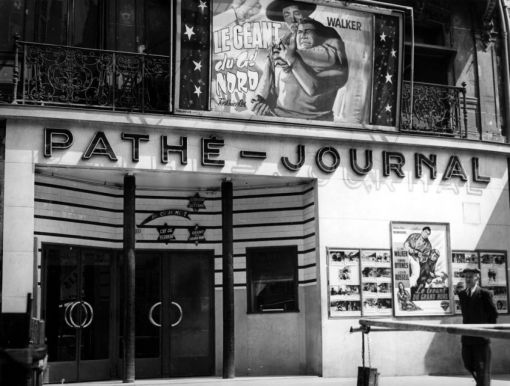
Not to be missed: the arrival of hobos with snacks and wine bottles at the Pathé-Journal at noon. They sleep there in the warm until evening. Contrary to their reputation, the three cinema halls specializing in Muslim films are flawless. What’s more, the noise of peanuts here pleasantly masks the humming of the projectors.

Choice of timing

Avoid cinema halls on Saturday evenings, holidays and at the beginning of all-night screenings of hit films: there’s a queue at the entrance and you’ll not know where to go.

Moreover, in the neighbourhood halls, films are generally cut short on Sundays.

Avoid normal halls playing films for the young on Thursday afternoons: we only hear their screams. Some halls have a reduced price before 1:30 p.m.

In general, permanent halls have screenings at 2 p.m., 4 p.m., 6 p.m., 8 p.m. and 10 p.m. The film starts at 2:30 p.m if it runs for 90 minutes, or at 2:40 p.m if it runs for eighty etc. Normal halls have a screening every evening (except Tuesdays) at 9 p.m., on Thursdays, and even Saturdays, at 3 p.m., and on Sundays at 2:30 p.m. and 5 p.m. The programme runs for about a hundred-and-forty minutes; so, it’s easy to find the exact starting time of a big film if we know its runtime. But there are exceptions. Better to telephone in advance if you want to avoid the first part of the film, which – having only one negative point – isn’t the least instructive for the non-Parisian. In the suburbs, the telephone call is indispensable; the cashier will tell you how to get there from Paris.

The entrance

Like everything in France, the best seats (front orchestra) are the cheapest, except in rare, exclusive halls with balcony (Napoléon, Paramount, Wepler). But, in neighbourhood halls, you’ll need to coax the cashiers a lot before getting these seats, which are to be sold at reduced tariffs imposed by the Centre du Cinéma against exhibitors’ wishes. The cashiers will tell you that you’ll have a hard time seeing the film, that you’ll ruin your eyesight, that it’s not healthy, that you must swear on your honour not to ask for a change of seats during the film. And that if you become blind, it won’t be for the lack of warning. They can hold you up for four minutes. And then, say the magic word: “I’m going to report this to the Centre.” But if, by chance, you don’t have exact change, you’ll never have your ticket. Or, they’ll go for the issued-ticket trick: “I thought you wanted a reserved seat; I’ve already issued the ticket: it’s going to go waste…”2

In exclusive cinema halls, a doorman will snip your ticket which the usherette will snip again. Absolutely useless, he’s there to look good, to make you believe you’re entering a theatre or an Opera.

Another useless thing: the usherette, already vanished in England and Italy to the benefit of a discreet lighting on the floor and whom you can even do without by closing an eye fifty to ten seconds before entering the hall. Each person must give her a tip of at least ten francs (twenty in exclusive halls). You can also tell her: “I’ll open the door myself”, but, if you do that, she’s likely to tell you off, disrupt your viewing, or prevent you from stretching out. Although it’s immoral to give ten untaxed francs to this useless thing while giving twenty-seven taxed francs to the producer, it’s better to give her the coin right away.

Warning: don’t ever hand her your ticket in a hall where you enter from the front (or from anywhere else for that matter) for she’ll run fifty metres away to seat you in the back. Some usherettes satisfy their obsession for logic by meticulously filling the hall row by row, left to right or vice versa, and admiring their fine fencing in of paying sheep. In short, annoying and expensive. At the Cinematheque (where you are better off taking your seats at 6 p.m. in view of the previews or hits of the evening), always carry a franc and ask for a ticket starting with AH, AG, AF etc. or say that you prefer a folding seat in the orchestra.

Inside

You can’t smoke inside (except at the Rex, the Féerie des Eaux eliminating all fire hazard, and at the Rotonde) because General De Gaulle agreed to continue the prohibition imposed by his colleague, the Marshall Pétain.

If you are taller than five feet, you are better off sitting on an aisle seat so you can stretch your legs comfortably without having to put up with the narrowness of French seating rows. It also allows you to leave the hall without disturbing anyone if the film is bad (the Godard variation: sit right in the middle to disturb as many people as possible to emphasize your discontent).

Screening conditions are often difficult: the format of the screen rarely corresponds to the format of the film (the superior technical commission of cinema or CST mandates several more or less necessary norms, but doesn’t ensure their effective implementation). At the Napoléon or the Ermitage, which open up from the front, every film is a parade of viewers (go there only after 10 p.m.) that we can tolerate better when sitting in the front at the right. You can’t see the entire screen from some seats at the Atlas or the Saint-Germain. At the Studio de l’Étoile, you can see shadows of viewers in the balcony where the rebellious usherette has seated you, claiming that the orchestra section is closed: pay her and go downstairs. The lighting at the Midi-Minuit reflects doubly on the screen. In front of many screens, a useless curtain crying “theatre” opens well before the film begins and closes well after it ends. Some cinema halls – Paris-Ciné (property of the ex-president of the federation of film exhibitors, Adolphe Trichet), Studio Obrigado – introduce in colour poor copies of black and white films; in such cases, get yourself reimbursed, you have the right to, and say the magic word if needed.

Since 1955, screening quality in France has enormously degraded and the theatre operators, flustered by the increasing complexity of new technology and devoid of references, have laid down their weapons. Lack of sound, fuzzy image, bad framing and darkness abound. Don’t waste a second, cry out right away: “Sound!… Focus!… Framing!… Image!” or simply “Projection!” if you are worried about scaring the public with these technical terms. Never whistle: they’ll think you are whistling at the film or the cameraman.

The screening, alas, is never continued from the point of failure but only much later, in violation of the decree of 18 January 1961 (article 13). Sad state of affairs, chief responsibility for which lies with the indifferent CST, which has just made a fool of itself by defending the intolerable screening conditions at the last Cannes Festival, otherwise irreproachable but compromised by this shortcoming.

Problem and solution

We must understand the passivity of projectionists: their minimum union tariff is 13,400 francs a week, three times lesser than the smallest technician in production, six times lesser than the first assistant camera, twelve times lesser than the director of photography. This is a scandal that must be called out. We can understand a first assistant or an usherette getting paid at the minimum wage, these are optional and often useless jobs not needing precise competence and not entailing serious consequences in case of mistakes. That would be a normal thing despite the massive revenues made by the film industry because, for example, producers pay their couriers at the same tariff as an artisan. But it’s not normal to pay all the collaborators of creation well and pay all the collaborators of exhibition badly (which is what happens in the music industry as well). Collaborators of exhibition must be well paid. We must pay important collaborators in every sector well and pay secondary collaborators less well. Bardot making 5,000 times the minimum wage is normal, but the assistant getting ten times the minimum wage is excessive, and the 1.7 times the minimum wage of the projectionist is ridiculously low.

A projectionist is an artist: he can ruin the work of a technical crew, he can even improve it slightly by his perfection and it’s fair that he be paid in proportion to the enormous responsibility and competence required of him, as a percentage of the gross receipts, or at least more than the assistant and almost as much as the director of photography. There should also be an exchange between the two professions – which will open up new avenues for cameramen who are often unemployed and complement their training – a number of projectionists turning to more lucrative professions. It could be said that screening deficiencies today stem one-fourth from lack of funds (old projectors etc.) and three-fourths from the projectionist and from the theatre owner, who can cobble together his facility and his hall himself, for no cost, instead of waiting for viewers, daydreaming.

In any case, the film industry should not be surprised if our filmmakers prefer artisanship over itself: industrial production is justified only on the basis of its technical and aesthetic quality, which is almost forbidden in artisanship and which comes to pass in only fifty cinema halls out of five thousand (I’m being kind). It’d be stupid to make billion-franc films that can be appreciated only in the Club Publicis…

Instead of needlessly forcing production to increase its costs on the basis of regulatory decisions, we must facilitate a reduction in budgets by the wholehearted introduction of better, ultra-sensitive film stock and lighter material to the detriment of certain other sectors (the CST does the opposite), we must increase the cut to the exhibitor by five percent or give him financial aid to buy new equipment. We must financially encourage the management of cinema halls by projectionists, if they can’t be paid in proportion to the gross receipts, which would be the ideal. The entire industry is capable of evolving. We must transfer capital from one branch to another according to needs, like in America. Our status quo attitude to projection is driving it to ruin and is immorally adding bureaucratic profit to commercial ones. It’s double without quits.


1Gibe at this old magazine which praised turkeys and snubbed geniuses.

2All this is in my film Les Sièges d’Alcazar (1989)


[From Luc Moullet’s Piges choisies (2009, Capricci). See Table of Contents]

Climax

So Love was a one-off misfire where Gaspar Noé’s singular style came undone under the banality of the material. That’s partly because tracing the journey of a romantic relationship from inception to breakup requires an engagement with character psychology over a longer period of narrative time—something at odds with Noé’s cinematic temperament, primarily geared to short-term subjective phenomena. With Climax, flamboyant and stylish to the hilt, the filmmaker comes back to a narrative of a limited timeframe, in which character development and emotional maturity play little part. Unfolding almost in real time, the film centres on a dance troupe’s final rehearsal the evening before they leave on a US tour and the pre-departure party that follows.

Climax opens with a tracking shot of a woman crawling in the snow. The camera is drone-mounted and photographs the woman from overhead, producing a flat visual field. It circles the woman as she crawls and cries, circle being the chief visual motif of the film. The end credits roll, making it the second film at the 2018 Cannes festival to force the viewer to sit through the générique de fin. There’s an expectation that the story will unfurl backwards from this point as in Irreversible. Instead, Noé cuts to a series of talking heads taped on VHS. It’s a recording of the film’s actors talking about dance, drugs and sex. The footage plays on a CRT television surrounded by movie DVDs and books on cinema, art and philosophy. We aren’t sure who the viewer is, just as we aren’t sure whether there’s an orchestrating hand behind the spiking of the sangria at the party. Climax doesn’t have a single reverse shot; its participants are like fish in a tank observed by an omniscient eye, itself invisible. The filmmaker plays god, introducing an element of chaos into this world and studying its repercussions.

The dance sequence that follows the interviews—part of a longer, unbroken, 12-minute shot—is brilliant in the way individual performances find their place in the larger piece. Outside of a few coordinated passages, they are all freestyle, drawing from different genres, the only commonality between them being the audio beat. The performers react to the music instinctively and improvise, demonstrating that dancing is writing with the body just as filmmaking is writing with the camera. The number is choreographed for the camera which shifts axes as the piece proceeds. The rehearsal ends five minutes in, but Noé’s camera keeps going, following specific characters as they move around the floor to talk to others. This continuously shifting perspective parallels the dance number we’ve just seen and sets up the notion of Climax as one long dance sequence.

Throughout, the film emphasizes the similarity between dance choreography and filmmaking. The viewer of TV interviews in the beginning could be either the choreographer of Noé himself. Like choreography, filmmaking is collective writing that involves the manipulation of performer’s bodies in space according to a set of ideas. Noé’s film unfolds as a chain of pronounced gestures essentially without any meaning. Like the dance, it’s an instance of abstract writing that only intermittently has a signifying function. The dancers’ various moves, though referring to sexual and violent acts at times, are purely automatic, subconscious interventions that are performed, filmed and assembled together on instinct. The film is heavily improvised, made up as it proceeds (it was shot in sequence), and is one long tapestry of gestural work only symbolically liked to real-world phenomena.

The dance floor is a space where desire is fluid and, while participants have personal preferences, there’s a sense that any person in this twenty-odd group of young men, women and non-binary people could end up with anyone else. Noé chains together several bits of conversations—all filmed in two-shots—where characters talk about those off-screen. These dialogues enter increasingly sticky territory, until we discover that the sangria was laced with LSD. The dancers go unhinged after this point, as does the camera, and we follow their self-destruction in a virtuoso, 42-minute-long shot. It’s an impressive piece of conceptual art, with an impeccable sense of space delineation, whose force derives from the tension between the unseen, internal struggle of the characters and its external manifestation. That said, this is not In Vanda’s Room and Noé is moreover not interested in documentary. His camera choreography imitates the loss of direction the actors might be experiencing and unwittingly turns Climax into a cautionary film about drugs.

But the more crucial idea Noé seems to be working towards is the importance of discipline to artmaking. When the dancers go off the rails under the influence, and their worst instincts surface, we are surprised that it’s the same people who created the beautiful opening dance sequence of the film. The rehearsal’s rigour, singular determination and sense of communion with others gives way to survivalist violence and rapaciousness. Instinct gives birth to art, but when left undisciplined by craft and intellect, it enables the most repulsive human tendencies to flourish. Climax is Noé’s stab at the Apollonian-Dionysian dialectic. It’s also him assuring the viewer he’s not simply screwing around.

Jeanette

There are several contradictions in the TV version of Jeanette, Bruno Dumont’s reimagining of Charles Peguy’s The Mystery of the Charity of Joan of Arc as a neorealist musical. Firstly, there’s the protagonist herself: Jeanette (Lise Leplat Prudhomme) is only eight years old—not yet Jean d’Arc—but is torn apart by the poverty and suffering of the peasants around her. She sees that their souls are damned, and is disappointed by their apathy towards the English siege of France. She sings out her torment, addressing them to God, who sends forth the saints Michael, Catherine and Margaret to inform her of her mission. She keeps this annunciation from everyone else and it’s only three years later, when the English have besieged Orléans, that she assumes the responsibility. With the help of her uncle, she leaves home to meet the Dauphin of France and convince him about taking on the English.

The incongruence created by a child uttering Peguy’s complex, incantatory verse as though in a school recitation is amplified by Dumont’s stylistic choices. Jeanette is broadly naturalist in that it is made with amateur actors, real locations and direct sound. The story is mostly Jeanette conversing with her friend Hauviette (Lucile Gauthier) and madame Gervaise (one character played by two actors, Aline and Élise Charles, à la Buñuel). Like Pasolini before him, Dumont clothes his actors in plain outfits, there’s very little psychology in line delivery of his amateur actors and the landscape is elemental. The compositions are simple, even rudimentary, and veer on the painterly when the actors are filmed against the sky. As much as Straub, Pasolini or Oliveira, Jeanette recalls the theatre with its single perspective, single décor, improvised performances, and marked-out character entries and exits.

This visual asceticism, however, is tipped over by Dumont’s use of heavy metal music to which his actors sing, not always in pitch, beat or meter. The filmmaker has stated that this lack of finesse is the point, music and dance manifesting in bodies unprepared for them being the essence of Jeanette’s preordination. Characters bang their heads to bass guitar riffs, leap around to perform flips and splits. Dumont finds an intersection between the highs offered by metal music and Jeanette’s religious transports; cutting off the score, it would appear that her ecstasy is authentic. There is also a magical excursion in the appearance of the levitating saints, and absurd turns such as Hauviette walking bent over like a crab. Jeanette’s speech is all about the damnation of the soul, but Dumont’s camera is firmly fixed on Jeanette’s physicality: the way she clutches her garb, her bare feet hopping in sand and her unruly hair. Her perennial doubt and turmoil are in contrast with the constant sun illuminating the countryside—Dumont transposes Jean’s historical birth region of Lorraine onto his own native Nord and the film is shot at a point from which England is visible.

Jeanette provides specific pleasures through its many aesthetic tensions. Peguy’s text, even when presented as a rock musical, can be challenging to penetrate. The film’s sincere intention and anachronistic method situate it somewhere between satire and solemn drama, and I’m not so sure that Dumont really succeeds on either front. The result is merely quaint. Devoid of the socially-conscious edge of Lil’ Quinquin and Slack Bay, Jeanette feels frozen as a concept. Dumont’s intention is perhaps to rescue Joan of Arc from the National Front’s appropriation of the figure. His film teases out the human aspect of Jeanette. Her lies to her friends and parents in the quest for her personal truth register like but one instance of an eternal teenage condition. But neither making her a universal icon nor asserting her Christian piety is going to override the fact that she’s associated with the French national identity – a topic that I hope Dumont tackles in the second part.

Staying Vertical

With Staying Vertical, Alain Guiraudie sustains his standing as the maker of enigmatic, beguiling films. The mystery here doesn’t stem from concealed character motivations or narrative convolutions, but by the creation of a world where familiar social rules don’t apply. The film opens with shots from the dashboard of a car moving through the countryside. The driver is Leo (Damien Bonnard, a potentially-great comedian) and, given it’s a Guiraudie film, he’s likely cruising. He solicits a young man with an instantly-suspicious body language and is turned down. The boy is Yoan (Basile Meilleurat) and lives with old man Marcel (Christian Bouillette) whose waking time is accompanied by booming metal music. Though in rase campagne, neither of them is scandalised by Leo’s solicitation – a behavioural detail symptomatic of the universe Guiraudie constructs here.

Leo continues and arrives in the prairies in the south of France, where he hooks up with Marie (India Hair), a shepherdess living with her farmer father Jean-Louis (Raphaël Thiéry) and two sons. Leo frequently escapes to the city: he’s a screenwriter short-changing his producer with a non-existent script. In an abrupt time-leap, we see Marie giving birth to Leo’s baby. Depressed and anxious about Leo’s regular absences, Marie departs for the city with her two sons, leaving Leo and her father with the newborn. Leo wanders with the baby, sometimes consulting a therapist living in the woods, always keeping an eye on Yoan and Marcel. Jean-Louis discovers him, takes him to Marie by force and, given Marie doesn’t want to return from the city, keeps Leo with him. Leo escapes the farm after Jean-Louis makes sexual advances and uses his baby as bait for wolf-hunting. At the end of another series of encounters with all these characters, Leo ends up with the lonely, suffering Marcel. He helps the old man alleviate his pain by screwing him to death. He’s arrested and his baby handed over to Marie by the child services.

Staying Vertical spans the entire breath of France, but we don’t really get a sense of the scale of geography the characters traverse—perhaps a product of the film’s piecewise funding. Guiraudie’s film is a series of a journeys into and out of the heartland of the country: young people like Leo, Marie and Yoan are able to get out and return at will to the backwoods, but old men like Jean-Louis and especially Marcel have to resign themselves to this life of isolation. So, in a way, Guiraudie is mapping out the tragedy of queer aging onto the landscape, the city offering more chances of at least passing connections than the endless prairies. Leo loses his car, becomes penniless and makes it on foot across the country dodging the police. The film contains several wide-angle shots of him walking across a seemingly infinite geography. This isn’t an existential image as in Ceylan’s films, but a metaphor for gay loneliness that Staying Vertical is about.

Guiraudie’s film develops what might be called a non-normative—or even homonormative—world. Characters recognize desire in each other’s eyes instantly, their changing sexual affinities being a surprise to no one within this world. Guiraudie cycles through various permutations of his five central characters, just as he cycles through the same spaces and same framing of these spaces, to create several fleeting family-like units. Leo’s desire to retain his baby parallels Marcel’s wish to hold Yoan and Jean-Louis’ to keep Leo with him. Within these two-member units, characters are bound to each other by traditional, heterosexual familial relations as well as by their own romantic coupling. The nature of relationships between people in this world oscillates constantly between sexual and platonic. Guiraudie refuses to make a distinction since, for these gay men of vastly different ages, the same relationships must fulfil multiple needs.

Staying Vertical does have elements of melodrama in that it follows the romantic quest, fulfilment and disillusionment of a sympathetic central character. When Leo returns to the same locations, he’s always worse-off than before: all his objects of interest vanish from his ambit, he and his baby are held hostages by Jean-Louis, he loses his car, goes broke, is attacked by a group of clochards, gets implicated in assisted suicide, loses his son to child services. Without his baby by his side, he sleeps in Jean-Louis’s barn maternally clutching a lamb. This appropriation of ingredients from the woman’s weepie for queer ends finds its summit in the symbolism of the prairie wolves. Threats to the sheep and general life in the region, the wolves reside in the outer margins of the grasslands and come to represent the external world in face of which Leo must stand tall and fearless. It’s a blunt symbol that’s somewhat softened by Guiraudie’s matter-of-fact treatment.

Wonderstruck

Is Todd Haynes an auteur? Sure, he exclusively makes period films that deal with the question of personal identity within a society in flux. But Haynes’ works are so different from each other in terms of subject matter and style that they seem to be a product of many subjectivities and no subjectivity at once. If there’s any doubt as to whether this is intentional, look no further than his masterpiece I’m Not There (a title that should be read as “there is no such thing as I”). Bob Dylan stopped singing protest songs as a protest against an establishment that was expecting protest songs from him, just as Haynes frustrated the expectation from him to keep up the melodramatic high of Far from Heaven. Todd Haynes is an auteur whose preoccupation is a denial of that label. He’s done the flip again with Wonderstruck, following up a heartbreaking film about the assertion of queer identity in a conservative milieu with an equally-felt straight up children’s picture on the value of traditions.

Adapted from Brian Selznick graphic novel of the same name, Wonderstruck weaves together two stories set fifty years apart. The first unfolds in New Jersey in 1927 and follows a deaf-mute girl Rose (Millicent Simmonds) who runs away from her authoritarian father to her mother, a famous silent film star (Julianne Moore) in Hollywood. The premise and the timeframe allow Haynes to realize this section like a silent film—soon to make way for the talkies—without necessarily imitating its aesthetics. He pays tribute to Gish, Chaplin, Griffith, Murnau, and Vidor, but also shoots in widescreen monochrome, with a modern camera choreography and a conventional-sounding musical score by Carter Burwell. Information is revealed visually through texts that Rose writes and shows to others, producing plot surprises that wouldn’t have been possible with sound.

The second story takes place in 1977 in Gunflint Lake, Minnesota. Having recently lost his mother, Ben (Oakes Fegley) also loses his hearing in a lightning strike. Ben is a curator of sorts, he collects various models in his house, one of which is an old illustrated book published by the American Museum of Natural History. He sets out to New York city in search of his father, the only trace of whom is a scrap of letter addressed to his mother tucked in the book. As expected, the two stories come together in the third act in a predictable but meaningful way. But Haynes intercuts them right from the beginning in a thematic manner that allows each story to take turns in anticipating each other. This editing pattern, perhaps a little too neat, underscores the living weight of history and helps each narrative thread furnish information missing in the other. There are also a handful of psychedelic montage sequences recalling Guy Maddin where the past is evoked in the present.

Haynes’ film is most of all a tribute to museums as institutionalized memory creating and outlasting personal memories. The plot revolves around two people who manage to find their roots in a particular room of the American Museum of Natural History. The film’s key moments involve the act of touching—a proscribed yet instinctive gesture for first-time museum visitors the film understands well. Rose and Ben connect to each other in their coming in physical contact with the meteorite at the museum. The shooting stars they see in the sky, themselves, are emissaries from the past. The two stories come together in a voiceover that is cut to a miniature NYC panorama at the Queens museum, a double metaphor of museums as living histories that provide narratives and whittle down time and place to human scale. Haynes’ film is a kind of museum too, depicting the changing face of New York over a long period. Like those institutions, it aims to connect people across ages through a shared geography.

Wonderstruck is untainted in its innocence. To be sure, there are several failed parental figures and Ben has all his money stolen in the city, but the children in the film aren’t subjected to any real loss of innocence. Rose and Ben leave for New York on pure faith—a faith that is returned by its residents and institutions. In doing so, I think Haynes divests himself of his camp, ironic sensibility and pays a more profound, close-grained tribute to the silent movies. Julianne Moore is incredible, but it’s the sublime Millicent Simmonds, deaf-mute in real life, who is the very face of the film. With her cropped hair and deep, sparkling eyes, she recalls the great waifs of silent cinema. I hope we see more of her. The wolves are symbols.

Cahiers du cinéma no. 484; October 1994.

French Regions (old) and filmmakers

In the realm of classical music, it’s commonplace to point to Germanic supremacy and English failure. Similarly, the mediocrity of Spanish cinema strikes us in comparison to the abundance of Italian or even Portuguese cinema.

These differences are even more present at the regional level. National identity remains a somewhat hollow idea, a little too recent (under Louis-Philippe, it took three weeks to go from one end of France to another), while regional identity has always existed. Its application to artistic realm is thus valid. In the United States, its creation was a moment dominated by the Midwest (Hawks, Welles, Ray, Losey) and the South (Griffith and Vidor, and also Faulkner, Caldwell, McCullers, Penn Warren, even Styron and Tennessee Williams), the hurt of the defeat calling for a compensatory expression. Brazillian cinema is centred around the Northeast. Transalpine cinema is, in fact, an Emilian cinema (Bertolucci, Cottafavi, Fellini, Zurlini, Baldi, Pasolini, Antonioni, etc.), opposed to the mediocrity of Tuscan cinema, which has gone down for good, and transmitted by brilliant satellites scattered in the north and the centre of the peninsula.

The regionalization of filmic space in France is less evident since film directors have to live almost compulsorily in Paris in order to work, whereas filmmakers in the neighbouring countries are spread over many metropolises and our painters, sculptors and writers can spare themselves the race to the capital. But we often notice that residential or natal Parisianism is a form of misleading disguise. Compared to the regions, moreover, Paris today has little to offer as original material for inspiration.

We have recently witnessed the burgeoning of Aquitanian cinema, with Eustache, then Téchiné, Breillat and Kané1, with at least four constants:

Childhood. It’s very apparent in Mes petites amoureuses (Eustache), even Le Père Noël a les yeux bleus if we also include adolescence. Kané remains the French filmmaker in whose work the hero is always a child (Dora, Liberty Bell, Un jeu d’enfant). A comparable frequency in the works of Breillat (Une vraie jeune fille, 36 Fillette), and of even Téchiné (J’embrasse pas, Le Lieu du crime, Les Roseaux sauvages).

Native land, in which the filmmaker rediscovers the child he was, and not just that: we find here the commune of Pessac and its two Rosière films, Mes petites amoureuses which goes from Pessac to Narbonne to meet Le Père Noël, Biarritz (Hôtel des Amériques, 36 Fillette), the Landes (Une vraie jeune fille), the Pyrénées (J’embrasse pas), Arcachon (Un jeu d’enfant) and Téchiné’s Agenais (Souvenirs d’en France, La Matiouette, Le Lieu du crime, Les Roseaux sauvages), Téchiné being the one filmmaker who emphasizes the light and the customs of the place.

Sexuality, broached upon with a candour bordering on scandal (Eustache’s La Maman et la Putain and Une sale histoire, all of Breillat of course, J’embrasse pas, Kané nevertheless maintaining his distance, perhaps because his native Angoulême is decentred with respect to Aquitania and to the other three musketeers).

Individualism. All four prefer characters estranged from their environment, their family and the society, and produce their work at the margins, close to autobiography, in occasionally difficult solitude2. Even on the margins of the other three, despite their commonalities: there is no school whatsoever to speak of.

One must perhaps find here the focal point of a regional reorientation that has been so cruelly lacking in France and which we could envy Brazil, India, Italy or the USA for.

It should, however, be noted that there has always been a point of convergence in France. Our real National Centre of Cinematography is, quite simply, the Centre, the Limagne, the Auvergne. French cinema is, above all, a rhombus with its north vertex at Commentry and its contour passing through Vichy, going till Cunlhat, Sardent and maybe Dun-le-Palestel. This rhombus thus encompasses Gance, Pialat, Bressonn, Chabrol and also filmmakers with Auvergnese affinities like Astruc and Truffaut. In contrast to Aquitanian filmmakers, the Auvergnese tend to obscure their origins (with some exceptions: Le Beau Serge and Les Noces rouges for Chabrol, L’Enfant sauvage and L’argent de poche for Truffaut and, for Pialat, La Gueule ouverte). These directors don’t like labels, which reduce their work to a place, a message, a subject or a trend.

Outside of their exceptional qualities, the Auvergnese hardly have commonalities. Except two:

An initial attraction towards more classical arts: Bresson and Pialat were first painters (and Jean Renoir is the son of Auguste, a native of Limoges). Gance started out as a poet. Astruc – like Renoir – wrote novels. Pialat and Chabrol authored one. Chabrol read every crime novel. Not to mention the importance of writing in Truffaut.

A discordant mix of media seduction and polemical virulence (Truffaut’s and Chabrol’s incisive critiques, Astruc’s camera-stylo, Bresson’s actor-models, Pialat’s raised fist at Cannes). The two are perhaps not so contradictory: iron hand and velvet gloves.

I sometimes wonder if Auvergne’s success – Pialat extols the positive influence of lava on his work – isn’t due to the social skills of children from the Centre. To make good films, you must first be able to shoot, know to manage things, solve monetary problems, beat your competition, gather support. This Auvergnese tide can be related to the “republic of the Bougnats” that France was after De Gaulle, and sometimes even before him.

We must note the inevitable character of conflict when an Auvergnese genius tries to work with an Aquitanian one (Breillat and Pialat on Police): these are two completely different worlds, just like Brittany and Auvergne (cf: the failure of Chabrol’s Cheval d’orgeuil).

Chabrol remains the most-advantaged French filmmaker: not only does he belong to the “golden rhombus”, but he is also the son of a pharmacist, like Resnais, Rivette, Nuytten, Juliet Berto and John Wayne. It helps to have a pharmacist father in cinema because it’s a middling socio-professional category, open to all walks of life, or because direction is a sort of alchemy.

Clermont-Ferrand is thus the true capital of French cinema, more than Paris. But Paris is not deprived either: there is, in fact, an Auvergne-Île-de-France axis, founded on round trips between the two regions, on “transfers” (Truffaut, Renoir etc.).

The express train between the two cities, the Bourbonnais, is the best symbol for French cinema. There are also pure Parisians, such as Autant-Lara, Becker or Doillon. But this species tends to be rare.

The distribution across other regions turns out quite even: in general, one or two great auteurs in each one: Pagnol and Allio (Provence), Feuillade and Leenhardt (Languedoc), Straub and Rohmer (the austere Lorraine), Depardon (Lyon), Stévenin (Jura), Grémillion and Rivette (Normandy) and, for Brittany, Resnais and Demy (who will recreate a little of his Nantes in all other regions).

We see that France splits into two: the Germanophone France of the two Lorrainers (Die Marquise von O, Nicht Versöhnt and the follow-up) and the Anglicist France of men from the West (Providence, Model Shop and the quartet Shakespeare/James/Tourneur/Bronte in Rivette). On the other hand, Auvergne and Aquitaine reject anything foreign (see the failure of Chabrol’s Sang des autres, and Truffaut’s problems with the English language).

Certain Frenchmen exhibit a contempt towards their native region, preferring their region of adoption instead: the Norman Rivette is the one who has shown Paris the best. But I’m overwhelmed with emotion when, in Mon oncle d’Amérique, after thirty-five years of self-denial, Resnais finally shows us “his” island near Vannes. There is a little of that in the Straubs’ Lothringen! too.

That brings me to the black holes: Alsace (unless we accept the dull Wyler as the flag-bearer), the Pyrenees (but it’s sparsely populated), the eight departments of Pays de Loire, from Angers to Nevers, and especially Nord.

This region nevertheless has a number of ambitious filmmakers (Daquin, Duvivier especially), but they seem to be tempted by academicism. And the difficult social reality of the region has oriented them towards a lazy naturalism. I can hardly believe Gilson and Pollet to have avoided this pitfall (the latter with a contrasting country of adoption: Greece and the Mediterranean, just like how the Nordist Malle made his best fiction, Lacombe Lucien, in Aquitania), but these are, alas, interrupted bodies of work, the Nordists not possessing the media genius of the Auvergnese. The supreme insult to the Nordist filmmakers, however is that the best local films were made by an Auvergnese, Pialat moving from the volcanoes to the slagheaps with L’Enfance nue, Passe ton bac d’abord, and getting closer in La Maison des bois. Perhaps Xavier Beauvois will reverse the trend3.

The periphery occupies an increasingly large space: not just recent immigrants (Iosseliani, Ruiz – currently perhaps the two best French filmmakers – Kramer, Bral, Fuller, Santiago, Polanski, late Buñuel, Ivens, Losey and the Ophüls), but also and especially a periphery closer to home: Swiss Romandy (Godard), Corsica (Vecchiali), erstwhile French Indochina (Duras) and, on the other hand, the purest Frenchmen associated, by way of reportage, with faraway lands (Marker, Rouch and Africa). The most surprising case remains Camille de Casabianca, who has made three films, one in Asia, the second in Africa and the latest in America.

Province-Paris, foreign country-France, is French film art founded on the pleasures and pains of transfers?


1 Today we can add Nolot, the Larrieu siblings, Guiraudie.

2 Besides, of the three great filmmakers to have committed suicide, two are from the Bordeaux region: Eustache and Max Linder.

3 This was written before the arrival of Dumont and Desplechin.


[From Luc Moullet’s Piges choisies (2009, Capricci). See Table of Contents]
A Wild Pear Tree

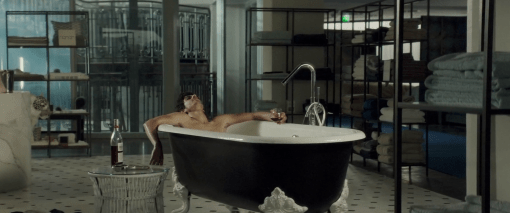
“Simple minds like to reduce a work to a central idea”, says Sinan (Aydın Doğu Demirkol) in a conversation with a local celebrity author. It’s a gibe at the critics of Nuri Bilge Ceylan’s The Wild Pear Tree, a polyvalent, multi-thematic portrait of life in the director’s native region of Çanakkale in the western extreme of Turkey. Sinan has just graduated and returned to his hometown of Çan for his teacher’s exam preparations. Çan is chiefly known to the world as the site of the Trojan war and for its war cemetery. Sinan hates the city, whose natural beauties have been overridden by industrial and domestic garbage. All his childhood friends have left the city for better prospects elsewhere. But he’s nevertheless written a personal book on Çan and its people. Through the film’s three-hour runtime, Sinan tries to secure funds for the publication of his book, talking unsuccessfully to the mayor and then a businessman who patronizes the arts because the corporation gives him contracts. The film is told entirely through his perspective; he is present in every scene of the film, and his subjectivity merges with the events depicted.

One of the primary notions Ceylan’s film examines is that of inheritance and legacy. On his return, Sinan connects with his two grandfathers, one a farmer living up in the hills and the other a retired Imam, still solicited by his younger colleagues for weddings and the like. Sinan’s father Idris (Murat Cemcir) is a school teacher and spends his weekends digging a well in the mountains close to his father’s house. Idris is of scientific temperament and believes that the villagers, including his father, are wrong about the village being barren. Sinan, in turn, rebels against Idris, whom he takes to be a gambling addict. It is said that Idris, once a white hope of the town, got mixed up in horse races and lost his house in it. But we never see him gambling and Sinan’s conviction that his father is a ne’er-do-well remains unsubstantiated.

A self-styled misanthropic, Sinan rejects this lineage, considering himself above all this. His disgruntlement with his forefathers is as much artistic as it is familial. In the conversation with the local writer, Sinan grows increasingly confrontational, provoking his interlocutor in typically-upstart fashion. He belittles the author for participating in literary conferences, insinuates that he’d not understand the kind of novel Sinan’s writing. When he manages to publish his book, he signs a copy for his mother and basks in self-satisfaction of having arrived (or rather left this region in an intellectual sense), and having been better than his father. His parricidal tendency, Ceylan seems to be hinting, is a form of wanting to be accepted and the trajectory of the character ends in his owning up to his own provenance. Ceylan’s return to his hometown to make this film is also a kind of owning up, a return to roots for a filmmaker whose calling is now international.

The loosely-autobiographical nature of The Wild Pear Tree is also suggested by the specific memories it offers. The film unfolds leisurely through a series of conversations Sinan has at home and outside. In the first of these, he speaks with a woman he knew as a high-schooler, perhaps a flame, who is now engaged to a rich man against her wishes. They kiss under a tree as the wind ruffles its leaves. In another conversation on literature, the businessman scorns Sinan’s suggestion that anything is to be learnt from the cheerfulness of the town’s old fruit-seller. Sinan’s subjective novel, of which we know next to nothing, is a defence of art as personal expression against the utilitarian approaches of the people he speaks with, who’d rather he writes about the town’s tourist attractions.

There’s a constant friction between the abstractions Sinan deals with and the rooted, pragmatism of his surroundings. In an arresting conversation with two clerics, the non-believing Sinan teases out the head Imam’s hypocrisies. A newer Imam talks about the necessary distinction between the popular Islamic scholars and the important ones, just like Sinan did with the writer. The whole exchange takes place as they walk from an apple tree in the hills down to a tea joint as the sun sinks. As is his wont, Ceylan films them as tiny beings in the landscape, the abstract contours of their theological debate set against concrete physical phenomena like the fading sunlight, smoke from chimneys, moos of cows and noise of motorbikes. The speciality of this dialectical presentation, already evident in Once Upon a Time in Anatolia, is that it can be interpreted differently by the Imams and Sinan, as per their proclivities.

There are references to the current situation in the country. The entire scenario is predicated on money problems and the issue of unemployment is a constant threat facing Sinan, who’s always looking for things to sell – an obsession he is oblivious to while he scorns his father for gambling. One of Sinan’s friends is now a member of the government-sponsored paramilitary (or military) mobilized to bash up dissenters. But Ceylan is not a political filmmaker – if anything he’s likely the state’s cherished cultural ambassador of cinema like Jia Zhang-ke now is. His sensibility, like Asghar Farhadi’s, is closer to the 19th century Russian novelists than anything modern, and The Wild Pear Tree stretches out like a long parable minus the moral clarity. A shot of Sinan, his father and his grandfather together pulling up a boulder from a pit only to drop it back is a cogent summation of the film’s existential thrust.

Mektoub My Love

There’s a shot some fourteen hours into Abdellatif Kechiche’s Mektoub, My Love: Canto Uno in which a baby goat stares right at the camera. It’s not planned but it’s the first time we are reminded of the director’s presence in a film that’s all fly-on-the-wall. Kechiche’s always-mobile camera registers the smallest wrinkle of human interaction; his film is a veritable encyclopaedia of modern French greetings, gestures and social rituals. It’s rigorous, it’s exacting, but it’s also incurably obsessed with the heroine’s body, especially its rear end. One thing is sure: Kechiche really puts the cul in culture. It’s not anything new for the maker of Black Venus, an incisive study of the objectification and progressive breakdown of the black, female body. But here, as in Blue is the Warmest Colour, the viewer’s gaze of the film’s subject isn’t questioned. The film opens with a sex scene, but the camera is squarely on the woman, an all-too-easy site of male identification that’s already pervasive in visual culture.

The ostensible point of view of this opening scene is the voyeur-protagonist at the window, Amin (Shaïn Boumédine), who is taken aback that this woman is sleeping with his cousin Tony while engaged to another man. Amin interrupts the session, prompting his cousin to flee and the woman, Ophélie (Ophélie Bau), to scamper for her clothes. The dialogue between Amin and Ophélie that follows is awkward as expected, but tensely humorous in its mixture of empty cordiality and latent expectation of sexual violence. Nothing untoward happens though, and Amin turns out to be not just the film’s most charming character, but a downright gent. The year is 1994, Amin is reluctantly studying medicine in Paris and has come home to Sète on the Azure Coast for vacation. Like the protagonist in The Wild Pear Tree, he is an artist at heart: he writes film scripts and photographs. And just like Sinan, Amin is present in every scene of the film.

Life in Sète revolves around his extended family, which manages a popular restaurant in the city together. It’s summer and Amin’s relatives, all uniformly good-looking, spend their days at the beach and evenings at restaurants and pubs. Mektoub is an endless series of beach and party scenes, and presents a dreamy idea of fun with boys and girls frolicking in groups – a 20th century version of fête champêtre paintings. The mood is invariably, suffocatingly upbeat, with one girl’s heartbreak providing a welcome, sombre counterpoint to the primary-colour emotions of the scenes. Kechiche’s film opens, funnily enough, with quotes from the Bible and the Koran about light, and the film is a showcase of beautiful sun-kissed bodies shot in immersive intimacy. After sundown, they are seen in the artificial lights of disco and bars. The men and women dance with and seduce each other in varying permutations and, given their vague relationships, the invitation to dance scan as competitive mating rituals. Kechiche films their dynamic like an ethnographer, observing the minutiae of the process of la drague, the progress of flirtatious conversations from everyday exchange to something more.

The film is narrated through Amin’s perspective, but the point of view is fluid within each sequence, with Kechiche’s camera moving around the restaurant to construct mini-scenes involving different characters, something like a Renoir tableau. One impressive aspect of Kechiche’s film is that, despite being coupled to Amin, it breathes freely. So we get a subtle, superbly-detailed conversation between women of the family trying to passive-aggressively break up Ophélie’s affair. Likewise, a moment with Ophélie and Tony trying to steal a kiss, fretting about the crowd in the pub, in a work full of explicit, very physical exchanges. Kechiche’s film brims with crushingly-banal small talk and they would be of high documentary value if they weren’t so repeated and generalized. There are conversations between Ophélie and Amin about his relatives that are tediously long and go nowhere in particular. The fatigue is deliberately induced for what Kechiche wants to contrast it with later.

Amin remains an observer and a reticent participant in all this. While his cousins are busy picking up girls, he isn’t interested even when girls proposition him. On the contrary, his conversations with prospective partners builds up from shop talk to end in awkward silence, whose tension remains unresolved. He prefers spending his morning taking photos or watching Pudovkin. There’s no suggestion he is indifferent to girls, especially Ophélie, whom he stares at whenever she’s intimate with someone else. But there’s no sense that he wants to sleep with her either. As a favour from Ophélie in exchange for keeping silent about her affair with his cousin, Amin asks her if she can pose nude for his photos. His emotional peak comes in a sequence at a goat shed – a calculated break from the headiness of the other scenes – where he photographs a goat giving birth. Scored to operatic vocals, it’s a moving scene, and Kechiche pitches it at as an experience more rarefied than what transpires in the rest of the film. Amin, like Kechiche, is presented as the artist figure, trying to preserve his integrity in a world full of distractions and shapely bottoms. The point is that you can either make art or have fun. It’s Kechiche exculpating himself: he’s not having fun filming these undulating bums and naked torsos, he’s making Art.

Once Upon a Time in Hollywood

[Spoilers below]

Quentin Tarantino’s new film, Once Upon a Time in Hollywood, weaves a fictional narrative around the Tate murders of 1969, in which a pregnant Sharon Tate and four of her friends were killed by members belonging to the cult of Charles Manson at her residence in Hollywood. The film unfolds through a collage of four perspectives: Rick Dalton (a hammy Leonardo DiCaprio) a waning Western TV star ruing his sunset, Cliff Booth (Brad Pitt), once Dalton’s stunt double, now his pal and go-to-guy, actress Sharon Tate (Robbie Margot), who has just moved in next door to Dalton with her husband Roman Polanski, and the Manson Family, a hippie commune living in Spahn Ranch, a run-down movie and TV studio where Dalton and Booth used to shoot. The film begins six months before the murder and charts Dalton coming to terms with his imminent professional irrelevance, Cliff’s apathetic life alongside Dalton and Tate’s stuttering rise to public recognition. If not for its ending, the film registers as a transitional work for Tarantino in the way it leaves behind many of the filmmaker’s stylistic traits.

To be sure, Once Upon a Time turns out exactly the way one would expect a film written by Tarantino about the Tate murders to. But it doesn’t look anything like a Tarantino movie. For one, there’s a lot more “dead time” here than in any of his previous films. Nothing much happens in these long stretches except for characters driving around Los Angeles, the radio turned on, wind in their hair, Tarantino asking us to just absorb the atmosphere. The extreme close-ups that he usually reserves for a telling detail is generalized and multiplied. There are at least three identical shots of the Manson Family members walking towards Tate’s house – a superfluity that is symptomatic of the whole film. The pace is measured and the individual scenes themselves are much longer than usual, many of them outlasting their nominal purpose. There are three protracted sequences dedicated to Dalton bemoaning his decline. The last of these unfolds as a conversation with a precocious eight-year-old child actor (Julia Butters). It’s a remarkably insipid scene, even more than the other two, too shallow to be sincere and too cliched to be smart, and it’s surprising to find it in such prominence in a Tarantino film.

Secondly, Tarantino’s relationship with his influences is given much more showcase and precious attention than we’ve come to expect from the filmmaker. Tate looks at a poster of The Wrecking Crew (1968), her newly-released picture with Dean Martin. While this would’ve been a passing glimpse in the director’s previous works, here we get a shot of Tate looking at the poster, then a close-up of the poster and a reverse-shot of Tate again. Scenes of the real Tate in the film are also played for us. When producer Schwarz (Al Pacino) names the Dalton movies he’s seen, we see a detailed film reel of fake films starring Dalton. The reel comprises of Westerns, a musical, and an action movie where Dalton torches Nazis with a flamethrower, and serves as a wish-fulfilment for the Tarantino. Home turf for QT, the Hollywood milieu might have allowed for many more tributes, a temptation that he avoids for fewer, more elaborate quotations.

What most distinguishes Once Upon a Time from Tarantino’s earlier works, however, is the startling absence of suspense and a curious undercurrent of sentimentalism. While the film intercuts between Dalton, Booth and Tate from the outset, there’s no tension that the juxtaposition produces. It’s February 1969 and we know that the murders happened only in August. The first conflict of the film, and its first instance of accelerated editing, doesn’t occur until two hours in, when Booth visits the Spahn Ranch and picks up a fight with one of the Manson Family members. The only expectation the viewer has all through the film derives from the tragic consciousness of the Tate murders and even that is thrown into doubt considering Tarantino’s tendency to rewrite history. Unlike in any other QT film, the film’s only real tense sequence arrives at the end, on the day of the murder, when the filmmaker quickens the crosscutting with arbitrary, pointless time markers, expanding the sequence with extreme detailing of events.

The film’s emotional locus is instead vested in the friendship between Dalton and Booth, one of the few sincere relationships in Tarantino’s body of work. The friendship gets its own emotional climax, in a restaurant scene where Dalton, now married and washed-up, confesses he can’t afford Booth anymore, and a parting shot in which Dalton tells Booth he was a good friend. Also nagging the film’s conscience is Booth’s tragic professional situation. Like countless professionals Hollywood’s technological progress has left behind, Booth leads a ghost-like existence in the shadow of Dalton, himself fast becoming a shadow. He lives in a trailer park, drives Dalton around and even does household chores. His vocation is of no use anymore in the new Hollywood, where actors are expected to do their own stunts. Tarantino’s ode to the profession includes a fight between Booth and Bruce Lee (Mike Moh), presented in long takes, and several shots of Brad Pitt doing stunt-like activities.

This sentimentalism might be interpreted as nostalgia, but what Once Upon a Time deals with is nostalgia for a time when nostalgia was possible. His yearning is not for the old movies and movie studios but the neon lights of cinemas and restaurants that once dotted the Hollywood landscape. It’s a yearning that’s second-hand, for Tarantino couldn’t have himself lived the experiences he describes. The film is set in 1969 (two years before The Last Picture Show was made), a time when the studio system had collapsed and the movie brats had started to shape up the business and method of making films. The Vietnam War (and protests against it) continues under the newly-elected Nixon. Tarantino frequently cuts from Dalton to Tate to set up a contrast between an eclipsing, old Hollywood of the fifties and the rising, new Hollywood of the late sixties. Somewhat of a relic, Dalton is modelled after the suburban, middle-class, Eisenhower-era executive. He is mostly seen at the lot or back home. He spends his evening preparing for work or in front of television. He prefers his beer over drugs, hates the hippies and wants nothing to do with the debauched lifestyle of the times. It’s noteworthy, for a film set in Hollywood, how little of Hollywood or its people we actually see. The only party we are shown owes to the presence of Tate, Jay and Polanski, people wholly of their era, unlike Dalton. As Tate watches The Wrecking Crew, Tarantino regularly jumps to Dalton’s shooting of a TV Western. It’s a “old-timey” Western, but made in Tarantino’s style of long takes and direct sound. We don’t see the camera crew for the most part and the decoupage is presented as Tarantino would conceive it. There are several shots in Once Upon a Time of actors snoring, spitting and slurping – sounds rare in classical Westerns. The intercutting between an actor performing and another actor watching herself performing signals the shift of American movies towards greater self-reflexivity.

This opposition between the simple forms and moral clarity of old Hollywood and the darker, self-reflexive anti-authoritarianism of new Hollywood takes on a politically-noxious flavour when combined with Tarantino’s desire to deny the Tate murders. In Once Upon a Time, the Manson Family members enter Dalton’s house instead of Tate’s. Booth, under the influence of an acid-soaked cigarette a hippie sold him, kills all of them with the assistance of Dalton, who is finally invited home by a relieved Tate. In other words, the old heroes of old Hollywood, with their clear-cut notions of good and evil, have protected the Polanski household from crazy hippies squatting over the ruins of Hollywood. The implications are odious: that though home-grown antisocial elements denigrate them, it takes soldiers and war heroes, like Booth once was, to protect the country; that the movies and TV shows of old might have shown violence, but the mediatized images of the Vietnam War have rendered the violence in movies more real, more immediate, making them even more responsible for the violence in society. Tarantino’s reactionary re-revisionism is the opposite of the necessary process of cultural reexamination filmmakers such as Penn, Peckinpah and Altman were undertaking during the time the film is set in.

In Tarantino’s dichotomous image of Hollywood, hippies, cultists, druggies, squatters, libertines, the counterculture in short, are pitted against a pragmatic, intuitive world of cowboys and Mexicans – a strangely anachronistic vision that seems to belong to the film’s era and not current day. There’s no equivalence between the Manson’s Family’s real violence and the fictional violence that Booth and Dalton exercise on them. They are home invaders and so any violence on them doesn’t carry the same moral sanction as their own violence does. Before they leave their car, the Manson Family discusses television shows. One of them wants to “kill the people who taught us to kill”. This twisted reasoning helps Tarantino justify his excesses: movie violence, no matter how graphic, is ultimately harmless compared to real violence. This gives him the carte blanche to abandon himself in the thrill of brutal imagery, as Booth smashes the face of one woman against various hard surfaces of the house, including a framed movie poster. Dalton burns another one down with a flamethrower.

It is, however, impossible to precisely pin down the politics of a Tarantino film and Once Upon a Time, like all Hollywood tentpoles, is riddled with ideological paradoxes that makes any reading tenable. It is quite possible that Tarantino simply wants to further his project of harnessing cinema’s capacity to forge myths and correct historical-representational errors. His film is set in Hollywood, an ahistorical zone where fact and legend mix. Booth is said to have killed his wife, but nobody knows. The production of its films is based on a lie that the actor and the stuntman are the same people. Tarantino recreates a scene from The Great Escape with Dalton/DiCaprio in place of McQueen, even as Dalton clearly states that he was never in the running. It’s a lie that QT visualizes nonetheless: why shouldn’t cinema belie history, when every sane person in their implicit contract with the movies knows it is all made up? One has to be as deranged as the Manson Family, the filmmaker seems to say, to take what is represented for fact. Most auteur films Hollywood tend to be bitter about the industry and its people, but Tarantino’s too much in love with its history for that. In the final passage of the film, he cycles through various characters watching prime-time television. Through the cross-cutting, this shared cultural experience takes on a communal quality. Something resembling a prayer, which is what movie-going is for Tarantino. The prayers have been answered. The movies have made America safe again, if only on screen.

Think, You Fool

Unpublished

Robert Bresson

To go with his response to Cahiers du cinéma published in the 67th issue, Bresson, at the magazine’s request, had sent across his photo: a very old snap that made him look twenty years younger… Later, in the 72nd issue, we can read his objection to the fact that Cahiers attributed to him, between 1933 and 1939, the servile jobs of assistant and scriptwriter, however verified through credits and the most reliable sources. And, for a major part of his career, Bresson had us believe that he was born in 1907 while the real date is 1901.

There is then, in Bresson, a “trauma of youth” which translates to a “fixation” in his body of work. His principal characters, except those played by Sylvie and Paul Bernard in his first two films, are always young, especially towards the end of his career, with multiple protagonists of about twenty years of age (Four Nights of a Dreamer and The Devil, Probably) depicted by a nearly-octogenarian filmmaker. One notices the same trajectory with Rohmer, who, like Bresson, is a man of amazing vigour and a late-blooming filmmaker. The opposite of Hawks, Ford, and Visconti, who preferred filming their contemporaries as they aged.

It appears that there’s a nostalgia here for a youth lost in unsatisfactory work, the desire to erase all past and, at the same time, experience it again in an imaginary form. The filmmaker’s delayed arrival to cinema can also be explained by his initial engagement with painting (like with Pialat, the other great Auvergnese).

From the looks of it, Bresson’s youth hints at a series of wanderings: publicist, painter, scriptwriter, assistant etc. His first attempt at filmmaking, Public Affairs, is a tribute to The Last Billionaire by René Clair – a filmmaker whom he will assist and distance himself from through this work (even though there’s the same habit of filming people through windows).

Bresson really starts making films at an age when his contemporary Eisenstein completes his last. There is a certain logic to that. Eisenstein’s is first and foremost an art of silent cinema. But Bresson could barely come up with a film during his youth, simply because it was then the silent era and because his art is based primarily on sound and speech. Not entirely (his “guillotine framing” is also very important). But what distinguishes him clearly from other filmmakers is his use of speech. Look at a copy of The Trial of Joan of Arc or The Ladies of the Bois de Boulogne, and cut out the sound; it’s stupid, sure, but you will have a proof of Bresson’s singularity seriously fading away. Once the sound comes back, there’s no doubt about the paternity of the film.

Everyone knows this blank monotone, which was once deemed “false” insofar as it was totally foreign to contemporary cinematic acting. I sense it rather as the expression of reality since most people generally speak in a flat manner, without vocal effects. But everything’s not so simple. Bressonian speech is identified by the absence of tonic accent and even by a lowering of voice at the end of sentences or words. In short, the opposite of the norm in France. And it’s not all: there is the great speed of diction, the absence of hesitation, dead time, and awkwardness even during a long speech. This is understandable when they are beings driven by divine speech (Joan of Arc) or those who reproduce texts they have studied at the seminary in one go (the country priest). But it’s much more surprising when it comes to the criminals of L’argent, the humble peasants of Mouchette or the miser of Au hasard Balthazar: how can this utterly repulsive being defend such a cynical and stunted philosophy while his way of professing his faith, flawlessly defined in one go and with such a dignity of expression, seems to indicate a superior intelligence in him? Whatever his beliefs, the Bressonian hero is very sure of himself and knows his personal goal very well. An affirmation distinctive of each character (somewhat contradicted by the extension of the blank vocal tone to everyone). By making them speak this way, Bresson endows each creature – even the most vile-seeming – with considerable aura and weight, a conception that’s perhaps not faithful to reality but which reveals a very optimistic vision of human beings. I’m thinking of Vecchiali, who constantly imparts a grandeur to his whores, his pimps, his gangsters, his boxers and his mechanics.

Realism and its opposite at the same time. We have the proof of that in these words of the pickpocket Michel addressed to Jeanne: “Think, you fool.” This line provokes laughter, firstly because the word “fool” doesn’t entirely belong to the vocabulary of the 20th century in which the film is set. We’d hear it in Molière rather. Today, we’d rather say: “Think, you idiot”. But that’s not the essential reason for our laughter or surprise. The problem is that, against all expectations, the small pause, the small change of tone between “think” and “you fool” that naturalism requires is missing. The text is “rolled over”. Since they shot about sixty takes of this shot (as revealed by the actress Marika Green, visibly traumatized by these two words and the shooting of the brief shot containing them), it’s impossible that this particularity is the result of negligence. Only two other hypotheses remain: either that Michel is a kind of superior human being, who has everything he wants to say sorted in his head before opening the mouth, and his remark far from spontaneous, or that Bresson wanted to break realist convention of having a pause between words and, in some way, provoke the viewer by rendering a very familiar turn of phrase in a very dry manner.

A Bressonian motif tempts me: very often, Bresson duplicates the words of his text. A Bresson film is full of “no no”, “yes yes”, “go go”, “Marie Marie”, “go alone go alone”, “take me there take me there”, “remember remember”. The repeated words are always lumped together tightly. Their abrupt doubling undoes their spontaneity. We realize then that – more important than diction – it’s the choice of text that’s the pivot of Bresson’s specificity. Sometimes, a typically-refined phrase is destroyed by a trivial delivery: a long speech on universal happiness finally describes it as “boring as hell” (L’argent). We realize then that Bresson, far from the ascetic locked up with his bare essentials he’s caricatured to be1, in fact piles up contradictions of style and tonality, creating an infinite dialectic. It’s the rule of heterogeneity, Bresson’s unity residing paradoxically in his sustained heterogeneity.

If we look a little beyond speech, we realize that this alliance of opposites exists everywhere: Bresson’s films juxtapose patently modern elements (scooters, mopeds, 2CVs, horse races at Auteuil, credit card frauds in L’argent) and elements from a distant past (in the same film, laundry is done at the washing place and Bresson’s modern rural films evoke a countryside belonging to the filmmaker’s youth – always “youth” – or to the end of the 19th century, with all its clichés: bottles at the edge of the table about to shatter, axe murders, lack of electricity etc.). It’s truly the follow-up to the meeting of Diderot and the windscreen wiper that Bazin pointed out in The Ladies (Cahiers no. 3).

These internal clashes between eras – just like the ellipses and guillotine effects – serve to agitate the viewer, dumbfounded before this unexpected pile up of contradictions, and to make him look beyond naturalism through the very confrontation of different norms of naturalism. Except in Mouchette, which is too often limited solely to a pastoral realism and which is, because of that, perhaps the worst Bresson film.

I think this bi-temporality came about naturally, almost accidentally, in The Ladies and it was deliberately and systematically harnessed after that, without the “alibi” of Diderot and a classical text: Balthazar, a modern and original subject, contains no logical justification for its archaic elements.

Finally, what Intolerance, The Road to Yesterday, François Ier and Les Visiteurs seek through their editing and their very crude juxtapositions, Bresson achieves it more insidiously, and even within a shot.

Bresson is a somewhat straitlaced man, old France, very discreet, who opposed the sexual liberation of post-1968 cinema. Giving his thugs, his frauds, his hippies a pre-1914 language was perhaps the only way for him to endow them with dignity and depth. This contempt for the contemporary, this moral motivation was perhaps the unwitting springboard for a new and astounding dichotomy.

1 All these purists, Bresson as much as Hanoun, Straub as much as Godard, are at the same time rigorous and mischievous, fanciful, even affected, if only because their rigour is a gibe at the system.


[From Luc Moullet’s Piges choisies (2009, Capricci). See Table of Contents]
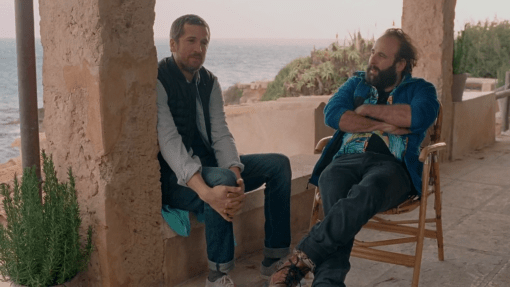
First Reformed

[Spoilers below]

With First Reformed, Paul Schrader moulds his lifelong influences – Bresson, Ozu, Dreyer – into a film that resembles theirs in many ways, but is an entirely personal project. Veteran Ernst Toller (a terrific Ethan Hawke) lost his son in the Iraq War and was down in the dumps. Abundant Life, a corporatized megachurch in Albany, decided to give him a break by appointing as the reverend at the eponymous church in a small town in New York State. The church is of historical significance, but is mostly a tourist spot surviving by the grace of Abundant Life. As preparations are on for the 250th anniversary celebrations, Toller is requested by Mary (Amanda Seyfried) to talk to her husband Michael (Philip Ettinger), a militant eco-activist despondent over climate change. In an arresting conversation, which he compares to Jacob’s tussle with the angel, Toller turns out ill-equipped to console Michael, who doesn’t want Mary to have their baby. When he thwarts Michael’s plans for a suicide attack, presumably against a locally-headquartered, super-polluting corporate behemoth, Balq, Michael commits suicide. The reverend gives Michael a service that includes a protest song, a gesture that doesn’t go well with Abundant Life or its sponsor Balq. Disappointed with the Church’s blissful inaction towards pressing questions of our times, Toller finds himself filling the dead man’s shoes in several ways and experiences a crisis of faith of his own. Alcoholic and suffering from cancer, he decides to continue Michael’s mission.

The Gordian knot at the heart of Toller’s spiritual crisis, it appears, is the incompatibility between two world views, between the Church’s teaching of courageous acceptance and the global consciousness of the young people the reverend encounters. When Michael despairs about bringing a child into a world that’s heading towards disaster, Toller has no convincing answer; he asks Michael to choose courage over reason in face of uncertainty. It’s an appeal for resignation that Toller himself gets from Pastor Jeffers: it may be that the destruction of the world is part of God’s plan. That advice is not just an absolution of individual responsibility, it’s a falsification of one’s spiritual turmoil – the same kind of emotional violence that positivists wreak on people claiming to have experienced religious transport. What elevates Toller’s crisis of faith above a notional concept and gives it a particular force is that it’s rooted in the character’s personal history. Toller’s disillusionment with the Church’s tendency to reduce political issues to an abstract question of providence stems from his own guilt of not having questioned his faith in abstractions like patriotism. That his son was killed in Iraq is a political tragedy, not simply a personal misfortune as the Church would have it.

Michael’s response to his despair is calculated political violence. When Toller takes the explosives away from Michael’s garage, he also takes his life purpose away, turning the violence inward and killing Michael. Toller’s response to his crisis is identical. He comes in the line of Schrader loners, present in every scene of the film, trying to work through their anguish by acting on the world around. Toller’s spiritual sickness feeds on and into his physical sickness. He tries to give meaning to his impending death and cherry-picks ideas from the Bible to justify his turn to extremism, just as Jeffers cherry-picks to justify status quo. To preserve is to participate in creation, he writes, and thus to do God’s work. And to preserve, you have to sometimes destroy. When his bombing plan is hindered, Toller wraps himself with barbed wire and tries to drink drain-cleaning acid. Mary stops him, they embrace each other in a coupling of love and death as the camera roves around them to end the film. Ultimately agnostic, Schrader’s film cannot claim to provide a solution to the dilemma, only a momentary suspension.

The Franciscan austerity of First Reformed derives from an acute film-awareness. Right from its 1.37:1 aspect ratio (same as that of Winter Light) and its old-style cursive credits, the film announces itself as the inheritor of a cinema that Schrader described as transcendental. There is, specifically, a Bressonian vein in the choice of having a priest maintain a diary, his solemn voiceover, the opening shot of the church and the style of editing. The major part of the film unfolds between two Sundays, but the film doesn’t give provide any explicit markers. Sparsely furnished, with a large living room containing a sole, inexplicable chair, Toller’s Ordet-inspired quarters as well as Mary’s house are products of a theatrical mise en scène, a possible one-act play in which the character paces around the stage and monologues to the audience. Scenes transition from master shot to close-ups sparingly, which renders the latter more effective. A shot of Toller pinned in his seat holding a coffee cup drives home his agitation all the more directly. The tight, fixed-camera shot of the reverend and Mary on bicycle is Ozuvian in its liberative simplicity. Toller himself is an extremely self-aware character, analytical about his own feelings and cognizant of the vanity of his diary-keeping project. He compares writing to praying and, in his torment, Schrader recognizes the spiritual quandary of an era.

mother!

Another film with religious overtones, Darren Aronofsky’s mother! couldn’t be more different from Schrader’s sober film, what with its unabashed formal and thematic excesses. It showboats from the opening shot where Lawrence’s bloody face stares at the viewer against a burning backdrop. A writer (Javier Bardem) and his wife (Jennifer Lawrence) live in their isolated bungalow surrounded by vegetation. The building, the writer’s childhood home, was burnt down in a fire and the woman is rebuilding it entirely from memory. Her husband is experiencing a writer’s block and is growing aloof from her. When a suspicious fan (Ed Harris) comes into their house, he senses inspiration and invites him to stay over. The following day, the guest’s wife (Michelle Pfeiffer) moves in and one of their sons murders the other in the bungalow. The writer lets the mourning take place at his house, making way for the encroachment of dozens of obnoxious friends. When he finally finishes his play, it becomes a success and a horde of fans invades his house, destroys his property, and kills his baby, the writer welcoming all of it. The woman remains a helpless witness to the disintegration of her own life. Aronofsky’s film shifts from psychological horror to outright camp by the time it ends. The transformation is deliberate and is intended to sever the film from wan realism.

Aronofsky’s film is of a piece with The Wrestler and Black Swan, but with one crucial change: the narrative perspective is no more that of the artist figure, but of the woman he lives with. This tempers the overarching narcissism of the earlier films and turns the gaze back on to the artist, whose self-love now becomes a problem, the main problem. The artist here is a needy, vampiric god, sucking all the love and attention from his environment. The filmmaker is entirely critical of Bardem’s writer, to the point that he becomes a caricature, a pawn in sway to the adulation of his fans. Aronofsky’s sympathy is instead with Lawrence’s character. She is a caregiver, a homemaker maintaining the house and nurturing their child. Her dedication is met with indifference, the writer preferring to be left alone or recognized by others. Pfeiffer’s character grills her about her love life and insults her for not having a child. Ed Harris calls her a pretty face. Most direct and effective among the many allegories mother! accommodates is that of the universal mother itself.

The value of mother!, however, resides less in the interpretations it yields, which are no doubt numerous, than in the unrelenting atmosphere it creates that doesn’t allow the viewer a moment’s breather. There is perhaps a streak of sadism in dragging a character through an endless series of distressing situations which she has no power to tackle. This, of course, is a horror movie trope, the last girl who has to go through hell to come out alive. Aronofsky’s success lies in how closely he binds the viewer’s perception to that of the character. His characteristic, ever-moving camera is always fixed on Lawrence and from up close; the viewer is hardly allowed a glimpse of her surroundings before she is. This claustrophobic locking down of the viewer amplifies the horror and the suspense tenfold. Adding to this is the accentuated sound design that magnifies ambient noise to a point of threat. There are low frequency hums at certain points, but there’s no real musical score – a lack that’s barely noticeable.

Aronofsky can direct the hell out of a scene and if mother! provokes extreme reactions, it’s less because of its raw material than the way the filmmaker has turned it into a bludgeon that assaults the viewer from the get-go. He threads one gratuitous, strong image over another, one potent sound choice over another to effect a sensory overload. Aronofsky and cinematographer Matthew Libatique draw their visual cues from Andrew Wyeth as much from Tarkovsky, Malick or Hitchcock. It’s all one steady, monotonic build-up till the apocalypse at the end. Every time Lawrence’s character has a chance to intervene or get a word in, there’s an interruption – a fit of cough, the phone ringing, the stove going off – that pulls her back on the everyday treadmill. She’s always cleaning the house, fixing stuff, trying in vain to prevent its inevitable collapse. In this respect, she’s a reincarnation of the Deneuve character from Repulsion as much as she recalls Rosemary. The house is her sanctuary and its violation constitutes a rape. She is destroyed by the film’s end and replaced by another woman. The film’s campiness veers into noxious territory at times, but Aronofsky must be given the props for hyperbolizing as full-blown cinematic horror what is otherwise low-key everyday horror.