Die, die, die, 2012! Besides being a period of personal lows, it was a bad year at the movies for me. Not only did the quantity of the films I watched come down, but the enthusiasm with which I watched, read about and discussed films plummeted. That the amount of good films made this year pales in comparison to the last doesn’t help either. Not to mention the passing of Chris Marker. Unlike the years before, there are barely a handful of movies from 2012 that I’m really keen on seeing (most of them from Hollywood). The following list of favorite 2012 titles (world premiere only) was chalked with some struggle because I couldn’t name 10 films that I loved without reservations. Here’s to a better year ahead.
1. Cosmopolis (David Cronenberg, Canada)
 Surely, it takes a bona fide auteur like David Cronenberg to locate his signature concerns in a text – such as Don Delillo’s – that deals with ideas hitherto unexplored by him and spin out the most exciting piece of cinema this year. Holed up in his stretch limo – an extension of his body, maneuvering through Manhattan inch by inch as though breathing – Eric Packer (Robert Pattinson) comprehends the universe outside like cinema, through a series of moving images projected onto his car windows. Why not? This world, whose master he is, is experiencing the epistemological crisis of late capitalism: the increasing abstraction of tactile reality into digital commodities. Packer, like many Cronenberg characters, is more machine than man, attempts – against the suggestions of his asymmetrical prostate and of the protagonist of Cronenberg’s previous film – to construct a super-rational predictable model of world economy – a project whose failure prompts him to embark on an masochistic odyssey to reclaim the real, to experience physicality, to be vulnerable and to ultimately die. At the end of the film, one imagines Packer shouting: “Death to Cyber-capitalism! Long live the new flesh!”
2. Holy Motors (Leos Carax, France)
 Un chant d’amour for cinema, Leos Carax’s Holy Motors is an ambitious speculation about the total transformation of life into cinema and cinema into life – the death of the actor, audience and the camera. The European cousin to Apichatpong Weerasethakul’s Uncle Boonmee Who Can Recall His Past Lives (2010), Carax’s return-to-zero work draws inspiration from the process of film itself – death, resurrection and persistence of vision – and takes cinema to its nascence – fairground attractions, popular theatre and zoopraxography – while opening up to its future possibilities. Uncle Oscar (Denis Lavant, the raison d’etre of Holy Motors), like Cronenberg’s Packer, cruises the streets of Paris in his limo in search of purely physical experiences – a series of performance pieces carried out solely for “the beauty of the act” – only to find that the city is a gigantic simulacrum in which everyone is a performer and a spectator (and thus no one is) and where the distinction between the real and the fictional becomes immaterial. At the very least, Holy Motors is a reflection on the passing of “things”, of physicality, of the beauty of real gesture, of the grace of movement of men and machines.
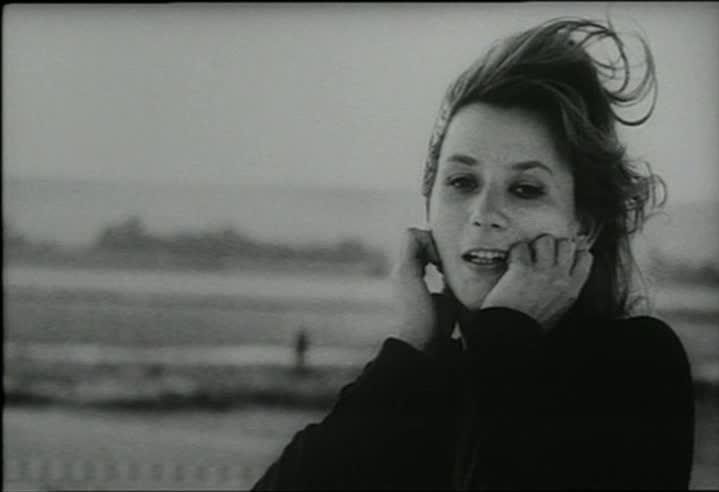
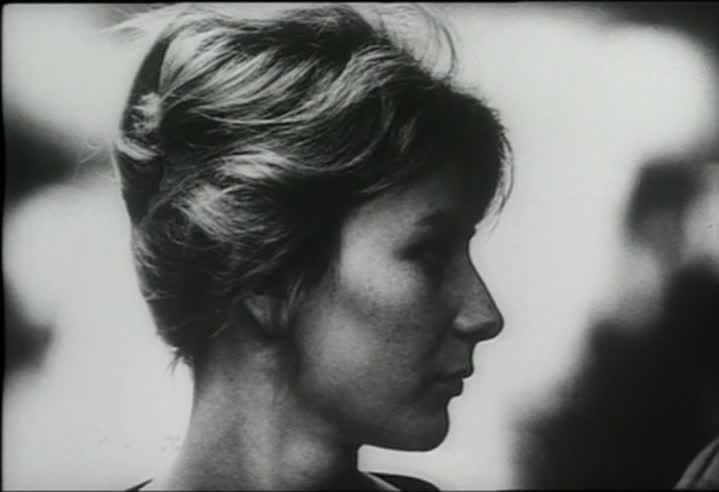
 Nicolas Rey’s third feature, consisting of 9 short segments (reels, to be precise) projected in a random sequence, is a radical project that re-politicizes the cinematic image. Not only does the randomization of the order of projection of the reels circumvent the problem of the authoritarianism of a fixed narrative, it also exposes the seam between the semi-autonomous theses-like segments, thereby making the audience attentive to possible ideological aporias that are usually glossed over by the self-fashioned integrity of filmic texts. Furthermore, the existence of the film in the form separate reels is a breathing reminder of the material with which it was made: 16mm. The persistent dialectic between the visual – shots of highways, industries, farms and modernist suburban housing in the eponymous fictional city registering the sedate rhythm of everyday life – and the aural – snippets of conversations between two politicized industrial workers about the invisible tendons that enable a society to function smoothly – strongly drives home the chief, Althusserian concern of the film: the essential unity of the various, seemingly autonomous, strands of a state, contrary to claims of disjunction and autonomy.
4. Tabu (Miguel Gomes, Portugal)
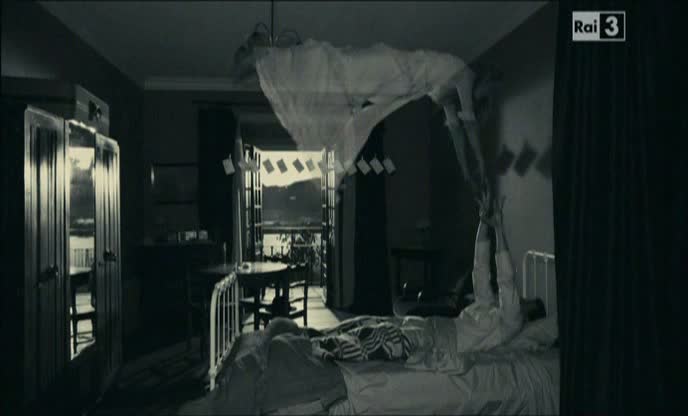
 A film that is reminiscent of Weerasethakul’s many bipartite films, Miguel Gomes’ singular Tabu, too, works on a range of binaries – past/present, youth/old age, city/countryside, abundance/scarcity, modern/primitive, colonizer/colonized – and sets up a conversation between the carefree, profligate days of the empire full of love, laughter and danger and Eurocrisis-inflected, modern day Portugal marked by alienation and loneliness. The opening few minutes – a melancholy mini-mockumentary of sorts chronicling the adventures of a European explorer in Africa with a native entourage –announces that the film will be balancing distancing irony and classicist emotionality, donning an attitude that is in equal measure critical and sympathetic towards the past. In Gomes’ sensitive film, the heavy hand of the past weighs down on the present both on aesthetic (silent cinema stylistics, film stock, academy ratio, the excitement of classical genres) and thematic (collective colonial guilt, residual racism, punishment for forbidden love) levels and this inescapability of the past is also functions as (sometimes dangerous) nostalgia for the simplicity and innocence of a cinema lost and an entreaty for the necessity of exploring and preserving film history.
5. Paradise: Love (Ulrich Seidl, Austria)
 What partially elevates the first film of Ulrich Seidl’s Paradise trilogy from its rather undistinguished concerns about emotional alienation and old age loneliness is the nexus of intriguing cultural forces that it brings into the picture by having a relatively affluent, 50-year old Austrian single-mother (Margarete Tiesel, in a no-holds-barred performance) indulge in sex tourism in Kenya along with five other women friends. The result is a rich, provocative negotiation along class, gender, race and age divides that upsets conventional, convenient oppressor-oppressed relationships. In doing so, the film wrenches love from the realm of the universal and the ahistorical and demonstrates that between two people lies the entire universe. Seidl’s heightened, bright colour palette that provides a sharp chromatic contrast to the bodies of Kenyan natives and his confrontational, static, frontal compositions (Seidl’s nudes are antitheses to those of the Renaissance), which make indoor spaces appear like human aquariums, both invite the voyeuristic audience to take a peek into this world and place it on another axis of power – of the observer and the observed.
6. With You, Without You (Prasanna Vithanage, Sri Lanka)
 Sri Lankan filmmaker Prasanna Vithanage’s exquisite, exceptional adaptation of Fyodor Dostoyevsky’s The Meek One (1876) aptly locates the Russian tale of matrimonial discord between a bourgeois pawnbroker and the gentle creature he weds within the ethno-political conflict between nationalist and rebel factions of the country. Unlike humanist war dramas that, often naively, stress the underlying oneness among individuals on either side, Vithanage’s intelligent film underscores how the political haunts the personal and how the tragic weight of history impacts the compatibility between individuals here and now, while deftly retaining Dostoyevsky’s central theme of ownership of one human by another. Though liberal in narration and moderate in style compared to Mani Kaul’s and Robert Bresson’s adaptations of the short story, Vithanage, too, employs an attentive ambient soundtrack that counts down to an impending doom and numerous shots of hands to emphasize the centrality of transaction in interpersonal relationships. The metaphysical chasm between the possessor and the possessed finds seamless articulation in concrete sociopolitical relations between Sinhalese and Tamils, between the army and refugees, between the poor and the wealthy and between man and woman.
7. Walker (Tsai Ming-liang, Hong Kong)
 There has always been something intensely spiritual about Tsai’s films, even when they seem to wallow in post-apocalyptic cityscapes and defunct social constructions. In Tsai’s hands, it would seem, an empty subway corridor shot in cheap digital video becomes the holiest of spaces ever filmed. Walker, a high-def video short made as a part of the Beautiful 2012 project commissioned by Hong Kong International Film Festival, crystallizes this particular tendency in the director’s work and centers on a Buddhist monk played by Lee Kang-sheng (a muse like no other in 21st century cinema). As the monk walks the hyper-commercialized streets of Hong Kong at a phenomenally slow pace for two days and two nights, his red robe becomes a visual anchor in stark contrast to the greys of the urban jungle and the blacks of people’s winter clothing and his very being, his eternal presence, becomes a spiritual grounding point amidst the impersonal hustle-bustle of this super-capitalist Mecca. Part performance art with a gently cynical punch line, part an exploration of the limits of DV, Walker is a deeply soothing and often moving work from one of Asia’s finest.
8. Celluloid Man (Shivendra Singh Dungarpur, India)
 Moving unsteadily with the help of a walking stick, the 79-year old founder of the National Film Archive of India (NFAI), P. K. Nair, despite himself, becomes a metaphor for the state of film archiving in the country. It is of considerable irony that, in a nation that prides itself for its rich cultural heritage, film archiving is considered a useless exercise. During the three decades that Nair headed the NFAI, he was instrumental in discovering the silent works and early talkies of Bombay and south Indian cinema, including those of Dadasaheb Phalke, the “father of Indian cinema”. Celluloid Man, bookended by scenes from Citizen Kane (1941), draws inspiration from Welles’ film and sketches a fascinating if reverential portrait of Nair constructed from interviews with international filmmakers, scholars, historians and programmers and curiously hinged on the fact of Nair’s “Rosebud” – ticket stubs, promotional material and assorted film-related curios that the man collected during his childhood. Shivendra Singh’s film is a irresistible romp through early Indian cinema and an endlessly absorbing tribute to a man who is fittingly dubbed the “Henri Langlois of India”. To paraphrase one of the interviewees, Phalke gave Indian cinema a past, Nair gave it a history.
9. Laurence Anyways (Xavier Dolan, Canada)
 Although it might appear that it is perhaps the hollowness of Xavier Dolan’s previous feature that makes his latest, 160-minute music video look like a cinematic coup, Laurence Anyways really does succeed in accomplishing more than most of contemporary “LGBT-themed independent cinema”. While the latter – including this year’s Cahiers darling – almost invariably consists of realist, solidarity pictures that use social marginalization as shorthand for seriousness, Dolan’s emotionally charged film takes the game one step further and probes the inseparability of body and character, the effect of the physical transformation of a person on all his relationships – a transformation that is mirrored in the flamboyant, shape-shifting texture of the film – without sensationalizing the transformation itself. Rife, perhaps too much so, with unconventional aesthetic flourishes and personal scrapbook-ish inserts, the film rekindles and enriches the youthful verve of the Nouvelle Vague – a move that should only be welcome by film culture. If not anything more, Laurence Anyways establishes that critics need to stop using its author’s age as a cudgel and look at his cinema du look as something more than a compendium of adolescent affectations.
10. Moonrise Kingdom (Wes Anderson, USA)
 Let me confess upfront that putting Wes Anderson’s (surprise!) whimsy, twee and self-conscious Moonrise Kingdom in my year-end list is less a full-hearted appreciation of the film than a confession that I find Anderson to be an important voice that I’m genuinely keen about, but can’t entirely celebrate. I don’t think I’ve seen any film that employs so many elements of industrial cinema yet feels meticulously artisanal, a film that, on the surface, seems to (literally) play to the gallery yet is so full of personality and one that is oddly familiar yet thoroughly refuses instant gratification. Moonrise Kingdom appears to have every ingredient of an obnoxious family comedy, but the unironic, straight-faced attitude and the single-minded conviction with which it moulds the material into an anti-realist examination of the anxieties of growing up, alone, is something not to be found either in cynical mainstream cinema or in the overwrought indie scene of America. Anderson’s neo-sincere film is, as it were, a classicist text couched within a postmodern shell, an emotional film without affect. Paper blossoms, but blossoms nonetheless.
 Ernst Lubitsch’s divine To Be Or Not To Be (1942), which is arguably the greatest American comedy of the talking era alongside Dr. Strangelove (1964), opens with a sequence in which Adolf Hitler wanders the busy streets of pre-war Warsaw for apparently no reason. We are immediately taken into a flashback that purports to explain the faux-historical scene we just witnessed only to, eventually, reveal it as a piece of fiction – a provocative performance art – within the film. In fact, in Lubitsch’s movie, which is the most direct precursor to Inglourious Basterds (2009), History itself unfolds as theatre, with characters impersonating other characters, with Nazis playing Nazis, with timing, blocking, make-up and diction becoming questions of life and death; politics becomes theatrical and theatre becomes political. The funniest line in the film is perhaps also the most trenchant: “What he did to Shakespeare, we are now doing to Poland”. For these aesthetes of war, Warsaw becomes a theatrical space to be controlled, its inhabitants, actors to be directed and history, a grand narrative to be shaped. On the other hand, for the Polish acting troupe, the stage becomes the most politicized space, with even the most harmless subversion stamped out. In a disturbing way, History haunts Lubitsch’s film as farce, before unfurling as a tragedy a few years later. Like in Dr. Strangelove, History had not yet happened to separate comedy from horror. Now that it has, it has ensured that To Be Or Not To Be is not cheap propaganda but biting satire. Hysterical and terrifying from start to end, Lubitsch’s film is a coup de grâce from the greatest weapon that the Allies possessed: Hollywood.
 The least everyone could agree on Lars von Trier’s Dancer in the Dark (2000), without getting into a debate about its artistic merit, is that it is a work of immense range. Juxtaposing Dogme-styled kitchen sink ultra-realism with musical numbers replete with chorus dancers, it ambitiously attempts to marry genres that are positioned at the opposite ends of a spectrum. It’s a marriage that is perhaps doomed by construct, but in Trier’s film it is intended to be an unholy, internecine union. The flights of musical fantasy that Selma (Björk) launches into, like the stripped scenery of Dogville (2003), serve as Epic Theatrical devices that seek to thwart audience’s uncritical surrender to the film’s drama and continually remind them of the artificiality of the film’s construction. That even such a blatant disfiguration of the film’s tonal integrity doesn’t successfully prevent the audience from total emotional identification with Selma is less an indicator of the film’s conceptual failure than a demonstration of why a multi-generic cinema, like Bollywood, works on the same audience-character dynamic as the straightforward genre entries of the West and why a mixed-mode narrative doesn’t necessarily avoid the pitfalls of Realism. That’s because von Trier the screenwriter is an incurable melodramatist (tempered by von Trier the director), who, by heaping misery upon his protagonists, makes sure that there’s not a single dry eye in the house. (Unsurprisingly, he cites Douglas Sirk as a major inspiration here, but I’d think Sirk’s assimilation of Brecht’s method is a tad more successful). On the other hand, as a musical, von Trier’s film leaves a lot to be desired. He shoots musical numbers like action scenes (in contrast to Peckinpah, who shoots action scenes like musical numbers), forgetting that the secret to a great musical number lies in the Bazinian conquest of space and not time.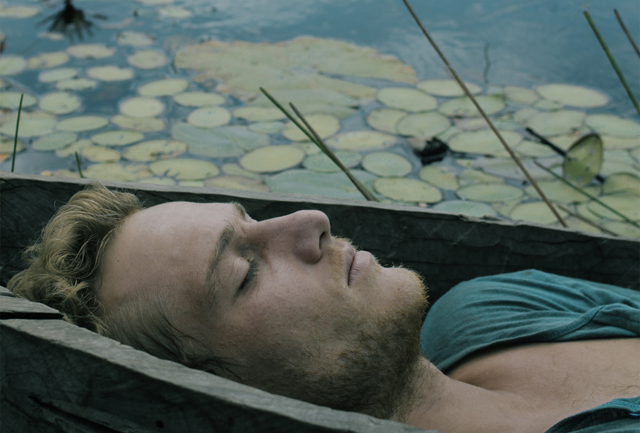


 Hinged on the economic crisis of 2008, Lauren Greenfield’s cautious, measured The Queen of Versailles (2012) charts the riches-to-proverbial-rags trajectory of David A. Siegel, American real estate magnate, and his family as they plummet from being revoltingly rich to being nearly have-beens who are forced to relinquish the largest American home ever built. Greenfield’s film is full of improvisational metaphors, bitter little ironies and strokes of poetic justice, such as how the many employees whom Siegel laid off – not the big banks which refused to fund him – end up helping his family through thrift shopping. The most interesting aspect of the film, however, is how it throws light on how the familial fabric of the Siegel family, which no doubt is used to typify middle and upper American households, is dictated by factors outside their control and much larger than them, such as the global economic downturn – a direct demonstration of family being superstructural organization shaped by an economic base. These passages of the film play out like Metamorphosis as we witness the bourgeois family structure falling apart when the financial adhesive that held it together vanishes. Like Kafka’s novella, these scenes evoke a mix of revulsion and pathos: the repulsion one feels watching how thoroughly these relationships are founded on a bed of material transactions is counterbalanced by a pity for the children who seem to be oblivious to how tainted by excess wealth they are. If there is a lingering feeling, despite the film’s efforts to remain nonjudgmental and neutral about the events that transpire, that we feel pity for a group of people who are going from being extremely rich to merely rich, it is because the film rightly preserves the basic humanity of the Siegel family.