Sounds From A Town I Love (2001)
Woody Allen
USA
3 Min.
Long before young directors started professing their love for their hometowns through segment films, we have had directors whose relationship with their city has been more than a mere proposal. I mean, what would Fellini be without Rome, Scorsese without New York or Truffaut without Paris? And how can one ever forget to add the love affair between Manhattan and Woody Allen to that list? Sounds From A Town I Love (2001) was made as a part of the New York Concert that was held following the 9/11 attacks and presents us snippets from phone conversations of random individuals walking on the streets of the city. When the Academy decides to hand the life time achievement to Allen, they might very well go with this clip for the introduction because Sounds, in a way, helps to sum up the whole career of Woody Allen and, in particular, his style of script writing. The throw-them-all-you’ve-got attitude that is so consistently manifest across his filmography and also within each film is very evident in this short too. Most of the one liners work, big time, and some don’t. The camera tracks, in a way that seals the authorship of the film, along with the actors who deliver these lines the same way that Woody the actor himself would have done. Extremely neurotic and utterly funny at once, these characters are all blasts from the past for anyone who has relished the director’s films. The neighbourhood, which is the raison d’etre of this short, is quite familiar to all of us now and only adds to the nostalgic trip. And that introduction message by the director, where he promises his fans that he would make up for it if they felt that this short film was bad, just goes to show how his relationship with his audience has changed post-Deconstructing Harry (1997)
Block-notes Di Un Regista(1969) (aka Fellini: A Director’s Notebook)
Federico Fellini
Italian/English
“To me, the subway is like a catacomb which goes right through the bowels of Rome.”
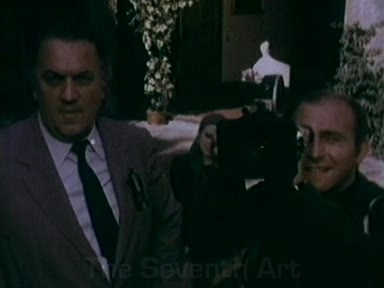
If there ever was something called personal cinema, it had to come in the form of Fellini’s masterpiece 8½ (1963). With 8½ had come a new kind of cinematic artist, standing in front of an unlimited canvas woven in time, dipping his hands in colours called memory, fantasy and magic, painting it without giving a damn about what a world would think about it. Placing himself at the centre of his fictional world, Fellini had indeed made it clear what the director of a film can do to it – as a manager, as an artist and as a personality himself. But to see that a film that he made half a dozen years later, Fellini: A Director’s Notebook (1969) that is as ambitious in its scope and as groundbreaking in its impact as 8½, is much less discussed is both surprising and disheartening especially considering the way Fellini transforms a mere, unappealing making-of-movie into something that is as profound and as personal as his acclaimed movies. Made as a part of a series titled NBC Experiment in Television (1967-71), A Director’s Notebook is a precursor to his next film Satyricon (1969) and traces the groundwork that Fellini laid before the shooting of this film.
A Director’s Notebook presents us Federico Fellini setting out in search of locations, sets and character inspirations for the period drama within modern day Rome. The narrator tells us that he is trying to affirm his belief that there is a strong link between the ancient and the modern and that the Rome of history text books is still alive and kicking. This idea forms the backbone for the hunt as Fellini hops from night-time streets of Rome to the countryside, from the city’s subways to world renowned monuments and from abandoned sets to active slaughterhouses. We meet a range of characters and also get to see them through Fellini’s eyes. Soon we start to sense what Mr. Fellini is arriving at. We see the Coliseum alongside defunct movie sets, we see images of Nero’s debauched army along side the street birds of Rome, and we see brave gladiators alongside butchers of slaughterhouses. Fellini, as usual, has fun transforming his situation as he wants. He seamlessly switches between images of the past and those happening now. We even get to see the iconic Marcello Mastroianni, whom Fellini likes to call a true Roman (“has all the virtues and all the faults of the ancient Romans”), and his subsequent conversations with Fellini beyond which the film really digs deep.
Throughout the film, Fellini sets up a channel between the two Roman civilizations – the present and the ancient – in a way that, primarily, serves as an inspiration for his next movie but also as a personal journey towards the director’s own roots. Be it the virtues – especially the warm and hospitable nature of the people – or the vices – the notorious debauchery of Nero and Caligula – Fellini seems to believe that the culture and the spirit has persisted through the years in the Romans. Towards the end of the A Director’s Notebook, Fellini even has the townsfolk who work at the slaughterhouse enact sequences from ancient Rome, complete with costumes and wreaths, in order to validate them for his next film (In the sequence’s hilarious end, one of the gladiator almost cries because he gets a scratch on his ear). In some ways, A Director’s Notebook is Fellini’s version of the wonderful Tarkovsky documentary Voyage in Time (1983), which too unfolds as a nostalgic trip set in Italy, wherein the director uses geography extensively to invoke memories and emotions. In one scene, Fellini and company travel in the subway train and we notice ancient Romans standing outside the train at many places, upon which the director himself notes that this must be a journey in time and not space.
A Director’s Notebook is to 8½ what Woody Allen’s Deconstructing Harry (1997) is to his Stardust Memories (1980). Allen’s admiration for Fellini has been largely overshadowed by the influence of Bergman on him. In fact, Allen’s career closely follows that of Fellini’s even though the philosophical questions that Allen revisits is that of the Swedish. Stardust Memories (which, in a way, happens to be Woody’s 8½th movie), like Fellini’s 8½, is all about the director. Both movies are exercises in narcissism as many have pointed out. In both, the director treats himself as if he is the centre of the universe while the world around seems to exploit him despite his turmoil. In Deconstructing Harry, Allen comes full circle and, once and for all, accepts the fact that it is he who has been exploitative and that he has to let go of his balancing act between his fictional world and the real world. Likewise, in A Director’s Notebook, Fellini studies his own self and, in an act of purging himself of the ego, reflects on how his relation has been with his actors and everyone else who has helped him gain the international reputation. Towards the end, when many actors and players try to impress the director with their skill set, Fellini tells us in the voice over:
“Yes, it might seem very cynical, very cruel. But no, I am very fond of all these characters who are always chasing after me, following me from one thing to another. They are all a little mad, I know that. They say they need me, but the truth is that I need them more.”
In one section in A Director’s Notebook, Fellini visits his long time friend and movie star Marcello Mastroianni to audition him for the leading role in his unfinished film The Journey of G. Mastorna. Fellini tries a lot – adding make up, setting up wigs, going for multiple takes – to somehow get a shade of the cellist Mastorna out of Mastroianni, but finally resigns. When he turns down Mastroianni telling him that he wasn’t into it at all, the actor quips back: “No Fellini, it’s because now you have no faith. It’s as if you are scared. If you could believe that I am Mastorna, I would automatically become Mastorna”. Throughout the movie, Fellini examines the cost that he has to pay for conforming to his reputation, the cost to that has to be paid for him to remain the Fellini that the world knows him as (Fellini is notorious for rarely using the same actor more than once), the cost for imitating oneself just for the heck of it. Fellini’s situation remains true for any filmmaker who tries to construct his fictional world the way he wants it, even at the cost of the real one – issues that both Woody Allen and his idol Bergman have explored time and again.
Fellini really pushes the boundaries of filmmaking over here. Unfolding as a tone poem in typical Markerian style, A Director’s Notebook soon goes on to blend documentary and fiction to create a truly personal form of expression that seems to be way ahead of its time. Far from the assured and fluid camera work of 8½ and rightly so, the cinematography in A Director’s Notebook is self-conscious, largely handheld, seemingly offhand and purely functional all the way. Closer to a series of essays than a complete film, the movie seems to be one of the earliest examples of the kind of cinema that would later be explored deeply by filmmakers such as Werner Herzog and Jean-Luc Godard. What part of the film was scripted, what was improvised and what was plainly documented will remain a mystery, but what matters is the unique concoction that the director achieves by this mixture. Stacking various levels of reality over one another like 8½, but also taking it further, this stunning little gem from Fellini may just be the golden key required to unlock all his films that were to follow.
A Director’s Notebook, true to its title, also serves as a nostalgia trip for both the director and fans of his work. There are throwbacks of his earlier films throughout A Director’s Notebook. When Fellini visits Mastroianni, the latter is in an interview where the reporters ask him inane questions, much reminiscent of the irritating paparazzi of La Dolce Vita (1960). Early in the film when Fellini is scouting for locations during the night, we cut to a little interview of his wife Giulietta Masina who recalls the (then) edited scene in The Nights of Cabiria (1957) where a strange man delivers goodies to the people living on the fringes of Rome. The hilarious audition section where we have all kinds of people, including a boy who claims he can whistle like a blackbird, a charlatan who seems to know painters more important than Raphael, a lady who thinks her music conveys the same thing as Fellini’s films and even a man whose life depends on his wig, seems straight out of 8½. Even the sequences in the film where the director hunts for life in the streets of Rome during the night time has a lot in common with the positively eerie and Lynchian atmosphere that he created in his segment Toby Dammit in the portmanteau film Spirits of the Dead (1968).
But even without the references, A Director’s Notebook remains an auteur’s work. Even if one doesn’t see any connections of this film to his other movies, one can say with conviction that it is a “Fellini movie”. No one other than the ringmaster called Fellini could have assembled the army of characters that appears at various places in the film. At one point in the film, Fellini takes a mini nostalgic trip where he recounts the people of his childhood watching a movie at the theatre, hinting at the kind of films he would be making henceforth. The clairvoyant who can talk to the people of the past, the professor who studies the connection between historical Rome and its present version and the crewmen who turn into Nero’s soldiers are all characters who have the Fellini tag stuck on their forehead. The lonely yet lyrical, dark yet alluring, beautiful yet decaying streets of Rome, the array of immensely human characters who keep flooding the screen with enthusiasm and women with exaggerated make-up and strikingly extreme expressions – now, where else can one see such images other than at Fellini’s circus?
Tabiat-e Bijan(1974) (aka Still Life)
Sohrab Shahid Saless
Persian
“It means that you’re retired now.”
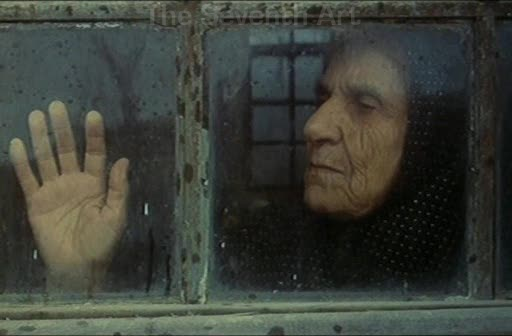
Sohrab Shahid Saless’ Still Life (1974) is, barring Kiarostami’s Homework (1989), the greatest Iranian film that I’ve seen. To see that even during the pre-revolution era, when the escapist cinema of Hollywood and its imitations were much more popular, such uncompromising and quality films were being made is both surprising and hope-instilling. Typically European in its form but uniquely Iranian in its content, Still Life is the kind of movie that contemporary contemplative cinema takes off from. Produced by a newly formed group called Kanun-e Sinemagaran-e Pishro (Centre for Avant-Garde Filmmakers), that also produced some of Mehrjui’s early features, the film was one of the many films that were discontented with the existing way of governance. Although never overtly political, Still Life not only manages to critique deeply the disparity that existed between villages and cities of the country during the Shah’s regime, but also remains one of the best works from the country till date. Let’s wait and see what the present-day Iran brings in reply to this masterwork.
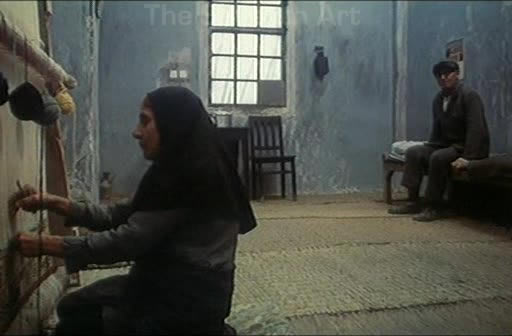
Still Life documents a period in the life of Mohammad Sardari (Bonyadi), a veteran employee of the railway services living in a rural part of the country and whose sole job is to close and open a railway crossing few times a day. He is waiting for a festival bonus from the department that is long pending. He is married and his wife (Zahra Yazdini) supplements his income by weaving carpets and carrying out minor tailoring jobs. We are only given such utterly quotidian details from his everyday life – he operates the railway gates in the morning, he rests at his accommodation near the crossing, he returns home for lunch, he goes back to operate the crossing for the evening train, he returns home for dinner and he sleeps – but that is all there is to Sardari. We are also given a few glimpses of his son who returns home for a day from the military service and a bunch of customers who exploit Sardari by underpaying him for the carpets his wife has woven. One day he receives a letter from the railway department that intimates him of his retirement from service. Sardari is unable to comprehend the meaning of the letter and starts to believe that he has been unreasonably given the sack. Heartbroken, he decides to go to the department headquarters located in the city and find out the reason.
Saless’ style is remarkable here. Almost throughout the entire film, he presents us long, uninterrupted extreme long shots of Sardari going about doing his routine at the railway crossing. Even when the old man is home, Saless and cinematographer Hushang Baharlu give us mostly medium and long shots that are filmed with the camera placed at the ground level, sometimes reminiscent of Ozu. In either case, Saless’ eye is that of an ethnological documentarian – interested in what his protagonist is doing, but never wanting more than that. The mise en scène is spare, stripped down to bare essentials, with a chunk of space between the characters and the camera. Even gestures, dialogues and movements are reduced to an absolute minimum. Watching the indoor scenes in Still Life is like gazing at an aquarium in which the fishes indifferently perform the same mundane activities over and over again. Halfway into the film one is acquainted with the routines of the old man and his wife. He comes home, rolls his cigarette, and starts smoking and she continues to stitch clothes and weave carpets. Even when their son returns home after a long time, conversations are perfunctory and the character functions are unhampered.
But what is singular about Still Life is the way it handles cinematic time. Saless, while letting us witness individual scenes unfold in real time – be it entire dinner sessions or railway transitions – without hindrance, shuffles the order of these scenes in a way that disregards chronology. In one scene in the film we see the couple’s son return home and in the next one, he is missing. And then he’s back in the subsequent one. Soon one notices that most of the scenes could have taken place in any arbitrary order in real time and each of those orders is essentially irrelevant, given the idea of the film. What’s the use of chronology when time repeats itself by going in cycles? In Jeanne Dielman (1976), Chantal Akerman used each day of the protagonist life’s to illustrate its microscopic deviation from the previous. She seemed to be essentially constructing a spiral out of Jeanne’s life – a structure that made her life seem to go in circles but which, in actuality, ends only in annihilation. Saless, on the other hand, treats time as some form of stray deadlock that could only be resolved by an alien intervention. Within this loop, all time is one and each day is virtually indistinguishable from the other.
In one scene that comes towards the end of the film, Sardari visits the railway headquarters to seek an explanation for the retirement notice. In the building, he notices a pair of officers scanning through old photographs reminiscing about the past and talking about plans for the weekend, And just there, Saless provides the most overt and powerful contrast between the life in rural and urban Iran. The officers with a lush past and a busy future stand directly in opposition to Sardari, whose past is almost non-extant and whose future promises nothing different. Still Life would definitely form an interesting companion piece to Antonioni’s Blowup (1966), which seems to resonate more and more with the years. Both Thomas (played by David Jennings) and Sardari are perfectly alienated creatures who pass through life without an iota of an idea about their place in the world. Only that their geographical locations are poles apart. Thomas is one of cinema’s many alienated urbanites trying to impart a meaning to their lives. On the other hand, Sardari is the rare villager who believes that life will go on as it is and who is nudged to action only when that belief is shattered. But in essence, both of them are individuals wallowing in their own world unable to snap out of it.
Even with all its serious themes, Still Life isn’t entirely humourless. There is a constant undercurrent of dark comedy throughout the film (In a masterstroke of black humour, Saless has Sardari regularly tune the alarm clock!), but, like all the other elements of the film, it remains extremely subtle and never thrusts itself upon us. Instead, Saless builds one stretch of time upon another, elevating the film from the territory of mere narrative cinema to the realm of the philosophical, the experiential and the contemplative. In the shattering last scene of the film, we see Sardari, who is now forced to accept the reality that he can no longer work at the railway crossing, vacating his quarters. After he loads the cart with his possessions, he decides to check the house one last time for any object he may have forgotten. As he stands in the middle of the now-empty house, gazing at the room of whose inanimate furniture he had become a part of through the years, Sardari notices the final remnant of his life at this place – a piece of mirror hanging on the wall. He reaches out to collect it and, in the process, looks at himself for the first time in the film. Mohammad Sardari has indeed become old.
Schastye(1934) (aka Happiness)
Aleksandr Medvedkin
Russian/French
“Go and find happiness.”
It is now generally accepted that if not for the efforts of another less talked about filmmaker Chris Marker, the world may not have come to know about his mentor Alexandr Medvedkin and his work. Standing somewhere between the films of Dovzhenko and those of Pudovkin, Medvedkin’s most famous movie Happiness (1934) offers a radically different perspective to the political and cinematic developments in Stalinist Russia. The discussions about Soviet cinema have been dominated by the films and theories of major figures like Eisenstein and Vertov, and perhaps rightly so, obscuring inevitably other stalwarts who may have been. Much less a theoretician than his contemporaries, Medvedkin produces a film that may never make it into classrooms. But one thing can’t be denied and that is the fact that Happiness is a film with a heart. Happiness does work very well as a stand alone piece, but the fact that it is a culmination of a larger and a nobler mission makes it all the more special.
Happiness follows the life of a poor Soviet farmer Khmyr (Piotr Zinoviev) and his “horse-wife” Anna (Elena Egorova) before and after the October Revolution. During the Tsar’s rule, we see Khmyr struggling for existence and envying his wealthy neighbour Foka, who also happens to be the loan shark of the village. So he goes in search of happiness and gets it in the form of a sum of money. He buys a horse for farming but the animal goes on a strike. He manages to harvest by substituting Anna for his horse and gathers a rich output. His celebrations don’t last long as Foka and the Church figures are quick to grab it back from him. He contemplates suicide, but the Church prevents him from doing this “sin”. Now, it decides to punish him by whipping him but not allowing him to die. Years pass by and the country is now in the hands of the communists. The collective farming system has been implemented. Anna seems to have adapted to the system and seems to be doing exceptionally well, becoming the breadwinner of the family. Khmyr, on the other hand, lazes around, making one blunder after the other, desperately tries to become an honest farmer. But the disinvested Foka plans revenge.
Happiness would seem like a very directionless film, if one does not take a look at Medvedkin’s modus operandi outside of the film. Medvedkin was one of the founders of the famous Cine Train of Bolshevik Russia that aimed to travel into the hinterlands of Russia, document the lives of peasants and workers and show it back to them in order to make them understand their strengths and weaknesses. The country had just entered the Bolshevik regime and the common folk, it seems, found it difficult to adapt to most of the improvement measures. Medvedkin and group understood this problem and used the cinema as a medium of introspection to illustrate the situation clearly to the people. Be it public service messages like the importance of hygiene (as in the film Watch Your Health), critical documents about absenteeism, inefficiency and negligence (as in Journal Number 4 and The Conveyor Belt) or queries for betterment of living and working conditions (How Do You Live Comrade Miner?), the Cine Train seems to have never hesitated in putting everything that is right and everything that is questionable about a system on the same plane. And that is very true about Happiness too.
Joseph Stalin banned the movie apparently because he thought that Happiness was mocking his collective farming system – the Kolkhoz – but spared Medvedkin knowing his service for the state. But surely, what Medvedkin was doing was neither a satire on the state of affairs nor a propaganda movie that the Soviet cinema was famous for. What he was presenting was merely an honest view of the newly born farming system, without any form of prejudice or support. For this, Medvedkin pays equal attention to both the positive and the negative ramifications of the collective farming. Through a largely objective eye – a common eye called cinema – Medvedkin makes a transparent reading of the Kolkhoz, its strong points and its limitations. If Stalin is pleased by Medvedkin’s attack on the exploitative and irrational nature of the church in the Tsar’s regime, he would be turned off by the vignettes of the Kolkhoz, where there are a bunch of goons waiting to ruin it all for themselves. If he would be laughing at the director’s depiction of the Tsarist army as a bunch of men wearing the same grumpy plastic masks, he would be annoyed by the possibly individualistic upshot of the film. But by no means is Medvedkin taking a centrist stance, for his stance is that of the people. As confirmed by Happiness, his interest is not the upholding of a political ideology, but a desire for people to have better lives.
“Every man is seeking happiness. Some see it in wealth, but the Russian peasant who struggled in poverty dreamt of it in his own way. Anton Pavlovich Chekhov noted in his diary: “What is a Russian peasant’s dream? If I were tsar, I’d steal 100 roubles and run away!” A Russian proverb says that the peasant’s reply is: “If I were tsar I’d eat the fat of the bacon and I’d go to sleep.” What an idea of happiness! Just having a piece of bread, not being hungry, having a horse, a barn, having a few possessions, a sack of wheat… Such an idea of happiness, so little, but linked to the age-old harshness of a Russian peasant’s life, that’s the basis of my comedy Happiness. I tried to show the tragedy of such a man, and the effort he makes to find his ideal life. His dreams couldn’t be very elaborate, of course, they were on his own scale, but in his own way he was looking for happiness. And in this film I tried to tell a story that’s funny, sad and tragic, the story of a peasant like him, Khmyr, for whom nothing goes right. His life is a struggle, just as his grandfather’s and great-grandfather’s had been, just as his father’s had been. And, totally unexpected to him, at the end of the film he finds that there are others who care about him, friends, neighbours, the government too. And in a collective farm he comes close to happiness. That’s the story of the film. Throughout my life the film train has been a wealth of ideas and themes. It made me love themes linked to the people, it made me love the life of the people, their dreams, hopes, joys and pain.”
As he says above, Medvedkin fascination lies with the people of his country. Instead of making his film into a moral tale about the truth about happiness, he is content is depicting the struggles, aspirations and triumphs of a common man – a simple man whom he has seen throughout his life in the Cine Train. That is why, I believe, it is not fair to call Happiness as a politically charged film even though it provides a good indication of the politics of Russia at that time. His Khmyr is not an icon of satire or propaganda, but of the Russian peasant himself. Khmyr is like Chaplin’s Tramp, not fitting easily into preformatted social structures, only that Khmyr is not the happy-go-lucky type like his American twin. Medvedkin seems to be of the opinion that, however strong and simple a system is, there will always be anomalies who will take time to settle down. This idea is reinforced by his other films The Story of Tit (1933) and Stop Thief! (1931), where too we have lazy or incompetent peasants trying to malinger and wriggle their way out of duties at the Kolkhoz.
In Chris Marker’s brilliant film The Train Rolls On (1971), he recounts the rise and fall of the Cine Train, employing meditative voiceovers, stock photographs and interviews of Medvedkin himself. The Train Rolls On starts (and ends) with the image of a moving train, denoting at once the beginning of this film, the beginning of cinema and the beginning of revolutionary cinema heralded by the Cine Train. Marker, not without a tinge of sadness, documents the activities of the Train, from its inception to its death, and attempts to bring to light how revolutionary the vision of the group was. In the interviews, Medvedkin recalls the experience of traveling in the train, stopping at villages, carrying out the mission’s objective and working against all odds to give to people what he had taken from them. Marker’s work is a documentation of a (lost) documentation of history, of revolution and of change. Marker tells us that although most of the Cine Train’s work has gone into oblivion, the spirit of the undertaking has lived on. As he puts it: “The biggest mistake one could make would be to believe that [the Train] had come to a halt”.
What is perhaps most unique about the Cine Train is its conviction that cinema is a medium that is of the people, for the people and by the people. That it can indeed bring a change in the lives of common people. That it is the only art which can create a revolution for good. This view is remarkably similar to Medvedkin’s contemporary and fellow Russian Dziga Vertov’s Kino Pravda theory. Nikolaï Izvolov, who headed the restoration of Happiness, narrates the strange phenomenon that Medvedkin and Vertov shared. Even though both lived in Moscow and were even next door neighbours for some time, they seem to have never met each other officially. And just before they had an opportunity to work together in the 50s, Vertov passed away. One only wonders what course cinema would have taken if they had joined hands. Herzog’s belief that cinema is the art form of the illiterates seems so true when watching the films of these pioneers. Somehow, it feels like cinema has moved backwards from where it started. One should at least be glad that their followers – the Dziga Vertov Group (Godard et al) and the Alexandr Medvedkin Group (Marker et al) – have tried to sustain the vision of their mentors, if not achieving the desired results.
In Happiness, Medvedkin sets up a hilarious contrast between Khmyr and his wife Anna by reversing the conventional notions of masculine and feminine. As Khmyr goes out in search of “happiness”, Anna grabs him by the collar and kisses him goodbye. She defends him against Foka’s exploitation. She steals a horse from thieves and rescues Khmyr from execution. She drives a tractor and runs the house. Heck, she even carries the horse down from the top of their hut! Medvedkin almost always frames her above the feeble Khmyr producing an amusing effect. Sergei Eisenstein called Medvedkin a “Bolshevik Chaplin”. Although I’m sure many will be surprised by that statement since the slapstick in Happiness seems to have aged a bit (but only as much as many of its American counterparts), there is much dark humour in Happiness to make up for that. I haven’t seen any Russian comedy of this period, except Pudovkin’s magnificent Chess Fever (1925), so I am not sure how this film stands out as a comedy among its contemporaries. But where the success of Happiness (and Medvedkin’s work in general) really lies, in hindsight, is in the fact that it offers us an alternate prism to view a country’s cinema, which has been reduced by text books to mere political messages and then a few cutting techniques.
Scorsese On Scorsese Martin Scorsese (Edited by: David Thompson and Ian Christie) Faber and Faber, 1979
“But prayer is really dealing with what you have in the home, dealing with the family, how you raise your children, how you relate to your wife. May be that’s what prayer really is in the modern world”
– Martin Scorsese (Scorsese on Scorsese, 1979)
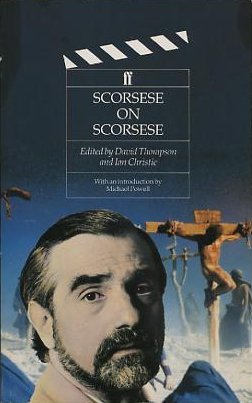
Amazingly, last night I had the most memorable dream of my life and the best part is that I remember all of it in detail. I was at Scorsese’s house and talking to the man himself about the cinema in India and the deteriorating state of old regional films. How about that?! Dr. Freud would immediately remind me that I had finished reading Scorsese on Scorsese just the day before. Whatever the case is, reading Scorsese on Scorsese is best approximated as an extended conversation with the director. In fact, editors David Thompson and Ian Christie have done a splendid job by keeping factual autobiographical details to the minimum, presenting them as small italicized snippets between Scorsese’s talks, hence removing any hindrance for us to speak with Scorsese the man and Scorsese the director. Though compiled from a set of lectures and interviews the director had given around the world, Scorsese on Scorsese never gives you the feel of an authoritative person directing you towards what you have to know. Instead, Scorsese recollects events, almost from the top of his mind, lets us interpret and thus get to know the man and his films more.
Divided into six chapters, the first of which details his childhood and teenage memories and the rest taking us virtually through the making of each one of his movies, Scorsese on Scorsese is a joy ride for any film buff. There is much humour throughout the book and at times you almost hear Scorsese break out with his characteristic and infectious laughter. Many would agree if I say that Scorsese is one of the biggest film buffs of the world and this opinion is established as a fact in these texts. There is almost no line in the book where you don’t hear the man come up with a movie comparison or a simile that is related to the movies. Even in the most commonplace of statements, like feeling sick on the sets (“…I was coughing on the floor and sounding like a character from The Magic Mountain”), recalling parking problems (“…but destroying things as in a Godzilla movie”) or describing the streets of New York during summer nights (…reminds me of the scene in The Ten Commandments, portraying the killing of the first born, where a cloud of green smoke seeps along the palace floor…), Scorsese’s never flagging enthusiasm for the cinema surfaces.
Scorsese on Scorsese is a must-read for anyone who doubts Scorsese’s status as a genuine auteur. As one moves along in the book, one sees that all of Scorsese’s characters have a bit of Scorsese in them and could be seen as extensions of his personality in a fictional world (Be the screenplay officially by Schrader, Price or Minion, Scorsese invariably seems to have had a hand in their final versions). Although the book covers the directors career only till New York Stories (1989), one can see the same phenomenon carry on in his later films too. As Scorsese goes on explaining how each movie, each scene and each set piece came about one can actually see the deep influence that his childhood and teenage has had on his thought process and his vision of the world. He elaborates on what made him take to priesthood and then the transition to cinema (He says: “In my neighbourhood, the people in power were the tough guys on the street, and the Church. The organized crime figures would tip their hats to a priest and watch their language, an they would have their cars and pets blessed”).
This book was compiled just after The Last Temptation of Christ (1988) hit the screens and it is evident that the whole book centers itself on this event. Right from the unusual introduction chapter, which recounts the events that preceded the release of the controversial movie, one can see that the authors intend to take a look back at the director’s career standing at this historical point. The concept of religion is also manifest in Scorsese’s talks throughout the book as he subtly reveals how his experience during the days as a young priest, away from the meanness of the streets, shows itself in almost all his early films. Be it overt as in Mean Streets (1973) or underneath as in Taxi Driver (1976), the idea of God and religion, Catholicism in specific, seems to be always present, mostly in the form of a hope for redemption, in his movies. In hindsight, The Last Temptation of Christ almost looks like a confrontation of sorts with his own inability to reconcile between what he learnt in the Church and what he saw in the streets.
Another interesting thing is that even though he has had to put up with a lot, Scorsese never dwells on the difficulties much. Yes, he does talk about them in detail, but he makes all his travails sound like simple trivia and things of distant past. It is remarkable how he has earned the title of a major Hollywood director (in spite of his legendary association with New York), especially after his near ostracism by the studios after The King of Comedy (1982). He makes the trouble he had shooting After Hours (1985) and The Color of Money (1983) sound so amusing that one tends to overlook how appallingly tough it must have all been. The book complements these accounts with loads of rare, behind-the-scenes photographs from his movies, the complete story board of the final scene in Taxi Driver drawn by the director himself and other stills from famous movies, including the ones he cites as inspirations, placed side by side as if the director himself is showing us what went through his mind when he made those compositions. There is even a still of Michael Jackson and Martin Scorsese in discussion during the shoot of Bad (1986)!
During the course of all this recollection, Scorsese talks about some abandoned scripts and some ideas for future that now seem so fascinating. He talks about a script called “Gangs of New York” that couldn’t be realized (and which eventually got made in 2002 perhaps with much change), he mentions that he doesn’t really want to do remakes (he made Cape Fear (1991) almost immediately!) and that he was immensely influenced by the music in the Moroccan film Transes (1981) (which has now got restored by the World Cinema Foundation headed by him and shown online for free!). Those who still think that Scorsese has sold his soul to Hollywood of late, I think, would see that The Aviator (2004) is as personal a movie as Taxi Driver or Raging Bull (1980) once they read this book, or rather this memorable evening of reminiscing with Scorsese. At the end of it all, it feels like if Scorsese had indeed taken up priesthood as a profession, which seems to have seemed very likely, the world would have got one good priest more but one great director less. Now, what kind of an unfair exchange is that!
Verdict:
P.S:Scorsese on Scorsese contains one of the greatest forewords that I have read. I type it down for you here:
What’s Hecuba to Him?
The first Martin Scorsese film that I saw – or that saw me – was Alice Doesn’t Live Here Anymore. The actors were directed with assurance. There was not a frame wasted. I said to myself: Michael Powell, you’re going to have a good time – this man knows where he’s going and you’re going with him. On the screen we were entering a fast food emporium, with two splendid actresses volleying words and phrases at one another. It was like watching a singles match on centre court at Wimbledon, between two champions. I hadn’t seen match play like this since I saw Pat and Mike.
We screened Taxi Driver. ‘Stop! Stop!’ I said. ‘Who’s that devilish actor who plays the Devil in the scene with Robert De Niro?’
‘That’s Scorsese.’ Said my friend, who had arranged the screening.
‘What! Can he act too?!’
He smiled, ‘want more?’
‘Is there more?’
He nodded vigorously. ‘Much, much more.’
He arranged a screening of Mean Streets. It was in a little projection theatre off Wardour Street, London WI. There were four of us and the projectionist. When the screening ended, we looked at each other, stunned. The five of us crossed a narrow street and went into a pub that was just on the verge of closing. Nobody else was there. Still we said nothing. There was nothing to say.
All art is one, and every artist owes a duty to his art. We can’t all be masters, but we can know a master when we see him, because he has something to say to us, and sooner or later imparts it. The difference between these films of Martin Scorsese’s is that with Alice and Taxi Driver he handles the materials like a master; with Mean Streets he is in direct contact with the audience, from the beginning to the end. This is the rarest gift given to a movie director. Most directors, however wise, however experienced, however resourceful, however bold, don’t have it and never will have it. Marty always had it.
He has this great, generous gift of creating a situation for an audience, and sharing it with them. He is the ventriloquist and his doll, the singer and the song. In his latest film, Life Lessons, Marty performs the same miracle, he is the painter and his palette, he is the pupil and the master, he is the cunning of the fox and the innocence of the child, he is the voice of the tape deck screaming ‘A Whiter Shade of Pale’.
When Hamlet sees the tears in the Player’s eyes, and asks Horatio:
What’s Hecuba to him or he to Hecuba
That he should weep for her?
he is asking the same question that we ask of ourselves when Scorsese, in The Last Temptation of Christ, gives us our first glimpse of that hill called Golgotha. For, as the tears spring to our eyes, we know that we shall see that hill again, and then it will be our last sight on earth – and his.
I don’t think there’ll be anyone who would not be disarmed by Kenneth Anger’s Mouse Heaven (2004), unless that person is allergic to the world’s most famous mouse – Mortimer aka Mickey. We can never have enough of Mickey Mouse, can we? And that is exactly what Anger in underscoring in this fabulous little short. Mouse Heaven begins with a shot of creepy lab rats (in negative, to make it worse) followed by a drawing of Mickey on paper. We are then shown shots of an animated Mickey mouse, then two of them, then a few of them and, soon, then an army of them. And before you know it, Mickey Mouse is on your underwear. Anger floods the screen with all types of Mickey Mouse merchandise – food items, clothes, toys, and tattoos, Mickey in clay, Mickey in metal and even a Mickey in diamond. Although many modern filmmakers have adopted a similar style, Mouse Heaven, clearly, is an auteur’s work. When such quirky songs like “I’m your puppet” and “If I had a million dollars” play on the soundtrack while the visuals give you hundreds of Mickeys dancing and singing, you know it is Anger at the cutting table. Unlike many of his earlier films, which used barely comprehensible imagery, Anger presents us with neat and instantly lovable visuals to show us what our fetishes have brought us to. Thematically close to the director’s unfinished film Kustom Kar Kommandos (1965) but based on a zeitgeist of this age, Mouse Heaven is Anger at his sarcastic peak as he takes a massive jab at this exploitative economy of ours, whose free agents are just waiting to stuff the next cute thing.
What Is Cinema? Volume I André Bazin (Translated by Hugh Gray)
University of California Press, 1967
Yes, I know this is the “inferior” translation. But hey, this is all I could get my hands on. But surely, the translation isn’t the bottleneck in understanding what the author is saying, for Bazin himself makes things tough with his analogies and references! Taking examples from almost every field of science and arts – from chemistry to Comédie Française, from geology to Christianity – he stacks one argument upon another, turning down existing critical principles and builds a vision of cinema that does not care as much about the artist’s vision as it does about faithfulness to reality. Presented as an anthology of selected essays from the author’s original four-volume work Que-est-se que le Cinéma? (1958-65), this translation by Hugh Gray has received a lot of flak after the release of the Caboose edition. But the historical importance of this translation remains unquestionable and the book still remains an immensely insightful introduction to the work of arguably the world’s most revered critic.
The anthology begins with the small chapter titled “The Ontology of the Photographic Image” where Bazin traces the need for plastic arts, especially cinema way back to the time of the kings. He argues that it is mankind’s ambitious need to preserve the living and hence achieve immortality that has caused the arts to associate themselves to the reality of the world. He pins down the origin of this practice to the Egyptian craft of mummification and then gradually draws out the evolution of the other arts right down to cinema and photography. He illustrates how photography indeed freed painting from its ambivalence by allowing it to retain artistic abstraction and leave faithfulness to reality to photography (“…for photography does not create eternity, as art does, it embalms time, rescuing it simply from its proper corruption.“). This chapter, in fact, becomes the base for all of Bazin’s theory in the rest of the book, establishing his unshakeable faith that the power of cinema lies in its property to reproduce reality without any form of human interference.
In the subsequent few chapters, he builds on the first chapter and analyzes what reality and cinema mean to each other. In an interesting section, he puts forth the argument the introduction in sound in cinema was not actually the biggest turning point. He says that the dichotomy that existed was not between the talkies and the silent movies, but between films that relied on reality, like the films of Erich von Stroheim and the ones that were trying to do precisely the opposite, like the Expressionist cinema. He further points out that the introduction of sound was a mere technical triumph that enabled cinema to move one step closer to absolute realism. Carrying the argument forward and considering both extremes – spectacles concocted purely in reality that is faithfully filmed by the camera and spectacles concocted by montage which cuts out facets of reality that may hamper the truth of its world – he examines the advantages and limitations of montage where he exemplifies how montage and its avoidance alter cinematic reality and how montage should be used depending on the context of the sequence filmed.
But what the book primarily concerns itself with is the relation that cinema bears to contemporary arts like literature, theatre and paining. Almost half the book is devoted to studying how cinema absorbs and contributes to literature and theatre and how this phenomenon is just a symbiosis among the arts. He argues that although the relatively infantile cinema plunders themes and tales from literature, it is literature that gains audience. Furthermore, he lashes out against dogmatic purists who readily shrug off theatrical and literary adaptations that are faithful to their source. Bazin stands in support of adaptations that are faithful to the source and whose concerns are not merely providing a mutation through cinema. Using a separate chapter titled “The Stylistics of Robert Bresson”, which is more concerned with exploring the relation between Bresson’s Diary of a Country Priest (1950) and Bernanos’ novel than with Bresson’s mise en scène and ideology, Bazin establishes the invalidity of existing comparisons between literature and their cinematic adaptations. To quote the author himself:
“But Le Journal has just proved to us that it is more fruitful to speculate on their differences rather than resemblances, that is, for the existence of the novel to be affirmed by the film and not dissolved into it. It is hardly enough to say of this work, once removed, that it is in essence faithful to the original because, to begin with, it is the novel. But most of all the resulting work is not, certainly, better (this kind of judgment is meaningless…) but “more” than the book. The aesthetic pleasures we derive from Bresson’s film, while the acknowledgement for it goes, essentially, to the genius of Bernanos, includes all that the novel has to offer plus, in addition, its refraction in the cinema”
A third of the book is taken up by a chapter titled “Theater and Cinema”, which inquiries in detail what precisely is the difference between the two media is. Strongly supporting Laurence Olivier’s Henry V (1945) and Jean Cocteau’s Les Parents Terribles (1948), Bazin slams the overused critical term “Filmed Theater” and elaborates on the features that separate theater from cinema and why the films that he supports are indeed true to the cinematic medium. He does not agree that it is the mere presence of the actor that makes theater unique, as proposed by earlier theorists. Instead, he postulates that it is the knowledge of being watched – for both the performer and the audience – that forms the basis of classical theater and the one facet that makes it distinct from cinema. A lot of arguments in this chapter went over my head, for Bazin frequently throws in examples from contemporary and ancient French theater to underscore his point. But it is clear that Bazin’s discussion boils down to his theory that that theater space is essentially a showcase of unreality (or a different reality) while that of cinema is true reality.
There is a minuscule yet extremely insightful essay on Charlie Chaplin where Bazin deconstruct the tramp and throws light on the social, cultural, comic and cinematic aspects the iconic figure. He stresses that Chaplin would have been a great theatre actor, but his stint in cinema wasn’t, in any way, less brilliant. He illustrates how Chaplin used the medium to not merely photograph a theater act, but to overcome the limitations of theater and derive maximum comic effect out of film editing. That said, one must also acknowledge that the selection of essays from the original French anthology could have been better or at least arranged in a more streamlined fashion. Since Bazin’s canvas of references is huge, spanning several centuries and fields, it is difficult for me to assess the exact outcome of this reading experience. At the end of it, one feels like having read more about other arts than cinema. It is as if Bazin is pruning down all that is not cinema, but usually associated with it, to bring to surface the real meaning and power of the most popular medium – exhausting what is not cinema to derive what is cinema.
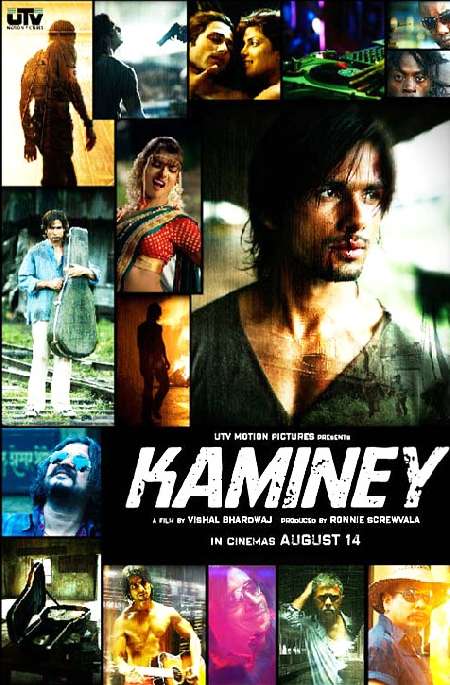
The protagonist of Vishal Bhardwaj’s Kaminey (2009) tells during the beginning of the movie: “We are never screwed by the paths that we take, but by those which we don’t”. And at the end of the film, this is exactly what must be told of Kaminey too. The idea behind Kaminey is inarguably great – so great that each one of us who hears it would be tempted to elaborate on it, make our own version of it and provide a whole new dimension to it. The sad thing is that that is precisely what has happened. With much hype behind it, Kaminey has proved to be yet another idea wasted, but is sure to have its own takers claiming everything, from Shahid’s six pack abs to its pretty neat soundtrack, as a reason to celebrate it as a masterpiece. Cinema is often called a “collaborative art” and Kaminey serves to prove that the real challenge is not to produce art, but to derive it out of collaboration. What would make for a more interesting movie than Kaminey would be a film about its making, for it is surely going to be funny seeing too many people trying to incorporate their own vision into the film, leaving the director helpless.
(Possible spoilers)
Here is the plot for those who would like to know what the film is about. I’m pruning down a lot of details which Bhardwaj seems to have retained for the sake of filling the runtime of the film. Guddu and Charlie (both played by Shahid Kapur) are twins. Guddu is working in an NGO, spreading awareness about HIV/AIDS and is in love with Sweety (Priyanka Chopra). Sweety is pregnant with Guddu’s child and is the sister of Bhope (Amol Gupte), a fundamentalist politician who is now hell bent on getting rid of Guddu to stabilize his position in the party. Charlie, on the other hand, is a gambler and a small time crook. He dreams of having his own horse-race booking company and hopes to grab hold of lady luck by whatever way he can. His villain is Tashi (Tenzing Nima), a high-profile gangster with international connections whose “goods” fall into the hands of Charlie. There are also some two dozen characters who enter the screen now and then, laugh manically, get shot and get forgotten. And yes, their paths cross, things (are made to) happen and they live happily ever after.
Kaminey is written by four people and it shows. Remember the game we used to play where each one of us took turns to add one line to take the story forward? Now remove all the fun from that and voila, you have the script of Kaminey. This proverbial broth absorbs a specific character from each one of its cooks, but doesn’t have one of its own. Nor does it present memorable characters in it. May be Bhardwaj was trying to create a Pulp Fiction (1994) of sorts, but the result is far from it. His characters are quirky for the sake being quirky. May be their names do allude to some movie classics, but you almost hear them crying out: “Hey there, I’m a offbeat and kinky character. Please love me and imitate me”. Neither are they employed as abstractions to make large scale statements about the world as in “arthouse cinema”, nor are they distorted and caricatured to pay homage and refer to film history as in Pulp Fiction and nor are they used to summarize the spirit of the age. They are not even real people living in all three dimensions. Characters come and characters go. Peripheral characters have their own limelight and die without a trace.
Let me try to clarify what I mean by summarizing what “each script” of Kaminey wants to be and what it turns out to be. The first of these was the potential USP of the film. Kaminey is full of Bolly references. Two brothers, who love each other, growing up on either side of the law, a larger than life baddie who vacations in exotic locales while giving orders to pull the trigger elsewhere and even a climax where almost all the characters in the film start firing at each other, while the bad bro turns martyr to save his sibling – we’ve seen them all before. What Kaminey seems to be trying is to pay tribute to and give a reboot to this Masala Noir genre while attempting to retain the sensibilities of today’s generation. But such a film ought not to take itself seriously. Instead it has to go for the laughs, all the way. This is where the second thread of Kaminey intervenes. One might argue that Bhardwaj was trying to give a slick production like Raghavan’s superb Johnny Gaddaar (2007), but characters in such films, I believe, should never be psychoanalyzed. Look at each character in Gaddaar. What do they all want? Simple. Money. Each of them is a mere placeholder, a mere entity that is driven along by the plot, its uncertainties and well, its fate. Kaminey, on the other hand, earnestly elaborates on the characters’ motivations and dreams, trying to make us empathize with them. It even presents extended Freudian sequences for this “purpose”.
[Kaminey Trailer]
Kaminey is then a character-driven film, you say? Let’s take the case of Guddu and Sweety – the two characters that the writers may claims as having depth. Apart from their one night-stand, we are given about three short scenes that are supposed to illustrate their relationship. The first of this is a perfunctory “chemistry scene”. The second one, which turns up just after the fiasco at their marriage ceremony, seems like just another ploy to siphon sympathy. And wait till you hear what the laughable basis of their romance is, in the third scene which takes place in a train. And finally, the most annoying of all the contributions is what makes the already out of control film seem overreaching and pretentious. With a tacked up message that blows up to full scale during the final shootout and cooked up observations that would make Thomas Friedman scratch his head, Kaminey shows signs of a naughty liberal chuckling his way through. Kaminey is not four films packed into one, but one film torn apart into four. Even if it had stuck to one of those paths, Bhardwaj would have had a pretty decent bullet point in his resumé.
Everything seems to come in pairs in Kaminey. There are pairs of brothers everywhere in the film. I would have even loved if the rapper-gangsta from Bombay to Bangkok (2007) showed up in Kaminey to claim that Tashi was his half-brother! But seriously, Kaminey never capitalizes upon this opportunity anywhere in the film. Let me just tell you about a couple of points in the film where I thought it could have taken the “other path” and salvaged itself to an extent. The first is at the intermission point, where Guddu and Charlie are confronted by wrong sets of goons. There was scope both for some awesome comedy and awesome suspense there. Not by the regular identity-confusion gag (and if the film’s vision was strong, that too), but by some subversion of conventions and morals. Instead, the film opts for some slapdash rush towards the climax, which is the second time I felt that the film could somewhat reset itself towards the destination it wanted. When more than a dozen characters are present on your canvas for a single scene, it’s very easy to mash it all up and that is exactly what happens. But this could have proved to be gold if only Bhardwaj had decided to stick to the true purpose of the film.
I may be just playing the troll over here, but surely, none of the scenes hold together. Each version of the film’s script seems to pull down the other, taking the film into a zone of utter indecisiveness. Kaminey, unfortunately, does not even have the surface gloss of Dev D(2009). Using ill-focused, largely handheld shots, Kaminey betrays both its history and quality. One can’t even comment on the technical aspects of the film, for the script leaves them without a direction. So it remains a mystery whether the excessive number of close-ups did good to the film or whether Bhardwaj’s device of revealing the past towards the end was apt, for the film does not seem to know what is good for it at all. All that is amusing in the film is the way Shahid Kapur makes lisping sound funny (lisping is new, stammering is out of date, you know). As for Vishal Bhardwaj, it is only good that he now returns to his personal and honest way of storytelling, for god sake, having a say on the final script. I risked Swine Flu by going to this movie and I say I deserve a medal.
Watching Artavazd Peleshian’s movies, I had this constant feeling of having seen such films elsewhere. A little deliberation reveals that the extraordinary Jean-Luc Godard compilation History of Cinema (1988-98) is, in fact, closer to the works of this Armenian auteur than anyone else’s. Furthermore, it becomes clear that almost all of Godard’s films made in the past couple of decades, especially the many short films, have a notable influence of Peleshian’s style, although they evidently bear Godard’s signature. With a total runtime of hardly three hours, Peleshian’s filmography may not be as prolific as the French director’s, but it shows such degree of consistency of style and unity of content that it almost feels as if Peleshian had decided beforehand what his résumé would read. I guess Peleshian’s films are what could be truly called film poetry. This is because they completely wallow in ambiguity that is so essential to poetry. By ambiguity, I do not mean that they elude meaning or try to deliberately confuse the viewer, but that their meanings are with the audience. That is to say that each viewer would draw out a different meaning or exhibit varied emotional responses that would solely depend on his/her accumulated experiences and thought processes. One might say that this is true of any film. But with Peleshian’s films, all of these responses hold good to some degree. As Peleshian himself says in his interview with Scott MacDonald (found in the book A Critical Cinema: Part 3): “It’s everything”.
I would probably go on talking about Godard’s later works when talking about Peleshian because the similarity here is remarkable. Much like what Godard does with the images from Ivan the Terrible: Part 2 (1958), Angels of Sin (1943) and many of his own films, Peleshian reuses and recycles a number of familiar images and sounds throughout his filmography. And likewise, each of these instances elicits a different meaning every time they occur. Peleshian seems to believe that photography is indeed truth, but alters its frame rate to underscore, enhance and provide meaning. It is as if the director is holding a photograph of stellar importance in his hand, commenting on it, animating and then stopping it, whenever required, to emphasize what he has said, going back to tell us more using the same photograph and, in essence, writing an essay using prefabricated sentences. Only that there is no text or speech as in Godard’s films. In fact, there is not a single word spoken in any of Peleshian’s films, highlighting the deliberately universal nature of his cinema. That is because people, beings to be precise, have always been at the center of Peleshian’s films. Peleshian seems to see humans as a monolithic entity whose ambitions, idiosyncrasies, struggles and emotions, although particularized by history, (to kill a cliché) transcend geographical and ethnological barriers.
But then, this history which Peleshian takes as reference for his examination always seems to be something that is close to Peleshian’s heart, which could perhaps be called truly “Armenian”. A mere look at the country’s history reveals large scale tragedies that have mercilessly plagued it throughout its life. A constant target of imperialism, oppression and, later, nature’s wrath, Armenia has certainly put up with some nasty things. With this knowledge, it is but natural for one to view Peleshian’s films as being also about the resilience of the nation’s residents. This reading seems quite valid at first since Peleshian’s films always seem to be about “movement“ – movement of time, movement of people and movement of life. In almost all of his films, we see various images that denote movement, change and constant transmutation – man made modes of transport, exodus of humans and animals, cycling of seasons, revolutions and of course, birth and death. And Armenia itself has been characterized by such movements and instability as its history tells us – the country’s constant transfer from the hands of one ruler to the other, people made refugees in their own country, forced evacuations and exiles and deformation by natural calamities. It is just too tempting to place these facts alongside and tie Peleshian’s films to a specific nation before generalizing them. But the director seems hesitant to attach any geographical importance to his films:
“The Armenians are simply an opportunity that allows me to talk about the whole world, about human characteristics, human nature. One may with also to see Armenia and the Armenian in that film. But I have never allowed myself to do it then, and would not now.”
Peleshian calls his technique “Distance Montage”, of which, I must admit, I could not make head or tail of, despite the director’s numerous attempts to clarify himself in the interview. But one thing that is clear from his films about his style is that it provides totality to them. That is, what the viewer takes away from the film is the whole and not any fragment or any individual aspect of it. Although certain images and sounds repeat themselves throughout the film, their order and composition are designed to evoke different responses depending on the context. As a matter of fact, without any impact on the individual films, all of Peleshian’s movies could be combined seamlessly into an indexed anthology that produces the same effect as its constituents, for the director’s style is too consistent to make any film seem out of place. Peleshian places the audience always at a distance, giving them an omniscient eye that concerns itself the whole of humanity instead of making them care about individual subjects and their petty objectives and aspirations. Perhaps this is why there are no “characters” in any of Peleshian’s films. It is quite impossible to distinguish between the archival footage and fabricated shots that Peleshian uses since none of these images show any trace of a motive to create a fictional world. The characters, for Peleshian, are already written and exist all around us, merely waiting to be read.
Earth Of People (1966)
Earth of People (Mardkants Yerkire, 1966) is the second student film that Peleshian made while studying at the prestigious VGIK institute and already, it shows the author’s stamp. Early on we are shown images of massive man made structures – bridges, railroads and skyscrapers. As the twisted title starts to make meaning, Peleshian starts showing us human hands, humans at work and the world being constructed by humans. We see people from every profession – doctors, engineers, workers and scientists – carrying on with their routine robotically as the soundtrack suddenly stops giving us conventional score and starts gathering the most bizarre of mechanical sounds. But soon, the optimistic tone of the film gives way to distrust and we realize that we aren’t exactly masters of this world. We see these people are, in fact, trapped within their own creations (which strangely reminds us of 2001: A Space Odyssey (1968)), which gradually takes us back to the title: Whose world is this? No wonder the film opens and closes with the image of a thinker’s statue. Peleshian’s film is symmetrical, as would be his later works, with both the soundtrack and imagery getting reflected along the centre of the film.
Beginning (1967)
Although Peleshian’s style already shows maturity in Earth of People, his official filmography begins with, well, Beginning (Skizbe, 1967). Chronicling the historical events that changed the course of the century following the monumental October Revolution of 1917, Beginning is a powerhouse trip that would definitely rank among the best political films ever made. Running for a mere 10 minute span, Beginning exemplifies Peleshian’s preoccupation with mass movement like no other film. Employing an eclectic mixture of photographs, studio shots and documentary footage, manipulating their speed, repeating them regularly and eventually attaining a musical rhythm like the Soviet pioneers’, Peleshian emphatically registers our recent history that has been marked by an extraordinary number of uprisings and bloodsheds. Peleshian’s soundtrack is remarkable here. Using a combination of highway chase music, gunshots, screams and silence, Beginning shifts gears from a documentary, to an agitprop, to an essay and to an epic in no time. But the true revelation is the ending of Beginning where, after a brief visual and aural pause, Peleshian delivers a moment of epiphany, once again reminiscent of 2001 – an extended close up of a young child staring determinedly into the camera as the soundtrack plays a majestic, Thus Spake Zarathustra like score. Forget the Star Child, what is the human child going to see in the future?
We (1969)
Sheep and mountains have almost become Armenian identities of sorts, thanks to the films of Sergei Paradjanov. We (Menq, 1969), which begins and ends with the image of a gargantuan mountain, is perhaps the most “Armenian” of all Peleshian movies. We are shown images of mountains falling apart before being cut to a large funeral procession. This is followed by visuals of common people carrying on with their everyday work, – some utterly mundane, some shockingly risky – as if proving the adage “Life must go on”. For the first time, religion, which was a major reason for the Armenian Genocide, makes its presence felt in a Peleshian film. It isn’t just personal disappointments that these people seem to putting behind them, but shattering national tragedies, despite (and perhaps because of) which their faith stands affirmed – in religion, in life. The last third of the film acts as a meeting point and the resolution for these two types of calamities as we are presented visuals of reunions of families (and of people who seem to be returning from an exile). More than anything We feels like an ode to the resilience of, in particular, the Armenian people (although Peleshian himself denies this!), who have had to put up with a lot through the centuries and, in general, the spirit of everyday heroes. If at all anything can be made of Peleshian’s attitude here, it must be his unassailable faith on the ability of humanity to survive no matter how difficult it makes it for itself.
Inhabitants (1970)
In contrast to the unusually large number of people in the Beginning and We, Inhabitants (Obitateli, 1970) is almost completely devoid of humans. Peleshian attributes this peculiar absence, quite strangely, to his audience being critical of him for We. Filled with shots of large-scale migrations and stampedes (with, surprisingly, even helicopter shots being present in the film), Inhabitants merely alludes to the presence of the human beings, in the form of a few silhouettes, who seem to be the central cause of panic. Shot in widescreen, Inhabitants, for most part, depicts wildlife, in panic. At first glance, with the anti-mankind tone of the movie, Inhabitants seems to take Peleshian back to the arguably cynical mode of Beginning. But once you begin to see that the humans in the film aren’t exactly humans but far from it, Peleshian’s faith in humanity comes to surface. Surely, the animals are just a normalized form of the people of We, of Beginning and of Earth of People. But the relevant question is whether Inhabitants is connected to the Armenian history directly or not. With the visuals showing us exoduses and captive animals and the soundtrack including gunshots and screams, it is not unfair for one to be reminded once more of the nation’s plight. Whatever the case, the film resonates with quintessentially Peleshian themes – of change, of resilience and of survival.
The Seasons (1975)
The Seasons (Vremana Goda, 1975) is perhaps the most famous of all Peleshian films and just its opening shot would show why – A man, clutching a sheep in his hand, trapped in a raging stream, trying to get to the shore along with the animal. Setting the tone of film and, to an extent, to the director’s whole filmography, The Seasons’ first shot effectively underlines the irony that forms the basis of the relationship between humans and nature. The Seasons, as the title suggests, deals with the change of seasons. In the first section Peleshian presents us images from sunny day in an idyllic pastoral life, where a family of herdsmen lead their sheep through a dark tunnel and then to light. We then see a group of young men dragging huge stacks of hay down a hill slope and then trying to stop it. This scene, once more, illustrates our can’t-live-with-can’t-without relationship with nature, but never once becoming a contrived symbol or a metaphor. It is merely a glimpse of life which reveals a fact rather than expressing it. The same would be true of the sequence that is to follow, where the herdsmen risk their own lives in order to salvage their herd that is caught in the rapids. The film then shifts to an ethno-documentary mode as we witness a marriage ceremony in which a cow forms as much an integral part as the bride and the groom. In a rather prolonged scene that follows, in what looks like an amusing sport, we are shown a few men, each holding a sheep in his hand, sliding down a snowy hill, refusing to let go of the animal – A practice that is as strange as man’s kinship with nature – living with it, living against it, living despite it, living for it and living because of it.
Our Century (1983)
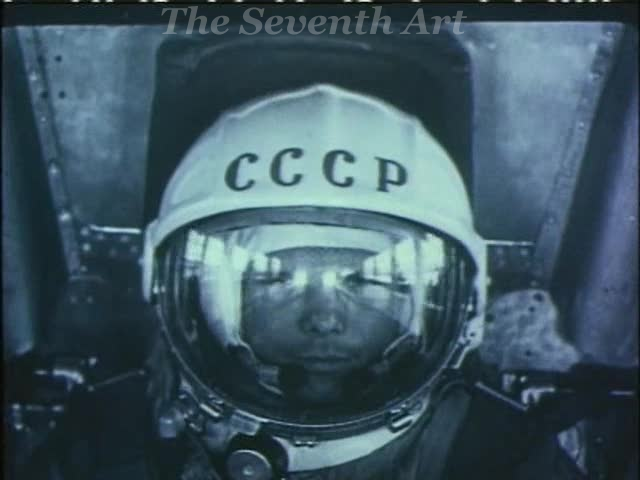
What followed remains Peleshian’s longest film to date, the 50-minute feature Our Century (Mer Dare, 1983). Our Century concerns itself with some cosmonauts (and astronauts) preparing themselves for a space flight. Peleshian constructs the film around this event, quite predictably, exploring his themes through a complex editing system coupled with an equally complex soundtrack. Initially, Peleshian crosscuts between the footage of the activities at a space station, minutes before the launch of a shuttle, and a celebratory procession where the space-heroes are cheered and applauded by the mass. Peleshian frequently presents clips that show the immense stress that the cosmonauts are put under, during the test phase and in space, It is a period of sheer loneliness, physical and mental fatigue and, yet, of excitement and ambitiousness. He then goes on to depict man’s obsession with flight and, in general, his desire to conquer the various elements of nature, where he shows a number of bizarre experiments in aviation, most of which end unsuccessfully. As ever, individual turmoil gives way to and unifies with national tragedies to the point beyond which there is no difference between a nuclear explosion, a rocket launch and the human heartbeat. Our Century arguably presents Peleshian at the top of his game, converting both the form and content of the film into a highly personal mode of expression. In no other Peleshian film has the ecstasy over human achievement mingled with the agony of existence in such an intricate fashion. The point is not the establishment of a simple irony, but of an exploration of what makes humanity go on, against all odds.
Life (1993)
There is some confusion regarding the order of release of the last two Peleshian films. The official Paradjanov site, however, suggests that it is, in fact, Life (Kyanq, 1993) that is the director’s penultimate film thus far. Peleshian uses colour film for the first time, perhaps to enhance the already optimistic tone of the film, and makes his shortest film till date. Running for a mere seven minute time span, Peleshian, for most part of the film, presents us extreme close-ups of a woman delivering a baby. Probably the most moving Peleshian film, Life is also the most overt manifestation of the ever-present Peleshian-ian conversation between human pain and ecstasy in his films. The soundtrack is comparatively simpler here, with only two audible layers – an evocative opera piece and an amplified track of the human heartbeat. Naturally reminiscent of that staggering Stan Brakhage work, Window Water Baby Moving (1962), Life is an equally personal (although far easier to watch), emotionally exhausting and visually stunning piece of film that has the power to dispel any trace of pessimism that anyone may have about humanity. The film ends on a freeze frame showing a mother and her young child looking towards the camera and, possibly, a bright future.
End (1994)
Although Life would have made an astounding end to a solid filmography, it is End (Verj, 1994) that provides a more rounded closure to it. End is a series of shots inside a speeding train, the passengers of which are of diverse age groups, ethnicities and emotional statuses. The train itself feels like a microcosm of the whole world, each of whose inhabitants is moving towards an individual destination but the totality of them going in the same direction. End is perhaps the kind of vision that Damiel (Bruno Ganz) saw in the train in Berlin in Wings of Desire (1987), considering the voyeuristic nature of the camerawork in this film. There are also a few outdoor shots, of mountains (again) and of the sun, that punctuate End. If Life’s ending shot seemed to seal Peleshian’s faith in humanity, the closing shot of End brings back the lifelong dialectic between cynicism and optimism that has so consistently characterized Peleshian’s work. We see the train, after a very long passage through the darkness of the tunnels, suddenly plunging into blinding light. Before it is revealed to us what lies beyond, the end credits roll. Is it a man-made apocalypse foreseen by Earth of People? Is it the Great Armenian Earthquake? Or is it the ultimate redemption for humanity that Life suggests? Looking back at Peleshian’s body of work, it is probably the latter.
Le Sang Des Bêtes (1949) (aka Blood Of The Beasts)
Georges Franju
France
20 Min.
Georges Franju’s Blood of the Beasts (1949) is perhaps the kind of film that you obtain when you mix poetry and snuff. Detailing the everyday work of Parisian slaughterhouses, Blood of the Beasts is a film that manages to rise above its gore-quotient to explore what exactly a ‘society’ is. Franju cuts back and forth between the serene, romantic and sacred city of Paris, where the church carries on its duty, absolving people of their sins and providing solace for the dying, and the slaughterhouses in its suburbs where cattle are beheaded in a mechanical fashion like units on a production line. We are also shown the people who slay these animals and process them for those outside this building. They carry out their routines dispassionately and with no moral dilemmas whatsoever. In fact, never does Blood of the Beasts cry out about it all or take an ideological stance like some propagandist video. It merely presents us facts – purely scientific at times – and gradually reveals to us the questionable basis upon which our so-called ‘civilization’ is built and the moral impasse that it has brought us to. Franju apparently did not want to film the movie in colour since he felt it would be too much to take for the audience. But coming to think of it, had Franju decided to shoot Blood of the Beasts in colour, the movie would have been elevated to a different level altogether. Imagine the mere implication of including the colour red in a film that opens with romance and culminates with bloodshed. But I’m not going to complain, since the black and white too, in a way, provides an odd and tranquil beauty to this gem of a film that strikingly blends conventional documentary and fictional narration.












 The Seventh Art