Jag Mandir: Das Exzentrische Privattheater Des Maharadscha Von Udaipur (1991) (aka Jag Mandir)
Werner Herzog
German

“Culture in India is a basic life-sustaining force “


Jag MandirJag Mandir is a quiet and often overlooked film in the vast oeuvre of Werner Herzog. Apparently, 20 hours of footage was shot that covered the whole fest and the film hardly presents us a twentieth of that. A native walking into the film in between may well fail to immediately realize that it is his country that is being shown and these are figures from the mythology of various sections of his nation. You might take if for a scene from a procession in Thailand or a sketch from festival from Africa or even a snapshot from the gala celebrations in Brazil. Such is the diversity it presents that it reminds us of those clichés about Indian culture.

Werner Herzog’s Jag Mandir begins with an extended take of André Heller giving an introduction to the project (on which the film is based). He recollects his experiences organizing the folk-art festival called for by the Maharana of Udaipur, who the wishes that the succeeding prince sees the artistic diversity of the country before it succumbs to “mcdonaldization”. This is a mesmerizing section and Heller’s monologue contains observations that will leave you ruminating for a long long time. Being a native, I am always skeptic of westerners’ cursory probing of the country and the life-changing-experience it seems to give many. But Heller’s piece, though romanticized, gives everyone something to think about the way we live. The speech lasts for well over seven minutes and dissolves into the titles. Herzog then takes us back to the actual events which unfold without any demarcations between reality and fiction, as always with the director, The greater part of the film presents us footage of performances that run the gamut.

You have classical dancers in unison, street players wielding everything from swords to artificial horses, a man who lifts weights with his eyelids, a woman who balances a kid standing on a ten foot pole on her chin, a little girl who swings blazing torches with nonchalance and what not. It is highly likely the average Indian today hasn’t seen any of these folk art forms. The saddest and the most surprising part is that it looks like many of these art forms and skill sets aren’t seen around in the country today and may even have gone into oblivion without a trace. May be the Maharana’s nightmares have indeed come true.

P.S: Call it an obsession with a man obsessed with obsessions, but you’re going to be seeing more of Werner Herzog’s name on this blog. Trolls beware.

Stanley Kubrick Directs:  Expanded Edition
Alexander Walker
Harcourt Brace Jovanovich (HBJ), 1972
 

A brief internet research about the best books written about the life and works of Stanley Kubrick gave me quite a few results with Alexander Walker’s Stanley Kubrick Directs (Expanded Edition) topping the list. Since there wasn’t any book called Kubrick on Kubrick, I had to go for this one! Stanley Kubrick Directs is literally a page-turner, for it contains more images than text. The book is divided into six sections – The Man and Outlook, Style and Content and four chapters dedicated to four of Kubrick’s most famous films.

stanley_kubrick_directsA friend once remarked that there was spirituality in the way Max Ophüls’ camera moved. I was reminded instantly of Kubrick then. But surely, not for the same reason. Kubrick’s tracking shots are anything but spiritual. I should label them “satanic”. These bewitchingly ominous shots, in my opinion, are the essential sequences from each of the films – be it in the French war trenches, in Korova Milkbar or aboard the Discovery space shuttle. And reading that Kubrick was impressed by Ophüls’ films forced a smile on my face. This is not the only reason that I find the opening section of the book – Stanley Kubrick: The Man and Outlook – fascinating. Walker presents us all of Kubrick’s preoccupations as a child and as a teenager and later establishes how the reverberations of these influences find their way to most of Kubrick’s films. As a film buff, it is rewarding to dig deeper into Kubrick’s films after reading these facts.

But Walker follows it up with the most disappointing of all sections in the book. In this section, titled Kubrick: Style and Content, Walker aims to present us the working methods of Kubrick. Unfortunately, this part turns out to be nothing more than a briefing of Kubrick’s early films, till Lolita (1961), interspersed with elaborations of some obvious facets of Kubrick’s films. Walker’s digresses without hesitation and adulterates the section with facets not in line with the chapter’s objective and analyses that at times seem downright speculative.  As a result, this section seems like a poor excuse for a ramp up to Kubrick’s masterpieces that were to follow.

The book then presents us illustrated analysis of Kubrick’s Big 4 that followed – Paths of Glory (1957), Dr. Strangelove (1964), 2001: A Space Odyssey (1968) and A Clockwork Orange (1971). The first two films here take up two thirds of the analysis section and ironically are the least satisfying. Both the analyses of Paths of Glory and Dr. Strangelove are fraught with screenshots (by Halcyon) that are subsequently verbalized. Having presented the early influences of Kubrick, Walker should have let the audience connect the dots and interpret the film their own way. But he starts deconstructing Kubrick’s mise-en-scene frame by frame and strips us completely of the joy of discovering a film. No, I’m not cribbing, but it is a bit discomforting to see such great films presented cut and dried, preventing further exploration the reader may otherwise be tempted to perform. I know this is an analysis, but why at such grassroots level?

Surprisingly, Kubrick’s most profound film is given the least space. A big positive for this section is that it does not go over the top like many an analysis written on the film. Walker sticks generally to the technical and narrative aspects of 2001: A Space Odyssey and discusses “2001 that could have been” citing various choices made by Kubrick with respect to the script. However, it is dissatisfying to see the film grossly ignored in comparison to the earlier two films and sidelined to a smaller status. The film by itself warrants elaborate literature and any analysis should most definitely include the higher aspects it tries to encompass. Walker just grazes through those notions and it never looks like it is for the good of the audience.

But, comes the essay on A Clockwork Orange to salvage the book’s pride. This is the best of the four analyses and serves as a grand climax to an otherwise dissatisfactory book. This is one section that respects the complexity of the film but never once shirks discussion. Walker makes a great move by not just diluting the mise-en-scene by deconstructing it to particulars. He seamlessly integrates multiple ideas the film presents and provides us a solid critical analysis that clearly shines in comparison with the previous three. And it is this section that provides a sense of comfort when one closes the pretty ordinary book.

This book is widely considered the best book on Kubrick till date and that worries me. Kubrick’s canvas is visibly vast and if this is the best of literature available on him, there is a long way to go. Stanley Kubrick Directs does present considerable detail for people who are confused why he is the most critical Hollywood director on a technical level, but the treatment of the content of his film leaves a lot to be desired. May be I expected a bit too much.

 
Verdict:
 

Note: This is a section where I will be blogging on books on films and filmmakers. The entries will be far and few, but this will at least provide me an opportunity to read text – a thing that I used to hate till now.

Panelkapcsolat (1982) (aka The Prefab People)
Béla Tarr
Hungarian

“What about those who are away for years? They never see their kids. The kids grow up with no dad. They grow up and the dad gets them ready-made “


The Prefab PeopleAfter watching films like Scenes from a Marriage (1973) and Hyderabad Blues 2 (1998), I had come to a kind of conclusion that films about marital life are and even have to be necessarily lengthy in order to depict relationships falling apart bolt by bolt. But Béla Tarr’s masterful venture The Prefab People brutally shatters that perception. The film is so masterfully crafted that I was afraid that Tarr would have to have a pathetic showdown in order to wrap up the film within 80 minutes. But gladly, one couldn’t have asked more after watching what Tarr delivers. He lets the film gradually evolve instead of providing it narrative momentum (but never without a direction). Watching The Prefab People, one can see why Mendes’ Revolutionary Road doesn’t exactly succeed.

The Prefab People is Tarr’s fourth feature and one can clearly see Tarr maturing as a filmmaker. He intelligently avoids all the mistakes of his previous outings (which were pretty good themselves) and makes it seem like a grand culmination of a chain of dress rehearsals. He substitutes the extreme verbosity of Family Nest (1979) with self-sufficient images. He sheds the self-indulgent meditation of The Outsider (1981) and makes a film that is universal in its appeal and as personal in its content. He avoids the complex mise-en-scene he employed in his mediocre single-shot adaptation of Macbeth (1982) and in exchange develops a keen sense of shot composition and cutting. One can virtually see where Sátántangó (1994) gets its pitch-perfect atmosphere from. But in spite of the trademark style of the director, The Prefab People is very much a cinema vérité film. It wouldn’t be a coincidence if one was continuously reminded of Cassavetes while watching this one. The resemblance is most glaring in the scene at the party, which has to be experienced to be believed.

These are beautiful characters and so are the actors. To use a worn out cliché, Tarr does not take sides. Both the husband and the wife have their own visions of what happiness is. Just that one is evidently naïve and the other is actually romanticized. But the masterstroke of the film is the Kubrickian theme of man and machine that Tarr blends in this outwardly boring suburban life. And just like the American genius’ style, Tarr controls his décor, landscapes and film equipment to provide a literature-free rendering of one of cinema’s most favorite themes.

Five Dedicated To Ozu (2003) (aka Five)
Abbas Kiarostami
Silent

“…”

Five

Unquestionably, Kiarostami’s films are unlike any film ever seen, leave alone Iranian ones.  But one film that is extreme and decidedly avant-garde even by Kiarostami’s standards – Five: Five long takes dedicated to Yasujiro Ozu (2003) – has turned out to be one of his finest works. In what can be described as a super-slow version of Koyaanisqatsi(1982), Kiarostami presents us five shots of the sea, filmed during various times of the day, at various distances and of varying lengths. Kiarostami quietly integrates the five elements of nature to create a film that is as warm as Ozu’s and as puzzling as his own, in a way, forming a singular connection between them.

The first shot shows us a piece of log lying on the beach as the incoming waves unsuccessfully try to pull it in. There is instant engagement here. I do not know about others, but I have spent hours watching such insignificant dramas of nature – the wind trying to knock off a fruit of a tree, a crow trying to pull out a twig that is stuck and the waves trying to sweep my feet at the beach. There is complete focus on the log and the incoming waves here. These are the only two components of the frame and these alone form the foreground of the image. Interestingly, this is the only segment where the camera actually moves in order to accommodate the object under consideration. Kiarostami shows us a very ordinary piece of event, but our mind conjures up a narrative of sorts – with its own formulation of safe-space and danger zones of the “narrative”.  And things become complicated as the log breaks off and the larger part is swept off into the sea. Though completely unrigged, this “turning point” makes our attention shuttle between the drifting piece in the water and the struggling one on the beach. Is Kiarostami alluding to Floating Weeds?!

In the second one, we are shown the image of the sea as seen from an embankment on the beach. We are drawn into the horizontal waves that decorate the widescreen in the form of broad white lines. Gradually, we have people walking across in front of us pushing the sea into the background. People of all ages flood the screen in many amusing ways, regularly diverting our attention from the sea. There are even critters that wallow into the frame and easily gather focus. There is a feeling of watching a Béla Tarr film – but only in a sense. That is, in Tarr’s films, the dynamics of the foreground, though initially attractive, feel like clockwork after a while. Slowly, we sense the background – the still life – gathering a presence of its own and even imposing itself upon us. There is a feeling of intimidation and ill-omen whereas here, it works the other way round. The patterned backdrop is quite fascinating to start with, but as the humans start coming in the foreground, our attention is naturally devoted to them. We start studying them and even start expecting some new ones (I was hunting Jafar Panahi’s cameo). This segment ends the way it started – the sea alone occupying the stage.

The next shot presents us the sea sandwiched between the sky and land. This is shot from considerable distance and looks like a painting. It is early morning and there are dogs lying on the beach. Almost nil action takes place notwithstanding the stray movements made by the canines. Everything is in the background here as opposed to the previous two shots. Gradually, the contrast of the image starts reducing and after one point we are unable to differentiate between the sky and the sea. The shot fades to white after all the three elements of nature dissolve into one another.

The fourth shot is perhaps the most “interesting” of all. In a direct homage to Ozu’s style, Kiarostami places the camera at knee level and in close proximity to the sea. Soon, the screen is infested by ducks of various sizes, colours and gaits. This is the as close to comedy as the film gets. The ducks move at almost a fixed speed and their footwork seems like a musical rhythm.  Suddenly, all the ducks that have gone past retreat as a bunch as if in a panic. The concentration is completely on the foreground here and the sea becomes no more than a comfortable backdrop.

The final shot lasts about half an hour and is the boldest of them all. It is night time and we can hear the loud croaking of frogs and barking of dogs. And it is only after a while we come to know that we are staring at the still sea. The reflection of the moon appears in a distorted way on the dirty surface of the water. Once more we desire the reflection to settle down to form the perfect circle. The notions of foreground and background are completely eliminated as the pulsating moon appears like a milk drop that falls into abysmal vacuum. And just when everything seems unperturbed, rain comes. The annoying frogs disappear and so does the reflection. Kiarostami has probably shot this in time lapse as the rain stops suddenly to restore the noisy atmosphere. The moon “settles down” and soon disappears behind the clouds. It is interesting to see that all the dynamics of the scene here is off-screen and their presence indicated only by the sounds they produce. We stare at nothing but dark blank space for most of the time but never once lose hold of what is happening in the film’s environment. A little later, we hear the rooster’s call and sure enough, bright sunlight strikes the image to reveal the clear blue water. This part is truly a revelation as one feels a fresh lease of life in the hitherto mundane and contemplative frame.

There is naturally a problem with a film that is as provocative as “Five”. How much of the content we derive out of the film is intentional? Was there a set of objectives for the director while filming the footage? Was every element in the mise-en-scene completely controlled by the filmmaker? Would the film have been different if each shot was prolonged or shortened?  Here lies the classic tale of the emperor and his clothes. With a name as great as Kiarostami’s in the title cards, one directly gets ready to attach significance to the images, however banal they are. At the same time, it is but natural to feel awkward while watching such material. There is that absurd feeling of watching a Stan Brakhage film (I’ve seen over two dozen of his films and I must admit I can’t recognize most of them!) to the point of laughing at yourself. You get the feeling that Kiarostami is probably toying with his audience after all.

But surely, this isn’t anything like what Warhol did. Here is a filmmaker who understands what Ozu stood for and how big a responsibility the title of the film places on him. A filmmaker in the tradition of Ozu himself, Kiarostami does not go for cheap attention using complicated mise-en-scene and steady-cam shots. He doesn’t just see the world but observes it. He studies the relation between the various planes of the image. He experiments with the distance of observation and the range of emotions they evoke. In essence, he analyzes the subjective and objective components of the cinematic image never once losing the most important ingredient of his entire body of work – humanity. And that is why “Five”stands as a fitting tribute to one of cinema’s greatest humanists, by another.

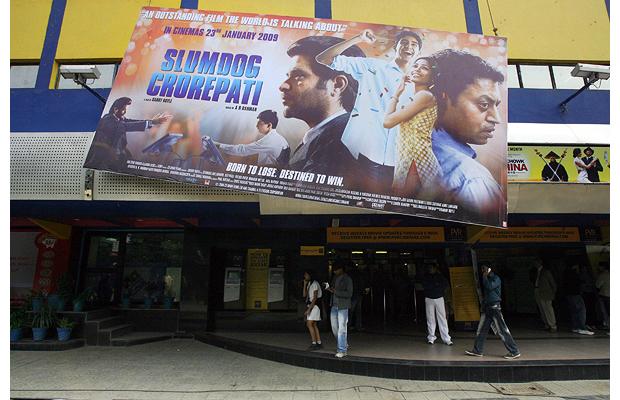
Slumdog Millionaire: Creating Opportunities                    (pic courtesy: Telegraph)

Slumdog Millionaire: Creating Opportunities (pic courtesy: Telegraph)

There has been a lot of question raised about the recognition Slumdog Millionaire is getting across the world. And things have been made worse as people with no connection to cinema whatsoever have started capitalizing on the situation. Let’s set the latter aside as it speaks for itself. There are claims that it is because an Englishman directed the film that it has gone to such heights and had the same been done by an Indian, it would have been crushed. I say – Obviously. To be recognized, you have to be seen first. And bringing wide visibility to your work by itself is job half done. The gripe that such a film by an Indian filmmaker would have gone unnoticed is more of a scar on the Indian scenario than the West’s.

The content in films like Slumdog Millionaire and Smile Pinki is very much Indian and is clearly not out of reach of our filmmakers. Indian film industry,  too, is not short of great technicians and it could easily pull off similar films by itself.  The only and the largest concern is that of the big $. The reason that good films are not being recognized in India seems to be that distributors are not willing to take risks or even pay heed to independent ventures. The term “promoting a film” has been used extensively by the media and its importance never explained. Moreover, the films being promoted are mainstream biggies that already have huge banners behind them. On the other hand, the independent and low-budget ventures keep suffering from under-promotion This situation isn’t going to improve unless some angel pours in money like crazy, which is as likely as a coin landing on its edge. But what can be done is promotion via the hard way. One has to give a push to worthy works regularly so that it is lapped up by the rest of the world.

One thing that could help filmmakers to pitch their work to the world is a film festival. No, wrong – a slew of film festivals organized at various levels of governance. This could be done using a hierarchical setup installed across the country. Something like the  TV reality shows of today. Filmmakers get to submit their films at city-level film fests. Winners of each city get a chance for exhibition at the state level. The state level winners could then compete against each other at the national level and finally, the national winner could be made the official representative of the country that year. This would not only be a democratic choice but also one that encompasses a large section of films. When sufficient momentum has been gained from the previous wins, a film would evidently get larger attention. Even the ones that lose out would have been seen by a huge audience at the end of it all. Of course, the country’s film board would have to contribute a lot here. But if the filmmakers themselves could assemble some sort of “unconference” (that wouldn’t cost much would it?), the film development board has to just take care of the higher levels.

And most importantly, a really revered international film festival – a centralized national deal – should be set up. This one should not only advertise the above formed cream of the films from the country but also should prompt international filmmakers to showcase their films. Of course, it can’t be made at the extravagant levels of the Oscars or Cannes and needn’t be too. It could, however, earn a name for itself with its selection of films and the awards it hands out. Once this is done, the films would be automatically taken up for exhibition by other festivals across the world. And when a film is promoted across most reputed film festivals of the world, the Oscars would not hesitate to take note. Why not? What is the Oscar but a grand culmination of extravagant chain of promotions?  

There is a big problem here. I may sound like advocating that we have to work towards the Oscars. No. The Oscars are being widely recognized as the greatest recognition in film world, whereas they are anything but that. The Oscars are as vital as they are being considered, but not for the same reason. The Oscar is not as much important as a consequence of good filmmaking as it is as a cause. Look what happens once the Oscars are announced. The box office results soar. Slumdog Millionaire is back to the top 5 this week at the US box office. The DVD market would now be flooded with the winning films. Even the films that were snubbed by the Oscars, but given nominations would have a chance of making it big a la the Shawshank phenomenon. Distribution of obscured films will become fluid. And if this cascade continues, independent movies would be picked up even before the Award season and given a fair chance (True to their name, Fox Searchlight Pictures found Slumdog in the dumps and have created history now). Multiplexes will be used for the real reason they should be. And if the government is ready to push further, they could pass an ordinance where major multiplexes could be asked to allot one show per day to some of these award-winning films. This would significantly reduce the problem of distribution and film availability.

But then, cinema is not an essential service and all the above could be an exercise in futility. But one should also remember that cinema is a huge revenue winner and if proper platform is set up for international collaboration, this would only increase manifold.  For the good or otherwise, Slumdog Millionaire has become a landmark film in global cinema and has created a climate apt for cross over filmmaking. This is perhaps the most opportune moment for the country’s cinema to resurrect itself and truly find its voice. However, our filmmakers have to be careful about the most natural pitfall that evolves. They should not look forward to cater to an international audience now but to the local one, however with a keen eye on quality. Only then, we would be able to create a unique identity for our cinema on the map of the world. 


I’ll reserve the Jai Ho for then!


“Whenever I hear the word ‘culture’, I bring out my checkbook”

 – Jeremy Prokosch, Contempt (1963) 


Culture Soup For The NRI Soul     (pic: Rediff)

Culture Soup For The NRI Soul (pic: Rediff)

Quarter hour into Delhi 6, I found myself sitting dispassionately with a hand on my forehead. The last thing I wanted to see after all the hullabaloo over Slumdog Millionaire was a film extolling our culture. The pleasantries among the characters had nearly sealed off the fate of the film as far as I was concerned. And Waheeda Rehman wasn’t helping with her repetitive “Ab main chain se so sakti hoon” (I can rest in peace now) act. It was almost as if Rakeysh Omprakash Mehra was selling nostalgia to the NRIs. As if he was making a film about “our great culture” and never taking it as a platform As if he was trying to make the green card holders break down into tears and say “This is MY country after all. These are MY people”. You know… the usual stuff one feels till the pop corn runs out (Damn, Culture sells). But, to my relief and amazement, Delhi 6 recovers from 0 for 3 wickets to making a decent total. 

Delhi 6 revolves around…Heck, chuck it. This would probably result in a census report. Let me just say that there are more people in the film than the number of shots.  So we have Roshan Mehra (Abhishek Bachchan) who comes to India to take home his granny (Waheeda Rehman). The first half of the film shows us vignettes from the family called Delhi told through the typically patronizing expat eye (but not Roshan Mehra’s). These people spend their time watching unrequited love among Rama and Bharata, but fight with their own brothers. They adore Rama’s marital fidelity, yet go after married women. They are moved when Rama eats food cooked by a socially outcast character yet ostracize and demonize Jalebi, a so-called lower caste woman. They worship Hanuman but are dirt scared of a wild monkey on the prowl, which reveals itself as the focal point of the plot. 

There is some good writing at work here. It is as if we have practically isolated our mythology from our everyday lives and deemed it strongly as strictly fictional. Where the characters in Rang De Basanti (2006) found their history more relevant now than ever, here they see otherwise.  I’m sure that two of the sequences are going to receive much flak. The first one being the “Dil Gira Dafatan” song, which captures the quintessential dream. Purists may even be prompted to do a Freudian analysis as the images run the ganut of Roshan’s experiences. You have Jalebi vendors and cycle-rickshaws ruling the streets of New York. You have Americans celebrating the birth of a calf and shaking a leg at Hindu processions. You even have the monkey man, having been promoted to King Kong status, romancing on the Empire State Building. The second sequence is a bizarre conversation between Roshan and his grandfather (played by his real life father!) which does seem tasteless for different reasons. But no one can blame them for being out of place, for I believe that this kind of a film warrants such treatment. It is indeed a good move to show disjoint sequences from a society when you are encompassing extremely large issues and not dealing with a smaller struggle amidst larger ones. If a tighter plot would have been used, it would most definitely have been a failure and would seem like the film was biting more than it could chew. 

Sonam Kapoor is a bad decision and I felt Soha Ali Khan could have done better. In hindsight, the character of a typically NRI-incriminating modern Indian woman seems tailor-made for Soha. As funny as it sounds, Abhishek Bachchan saves the day. All the potentially fatal reaction shots are redeemed by Abhishek’s unexpected expressions. He plays it low key an never goes into the overwhelming-love-for-home-country mode and cleverly becomes the visitor alone. Though that is a credit to the script, Abhishek manages well to never gain attention (even if it is a consequence of a weakness). All this is until the 115th minute of the film (trust me, I saw my watch here). Then both the Mehras go berserk. There is a fakir in the film who keeps showing everyone a mirror and goes on about the godliness in oneself. This is a good move that could have driven home the point, never looking tacked up too. And at this explosive plot junction (the 115th minute), Abhishek takes up the role of the savior (yes, the pseudo-Indian who refuses to stay passive), he points the mirror to all and “explains” them the truth of life. This is salvaged to some extent by the supporting cast, but the final quarter hour proves fatal. This time, it is the bumpkin Gobar (the talented Atul Kulkarni) who elaborates to all the sane ones how big Abhishek’s role is in changing the lives of the people. And the massacre of the script follows. 

Delhi 6 doesn’t suffer from very many problems per se. It is just that it is irregular. Sequences of sheer brilliance are promptly followed by ordinary ones. Fabulous use of soundtrack is interspersed with the stereotypical utilization of music. Rather than calling these weaknesses, I would like to call them glitches. Sporadic, yet affecting the holistic quality of the film. Delhi 6 presents an open ending and fades to black with the most powerful of all quotes in Hindi cinema that I have heard in recent years – “I returned home”. Just see how profound this line is when you discover for yourself what it means. This line would easily substitute for the last 20 minutes of the film. Let’s hope that the director’s cut (if there ever is one) rectifies the mistake. 

Delhi 6 is exceedingly well shot. Mehra uses extreme close-ups and deep focus to the point that you can see blemishes on the actors’ faces. In spite of the detached view that the script offers, Mehra’s camera becomes one among the characters. It does not impose on us the bittersweet and condescending opinions that Abhishek’s character may have.  See how he desensitizes controversial statements on the news channels by framing the television set along with the news footage. Not only does this offer a space for audience to analyze their own actions but also plays out as a timely satire on the worst thing on Indian television now. The only quibble is that Mehra does not let the images speak for themselves. I would love to show the same mirror that the fakir uses in the film and show it to Mr. Rakeysh Mehra, or his film rather. And tell him “Look, how your film speaks for itself, why try to adulterate it by your obligation to deliver a social message?


Verdict: 


The 81st Annual Academy Awards

The 81st Annual Academy Awards

It’s that time of the year again! Yet another year where the whole world is ridiculing the Academy Awards aka The Oscars, yet looking forward to it (to ridicule it of course!). With each film site/blog on earth trying to crack the ever controversial results, I too decided to give it a shot. Originally, I just wanted to cast my vote among the nominees. But hey, a prediction is a win-win situation. If you get them right, a pat for yourself and if not, you get to curse the Academy! Of course, the nominee list itself is ultra-absurd and carefully leaves out the really good films. Here it goes anyway.


Best Motion Picture of the Year

The Curious Case of Benjamin Button (2008): Ceán Chaffin, Kathleen Kennedy, Frank Marshall

Frost/Nixon (2008): Brian Grazer, Ron Howard, Eric Fellner

Milk (2008): Bruce Cohen, Dan Jinks

The Reader (2008): Anthony Minghella, Sydney Pollack, Donna Gigliotti, Redmond Morris

Slumdog Millionaire (2008): Christian Colson


Academy’s Vote: Slumdog Millionaire (2008): Christian Colson

Emotions are soaring high for this harmless and lightweight contender among the residents. And the path to the Oscar doesn’t disagree. This one has got odds of 99 to 1. That 1 is for The Curious Case of Benjamin Button that may just be the darkest horse ever.

My Vote: The Reader (2008): Anthony Minghella, Sydney Pollack, Donna Gigliotti, Redmond Morris

This is an easy choice for me. Not just that the other nominees don’t hold a candle to this one, but The Reader is made in the tradition of finest contemporary films from Europe and its value is going to just escalate with the years. A film that grows on you in the truest sense of the word.


Best Performance by an Actor in a Leading Role

Richard Jenkins for The Visitor (2007/I)

Frank Langella for Frost/Nixon (2008)

Sean Penn for Milk (2008)

Brad Pitt for The Curious Case of Benjamin Button (2008)

Mickey Rourke for The Wrestler (2008)


Academy’s Vote: Mickey Rourke for The Wrestler (2008)

Oh, it looks like this is a three way race between our horses Rourke, Penn and Jenkins. Oh no, our first horse has fallen. It is Jenkins and it looks like it is going to be a photo finish…. No, no wait. Look at Rourke The Ram Robinson go… Blazing away as if on steroids. He’s taken it and how!

Penn has got the award in 2003 and the Academy will not hesitate from giving it whole heartedly to Rourke.

My Vote: Mickey Rourke for The Wrestler (2008)

Sean Penn may be Frank Capra of the actors, but what Rourke‘s got here is a Citizen Kane. There wasn’t and will never be any performance like this from him. The Wrestler is a great example of what Method Acting could do to a film and there isn’t anyone else who could be cast so effectively. Go Randy Go!


Best Performance by an Actress in a Leading Role

Anne Hathaway for Rachel Getting Married (2008)

Angelina Jolie for Changeling (2008)

Melissa Leo for Frozen River (2008)

Meryl Streep for Doubt (2008/I)

Kate Winslet for The Reader (2008)


Academy’s Vote: Melissa Leo for Frozen River (2008)

This category mirrors the previous one closely with the last three actresses coming in big time (and the Brangelina pair being the filler noms). Kate Winslet seems to be the absolute favorite everywhere. And Meryl Streep would be here even if she had played the lead in Rambo 5. But I have a gut feeling that the Academy will snub the last two again to make up for their mistake that they did with Gena Rowlands

My Vote: Melissa Leo for Frozen River (2008)

Both Streep’s and Winslet’s acting enhance the written characters, but Leo’s performance defines it. Like Rourke, Ms. Leo has pulled off something very unique and probably once is a life time. I would have given an arm for Meryl Streep’s win until I saw Frozen River.


Best Performance by an Actor in a Supporting Role

Josh Brolin for Milk (2008)

Robert Downey Jr. for Tropic Thunder (2008)

Philip Seymour Hoffman for Doubt (2008/I)

Heath Ledger for The Dark Knight (2008)

Michael Shannon for Revolutionary Road (2008)


Academy’s Vote: Heath Ledger for The Dark Knight (2008)

Right from the day Ledger passed away, there has been an onus placed on the Academy. But luckily for them, Ledger comes up with this. Strange that the Academy took it for granted that in a Batman film the villains are always supporting actors. Why do they notice only the unstoppable force and not the immovable object?!

My Vote: Heath Ledger for The Dark Knight (2008)

It would be a crime or a plea for insanity if I vote otherwise. All the other actors in this category, who had done great work actually, had it coming. Downey Jr. plays a very tough character that works on multiple levels of self-consciousness, but The Joker is untamed savagery.


Best Performance by an Actress in a Supporting Role

Amy Adams for Doubt (2008/I)

Penélope Cruz for Vicky Cristina Barcelona (2008)

Viola Davis for Doubt (2008/I)

Taraji P. Henson for The Curious Case of Benjamin Button (2008)

Marisa Tomei for The Wrestler (2008)


Academy’s Vote: Viola Davis for Doubt (2008/I)

No, no. She’s not the token black person. Her performance comes as a surprise, both on and off the screen. Her role could have been called badly cast for she was pitted against three established actors. But she shows otherwise.

My Vote: Viola Davis for Doubt (2008/I)

For me, this boiled down to Ms. Davis and Ms. Cruz. I would have blindly given it to the latter if not for the feeling that she has done this kind of charming act somewhere before, many times.


Best Achievement in Directing

Danny Boyle for Slumdog Millionaire (2008)

Stephen Daldry for The Reader (2008)

David Fincher for The Curious Case of Benjamin Button (2008)

Ron Howard for Frost/Nixon (2008)

Gus Van Sant for Milk (2008)


Academy’s Vote: Danny Boyle for Slumdog Millionaire (2008)

Danny Boyle has reinvented something as far as the West is concerned. They never could come to terms with Bollywood until Slumdog Millionaire showed up to appease them. Mr. Fincher could have posed some threat, but he fails himself. And so does Van Sant.

My Vote: Stephen Daldry for The Reader (2008)

Another sitter of a choice. Stephen Daldry’s direction is uncompromising and his mise-en-scene, meticulously controlled. His immense confidence on his actors and script are one for the arthouses. Take a bow Mr. Daldry. You have to be satisfied with my vote alone though.


Best Writing, Screenplay Written Directly for the Screen

Frozen River (2008): Courtney Hunt

Happy-Go-Lucky (2008): Mike Leigh

In Bruges (2008): Martin McDonagh

Milk (2008): Dustin Lance Black

WALL•E (2008): Andrew Stanton, Pete Docter, Jim Reardon


Academy’s Vote: In Bruges (2008): Martin McDonagh

I may have just gone against my better side of the brain. Though WALL•E is the kind of material that Academy considers its 2001, the film turns spoof-like and a tad restless. Not that the committee considers all that, but WALL•E already has a lock and would have to let go of this one.

My Vote: In Bruges (2008): Martin McDonagh

In Bruges is my favorite fiction of the year and its script would show why. Awe-striking use of the material at hand, McDonagh should have been nominated for the director category too. Genre-bending and genre-blending isn’t restricted to French films and Tarantino alone, says McDonagh


Best Writing, Screenplay Based on Material Previously Produced or Published

The Curious Case of Benjamin Button (2008): Eric Roth, Robin Swicord

Doubt (2008/I): John Patrick Shanley

Frost/Nixon (2008): Peter Morgan

The Reader (2008): David Hare

Slumdog Millionaire (2008): Simon Beaufoy


Academy’s Vote: Slumdog Millionaire (2008): Simon Beaufoy

Academy: “The Curious Case of Benjamin Button is too long, Doubt is too stagey, Frost/Nixon is real, The Reader is too Cannes. Slumdog Millionaire is just about perfect”

Beaufoy packs all that is wanted in this kind of a film with all the vignettes from the country of the snake charmers that is just too good to resist.

My Vote: Doubt (2008/I): John Patrick Shanley

Sober, neat and beautifully rendered script stands out among the five and is going to become one of the most respected films of the decade. Characters are written without prejudices, interaction between the film and the audience remains pristine, never once incriminating or loving its central characters. Top Notch.


Best Achievement in Cinematography

Changeling (2008): Tom Stern

The Curious Case of Benjamin Button (2008): Claudio Miranda

The Dark Knight (2008): Wally Pfister

The Reader (2008): Roger Deakins, Chris Menges

Slumdog Millionaire (2008): Anthony Dod Mantle


Academy’s Vote: Slumdog Millionaire (2008): Anthony Dod Mantle

There is no stopping Slumdog Millionaire. Mantle’s camera is “energetic” and seems to intensify the visuals of the film, though it never determines it. This would seem like a easy choice for the committee.

My Vote: The Dark Knight (2008): Wally Pfister

I would have loved to see Kaminski for Indiana Jones 4 here in the list. Watching The Dark Knight is an experience and Wally Pfister is a prime reason. The tag of an action film will hurt him in the awards ceremony, but the truth is that he has pulled off something humongous and something sweeping that can’t just be covered up.


Best Achievement in Editing

The Curious Case of Benjamin Button (2008): Angus Wall, Kirk Baxter

The Dark Knight (2008): Lee Smith

Frost/Nixon (2008): Daniel P. Hanley, Mike Hill

Milk (2008): Elliot Graham

Slumdog Millionaire (2008): Chris Dickens


Academy’s Vote: The Dark Knight (2008): Lee Smith

This is a close call between Slumdog Millionaire and The Dark Knight, but the Oscar committee would not want to increase the ire of the Batman franchise fans and would give this category to it.

My Vote: The Dark Knight (2008): Lee Smith

Slumdog Millionaire does well, but The Dark Knight’s editing literally zips the film from a 4 hour drag to what it is. Making the audience restless in every sense of the word, The Dark Knight’s Editing hits the nail on the forehead.


Best Achievement in Art Direction

Changeling (2008): James J. Murakami, Gary Fettis

The Curious Case of Benjamin Button (2008): Donald Graham Burt, Victor J. Zolfo

The Dark Knight (2008): Nathan Crowley, Peter Lando

The Duchess (2008): Michael Carlin, Rebecca Alleway

Revolutionary Road (2008): Kristi Zea, Debra Schutt


Academy’s Vote: The Curious Case of Benjamin Button (2008): Donald Graham Burt, Victor J. Zolfo

This one is essentially a competition between the first three nominees. Changeling has been done before numerous times. The Dark Knight doesn’t show out its fantastic art work. And The Curious Case of Benjamin Button visibly makes emphatic statements as far as its production design is concerned. Sweeney Todd (2007), had a similar footing and it went all the way.

My Vote: The Curious Case of Benjamin Button (2008): Donald Graham Burt, Victor J. Zolfo

The Dark Knight’s vision of a nihilistic world is extremely well designed. Gotham City is crafted to perfection, but the film otherwise takes place indoors or in utter blackness. The Curious Case of Benjamin Button wins by a micro margin here with its mystical brown and progressively empty spaces in the film.


Best Achievement in Costume Design

Australia (2008): Catherine Martin

The Curious Case of Benjamin Button (2008): Jacqueline West

The Duchess (2008): Michael O’Connor

Milk (2008): Danny Glicker

Revolutionary Road (2008): Albert Wolsky


Academy’s Vote: The Duchess (2008): Michael O’Connor

Hold on. I have not seen the film per se, but heck, here is a costume drama arriving after a long time and the Academy will not forget to pounce on it. It looks like this one has a lock and I go with the mass opinion.

My Vote: Milk (2008): Danny Glicker

This may be a case of Emperor and his New Clothes (no, pun unintentional) like Van Sant’s films themselves, but Milk’s costume is deliberately sober and simple like the film. There are no special costumes designed to highlight Harvey but makes him one of the very many people of the world. For once, a costume design that conforms to the film’s theme.


Best Achievement in Makeup

The Curious Case of Benjamin Button (2008): Greg Cannom

The Dark Knight (2008): John Caglione Jr., Conor O’Sullivan

Hellboy II: The Golden Army (2008): Mike Elizalde, Thomas Floutz


Academy’s Vote: Hellboy II: The Golden Army (2008): Mike Elizalde, Thomas Floutz

The Academy has two choices – to award either the Rick Baker kind of extravagance or to surprise all with the low-key but formidable make up used in the first nominee. The fact that they did not nominate the first installment in the Hellboy series makes me suspicious.

My Vote: Hellboy II: The Golden Army (2008): Mike Elizalde, Thomas Floutz

I may have voted for The Curious Case of Benjamin Button if not for the intervention of CG that prevents clear classification. Hellboy II: The Golden Army takes extreme pains to present us a world full of unimaginable creatures that should not go unnoticed.


Best Achievement in Music Written for Motion Pictures, Original Score

The Curious Case of Benjamin Button (2008): Alexandre Desplat

Defiance (2008): James Newton Howard

Milk (2008): Danny Elfman

Slumdog Millionaire (2008): A.R. Rahman

WALL•E (2008): Thomas Newman


Academy’s Vote: Slumdog Millionaire (2008): A.R. Rahman

Slumdog Millionaire isn’t like anything Hollywood has ever heard before. Luhrmann teased them with it, but Boyle floods them. If they loved Slumdog Millionaire to death, it is largely due to the emphatic soundtrack that stands tall among mellower tunes.

My Vote: Take a guess!


Best Achievement in Music Written for Motion Pictures, Original Song

Slumdog Millionaire (2008): A.R. Rahman, Gulzar(”Jai Ho”)

Slumdog Millionaire (2008): A.R. Rahman, Maya Arulpragasam(”O Saya”)

WALL•E (2008): Peter Gabriel, Thomas Newman(”Down to Earth”)


Academy’s Vote: A.R. Rahman, Gulzar(”Jai Ho”)

Finally a Masala song to which the westerners have shamelessly let their legs loose. If one loved the film, one would doubly love the fascinatingly-ludicrous end credits pepped up by the fizzy voice of Sukhwinder Singh.

My Vote: A.R. Rahman, Maya Arulpragasam(”O Saya”)

This is essentially choosing one out of two songs for me and O Saya is magical on screen. I would have loved to see The Wrestler and Gran Torino over here, but the votes wouldn’t have changed.


Best Achievement in Sound

The Curious Case of Benjamin Button (2008): David Parker, Michael Semanick, Ren Klyce, Mark Weingarten

The Dark Knight (2008): Ed Novick, Lora Hirschberg, Gary Rizzo

Slumdog Millionaire (2008): Ian Tapp, Richard Pryke, Resul Pookutty

WALL•E (2008): Tom Myers, Michael Semanick, Ben Burtt

Wanted (2008): Chris Jenkins, Frank A. Montaño, Petr Forejt


Academy’s Vote: WALL•E (2008): Tom Myers, Michael Semanick, Ben Burtt

Another close call between WALL•E and Slumdog Millionaire as both of them rely heavily on the environment in the film. WALL•E wins by a margin because the whole of its first half is communicated almost only by sounds and the Oscar people would not hesitate to convert their “aaws” and “oohs” into an award.

My Vote: WALL•E (2008): Tom Myers, Michael Semanick, Ben Burtt

It’s a real joy watching a film that builds its atmosphere on silence, grunts and only a couple of syllables – “Eeeevaaaaa”. The first half of the film is up there with the greatest of silent films and its sound design is extends the possibilities.


Best Achievement in Sound Editing

The Dark Knight (2008): Richard King

Iron Man (2008): Frank E. Eulner, Christopher Boyes

Slumdog Millionaire (2008): Tom Sayers

WALL•E (2008): Ben Burtt, Matthew Wood

Wanted (2008): Wylie Stateman


Academy’s Vote: Slumdog Millionaire (2008): Tom Sayers

Slumdog Millionaire may lose out to The Dark Knight in the Editing category, but this one would be a revenge of sorts. This is one dark horse of a category where it seems like anyone could win without a surprise.

My Vote: Slumdog Millionaire (2008): Tom Sayers

The sounds in the film zip back and forth in time and space like the movie itself and Sayers uses clever sound bridges to extract jolts and jumps from the audience to the maximum. This would be one award that the movie really deserves.


Best Achievement in Visual Effects

The Curious Case of Benjamin Button (2008): Eric Barba, Steve Preeg, Burt Dalton, Craig Barron

The Dark Knight (2008): Nick Davis, Chris Corbould, Timothy Webber, Paul J. Franklin

Iron Man (2008): John Nelson, Ben Snow, Daniel Sudick, Shane Mahan


Academy’s Vote: The Curious Case of Benjamin Button (2008): Eric Barba, Steve Preeg, Burt Dalton, Craig Barron

This is the pacifier for what is going to be one of the biggest snubs of recent years. The CG team here blurs the line between, acting, make-up and animation seamlessly and the others have to nod.

My Vote: The Curious Case of Benjamin Button (2008): Eric Barba, Steve Preeg, Burt Dalton, Craig Barron

This is serious LOL stuff. In a year with a dozen superhero films, only 3 nominees? And what ever happened to Speed Racer? The Curious Case of Benjamin Button has to satisfy itself with one of the minor awards, for which it has done darn well.


Best Animated Feature Film of the Year

Bolt (2008): Chris Williams, Byron Howard

Kung Fu Panda (2008): John Stevenson, Mark Osborne

WALL•E (2008): Andrew Stanton


Academy’s Vote: WALL•E (2008): Andrew Stanton

Is there even a question? The Academy invented this category for Pixar. And Pixar follows the decision up with such gems.

My Vote: WALL•E (2008): Andrew Stanton

I feel bad for Kung Fu Panda. It had wanted so much and did it with all sincerity. But Pixar make it seem like they are in a different genre altogether.


Best Foreign Language Film of the Year

Der Baader Meinhof Komplex (2008)(Germany)

Entre les murs (2008)(France)

Revanche (2008)(Austria)

Okuribito (2008)(Japan)

Vals Im Bashir (2008)(Israel)


Academy’s Vote: Vals Im Bashir (2008)(Israel)

Aah, The Middle East, the oil nations, war, anti-war, politics, wrath of Persepolis. All the Oscar ingredients. Only The Class might stop this one.

My Vote: Revanche (2008)(Austria)

Only seen two films here. I liked Vals Im Bashir very much. But Revanche – what a sleeper of a film! Never thought this one would make it here and turn out so good. A film that I would like to compare with The Reader. This one stays with you long after the end credits roll. That is if you are game for it.


Best Documentary, Features

The Betrayal – Nerakhoon (2008): Ellen Kuras, Thavisouk Phrasavath

Encounters at the End of the World (2007): Werner Herzog, Henry Kaiser

The Garden (2008/I): Scott Hamilton Kennedy

Man On Wire (2008): James Marsh, Simon Chinn

Trouble the Water (2008): Tia Lessin, Carl Deal


Academy’s Vote: Encounters at the End of the World (2007): Werner Herzog, Henry Kaiser

It would seem like the Academy would not award another eco-friendly documentary and give it to the unstoppable Man On Wire. But going by the reputation and long overdue recognition of Herzog (who was promoting the film at the Oscar meet), the Oscar may just go to Encounters at the End of the World.

My Vote: Encounters at the End of the World (2007): Werner Herzog, Henry Kaiser

I’ve seen only a couple of films here too. But an easy choice nevertheless. Encounters at the End of the World is my favorite film (along with In Bruges) of all those in the list and perhaps of the year too. There is no way I can stop myself from voting for and recommending this film. It’s a relentless and shattering exploration of human instincts that just wouldn’t leave you alone.


Predictions Tally: It looks like it is Slumdog Millionaire all the way. The Curious Case of Benjamin Button ate up worthier nominees and in turn is going to be eaten up by the minnows. What a waste!

Slumdog Millionaire (7), WALL•E (2), The Dark Knight (2), The Curious Case of Benjamin Button (2), The Wrestler (1), Frozen River (1), Doubt (1) In Bruges (1), The Duchess (1), Hellboy II: The Golden Army (1), Encounters at the End of the World (1), Vals Im Bashir (1)


Watch this space for the results and comments on those! By the way, there is another set of awards being given away a day before The Oscars – The Independent Spirit Award. If you are a person who takes awards as recommendations, watch out for that one.

That’s it from the Road to the Oscars (RTTO) series from me. Hope we have a great year for cinema ahead.

Good Bye and Good Luck!


[Edit] The Results:

Best Picture: Slumdog Millionaire (2008): Christian Colson

Best Actor: Sean Penn for Milk (2008)

Best Actress: Kate Winslet for The Reader (2008)

Best Supporting Actor: Heath Ledger for The Dark Knight (2008)

Best Supporting Actress: Penélope Cruz for Vicky Cristina Barcelona (2008)

Best Original Screenplay: Milk (2008): Dustin Lance Black

Best Adapted Screenplay: Slumdog Millionaire (2008): Simon Beaufoy

Best Director: Danny Boyle for Slumdog Millionaire (2008)

Best Cinematography: Slumdog Millionaire (2008): Anthony Dod Mantle

Best Editing: Slumdog Millionaire (2008): Chris Dickens

Best Art Direction: The Curious Case of Benjamin Button (2008): Donald Graham Burt, Victor J. Zolfo

Best Costume Design: The Duchess (2008): Michael O’Connor

Best Makeup: The Curious Case of Benjamin Button (2008): Greg Cannom

Best Original Score: Slumdog Millionaire (2008): A.R. Rahman

Best Sound Mixing: Slumdog Millionaire (2008): Ian Tapp, Richard Pryke, Resul Pookutty

Best Sound Editing: The Dark Knight (2008): Richard King

Best Original Song: Slumdog Millionaire (2008): A.R. Rahman, Gulzar(”Jai Ho”)

Best Visual Effects: The Curious Case of Benjamin Button (2008): Eric Barba, Steve Preeg, Burt Dalton, Craig Barron

Best Foreign Language Film: Okuribito (2008)(Japan)

Best Animated Feature: WALL•E (2008): Andrew Stanton

Best Documentary feature: Man On Wire (2008): James Marsh, Simon Chinn

Best Documentary Short: Smile Pinki (2008) – Megan Mylan

Best Animated Short: Maison en petits cubes, La (2008) – Kunio Katô

Best Live Action Short: Spielzeugland (2007) – Jochen Alexander Freydank


Endnote: The Academy has been pretty safe afterall! Except for the odd snubs like Waltz with Bashir and Martin McDonagh, it has played considerably safe and comforming to the previous award ceremonies. Strange to see Asians all over the Kodak theater – more than the amount they were seen in the films of 2007. Whatever. Let’s hope there are some really good and worthy films next year.

Gaining The Upper Hand

Austria is presently the defending champion of the Best Foreign film Oscar following its dream run last year with The Counterfeiters. However, the inclusion of its contender this year, Götz Spielmann’s Revanche, has come as quite a big surprise. With the film pipping heavy-weight contenders like Italy’s (2008) and Romania’s Gomorra Rest is Silence (2008) , it does make me inquisitive as to why the Academy preferred this one. Now that I’ve seen the film, the curiosity still persists.

I’m not going to give away the plot here although I’m going to mention some interesting points in the film. But don’t worry. This is a film that doesn’t have spoilers, for it derives its glory, ironically, not from concealment of plot points.Revanche kicks off with an array of seemingly disparate sequences involving more than half a dozen individuals. We are forced to think that this is going to be one of those hyperlink films that deal with interconnected lives. But in a Hitchcockian twist to the story Spielmann kills off the central plot and steers the film, literally, into a completely new environment. He shifts a seemingly event-driven film into one that balances character and their actions very delicately.

Spielmann’s camera is reminiscent of the damn good contemporary films from countries like Germany and Romania. It takes up the position of a non-human character in each scene and captures the mise-en-scene with great detail. In most of the scenes, it is situated at a shady corner of a room, the end of a corridor or among the trees of a park. There are no unnecessary pans, hand held sequences or even drastic zooms. To use a cliché, it merely observes. A sizeable distance is maintained while documenting the characters and their actions. But what effect does all this produce? One could say that it provides us drama in its purest form.

Clearly, there is considerable drama in the character’s own lives. The ever-baffling twists of fate, luck and destiny by themselves provide enough fodder to keep one astonished. Spielmann cleverly retains it and never tries to externally dramatize it by employing soundtrack (there isn’t one at all in the film), spectacular camera movements or even by extremities of the character’s actions (although the parallel editing in the first half hour does impose itself on us). The bank robbery, that could easily have been made the central piece, lasts less a minute! Also, Spielmann never delves into the characters psychology for even a moment. He never claims to explore their motivations and intentions. Why doesAlex work at the farm at all? Why does Susanne visit the old man? Why doesAlex throw away the gun? Spielmann never intends to answer these questions though me makes all of it completely workable. Each of the characters here could be made into a complete melodramatic film. The old man, AlexTamara, Susanne and Robert are easy candidates for in-depth psychoanalysis. But Spielmann eschews from making even one.

Furthermore, Spielmann doesn’t even rely on the twists in the plot for attention. The audience can easily guess out what an action is going to result in much before it is revealed. When Alex pins the picture on the wall of his room, we know immediately that it is going to give him away. Spielmann deliberately does that. Consider the moment Alex comes to know that Susanne has found out his secret. There are no wide eyes or Vertigo shots over here! There is a long pause where Spielmann focuses on Alex’s face. That is all. Alex has assimilated what this means and what its consequences are going to be. That is the stuffRevanche is made of. The twists aren’t as important as the actions that they result in or those that precede them. And it is indeed these “actions” alone that help us piece together the characters’ motivations.

Interestingly, there are extended shots of Alex chopping the wood and his grandfather playing the accordion. What begins like an establishing technique goes on to become something more vital. The wood chopping becomes more than Alex’s work. It becomes a gesture by itself. It seems as if it is his interaction with the hermetic world. And same is the case with his grandfather. Both these characters are in complete loneliness even though they live together. They seldom talk and carry on with their “gestures” even if there is no one to receive them. There is something elusive in the presence of these actions. At times the wood-cutting seems like a token of atonement and at others, it seems like a representation of building resentment. In an case, it falls in resonance with the execution of the whole movie – Actions taking the place of words, gestures taking the place of dramatic cues.

Daldry’s Oscar contender The Reader (2008) mentions how European literature thrives on secrets to drive its characters’ lives. That how persons in power are the ones in possession of great secrets. Many a time, concealment of truth is the prime way to domination. Revanche is exactly that. Alex is pretty helpless and possibly a pawn of fate till the second half of the film. Once he knows that he is in possession of an exclusive piece of information, he is able to control his fate and of others. Susanne is very much an instrument controlled by Alex. And so is Robert. Note how the single secret can create or destroy vantage points. Objectively speaking, Alex is the one guilty of a crime. But the concealment of truth makes it look like Robert is the one. Alex is the one who is vulnerable to law. But because he has used his knowledge to suit his plan, it seems as ifSusanne is going to be the victim if everything comes to light. And this is the “Revenge” of the title – revenge without a single (well, one!) bullet fired.

Revanche opens with a shot of a placid lake followed by a startling fall of an object into it. There are ripples and then back to an unperturbed state. But what is buried into it now will be an object of tension for ever. This sequence is whatRevanche mirrors in the rest of the film. What the intrusion of the third personAlex into the peaceful life of a countryside couple has resulted in. The issues may be buried and done with amicably. But its consequences, the tension thatSusanne is thrown into and the fear that Robert is nudged into will echo for eternity.

I’m not sure if the Academy really considered Revanche as a contender or did they just use it as filler. It neither has the political grounding or the moral righteousness or even the emphatic statements that it looks for. Perhaps Waltz with Bashir already has the Oscar it in its kitty.


Verdict:

The Jigsaw Called Past

A Paradox Of Memory

We always have that “one foreign film” to top it all, don’t we? Continuing the tradition of extraordinary films like The Lives of Others (2006)4 Months, 3 Weeks and 2 Days (2007), this year we have an Israeli flick Waltz with Bashir. Already a winner of the Golden Globe for the best foreign film of the year, the film is all set to make it big at the Academy Awards late next month. Director Folman dedicated the Golden Globe to all the babies that were born during the production of the film and desired that when they watched the film in the future, they should think of the film as an ancient video game. And indeed, Waltz with Bashir is a sincere attempt to come to terms with the mistakes of the past.

Waltz with Bashir takes place 20 years after the “purging” operations of the Israeli army in Lebanon. Ron is one of the soldiers in the war who is leading a peaceful life as a filmmaker now. One gloomy night, after he hears about the strange dream that haunts his friend, Ron decides to dig up his past. This takes him to various places across the globe as he gradually recovers his memories of the fateful war. There is considerable romance in the events of the war, with Apocalypse Now – like celebrations of destruction. Men come, men go; No one recognizes the other completely, but each one has a story to tell. Each one has a version of the war. We are presented many POVs as Ron continues inquiring his role in the war. He isn’t happy about what he is discovering. But the thirst for truth keeps him going.

Waltz with Bashir presents a great paradox now. One that all of us carry with us in one form or the other. One that uniquely characterizes the human intelligence. A paradox of memory. When you want to forget something, your mind does not let you. It keeps coming back to haunt you until you confront it for good. And when you want to remember something desperately, the same memory starts playing tricks with you. It cooks up some mutated form of the past combining elements of truth and fantasy. Ron seems happy with his filmmaking business until the inevitable shadow called past catches up with him. He realizes the need to remember. But no one lets him – neither his own mind nor his friends’. Early on, Ron’s psychologist friend tells him of a memory experiment where people were found to accept small deviations from reality as reality itself. Similarly, everyone seems to have settled into some form of comfortable reality in order to barely escape from the horrors of the past and yet remember their years in the war. Unwilling to strike a balance between the need to document and the need to forget, Ron decides that he has to know what happened and not speculate.

It is but natural to be reminded of the previous year’s fantastic film Persepolis, for both employ animation to address issues of very high importance. Persepolis, using its childlike animation effectively along with its monochrome, presented one girl’s quest for identity and her abstraction of the ever-changing world. Marjane’s fantasies of a fairy-tale childhood are slowly corrupt by the knowledge of the harsh realities of the war-torn world. The ever-unsafe world prevents her from carrying on with her illusions of undisturbed happiness. Waltz with Bashir, on the other hand, is an account of one man’s struggle to recollect the past. It sort of reverses the structure of Persepolis and presents us a man who attempts to recall reality exactly as it happened. Ron does not want to concoct a “safe version” of reality that remains tough enough to reflect truth but comfortable enough to be complacent about what happened. In essence, Waltz with Bashir asks us to confront reality– without any pretense and escapism – and get over with it once and for all. And this, in my opinion, is the film’s greatest success.

One can’t entirely say that the film does not take sides. True, it is told from an Israeli point of view and yet comments on the atrocities done towards the Palestine refugees in Lebanon, but the Lebanese evangelists won’t be happy with the depiction of the massacre. However, this can not be considered a blatant caricaturing of them. Waltz with Bashir takes just a single event from the war – the refugee camp massacres at Sabra and Shatila – and questions the appropriateness of that event alone. Yes, it does take a stand there and it does condemn the way things unfolded on that dreadful day. But that’s about it. It does not extrapolate the incident to judge the present political policies of either country or even question the motives of the war that it depicts. It is as if the film isolates the lone event in order to denote the sheer enormity of it all and to show how such unwarranted acts of violence have a deep impact on the psyche of an individual and of a nation.

I can’t complain on the technical grounds either. The animated characters are deliberately out of sync with their environment, which gives the film a kind of surrealism that is in tone with Ron’s recurring dream. The dubbing is spontaneous with even mistakes finding their way into the film. The narrative proceeds non-linearly never once going over the head. But these are just the secondary reasons that make the film stand apart. In an age which is plagued by over-sensitivity towards issues such as racism, communalism and war, films such as Waltz with Bashir (and the surprise winner Gran Torino (2008) appeal for an acceptance of these issues as it is and to deal with them without much fuss. And that is a reason enough for me to cast my vote for Waltz with Bashir.

Verdict:

Director: James Marsh

Cast: Philippe Petit

The Buzz: Nominated in the Best Documentary category

The Run: Won the Audience Award and the Grand Jury Prize (Documentary) at the Sundance Film Festival, BAFTA for Outstanding British Film

Man On Wire

Audience On Wire

The much talked about documentary Man on Wire is about a man who breaks into rooftops of tall structures only to perform his ropewalking act on them. Specifically, it shows us Philippe Petit’s attempts to fulfill his cherished dream of walking between the twin towers of the World Trade Center on a wire. The film cuts to and fro between three time lines – Philip’s biographical history and his induction into this “crime”, hours before the actual event that is to occur, and the present year at the studio – and provides a seamless documentation of one of the most shocking moments in history.

Mr. Marsh, the director, crosscuts facts presented as interviews with fictionalized forms of the same, shot in B&W. Man on Wire carries the tagline “The artistic crime of the century”. And in retrospect, each word of the tagline seems to resonate loudly. “Artistic” because of the discoveries it can make – of one’s own unlimited physical and mental strength and of one’s own limitations. “Crime” because how it all happened. More than the event itself, the preparations of the event are so dramatic that they can pass of as sequences from a top-notch heist film. And the last word of the tagline is a subtle tribute to the famous twin structure that the new century could never retain. Interestingly, the film never laments about the destroyed structure and sticks to what happened with Philippe alone. And that is a move of great confidence.

As such, Man on Wire makes a great watch primarily because of the content it provides. There are pretty decent insights too into Philippe’s mind with respect to the death-defying act he performs. But I guess, even though it is lovingly directed, it may not go on to win the Oscar. True, that it throws a shiver down the spine but not more than the event itself. And kids, do not attempt this at home!