[Part of Curator’s Corner, a section dedicated to showcasing work of emerging and marginal filmmakers. See here for details.]
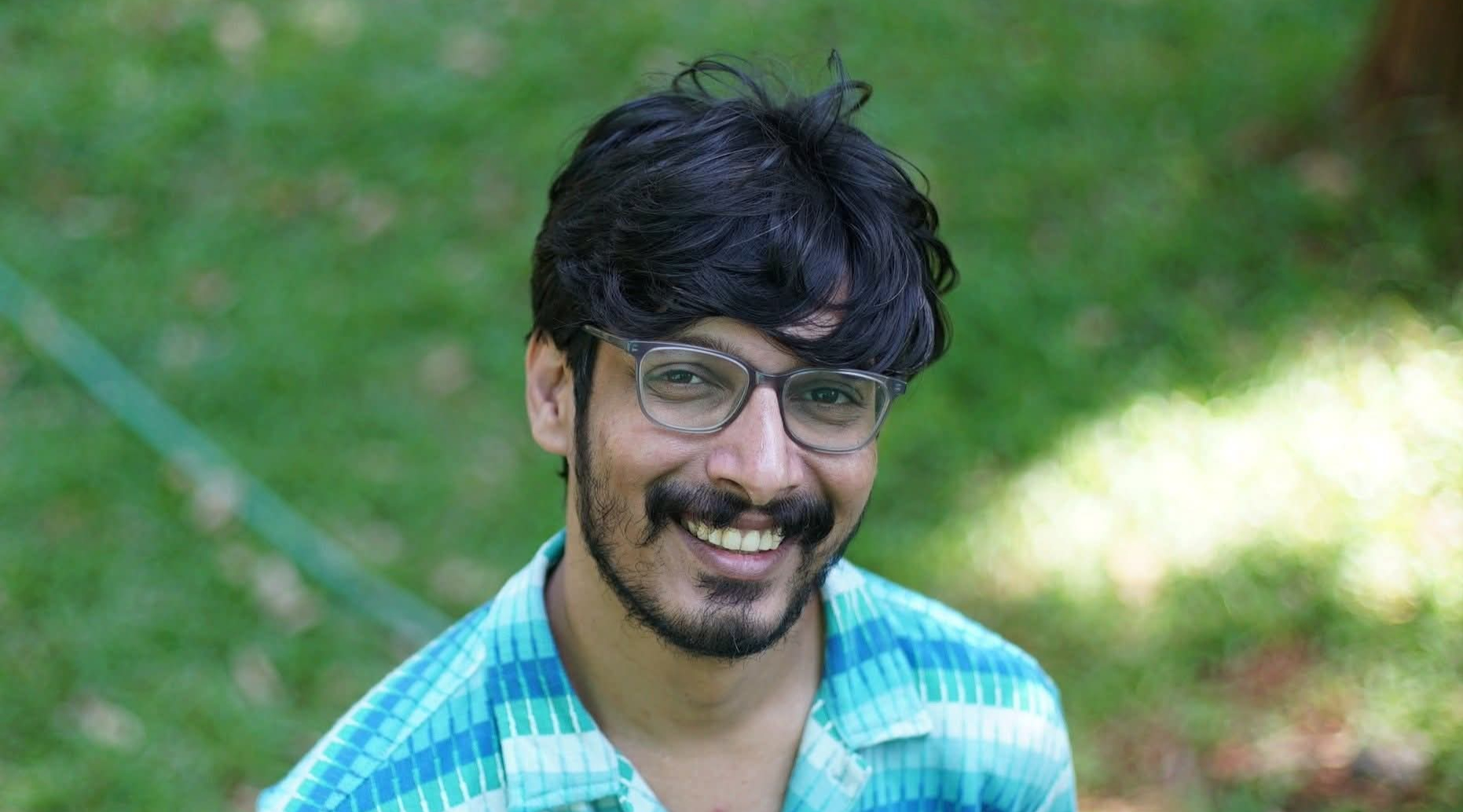
Writer, teacher and filmmaker Arjun is something of a provincial cosmopolitan. He lives in Kannom, a village in the Kannur district of Malabar region in Kerala, but is up to speed on the latest filmmaking currents and debates from across the globe. He teaches film history — drawing primarily on David Bordwell — at the Kozhikode-based New Wave Film School, a collective of practitioners and scholars seeking to open up film education to interested people from all walks of life. With his colleagues at the school, Arjun also organizes the annual Independent and Experimental Film Festival of Kerala (IEFFK) and its short-film variant (IEFFK-S).
Arjun leads a minimal, almost ascetic life with scant financial resources — a mode of living and artmaking that seems hard to imagine anywhere in the country outside Kerala, where questions of sustainability are constantly gnawing at one’s practice. This minimalism has a direct bearing on Arjun’s films, which are made on near-zero budgets, hyperlocal in their concerns, and rough and ready in their surface finish. Yet there’s no compromise in their philosophical ambition or artistic-political conviction.
His mid-length documentary, Dialogues on Emancipation (2023), is set in the Chirakkal region of northern Malabar, not far from his native village. This region, we are told, was once known for its thriving slave trade — a tradition remembered today through an annual ritual around a memorial stone. The descendants of the slaves, largely the Pulayas of the Dalit community, didn’t fare much better, leading a miserable life in a feudal order under the landowning and priestly classes of Malabar.
The film unearths the story of Fr. Peter Caironi, a Jesuit missionary from Italy, who operated in Chirakkal until his death in 1966. Through interviews with the last surviving individuals converted to Christianity personally by him, a complex portrait of the priest emerges. Caironi, we learn, was an eccentric who worked for the upliftment of the poor and the downtrodden in the area. He provided them with reliable supply of food, paid them fair wages for their work and even helped them acquire land by pitching in with money.
On the other hand, Caironi appears to have been of a mercurial temperament, berating and brutally beating his new parishioners when he found them lacking in discipline or forcibly marrying off young girls for the greater good of the community. For the elderly interviewees, however, he has become something of a myth. They recall the time they spent under his guidance with reverence, going so far as to reframe his beatings as a kind of blessing too. There has even been a proposal to induct him as a deity in Theyyam, the ritual performance prevalent across Malabar and practiced by the subaltern communities of the region.
Today, Caironi seems to enjoy a dubious status, venerated by those emancipated by him, but sidelined by the Church and the left-leaning establishment alike (although the film doesn’t elaborate why). Arjun’s sober, patient documentary follows the field work of Dais Hubert, an academic researching Caironi’s life who appears in the film. But it places emphasis on recollected experience rather than corroborated truth, shedding light on a contentious figure not easily assimilated by dominant modes of history writing.
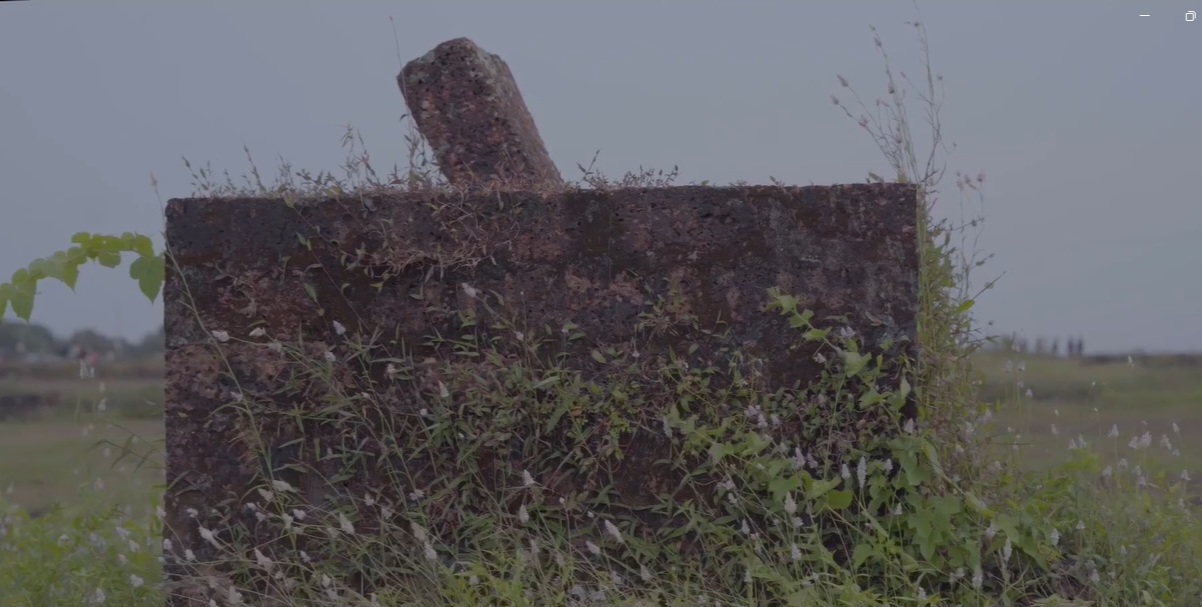
Dialogues on Emancipation
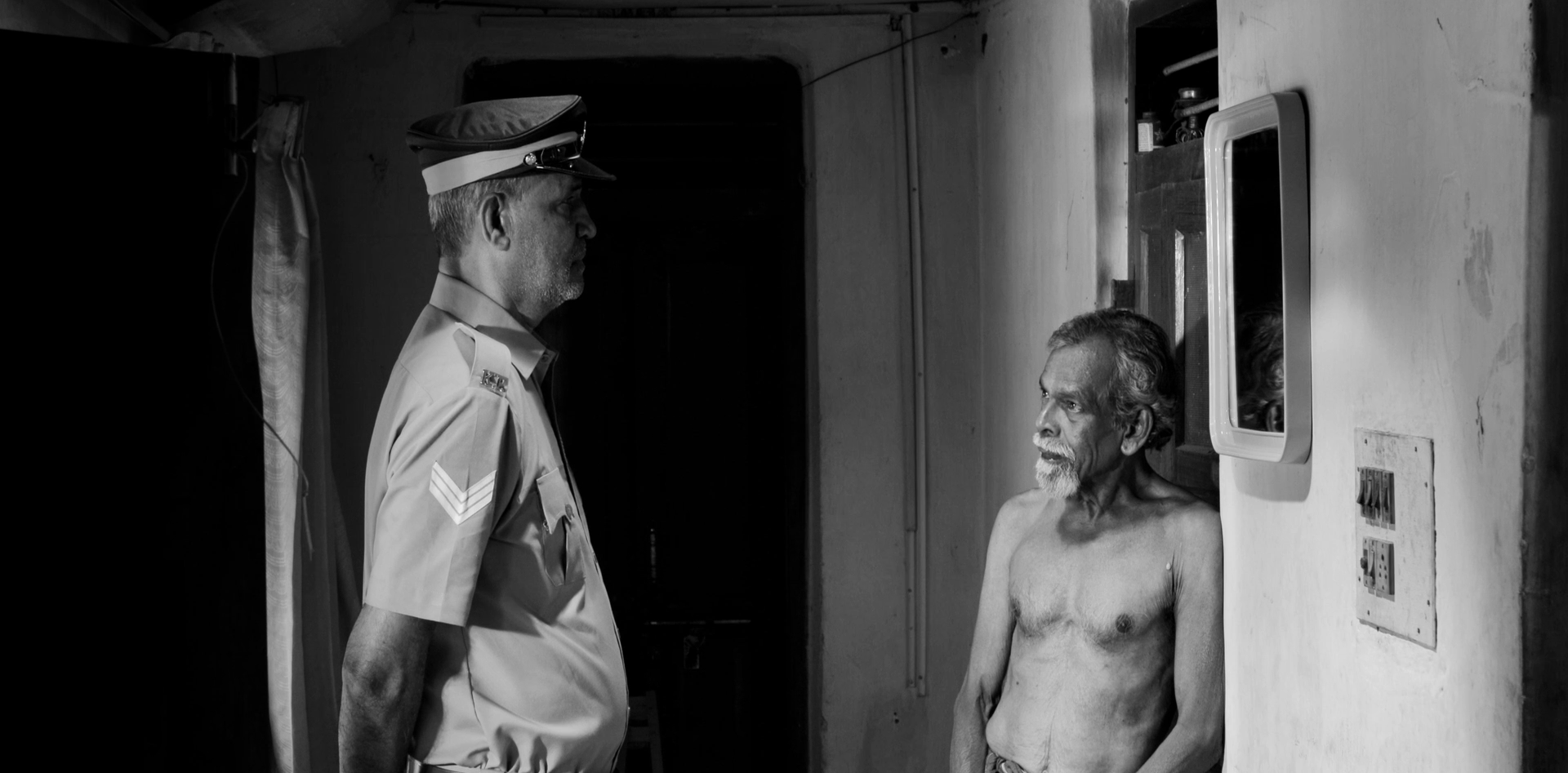
K-Pop
A diametrically opposed work, K-Pop (2026), Arjun’s fiction debut, embodies something of Caironi’s volatile character in the way it combines deadpan comedy with raw political rage. The opening title card gives a glimpse into its in-your-face, almost tendentious approach: “[This] film is a mapping of contemporary Indian way of life after the demolition of the Babri Masjid Mosque and the transition of India to a Nazi Republic.” If this sounds like hyperbole, it fits in with the film’s heightened rhetorical mode. Another example: an intertitle about the opening of a migrant detention centre in Assam in 2021 is cut to extremely graphic footage from the liberation of Auschwitz.
At the same time, there are elements that soften the blow. Throughout K-Pop, the filmmaker advances pungent political critique, only to offset it with moments of humour and formal playfulness. For instance, news on the radio about the inauguration of the Rama temple in Ayodhya in 2024 are cut to images from G. Aravindan’s film Kanchana Sita (1977), reminding us of the politicization and canonization of a multifarious, possibly tribal deity. Most amusing of all is the film’s central fictional narrative that involves a towering ex-cop and a literature-quoting thief who swap places.
Vattoli (Balakrishnan Pappinisseri) has recently retired after an illustrious career as an upright police officer. One day, he catches a thief named Krishnan (K.C. Krishnan) dozing in his house. Against expectation, he offers food to the trespasser, then invites him to stay at his place for as long as he wants. Once a star robber trained by a master bandit, Krishnan is now a timid, has-been crook afraid of venturing out without proper identification papers. So he accepts Vattoli’s offer and begins to spend a life of boring lawfulness. He takes the place of Vattoli’s absent wife, cooking for him and gaining unearned respect in the village. Meanwhile, estranged from his son, Vattoli begins to question his long-held ideals, going so far as to request Krishnan to teach him how to steal.
K-Pop describes a world where truth and falsehood have lost their bearings, and good has abandoned its station in lack of self-faith. If this parable is on-the-nose, it also invites a counterargument: is the village a better place now that Vattoli, the keeper of order, has relinquished his moral high-ground and ceded to pragmatism? Is the world better served by people like Krishnan, crooks turned cops who have tasted evil and are hence immune to its temptations?
The quaint police-thief story is interspersed with archival documentary footage, photographs, film stills, paintings and philosophical quotes, all of which directly address the rise of totalitarian tendencies in Indian politics and society. Fiction often serves as a sublimation of an artist’s reaction to real-world strife and discontent. In K-Pop, Arjun is reflecting on the sorry state of the nation, forging a reckoning — admittedly partisan — with the country’s long history of religious fundamentalism. In presenting his allegorical tale alongside a collage of overt political statements, he is giving the viewer both the text and the context, discontent and sublimation.
The film ends with a photograph of Subhas Chandra Bose shaking hands with Hitler. It’s a moment ripe for historical speculation: what if the Nazis had helped India overthrow the British? What would the shape of the nation be today, of our notions of good and evil? Rather than a counterfactual, Arjun’s film deems it a prophecy fulfilled.
K-Pop is awaiting its world premiere.
Bio
Arjun K is a Kerala-based filmmaker and film critic whose work bridges fiction, documentary, and experimental cinema. With a background rooted in history, memory, and philosophical inquiry, his films challenge narrative conventions while maintaining strong socio-political relevance. He is the director of K-Pop (2025), Dialogues on Emancipation (2023), and the short film Two Deaths (2021). As a film critic, Arjun’s essays have been published in journals like Chalachitra Sameeksha and Drishyathalam. He also teaches film history at New Wave Film School and programs the Independent and Experimental Film Festival of Kerala.
Filmography
- Randu Maranangal (Two Deaths), 2021, 18 min., digital
- Vimochana Sambhashanangal (Dialogues On Emancipation), 2023, 53 min., digital
- K-Pop, 2026, 75 min., digital
- Hail Cinema (work in progress)
- Amavasi Nights (work in progress)
Showcase
Trailer for Dialogues On Emancipation (2023)
Trailer for K-Pop (2026)

