Week End
(Week-End)
1967

Aah… Week End. A film that would have made John Waters proud. It wasn’t until this film that I got a firm hold on the roller coaster that was Godard. Fully bloomed, Godard plays with the medium like a potter does with his sand – only more carefully careless. Self-proclaimed end to Godard’s most celebrated period is fittingly over-the-top, with the evidently characteristic Godardian magic oozing out of each second of runtime. Closer to conventional narrative than La Chinoise (1967) but overtly more political than his Anna Karina period, Godard leaves no stones unturned to lay open himself and chart out what was to become his mainstay.

Week End (1967)

Week End (1967)

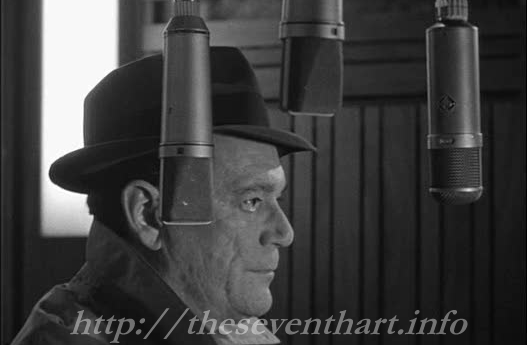
The film follows the road trip of a French couple immediately following a notoriously extended narration of an erotic tale. They come across everything but the kitchen sink (or may be that too…) on their way as Godard employs the unsuspecting leads to paint the screen with his bubbling political ideologies and cultural stand. With intriguingly long tracking shots (including the instant classic traffic jam where Godard pulls off an unimaginable 10 minute odyssey that is as dynamic as it is static) Godard distorts space and time and disorients the viewer from “expecting” anything. So all the viewer can do is to live the moment and reflect on what’s happening on screen. Hmmm… the Brechtian influence has most definitely paid off this time Monsieur Godard.

Progressively mad, Week End ironically takes civilization backwards to the point where we meet cannibalistic guerillas waging war with catapults and stealing picnic baskets (Yes, they are smarter than the average guerilla!). Intense meditation on African colonialism and featherweight moments of self- glorification (to the point of calling himself The Saviour) intersperse to form an oddly entrancing landscape that has to be seen to be believed. An addictive masterwork or decidedly camp, depending on how much you appreciate Godard’s style.

La Chinoise
(The “Chinese,” Or: Something Like The Chinese)
1967

In La Chinoise, Godard explores the issue of intra-party ideological difference as he tries to contrast what Marxism and Maoism stand for. He criticizes, though not hard-hittingly, the revisionist policies of the present-day socialists and questions if they are true to communist principles at all. But the larger discussion in the film remains about the involvement of the student community in revolution – an issue he grazed in Masculine-Feminine (1966) employing the same Jean-Pierre Léaud. Through this issue and use of a classroom-like atmosphere for almost the whole film, Godard calls for sensible political education and calculated extremism – both of which the protagonists of the film fail at.

The Chinese (1967)

The Chinese (1967)

Godard’s use of the red, blue and white colours reaches remarkable heights as he employs them to convey multiple layers of meanings. On a basic level, Godard uses them to portray love, hate and apathy respectively and Contempt (1963) and A Woman is a Woman (1961) remain prime examples of that.  Additionally, he uses them to represent communist, neutral and capitalist principles in this trilogy. He also alludes to the presence of these colours on the French flag, as if suggesting that France herself is being torn apart by these opposing ideologies. Godard turns down the notion of the Left and the Right in Made in U.S.A. (1966) and interestingly, red and blue respectively occupy the right and the left side of the French flag! And in La Chinoise, he does all this so effortlessly.

Godard continues to ruthlessly breach the fourth wall and even refers to Brecht and other influences during the course of the film. In some ways, La Chinoise looks like Godard’s first politically revolutionary film. 2 or 3 things I Know About Her looked like a yearning for change whereas La Chinoise seeks to do the change. Because of this significantly didactic nature of the film, many may decide to put an end to their journey of discovering Godard. But it is indeed after this film that Godard’s films become both politically and cinematically revolutionary.

2 Ou 3 Choses Que Je Sais D’elle
(Two or Three Things I Know About Her
)
1967

What Bitter Tears of Petra Von Kant (1972) is to Fassbinder, 2 or 3 Things I Know About Her is to Godard – minimal, meticulously controlled, thematically central and hard to watch. Harder than that is to follow everything that Godard throws at us, especially when he does it in his characteristically indulgent way. He proves, as he does regularly, that the language of cinema is left largely unexplored and it is, or rather can be made free of the subjectivity and pseudo-objectivity that plagues the oral languages and limits the world one gets and gives access to.

Two or Three Things I Know About Her  (1967)

Two or Three Things I Know About Her (1967)

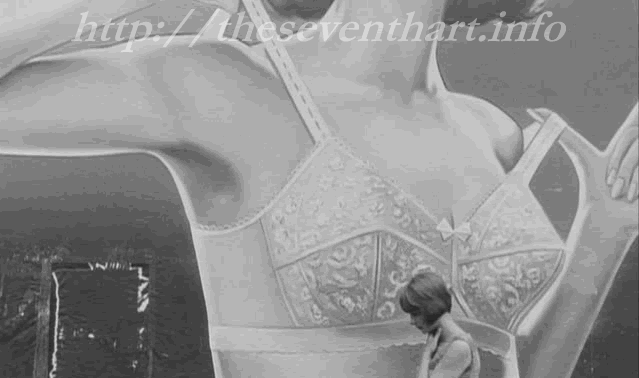
Another multi-layered approach by Godard compares the central character with the actress who plays her and the city of Paris herself.  It looks as if Godard is bemoaning the changes that are taking place in the society as it assumes a monstrous attitude through incessant consumption and the rat race it nurtures. Scenes of massive reconstruction that dominate the big picture are interspersed with the quotidian struggles that delineate the microcosm as the protagonist takes up casual prostitution to supplement the meager income of the household. Again Godard hints at the prostitution of the city’s ideologies with effective use of red and blue colours, as with the other films of the trilogy.

If I have to sum up the film in a single word it would definitely be “uncompromising” and so will be the word that I would use to describe Godard himself. Till 2 Or Three Things… Godard used a simple story line as a platform on which he would knit his ideas. But here, he sheds even that simple requirement and goes beyond his working limits, which is phenomenally radical by itself. Because of this, the audience is completely left helpless as the characters directly address them and force them to think. This way, Godard stretches the Brechtian theory and makes it the prime mover for the film instead of using it as a tool like he did so far. This is implied in the very title of the film as Godard warns us of the fragmented nature of the film and prepares us to fill in the rest by ourselves.

Made In U.S.A.
1966

Agreed that Tarantino loved Band of Outsiders (1964) and named his production company after the film, but it is in Made in U.S.A. that one can see the most evident inspiration for my favorite Tarantino, Kill Bill Vol.1 (2003). The bride is Paula incarnate and her “roaring rampage of revenge” isn’t much different from Paula’s own quest for vengeance. Tarantino’s unrestricted use of cartoons, music, black comedy, gore, melodrama and action may be a extrapolation of what Godard called “a mix of blood and Disney” in Made in U.S.A.. And come on, the censoring of The Bride’s name is a direct inspiration from the running gag in Made in U.S.A. where Godard censors Richard’s second name with all kinds of sounds possible.  In retrospect, it looks like Karina herself would have made a great Beatrix Kiddo (oh, sorry I forgot the “beep”!)

Made In U.S.A. (1966)

Made In U.S.A. (1966)

Godard’s political inclinations become much clearer as he overtly talks about the so-called Left and the Right. He calls for a drastic change in outlook towards these ideologies and urges that the “Left” is not a minority and hence such a classification remains invalid. Godard, as ever, uses every square inch of the screen effectively and conveys all he wants using even the objects that one might notice only on keen scrutiny. Remaining true to the title and intention, Godard uses generous amounts of gore and violence. No wonder Tarantino spotted a perfect adaptation.

This is Anna Karina’s only political film with Godard and he treats her with no more attention than any of his other actors (At least, that’s what it looked like to me!). But that doesn’t mean Godard’s chucked his style. The tributes continue and this time it is the American pulp genre and film-noir. You have characters named David Goodis, Richard Widmark, Donald Siegel, Richard Nixon and what not. And so do the lengthy indulgent monologues including one where Godard argues about the futility of sentences in comparison to words. Haha, what else did you expect from a man who single-handedly tried to change the way a film was constructed from the basic tenets of filmmaking?

Masculin féminin: 15 Faits Précis
(Masculine-Feminine)
1966

Watching Masculine-Feminine, I was once again reminded of Truffaut. May be because of the very presence of Jean-Pierre Léaud , or may be because of the tongue-tied and ambivalent Paul he plays. The scene at the mall where Paul records everything that he honestly thinks about Madeline on a disc and perhaps intends to present to her was an instant portal for me to the scene in Truffaut’s Stolen Kisses (1968) where Antoine, incidentally the same Jean-Pierre Léaud, repeats his name and those of Fabienne and Christine in front of a mirror to come to sanity. And may be it is because of all these warm moments, the film works well also as an ode to the joy of youth.

Masculine-Feminine (1966)

Masculine-Feminine (1966)

If Godard captured what men and women expect from each other in Contempt (1963), he extracts how exactly their younger counterparts view each other and how their actions are subconsciously manipulated to concur with that perception. Another similarity between the films would be the misattributed Bazin quote (“The cinema,’ substitutes for our gaze a world that corresponds to our desires“) that Godard rephrases in the scene at the theater. Being as naughty as ever, Godard dubs the film as “Children of Marx and Coca Cola“. And it probably sums up the entire film. It is so amusing to see Léaud trying desperately to become a revolutionary leftist and helplessly embracing the western way of life. And silently from this honesty arises Godard’s viewpoints on involvement of the student and the youth community in revolution.

Though not as experimental as Godard’s other films of the period, he does develop some style points that he would extrapolate in his later films –  the regular interruption of key conversations with unexpected noise, the flashy titles with word plays et al. Godard utilizes a lot of off-screen sounds and events equiping the audience enough for them to figure out what is happening on and off the screen. And perhaps because of its non-alienating and mostly non-experimenting nature, Masculine-Feminine may be one of the few Godard films that many will love without hostility.

Pierrot Le Fou
(Pierrot Goes Wild)
1965

Pierrot Le Fou is perhaps Godard’s most loved film after Breathless and it isn’t a coincidence that the films are often placed on the same platform for discussion. Pierrot Le Fou intentionally reverses the narrative that Breathless offered which just reinforces Godard’s stand on the nature of the medium. Breathless ended with a murder while Pierrot Le Fou essentially starts with one. The previous film had wandering souls falling in love whereas the latter has two lovers on the run. And even the starting quote of Breathless resembles the final one of Pierrot. He bends the rules all right, but what is more interesting is that he redefines film grammar that he had constructed.

Pierrot Goes Wild (1965)

Pierrot Goes Wild (1965)

Godard continues to play with the genre system, paying homage at times and ridiculing it at others. Early on in the film we see Samuel Fuller putting forth his definition of cinema as being one about emotions alone. And Pierrot tries to do exactly that. As with most Godardian characters, Pierrot knows that he is in a film and also that we know that he is in a film. He tries to make his journey as “cinematic” as possible by trying to indulge in all possible emotions that he can cook up. Surely, Pierrot stands for Godard himself as he moulds his life as per his whims as Godard does with the film itself.

But the film works the most on a personal level as Pierrot Le Fou sharply marks the end to what I would like to call Godard’s Anna Karina years. The film was made after the couple got divorced and Godard seems to lament the years gone by. Pierrot’s suicide in the final scene may be a manifestation of Godard’s own mental landscape. He even insinuates his future moves in the form of the impromptu play that Pierrot and Marianne put up, where he comments on the attitude of the west towards the Vietnam War (and this was when the war was going on, mind you). So, in a sense the film forms the junction between the two starkly different periods of Godard’s filmography. On the whole, a film about a man dissatisfied by conventions and with nothing to lose made by a man dissatisfied by conventions and with nothing to lose.

Alphaville, Une Étrange Aventure De Lemmy Caution
(Alphaville)
1965

There are two ways to watch Alphaville. One, you think of the film as a precursor to so many sci-fi films that were to use similar themes and construction or two, take it as another one of Godard’s games with the genre system and his stand against the occidental culture. I chose the second. True, it has striking images and notions that remind one of later films like Solaris (1972, the human dimension of space conquest), Blade Runner (1982, the dystopian setup devoid of warmth) and even 2001: A Space Odyssey (1968, HAL 9000 and Alpha 60 may pass off as cousins!), but I felt that Godard never intends to show to us a conventional narrative or a genuine sci-fi thriller.

Alphaville (1965)

Alphaville (1965)

This time over, Godard pays his tribute to the stalwarts of the 20’s who defined German expressionism. The character named Leonard Nosferatu, the     film-noir like texture of the film and the whole theme of the film that echoes Fritz Lang’s Metropolis (1927) are indications of nothing but Godard’s heartfelt homage to his idols. However, he never lets us sink into the film as the expressionist classics passionately did and constantly interrupts out attention with high-pitched beeps and occasional use of negatives that abruptly flip the colour scheme.

In the film Godard presents a world ruled by logic and precision where emotions don’t have any vitality. Poetry is extremely mysterious and malicious content and so is love. In such a place, all that matters are the absolute numbers and objective quantities. In other words, everything is commodified and its value measured against standards calculated solely by artificial intelligence. Godard explores the extremities of a fascist regime whose capitalistic policies thrive on quantity rather than quality and each person is no more than a unique number in an infinite list. Lesser didactic than many Godard works, Alphaville still retains Godard’s philosophical monologues that have become a staple in his films.

Une Femme Mariée: Suite De Fragments D’un Film Eourné En 1964
(A Married Woman)
1964

Godard does his biggest flip in style in his next film A Married Woman (1964). After all the freewheeling and cheerfulness of Band of Outsiders, Godard pulls of an intense drama whose typically French texture can make many rave about it on and on. Although a decided anomaly in Godard’s body of work during this period, A Married Woman still handles issues that had Godard going for it in the later part of his career.

A Married Woman (1964)

A Married Woman (1964)

Godard takes up the classic triangle love story and distorts it to fit his needs, as usual. It isn’t the men who are both trying for the woman, but it is the troubled central female who seems unable to decide between two men. She is treated like an object by both men, but in different ways. She, perhaps representing the entire Parisian women, is commodified by the endlessly long list of capitalistic companies with their products that implicitly try to “synthesize” the perfect woman. What’s worse is that the entire society aids it by conforming to their standard of the perfect woman. Coutard captures the leading lady Macha Méril seamlessly making her look like a soap bar or a piece of apparel displayed on a shop window, all prepped up for sale.

A Married Woman is one of the very few Godard films that prompt a character analysis in the traditional sense of the terminology. Though Godard’s characters are meant to be thought over and the on screen events they indulge in are meant to be detachedly brooded upon, there were never conventional dominator-dominated and victor-vanquished relationships. But A Married Woman is so character-driven that the film can well pass off as an Antonioni film. But that doesn’t mean that it is totally un-Godardian. You have all the typical on-the-screen text, intertitles and even the “negativized” sequences that would sprout up again later in Alphaville.

Bande À Part
(Band Of Outsiders)
1964

Godard proves that Breathless was not a fluke with his next film Band of Outsiders (1964). Band of Outsiders was the first Godard movie I saw and I had mixed reactions about it. And having watched quite a few of his films now, I understand that my perplexity was warranted in every way and that’s the way probably Godard would have wanted his audience to react. For sure, I will be revisiting it shortly and know for certain that I will gain more out of it now. Godard’s most lovingly directed work works on many levels and is perhaps his best take (or homage) on the genre.

Band Of Outsiders (1964)

Band Of Outsiders (1964)

I won’t be surprised if people rate it higher than Breathless for Band of Outsiders remains warmer and mellower today than at its time and would most probably elicit more “aaaws” than “huhs” unlike Breathless that still remains iconoclastic. A special mention for the DVD edition by Criterion – ranks among their best releases. Loaded with fantastic features including great interviews with Karina and Coutard, a gallery where Godard’s film is deconstructed stylishly and a short film Les Fiances du Pont Mac Donald (wanna bet Godard decided the title?) by Agnes Varda that is as charming as the main movie itself. A definitely great addition to your DVD collection.

With Band of Outsiders, Godard obtains a kind of inherent copyright for his work in the sense that a remake of the film is near impossible. Godard has already made a universally acceptable film with just the backdrop of Paris, literally. The gang of three is an anomaly in the relatively conservative city of Paris much like the Nouvelle Vague itself. The minute long silence (embodying Godard’s style of working), the impromptu dance (his theory of fluidity of the genre), the race through the L’ouvre (tribute to Truffaut’s Jules and Jim and a poke at the American cinema and its way of life) and the English class (well, er…, see for yourself) remain pieces of cinema to be cherished for ever. More than anything, the film is a celebration of unbridled youth, unsupervised freedom and unconventional cinema.

Le Mépris
(Contempt)
1963

Godard does not keep films and life dissimilar. His films influence his life and his life influences his films. This is manifest to the maximum extent in Contempt (1963). Godard’s divorce with Anna Karina can be directly seen from the film as Godard retains even the lines spoken by Karina during the period. And it’s probably because of this intensely personal nature of the film that the film forms a perpetual conversation in any Godard discussion. And needless to say, Godard’s incessant love for cinema shows and he pays homage to his idols with references all the way – naturally, for the film is about the filmdom itself.

Contempt (1963)

Contempt (1963)

Godard’s immense control of the medium is at its peak perhaps in Contempt. Remarkable use of room space as Godard employs empty and decaying structures that mirror the central characters’ lives. The film works on multiple levels and this genuinely multi-layered attempt gets better on repeated viewings. At one of those levels, Godard captures what men and women expect from relationships. Paul follows Camille wherever she goes but only late. Here again, with extended shots, Godard uses the screen space so effectively that one gets the taste of what mise en scène really is, not to mention his singular use of red and blue to convey deeper meanings than meets the eye.

Watching the film, I was so much reminded of Federico Fellini‘s masterpiece 8½. Both films are made by geniuses of cinema in the most troubled phase of their lives. Both films feature artists having trouble making their films, primarily due to fractured personal lives. The central scene where Paul, dressed in a toga-like costume, trying to control his wife is so strikingly similar to the surreal scene in 8½ where Guido tames women while dressed in a toga!. Both are films about making of films that are the films themselves (think over that!). Also, both of them contain one of the best film openings and endings ever. Additionally, both are intensely personal films that get better with knowledge of the situations in which they were made. And the whacker of a trivia being that they were both made in the same year!… Wierd.