Les Carabiniers
(The Riflemen)
1963

Godard first real failure looks much funnier today than it would have been at its time. Perhaps because we have realized the futility of war or perhaps because we enjoy it more. Whatever the case, Godard’s light-hearted satire on war, cinema and society remains one of his most accessible films of his early years. The film follows two simpletons who are lured by the idea of unbound wealth and drafted to serve in the war. Sure enough, they fall for the trick and go places committing the entire sanctioned massacre according to their whims, only to become the victims in the end

The Riflemen (1963)

The Riflemen (1963)

Godard’s stand against commodification of life shows its clear roots in Les Carabiniers. Also, Godard’s concerns for the position of women in the society and in the way they are treated especially as portrayed by the cinema of the west is established in a very comical way. One of the lead character asks what all he can steal without punishment during a war and keeps going “Cars? Cigarette Lighters? Chocolates? Women? Diamonds? Casinos?…” . And there is this extremely extended scene where the men show their women hundreds and hundreds of photographs of various vehicles, places and animals (and women) from across the world one after the other. It feels like Godard is cherishing (or ridiculing) the idea that cinema is photographs in rapid succession.

Made in an oddly fascinating way, that is as Keatonesque as it is Godardian, the whole film feels like a warmly delivered tribute to the masters of the past especially the silent gems of the 20’s. In probably the funniest scene in the film, Michelangelo tries to get a follow a woman who goes off-screen to undress on screen and also tries to evade a train that seems to come towards him. Given that such incidents did take place after the Lumiére revolution, it is quite possible that Godard is portraying what may be the lost innocence of cinema.

Vivre Sa Vie: Film En Douze Tableaux
(My Life To Live)
1962

After three decidedly crazy ventures, Godard shuts the mouths of critics with his next film My Life to Live (1962). More sober than all of his previous ventures, Vivre Sa Vie follows the life of a wannabe-actress who takes up casual prostitution to make ends meet. With significantly long shots that are as intriguing as his jump cuts, Godard organically captures the quotidian and empty life of his protagonist. My Life to Live is probably one of the few Godard films to get universal acclaim. Supposedly one of the most distressing shoot for the crew, especially for Anna, because of Godard’s sporadic fits of anger and frustration.

My Life To Live (1962)

My Life To Live (1962)

The film is divided into 12 segments each of which consists of an encounter that Nana has with the people she meets. Godard employs a range of film techniques – Drama, cinema vérité, newsreel and documentary – without relinquishing the staple film references along the way. Probably the most famous scene in the film, Nana’s rendezvous with Dreyer’s hypnotic classic The Passion of Joan of Arc (1928) encompasses everything the film stands for. We see a shattered Nana breakdown at the trial of Joan of Arc as Godard replicates the extreme close-up, definitely as homage to Dreyer too, as if suggesting that Nana herself is like Joan of Arc – tried by the cruel society forcing her to recant her belief of a respectable life.

Godard studies his main character with religious focus. I don’t know what was running through his mind while filming Anna at various distances and angles, but I’m guessing that whatever is presented in the film is a manifestation of their personal relationship and how Godard perceived Karina. Godard’s fascination with prostitution begins here and would go on to take up multiple meanings in his future films, especially the political ones. And there is also the typically self-indulgent Godard’s philosophy that occupies a whole chapter towards the end of the film.

Une Femme Est Une Femme
(A Woman Is A Woman)
1961

Godard has a field day in A Woman is a Woman. What better genre to employ Godard’s influence of Brechtian theory than a musical! The sheer rhythm of the movie is enough to give it the instant classic status and the quirky humor just adds to the effect. More than being a novel attempt, the film seems like a celebration of the New Wave with references and homage to the biggies of the 50’s. And the wild child he is, Godard doesn’t miss out on opportunities to glorify himself too! (Émile says at one point, “I don’t know if this is a comedy or a tragedy, but it’s a masterpiece“)

A Woman Is A Woman (1961)

A Woman Is A Woman (1961)

The film flows like a dew drop on a leaf with each moment topping the previous. “Expect the unexpected” would make a great tagline for the film as Godard intentionally disorients us from any predictions. And the effect works for sure. We see Angela tossing up an omelet and gathering it after a small talk. She enters a magic chamber and gets her costume changed like that. Godard seems to elicit the craziness, or rather the magic of the medium employing such moments that not only break movie traditions as we know them but also add to the radiance of the film. Godard uses blue and red colours aptly but is nowhere close to what he would do with them in his later films.

Godard, at times, interrupts key conversations with sounds and at others, interrupts sound with conversations. So, one doesn’t follow the story line closely which is precisely what Godard wants. As a result, you can’t help but enjoy the individual and “present” moments of the film for what they are rather than connecting their relevance with the past or analyzing the direction towards the future. Anna Karina at her charming best and one can see why Godard was so smitten. It is a treat watching her dance and a restrained Belmondo accompanying her.

——————————–——–————————————

HAPPY BIRTHDAY MONSIEUR GODARD!

——————————–——————————————–

Le Petit Soldat
(The Little Soldier)
1960

Godard ran into controversy with the very second film he made. Le Petit Soldat got banned for graphic depiction of torture of its protagonist by both parties involved in the war against colonialism. Though very mellow and even fantastic when viewed today, it would most definitely have raised a few eyebrows especially because of the cinéma vérité style the scenes adopt. And as an interesting point, for Godard, is that he surprisingly does not take a stand at all. His focus remains his central character whose freedom and happiness have become functions of factors beyond his control.

The Little Soldier (1959)

The Little Soldier (1960)

Though a typical Godard character, I felt like watching a Truffaut written one at times. A chap full of ironies. He says that he won’t describe his torture and follows it up by exactly that. He says he will not commit a murder and flips to the other side in no time. Michel Subor’s quirky portrayal goes down as another underrated performance in the director driven New Wave. The narrative’s fluidity and emphasis on the mundane stays intact and Godard seems to assert his control over the medium with ease as he happily weaves his ideologies in the form of daring monologues.

Le Petit Soldat remains Godard first and most superficially personal statement made on film. It is not incidental that Godard himself had a childhood that was divided between Switzerland and France like the little soldier. But the film is, more importantly, of interest for its romantic significance that would define Godard’s first phase of filmmaking. Godard employs Anna Karina in the lead role for the first time and Coutard’s camera seems like Godard’s own eyes, never once stepping off her in the photo-shoot scene. According to fellow technicians, there was clearly a chemistry developing between them from the first few days of shoot. Godard’s least talked about film of his early years retains its power to charm.

À Bout De Souffle
(Breathless)
1959

Start of Breathless – End of Cinema. Infinity has been written about the film and any further writing on the film is just a formality – a formality that every film buff must perform. At a time when Alain Resnais had made the intense drama Hiroshima, Mon Amour (1959) and when Truffaut was riding high on the success of The 400 Blows (1959), fellow Cahiers du Cinéma critic Jean-Luc Godard hit the filmmaking world with Breathless.

Breathless (1959)

Breathless (1959)

The story is as simple as it gets, which is perfect for Godard’s loosely but meticulously constructed style. A man on the run, a woman on the road, a kiss before death. It is near impossible to tell anything about the film without romanticizing it. Godard’s love for cinema shows in every moment of the film as he places charming cameos of fellow New Wave filmmakers here and there. Jean-Paul Belmondo is an instant hit with his Bogart-loving borderline-misogynistic attitude and it is no surprise that he went on to become one of the most famous French actors ever. And poor Coutard’s groundbreaking techniques are overloaded to the point of nausea nowadays. And Godard’s own contribution lies in his avoidance of being analyzed by traditional methods of film criticism as he reconstructs film grammar using the alphabets created by his own predecessors. No wonder he said retorted “Yes, A film must have a starting middle and an end, but not necessarily in that order”. He, in effect, disorients traditionally trained minds by speaking in a commonplace oral language, but in an entirely different cinematic one.

I wouldn’t hesitate to say that Breathless is the coolest thing that ever happened to cinema. And most wouldn’t deny. But that isn’t what it is all about. It revolutionized the way movies were made and more importantly, the way movies were watched. Things that we now take for granted in films – the outdoor shoot, the jump cuts (incidentally begot by a runtime crisis), the fluidity of narrative and the hand held camera work – show their roots in Breathless. No one makes movies like them any more and any close attempts seem like nothing more than cheeky use of camera and scissors. To plagiarize a quote on The Lord of the Rings book, “The movie-watching world is divided into two – ones that have seen Breathless and the ones yet to see them.”

Tirez Sur Le Pianiste (1960) (aka Shoot The Piano Player)
French
François Truffaut

“My old man used to say: When you hear someone at your door, think it might be an assassin. This way, if it’s a thief, you’ll be glad.”
 

Shoot The Piano PlayerI’m sure many would have watched Quentin Tarantino’s Reservoir Dogs (1992) or Pulp Fiction (1994) and become fascinated with the style of film making – Long conversations about…er, just conversations, dark humour, petty issues magnified, weird characters. Though Tarantino was influenced much by the works of Godard, the effect of Truffaut’s Tirez Sur Le Pianiste (1960) on his style cannot be written off. Tirez Sur Le Pianiste primarily acts as a cross between the 50’s film-noir style and Hitchcock’s troubled characters.

The film starts off with Chico, a gangster being chased by two others. He runs for refuge to his brother Charlie, a piano player in a local bar. Charlie manages to save him while the focus of the film shifts towards Charlie’s lonesome and mundane life. Charlie, a timid and tongue-tied person as is revealed by many encounters with women, has never done what he really wanted to. He has unsuccessful attempts at getting close with a young stewardess Lena at the bar, who is attracted to Charlie. “The truth about Charlie” is revealed in a flashback where he is a famous pianist Eduardo Saroyan who is very much preoccupied with himself that he neglects his wife’s individuality. Things become sour when his wife reveals certain details. Charlie’s timidity becomes a reason for his wife’s demise. He decides to change for good and takes up a new name. A parallel track runs where a pair of gangsters are forcing Charlie to reveal the whereabouts of his brother (who apparently cheated these two guys out of a deal) and kidnap his brother Fido. Charlie is pulled into violence when he inadvertently kills his boss and runs to his brothers’ hideout. In a Vertigo-esque twist in the story, Charlie loses his love for the second time, almost in a similar fashion.

The film has a constant flow of humour that ranges from pure slapstick (The conversation about the Japanese metal scarf takes the cake) to black. Charles Aznavour‘s passive performance not only gives the timid portrayal required but also acts as a facade for his past. Truffaut’s follow-up to the spectacular Les Quatre Cents Coups (1959) is fresh but mellow. It is nevertheless, a critical film in the French New Wave.

La Pianiste (2001) (aka The Piano Teacher)
French
Michael Haneke

“Schubert’s dynamics range from scream to whisper, not loud to soft”
 

The Piano TeacherMichael Haneke‘s disturbing portrayal of an aging music teacher is definitely not for every one. Very graphic in nature and strongly thematic, La Pianiste (2001) attempts to simply document its central characters rather than offering a judgment on their conduct. A truly multi-layered film with characters that can be analyzed for hours.
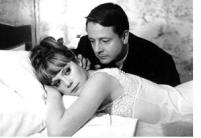
Erika is a very talented piano teacher who has always been controlled and ruled by her mother’s orders and wishes. This has not only resulted in her social isolation but also has risen a need for upholding her esteem. Thus she is straddled between two mindsets- one of a domineering male who wants to take control of all her actions, the other being a typical female craving for all the love she never had got in her youth. She meets Walther, a young dashing engineering student who loves music. He is quite opposite in character, very clement and conventional. He is attracted to Erika for reasons unknown and enrolls in her class. Erika, too, is attracted to and possessive of Walther. But she does not reveal it for it may seem like she is not under her control. When she finally decides to reveal what’s in her mind to Walther, the latter is disgusted by her weird sexual fantasies and tries to quit, but finds he is unable to. Finally, fed up from it all, he does what Erika asked him to do. The climactic scene deciding Erika’s fate can be interpreted in a number of ways.

Music is a critical point in the film. Not only does it provide the atmosphere, but also stresses on the characters. Erika specializes in Schubert who was extreme in thoughts became unstable of mind late in his life. The moderate Walther is unable to adapt to Schubert as opposed to Erika. Isabelle Huppert is one of the best actors around and La Pianiste shows why. Right from the cold stares in the piano classes to the quibbles with her mother, Huppert lives as Erika. Benoit Magimel as Walther too provides the right kind of reinforcement that a character like Erika needs. Both of them won the top honours at Cannes Film Festival in 2001 for their performances.

La Peau Douce (1964) (aka The Soft Skin)
French
François Truffaut

“Don’t talk so loud, people are staring.”
 

The Soft SkinLa Peau Douce (1964) is perhaps François Truffaut‘s least talked about good movie. Release alongside Jacques Demy‘s big favorite Les Parapluies De Cherbourg, La Peau Douce could well be called “eclipsed” by the former. From the outside the film could be written off as a mild drama, the characters in the films have much more impact than any melodrama. At first watch, it is but natural to think of Woody Allen‘s wonderful film Match Point – An illicit affair, the secrets revealed, tensions high for protecting egos. But neither is the film as verbose or as happening as Match Point.

The screenplay of La Peau Douce is not a usual screenplay one might see. There are no sudden twists, instigating incidents or unexpected moves through most part of the film. The film is paced slowly, with a lot of emphasis on the character development, especially the central character Pierre Lachenay. Pierre is a prude middle class person who is unsuccessful in sustaining relationships primarily because of his reservedness. Professionally an author, he is attracted to a young air-hostess Nicole who he meets during a lecture in Portugal. Jean Desailly is near perfection in the portrayal of a man who is crushed under his own principles. The affair continues all the way till Paris and Pierre still is secretive about the affair to Franka, his wife. Things take a sharp turn when Franka discovers the affair. There is an expected rift in relationships divorce is decided upon. Meanwhile, Nicole is also unable to sustain the relationship and quits.

The climactic quarter hour is where the film actually changes tone and feels like a Hitchcockian suspense tale. Pierre decides to apologise to Franka, only to find that she is unavailable in house. The climax, which I am not going to give away, is much debated upon by his fans. This tale of people caught within the formalities of love and the clockwork of the world was nominated for the Palm D’or at Cannes in 1964