Passion
1982
Passion marks the beginning of Godard’s most respected period, for those who were patient enough to dig deep. After years of self-glorification and reckless insubordination Godard seems to have shifted to this transitory period of intense self-criticism and awareness as he lays himself open, film by film, and at the same time commenting on how the industry itself is ruthless towards both minority experimentalists and the mass work-force in the form of extras, never once making the films unGodardian or compromising.
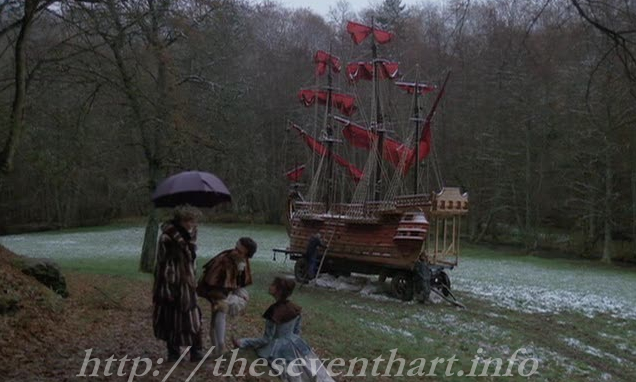
Passion (1982)
Passion follows three “individuals” – Jerzy, a workaholic film director without any real human attachment, most definitely representing Godard, Isabelle, a naïve worker at a factory and Hanna, a rich lady who, like Isabelle, is interested in Jerzy. Jerzy’s film in the movie consists of a series of Paradjanov-ish tableaus assembled with punctilious detail but apparently sans a structure and esoteric, like Passion itself. Hence, Passion becomes a self-indulgent movie about self-indulgence. These motionless images are interspersed with intriguing stretches of movement and restlessness. And over all this mystery, Godard continues to weave his philosophy on film grammar (At an interesting point in the film, Jerzy asks his film’s cinematographer, Raoul Coutard, also the cinematographer of Passion and off-screen both ways, if there are any rules in cinema upon which he gets a “No”), individualism and society, passion versus boredom, art against practicality and even the Polish revolution.
Godard compares art with love and the passion for art and labour with love-making. The effective character arc that Jerzy and Isabelle undergo isn’t one of redemption but of hopelessness. Jerzy seems to have abandoned his passion for art in exchange for commerce, Isabelle seems to have shed her genuine interest for work and both of them seem to have lost the genuine love that bound them. They assume fake passions and seem to have the notions of physical love and true love mixed up. Indeed, Isabelle’s final line reads “I don’t like cars” even when she continues working in Peugeot much like Jerzy who leaves for Hollywood deserting his “love”.
 The Seventh Art