[The following text was published in Pardo, the official daily of the Locarno Film Festival.]
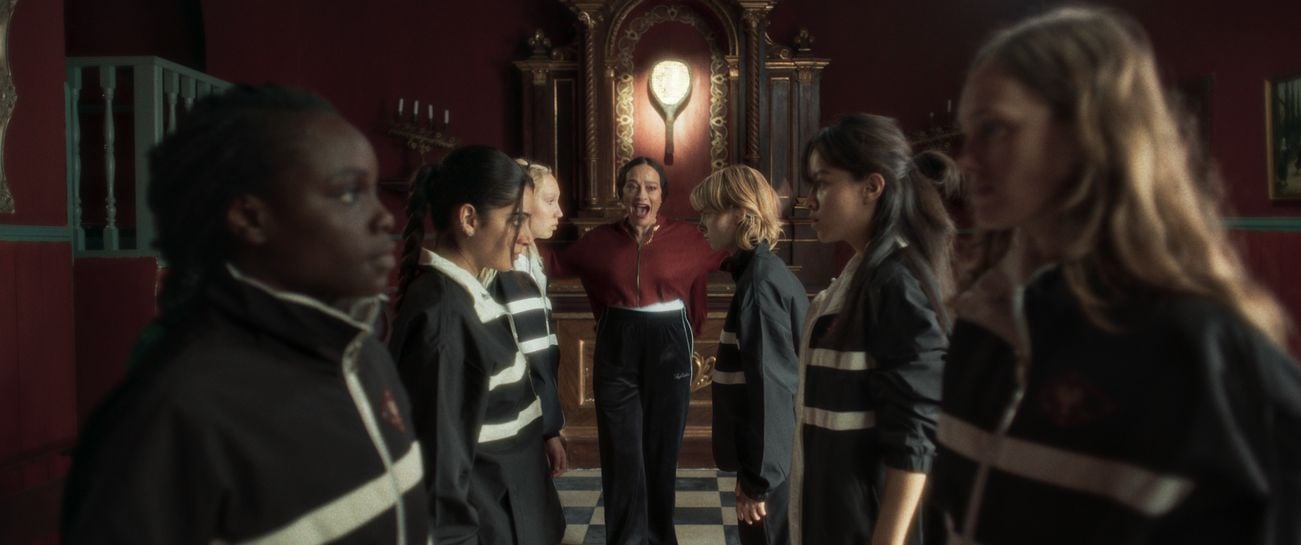
What does the rarefied, ceremonial realm of professional tennis have to do with the gooey, grisly messiness of horror? Judging by Bloody Tennis, quite a bit. In his fourth feature, the German filmmaker Nikias Chryssos smartly grafts the bloody enticements of final-girl sagas onto the highly competitive world of elite sport.
Aspiring tennis star Sophie (Sandra Guldberg Kampp), from Detroit, is enrolled by her father in an exclusive, all-girls training academy in the sun-soaked stretches of southern Europe. At this secluded facility, where she must compete with five other Wimbledon hopefuls from across the globe, the young woman realises that the journey to tennis supremacy doesn’t begin with “Love all”.
Run by the macabre Mary Tyrone, an erstwhile champion with a fondness for leeches and surveillance systems, played by Elina Löwensohn – last seen at Locarno in Bertrand Mandico’s 2024 work, Dragon Dilitation – the academy fosters a cutthroat environment where interpersonal bonds are discouraged and only the ruthless survive. Learning to navigate this girl-eat-girl world, her days a cycle of brutal practice sessions, bizarre communal meals and tense standoffs with peers and teachers alike, Sophie finds provisional allies and even ascends the pecking order. As she does so, however, she’s confronted not just with the mysterious terrors that lurk within the academy, but also in herself.
Using the lens of survival horror, writer-director Chryssos shines a light on the loneliness that grips top performers in competitive individual sports. The tennis matches here don’t look like anything on television: they are filmed close to the players’ bodies, edited with a frenzy that echoes their inner turmoil. Rather than mastery of the court, the games become about survival – existential contests where life hangs by a racket string. This aesthetic reaches an expressionist crescendo in a grotesque, lushly operatic final match where Sophie faces off against her fiercest rival.
Bloody Tennis adeptly manipulates the conventions and tropes of the slasher film, its pleasures added to by a subtle cinephilic self-awareness. Shot in captivating widescreen by Constantin Campean, the film makes eye-popping use of colour, its images often awash in saturated reds and browns, while the layered musical score employs a chorus of soft voices that augment Sophie’s psychological torment.
Directed with a sure hand, Bloody Tennis isn’t afraid to be pulpy when needed, rejecting the comfort of irony and the philosophical pretensions of elevated horror. The result is a smart and sinister scary movie that goes for both guts and glory.

