Tirez Sur Le Pianiste (1960) (aka Shoot The Piano Player)
French
François Truffaut
“My old man used to say: When you hear someone at your door, think it might be an assassin. This way, if it’s a thief, you’ll be glad.”
 I’m sure many would have watched Quentin Tarantino’s Reservoir Dogs (1992) or Pulp Fiction (1994) and become fascinated with the style of film making – Long conversations about…er, just conversations, dark humour, petty issues magnified, weird characters. Though Tarantino was influenced much by the works of Godard, the effect of Truffaut’s Tirez Sur Le Pianiste (1960) on his style cannot be written off. Tirez Sur Le Pianiste primarily acts as a cross between the 50’s film-noir style and Hitchcock’s troubled characters.
The film starts off with Chico, a gangster being chased by two others. He runs for refuge to his brother Charlie, a piano player in a local bar. Charlie manages to save him while the focus of the film shifts towards Charlie’s lonesome and mundane life. Charlie, a timid and tongue-tied person as is revealed by many encounters with women, has never done what he really wanted to. He has unsuccessful attempts at getting close with a young stewardess Lena at the bar, who is attracted to Charlie. “The truth about Charlie” is revealed in a flashback where he is a famous pianist Eduardo Saroyan who is very much preoccupied with himself that he neglects his wife’s individuality. Things become sour when his wife reveals certain details. Charlie’s timidity becomes a reason for his wife’s demise. He decides to change for good and takes up a new name. A parallel track runs where a pair of gangsters are forcing Charlie to reveal the whereabouts of his brother (who apparently cheated these two guys out of a deal) and kidnap his brother Fido. Charlie is pulled into violence when he inadvertently kills his boss and runs to his brothers’ hideout. In a Vertigo-esque twist in the story, Charlie loses his love for the second time, almost in a similar fashion.
The film has a constant flow of humour that ranges from pure slapstick (The conversation about the Japanese metal scarf takes the cake) to black. Charles Aznavour‘s passive performance not only gives the timid portrayal required but also acts as a facade for his past. Truffaut’s follow-up to the spectacular Les Quatre Cents Coups (1959) is fresh but mellow. It is nevertheless, a critical film in the French New Wave.
 During a war, more than armies and governments, it is the children who are affected most. The images of the atrocities and violence in the war makes an impact that is life-changing for them. The subject of children of war has been a less tackled one when it comes to Cinema. Andrei Tarkovsky’s Ivan’s childhood (1962) gave as an immensely personal account of war as seen by the title character. Another critical film on the same subject is Elem Klimov’s Idi I Smotri (1985). The film is hailed as one of the best anti-war films for its depiction of the influence of war on children.
 Michael Haneke‘s disturbing portrayal of an aging music teacher is definitely not for every one. Very graphic in nature and strongly thematic, La Pianiste (2001) attempts to simply document its central characters rather than offering a judgment on their conduct. A truly multi-layered film with characters that can be analyzed for hours.
 Ingmar Bergman‘s Oscar-winning film is the first of the “Faith” trilogy and is followed by
 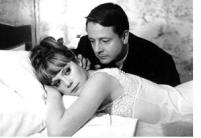 La Peau Douce (1964) is perhaps François Truffaut‘s least talked about good movie. Release alongside Jacques Demy‘s big favorite Les Parapluies De Cherbourg, La Peau Douce could well be called “eclipsed” by the former. From the outside the film could be written off as a mild drama, the characters in the films have much more impact than any melodrama. At first watch, it is but natural to think of Woody Allen‘s wonderful film Match Point – An illicit affair, the secrets revealed, tensions high for protecting egos. But neither is the film as verbose or as happening as Match Point.
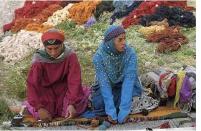 A co-production of the French and the Iranian film industry, Gabbeh (1996) is perhaps the best and most typical starting point for the westerners who would like to get an insight into the cinema of the east. Released in 1996 Gabbeh has managed to enchant the westerners and the Asians alike for not only its artistic merits but also for its subtle exposure of the culture of Iran. The film is centered around a nomadic tribe, which is tightly bound by blood relations. The tribe has its own rituals and beliefs which it passes on for posterity. One such practice is the weaving of carpets for a person depicting the journey of their life. The tribe carries and updates the carpets wherever they go.
 The Seventh Art