Visions du Réel, Nyon, continues to grow in stature and size into one of the most significant documentary festivals in the world; its recently concluded 57th edition featured a whopping 164 films from 75 countries. With a strong industry segment, co-production market and curation of special programmes, it is veritably an institution for contemporary documentary practice.
Which means it also flirts with the risk of institutionalization. I haven’t watched enough titles from the festival’s main section — International Feature Film Competition — to make a qualified judgement. But at a cursory glance, the section seems populated by commercially viable titles that embody a dominant tendency in documentary cinema today: human-interest stories featuring common people playing themselves, enacting fictionalized exchanges against the abstract backdrop of hot-button crises such as climate change, neoliberal plunder or geopolitical upheavals.
Like with all big festivals, the juicy, challenging and most rewarding films seem to be found in the sidebars, such as the experimentally oriented Burning Lights Competition. Here are a few of the titles from across the festival’s sidebars that I found most interesting.
—
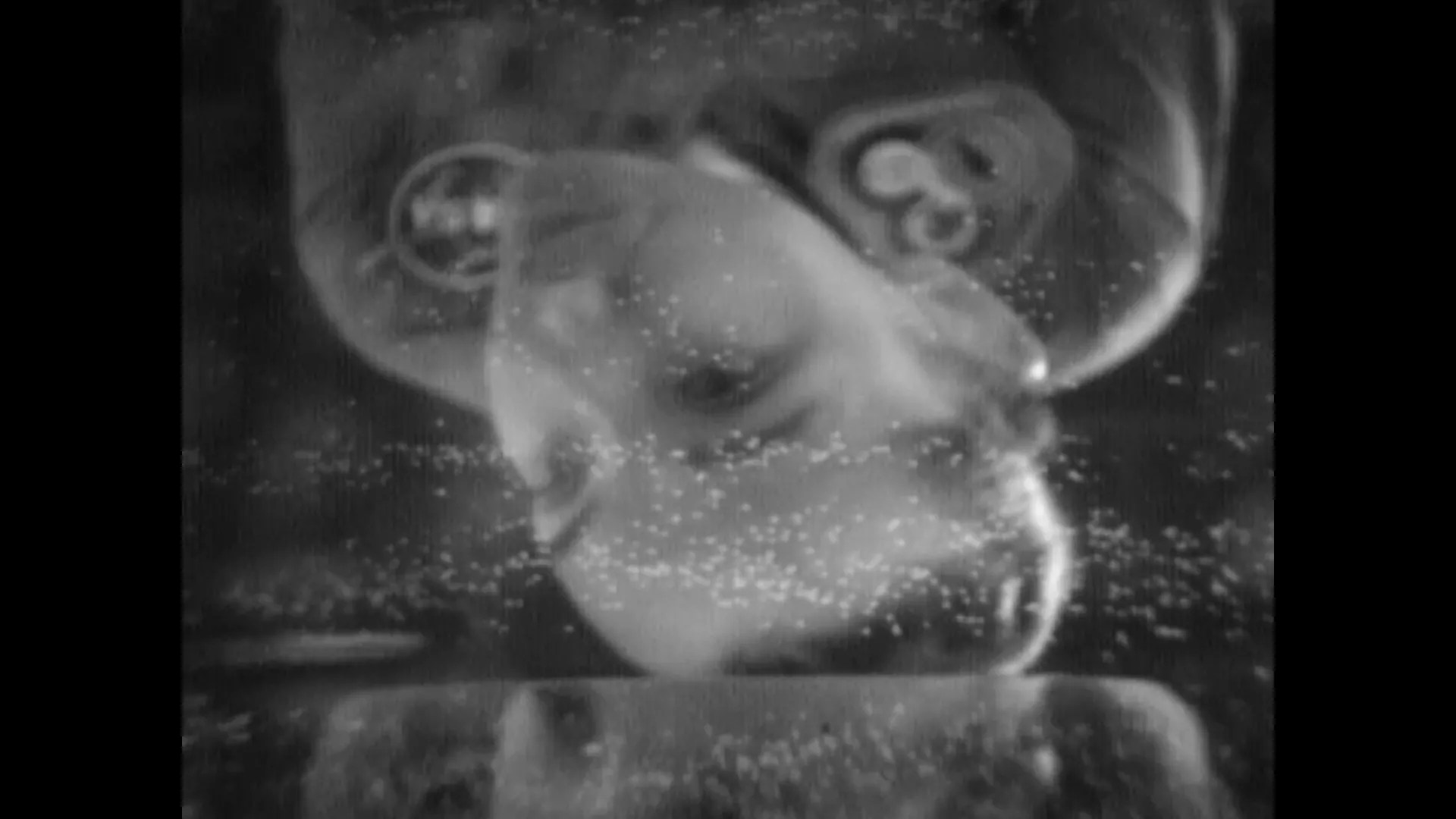
In the winter of 1973, a team of astronauts embarked on an 84-day-long stay aboard Skylab, NASA’s first space station. Not only was this the longest manned spaceflight thus far, the crew was also made of first-time astronauts. Assigned an unprecedented volume of tasks and experiments, they fell behind their schedule. Mission control, with whom they had brief contact over every orbit, urged them to catch up without paying heed to their deteriorating mental and physical conditions. Overworked and cooped up in a poorly designed environment unfit for long-term dwelling, the crew went quiet just before Christmas.
Accounts of what happened during this communications blackout differ significantly. The Case Against Space pursues the theory that the crew went on an organized strike, with the unstated demand that the working hours that apply on earth be applicable in space too. An extremely reduced kammerspiel, Graeme Arnfield’s film largely consists of performers talking to a frontal camera that simulates the radio equipment. These actors re-enact the crew’s experience in the days preceding the strike, their monologues based on transcripts of real communications with mission control, but complemented by creative speculation about what must have likely happened onboard. They describe their absurdly overstuffed to-do lists, their frustrations with faulty equipment and their dwindling faith in the top brass back home.
As the recent euphoria around Artemis II reminds us, space missions have historically been viewed in supra-political terms, as collective human accomplishments. At best, they have been proxies for national and ideological conflicts. The Case Against Space reframes the matter in starkly materialist terms. In Arnfield’s film, the work of astronauts isn’t the expression of human enterprise or techno-nationalist superiority, but concrete labour carried out for demanding bosses on earth. There’s no velocity high enough to escape the class struggle.
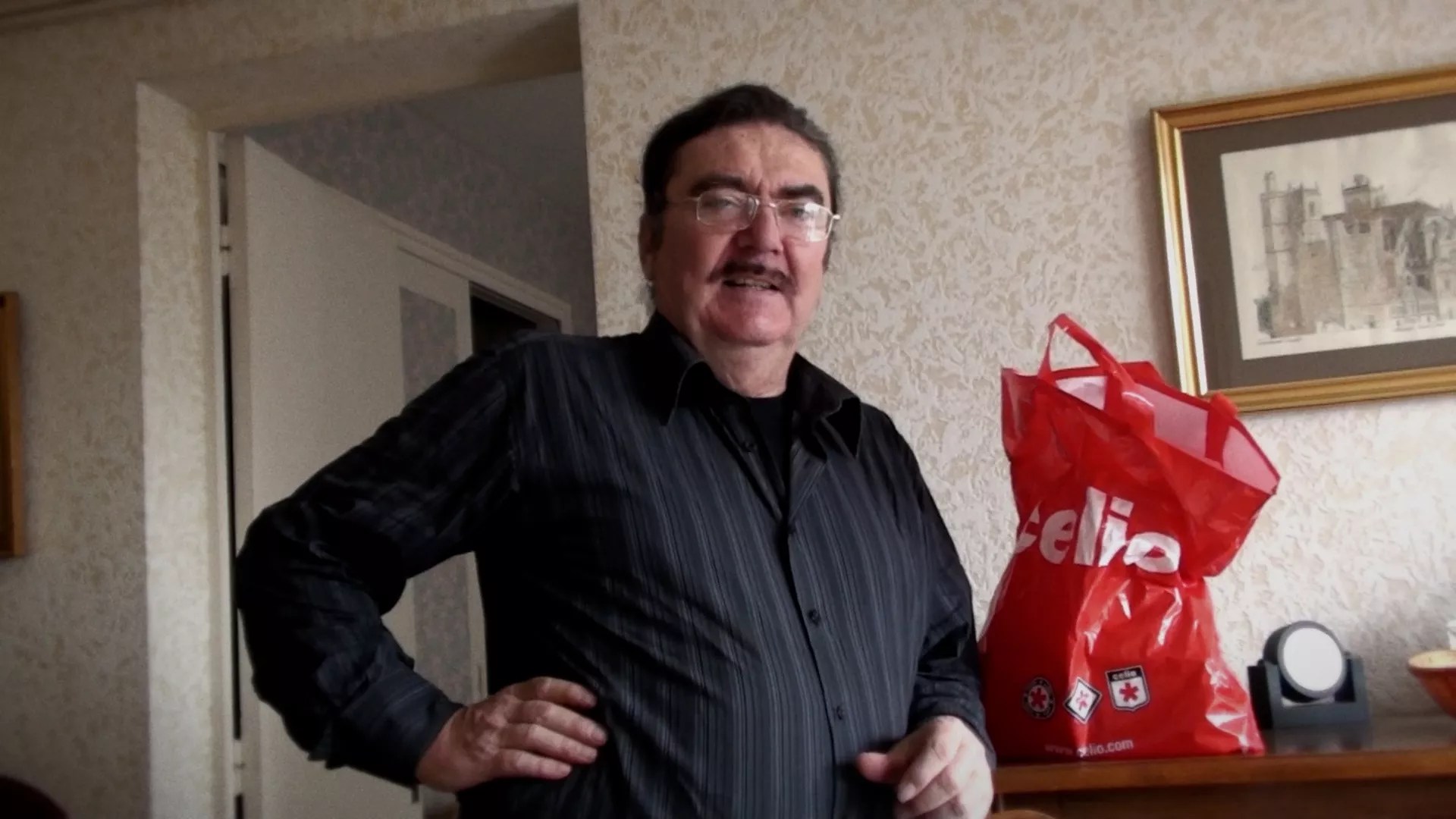
In 2019, Argentinian filmmaker Ignacio Ceroi bought a used camcorder on eBay and found that it was full of fascinating home and travel movies. Wishing to make a film from this material, Ceroi reached out to the camera’s old owner, an elderly man with a potbelly and an insistent moustache who figures regularly in the videos. This man, named Charles, gave the filmmaker the go-ahead and even shared personal stories that will help explain the footage. Ceroi went to work with this information and produced a film titled What Will Summer Bring (2021), a documentary about a man who went to Cameroon on an accidental adventure, fell in love with a woman there and ended up in the jungles in search of her renegade son. Since the film is entirely narrated by Ceroi on behalf of Charles, it is hard to know how much of all this is fabricated.
As it turns out, all of it was. While the footage and the camcorder were real, Ceroi never really found its owner. The entire story was made up, and there was no person named Charles. Those appalled by this impish piece of media-hacking wouldn’t probably care for Ceroi’s follow-up film titled Don’t Tidy or Clean My Room, I Like It as It Is. Here, Ceroi admits to being anxious all these years about the real owner getting a whiff of his heist. To find closure, he sets out in search of the owner — this time for real — with the help of a professor from Paris and contextual clues from the footage.
It would be revealing too much to say what happens next. But I found the film strangely touching. Whether intended in apology, curiosity or respect, Ceroi’s journey in search of the camera’s owner is a pilgrimage, a reparative attempt to wrest truth from fiction and return it to reality. His first film was the fruit of pure coincidence — the resale of an old camera — but the sequel suggests that even anonymous, arbitrary images can be the catalyst for meaningful relationships. While the former was based on a fake correspondence, the second one strives to create a real one. Through this striving, Don’t Tidy or Clean My Room honours the memory of “Charles”, whose afterlife in recorded images comes to hold personal significance for those who have encountered them.
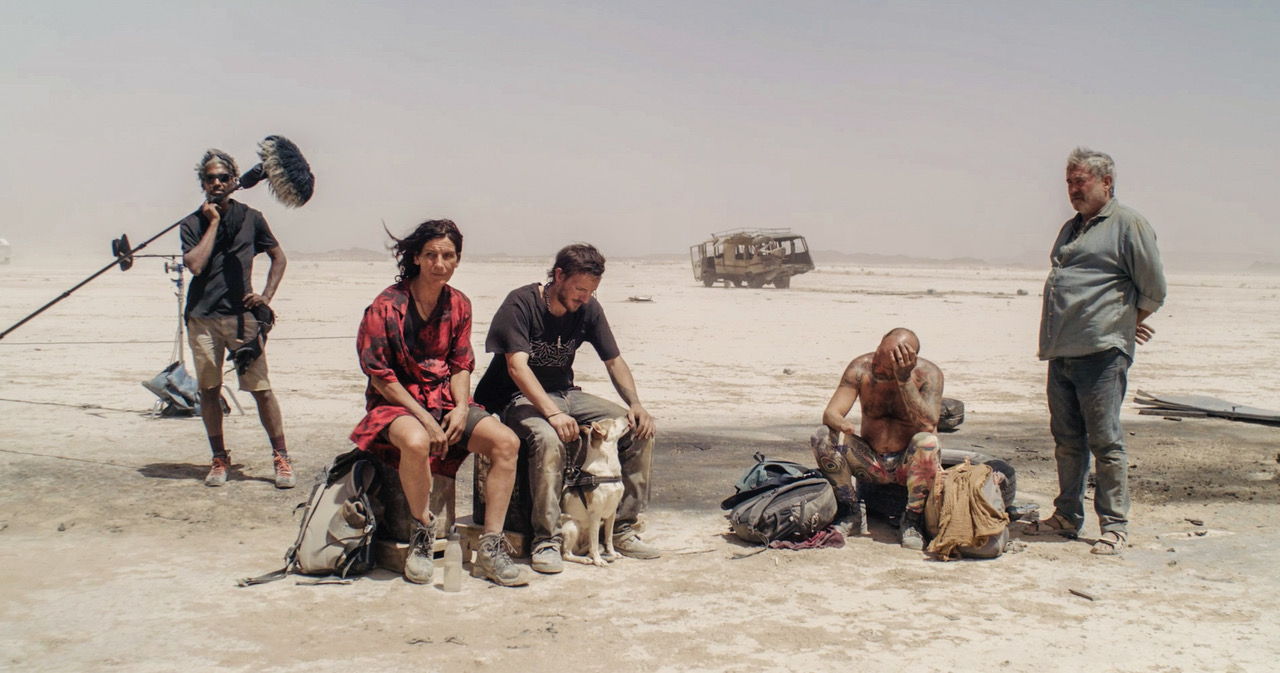
At first sight, Uberto Rapisardi’s Vacío Luminoso is a straightforward making-of documentary about Oliver Laxe’s arthouse hit Sirāt (2025). It details the filmmaker’s intentions, the casting and shooting process, the contribution of actors and technicians, and the craft behind the film’s most memorable — and shocking — scenes. But Rapisardi’s account does something more: it shows how the film was almost not made. Rapisardi intercuts footage from the sets of Sirāt with an interview with Laxe recorded at a moment of crisis during the last days of the shoot. Laxe is evidently dejected by something he doesn’t fully name and has retreated from the sets in frustration. Shot in extreme closeup, Laxe outlines the influence of Sufi thought and practice on his work. He also expresses horror at the flagrant incongruity between the spiritual origin of Sirāt — which is, among other things, a religious parable about ego loss — and the megalomaniacal behaviour that mounting such an international, quasi-super-production instils in him. Rapisardi also interviews actors who express their misgivings about the mismatch between the stated intentions and the methods of the film. In prying open the contradictions at the heart of Sirāt, Vacío Luminoso points to the resistances that lie at the heart of all creative endeavour.
What Lauren Dällenbach’s debut feature Nicole Nicole pries open are the contradictions of Western family relations. Winner of the National Competition section, Dällenbach’s endearing domestic documentary centres on the filmmaker’s grandmother, Alberte, and her maternal aunt, Nicole, who live together in mutual dependence – the former afraid of being alone, the latter neurodivergent and seemingly incapable of striking out on her own. This dependency, although functional, is a ticking bomb since Nicole cannot live forever with her ageing mother. What’s more, Nicole, we learn, has a secret lover, whom she sneaks out to meet without ever being able to bring him home.
To address this, Nicole’s wider family, primarily her elder sister (the filmmaker’s mother), hatches a plan to help her move out. Working with public institutions, they find a way for Nicole to find a job, a new apartment and, most importantly, the courage to tell Alberte that she will be leaving. Part of the challenge for them is in defining Nicole’s unique mental condition: her intellectual metrics are too low for a completely independent life, but too high to be considered autistic so that the state’s disability support system can come into effect.
As a maker of exterior images, however, the filmmaker has no need to label Nicole. With great affection and care, she spends time with her aunt, probing with hopeful thrill into her secret romance and even conspiring to turn her life into one of those softcore photo-comics that she loves reading. At one point, when Nicole breaks down at the thought of her mother’s eventual death, Dällenbach puts her camera down to go embrace her aunt — an acknowledgement of the filmmaker as a human that I have rarely seen in documentaries.
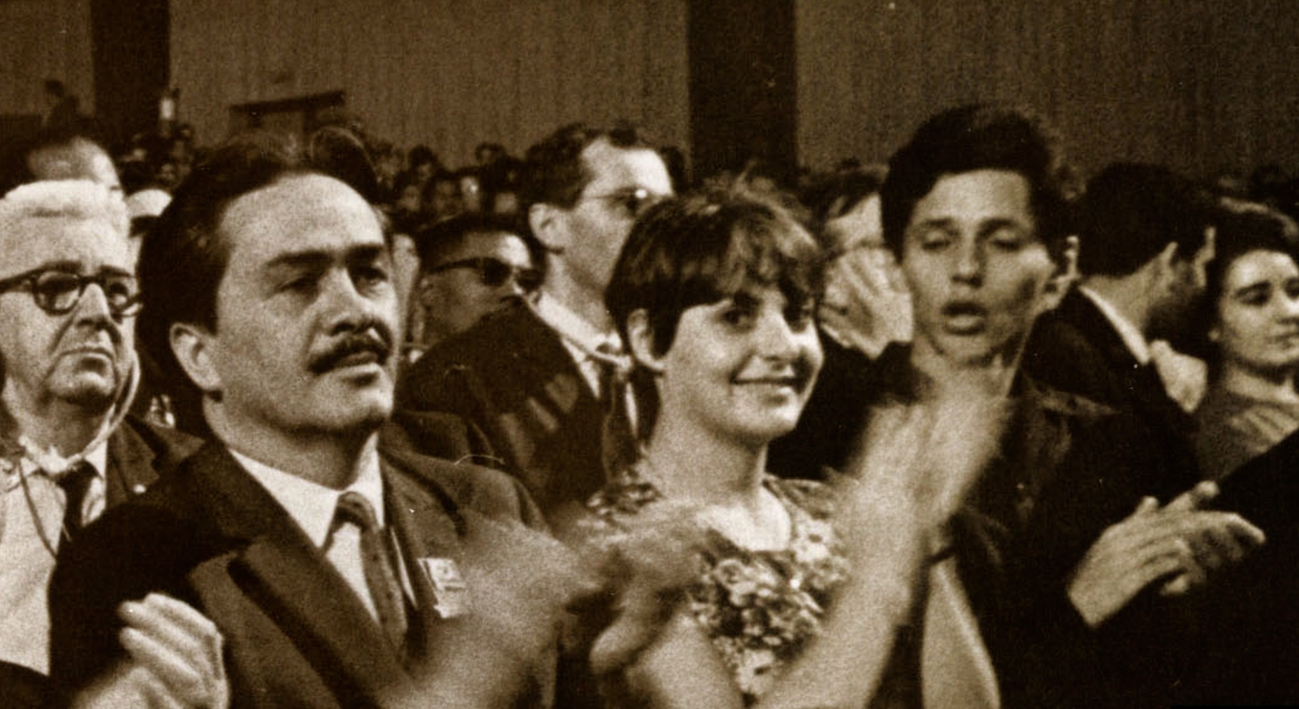
“Dear comrades, do not allow them to make me anything other than what I am, and what I wish to be: a revolutionary fighter.” These are some of the last words of a letter that Michèle Firk left to her friends-in-arms, titled “to be opened in case of”. What this unmentioned case might be was perhaps clear to Firk’s comrades engaged in militant struggles against imperialism in various corners of Latin America. Born in Paris in 1937, Firk began as a film critic at the magazine Positif (a role later memorialized in Luc Moullet’s Les Sièges de l’Alcazar), but her real calling was politics. At 24, as part of the Jeanson network, Firk was a voice for Algerian independence, and her interest would soon expand to international Third World movements.
Firk was acutely aware of the hypocrisies of armchair intellectualism and, unlike many of her peers in France, sought to refashion her life in line with her beliefs. “What is shameful is speaking casually of Vietnam without changing one’s life, being objectively informed from afar without getting involved,” she wrote in her final letter. In the early sixties, she moved to Cuba, where in addition to working the fields and meeting Che Guevara, she was an interpreter at the Tricontinental Conference of 1966. After years of pseudonymously moving across countries in service of the cause, she found herself involved in armed struggle in Guatemala. Implicated in the kidnapping of an US ambassador, Firk allegedly shot herself in her hotel room when the police came knocking.
Swiss helmer Laura Cazador’s rousing cine-portrait of Firk, Tricontinental, Letter to Open in Case Of, takes the words of the letter to heart, presenting the subject on her own terms, without distance, condescension or historical relativization. It helps that Cazador is committed to the same causes as Firk and has a shared affinity for Havana where she works at the EICTV film school. Cazador structures her film wittily, borrowing chapter titles and clips from anti-imperialist Third Cinema works. This is supported by a dense and propulsive voiceover composed of a mix of Firk’s own words and the filmmaker’s second-person account of Firk, creating a sense of complicity between the two across time. Cazador’s Firk is not a girl lost to history, but a model to be emulated, a guiding light shining on the horizon.
Cuba, specifically the EICTV, also features prominently in another title I was very taken by: Peter Mettler’s While the Green Grass Grows: A Diary in Seven Parts (which premiered in Toronto in 2025). Mettler’s seven-part, seven-hour-long diary film is an utterly unique object — part home movie, part travelogue, part visual experiment, part philosophical essay. But this colossal documentary is foremost a record of Mettler’s life over three years, which includes the passing of his aged parents as well as a major health scare for himself. Alternating between time spent with parents and encounters with people during professional trips, the filmmaker weaves a sprawling meditation on human striving, material and spiritual. Weighty considerations on what lies beyond immediate human experience rub shoulders with life as it is lived one day at a time.
Mettler incorporates vast amounts of natural vistas, especially water bodies, while the soundtrack carries his monologues and conversations. This oblique arrangement prompts us into reveries and reflections of our own, but integral to the subject at hand. Internal rhymes and echoes abound — remarks, themes and images from one section are reprised in others in subtle and surprising ways. At once ambitious and unassuming, Mettler’s film doesn’t shy away from overt philosophizing, but also lets the beauty, banality, frailty and absurdity of life trickle through in its quieter passages. I can’t recall a recent film in which every moment, every element becomes such a thorough expression of the filmmaker’s state of mind and life situation. Possibly one of the most vital documentaries of the decade.

