[The following interview was conducted for the Forum section of the Berlinale, where the filmmaker’s second feature Tiger’s Pond had its world premiere in February 2025.]
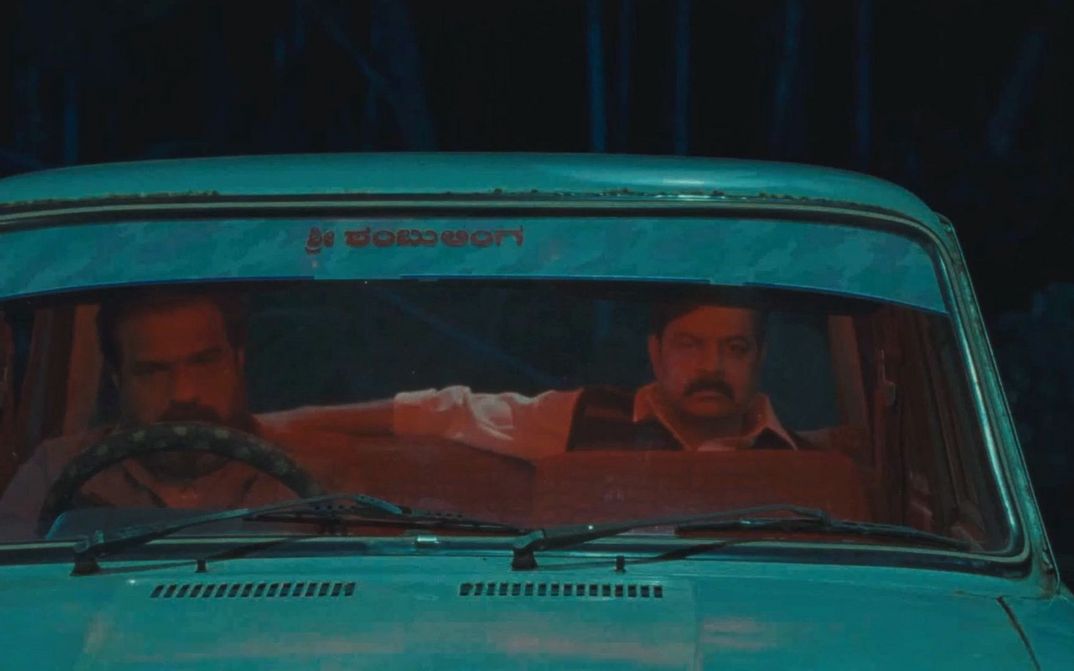
Berlinale Forum: Welcome, Natesh, and congrats on your new feature. Perhaps we could begin with the title of the film which is Tiger’s Pond in English, and Vaghachipani in Kannada [the main language spoken in the southern Indian state of Karnataka, ed.]. Could we talk about the place that it is set in, also called Vaghachipani, which seems to be a fictional village, but also very strongly rooted to the region you come from?
Natesh Hegde: The film is shot in my hometown where I also shot my previous feature, Pedro (2021). I shot that film in the rainy season and this film in winter. The title comes from the name of a real village nearby. That name had always fascinated me. Also, in the film, there is the lurking presence of a tiger. I wanted to evoke that fear. So I thought this would be an apt title.
The credits say that the film is based on the stories of Amaresh Nugadoni. What attracted you to his writings and what did you draw from them?
The character of Pathi, the girl. I had seen one such mentally-challenged girl at the bus stop in the town of Sirsi, where I was doing my graduation. One day, I noticed that her tummy had suddenly bulged, and after some time, she disappeared. This character always intrigued me. What happened to her? How can a society behave that way? Such a character was in Amaresh Nugadoni’s writings. Then I rewrote the script and made lot of changes. Once a short story becomes a film, there is a shift of medium, where we are creating something else. So I took that as a starting point.
The figure of Pathi is so striking, especially the actor, her unforgettable face and her screen-piercing gaze. How did you cast this actor and what were your directions to her?
She’s a mentally-challenged girl from my village. I couldn’t direct her like other actors: explain a scene and make her act. She’s there and I created the film around her. It’s strange, but she started responding to me. The form of the film is derived from her being, instead of the other way around. It’s absurd, but I feel like the celluloid wanted her, you know.
How did you develop this character?
NH: I saw her as the central human figure around which there are all kinds of lust: lust for power, for money, for identity. She’s the only pure figure, the only character not pursuing these things, not bothered about anything. She’s just there, present.
[Read the full interview here]
 The Seventh Art