La Peau Douce (1964) (aka The Soft Skin)
French
François Truffaut
“Don’t talk so loud, people are staring.”
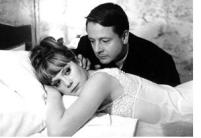 La Peau Douce (1964) is perhaps François Truffaut‘s least talked about good movie. Release alongside Jacques Demy‘s big favorite Les Parapluies De Cherbourg, La Peau Douce could well be called “eclipsed” by the former. From the outside the film could be written off as a mild drama, the characters in the films have much more impact than any melodrama. At first watch, it is but natural to think of Woody Allen‘s wonderful film Match Point – An illicit affair, the secrets revealed, tensions high for protecting egos. But neither is the film as verbose or as happening as Match Point.
The screenplay of La Peau Douce is not a usual screenplay one might see. There are no sudden twists, instigating incidents or unexpected moves through most part of the film. The film is paced slowly, with a lot of emphasis on the character development, especially the central character Pierre Lachenay. Pierre is a prude middle class person who is unsuccessful in sustaining relationships primarily because of his reservedness. Professionally an author, he is attracted to a young air-hostess Nicole who he meets during a lecture in Portugal. Jean Desailly is near perfection in the portrayal of a man who is crushed under his own principles. The affair continues all the way till Paris and Pierre still is secretive about the affair to Franka, his wife. Things take a sharp turn when Franka discovers the affair. There is an expected rift in relationships divorce is decided upon. Meanwhile, Nicole is also unable to sustain the relationship and quits.
The climactic quarter hour is where the film actually changes tone and feels like a Hitchcockian suspense tale. Pierre decides to apologise to Franka, only to find that she is unavailable in house. The climax, which I am not going to give away, is much debated upon by his fans. This tale of people caught within the formalities of love and the clockwork of the world was nominated for the Palm D’or at Cannes in 1964
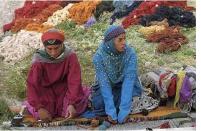 A co-production of the French and the Iranian film industry, Gabbeh (1996) is perhaps the best and most typical starting point for the westerners who would like to get an insight into the cinema of the east. Released in 1996 Gabbeh has managed to enchant the westerners and the Asians alike for not only its artistic merits but also for its subtle exposure of the culture of Iran. The film is centered around a nomadic tribe, which is tightly bound by blood relations. The tribe has its own rituals and beliefs which it passes on for posterity. One such practice is the weaving of carpets for a person depicting the journey of their life. The tribe carries and updates the carpets wherever they go.


 While watching Polladhavan, I realized that almost every other Tamil movie that releases today is based on underworld and organised crime. Gangwars, Hooligans in love, Rise to power of a henchman, common man pulled into violence and what not. We may even see a Dada learning bharatnatyam or a Gunda turning into a priest very soon. I then traced back to the movie that perhaps started it all, Mani Rathnam’s Nayakan. Released way back in 1986, the movie has inspired a whole new generation of filmmakers in the state.
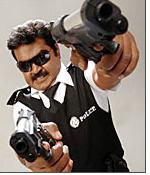 What do you get if you cross a Vijaykanth script with Vettaiyadu Vilayadu? Yes, You are right. Captain catching Kashmir-born Tamil terrorists (Theeviravadhinga) in Canada. That is exactly what happens in Captain’s 150th, “Arasangam“. After giving epics such as “Chocklet” and “Madurai”, R. Madhesh is back with this rib-tickler…oh sorry, nerve-wracker.
 This is it. One of the two movies I was looking forward this year is here (The other one OBVIOUSLY being “Dasavatharam”). After having seen V. Priya painful fall from “Kanda Naal Mudhal” to “Kannamoochi Yenada”, I did not want to see another successful debutant taking a hard second step. But “Arai Enn 305-il Kadavul” is a large disappointment from a person who gave the genuinely comic “Imsai Arasan, 23-am Pulikesi“.


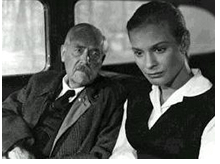 Wild Strawberries

 Special mention must be made to Jafer Panahi’s Ayneh and Daniel Myrick and Eduardo Sanchez’s Blair Witch Project for redefining the lines between reality and fiction, the former in its typical Iranian fashion and the latter in the American camp style. Let’s hope more such movies come up in the future and explore this medium to the fullest possible extent.