La Strada (1954) (aka The Road)
Italian
Federico Fellini
“What a funny face! Are you a woman, really? Or an artichoke?”
 Seldom do films come that are so simple in their presentation yet possess such strength in their characters. These are the films that sweep you off the ground with their sheer brilliance. Federico Fellini’s La Strada (1954) is a benchmark for industries such as Bollywood which flourish on fantasy for film making. La Strada marks Fellini’s transition from neo-realism (His previous film being the brilliant I Vitelloni (1953)) to fantasy. And what a transition it is!
Gelsomina is a innocent and childlike girl brought up isolated from her surroundings. She has always been with nature and children like her. Her life takes an unexpected when Zampano, a wandering stunt performer “buys” her from her mother. She learns to play the trumpet for performing with Zampano. The film follows her encounters with various people on her journey with the “road” being a metaphor for life. Zampano is a beast-like man who has no soft corner towards Gelsomina and ill-treats her consistently. They also meet The Fool, a comedian from another troupe who Gelsomina likes. Things are not smooth between The Fool and Zampano and the latter kills The Fool inadvertantly. Witnessing such cruelty is all novel to Gelsomina who goes into a shell and is eventually deserted by Zampano. Zampano learns later that Gelsomina passed away. The film ends with Zampano breaking down and realizing his mistakes.
A film with great characterization and humour bubbling with innocence. Gelsomina’s character acts as an angel who provides salvation at the end to the sin-hardened Zampano. The images and references of Gelsomina’s childlike innocence indicating her “angelness” appear throughout the film. Guilietta Masina gives a wonderful performance as Gelsomina with strong support from Anthony Quinn as Zampano and Richard Baseheart as The Fool. Oscar winner for best foreign language picture in 1957.
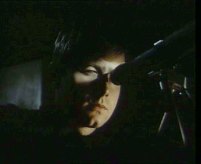 What is love? Is it the inevitable sensual desire that arouses? Is it only bodily game played by the hormones? Can science explain all loves? Or is it something that transcends reasoning? These are issues explored in Kieślowski’s Krótki Film O Milosci (1988). Released as an extended version of an episode from Kieślowskis phenomenal TV series Dekalog, Krótki Film O Milosci was shamelessly ripped off (including the title) for the Indian version Ek Choti Si Love Story.
 Cinema has evolved from being a medium of documentation and story-telling and to a medium of providing social, political and spiritual commentary of the era involved. But all such movies are not accepted with open arms. Tastes differ and so do ideologies. Films that have been against the political and religious ideologies of key organizations and powerful people have been shunned and their makers condemned. This was especially true of the films that were made in communist countries such as USSR and East-Germany. One such gem that came from the Czech Republic is Milos Forman’s Horí, Má Panenko (1967).
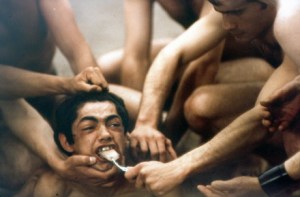 Once in a while, there comes a movie that shatters the beliefs of people on cinema and redraws the lines between right and wrongs of the medium. These are the films that redefine the boundaries of film making thus providing new standards and freedom for films to come. At a time when swearing on screen was a taboo, came the classic Gone With The Wind (1939) with the legendary “Frankly my dear, I don’t give a damn.” quote. A Clockwork Orange (1971) that questioned induced goodness and evil in a very strong way, Straw Dogs (1971), famous for its graphic rape scene, Un Chien Andalou (1929) that introduced surrealism in cinema, the semi-snuff Cannibal Holocaust (1980) and its brutality – all these movies may have been snubbed by audience and critics at the time of their release, but no one can question their impact on the future generation of directors.
 I’m sure many would have watched Quentin Tarantino’s Reservoir Dogs (1992) or Pulp Fiction (1994) and become fascinated with the style of film making – Long conversations about…er, just conversations, dark humour, petty issues magnified, weird characters. Though Tarantino was influenced much by the works of Godard, the effect of Truffaut’s Tirez Sur Le Pianiste (1960) on his style cannot be written off. Tirez Sur Le Pianiste primarily acts as a cross between the 50’s film-noir style and Hitchcock’s troubled characters.
 During a war, more than armies and governments, it is the children who are affected most. The images of the atrocities and violence in the war makes an impact that is life-changing for them. The subject of children of war has been a less tackled one when it comes to Cinema. Andrei Tarkovsky’s Ivan’s childhood (1962) gave as an immensely personal account of war as seen by the title character. Another critical film on the same subject is Elem Klimov’s Idi I Smotri (1985). The film is hailed as one of the best anti-war films for its depiction of the influence of war on children.
 Michael Haneke‘s disturbing portrayal of an aging music teacher is definitely not for every one. Very graphic in nature and strongly thematic, La Pianiste (2001) attempts to simply document its central characters rather than offering a judgment on their conduct. A truly multi-layered film with characters that can be analyzed for hours.
 Ingmar Bergman‘s Oscar-winning film is the first of the “Faith” trilogy and is followed by

