All Posts


CHAPTER 3: LOSS OF A BELOVED

Hey RamAugust 16, Calcutta. Saket arrives at the railway station and takes a taxi to his house. He is surprised to see what is going on around: A large scale riot with masses of people running here and there. He also sees Altaf, his tailor among the Muslim rioters. Altaf recognizes Saket and makes way for the taxi to go. Upon inquiry, Saket finds out that the riots are indeed due to the partition claim by the Muslims of Calcutta.

The taxi manages to get out of the riot and reaches the calm and serene surroundings of Saket’s apartments. Saket asks the guard to bring his luggage up as he goes to his floor via the lift. He finds that many shops had to close because of the riot. He reaches his flat and plays a prank on Aparna (Rani Mukherjee) who gets frightened and takes up a pistol. When Saket reveals who it is, she gives his a slap and tells him that there is a telegram for him. He asks her casually whether it says that his father is ill or if he is no more. She says that it is worse than that and reads out the telegram. We find out that his father has called him back and has asked Saket to marry a girl they have chosen for him. It is here that we find that Saket is cut off from his parents and has left them for good. He has not even mentioned about Aparna and his later life. On Aparna’s apprehension, Saket promises that he will never marry another girl.

Hey RamHe kisses her as they both lean on the piano as Saket plays it. This is the second sight of the piano in the film. The image of the piano plays a vital part in describing Saket and will be recurrent in the story. A moment later, both of them are seen playing the piano together. They play it with such care and love. Their music is mellifluous and in harmony with each other. They make love as the melodious music proceeds.

Hey RamSaket gets up from the bed and presents her the Thirumangalyam, the holy necklace that he had bought for her. Upon asking for a Bengali styled marriage, Saket takes the red ink pen from the table and puts a mark on her forehead. When Saket asks for reciprocation, Aparna takes out one of her Mettis (Toe rings) and slips it into his finger. The toe ring is supposed to be a symbol of marriage and the well being of the husband. The toe ring forms a vital part of the narrative and will occur regularly. Saket asks for something to eat, Aparna indicates that the shops are closed and there is only bread and butter in the house. He asks her to get ready to go to the market to get something to eat for which she replies that she is scared to go out. Saket ridicules her and starts for the market.

It should be noted here that the film has heavy overtones of religion, especially Hinduism and a lot of parallels are drawn between Saket’s life and the Hindu culture. These will be denoted whenever they appear. Hindu tradition mentions for vital stages of a man’s lifeBalya (Childhood), Grihasta (Marital life), Vanaprastha (Exile/alienation) and Sanyasa (Relinquishing worldly things for salvation). Saket has just entered the second stage, Grihasta and is in the marital bliss. But he is unaware that this stage is a short lived one.

Hey RamSaket takes his bike and sets out for the market. In some street he notices a young Sikh girl being chased by a mob. He manages to get the girl on his bike and takes her home. He slowly learns that the riots have worsened and it is unsafe to be in the streets. He returns to his apartments and finds out that something is wrong. He sees a corpse on the ground floor and runs to his flat. He finds that a group of men, led by Altaf are trying to break in into his apartment. Saket is held down as Altaf breaks in through the window. Saket tries to resist but is hurt. He is pushed harshly on the piano and lands on his face. He vents his anger on the piano and pounds his face on it. The music this time is anything but sweet. The somber and even a bit creepy tone reflects his state of distress. He is able to hear the cries of Aparna – “Ram, Ram”. He somehow coaxes one of the rioters to set him free and manages to kill the latter by pushing him out of the balcony. He reloads his pistol to shoot the rioters but is too late. Everyone has left. He rushed towards Aparna to check. She is found raped and her throat slit. Saket Ram is helpless and cannot even call the ambulance. Blood sprouts out of her throat as Saket tries to close it. Aparna passes away. Saket is mad. He cries, but it is of no use. He looks out at one of the dead rioters and with a shriek of anger he starts his rampage for revenge. This would mark his entering into the Vanaprastha from Grihasta. Saket would be exiling his true self to avenge his wife.

Go To Chapter

1 2 3 4 5 6 7 8 9 10

11 12 13 14 15 16 17 18 19 20

CHAPTER 2: TRUDGING THROUGH THE PAST

The film begins with a dedication, voiced by Kamal himself, to Ananthu, friend, philosopher and guide to Kamal Haasan. The titles roll up with the song “Raghupathy Raghav Rajaram” being sung in a very unconventional, war cry-like fashion in the background that defines the pace of the film. .The credits proceed as the visuals begin in monochrome.

The year is 1999. A dark room. The room opens as the doctor enters. A few sunrays barely make into the room revealing the elderly figure that is lying on the bed. He is surviving on an artificial supply of oxygen. Who is, in a few seconds, revealed to be the old man’s grandson, Ram, is sitting next to him. Suprabhatam, which is essentially a wake up call for God, is being played in the background as though waking the old man up. This is the starting point for the string of references to God and man’s relation to God in the film.

Hey Ram The doctor asks why the room is not lit. Ram replies that he has never seen his grandfather in the open or even in light upon which the doctor remarks Gandhiji’s habit of keeping the lights on even during his sleep. Ram is quick to reply that his grandfather has always liked darkness and he is no Mahatma. However, he is a good man. The small conversation sets up the contrast between the grandfather and Mahatma Gandhi which is to be observed during the rest of the movie. As the conversation proceeds, it is revealed that Ram is a celebrated writer and is very close to his grandfather. It is also found that the grandfather is of unstable mind and hence isolated. Nobody except his wife has seen him in his normal state. He has not opened himself to anyone except his grandson, that too in the form of stories which the latter regards no more than figments of imagination. The doctor picks up one of the three monkey skulls placed on the adjacent table in front of “Gandhiji’s three monkeys” and asks Ram about it. The dark light, that is suggestive of his exclusion from the outside world and his hidden past, slowly starts getting adulterated with bright light as he recounts his past. This bright light falls on the old man’s face as it is revealed that he was an archeologist at the Mohanjo-Daro ruins. The image of the dying man’s face is juxtaposed with that of a skull at an excavation site indicating the meeting point of his future and past.

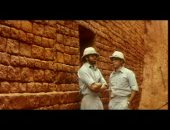
Hey RamHey Ram

Note the chromatic shift from grayscale to full colour indicating the complete opening up of the old man’s past. Such colour swings will be recurrent during the rest of the film.

Hey RamThe year is 1946. An excavation site. Saket Ram (Kamal Haasan) and Amjad Khan (Shah Rukh Khan) are digging through the layers of the past. Eventually, Saket will be excavating his own true self, mirroring his profession, revealing many hitherto hidden layers within him. Saket is clean shaven and wears spectacles whereas Amjad is bearded. General Wheeler calls Saket from up above and asks him to pack up. Upon asking the reason, Wheeler says it is because of the communal riots as a result of the ongoing discussion about the partition of the country. Both are turned off but decide not to lose their temper as Mr. Wheeler shouts “It’s pack up time”. It is as though communal riots have become a commonplace and it is no news that a new one has broken out. Amjad points out that the Indus Valley civilization was miles ahead of the present one for they had much advanced thoughts but never had to fight about God and religion. So both decide to call it a day and head towards Karachi.

Archaeological Society of India Recreational Club, Karachi. A party like atmosphere is around. Saket enters alone whereas Amjad alights from the car with his wife Nafisa and kids. Amjad’s father asks both Amjad and Saket not to go out of control and return home quickly. Everything is cordial between Saket and Amjad’s family. We also come to know that Nafisa ties a Rakhi every year to Saket and Amjad is like a brother to Saket. This point will be elaborated later in the movie. We also meet Lalwani, a jocular Sindhi industrialist who is friends to both of them. There are jovial discussions about the partition and everybody seems to have an opinion. It is here that the background of both Amjad and Saket are revealed. Saket is a Tamil Iyengar from South India who is married recently to a Bengali woman. Amjad is a Pathan who had stayed who had finished his graduation in the Madras Christian College along with Saket and Lalwani, hence his knowledge of Tamil. His wife Nafisa is also a Tamil Muslim. This is revealed in a nice bit of dialogue between Amjad and a certain Mr. Bright:

Mr. Bright: I always wonder how Lalwani and Amjad can speak in a Dravidian language…
Amjad: Same Alma Mater sir.

Hey RamThis reply from Amjad is not just indicative about their college but the country itself. This reference of India as an “alternate mother” occurs throughout the film. This piece of conversation will ring loud during the final parts of the movie and will be reminded there. Just then, a call comes from Calcutta from Saket’s wife Aparna. Amjad and Lalwani fool around with the phone and even manage to tell a few lies about Saket to Aparna, all in good spirits. After the call, the three booze and start celebrating. The scene basically establishes the affluence and friendship of the three men from different religious and geographical backgrounds. Saket plays the piano for the first time in the film. A song “Ramar aanalum, Babur aanalum…” ensues which tells about the importance of friendship over religion. A lot of photographs are taken too.

Go To Chapter

1 2 3 4 5 6 7 8 9 10

11 12 13 14 15 16 17 18 19 20

CHAPTER 1: PREFACE

Kamal Haasan’s body of works can be broadly divided into two categories: Hey Ram and non Hey Ram. Such is the effort, brilliance and technique put into the work. An epic film does not necessarily mean high production values and a period setting. Any film whose intentions and strides are of mammoth proportions qualifies to suit the genre. Hey Ram, by all means, not only qualifies but even has the power to top the genre.

Movies that last a lifetime are the ones that are rooted in the culture of their country of origin, but deal with themes that are contemporary and universal at the same time. By culture, I not only mean traditions and practices of the country but also its inescapable history, politics, its figures, its events and the social impact of those.  A prime example would be Florian Donnersmarck’s Das Leben Der Anderen (2006) (aka The Lives of Others), a film that firmly had a foot in political chaos of the post war Germany, its political ideologies and restrictions imposed due to the same, but spoke about the universal concept of art and humanity. Not over a handful of movies have come out from our country that handles these issues with solemnity. One such film, Kamal Haasan’s Hey Ram is arguably the best Indian film of all time.

In the following work, I would try to dissect the film and present an analysis of the film, though in no way, exhaustive. The film is fraught with symbols, metaphors and allegories that become clear only on multiple viewings. I have tried to cover them wherever applicable. I have tried to give the key images while trying to explain those scenes and also the conversation transcript wherever necessary. English translation of the same has been provided for universal access. Please feel free to agree/disagree at comments section of the relevant posts. I have provided a downloadable version of the same analysis at the end of the series of posts.

It would be of interest to note that the film was being made when another Kamal film had already kicked off, Marudhanayagam. So, naturally Kamal was into a thorough research on the freedom movement and its obscured characters. Hey Ram presents one such, perhaps fictional, character that was, though not instrumental in changing the course of history, an inlet to the mind of the father of the nation, Mahatma Gandhi.

Go To Chapter

1 2 3 4 5 6 7 8 9 10

11 12 13 14 15 16 17 18 19 20

Tystnaden (1963) (aka The Silence)
Swedish
Ingmar Bergman

“I didn’t want to accept my wretched role. But now it’s too damn lonely. We try out attitudes and find them all worthless. The forces are all too strong. I mean the forces… the horrible forces. You need to watch your step among all the ghosts and memories.”


The SilenceThe concept of faithlessness in today’s world has been filmed by a number of directors around the world in various manifestations. But none have come close to Bergman’s “faith trilogy” (save Andrei Tarkovsky, who Bergman himself considered unparalleled). The final part of the trilogy Tystnaden (1963) is perhaps the most difficult and coldest of the three films. The film itself was (in)famous for its graphic images that were unacceptable in that period of time.

Anna, her son Johan and her sister Ester are forced to spend a few days in a hotel in a foreign country following Ester’s illness. Anna is a free-lover and commences an intense affair with a waiter at the hotel. Ester does not approve this and Anna gives Ester a cold shoulder for probing into her affairs. Meanwhile, Johan who roams in the corridors meets various people and also bonds with one of the old stewards. Ester’s illness worsens and death is not far. Ester realizes this and regrets to the old steward that her relationship with Anna is not well. Ironically, Ester, who is professionally a translator, is unable to communicate to the old steward who symbolizes a pastor/God in this situation. She is hurt by the silence of god which is seen in the strained relationships of Ester and Anna. Eventually, she passes away after passing a letter to Johan that contains the equivalent foreign terms for a few words. The film ends with Anna leaving Ester to die alone and carrying on her indifference to non-bodily love.

While the first film established God as love and the second one saw faith and disbelief in mixed proportions, Tystnaden spells faithlessness in most its characters. With Ester being the only believer, the only hope for survival is through Johan (in the form of the few foreign words she passes to to him that signify communication and hence love). The trilogy (the previous ones being Såsom I En Spegel (1961), Nattvardsgästerna (1962)), as a whole puts forth notions of God and Godlessness (that translate to love and lack of love respectively in relationships among various individuals) and manifests itself in different situations. A truly meditative set of films that you have to watch in a unperturbed environment.

Blowup (1966) (aka Blow-up)
English
Michelangelo Antonioni

“I wish I had tons of money… Then I’d be free.”
 

BlowupMichaelangelo Antonioni‘s films have always tried to establish the growing distance between humans and the alienation of self in the modern society. Though L’Avventura (1960) is his most intense meditation of that concept, it is measured in its pace and may not entice viewers of the newer generation. Ironically, his Blowup (1966) has more lovers now than it had during its time! Unlike its contemporaries which age with time, Blowup‘s appeal seems to grow with the years.

Thomas is a young and famous photographer who has models running after him for an appointment. He is indifferent towards them and even treats them as mere objects to the extent of being misogynistic. He spends his time doing ritualistic things such as collecting scrap objects and antiques. One day he finds a couple talking in a park and photographs them. The female in the couple finds this and asks him to return the film. On refusal, she tracks him to his studio and gives a futile attempt at recovering it. Getting suspicious, Thomas examines the photographs by blowing them up to the point where he sees a man holding a pistol among the bushes. He goes to the park to check and finds a corpse near the bushes. Shocked, he tries to call his friends who are too busy living in their own fantasy. Next morning, he revisits the park and is befuddled to find the corpse missing. He is not able to gather what is happening. In what I consider as one of the best endings in cinema history, a group of mime artists recreate a tennis match as Thomas watches on. Suddenly they act as if the ball has gone out of court. They ask Thomas to throw the ball in. Trying not to look different, he “throws the ball” to them. As the “match” progresses, Thomas is able to hear the hitherto silent rally of the ball. Thomas stands alone on the vast empty field as the screen fades to black.

Thomas is dissatisfied with a simple photograph of the park and digs deep into the picture using blow-ups. Thomas tries to find something extraordinary out of the ordinary picture similar to his real life where he is trying to find some meaning out of nothingness. He pursues false and assumed passions, engages in activities that only seem to bring happiness and tries to find an interpretation to everything and eventually fails. After the final encounter with the mime artists, he learns that the ball itself is a figment of his imagination. Thomas has realized his alienation and spoiled quest for meaning. Winner of Palm D’Or at the Cannes Film Festival in 1967.

The Happening

What if the air that we breathe could kill us? What is the effect of increase in human population on nature? What happens when humans settlements clear vegetation? How will nature react to it? Can science reason the reaction, if there is one? These are the issues explored in M. Night Shyamalan‘s latest venture The Happening. Observing his progressively ordinary series of films (With the probable exception of Signs (2002)) starting from his fabulous third feature The Sixth Sense (1999), one will be quick to pan his new offering often with a tinge of prejudice. But forgetting statistics and filmographies, The Happening is not half as bad as some may claim.

The Happening records the events that spread over one day in the life of Elliot (Mark Wahlberg), a science teacher in the city of Philadelphia. His marital relation with his wife Alma (Zooey Deschanel) is not all that great. His friend Julian (John Leguizamo) is the math teacher at the same school. As Elliot is discussing the mass disappearance of bees in the eastern coast of the country, he comes to know of strange happenings in New York city. It is found that people inhale some kind of toxin that disorients them both physically and mentally, prompting them to kill themselves in the most bizarre fashions. It is found that these events originate in parks spread to other areas too. No one s able to say for sure the reasons for such strange events and its restrictions to the eastern coast alone. There is a large panic resulting in people’s migration to safer towns and cities. Julian discovers that his wife is in trouble, hands over his daughter Jess (Ashlyn Sanchez) to Elliot and Alma and goes after her. He does not return. As Elliot, Alma and Jess try to run for their lives from the spreading toxins, they try to find the various reasons for its occurrence.

Perhaps the best observation by the film is about the mentality and the rationality of the people before and after the 9/11 attack. After the terrorist attack, people have been attributing every petty inexplicable event to terrorism. This has not only resulted in the undermining of their rational stability, but also resulted in distrust of people in one another and hence more misery. Fear has been the central emotion in all Shyamalan films. The high point of the movie is this portrayal of the contemporary American mentality. The weird attacks keep reducing as we move from to denser to sparser areas. Hence the story strikes a relationship between the ever increasing plaguing of nature by the fast growing human population. In this way, the attacks act as cries from the nature against the human ravaging. The theme is made clear at the house of Mrs. Jones (Betty Buckley) when she chides Jess for taking a cookie without asking and says “Do not touch what is not yours”. This is the line that briefs the motive of the film. Yet another theme is the movie is about how people overcome their emotional isolation when they are forced into a physical one. Both Alma and Elliot realize their attachment to their wives when they are seperated by the large stretch of grassland between their cabins.

Unlike some of the previous Shyamalan movies (especially The Village (2004), which also dealt with people’s apprehensions but never decided what it wanted to be), the central theme of eco-conservation is evident from early on. But it mixes it with the right amount of thrill to avoid the film from becoming didactic. On the negatives, the film is way too predictable for this generation and fails to deliver what one expects from the maker of The Sixth Sense – an absolutely honest thriller with no thinking stuff. The cinematography by Tak Fujimoto and score by James Newton Howard faithfully underline what the director wants the viewers to feel. Mark Wahlberg’s performance is passable, but no one can ever believe this lad that seems like he is in the late 20’s to be a science teacher. The dialogues in the movie at many places are weak, to be euphemistic. Deliberately induced humour does not help at all.

M. Night Shyamalan, who has been evidently inspired by Alfred Hitchcock since the start of his career, treads the same path as his idol. Right from the habit of sticking to a single genre to the regular cameos in his films (and the occasional absence such as The Happening), Shyamalan seems to make his career a photocopy of the Master of Suspense’s. This time around, he has reworked the spectacular The Birds (1963) and tried to make it palatable to the post 9/11 audience. If it was the strange bird behaviour in The Birds, it is strange plant behaviour in The Happening. More verbose and explicit than its inspiration, The Happening has sequences that will force you to find similarities between the two. Right from the isolated country locales resembling Bodega Bay to the baseless worrying and reasoning of the people around, the film has “remake” written all over. The questions about the science of nature and the nature of science that was implicitly raised in The Birds is kept intact and even explained a bit. However, Shyamalan’s script comfortably adds an extra layer to that calls for environment preservation and control of pollution.

So, does The Happening mark the comeback of the director? Not Quite. Shyamalan, who gave us the genuinely original The Sixth Sense, is much more restricted this time and conforms to the time tested formula. I would say that The Happening is not his comeback, but definitely gives the director a little more breathing space in Hollywood and he can now gradually concoct a truly original script independent of industry needs. As for the recommendation, if you have seen the staggering The Birds, you can avoid this one and if you’ve not, The Happening is definitely a good option for you.

Verdict:

Todo Sobre Mi Madre (1999) (aka All About My Mother)
Spanish
Pedro Almodóvar

“You are not a human being, Lola. You are an epidemic.”
 

All About My MotherPedro Almodóvar is nothing short of an icon for feminist cinema. The way how he uses his female characters, their position and responsibility in society, their independence in making decisions – all indicate his support for the equality of the sexes. Todo Sobre Mi Madre (1999) (as mentioned in the titles) is dedicated to all the women in the world and marks a very personal chapter in the canon of Almodóvar.

Manuela is the organ transplant co-ordinator at the local hospital. She lives with her 18-year old son, Esteban who is currently working on a book titled “All About My Mother“. On her son’s birthday, both of them go to the staging of “A Streetcar Named Desire” immediately after which Esteban is run over by a car. Having lost her only motivation for life, Manuela leaves for Barcelona in order to inform her now-transvestite husband Lola (also called Esteban) about the accident. There she meets her old transvestite friend Agrado and another young nun Rosa and settles down in Barcelona till she finds Lola. She also befriends Huma, a stage artist who plays Stella in “A Streetcar Named Desire”. Things take an sharp turn when she finds that Rosa is pregnant and suffering from AIDS because of Lola (again!). She decides to take care of Rosa till her end. After the delivery and subsequent death of Rosa, her parents are unable to take care of the child. Manuela decides to raise the child herself. She returns to Madrid, determined that she will not lose her Esteban for a third time.

Striking direction utilizes a script that was built with utmost care and crafted part by part to near-perfection. Manuela represents the quintessential woman – an actor who plays a number of characters in real life and a mystery who hides all her innermost feelings under her skin. The motif of acting and artificiality of outer self occurs throughout the film. A pleasant mixture of humour and emotion, all the way, won the film the Oscar for the best foreign film in 1999.

(Warning: No spoilers in the review. However, storyline and characters are revealed. Proceed at your own risk)

DasavatharamFinally here. Passing through its quota of controversies, production delay and legal attacks, Aascar Films’ Dasavatharam has finally made it to its destination. Dubbed as the most expensive movie made in India, the film has been in the making for over two years. If it was Sivaji – The Boss for 2007, it is very much Dasavatharam for this year. Apparently, the time between consecutive movies of Kamal Haasan has been larger than that of Superstar Rajnikanth‘s. The promos have been, surprisingly (for a Kamal movie), extremely low key. So, have the team’s efforts paid off? Let’s see.
The movie opens in a non-traditional fashion (for Indian cinema) with a preface that recounts the spat between the Shivites and the Vaishnavites of the south during the 12th century. Rangarajan Nambi (Kamal Haasan) is a staunch Vaishnavite who does not wish to relinquish his ideology even at the cost of his life. Rangarajan is portrayed as a very strong person, physically and mentally. As a result, he is dumped into the sea along with the prime Vishnu idol. Cut to the 21st century, where the remainder of the story is to take place. It is December 2004. Govind Ramasamy (Kamal) is a biological scientist in the US and is involved in developing a powerful biological weapon for the military of the country. Govind decides to hand over the formula to the FBI when he senses that the weapon sample is all set to reach unsafe hands. Things take a difficult turn when the package is couriered to India by mistake. Govind manages to track down the package in the intention of returning it to the officials. He is closely tailed by Chris Fletcher (Kamal), an ex-CIA and a mean trigger-happy machine and Jasmine (Mallika Sherawat). This character, with his near-invulnerability and I-don’t-stop-at-nothin’ attitude , is reminiscent of T-1000 of Terminator 2: The Judgement Day (1991).

The rest of the film follows Govind’s attempts to retrieve the weapon and escape the gunpoint of Chris. He is assisted by Andal (Asin), the grand daughter of Krishnaveni Srinivasan (Kamal) who does no help by dropping the package into a Vishnu idol. Andal is not only a love interest for Govind but also his antithesis. The atheistic, borderline-scientologist Govind is balanced by the whole-hearted theist Andal. She completes him, romantically and ideologically. Chris and Govind are also being followed by the local police led by Balram Naidu (Kamal), a true-blue “Andhrite”, who provides a rip-roaring comedy both with his accent and his lines. And there are Shinghen Narahasi, a Fujitsu master and the brother of Govind’s dead friend Yuki, Kalifullah, an overgrown yet innocent Pathan, Avatar Singh, a Punjabi pop star with a Tamil Nadu connection, Vincent Poovaragan, a Nagercoil-based activist and environmentalist and George Bush, the president of America (played by Kamal, Kamal, Kamal, Kamal and Kamal respectively!) whom Govind meets on his pursuit. The most appealing character is definitely of Vincent Poovaragan, the most humanitarian of all the characters in the film. He stands against the unquestioned plaguing of the nature by humans for monetary benefits and faces trouble for the same. The script draws a parallel between Rangarajan Nambi and Vincent Poovaragan (apart from the more obvious adversarial relation between Govind and Rangarajan), both of whom go down fighting for their principles and what they think is the meaning of their existence.

The film’s narration is fraught with twists and suspense but can be boiled down to a large treasure hunt. As a consequence, it is action right from the word “go” with no questions asked. Hand-to-hand combat, gunfight, car chases, daredevil stunts – you have them all. With the characters consisting of a Hindu, a Muslim, a Christian, a Sikh, a Buddhist and even an atheist, it is but inevitable that the story has slight religious overtones. The film, however, does not hurt the sentiments of anyone and even silently calls out for religious tolerance in the society. Believers and non-believers would just have reinforced their respective faiths at the end of the film without contradicting each other, which itself is a success for the movie.

Though all the ten characters are given considerable screen time to make it seem like they all have equal weights, only a few of them actually contribute to the plot and take the story forward. In fact, one feels that a couple of characters could have been entirely done without. As a result, many scenes involving the non-pivotal characters become fillers for the shallow central motive. But one does not complain because something new (a new character for most of the time) pops up regularly to keep you engaged. Only after the ten characters are familiarized that you realize that the film has been extended needlessly. After this point, the film is nothing but overlong is spite of the adrenaline that’s oozing out of the screen. It is now a unanimous feeling that the climax could have been trimmed down.

It is just a formality to speak about Kamal Haasan’s performance. Right from the impeccable accents (especially the Nagercoil accent) to the don’t-tell-me-he-is-acting body-language (George Bush and Krishnaveni noteworthy), Kamal has put in more than everything to realize the film. It is not that his performance is worthy of such a grand movie, but it is his performance that has made Dasavatharam a grand movie. I, however, would personally like to see him in roles such as Shaktivel (Devar Magan), Balu (Sagara Sangamam) and those of Erland Josephson and Philippe Noiret, without much concentration on make-up. But nobody nowadays has the guts to produce such films. Asin‘s performance, which is like a torchlight amidst a Supernova, is going to go unspoken. She has done justice to the charater(s), to say the least. The (remaining!) minor characters are done satisfactorily by Kamal regulars Nagesh, Santhanabharathi, Ramesh Kanna and Vaiyapuri to name some.

K. S. Ravikumar‘s midas touch is alone what Kamal needed for this otherwise one man show and he has got that. With long pseudo-takes used at proper places, the movie “appears” to have larger than life cinematography. Himesh Reshamiyya‘s music is at times melodic, at times bubbly and at times jarring. Devi Shree Prasad‘s inspired but spirited background score has nothing to complain about. It is a known fact Kamal gets carried away with prolonged stunt sequences and Dasavatharam is no exception to that. Some illogical scenes corrupt the otherwise decent stunt sequences that are saved by the CG most of the time. A special mention for the CG that is seamless in scenes where multiple characters appear and also in many shots in the initial and final part of the film. Much is talked about the make up which is really fantastic agreed, but the harsh lighting exposes the prosthetics’ and makes one a bit alienated from the character. The editing is so prudent about the run-time that one can feel how large the original footage was. Huge production values in the preface speak for themselves.

There are two things Indian cinema has always been haunted by – Religion and Science. No one (fabulous exceptions always there) has dared to pass a judgement or even to make a documentation of these two issues. Dasavatharam, though superficial, tries to blend these two concepts into the simple narrative and that too, in such a risky venture. For this reason alone, one can argue for the movie. It is not something new to the medium altogether, but is definitely like nothing that Tamil cinema has never tasted before. Dasavatharam may not be what Kamal wants, but is very much what his fans want.

P. S.: Be alert to spot the brief homage to Martin Scorsese’s Taxi Driver (1976) in the film!

Verdict:

Charulata (1964) (aka The Lonely Wife)
Bengali
Satyajit Ray

“Give me your word that no matter what might happen, you won’t leave”
 

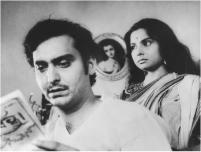
CharulataFor a large part of the rest of the world, the name Satyajit Ray would immediately relate to the Apu trilogy and would probably stop at that. Ironically, a great number of his fabulous films have never reached the eyes of the Occident. Charulata (1964) is one such gem that never gets a mention when briefing the director’s work.

Bhupati is the owner of a newspaper The Sentinel and gives his heart and soul for its development so much so that he neglects the presense of his wife Charulata. Charulata kills her time doing petty stuff such as looking at people on the street through her opera glasses and doing embroidery. Bhupati asks his graduate brother, Amol, to somehow induce her to write which she seems interested in. Amol pretends to Charu that he is interested in writing and spends his afternoons with her trying to get valuable inputs from her. Finally, Amol manages to make Charu write an article and get it published in a renowned magazine but not before the latter develops a strong bond with her brother-in-law. Meanwhile, Charu’s brother and treasurer of The Sentinel doesn’t see prospects in running the newspaper and decides to run away with the funds. Bhupati comes to know of the betrayal and decides to suspend production after which Amol leaves the house with the intention of easing his brother’s burden. After a few sombre days, Bhupati and Charulata decide to resurrect the newspaper with both of the contributing. This is immediately followed by the climax where Bhupati accidentally discovers Charu’s attraction towards his brother and realises his mistakes.

Not one character is wasted or overdone in the film. In many ways, Charulata is Satyajit Ray’s most daring and open statement on the position of women in the society. Charulata is the epitome for the free and thinking woman of new India as opposed to her sister-in-law Manda. The tale of constrained relations between a man who has been complacent in his marital life, a woman who seeks forbidden love and a young man who becomes an involuntary catalyst for the exposure of truth is not only a commentary on contemporary India but also a fine work of art. Charulata won the Silver Bear at the Berlin International Film Festival in 1965.

The Aviator (2004)
English
Martin Scorsese

Much has been spoken about Jamie Foxx‘s portrayal of the blind musician Ray Charles in Ray (2004) for which he won the Academy Award that year. But another underrated nominee for the same award was Leonardo DiCaprio‘s performance as the rich and ambitious Howard Hughes whose romance with flight never stopped. The performance, however, won the Golden Globe in the same year.

The film follows a section of the life of Howard Hughes whose ambitions were larger than life and personal life, a mess.. His slow mental disintegration (as a result of his OCD) is made worse owing to his financial losses and accidents. The scene given here is where Hughes’ assistant Odie informs him that it is near impossible to complete his project within the given time and there are a lot of hindrances to it. Just then Hughes notices a floor cleaner staring at him while cleaning the floor with a dry mop. His OCD aggravates and Hughes shifts into a state of mental block. He asks Odie to provide the details of the plan and repeats the same line over and over: “Show me all the blue prints“. Here is the transcript of the conversation:

Howard: Odie. That man sweeping up over there…does he work for me? I mean, have you seen him before?
Odie: Name’s Nick, something like that.
Howard: Why’s he looking at me?
Odie: I don’t know.
Howard: Fire him. And make sure they use damp brooms from now on. Respiratory diseases are expensive, and I don’t want lawsuits.
Odie: But can we at least proceed with the instrument panel? The tool shop’s ready.
Howard: I wanna see the blueprints.
Odie: Look, Howard, the deadline is now completely unrealistic. The war is gonna be over by the time she’s done. I need you to help consult on vital decisions, and you’re off dealing with movies. You got 1000 workers waiting for you to make a decision…
Howard: Hey, Odie! Take it easy, all right. You’re under pressure, but it’s gonna do me no good if you crack up on me. All right? Look…take a couple of hours off, all right. You just relax a little.
Odie: Okay.
Howard: See your wife.
Odie: Okay. All right.
Howard: Be sure to show me all the blueprints.
Odie: All right.
Howard: Show me all the blueprints. Show me all the blueprints. I’m serious, now. Show me all the blueprints. Show me all the blueprints.
Odie: Howard.
Howard: Show me all the blueprints. Show me all the blueprints. Show me all the blueprints. Show me all the blueprints. I wanna get this done right. Show me all the blueprints. Show me all the blueprints. Show me all the blueprints. Show me all the blueprints.
Odie: Howard.
Howard: Show me all the blueprints. Show me all the blueprints. Show me all the blueprints…
Howard: Quarantine. Q…U…A…R…A…N…T…I…N…E…Quarantine

The video of the scene is given below. Not much is to be said about the scene which by itself speaks volumes about the capability of DiCaprio as an actor. Announces to Hollywood that Leonardo DiCaprio is here to stay and is going to be an asset to the industry.

« Previous PageNext Page »