Jia Zhang-Ke
(1970-)
Born in 1970 (Fengyang, Shanxi Province), Jia Zhangke studied painting, developed an interest in fiction, and in 1995 founded the Youth Experimental Film Group, for which he directed two award-winning videos. He graduated in 1997 from the Beijing Film Academy, and his first feature, Xiao Wu (1998) was very successful at the Berlin, Nantes and Vancouver festivals. The following films Zhantai (Platform, 2000), and Ren xiao yao (Unknown Pleasures, 2002) were selected in competition respectively at Venice and Cannes. He established Xstream Pictures in 2003 in order to promote young talented directors from all over China. He directed Shijie (The World) in 2004 and his latest film Sanxia haoren (Still Life) received the Golden Lion Award at the Venice Film Festival 2006. (Bio Courtesy: Cannes Festival, Image courtesy: Glamour Vanity)
“Juxtaposing a person with an environment that is boundless, collating him with a countless number of people passing by close to him and far away, relating a person to the whole world, that is the meaning of cinema.”
– Andrei Tarkovsky
If the filmography of Jia Zhang-Ke is to be summed up in a single line, it has to be the above statement. Along with Apichatpong Weerasethakul, Jia appears to be the pick of the past decade and has made his way into almost every best-of-the-decade list out there. With a body of work that spans only a decade and a half, the Chinese has already authored at least four great works that clearly illustrate the director’s consistency of vision and his command of the filmic medium. What sets Jia apart from his contemporaries like Tsai Ming-Liang and Hou Hsiao-Hsien is the narrative and thematic specificity that pervades the whole body of his work. While the latter directors have sometimes de-contextualized their narratives and resorted to broad strokes in order to, perhaps, deliberately universalize the issues they are dealing with, Jia almost always particularizes. It is true that, like the other two senior directors, Jia keeps coming back to the same set of motifs and questions, but there is always a thread that runs through his films alongside these investigations that examines his own role and responsibility as a Chinese, as a filmmaker and as a Chinese filmmaker.
Jia seems to have established his signature aesthetic very early on in his career. Even in an early and relatively minor work like Pickpocket (1997), one can see that Jia, like Tsai and Hou, favours long shots, filmed from at a distance, and uses direct sound to wondrous effect. Then there is the trademark pan shot, which Jia treats like a brush running over a very wide canvas woven in time, whose use only proliferates with the years. Jia employs this pan shot to often depict people separated by space and time and the relationship they bear with the environment they live in. This unhurried, evocative shot directly ties Jia’s cinema to those of Tarr, Wenders, Polanski, Tarkovsky and Angelopoulos, the last of whom is the filmmaker Jia seems to closest to, thematically and formally. His actors are regularly seen squatting – a primal and distinctly human gesture that distinguishes man from the artificial, industrial universe around him. Most times, his scenes unfold in the master shot itself, as Platform (2000) and The World (2004) clearly testify. When the scenes are not shot in natural light – night scenes, for instance – they are, more often than not, lit by a single light source that is present in the diegesis itself.
From In Public (2001) onwards, Jia seems to have taken a liking for the HD digital format (shot masterfully by Yu Lik Wai) that seems to impart an extra layer of realism and intimacy to the films. Additionally, the director does not hesitate to shift the tone within his films abruptly – a playful tendency that is also palpable in Weerasethakul’s films. One moment you witness a solemn, moving conversation and in the next, you see characters floating about in animated spaces or buildings lifting off the ground like rockets. Apart from this, Jia’s vertically unsymmetrical framing is redolent of Godard’s early political features and he similarly embeds his characters within images of reconstruction and modernization of the place they live in. Also Godardian is the fact that there are hardly any “empty shots” (Godard’s terminology) in Jia’s films. He never depicts an action just for the sake of carrying the story forward or supplying petty information. To borrow Godard’s example, if a man crosses a street in a Jia film, one can be sure that either the director is interested in the man’s gait and gesture or the details of the street he is walking on or, as is usually the case, the relationship between the two.
Xiao Wu (Pickpocket, 1997)
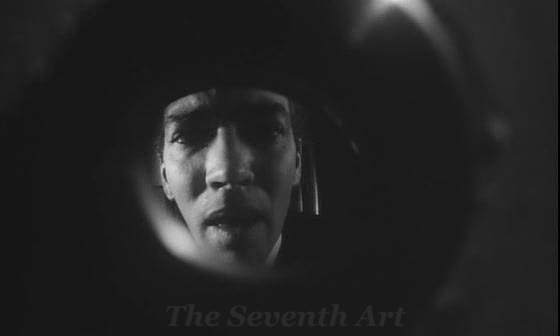
 The only Jia film with a single protagonist that I’ve seen, Pickpocket (1997) is also the director’s most accessible film. With a script whose likes one would find in the neo-realist films of yesteryear, Pickpocket chronicles the life of the titular small-timer, Xiao Wu, played charmingly by Jia regular-to-be Wang Hong Wei, as he loiters about doing his work in the streets of Fengyang, the director’s hometown. The questions of identity and cultural dislocation, which would intensify in the filmmaker’s subsequent works, already register a strong presence in this film. Jia employs direct sound to capture ambient and stray noises of the town that suit the film perfectly. Often, Xiao Wu’s voice is overpowered by the noise from the town streets or by the blaring pop songs that flood the soundtrack, which also particularize the film’s time line, suggesting the beginning of China’s globalization process. The soundtrack is complemented by the seeming omnipresence of the local television network that seems to either intrude into people’s private affairs or feed people with more dollops of pop culture. Xiao Wu is the quintessential Jia character, a flawed individual who has failed to catch up with the changing times (while all his colleagues have successfully boarded the train) and, as a result, pays the price. It is only after he (literally) sheds his old attire and learns to sing pop songs that he somewhat feels he is a part of his surroundings. As he sits arrested to an electric pole at the end, with the townsfolk staring at him curiously, one only thinks of the inevitability of this outcome. Forget the train, Xiao Wu hadn’t even got on to the platform.
Zhantai (Platform, 2000)
 Platfrom (2000), widely regarded as the director’s finest film, opens with a theatre performance that extols Mao’s communist revolution, setting up the theatre motif that permeates the entire film. Set at a time when China’s globalization measures were put into action, Platform is an epic film that actually gives the viewer the feeling of being there and drifting along with this endearing team of travelling players that stands for a whole generation – that of Jia’s – struggling to cope up with the drastic cultural transition that the measures have induced. That Jia sets the film in his hometown of Fengyang is of much importance because, according to Jia himself, it is one of China’s many towns that is far removed from the decision making machinery at Beijing and merely rolls along with the impetus given by the culture shock. Jia builds his film accumulating one insightful observation upon another, taking his characters through various signposts, such as screening of foreign films, permission for pop songs and private owned apparel shops, which indicate the direction the revolution is taking the country in. Characters go into sudden flights of fantasy, as they would in later films too, and step into improvised dance sequences and on-stage performances in an attempt to transcend the stalemate they are presently in. Jia’s film is a finely balanced mixture of nostalgia, elegy, cynicism, and hope, but never does it criticize its characters for their acts. It recognizes shares their surprise and alienation, recognizing and embracing them as flawed individuals who are yet to get onto the speeding train of progress and off the platform of cultural disjunction.
Gong Gong Chang Su (In Public, 2001)
 In Public (2001), made when Zhang-Ke was scouting locations for his next film, is the most abstract of all the director’s works for it completely sacrifices a narrative for something more expressive. Running for just over half an hour, In Public is the first film by the director to be shot in digital and presents vignettes from various public places, including a railway station, a bus stop, a bus, a pool hall and a discotheque, whose images inherently bear what Jia explored in his previous two fictional features. The key sequences come towards the end, in which we see people enthusiastically participating in activities at the pool hall and at the karaoke, where the effect of China’s modernization on a remote town’s populace is most evident. Even amidst the interesting impromptu dancing lessons that are taking place in the room, Jia’s ever-curious camera (often easily spotted by the people it shoots, helmed by regular collaborator Yu Lik Wai) keeps going back to a bald man sitting on a wheel chair at one end of the room. As the camera tilts down to the chair, we see a portrait of Mao Zedong hanging from the down. If not anything else, In Public serves as a distillation of the director’s techniques with its long and medium length shots, slow pans and his discerning eye for industrial landscapes. Jia’s attention is as much on the public places as it is on the people who inhabit them. He takes equal pleasure in dwelling on an arbitrary face that attracts him and in filming people from a distance, studying their behaviour in these public spaces.
Ren Xiao Yao (Unknown Pleasures, 2002)
 If Platform was Jia traveling along with the touring theatre and sharing their culture shock, Unknown Pleasures is the director stepping back and looking at his counterparts of the next generation. The fact is underscored with the help of Wang Hong Wei who, as usual, remains the director’s alter ego and makes a cameo appearance, playing a variant of Xiao Wu. Slightly more cynical than all other Jia films, Unknown Pleasures is also the most light-hearted of them all, betraying a love and sympathy that the director has for his characters. A couple of middle class teenagers – Bin Bin (Zhao Wei Wei) and Xiao Ji (Wu Qiong) – knock about the town without any apparent motive when one of them falls in love with the mistress, Qiao Qiao (Zhao Tao, modeled after Mia Wallace), of a local gangster. In one scene, Xiao Ji, a parody of himself, talks to her about the bank robbery in Pulp Fiction (1994). In fact, the whole film borrows much from the Tarantino film. Xiao Ji dances at the local disco with Qiao Qiao, only to get repeatedly beaten up by the gangster. He decides to rob a bank which turns out to be only marginally less funny than a Woody Allen sketch. Jia’s film apparently has China’s “single-child” policy for population control as its backdrop and Jia might just be pointing out how this has resulted in an entire generation feeding and growing up on ideas and attitudes proposed by pop culture. But, keeping in mind the director’s previous couple of works, one may conclude that Jia’s primary intention is to portray the aftermaths of a cultural shift that is just too drastic for its participants to cope up with.
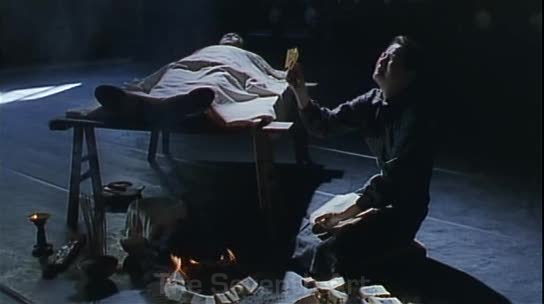


 “I don’t know whether it’s a comedy or a tragedy, but in any case it’s a masterpiece”, says one of the characters, self-referentially, in Godard’s
 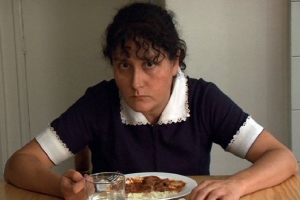 A sister film, in some ways, to Jonathan Demme’s brilliant Rachel Getting Married (2008), Sebastián Silva’s The Maid is nothing short of a spiritual revelation at the movies. What could have been an one-note leftist tirade about Chile’s class system is instead elevated into the realm of human where one facial twitch, one stretch of silence and one impulsive word can speak much more than any expository monologue or contrived subplot. There is no simplification of human behaviour here, no easily classifiable moral categories and no overarching statement to which truth is sacrificed. Nor does Silva suspend his study of the classes to observe his characters. He merely lets the obvious stay in the background. And just when you think that Silva’s vision of the world is getting all too romantic, he delivers a fatal blow to shatter your smugness – a single, deceptively simple shot during the final birthday party that masterfully sums up everything from the irreconcilable, repressed tension that exists between classes in capitalistic societies to our adaptability as humans to live peacefully with each other despite socio-economic disparities.
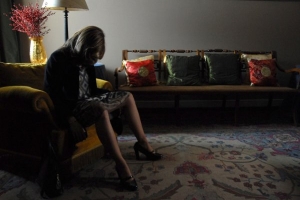 Rigorous but oh-so-tender, centenarian Manoel de Oliveira’s one-hour wonder Eccentricities of a Blonde-haired Girl is a film in one and a half acts. Oliveira translates the work of Eça de Queiroz to the screen, running the 19th century tale of romance through the current economic landscape and harnessing the resultant anachronism to paint an achingly beautiful picture about the inability to transcend class, escape reality and lose oneself in art. Despite its decidedly Brechtian and ceaselessly self reflexive nature, Oliveira’s film is rife with moments of poignancy and touches of humour. Using double, triple and quadruple framing and achieving a mise-en-abyme of art and reality, Oliveira writes a ruminative essay on the impossibility of art and reality to merge, the confusion that exists between them and the classism that exists within and with respect to art. Flooded with references to art and art forms, Eccentricities is such a dense and intricate fabric of the arts that even the past is treated in a detached manner like a piece of art, where each image looks like a painting, each sound feels like a melody and each movement cries out: “cinema!”.
 Of all the recent movies that have attempted to acknowledge dark chapters in national histories and advocated looking forward to the future instead of crying over what is lost, perhaps, none is as sober, ethical and uncompromising as Claudia Llosa’s Golden Bear winner. Llosa inherits her tale from the terrorist atrocities that plagued Peru two decades ago (Inheritance being the prime motif of the film) but, subsequently, discards every possible opportunity for sensationalism or propaganda. Tightly framing the lead character, Fausta (Magaly Solier), within and against claustrophobic structures, doorways, photographs, windows, paintings, mirrors and walls, gradually varying the depth of focus along the movie to detach the protagonist and integrate her with her surroundings and using extremely long shots to dwarf her in vast opens spaces of the tranquil town, Llosa concocts a film of utmost narrative austerity and aesthetic rigor. Punctuating and contrasting these downbeat images of Fausta’s life are slice-of-life sequences from the town depicting various wedding rituals and parties which tenderly highlight Peruvian people’s open-hearted embracing of capitalism and their resolve to come out of the trauma of the past and move on with life.
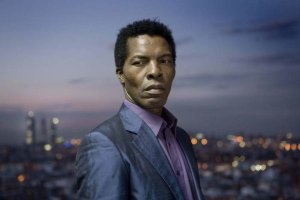 If Inglourious Basterds was a coup from within the system, Jim Jarmusch’s The Limits of Control is an out-and-out war against the machine. The essential piece of cinema of resistance, The Limits of Control eschews simple genre classification and flips every ingredient of Hollywood’s conveyor belt products to surprise, appall, irritate and provoke us with each one of its moves. The complete absence of Jarmuschian brand of deadpan humour announces the film’s seriousness of intent. It is as if Jarmusch wants to establish once and for all that Hollywood does not equal American cinema and that the cinema that the former school marginalizes is truly alive and kicking. The Limits of Control is a film that can easily get on your nerves but, eventually, it succeeds in getting under your skin and evolving gradually to reveal how meticulously crafted it is. Using Cinematographer Christopher Doyle, production designer Eugenio Caballero and editor Jay Rabinowitz masterfully, Jarmusch creates a movie so meditative and relaxing that one feels exactly how William Blake (Johnny Depp) would have at the end of Dead Man (1995).
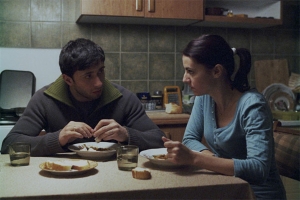 Porumboiu’s follow-up to one of the most hilarious comedies of the decade, 12:08 East of Bucharest (2006), is a companion of sorts to Jarmusch’s film not only in the sense that both of them negate the function of the genre they are supposed to belong to, by completely de-dramatizing their narratives, but also because Porumboiu’s film, too, is a conflict between two types of cinema – the cinema of analytical contemplation represented by the detective-protagonist of the film (Dragos Bucur) and the cinema of thoughtless action represented by his ready-for-ambush boss (Vlad Ivanov). However, more concretely, Police, Adjective is an examination of how our own political and social systems, partly due to the rigidity of our written languages, end up dominating us and how individual conscience and social anomalies are effaced clinically in order to have the bureaucratic clockwork running smoothly. Like Bucharest, Porumboiu, often self-reflexively, sketches the portrait of a bland and pacific city that tries to ape the far west and project itself as more dynamic than it actually is. The film’s disparate themes crystallize deliciously in the final, side-splitting, Tarantino-esque set piece where we witness the police chief urging his subordinates to act by the book, literally.
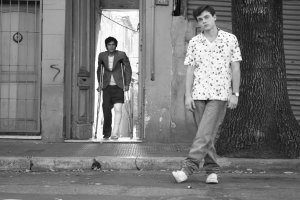 Tetro is a beautiful film. Not just in the way it looks, but in the sheer romance it has for a lost world. The only worthy B&W film of this year out of the four I saw (the other three being Haneke’s
 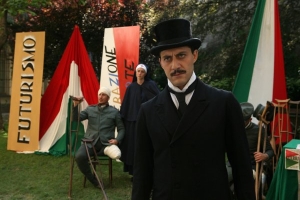 Writer-director Marco Bellocchio’s ballad, based on a nebulous part of fascist leader Benito Mussolini’s life, can teach those so-called historical dramas a thing or two about locating personal ideologies within collective history without being exploitative or pandering to pop demands. Bellocchio’s film is far from a detailed recreation of Mussolini’s political life. It is, in fact, a commentary upon such “detailed recreations” of history based on documents written by winners. Bellocchio’s formidable script and mise en scène keep probing and remarking upon the tendency of fascist systems to suppress histories – personal and national – and exploit popular media, especially the relatively young and emotionally powerful cinema, to blind people of truth and forge a faux reality – a theme underscored in Tarantino’s film too. What more? Bellocchio constructs the film exactly like one of those Soviet agitprop films – not by easy spoofing, but by retaining their spirit and rhythm – using rapid montage, expressionistic performances and operatic sounds. Be it common folk fighting in a cinema hall over a news reel or a bereaved mother breaking down during the screening of The Kid (1921), cinema registers its omnipresence and omnipotence in Bellocchio’s film.
 The perfect antidote to the summer blockbuster, Warwick Thornton’s Samson and Delilah is an extremely assured and undeniably moving piece of cinema that arrives, appositely, as the golden jubilee reboot to Herzog’s thematically kindred movie, Where the Green Ants Dream (1984). Cleverly relegating specific issues such as the Australian government’s intervention and relocation policies for the Aborigines to the background, Thornton frees his films of broad, propagandist political agendas, without ever making the film lack social exploration. With an extraordinary sound design, Thornton keeps the word count in the film to an absolute minimum, letting the stretches of silence shared by his lead characters speak for themselves. The film’s observations about banality of racism in contemporary Australia, exploitation of tribal art and its consequences, the effect of colonialism, especially due to Christian missionaries, on the Aboriginal culture and the ever growing chasm between the tribal and white life styles themselves are fittingly subordinated to the beautiful, unspoken love story that, essentially, forms the heart of the film.
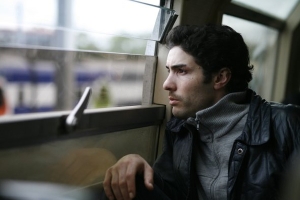 Let me dare to say this: Jacques Audiard’s A Prophet is either the most profound or the most pretentious movie of the year. For now, I choose the former. Audiard’s decidedly unflinching feature breaks free from the limitations of a generic prison drama and takes on multiple dimensions as the apolitical and irreligious protagonist of the film, Malik (played by Tahar Rahim), finds himself irreversibly entangled in ethnic gang wars within and outside the prison. A trenchant examination of religion as both a tool of oppression and a vehicle for political escalation, A Prophet is an audacious exploration of Muslim identity in the western world post-9/11. Although the plot developments may leave the viewer dizzy, it is easy to acknowledge how Audiard confronts the issues instead of working his way around it or making cheeky and superficial political statements. Strikingly juxtaposing and counterpointing Sufism and Darwinism in Malik’s search for identity, Audiard creates an immensely confident and nonjudgmental film that trusts its audience to work with the rich ambiguity it offers.