Schastye (1934) (aka Happiness)
Aleksandr Medvedkin
Russian/French
“Go and find happiness.”
 It is now generally accepted that if not for the efforts of another less talked about filmmaker Chris Marker, the world may not have come to know about his mentor Alexandr Medvedkin and his work. Standing somewhere between the films of Dovzhenko and those of Pudovkin, Medvedkin’s most famous movie Happiness (1934) offers a radically different perspective to the political and cinematic developments in Stalinist Russia. The discussions about Soviet cinema have been dominated by the films and theories of major figures like Eisenstein and Vertov, and perhaps rightly so, obscuring inevitably other stalwarts who may have been. Much less a theoretician than his contemporaries, Medvedkin produces a film that may never make it into classrooms. But one thing can’t be denied and that is the fact that Happiness is a film with a heart. Happiness does work very well as a stand alone piece, but the fact that it is a culmination of a larger and a nobler mission makes it all the more special.
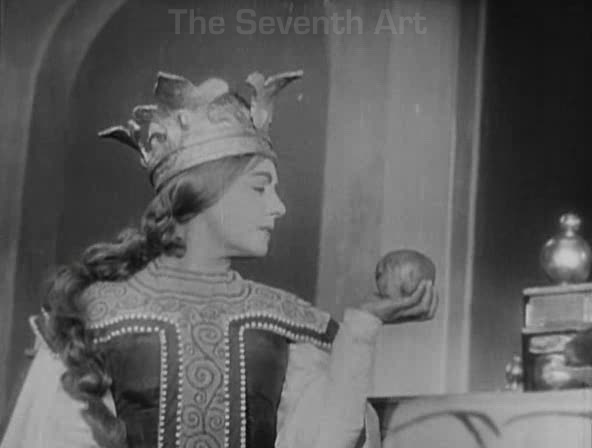
Happiness follows the life of a poor Soviet farmer Khmyr (Piotr Zinoviev) and his “horse-wife” Anna (Elena Egorova) before and after the October Revolution. During the Tsar’s rule, we see Khmyr struggling for existence and envying his wealthy neighbour Foka, who also happens to be the loan shark of the village. So he goes in search of happiness and gets it in the form of a sum of money. He buys a horse for farming but the animal goes on a strike. He manages to harvest by substituting Anna for his horse and gathers a rich output. His celebrations don’t last long as Foka and the Church figures are quick to grab it back from him. He contemplates suicide, but the Church prevents him from doing this “sin”. Now, it decides to punish him by whipping him but not allowing him to die. Years pass by and the country is now in the hands of the communists. The collective farming system has been implemented. Anna seems to have adapted to the system and seems to be doing exceptionally well, becoming the breadwinner of the family. Khmyr, on the other hand, lazes around, making one blunder after the other, desperately tries to become an honest farmer. But the disinvested Foka plans revenge.
Happiness would seem like a very directionless film, if one does not take a look at Medvedkin’s modus operandi outside of the film. Medvedkin was one of the founders of the famous Cine Train of Bolshevik Russia that aimed to travel into the hinterlands of Russia, document the lives of peasants and workers and show it back to them in order to make them understand their strengths and weaknesses. The country had just entered the Bolshevik regime and the common folk, it seems, found it difficult to adapt to most of the improvement measures. Medvedkin and group understood this problem and used the cinema as a medium of introspection to illustrate the situation clearly to the people. Be it public service messages like the importance of hygiene (as in the film Watch Your Health), critical documents about absenteeism, inefficiency and negligence (as in Journal Number 4 and The Conveyor Belt) or queries for betterment of living and working conditions (How Do You Live Comrade Miner?), the Cine Train seems to have never hesitated in putting everything that is right and everything that is questionable about a system on the same plane. And that is very true about Happiness too.
 Joseph Stalin banned the movie apparently because he thought that Happiness was mocking his collective farming system – the Kolkhoz – but spared Medvedkin knowing his service for the state. But surely, what Medvedkin was doing was neither a satire on the state of affairs nor a propaganda movie that the Soviet cinema was famous for. What he was presenting was merely an honest view of the newly born farming system, without any form of prejudice or support. For this, Medvedkin pays equal attention to both the positive and the negative ramifications of the collective farming. Through a largely objective eye – a common eye called cinema – Medvedkin makes a transparent reading of the Kolkhoz, its strong points and its limitations. If Stalin is pleased by Medvedkin’s attack on the exploitative and irrational nature of the church in the Tsar’s regime, he would be turned off by the vignettes of the Kolkhoz, where there are a bunch of goons waiting to ruin it all for themselves. If he would be laughing at the director’s depiction of the Tsarist army as a bunch of men wearing the same grumpy plastic masks, he would be annoyed by the possibly individualistic upshot of the film. But by no means is Medvedkin taking a centrist stance, for his stance is that of the people. As confirmed by Happiness, his interest is not the upholding of a political ideology, but a desire for people to have better lives.
“Every man is seeking happiness. Some see it in wealth, but the Russian peasant who struggled in poverty dreamt of it in his own way. Anton Pavlovich Chekhov noted in his diary: “What is a Russian peasant’s dream? If I were tsar, I’d steal 100 roubles and run away!” A Russian proverb says that the peasant’s reply is: “If I were tsar I’d eat the fat of the bacon and I’d go to sleep.” What an idea of happiness! Just having a piece of bread, not being hungry, having a horse, a barn, having a few possessions, a sack of wheat… Such an idea of happiness, so little, but linked to the age-old harshness of a Russian peasant’s life, that’s the basis of my comedy Happiness. I tried to show the tragedy of such a man, and the effort he makes to find his ideal life. His dreams couldn’t be very elaborate, of course, they were on his own scale, but in his own way he was looking for happiness. And in this film I tried to tell a story that’s funny, sad and tragic, the story of a peasant like him, Khmyr, for whom nothing goes right. His life is a struggle, just as his grandfather’s and great-grandfather’s had been, just as his father’s had been. And, totally unexpected to him, at the end of the film he finds that there are others who care about him, friends, neighbours, the government too. And in a collective farm he comes close to happiness. That’s the story of the film. Throughout my life the film train has been a wealth of ideas and themes. It made me love themes linked to the people, it made me love the life of the people, their dreams, hopes, joys and pain.”
As he says above, Medvedkin fascination lies with the people of his country. Instead of making his film into a moral tale about the truth about happiness, he is content is depicting the struggles, aspirations and triumphs of a common man – a simple man whom he has seen throughout his life in the Cine Train. That is why, I believe, it is not fair to call Happiness as a politically charged film even though it provides a good indication of the politics of Russia at that time. His Khmyr is not an icon of satire or propaganda, but of the Russian peasant himself. Khmyr is like Chaplin’s Tramp, not fitting easily into preformatted social structures, only that Khmyr is not the happy-go-lucky type like his American twin. Medvedkin seems to be of the opinion that, however strong and simple a system is, there will always be anomalies who will take time to settle down. This idea is reinforced by his other films The Story of Tit (1933) and Stop Thief! (1931), where too we have lazy or incompetent peasants trying to malinger and wriggle their way out of duties at the Kolkhoz.
 In Chris Marker’s brilliant film The Train Rolls On (1971), he recounts the rise and fall of the Cine Train, employing meditative voiceovers, stock photographs and interviews of Medvedkin himself. The Train Rolls On starts (and ends) with the image of a moving train, denoting at once the beginning of this film, the beginning of cinema and the beginning of revolutionary cinema heralded by the Cine Train. Marker, not without a tinge of sadness, documents the activities of the Train, from its inception to its death, and attempts to bring to light how revolutionary the vision of the group was. In the interviews, Medvedkin recalls the experience of traveling in the train, stopping at villages, carrying out the mission’s objective and working against all odds to give to people what he had taken from them. Marker’s work is a documentation of a (lost) documentation of history, of revolution and of change. Marker tells us that although most of the Cine Train’s work has gone into oblivion, the spirit of the undertaking has lived on. As he puts it: “The biggest mistake one could make would be to believe that [the Train] had come to a halt”.
What is perhaps most unique about the Cine Train is its conviction that cinema is a medium that is of the people, for the people and by the people. That it can indeed bring a change in the lives of common people. That it is the only art which can create a revolution for good. This view is remarkably similar to Medvedkin’s contemporary and fellow Russian Dziga Vertov’s Kino Pravda theory. Nikolaï Izvolov, who headed the restoration of Happiness, narrates the strange phenomenon that Medvedkin and Vertov shared. Even though both lived in Moscow and were even next door neighbours for some time, they seem to have never met each other officially. And just before they had an opportunity to work together in the 50s, Vertov passed away. One only wonders what course cinema would have taken if they had joined hands. Herzog’s belief that cinema is the art form of the illiterates seems so true when watching the films of these pioneers. Somehow, it feels like cinema has moved backwards from where it started. One should at least be glad that their followers – the Dziga Vertov Group (Godard et al) and the Alexandr Medvedkin Group (Marker et al) – have tried to sustain the vision of their mentors, if not achieving the desired results.
 In Happiness, Medvedkin sets up a hilarious contrast between Khmyr and his wife Anna by reversing the conventional notions of masculine and feminine. As Khmyr goes out in search of “happiness”, Anna grabs him by the collar and kisses him goodbye. She defends him against Foka’s exploitation. She steals a horse from thieves and rescues Khmyr from execution. She drives a tractor and runs the house. Heck, she even carries the horse down from the top of their hut! Medvedkin almost always frames her above the feeble Khmyr producing an amusing effect. Sergei Eisenstein called Medvedkin a “Bolshevik Chaplin”. Although I’m sure many will be surprised by that statement since the slapstick in Happiness seems to have aged a bit (but only as much as many of its American counterparts), there is much dark humour in Happiness to make up for that. I haven’t seen any Russian comedy of this period, except Pudovkin’s magnificent Chess Fever (1925), so I am not sure how this film stands out as a comedy among its contemporaries. But where the success of Happiness (and Medvedkin’s work in general) really lies, in hindsight, is in the fact that it offers us an alternate prism to view a country’s cinema, which has been reduced by text books to mere political messages and then a few cutting techniques.
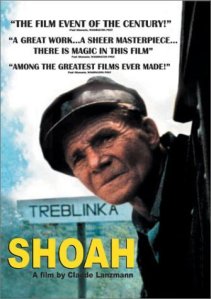 Let’s make a few things clear first. Shoah (1985) is an essential film. Essential not for us to see it, but for it to exist. Even if the world fails to take notice of it, even if audiences don’t see it, it will remain as glorious and as vital as any historical monument or religious document. It’s not a film that you merely watch, but one which you visit. Running for over nine hours, Shoah opens up at its own pace, never bothering about its destination or about its function as a film. Aided by a couple of cinematographers and a translator, Claude Lanzmann, a protégé of Jean-Paul Sartre and the director of the film, meets the survivors of the Holocaust, – of Auschwitz-Birkenau, of Treblinka, of Chelmno and of the Warsaw ghetto – neutral witnesses in rural Poland and even ex-Nazi officials and workers who were in some way related to the events at the camps, striking up conversations that seem utterly banal but which eventually develop the atmosphere of the film. Apparently, it took Lanzmann over a decade to complete the film and this determination shows. If you are looking for something close to courtroom transcripts or architectural details, look elsewhere. Lanzmann does not pretend to give a fair chance to the SS officers, nor does he try to tell us what actually happened out there. He takes a stand, for sure. Once you take its premise for granted, you realize that Shoah is more than a film. It’s a project – of preservation and of education.
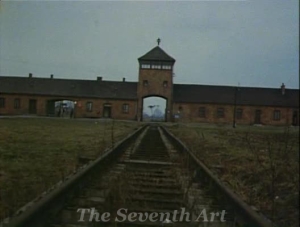 The more I learn about the Holocaust, the more I tend to admire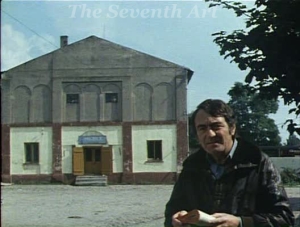
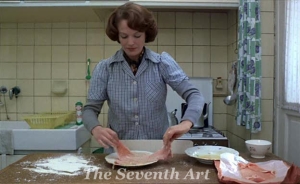 Chantal Akerman’s most famous film gives away all that is factual about it in its name itself. The rest of it follows what the titular Jeanne Dielman (Delphine Seyrig) does in this 23, Commerce Quay, 1080 Bruxelles house of hers, over a three day period in almost in its entirety. Using completely stationery cameras, Akerman creates a claustrophobic document of life in its most mundane form. Even with a screen time of over three hours, there isn’t much in the movie that could be fit into something called plot. That, precisely, is Akerman’s intention. Details are given with extreme reluctance and in exceedingly small measures (with hardly 10 minutes of spoken dialogue). On the first day, we witness Jeanne ritualistically moving about in her house, switching on and off the room lights, cooking potatoes for her obedient son, arranging tables, doing the dishes and making the bed. She earns by selling herself during the afternoons in her very house. All this is done by the book, if there ever was one.
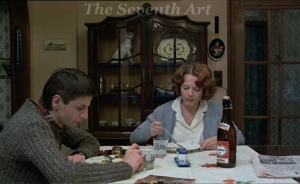 It wouldn’t be unfair to call Jeanne Dielman an experimental film. Where other films that deal with similar theme of urban alienation tend to bend towards the cerebral side, Jeanne Dielman is more experiential. At any point in the film, once the viewer gathers everything there is to an image, like Tarr’s movies, fatigue sets in. We start experiencing time as it is, undiluted. In other words, we begin taking part in Jeanne’s life by experiencing the savage inertia of time. The only difference is that she is oblivious to it while we, possessing knowledge of the artificial and transitory nature of cinema, are not. Jeanne doesn’t pass through life. She lets life pass through her. Not once does she show signs of emotional fatigue. She is insensitive to her condition much more than her cerebral counterparts. Except for one sequence at a button store, where she shows clear indications of mental derailment, there apparently is no outlet for her emotions at all. Apart from the perfunctory conversations with her son and the occasional visit by the neighbour, who asks Jeanne to take care of her baby (who could well be considered a miniature Jeanne) from time to time, Jeanne is completely cut off (at times literally, in the frame) from the world.
 The only hope for Jeanne to snap out of this vicious loop comes in the form of the final sequence in the film where she stabs to death an unsuspecting client of hers (Actually, it is never made clear if the scene takes place in Jeanne’s present or not. The man could well be her husband, whose death is talked about regularly in the film, thus, also, creating a narrative loop within the film. But considering the realities of the world, it is unlikely). This is where Akerman deviates from Tarr. Tarr seals his characters in their own existence until they fade into oblivion. His characters neither have history or hope. Akerman, on the other hand, gives her characters a past and a future. The circle in Jeanne’s life may just be a stray deadlock that had to be resolved by her action (rather, by ceasing her inaction). There is certainly a gaze at a different future throughout the film. Jeanne is expecting a gift from her aunt, which is revealed to be a dress later. She deposits money in the bank for future use. Her aunt even urges her to migrate to Canada. Even though, a large part of the movie is concerned with her empty life, it does offer a hope for renewal.
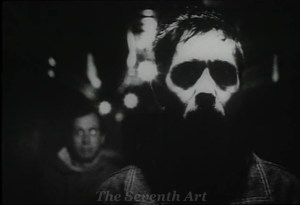 Who would have thought that one could make a sci-fi masterpiece in just 27 minutes? Well, I didn’t. I was wrong. La Jetée (1962) has left behind it, a legacy that many filmmakers have attempted to inherit, time and again, through the years. Its vision of the future of the world and its inhabitants – a sunless earth, cold expressionless faces and almost machine like emotional states – and the possibilities of experiment with cinematic and real time, that it has opened up, have become almost a standard template for sci-fi movies. If only a certain movie monument wasn’t made six years later, La Jetée, hands down, would stand out as the greatest sci-fi film ever made. The surprising fact is that the script of the film wasn’t adapted from some visionary short story, but one written loosely and directly for the screen by Chris Marker, the director, himself. And further, the script is just a minor contributor to the film’s success. Here is the thing: The word has been destroyed by the ominous nuclear war and humans are forced to stay underground. The “victors” of the war are trying to find a way to contact the past and the future of mankind to prevent the imminent annihilation of the human race. One of the lab rats for this is The Man (Davos Hanich), who retains vivid memories of his childhood and carries with himself, puzzles from the troubled past.
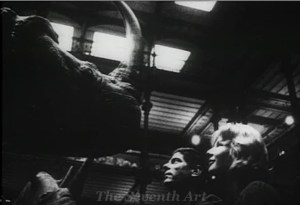 There is a remarkable scene in La Jetée where The Woman points at a cross-section of the tree trunk to denote her age. The Man jokingly (and self-referentially) points at a region outside the periphery of the trunk suggesting that he is from the future. This scene isn’t just an isolated homage to Vertigo (1958), but one of the many indicators that La Jetée is, in fact, laid on the very themes of Hitchcock’s film. Plainly, both films could well be seen as subjective accounts of treatments of psychological inhibitions – acrophobia and depression. In Vertigo, Scottie is a man who has lost his beloved (and whose face hypnotizes him for some reason) in an accident and is determined to reanimate her back to life, no matter what it takes. The Man, here, is no different from Scottie. The Woman could well be dead too (as he, also, suggests at one point). The Man’s tools for this “ritual” of resurrection are his memories and experiences, because of which he too, like Scottie, is nudged into the vicious cycle (rather, the Vertigo spiral) of resurrection and loss. In another extended sequence in La Jetée, The Man and The Woman visit a museum where stuffed animals are kept as exhibits. The range of animals there – giraffes, elephants and rhinos – make it seem more like a zoo than a hunter’s exhibition. The couple watches them with utmost fascination. Marker photographs the animals and the couple as if they were on the opposite sides of a mirror. There is great contradiction at work here. Are these live animals trapped in a time frame that is outside their own or are these really dead creatures resurrected back to life by some passionate enthusiast? Either way, they only reinforce that The Man and The Woman are, in fact, one of them.
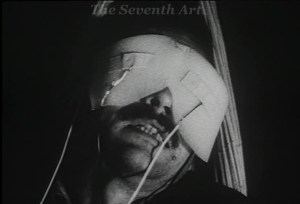 But it is Marker’s use of still images for his narration, almost entirely throughout, that is the masterstroke. He could have used muted motion clips, but that would have added no vitality to the themes of the film. The Man is forced to go back to his past, even after all those traumatizing events of the world. Predictably, his memory is fragmented, much like the images of the film. He synthesizes his “past” from his subsequent experiences, passionate fantasies and remaining shards of memory. His memory seems to document, eventually, not how the events were, but how he wants to believe they were. Marker uses an array of match cuts to emphasize the dependence of The Man’s memory and vision of past on the present state of his mind and of the world. In a critical scene in the film, The Man and The Woman visit a museum where they observe stone sculptures with missing heads or other parts of their bodies. Just then, an apparently tormented face in the sculptures is juxtaposed with The Man’s own distressed countenance. Are these the just figures of ancient art or are these “products” of the mutilated bodies of the war that The Man witnesses? Most of Marker’s images are spontaneous, with each of them seeming like a freeze-frame ending for intense moments. Each of these images seems like straight out of a dark comic book, with tension and horror oozing out of each pixel. Each one carries with it a past and a future that is as troubling as The Man’s own. Interestingly there is one single shot where motion photography is employed. The Woman, after assuming various poses during sleep, opens her eyes gradually. This is, perhaps, the only time where The Man really feels alive, witnessing movement, hence freedom and hence life. The only moment of escape from his physical existence in a world trapped under the surface of the earth – a world where people don’t live, they exist, a world where they don’t die, they expire.
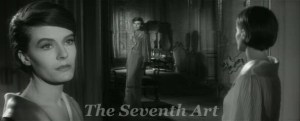 Right from its title, Last Year at Marienbad (1961) spells ambiguity. Neither does the film refer to a place called Marienbad, nor is it sure if the events that the protagonists, X the man (Giorgio Albertazzi) and A the lady (Delphine Sevrig), talk about took place the previous year. Last Year at Marienbad takes place in an ornate French chateau and unfolds as a conversation between X and A – a very repetitive one at that (at least, that is how it looks like!). X insists that he had met A last year when she promised that they would elope if only he waited for a year. But that’s about all the information that the film provides us. We hear X and A carrying on the same conversation, in one tone or the other, for the rest of the film. We see them moving about the chateau, gazing at the mannequin-like guests who seem to be able to speak and shut up according to the whims of X and A. Resnais superimposes every possible permutation of the characters’ forms, – past, present, memories, fantasies and possibilities – appearances – in black, in white – and locations – the chateau, the garden, the room and the bar – to produce a one-of-a-kind work that turns the very tenets of narrative cinema that is builds on.
 One thing that is conclusive is that Resnais uses the chateau as a visual manifestation of the human memory. He uses parallel, rigid and clearly defined structures for the interiors of the chateau. The hedgerows in the garden are pruned to perfection and show symmetry and clarity of position and shape. Resnais’ geometry spells determination and factuality and is anything but ambiguous, like the black and white of the film. The man, who persuades the woman to walk with him through the ominous corridors and staircases of the each other’s memories, mentions at one point: “At first glance, it seemed impossible to get lost in them along the straight paths”. Unfortunately, it is only the inanimate that are static. The humans in the chateau, their relation to their surroundings, their actions, their mentality and their appearances keep changing. Like an attempt at the recollection of a distant memory, the mise-en-scene of a sequence regularly changes, filtering out the unnecessary, checking out possibilities, trying to get the perfect match of image, sound and sensation. Perhaps the term “stream of consciousness” suits Marienbad more than any other film.