Cinema of India


Our Films Their Films
Satyajit Ray
Orient Longman, 1976


Surely, God is not a socialist. Why then would he bestow so much talent upon a single person and deprive the rest of the artists of country of any comparable finesse? Be it Japanese architecture, German music, English literature, Chinese paintings or world cinema, Satyajit Ray’s knowledge of the seven arts is everything a connoisseur could ever desire to have. And his book Our Films Their Films clearly shows why a true love for cinema is the only pre-requisite to be a filmmaker.

our-films-their-filmsI have hardly seen Satyajit Ray’s films and was apprehensive about taking up this book. I was afraid that it would require a prior introduction to films he talks about and especially to his own films. But as it turned out, I was completely wrong. Shubhajit here recalls how this book single-handedly induced him into the film culture. Why not? Our Films, Their Films is a rare book that works two ways. I can’t imagine any other book that is as interesting for strangers to cinema as it is for the film buffs.  Ray never does it like an academic scholar churning out one jargon after another nor does he go too low-brow elucidating every shred of observation. Ray’s tone is conversational and at the end of the book, one does feel like he has spent a good few hours with an interesting man.

The book could be plainly called a bunch of essays by Ray assembled in a chronological order. But surely, it can pass off as so many other things too. Each of these articles has the charm of a short story, the depth of a critique, the personal quality of a diary entry and observations of a great essay. With a language that is neither overpowers the content of the text nor undermines its quality (which I think is true of his films too), Ray sets a standard for not only analytical but also for the verbal component of film writing. No wonder he also stands out as one of India’s key literary figures.

Cinematographe has this to say about the book: “The originality of Ray appears in an indirect manner: whilst talking about others, he offers us a subtle self-portrait“. This is so true. The essays in the book gradually and subtly unravel Ray’s perception of cinema and what he believes makes for great filmmaking, all of which reveals itself through the very many critiques of world films he presents. But the fascinating part is that he never takes the role of a filmmaker when he writes these pieces. He could well have elaborated on what lens John Ford used or what editing instruments Kurosawa employed. But the sections where Ray presents his views of international films could only have come from a true-blue cinephile whose very love for cinema is infectious. Look how he presents his opinion on Kumar Shahani’s Maya Darpan (1972), Kaul’s Duvidha (1973), Benegal’s Ankur (1974) and Sathyu’s Garam Hawa (1973), which organically unfolds into a fantastic review of the films.

But what really swept me off my feet are the observations that Ray makes in these early essays, the last of which was written in 1974. These observations – their almost prescient and intensely accurate quality just goes to show how deep Ray’s understanding of cinema was – both as a person behind and in front of the screen. I’ll give you an example. Ray met Kubrick just after he had made Spartacus (1960). He recollects: “On the strength of his Paths of Glory (1957), Kubrick had seemed to me to be one of the white hopes of American Cinema. He had first rate technique, he had style and I had a feeling that he had also something to say.”. Not just that, his opinions of Billy Wilder, Antonioni, Kurosawa and many others prove to be bang on the money.

If one takes a survey of the favorite section in the book among those who have read, it would definitely produce variegated results, for each section has the power to top the previous, no matter what order you read them in. My favorite section in the book Problems of a Bengali Filmmaker (along with Calm Without, Fire Within and An Indian New Wave?) provides an answer to almost every question I have had about the state of filmmaking in India. But again, this is one opinion that may change even before I finish this review. An Indian New Wave? may be just the winner in the long run, I suspect.

Reading the very many experiences of Ray abroad, one is regularly surprised about the range of people he knows in cinema and the dream-like way they meet each other. Reading these is almost like hearing a splendid raconteur recollecting his road trips with wide eyes. But all that is only because he presents himself with such simplicity. And that is partly a reason that this book shines with honesty. I’m sure, there would be hundreds of pages written from the other side of these meetings that would really give an idea of this monumental figure called Satyajit Ray.

 
Verdict:

P.S: Some essays of the book can be found here. Do read it. I think this book is a must read for film-geeks and not-so-film-geeks alike.

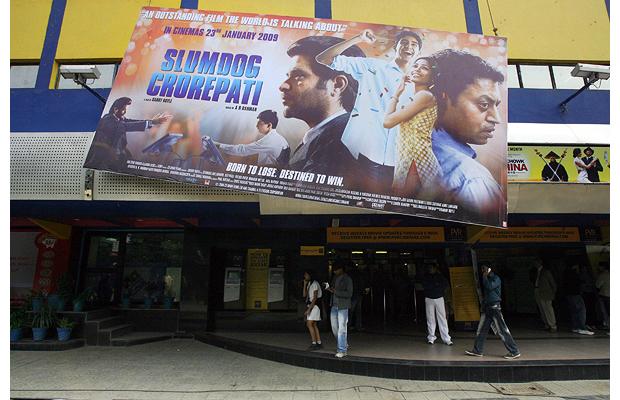
Slumdog Millionaire: Creating Opportunities                    (pic courtesy: Telegraph)

Slumdog Millionaire: Creating Opportunities (pic courtesy: Telegraph)

There has been a lot of question raised about the recognition Slumdog Millionaire is getting across the world. And things have been made worse as people with no connection to cinema whatsoever have started capitalizing on the situation. Let’s set the latter aside as it speaks for itself. There are claims that it is because an Englishman directed the film that it has gone to such heights and had the same been done by an Indian, it would have been crushed. I say – Obviously. To be recognized, you have to be seen first. And bringing wide visibility to your work by itself is job half done. The gripe that such a film by an Indian filmmaker would have gone unnoticed is more of a scar on the Indian scenario than the West’s.

The content in films like Slumdog Millionaire and Smile Pinki is very much Indian and is clearly not out of reach of our filmmakers. Indian film industry,  too, is not short of great technicians and it could easily pull off similar films by itself.  The only and the largest concern is that of the big $. The reason that good films are not being recognized in India seems to be that distributors are not willing to take risks or even pay heed to independent ventures. The term “promoting a film” has been used extensively by the media and its importance never explained. Moreover, the films being promoted are mainstream biggies that already have huge banners behind them. On the other hand, the independent and low-budget ventures keep suffering from under-promotion This situation isn’t going to improve unless some angel pours in money like crazy, which is as likely as a coin landing on its edge. But what can be done is promotion via the hard way. One has to give a push to worthy works regularly so that it is lapped up by the rest of the world.

One thing that could help filmmakers to pitch their work to the world is a film festival. No, wrong – a slew of film festivals organized at various levels of governance. This could be done using a hierarchical setup installed across the country. Something like the  TV reality shows of today. Filmmakers get to submit their films at city-level film fests. Winners of each city get a chance for exhibition at the state level. The state level winners could then compete against each other at the national level and finally, the national winner could be made the official representative of the country that year. This would not only be a democratic choice but also one that encompasses a large section of films. When sufficient momentum has been gained from the previous wins, a film would evidently get larger attention. Even the ones that lose out would have been seen by a huge audience at the end of it all. Of course, the country’s film board would have to contribute a lot here. But if the filmmakers themselves could assemble some sort of “unconference” (that wouldn’t cost much would it?), the film development board has to just take care of the higher levels.

And most importantly, a really revered international film festival – a centralized national deal – should be set up. This one should not only advertise the above formed cream of the films from the country but also should prompt international filmmakers to showcase their films. Of course, it can’t be made at the extravagant levels of the Oscars or Cannes and needn’t be too. It could, however, earn a name for itself with its selection of films and the awards it hands out. Once this is done, the films would be automatically taken up for exhibition by other festivals across the world. And when a film is promoted across most reputed film festivals of the world, the Oscars would not hesitate to take note. Why not? What is the Oscar but a grand culmination of extravagant chain of promotions?  

There is a big problem here. I may sound like advocating that we have to work towards the Oscars. No. The Oscars are being widely recognized as the greatest recognition in film world, whereas they are anything but that. The Oscars are as vital as they are being considered, but not for the same reason. The Oscar is not as much important as a consequence of good filmmaking as it is as a cause. Look what happens once the Oscars are announced. The box office results soar. Slumdog Millionaire is back to the top 5 this week at the US box office. The DVD market would now be flooded with the winning films. Even the films that were snubbed by the Oscars, but given nominations would have a chance of making it big a la the Shawshank phenomenon. Distribution of obscured films will become fluid. And if this cascade continues, independent movies would be picked up even before the Award season and given a fair chance (True to their name, Fox Searchlight Pictures found Slumdog in the dumps and have created history now). Multiplexes will be used for the real reason they should be. And if the government is ready to push further, they could pass an ordinance where major multiplexes could be asked to allot one show per day to some of these award-winning films. This would significantly reduce the problem of distribution and film availability.

But then, cinema is not an essential service and all the above could be an exercise in futility. But one should also remember that cinema is a huge revenue winner and if proper platform is set up for international collaboration, this would only increase manifold.  For the good or otherwise, Slumdog Millionaire has become a landmark film in global cinema and has created a climate apt for cross over filmmaking. This is perhaps the most opportune moment for the country’s cinema to resurrect itself and truly find its voice. However, our filmmakers have to be careful about the most natural pitfall that evolves. They should not look forward to cater to an international audience now but to the local one, however with a keen eye on quality. Only then, we would be able to create a unique identity for our cinema on the map of the world. 


I’ll reserve the Jai Ho for then!

♫ Thus Spoke Zarathustra ♫

♫ Thus Spoke Zarathustra ♫

It’s finally here. The first issue of Indian Auteur is out following the announcement of The Delhi Manifesto last month. My wishes to the whole team behind the effort. Let’s read, spread the word, participate and make it happen…

INDIAN AUTEUR E-ZINE ISSUE 1


There is a very evocative scene in Slumdog Millionaire – one of the two that embody the whole film – Jamal watches a European opera being conducted in front of the Taj Mahal. The protagonist rues the loss of a woman holding her in his arms. Jamal doesn’t know a thing about what is going on there. But it entrances him for some reason. He is able to siphon the emanating emotion irrespective of the language, the setting or the form of the gesture. A completely Indian cast, A British crew and a limited release – there could only be a few more reasons for the film to go down unnoticed in the west. But hey, it happened. And how! With 4 Golden Globes and going strong for the Oscars with 10 nominations, Slumdog Millionaire has become the film that everyone is talking about – in one way or the other. 


Rediff)

Slumdog Millionaire: Tender Coconut in Tetra Pak (pic courtesy: Rediff)

The story? Not different from what you have heard before. But definitely different from what you have seen before. As the title completely gives away, it is “about” Jamal Malik (Dev Patel), a slum kid who participates in a game show and goes on to win the grand prize at the event. He is also in search of his childhood sweetheart Latika (Freida Pinto) who he meets after religious riots in the city. There are villains who try to stop him and some elements – human and superhuman – that help him achieve his goal. But why is this making waves all over? The answer may be – the right move at the right time towards the right direction. It is a story that could possibly happen to anyone anywhere in the world – one of destiny and fate. So, why Mumbai? Well, Mumbai makes the possible probable. 


Here is an excerpt from Mr. Amitabh Bachchan’s blog post on the film: 

“It’s just that the SM idea authored by an Indian and conceived and cinematically put together by a Westerner, gets creative Globe recognition. The other would perhaps not.”

Why is that so?

Look at the characters that Boyle uses. Note their objectives. Could they be more stereotyped? Jamal – A lad who has grown with Hindi cinema and unconsciously imitates that. He is still the young hero who dreams of taking his sweetheart away from the jaws of the dragon. His morals are those defined by traditional Bollywood flicks – love over money, hard work and righteousness at all costs. The 20 million never crosses his mind as does the cherished idea of a “familial” reunion. Salim – brought up with similar Bollywood dreams like Jamal, but with a different set of films! The gangsta flicks (a la Drohkaal , Satya and Company) that make you drool over the wads of money that flow here and there. The sheer romanticism of pulling the trigger with utmost indifference. The jump cuts. The cigarette smoke and the all-hiding ever-cool sunglasses. He dreams of literally bathing in loads of money, till the very end (At this moment of the film, a shiver ran down the spine when he strikingly resembled Private Pyle of the chilling Full Metal Jacket (1987)). Yet, the urge to remain upright and undo his sins. And Latika – the Rapunzel of the story, resigned to her fate, fantasizing that a prince charming will come take her away some day. The arrogant constable Srinivas, the savage Mafioso head Javed, the one dimensional child trafficker Mamen – now, how many times have we seen them before?

See how Boyle employs the typical plot points to find a resolution. The baddie turns good out of remorse and sacrifices himself to aid the damsel in distress to reach the safe-space of the narrative. The quintessentially Bollywood theme of predetermination and destiny makes the lovers meet again. The inevitable train sequence that separates Jamal and Latika in the first place.  Ring a bell? Well, why Not? These are the characteristic sequences of our cinema (“entertaining mass oriented box office block busters” to borrow Mr. Bachchan). And look how fresh and unseen he makes it all! Boyle has provided the kind of new wrapper to the old sweet that the Indian directors seem to have traded with star power some point down the lane. Indians are masters at storytelling by tradition and cinematically too. But what has happened is that the craft of storytelling always played a second fiddle to the story itself.  And Danny Boyle, thoroughly soaked in the Hollywood-type craft of story telling, notes this. In essence, he bridges the best of both worlds – Form and content – to provide something so familiar yet not so much. A stereotype film with stereotype elements celebrating stereotypes with honesty.

There is a lot of talk going on around about the depiction of slums in the film and how the film is essentially a “consolation and titillation” device for the west. Claims are being made that the film is clearly Danny Boyle’s version of the Indian story and not the truth. Of course it is. And the sad thing is that the film is being criticized for that very reason. This is where I sense absurdity. Cinema, art in general, is most definitely an abstraction of the world that the artist sees though a kaleidoscope of his ideologies and idiosyncrasies. And its appreciation is one that involves its decryption and the discovery of what the artist sees, not what the artist should have seen.  Danny Boyle says in an interview to NDTV that when a foreigner attempts to picture something on a land alien to him, he must be extremely honest in his opinion. Indeed. When I started watching the film, I was afraid that Boyle would be quite conscious of what he is doing and would probably try not to breach certain lines. But gladly, he doesn’t do that. He relentlessly attempts to show what he sees. The child beggars, the riots, the guided tours. Once more, I take to Mr. Bachchan’s blog.

“If SM projects India as Third World dirty under belly developing nation and causes pain and disgust among nationalists and patriots, let it be known that a murky under belly exists and thrives even in the most developed nations.”

Precisely. And that works the other way round too. Take Hollywood for instance. Though plagued with essentially American morals (beautifully parodied in Slumdog Millionaire at one point where the tourists offer consolation to the hurt guide, all in the “American way”), the industry has never flinched from showing the darker side of the nation. One of the most self-criticizing and self-correcting cinemas of the world, Hollywood and its associated branches have regularly treaded to their “dark side”, though unfortunately with considerable romanticism. Now, there is no reason for anyone, leave alone developing nations, to turn away from all the filth going on around. Note that all that Boyle has shown in the film has earlier been shown in Indian cinema numerous times, many times going unnoticed. But when Boyle, the unnamed representative of all foreigners, points this out – to us or the west, immaterial – our pride is hurt as if being frank (note that being frank is not related anyway to being true) is a crime. We argue that a westerner should not make comments about our country without even experiencing it. Now, I don’t understand this newly born possessiveness about our “underbelly” that hitherto was repudiated by “the commercial escapist world of Indian Cinema”.  If what this film is doing is slum porn, the behaviour of ours should be aptly called shameless opportunism.

I have a question. Zana Briski made an Oscar winning documentary about kids in red light areas – Born Into Brothels (2004) – that was hundred times more stomach churning than Slumdog Millionaire. Now, why was no claim made about that film’s portrayal of the slums, though by no means it projects a rosy view of the state of affairs? Was it because it was low-profile? Was it because only Slumdog seriously reminds us of the stale state of our mass entertainment, hence hurting our pride? Or was it because the facts were undisputable there and in that Slumdog, which is a work of fiction, they can be easily disowned? 

Having said these, one must also note that what Boyle has done here is not a consequence of frustration but of brimming hope. True, he does show the most shattering facets of Mumbai’s buzzing life, but he picks up situations that always have an outlet into redemption. Yes, it is typically what a  tourist would see in Mumbai. The contradictions, the happiness in spite of that and “the show must go on” attitude – aspects that residents would naturally be indifferent to. He never condescends on his lead actors. There is no sympathy for them. Boyle always films them from a downward angle.  Yes, he celebrates them during their highs, but does not go for tears during their lows. And amidst all this, he superficially studies the spirit of the city. Jamal’s win is necessarily an escapist entertainment, irrespective of the money, for the people who would go on to live their own lives after the show ends. All they need is a hero, which is a universal desire, who comes up from rags by the moral path (“substitution of their gaze”). Boyle’s film is an escapist fare about escapist fares. Slumdog Millionaire could well be termed as a crash course to Bollywood to the west – only that it celebrates the tradition honestly and in the right way. 

Sorry, but Mr. Bachchan again:

“The commercial escapist world of Indian Cinema had vociferously battled for years, on the attention paid and the adulation given to the legendary Satyajit Ray at all the prestigious Film Festivals of the West, and not a word of appreciation for the entertaining mass oriented box office block busters that were being churned out from Mumbai.”

Now, I’ve read a lot of support for the “Indian mainstream” cinema by people who claim it is purely a manifestation of the workings of the Indian mind and the West can’t possibly judge them using their yardstick. Now, once it has been decided that this type of cinema is clearly democratic (of and for the Indian people), then what is the need to expect admiration and applause from the west? Isn’t it being dishonest trying to entertain locals and requiring admiration world over? Here, in Slumdog Millionaire, Boyle presents escapist entertainment to the west in a form that they would naturally like (incidentally, being liked by the Indian audience too). Thus, it would deserve no more criticism than a mainstream Indian film does. But when it comes to admiration, the craft gains weightage and Boyle scores there. 

Cinematographer Anthony Dod Mantle does Christopher Doyle all the way. The restlessly blurred events, the dizzyingly deep focus shots and the skewed camera angles are clearly adapted from Doyle’s features with Wong Kar Wai, but definitely suit this film too. Probably one of those oriental good luck charms!  I will not elaborate upon A R Rahman’s soundtrack as I have been deemed as one of his notorious fanboys. But seriously, it is nothing short of triumphant and a sizeable fraction of the film’s success. And the editing is masterful with snazzy and relevant cuts between the past and the present. The final sequence tops it all where we have three visual sequences intertwined and led by a single soundtrack. It is definitely going to be a tough call between The Dark Knight and Slumdog Millionaire at the Oscars next month. 

I had mentioned one of the two sequences that typify the spirit of the film. The second sequence obviously being the one where young Jamal, covered in filth, celebrates after getting the autograph from the angry young man and the hero of this review Mr Amitabh Bachchan. Placing the celebrity above himself, despite of his own pathetic state. Celebrating life despite its own wishes. This is what Danny Boyle (or any foreigner who admires India) has seen in the country. And this is what he has honestly unfolded in the film, with significant decoration but no other hidden intentions. Mr. Boyle isn’t teaching us what to show, but how to show. He isn’t telling us how India is, but how he sees it. And positively, he isn’t showing us our darker side, but the brighter and more humanistic one.  

Verdict: 

Vanaja (2006)
Rajnesh Domalpalli
Telugu

“Can you believe it? Your own mother used you. Disgusting. ”

Vanaja

Browsing through Rajnesh Domalpalli’s cine résumé, we see more than two dozen awards from various film festivals across the world, against just one film. The sole bullet point in his filmography reads Vanaja (2006), a quiet little film that has conquered its own domain, won its own set of hearts with its sheer brilliance in thematic and visual execution and perhaps gained an entry to the list of best films of that year.

Vanaja opens with a Pulp Fiction like definition of its title – “(a) Water Lily (b) Wild at Heart | Sludge Born, Struggling | Rising | You Bloom So True”. And that is what the screenplay reveals as it measuredly blooms out. Vanaja is a girl untethered by the notions of class, caste, gender and age. Though it shouldn’t be said that she shoots her mouth off, she does express herself firmly when required and restrains herself when it is not. Born in a fisherman family, Vanaja (Mamatha Bhukya) loses her mother at a very young age and her only memory of her mother remains not so sweet. We come to know from the first minute that she loves dance and it is the only driving force to her otherwise ordinary (and even depressive) life.

She agrees to work as a maid at the village head’s house where she wins a chance to learn Kuchipudi. She shines, needless to say, and hopes to make it big one day. All is well until the village head’s son returns from the US for contesting in a local election. He is quick to take advantage of Vanaja’s sexual awakening and vulnerability and she becomes pregnant. After evading the criticizing eyes of the society, Vanaja gives birth to a boy who is immediately given shelter at the village head’s house where Vanaja’s father is forced to relinquish claims on the boy. However, Vanaja’s interest in dance never wanes and she continues to learn, while acting as a nanny to her own son. Troubles increase for her when her father dies of drinking and she is left helpless.

The film is probably summed up in the fleeting dream that Vanaja has towards the end of the movie in which her father is buried neck deep in sand as she tries to free him. However, she is being pulled by the local brats using a fishing net as the village head and her son try to put a garland around her neck while glorifying his political victory. This is the point where Domalpalli surreally stresses on the caste system that plagues the nation. Ironically, it is the same diversity (that makes the country so wholesome and tolerant) that plagues it with ideas of caste system and social superiority. Neither is the so-called upper caste able to accept her with open arms because of her assigned caste, nor is Vanaja free to follow her dreams owing to the society that pulls her down time and again.

I am tempted to compare the film with another collaborative effort that released three years before this film – Manish Jha’s Matrubhoomi: A Nation without Women (2003) – for both are independent ventures that deal with exploitation of women in the arcane hinterlands of the country where women are apparently sacred. But what the latter venture shows us in a somber and positively depressing tone, Vanaja does in a very light and easy atmosphere. It is easy to note Domalpalli’s striking and daring use of colours that almost exhaust the visible spectrum. The wildness of Vanaja’s heart seems to be reflected in this fascinating colour festival.

Also worth contrasting with Vanaja is Jason Reitman’s Juno (2007). Both the films deal with similar issues of teen pregnancy and their responsibilities and morals, but are poles apart in their execution and are so culturally unique. True that neither Juno nor Vanaja knows the graveness of the act they are going to commit by relinquishing their claim on the child, but where Vanaja stands apart is the fact that her situation is a function of the uncontrollable factors that include the caste system and the servile mentality of the village’s residents. Juno, on the other hand, is solely responsible for her action and plight that she gladly accepts and so do her parents and the society, and this makes Vanaja’s situation all the more shattering.

Having said that, it is remarkable that Domalpalli never begs for sympathy for Vanaja. It was so easy for him to tilt the audience’s support towards her but he never does that. Even more striking is that he doesn’t even appeal for antipathy towards any of the other characters. The complete absence of a soundtrack reinforces Domalpalli’s stand in handling his characters. The primary reason for this neutrality arises from the grey characters that Domalpalli has meticulously sketched. He never typecasts any of them and [deliberately] draws out the multi-dimensional nature within each character, thereby leaving the audience assessing their various actions and not the characters as a whole. Viewed with any fixed set of morals, all characters appear equally sympathetic and flawed.

Clearly, dance is a vital part in the narrative and Domalpalli employs stretches of complete dance sequences that highlight Vanaja’s state of mind. The songs move from Radha’s pining for Krishna’s attention to the slaying of the demon Mahishasura. It is also interesting to note that Vanaja never goes down after the child birth. All she wants is to take care of her child as its mother and continue her strides in dance. But once she takes her final beating when none of her old friend Radhamma’s predictions come true, she slays her inner demon of servility and moves towards true independence – one that has been hard fought and has demanded a larger than life sacrifice. Discussing the morality of Vanaja’s decisions are out of the scope of this article for it requires more than a knowledge of two hours, but what is sure is that these are choices of immense practicality and rationality.

It will be a crime if I don’t mention the stellar performance of Mamatha Bhukya who can teach any so-called-veteran mainstream actresses a thing or two. Independent films usually suffer from bad non-professional performances but it his essentially Bhukya’s work that takes the film out of that pitfall and elevates it into extraordinary levels. Now, here is a killer of a trivia – Vanaja was made as the final project to a master’s degree in film studies at the Columbia University! And perhaps this is the reason, Vanaja could not make it into the Oscar race (not that the selection panel passes only great films!). If this is the kind of cinema that we get from a student, I am thrilled to imagine what we can expect of him when he is an established filmmaker. Perhaps Domalpalli is the Indian reply to Florian Donnersmarck.


Mahanagar (1963) (aka The Big City)
Satyajit Ray
Bengali

“I think you should apologize to Edith”

Mahanagar

The other day I was reading some of the reviews of Deepa Mehta’s Oscar nominee Water (2006) and almost in every one of them, I could find a comparison of Mehta’s work to Satyajit Ray’s films.  What is more surprising than the fact that Ray’s films are universally accepted with open arms and considered timeless, is that a large part of the west is able to relate only to works of Satyajit Ray whenever cinema of India is discussed. Similar to how Satyajit Ray’s phenomenal body of work eclipses all other commendable efforts from the country, his own Apu trilogy overwhelms his other worthy films. Case in point – Mahanagar (1963).

Mahanagar is a decidedly contemporary story of a middle class couple Bhambal and Arati Mazumdar (With a ‘Z’, not ‘J’!), struggling to make ends meet in the ever happening City of Joy. As the money crunch intensifies, Arati decides to take up a job as a sales girl in a company owned by a chauvinist, Mukherjee. It is here that she meets Edith, an Anglo-Indian, and instantly bonds with him. She learns courage and assertiveness from Edith and shines in her job. Things go sour as Bhambal starts envying her and asks her to quit. But just as she proceeds, she comes to know that her husband has lost his job. Arati musters faith and asks Mr. Mukherjee for a pay hike and works harder than ever. But when she sees discrimination against Edith based on race, she does the unthinkable.

There is also a thread about Bhambal’s father, a retired teacher who is restless at his dormancy at home and is surprised to see the vast change in times that he had been unknowingly moving along with now. He seeks out his old students in search of consolation and respect in order to tell himself his contribution to society has been quite vital. Being a staunch conservative he is visibly disappointed with his self-indulgent son’s attitude and his daughter-in-law’s decision of taking up a job. And there is also Bhambal’s daughter, played by a very young Jaya Bhaduri, adding warmth to an otherwise tense household.

In Mahanagar, Ray does not merely suggest that women should be given an opportunity to work, but also makes larger statements about their present and ideal positions in society. He put forth the idea that equality is not just a right for women, it is their responsibility. He suggests that women have to stand up against all odds and voice their opinions for their needs. If they witness injustice, against them or otherwise, it becomes their duty to fight it.  And yet, Mahanagar is not one of those feminist films that are made only to put forth principles and theories. It follows a single woman’s choices with as much honesty as her impulsive acts.

I do not have much knowledge about Calcutta, but I have heard that the streets of Calcutta have the potential to change the way you look at life. Indeed, Bhambal’s and Arati’s ordeal may be just a tiny drop in the vast ocean of happenings of the city. Ray captures the microcosm of the society in the family and depicts the most realistic picture of the then Indian society without once going over the top or making it overtly dramatic. The entire drama one feels while watching the film is internal. And as we watch Arati develop into a truly independent and morally strong character, we can’t help but admire the hope that the character instills in us.


Hyderabad Blues 2 (2004)
Nagesh Kukunoor
English

“If divorcing you was the only way to get you back, I would do it all over again”


Hyderabad Blues 2

“Indie Cinema” and “Indian Cinema” – Totally unlike the way they sound similar, the two terms have come to bear quite an adversarial relationship to each other. Undoubtedly, Nagesh Kukunoor forms a vital milestone in the history of Indian Independent cinema and stays in the cream of my list of most important contemporary film directors from the country in spite of his recent debacle Bombay to Bangkok (2007) whose elusive charm eluded most of us! Nevertheless, his films like Rockford (1999), Hyderabad Blues (1998) and its sequel still have the potential to inspire anyone to take up a camera and have taken the esoteric world of Independent films into the households.

And I felt Hyderabad Blues deserves an article in spite of the flak it faces regularly from the lovers of the earlier film. The central character Varun (Nagesh Kukunoor) has already been introduced to us as a broadminded, level-headed and immensely cool gentleman who has been charmed into staying in India by his bold and independent wife, Ashwini (Jyoti Dogra). Varun hangs out with his group of friends consisting of married and single men but most importantly with Sanjeev (Vikram Inamdar) who warns Varun about all the difficulties in having a baby that he has learned the hard way. Ashwini, meanwhile, hangs out with Sanjeev’s resourceful and cunning wife Seema (Elahé Hiptoola).

All is fine with the lead couple until the wife wants to have a child. Varun, however, is totally unprepared and tries to avert the matter. Things don’t help when Varun’s employee Menaka (Tisca Chopra) is found wooing him in the office by another resentful employee and the issue promptly goes to Ashwini. And just like that, they land up in court debating divorce and eventually getting it. Hyderabad Blues gets all the characters right. Be it the consciously flawed Varun or his voluntarily subordinating mother, you see them all in everyday life. And herein lies Kukunoor’s keenly discerning eye that penetrates into the real workings of the society, without the regular mainstream makeup.

I always thought Bergman’s Scenes from a Marriage (1973) was a great idea (with performances of a lifetime by Erland Josephson and Liv Ullmann) overstaying its welcome. But after watching a series of films on the subject culminating with Hyderabad Blues 2, I have come to realize that divorce, in most cases, is itself a very precipitous event and to portray one, the film’s runtime has to be suitably long in order to highlight the impulsive nature of the decision. And Hyderabad Blues does that without making the film once gloomy or overly melodramatic. All this apparent lightness never takes the solemnity of its objective and only aids the film to move closer to reality.

Hyderabad Blues 2 bears a relation to its predecessor somewhat in the same way Toy Story 2 (1999) is linked to its path breaking prequel (1995). In both cases, arguably the sequel is better in terms of the production values and the wholesomeness of the film. However, it is the prequel that is revered unanimously since they are the ones that gave birth to the sequels and they are the ones that changed the way people looked at films of their kind. Hence, the prequels naturally become close to heart and their successors easily dumped. When Hyderabad Blues came out, it was an instant hit. It captured, with near perfection, the way how anyone in the position of Varun feels, trying to cope up with the increased moral and cultural standards and decreased technological advancements.

Hyderabad Blues 2 is as hilarious as it is outrageous. Though most of the dialogue is in English, they never once feel contrived or out of place. Be the typically American wit of Varun or the bumbling acts of Sanjeev (“Pardon my wife. She has a problem with truth. Always speaks it out” is a knockout), they put one instantly at ease even if the sudden dose of iconoclasm as compared to the first film catches one unawares. By iconoclasm, I do not refer the film’s reflections on the society but on the country’s cinema itself. I wonder if the film would have been so open had it been made under the big banners. And thank god that wasn’t the case.

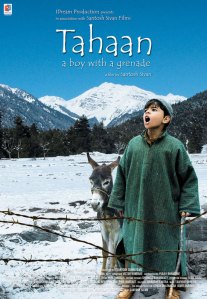
Tahaan

Tahaan: Disarmingly simple

Santosh Sivan is one of those very few DOP turned directors that are spoken of nowadays. In spite of their box office results, Santosh Sivan’s films always create expectations. It is not often that we see a wide release of his films. And when they do, it is wise to catch them up on the big screen. Watching Tahaan: A Boy With A Grenade, it is inevitable for one to be reminded of his staggering work Theeviravaathi: The Terrorist (1999), for both graze similar and contemporary themes.

Set and shot is the paradisal Indian (!) state of Kashmir, Tahaan (Purav Bhandare) is the story of a young boy of the same name and his friend/donkey Birbal. Situations change for the worse and Tahaan is forced to separate from Birbal. Tahaan is shattered and decides to get back Birbal at any expense. For this, Tahaan travels from one place to another, meeting one character to another and facing one peril to another, in the end being exploited in many ways, much like Birbal himself. Meanwhile, his mute mother (Sarika) is desperately is search for her husband, who went missing three years ago. Though in utter distress, her only hope is a miracle, which seems to be the only way out for all of the valley’s residents. Amidst the echoes of bombs and bullets in the serene valley, Tahaan’s objective, however, remains simple and straightforward – Get Birbal back. Unlike Malli of The Terrorist, Tahaan’s primary aim is utterly disjoint from the state of the affairs of the country.

Made in the same tradition as Iranian gems such as Marooned in Iraq (2002), Turtles Can Fly (2004) and a few others, Tahaan is tightly grounded in the culture of the state and also in the present political turmoil of the region. Unlike many of its Iranian counterparts that enthrall the audience with the sheer simplicity of their plot, Santosh Sivan’s script tries to bring in the larger issues into the picture, but never once changing perspective or taking a stand. Thus, Tahaan strictly remains a story of the titular character, without any pretense.

Few directors in India remain in the same cadre as Sivan when it comes to visual composition. If it was the haunting and dense jungles of coastline Lanka in The Terrorist, it is the vast and white snowy stretches of Kashmir in Tahaan. Sivan’s cinematography effectively uses the widescreen to capture the awe-inspiring peaks of Kashmir in its entirety. The sound design needs a definite mention for its remarkable ear for detail and naturalness with its borderline synchronized sound.

No complaints in the acting department of the film. Anupam Kher is at his easy best and churns out the best performance of the film. All his lines succeed, in spite of being very mediocre and deliberately inserted. Sarika’s self-assuring quietness and her countenance gel well with her character and makes it a very credible effort. Rahul Bose, after a series of debacles, shines as a dimwit in his earthy and lovable role. Purav Bhandare, who plays the title character, does a decent job too.

Like The Terrorist, Sivan goes totally minimalist, in spite of not being under financial constraints this time around. This particularly shows in the film’s near-zero depiction of on-screen violence and its stubbornness against visual extravaganza, reminding us again of its spectacular predecessor.  This not only reminds us that grandness does not necessitate lavishness but also shows how Tahaan is shielded from the trauma of war, which apparently is the need of the hour. However, Tahaan does differ from The Terrorist, unfortunately, for the worse. More verbose and noisier than the former, Tahaan tries hard to elucidate the protagonist’s charm and bring in calculated humour, which could have been made very self-sufficient considering the quality of the material at hand. As a result, Tahaan does not linger in the minds of the viewers permanently and fails to stalk them long after the movie is over.

Though more overtly dramatic and conventional than The Terrorist, Tahaan may, to an extent, serve as a companion piece to it. The Terrorist depicts how the basic human nature is interminable and unalterable be what the external situation whereas Tahaan shows how the innocence of childhood is unduly exploited by (anti) social elements, although it remains untainted by them.

Verdict:

Thevar Magan (1992) (aka The Chieftain’s Son)
Bharathan
Tamil

“Go on, go educate your kids”


Thevar MaganThe slew of movies in Tamil cinema based on villages stopped with the late eighties as cities became the prime audience of the filmmakers. Though infinitely many stories still lie in the villages waiting to be told, not many movies from the nineties and the new century have tapped it. One film that has indeed done it, Kamal Haasan’s Thevar Magan (1992), stands out as a vital milestone in the history of Tamil Cinema.

Coming as a revamped adaptation of Mario Puzo’s The Godfather, Thevar magan chronicles the life of Sakthi (Kamal), the son of the village head Periya Thevar (Shivaji Ganeshan) who has just returned from his life in the city for a few days. He experiences a totally different and even savage life in the rural area and is disgusted by it. Just when he decides that he has had enough of it, things take an awry turn and Sakthi is forced to relinquish his career to take up the helm of the village administration. Past rivalries are dug up, cries of scores to be settled once and for all echo and hatred and violence reign. Sakthi decides that the village needs to be saved and the villager’s pride for caste and race needs to be eradicated.

More than anything, the film is a powerhouse of high wattage performances with the central conversation between the two veterans remaining one of the best scenes of recent times. One can easily condemn the film as glorifying violence but on second thoughts, it is indeed the violence of the film that supports its cause. At the end of the film, one does realize that nobody has won and violence does not pay.

Do Bhiga Zamin (1953) (aka Two Acres Of Land)
Bimal Roy
Hindi

“The land is the farmer’s mother. How can I sell my mother?”


DBZPost-war world cinema has been undoubtedly influenced by the Italian realist wave – be it the hard-hitting social commentary by Rosselini and Visconti or the soft delineation of day-to-day struggle by De Sica. After all, it gave birth to India’s greatest filmmaker Satyajit Ray! India, too, was quick to join the bandwagon and as a result, produced some terrific neo-realist films. Although a bit melodramatic, Bimal Roy’s Do Bigha Zamin (1953) may well be called the Indian answer to De Sica’s The Bicycle Thief (1947).

Shambhu (Balraj Sahni, the Indian Humphrey Bogart) is a petty farmer who is happy with his two acres of land, his wife Parvati (Nirupa Roy) and his son Kanhaiya (Rattan Kumar, who would go on to become the star in Raj Kapoor’s Boot Polish (1954)). Things are smooth until his tract of land comes under threat of industrialization – A scheme spearheaded by the zamindar and loan shark of the village Thakur Hamam Singh (Murad), who tricks Shambhu into either paying up a huge amount of money or relinquishing the claim on his land. As a result, he is forced to go to the city with his son and earn the required sum of money, leaving his father and wife behind in the village. Shambhu takes a range of jobs – from a coolie to a rickshaw puller – just in order to earn those few hundred rupees. Kanhaiya, too, tries to lend a helping hand to his father. The rest of the film follows their harsh life in the city of Calcutta, their hopes, struggles and the denouement of their exertions in a very pragmatic and undecorated fashion.

The ending, a poignant and satirical visual assembly, is a bit sorrowful contrary to the popular happy ending concept prevalent during its times. A very daring move by Roy that tests the comfort levels of the audience – an idea that would be given an in-your-face execution later in Clouzot’s The Wages of Fear (1957). The score by Salil Chowdhary, who also provided the story for the film, is low-key and does not manipulate the emotions of the viewers for most part of the movie while the restrained camerawork matches the intensity of its lead.

The consummate screenplay by to-be-legendary director Hrishikesh Mukherjee, who also edited the film, handles many social themes with ease. The issue of internecine twin migration among the rural and urban not only becomes an integral part of the narration, but also serves as an eye opener for the hundreds of villagers who abandon farming in the dream of making it big in the city. Its counterpart, where agrarian lands are scathed, drained and made lifeless in the name of industrialization and development, is also subtly critiqued.

The most positive aspect of the film is the accentuation on upholding of one’s dignity and self esteem in the most perturbing situations. Though Shambhu could have executed his task easily in more ways than one, he opts for the most ethical choice of all – hard work. This universal theme of strong moral stand against a tide of corrupting influences would be seen in hundreds of movies that followed, more famously in Charles Burnett’s Killer of Sheep (1977), which stands at the pinnacle of American Neorealism.

The indivisible nature of the family, all of whose members work towards the fulfillment of a single objective, which is a feature of the traditional Indian society yet universal in application, is a motif in the film. All of the members – Shambhu, his wife, his father and son – intend to alleviate his situation and try to contribute in every way possible. Another theme in the film that is characteristic of the then rural India is the issue of illiteracy among small time farmers that results in their economical exploitation by the money lenders and zamindars. On slight deliberation, it is easy to see that the root of Shambhu’s afflictions is his naiveté towards the legal issues of debt and interest. This issue would be lapped up later by Mehboob Khan’s Oscar nominee Mother India (1957).

Bimal Roy distributed the film abroad in the name “Calcutta – The Cruel City”. Indeed, the shattering image of Shambhu overtaking a horse cart as his customer offers more money for going faster shows how humans and beasts are considered no different in the cities. The film carries a recurring contrast between the warmth of bucolic life and the sheer frigidity of urban living throughout. Shambhu is consistently snubbed and ridiculed when he asks for a job in the city whereas he was offered a Hookah in the village without even asking.

Mahatma Gandhi said that the soul of the nation lies in its villages. What happens if the soul is ripped apart by the existentialism of its body? It is evident that Do Bhiga Zamin has been influenced by and influenced tens of masterful movies spanning different geographical, linguistic, social and temporal backgrounds, but still has a firm foot in its culture. This testifies that cinema knows no barriers and can be ecumenical but at the same time, be uniquely encoded in its culture. To paraphrase film theorist André Bazin – “it is both pre-translated and untranslatable”.

First published in Dear Cinema

« Previous PageNext Page »