Filmmakers


Anand Patwardhan

Anand Patwardhan 
(1950-)

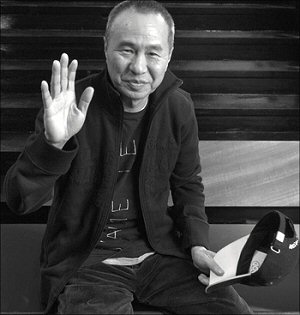
Anand Patwardhan has been making political documentaries for nearly three decades pursuing diverse and controversial issues that are at the crux of social and political life in India. Many of his films were at one time or another banned by state television channels in India and became the subject of litigation by Patwardhan who successfully challenged the censorship rulings in court. Patwardhan received a B.A. in English Literature from Bombay University in 1970, won a scholarship to get another B.A. in Sociology from Brandeis University in 1972 and earned a Master’s degree in Communications from McGill University in 1982. Patwardhan has been an activist ever since he was a student — having participated in the anti-Vietnam War movement; being a volunteer in Caesar Chavez’s United Farm Worker’s Union; working in Kishore Bharati, a rural development and education project in central India; and participating in the Bihar anti-corruption movement in 1974-75 and in the civil liberties and democratic rights movement during and after the 1975-77 Emergency. Since then he has been active in movements for housing rights of the urban poor, for communal harmony and participated in movements against unjust, unsustainable development, miltarism and nuclear nationalism. [Image Courtesy: Icarus Films, Bio Courtesy: Official Site]

The most acclaimed Indian documentary filmmaker, Anand Patwardhan has been called the Michael Moore of India, although the latter started his career much later than Patwardhan did. The comparison is not entirely unwarranted though. For one, Patwardhan’s political inclination is very similar to that of the Canadian-American. He even admires Moore’s works to a large extent. But of more interest is the commonality between their styles. Like in the films of Moore, the image and the sound counterpoint each other at the most critical junctures. But, unlike in Moore where it’s almost exclusively played out for laughs, this friction is also used to provide highly affecting social ironies or even serve as penetrating summations. Same is true of the dialectical imagery – arrived at though Eisensteinian cutting or, more frequently, within the same shot – in his films. This might sound too crude and simplistic, but Patwardhan’s curious, clear-sighted camera and editing never once call attention to themselves or invite us to marvel their artistry. It is almost as if the sound and the image have independent existence since each of them has its own emotional weight and rumination quotient. At times, the image and sound are linked together by folk (generally recorded directly) or pop songs (official versions), which serve as catharsis for the pent up resentment and tension. Moreover, these folk songs also help illustrate how a community uses its art forms to make a record of its problems and struggles and to develop a sense of clanship among its members to help them go on.

Another singular aspect of Patwardhan’s cinema is his attention to dialects, language and speech patterns. Although there must have been considerable amount of luck in making many of these observations, the amazing consistency with which these nuggets steal the speeches they appear in makes this an ostensible trademark of the director.  A chief nuclear scientist believes, albeit with a modicum of humour, that the numerous berserk cows did not spoil the nuclear test because they are sacred. A well-off, educated urban businessman, who has, along with his wife, resorted to religious methods for having a child, tells us (among other atrocities) that Hinduism is extremely liberal and broad minded in comparison to Islam and that “women cannot be divorced very easily”. An atheist (or secular) speaker of the Left uses the term “Lakshman Rekha” to denote the poverty line. This scrupulous attention to representation extends also to the visual language. Mass media, especially mainstream cinema and popular television (shows and news – rather interchangeable really), make regular appearances in Patwardhan’s films and are used to highlight their regressive influence. Although the working methods that he has developed over time bear an unmistakable authorial stamp (save for two rather ordinary short films), Patwardhan claims that he does not believe in deliberate stylization and that there is no conscious aesthetic in his films. In fact, the only cinematic influence that he mentions in interviews is that of Imperfect Cinema (Patwardhan’s films are certainly works of Third Cinema and his essay on The Battle of Chile (1977) is an illuminating read). So it should of little doubt that his politics is what informs his aesthetics.

In a way, Anand Patwardhan could be called the child of Karl Marx and Karamchand Gandhi. If there is one vein that runs throughout Patwardhan’s filmography, it is the attempt to suitably wed class consciousness with nonviolent methods of problem solving. In that respect, all his films could be seen as efforts to demonstrate that this marriage is not just chimerical utopianism, but a practical possibility. He has been criticized for taking sides, for not presenting facts with objectivity and, plainly, for not giving the ‘other’ side a fair hearing. Surely, there can be few qualities more repulsive than non-committedness, neutrality and pseudo-objectivity in a political documentary for you can’t be neutral on a moving train. But then that doesn’t mean films such as Patwardhan’s are propagandistic or, worse, merely personal preferences, worldviews and opinions. His filmmaking is defined by curiosity and compassion rather than didacticism and judgment. Patwardhan’s allegiance is not to any geography, religion, ideology, language or class, but only to humanitarianism (for the lack of a better term), although, ironically, that stance dictates much of his politics. Through the films, it becomes evident that it is not an hatred towards the ruling class, but a genuine concern for the underprivileged that characterizes his cinema.  Witness to this attitude is the fact his central interest remains – and this has given birth to the best sections he’s ever done – in the struggles of the oppressed than the acts of the powerful. All his films, in one way or the other, are celebrations of (or pleas for) nonviolent forms of resistance. (He places Mohandas Gandhi, Martin Luther King, B. R. Ambedkar and Salvador Allende on the same pedestal.) It is as if, for him, the struggle itself is more important than the end result. These films testify to the filmmaker’s belief that a struggle for human rights need not necessarily entail dehumanization of oneself, that, to borrow Gandhi’s oft-used quote, “an eye for an eye makes the whole world blind”.

 
(NOTE: As usual, there are gaping holes here which will be filled once I see those missing films)

Zameer Ke Bandi (Prisoners Of Conscience, 1978)


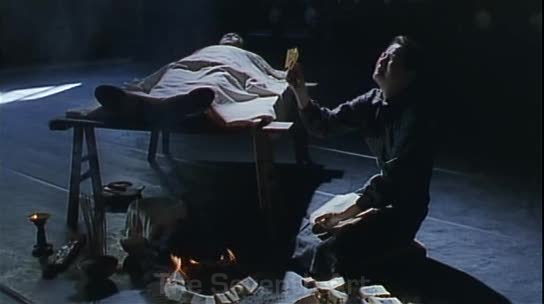
Prisoners of ConscienceShot on grainy 16mm stock that embodies the spirit and theory of Imperfect Cinema that Patwardhan so cherishes, Prisoners of Conscience (1978) captures a particular facet of the tumultuous years following the declaration of emergency by Prime Minister Indira Gandhi in June, 1975: political imprisonment. Through first hand accounts, the director presents details of the appalling brutality of prison procedures and the classism that permeates them. Patwardhan’s major lament is not against Indira’s policies per se, but the very act of holding political prisoners without trial (That the film clearly points out that the situation did not improve much even after Janata Dal came to power testifies to its “nonpartisan” quality). What was unique about the widespread resistance to this political ploy of Indira Gandhi was that it was highly democratic in nature, with participation by both the secular Left and the Hindu-based RSS (a marriage quite unimaginable now), both workers and students, both citizens and immigrants and both radical Maoists and nonviolent Gandhians. Using the various interviews of people from each of these groups, Patwardhan attempts to examine and evaluate his own political leaning by trying to uncover socialist strains in Gandhian philosophy and the possibility of having a nonviolent base for Marxist thought. In additional to his ideology, it is also Patwardhan’s directorial style that seems to have (more or less) found its bearings in Prisoners as is evident in the therapeutic use of folk songs, the ironic cross cutting between Republic Day celebrations and prison proceedings and the general hesitation to be overly acerbic or coldly academic.

Hamara Shahar (Bombay, Our City, 1985)

Bombay, Our CityBombay, Our City (1985) is a devastating account of the slum clearance operations of the Bombay Municipal Corporation in 1984, in which encroachments by rural immigrants were systematically removed to make way for skyscrapers and to prettify the city. Patwardhan interviews residents of the slums, industrialists in the city, officials at the municipality office and middle class citizens of the city, all of whose words provide a unique insight into the issue. Occasionally, the film falls prey to an unrefined Marxist impulse wherein the director includes images of bourgeois tea parties and yacht races for no reason other than to provide contrast. But then, this sudden shift of gears also seems justified when we witness a group of upper-class folks – the city’s police commissioner included – discussing how to fight this “evil” of encroachments through martial training of youths. What is really extraordinary about the segments involving the slum residents is how remarkably aware these people are of their surroundings and of the numerous forces that bind them. A terrific song compiled by the local theatre group, which forms the spiritual backbone of the film, details the government’s injustices with great humour and pathos. Equally piercing are the testaments of the evicted (One of them says “Instead of removing poverty, they’re removing the poor”, alluding to Indira (and Rajiv) Gandhi’s populist slogan for eradicating poverty). Finally, Bombay, Our City also presents Patwardhan finding his own place as a filmmaker and an activist. One of the slum dwellers accuses Patwardhan of exploiting their misery for artistic gains while the Right accuses him of romanticizing the working class. The director, however, remains the humble inquisitor.

Una Mitran Di Yaad Pyaari (In Memory Of Friends, 1990)

In Memory of FriendsIn Memory of Friends (1990) finds Patwardhan in Punjab covering communal clashes between Sikh and Hindu fundamentalists during the Khalistan Movement and the subsequent endeavours of secular parties with Marxist associations in reinstating peace in the state. The subject of In Memory is both philosophically and politically complex (primarily due to different parties holding power at the state and central levels), for the demand for a separate state based on religion is, as Patwardhan remarks, both purely democratic and against democracy. At the focal point of the film is the figure of Bhagat Singh, freedom fighter and revolutionary whose image has been appropriated and manipulated by each political group to suit to its own ideological agenda. The Sikh separatists claim Bhagat Singh was a religious man whereas the right wing extols his nationalism. Even those who remain neutral about him seem to consider him as some sort of an antithesis to the nonviolent Gandhi. This starling rupture between the past and the present – the reality and its image – informs the central structuring device of In Memory. Interleaved with footage of interviews with the secularists, the separatists and the relatives of Bhagat Singh are passages in which Bhagat Singh’s posthumously published jail writings are recited by a narrator (Naseeruddin Shah) which clearly indicate that he was not only a staunch socialist and an atheist who believed that widespread class consciousness was the only way out of communal wars, but also that he deeply admired non-violence. Like all the secular teachings of Sikhism, Bhagat Singh’s beliefs, too, seem to have vanished into the past.

Ram Ke Naam (In The Name Of God, 1992)

In The Name Of GodIn the Name of God (1992) chronicles the immediate and historical events leading up to the demolition of the Babri Mosque in Ayodhya, Uttar Pradesh on 6 December 1992, when thousands of Hindu fundamentalists barged into the mosque premises and started bringing down the structure. Characteristically witty with a very keen eye for tragicomic ironies (The camera casually photographs an eatery named “Shriram Fast Food” as we hear public speakers, mounted on hired trucks, advertising the divinity of Lord Ram), Patwardhan examines the classism that exists within these communal forces (in the form of castes) and charts both the strategies of the then-oppositional Hindu groups, one of whose leaders had undertaken a nationwide propagandist tour, and the efforts of the secular Left in mitigating the communal agitation that seemed to have gripped the country like a plague. Unlike most rationalists, he chooses to view religion not as an entity fascist in its very conception, but as one which is molded by the ideology that propagates it. This is reinforced by the numerous segments featuring with Pujari Laldas, the official priest at the temple inside the mosque premise and a Hindu liberation theologian, the honesty and conviction of whose words suffuse the film with an earnestness and compassion so crucial to sociological filmmaking. But perhaps more than anything, In the Name of God is an elegy for the city of Ayodhya – a city caught unawares by external polarizing forces, its identity erased and reconstituted and its people made to live in perpetual fear.

Pitra, Putra Aur Dharmayuddha (Father, Son And Holy War, 1994)

Father, Son And Holy WarA twin to In the Name of God, Father, Son and Holy War (1994) is less topical and more contemplative a film than its predecessor in that it attempts to study primeval and deep-rooted social issues with the bloody aftermath of the Babri Mosque demolition as only the backdrop. The central thesis of the film contends that religion and mythology – whatever be their flavour – construct and propagate a skewed sense of masculinity and bravery that is predicated on violence and hatred, which deems non-violence as an impotent principle and which is only exacerbated by most of modern consumerist advertising and certain sections of the mass media. Furthermore, Patwardhan suggests, it is the same texts and practices that define femininity as whatever masculinity isn’t, with passive acceptance, chastity and servility being its prime virtues. The film argues, presenting archaeological evidence, that this was not always the case and that, at the danger of sounding too simplistic, this worship of violence and destruction – in place of fertility and proliferation – started when man learned to domesticate and own animals and settle down. Equally sweeping are its other assertions that attempt to cover of number of social phenomena (including the popularity of WWF and on-screen violence, in general), which runs the risk of decontextualizing the key argument of the film. True, that all these facets are only deeply intertwined, but the film is so ambitious and loosely structured that it almost ends up proving otherwise. These observations would find greater strength and coherence in the director’s decidedly superior work, War and Peace.

A Narmada Diary (1995)

A Narmada DiaryA very pertinent film about the social conditions in the third world – especially after the advent of globalization – A Narmada Diary (1995) sits well alongside works such as West of the Tracks (2003) and Up the Yangtze (2007) in the sense that it chooses to document on film – for us and for posterity – what would otherwise be relegated to the footnotes of most mass media. Co-directed with activist Simantini Dhuru, the film tracks the struggle of an indigenous population (Narmada Bachao Andolan/Save Narmada Movement) living on the banks of river Narmada against the Sardar Sarovar Dam project, which would result in their displacement and massive land submergence. There is a sense of watching history in the making as the group congregates for planning, organizes non-violent protests, confronts key officials responsible for the construction of the dam and exhibits a singular integrity of purpose, further evidencing Patwardhan’s heartfelt admiration for Patricio Guzmán’s masterpiece. Although the Save Narmada Movement is generally known to be led by Medha Patkar, Patwardhan and Dhuru avoid the pitfall of making a hero out of her and building a film around an exceptional individual’s actions. Instead, true to the spirit of this struggle, the directors present her as a key player in a movement organized and executed by the local populace en masse. Additionally, A Narmada Diary is also a personal struggle for Patwardhan as a filmmaker. Like the rebellion, his work stands as the direct antithesis to the pro-dam government propaganda films that make their appearance throughout the picture.

Jang Aur Aman (War And Peace, 2001)

War and PeaceWar and Peace (2001) could well have been titled War and Peace: Or How I Learned to Forget Gandhi and Worship the Bomb, for the major theme that runs through the film is the disjunction that exists between the past and the present and a nation’s collective (and selective) cultural amnesia with respect to its own past. Shot in four countries – India, Pakistan, Japan and the USA – and over a period of four years following the 5 nuclear tests done by India in 1998, Patwardhan’s film was slammed by Pakistan for being anti-Pakistani and by India for being anti-Indian, while the film’s barrel was always pointed elsewhere. Tracing out the country’s appalling shift from Gandhianism to Nuclear Nationalism and Pakistan’s follow-up to India’s nuclear tests, Patwardhan examines the role of the two countries as both perpetrators and victims of a major mishap that is now imminent, taking the Hiroshima-Nagasaki incident as a potent example to illustrate why nuclear armament is not merely a potentially hazardous move, but a wholly unethical one. War and Peace is a film that should exist, even if amounts to only the ticking of a radiometer amidst atomic explosions, for it calls for a realization that there can be neither a victor nor a finish point in this internecine race. It is, without doubt, Anand Patwardhan’s masterpiece. [Read full review]

[To The Children Of Swat, From The Children Of Mandala (2009)]

Sharon Lockhart

Sharon Lockhart 
(1964-)

Sharon Lockhart was born in 1964 in Norwood, Massachusetts. The American artist and filmmaker studied at the Art Center College of Design in Pasadena, and at the San Francisco Art Institute. She lives and works in Los Angeles. Her work has been shown in numerous exhibitions and screenings in America, Europe and in Japan and has won many awards. Lockhart is the recipient of fellowships from the Guggenheim Foundation, the Rockefeller Foundation and the Asian Cultural Council. Her films NO and TEATRO AMAZONAS both screened at the Berlinale, Forum of New Cinema. In February 2006, her work, PINE FLAT, was shown at the Berlinale within the context of Forum expanded, the new platform for video art and installations, hosted by Forum and KW Institute for Contemporary Art. [Bio Courtesy: Split Film Festival, Image Courtesy: Walker Art Center]


Photographer and experimental filmmaker Sharon Lockhart’s cinema is one that straddles multiple realms. It has been noted that her film works attempt to explore the boundary between photography and cinema. For one, most of her films are composed with a static camera and with self-conscious framing that photographs actions head on. The compositions serve to remind us that the camera’s vision is highly restricted and there’s a world that lies beyond its four edges. This is also reinforced by the numerous activities that take place off-screen in the films. Since the prime distinguishing factor between cinematography and photography is time, these works are highly conscious of their temporal dimension. While Lockhart introduces the element of time in her photography by perturbing the order in which the photographs were taken, she chooses to preserve the linearity of time in her films. Instead, she invokes the sense of passing of time by retaining the photographed image for a long time – by using overly prolonged shots of largely unchanging actions. It is perhaps best to look at her films in relation to her photographs and vice versa. Another prominent aspect of her cinematographic work is the relationship between people and the spaces they inhabit. These surroundings may counterpoint (an opera house in the Amazon, a basketball court in Japan) or define (a labyrinthine industrial corridor, dusty Polish courtyards) the way of life of the people within them, but, in all cases, the kinship between the two remains of central interest.

Another dialectic that permeates Lockhart’s filmography is that between art and ethnography/anthropology – between straightforward documentation and authorial stylization. Lockhart seems to be conscious of the fact that such a tug-of-war always runs the risk of entering the territory of exploitation and unwarranted anesthetization (“I was well aware of the problems of filming in another culture and had begun to think about the way ethnographic film works within an art context.”). She overcomes this deadlock, as do other documentary filmmakers, by choreographing routines (there are dance trainers and movement advisors who work in Lockhart’s films), by making the subjects active participants in the filmmaking process and by not imposing preformed psychoanalytic notions on them. She cites Jean Rouch as a major inspiration (“I became even more fascinated with ethnographic film, especially Jean Rouch. He took ethnographic film to a whole new level. His ideas of collaboration and being a catalyst are especially interesting to me, like the way he lets his subjects choose fictional characters or roles, through which something very real comes out”). Consequently, the actions in her films are both spontaneous (the anthropological) and rigged (the aesthetic) wherein the participants both perform and behave. They are carrying out their daily tasks and, at the same time, executing the choreography they have practiced.

Goshogaoka (1998)

GoshogaokaLockhart’s debut project, Goshogaoka (1998), shot in 16mm in a basketball stadium in Japan, opens with the image of a theatre curtain, thereby setting up the motif of theatricality that pervades the rest of the film. The stillness of the image is interrupted as we witness almost two dozen high school girls in sports outfit running in and out of the frame – apparently in a circle – making the shot indicative of the cinematic system itself – the projector and the screen (In one segment, the “actors” run towards the camera, projecting themselves on us, as if mirroring the light particles that bombard the screen within the film). In fact, Goshogaoka, in its entirety, could pass of as a metaphor for filmmaking where seemingly random acts are shaped and stylized into a coherent whole (“everyday routines recontextualized and reinterpreted as dance”), where order is arrived at through disorder and where the banal moulds itself into the beautiful. The impeccably ritualized nature of the activities in the early part of the film – as one would associate with the Japanese-ness of the participants – gives way to more improvised individual tasks where the girls “perform” consciously in front of the camera, floundering at times, as if on the audience’s demand. The illusion of the work being a straightforward documentation of routines is also broken by Lockhart’s self-referential framing and utilization of off-screen space wherein we are made to acknowledge that all that we see is as much posed as it is improvised. This concept of the cinema space, by its very purpose, being a zone of contemplation would be explored further in Lockhart’s next film.

Teatro Amazonas (1999)

Teatro AmazonasTeatro Amazonas (1999) is set in the eponymous opera house in Manaus, Brazil, which one might remember from Herzog’s Fitzcarraldo (1982), and consists of a single half-hour shot filmed in 35mm of a native audience listening to a piece of avant-garde music (scored by Becky Allen). As the film progresses, the voices of the audience completely overpower the vocals of the music in the same way our concentration is distracted by the length of the shot. The camera is on the stage and observes the audience head on, essentially making the film screen a portal of sorts through which cultural exchange – between two worlds, one might say – takes place. One is reminded of Kiarostami’s Shirin (2008) in the way the screen additionally acts as a mirror where one audience – watching Lockhart’s experimental work – resembles the other – listening to Allen’s experimental work. Being set in South America, the reversal of the subject-audience relationship here elicits other intriguing responses from us as well. Lockhart’s camera places us on the stage, with the Native American audience staring at us, and hence manages to reverse the colonial gaze (if one makes the fairly questionable assumption that the audience is predominantly European/North American). The “colony-wise” credits at the end only compound this revisionism. In that sense, each passing minute ratchets up the tension instead of accustoming us to the new space. Although Lockhart’s films don’t possess such overt political objectives, this particular film works on such an extreme Brechtian level that such a response doesn’t seem invalid.

NŌ (2003)

NoA companion piece to Goshogaoka in a number of ways, (2003) is a highly formalist work that attempts to study the properties of the film frame with the agricultural process of mulching as the backdrop (the ethnographic aspect of the film is very subdued). The film documents two Japanese farmers (Masa and Yoko Ito) amassing heaps of hay and later spreading them out on a field. We see that farther the farmers are from the camera, the longer they take to traverse the breadth of the frame. As the amount of hay gathered decreases with decreasing distance of the workers from the frame, we realize that the geographical and representational areas of a region are in inverse proportion to each other and that the field of vision of a camera is conical rather than cubical. Although is an examination of the relation between the XY plane and the Z-axis, it also functions as a painting unfolding in time. The screen is bisected by the horizon which separates the black soil from the reddish sky. As the farmers spread the hay over the soil, they end up coloring the lower half of the frame, literally assembling it. Coupled with ambient sounds of bird chirps, is like an impressionist painting on film in which both rapidly and gradually varying hues of light are registered (A little more plot and it could pass off as Jean Renoir). In that respect, the semi-static-semi-dynamic composition of the film largely resembles those of James Benning, where, too, quick changes in landscape are pitted against microscopic ones.

Pine Flat (2006)

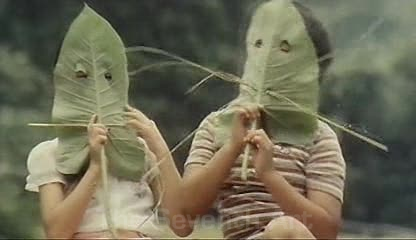
Pine FlatLockhart’s longest feature to date, Pine Flat (2006) is shot in the eponymous rural area in California where she apparently lived for four years. Consisting of twelve silent ten minute sketches – most of them presented through skewed compositions – all of which deal with kids and teenagers residing the locality, Pine Flat preoccupies itself with the study of cinematic time. The first six sketches deal with children who are alone and the next six with groups of teenagers and kids hanging out together. Lockhart reveals that she wanted to investigate the subjective experience of time in both these types of situations. In both cases, the kids seem to be somehow beating boredom by indulging themselves and each other (The viewer’s experience of these stretches of time also plays a part in the film’s exploration). Lockhart’s idea of disrupting chronology in her photo works translates to prolongation of the film image in this work. Consequently, the segments are reduced to their functional minimum and come across as little more than photographic – a girl reading a book, a boy playing the harmonica, a kid waiting for the school bus, a boy sleeping on the ground and so on. This return to cinematic zero (if one can approximate cinema as photography in time) is also mirrored in the implied return to zero of nature. The kids playing and carrying out their petty activities happily in the lush woods is the image of serenity itself. Alternately, this sort of persistence on mundane gestures defamiliarizes them, elevating the quotidian into the realm of art (similar to Walhol’s works) and eventually urging us to see them with fresh eyes.

Lunch Break (2008)

Lunch BreakIn Lunch Break (2008), Sharon Lockhart seems to have taken to heart the Douglas Adams quip that time is an illusion and lunchtime doubly so. Shot in Bath Iron Works, Maine during the titular break period on a typical day, the film consists of a single tracking shot through the central corridor of the factory slowed down digitally to 75 minutes (It is probably the only film I’ve seen that takes longer to see than to shoot!). The dolly moves along the Z-axis of the frame – reminiscent of Kubrick’s tracking shots in the WW1 trenches – as rusty lockers and other furniture trudge past us. The film almost entirely consists of vertical planes, straining and training our eyes to such an extent that we start recognizing the minutest of lateral movements that the camera undergoes. Beyond a point, our eyes start playing tricks on us. If we concentrate at the centre of the image, the edges seem to melt away and the camera seems to move pretty fast and if we choose to pay attention to the edges, the camera seems slower than ever (an illusion that might be very useful in genre filmmaking). At times, when there are only machines in our view, we are not sure if we are witnessing a tracking shot within a real space or a zoom into a photograph (The one Lockhart film that most resembles Wavelength (1967) is this). It is only when the humans enter the frame that we have reference for the camera’s motion. Likewise, it is only during the lunch break that the human elements, for once, triumph over their mechanical counterparts, which continue to drone even during this cherished recess time.

Exit (2008)

ExitOver a 110 years after the Lumiére brothers photographed workers coming out of a factory, Sharon Lockhart embarks on a similar project, attempting to chronicle workers exiting a factory – Bath Iron Works again – over a time span of five days. Unlike in the earlier film, we don’t get to see the worker’s faces. Only a few of them even seem to notice the presence of a camera. Over the week, we see a number of workers walking into the frame, moving away from the camera and vanishing at a point near the centre. There is no strict pattern – in attendance, in attire or in mood – that is evident as we move from Monday to Friday. No insight into the psychology of the workers is given either. Instead we are left to speculate about the contents of the lunch boxes (which had made their debut in Lunch Break) and back packs (which many seem to be carrying), about the kind of work these workers are doing (not all seem to be involved in physical labor) and about the time of the day and season of the year (given the changes in the intensity of natural light). It’s kind of like guessing the contents of those mysterious trains in RR (2007). A man stops to chat with another. We barely hear their voices and are left wondering about the poetry of their lives. One striking thing that is evident is that the majority of the workers are wearing denim. This might give us an insight into the taste and economic standing of these people, but it is also suggestive of mass production of commodities, discrediting of human skill and homogenization of culture.

Podwórka (2009)

PodworkaPodwórka (2009) is shot in Lodz, Poland and consists of six sketches depicting the kids of the neighbourhood playing with each other in the courtyards of the city. A miniature version of sorts of Pine Flat, this film, too, presents a string of vignettes from the lives of children of a particular city. But, unlike Lockhart’s earlier film which shot the kids from at eye level and from a close distance, the kids here are photographed with a detached perspective and in long shots as if integrating them with their environment. This, in effect, presents them as human elements maneuvering through industrial landscapes which are – a la Lunch Break – marked by rusted pipes and seemingly defunct structures. Like Pine Flat, Podwórka attempts to study a locality by viewing it from different angles and through different people and to synthesize a version of the region that stays true to the filmmaker’s experience of it (although I don’t understand the geo-specificity of Poland for this project) – as if trying to hold on to the fleeting memories of childhood, which is influenced only too deeply by one’s environment. If it was the green trees in Pine Flat, it is Lodz’s mellowed courtyards that seem to be engulfing the children in Podwórka. The soiled, dilapidated walls of the neighbourhood seem to be of no bother to the kids, who are gleefully engaged in playing with mud, bicycles, footballs and the surrounding buildings. In that sense, one could say that the film is, as is Weerasethakul’s debut feature, a paean to dead times of the afternoon and to the power of human imagination.


(You can watch two of Lockhart’s films here)


(Continued from Part 1)

Fort Apache (1948)

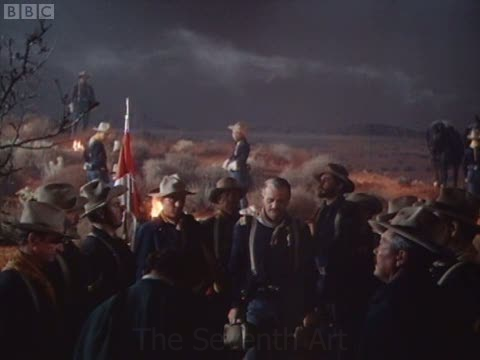
Fort ApacheFort Apache (1948), first of the director’s cavalry trilogy, marks a stark shift in tone and attitude for Ford. It is from this film onwards that Ford’s view of the west becomes progressively unromantic. For one, the central protagonist, Colonel Thursday (Henry Fonda), is gradually alienated from us. His actions seem increasingly misguided and the only force of sanity comes in the form of captain York (John Wayne) who acts as our mouthpiece in the film. Colonel Thursday is a prisoner of his own position in the army. He’s the first of Ford’s many men to show loyalty to external ideologies than to his conscience (“Tell them they’re not talking to me, but to the United States government” says Thursday). These men abandon what is essentially human for some vaguely defined concepts of glory and martyrdom (One can imagine how much Ford would have admired Stanley Kubrick’s first masterpiece). These are also invariably the men who believe in establishing hierarchies and locking people into rigidly defined categories that could systematically be manipulated and deployed (Ford’s reaction to such men would move from fascination to ambivalence to utter contempt, as is evident in his last Western). Consequently, the film, like most of Ford’s subsequent works, is full of petty rituals – ball room dances (compare this mechanical waltz with the divine dance sequence in The Grapes of Wrath), coldly worded field orders, automated salutations and bookish sentences. Ford would take a decade and a half to convert the cynicism of this film to a monumental tragedy.

3 Godfathers (1948)

3 GodfathersTo borrow Manny Farber’s terminology, 3 Godfathers (1948) is a very powerful termite that gradually grows into a giant white elephant (Compare John Wayne’s blue moon laughter in the first scene with his laboured theatrics towards the end). Yet another remake of a story filmed multiple times before, 3 Godfathers is the kind of movie that can pass off as a Sunday school lesson. Technically, Ford is at the top of his game here, walking through the film with ease, conjuring up one larger-than-life image after the other. But the film feels more like a showcase of Ford’s directorial skills than a coherent work driven by a vision. One also gets the feeling that Ford made this film more as an obligation and as a tribute to his one-time collaborator Harry Carey Sr. who starred in the film Three Godfathers (1916), which Ford himself remade three years later. Hence, the film seems more like a launching vehicle for Harry Carey Jr. that Ford was able to slip in between his cavalry trilogy. Complaints aside, it should also be noted how Ford manages to leave his fingerprints all over the film. At least, the first half hour is a complete throwback to Ford’s prewar Westerns. Glorious landscapes all over and even more glorious men cutting through them, mutually respecting lawmen and bandits of very high moral standards and the psychological tug-of-war they indulge in – one would think that the film just can’t go wrong from here. Sadly, it does. The last half hour is Ford sleepwalking though his material.

She Wore A Yellow Ribbon (1949)

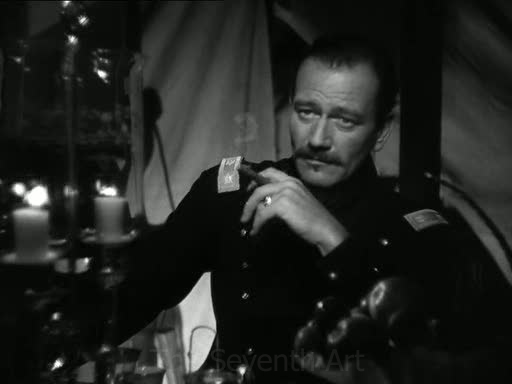
She Wore A Yellow RibbonShe Wore A Yellow Ribbon (1949) is the best film in the director’s cavalry trilogy and, with the probable exception of The Quiet Man (1952), has to be his most personal work as well. Here we have John Wayne playing the old Captain Brittles, who’s just about John Ford’s age, ready to retire from the army in a few days. Like Ford, he’s a man who throws his weight around just to show how rough and demanding he is and within, he is a child. He’s like Colonel Thursday of Fort Apache on the outside (“I’m ordering you to volunteer” he says – a phrase that would recur in Ford’s later films) and Colonel Marlowe of The Horse Soldiers on the inside. Like Kane of High Noon (1952), he’s a man who feels responsible for the lives of his men even though he’ll become a complete stranger to them in a few hours. Moreover, the film is also about ageing, about giving up one’s game. Captain Brittles is a man who’s seen enough bloodshed in his life. His fervent wish is to save his men from sure death rather than to achieve glory or exhibit heroism (“Old men should stop wars” he says to the old Indian chief who wants to stay indifferent). One can’t help but think Ford might have intended this film to be a swansong of some sort. The most significant scenes in the film are shot at (artificial, accentuated) twilight that so directly registers the dread of being left alone. Brittles speaking to his deceased wife at her grave might be more than a sign of affection. It might be of desperation.

Rio Grande (1950)

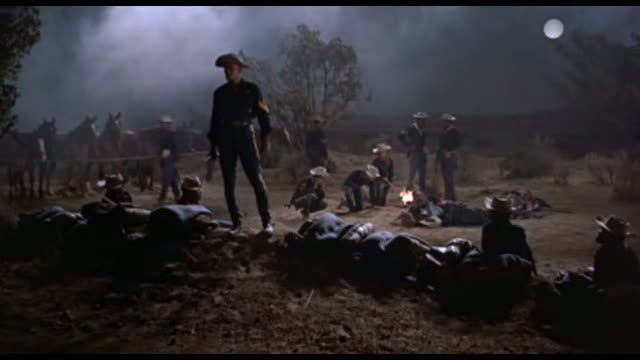
Rio GrandeThe extremely eloquent and moving Rio Grande (1950) is evidently a thematic extension of the previous couple of films in the trilogy. If professional authority blinded Colonel Thursday of conscience and protected Captain Brittles from baring it, it prevents Colonel Kirby Yorke (John Wayne, perhaps reprising his role from Fort Apache) from bonding with his son. But there is also a sense of inevitability that permeates Rio Grande. Colonel York burns down his wife’s nursery as a part of his duty and pays the price for it. He also stays aloof from his son for he is his supervising officer. He keeps demoralizing his son and tries to siphon off any pride that the boy may have in his new profession. The question here is if one could really break such a barrier, giving in to emotionality or humanism. This idea of free will being overridden by man-made hierarchies echoes throughout in the film. Soldiers exhibit comradeship and honor among themselves whereas they stand stiff and unresponsive while dealing with higher officials (“I refuse to answer sir… respectfully” goes the reply, as it would elsewhere in Ford’s films). Rio Grande is gloriously lit and photographed and each of its images looks like a painting, a moment frozen in time. In this film too, it appears as if Ford is expressing something that is utmost personal in purely generic terms. And Wayne brings such honesty to the character that, when he comes in all white, for once, with a bouquet in his hand, you wish the film ends right there.

Wagon Master (1950)

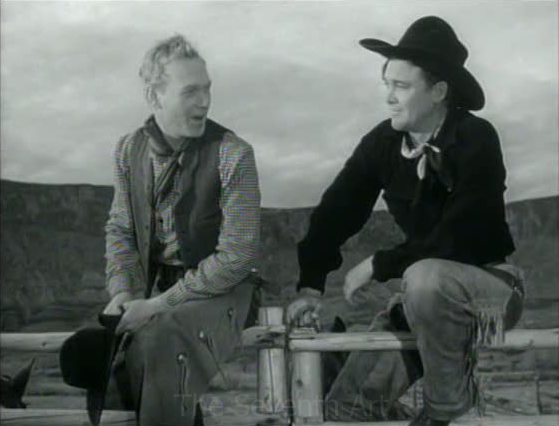
Wagon MasterWagon Master is what one might call a “minor Ford” (shot in black and white with no stars), but that doesn’t do any justice to this superb Western. Less a story and more a journey, the film follows a pair of ranchers (Ben Johnson and Harry Carey Jr.) who agree to escort a community of Mormons on their way to establish a new settlement. The crew on the road entirely consists of people relegated to live on the fringes of the society, the latter being just an arbitrary, prejudiced crowd anyway in most of Ford’s westerns. Ford’s most optimistic film, Wagon Master can be seen as the director’s vision of an ideal West – a place where all races and religions can coexist peacefully, a place where real joy comes from not amassing wealth, but by building a healthy and closely-knit community and a place where the only gold to be found is in the fertility of the soil. Ford counterpoints this vision of utopia by introducing the Cleggs family (which is sort of carried over from My Darling Clementine) that embodies everything that is lamentable about the frontier – racism, hooliganism and intolerance. Watching Wagon Master, one gets the feeling that Ford would have made some very great films (as if he hasn’t already!) had he taken to documentaries. Ford builds the film upon moments of commonplace magic, dwelling considerably on the everyday activities of the Mormons and upon shots of people travelling, moving ahead against nature’s odds and exhibiting a sheer desire to live.

The Searchers (1956)

Everything significant about The Searchers (1956) is off-screen, in its untold passages, unfilmed spaces and undiscussed possibilities. It is as if Ford was commenting upon the genre, and on his own brand of cinema, without ever breaking it down, as if he was repudiating the racist falsities hitherto bestowed upon the Indians by showing how much the white community shares those traits with them and as if normalizing the “demonic” acts of the Natives by presenting them as justified if done by the whites. The Searchers is a film with a mass of unresolvable tensions at the core, each of which threatens to take the film apart. “He’s got to kill me”, says Ethan (John Wayne) about Scar (Henry Brandon). He knows as much about Scar as he does about himself. What are Scar and Ethan are but the same person born on either side of the frontier? Both are old timers who prefer revenge over justice and who believe that each of them has complete justification to kill the other. When they look at each other in the eye, what they are staring at is, in fact, the abyss within each of them. It’s not just Ethan and Martin who are the titular searchers, it is Scar too. That’s why The Searchers is, at heart, a tragedy. Somehow, Ethan seems to know his condition and that his choice of an artificial racist ideology over his conscience (unlike Martin) has done him more harm than good. Consequently, the journey, like the film itself, becomes a quest to define, once and for all, what Ethan is.

The Horse Soldiers (1959)

The Horse SoldiersThe Horse Soldiers (1959) is set during the American Civil War and unfolds primarily from the point of view of Colonel Marlowe (John Wayne), an officer in the union army who plans to blow up a key railway line to disrupt supplies to the Confederate forces. Locating the story within civil war helps Ford to comment on the war without taking sides, unlike the earlier films. Also in Colonel Marlowe’s cavalry is surgeon Kendall (William Holden), whose mere presence irritates Marlowe to no end, and a prisoner Miss Hunter (Constance Towers). As in My Darling Clementine, the Fordian male bonding is between a doctor and an army man. Hunter sees the doctor’s profession as one that saves lives and the army man’s as one that kills. Marlowe, on the other hand, considers doctors as parasites who want people to be sick and, perhaps, his kind as those who want then to be healthy. It is only towards the end of the film that Marlowe comes to realize that his grief of losing his wife after a failed operation is no more sorrowful than the doctor’s angst of not being able to save a patient who has come to him for help. This sense of empathizing with the ‘other’ forms the backbone of the morally complex work that is The Horse Soldiers. When the confederate army is, actually, made of school kids and old men, it’s hard not to see the futility of a war that is fought just for the sake of wiping out one side.

Sergeant Rutledge (1960)

Sergeant RutledgeIf The Horse Soldiers was Ford empathizing with the Tories and Cheyenne Autumn would be him empathizing with the Native Americans, Sergeant Rutledge (1960) is Ford making amends for the under-representation of the African-Americans in his Westerns (This near total absence of African-Americans is startling given that Ford has made more than one film dealing with the Civil War). Basically a courtroom drama uniformed as a Western, but also historically particularized, Sergeant Rutledge is Ford tackling the issue of racism head on. The film unfolds piecewise, moving from one incomplete perspective to another while keeping the truth at an arm’s distance, so that the audience is never completely allowed to vindicate and sympathize with protagonist Rutledge (Woody Strode, ironically given the 4th place in the title credits!). It is interesting to imagine how the audience would have reacted to this kind of a narrative structure in the pre-PC era in which the film was made, especially given that the central drama involves a young black man and a white adolescent woman – arguably the most scandalizing combination of them all. Despite the fact that the film has some pointed writing (“What does it all add up to, sir?” Rutledge asks an edgy Tom Cantrell (Jeffery Hunter), who is not entirely free of racial prejudices and acts himself as one might be led to believe, coldly exposing the latter’s disbelief in him), Sergeant Rutledge suffers from Ford’s heavy-handed direction. Ford attempts earnestly to develop a mythical African-American hero in Rutledge, but the effort seems more like calculated posturing than genuine legend building.

Two Rode Together (1961)

Two Rode TogetherTwo Rode Together (1961) could be seen as an unequivocally liberalist reworking of The Searchers that resolves the irreconcilable tensions of the earlier film and takes a clear cut political stand. One could say that this is the film The Searchers would have been had there been no man called Ethan Edwards. Ford makes this clear by resorting to a plot that resembles that of the previous work (There is much intertextuality in the film, with characters, actors and lines being directly borrowed from the previous film) and commenting very strongly on the racist tendency espoused by some people of the white community at the frontier. A white boy who was captured and raised by Indians is traded back for some weapons by corrupt antihero sheriff Guthrie “Guth” MacCabe (James Stewart). The white community is asked to identify the boy and claim him back. The scenario has all the uneasy trappings of a slave market and that may just be the point of the film. And the sharp character arc that Guthrie undergoes could well apply for the whole of Ford’s cinema. Despite its occasional flourishes of melodrama, there is much left unanswered in the film and its take on mob mentality, fear of miscegenation and domestic racism leaves one very agitated. And yes, Two Rode Together has the greatest dialogues in all of Ford’s Westerns that are delivered with such panache that the film feels almost Hawksian. The conversation between Stewart and Widmark at the riverbank, spanning several minutes, is a sheer joy to watch.

How The West Was Won (1962)

How The West Was WonAn omnibus film directed by John Ford, Henry Hathaway and George Marshall and starring just about every living actor that you would associate with Westerns, How The West Was Won (1962) is the kind of film that cries out: “Look at me. I’m epic. Worship me”. Indeed. Made for Cinerama and shot in such spectacular fashion (that it might have well set the trend for present day epic cinema), I can imagine how viscerally enthralling it would have been to see it in its original projection. John Ford apparently directed the segment on civil war that comes halfway into the film. With the trappings of an episode from late Kurosawa, Ford’s segment is an uninspired piece of filmmaking starring John Wayne, who could easily have been replaced by a John Wayne impersonator here. The film, likewise, could have been titled “How the Western Was Won” for the work seems more like a reverent pastiche of great Westerns through the ages than a conglomeration of myths about the Wild West. Conservative to the point of being laughable (and this might have really turned off Ford, given the kind of films he was making at that time), the film has two well made segments that hold it together. The first is the charming interlude involving Gregory Peck and Debbie Raynolds which is actually a romance dressed up as a Western. The second redeeming section is the strikingly directed final half hour, which plays out in a High Noon-esque, traditional fashion that infuses the film with a spirit that is missing in the first two hours.

The Man Who Shot Liberty Valance (1962)

The Man Who Shot Liberty ValanceThe proper place for John Ford’s greatest Western, The Man Who Shot Liberty Valance (1962), is not among Ford’s other westerns but among films like The Diary of a Country Priest (1951), Ordet (1955) and Winter Light (1962), for it is a spiritual work of the highest order. By the time the film ends, you almost get the feeling that all that you saw was a pair of eyes piercing the pristine screen. In the film, Ford examines what essentially comprise the soul the Western – Law and Morality – through three different embodiments of these entities – the good legal Ransom (James Stewart), the bad illegal Valance (Lee Marvin) and the good illegal Doniphon (John Wayne, a Farber termite, delivers the performance of a lifetime). The Fordian dialectic between tradition and modernity is at its most intense here, with Ransom’s civilization making way for Doniphon’s way of the gun. The Man Who Shot Liberty Valance is a textbook for genre filmmakers on how to light, stage, shoot and cut a film. Every second of the film, you feel you are there, in the midst of the action, living with the characters. The film is like a stretched rubber band, ready to snap any moment, with every character pulling the film’s moral center towards himself/herself. A tragedy of monumental proportions (It is from this film that The Dark Knight (2008) borrows heavily from), The Man Who Shot Liberty Valance is perhaps the one film that Ford should be remembered by. “When the legend becomes a fact, print the legend” says a newsman in the film. His voice might just be of John Ford.

Cheyenne Autumn (1964)

Cheyenne AutumnCheyenne Autumn (1964) has widely been labeled as Ford’s official apology letter to the Native Americans for having usually cast them as bloodthirsty savages. If one follows all of Ford’s Westerns from The Searchers onwards, one would see that the film is also a logical conclusion of a trajectory. Cheyenne Autumn is a highly liberalist film, but it does not present a primitivist’s view of the Native Americans. Sure, it portrays them as a proud and peace-loving race, but Ford is more interested in treating them as a group of individuals who may or may not conform to stereotypes and perceived cultural truisms (“He is your blood, but he is not you” says the new clan leader). Actually, Ford endorses individualism more than ever in this film. He underscores the need for individual decision making and the need to act according to conscience. Elegiac in tone, as if mourning national and cinematic mistakes of the past, the film is almost entirely defined by its harsh, godforsaken landscapes. The central comical segment with Stewart as Earp should be disregarded for that’s how the director’s cut of this film would have turned out to be, even if it serves both as a throwback to pre-war Ford and as a hilarious critique of the racist tendency commonplace at the frontier townships. From Americans hiding in a hut from an Indian onslaught in Straight Shooting to Indians being imprisoned in a barn by the Americans in Cheyenne Autumn, Ford’s Westerns, spanning nearly half a century, seal the filmmaker’s position as a chronicler of both the history of America and the history of American cinema. Rife with, well, Fordian compositions, Cheyenne Autumn is a fitting, if not the ideal, farewell to Westerns for Ford and to Ford for Westerns.

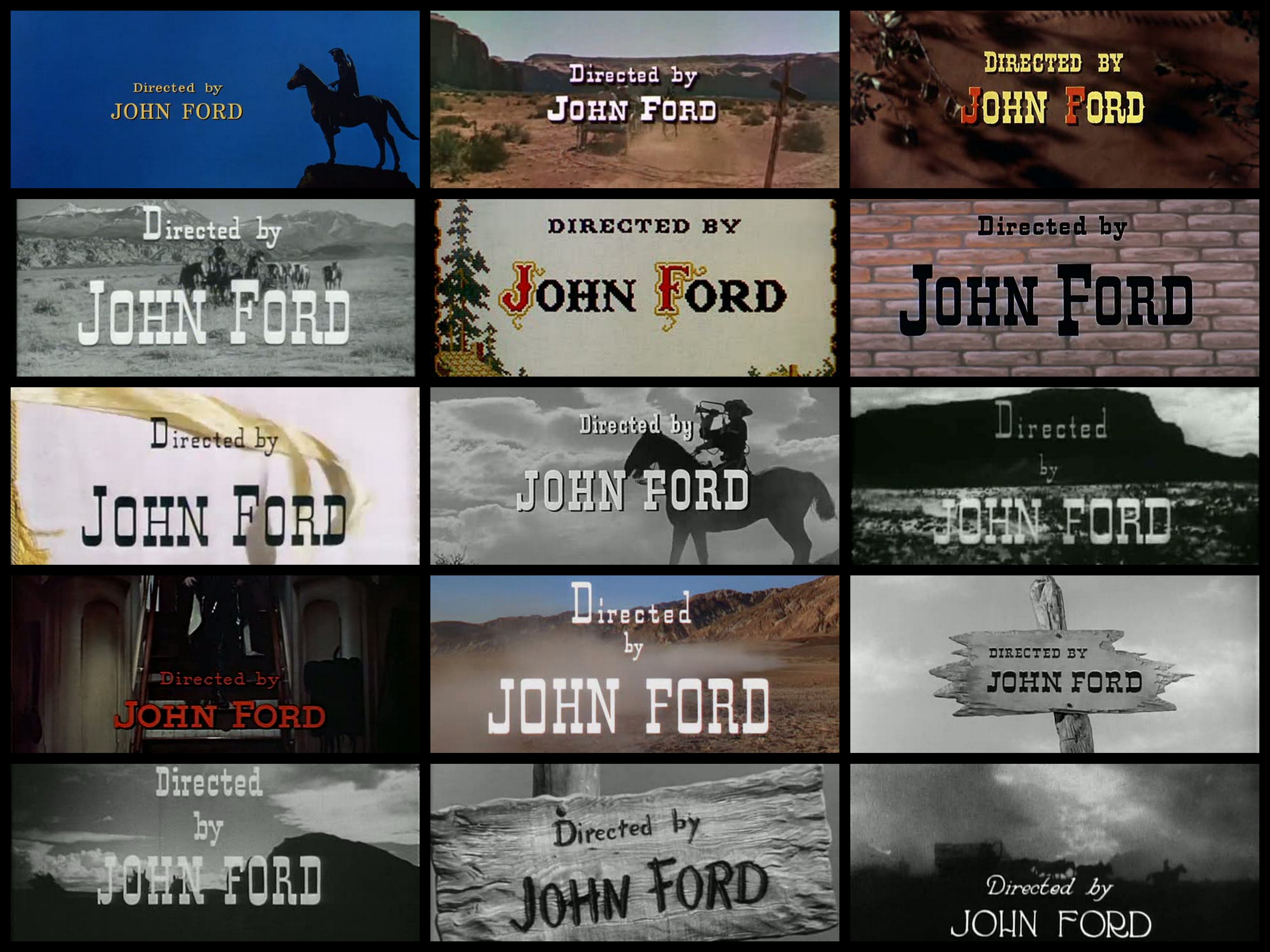
Directed by John Ford

John Ford

John Ford 
(1894-1973)

Maine-born John Ford (born Sean Aloysius O’Fearna) originally went to Hollywood in the shadow of his older brother, Francis, an actor/writer/director who had worked on Broadway. Originally a laborer, propman’s assistant, and occasional stuntman for his brother, he rose to became an assistant director and supporting actor before turning to directing in 1917. Ford became best known for his Westerns, of which he made dozens through the1920s, but he didn’t achieve status as a major director until the mid-’30s, when his films for RKO (The Lost Patrol [1934], The Informer [1935]), 20th Century Fox (Young Mr. Lincoln [1939], The Grapes of Wrath [1940]), and Walter Wanger (Stagecoach [1939]), won over the public, the critics, and earned various Oscars and Academy nominations. His 1940s films included one military-produced documentary co-directed by Ford and cinematographer Gregg Toland, December 7th (1943), which creaks badly today (especially compared with Frank Capra’s Why We Fight series); a major war film (They Were Expendable [1945]); the historically-based drama My Darling Clementine (1946); and the “cavalry trilogy” of Fort Apache (1948), She Wore a Yellow Ribbon (1949), and Rio Grande (1950), each of which starred John Wayne. My Darling Clementine and the cavalry trilogy contain some of the most powerful images of the American West ever shot, and are considered definitive examples of the Western. Ford was the recipient of the first Life Achievement Award bestowed by the American Film Institute, and was the subject of Peter Bogdanovich’s documentary, Directed by John Ford (1971). He died in 1973. [Bio Courtesy: All Movie Guide, Image Courtesy: Star Pulse]


Mythmaker extraordinaire John Ford made over a hundred films in his career that now spans half of cinema’s lifetime. Even though these works cover a number of genres, Ford’s name has become synonymous with the Western. The Western as a genre originally had a specific historical context, but, as Bazin elaborates, it went on to become a narrative template, with its own clichés, conventions and myths – a form that needed content. Interestingly, Ford’s Westerns are a mixture of both kinds. The events in his films are historically particularized while the emotions that drive them are universal. Likewise, Ford himself is a historian and a humanist, a documentarian and a poet, a reporter and a raconteur. His cinema is an encyclopedia of American history, but it is also a treatise on human goodness. The eternal conversation between the human and the political dimensions in Ford’s Westerns is ingrained in the director’s aesthetic itself, where human drama is often juxtaposed with historical events (The latter may have given birth to the director’s semi-static compositions that serve the purpose of both establishing a scene and letting an action unfold in the same shot). Furthermore, Ford’s Westerns are documents about the evolution of the genre itself. No other director apart from John Ford can claim to have witnessed the evolution of the Western in its entirety. Each of his films carries within itself the spirit of its age, its cultural norms and the ever changing ambitions of the genre (In one early silent Western, the word “damn” is graphically censored while the word “chink” is retained. In fact, the self-censorship – or a lack of it – in Ford’s films helps trace out the general outlook of Hollywood towards many social issues).

Godard once remarked that it is only in Hitchcock’s films that the viewer remembers specific objects in the story more than the story itself. Similarly, Ford’s is a cinema which consists of a number of gestures and glances and, in the most brilliant instances, is made of just those. In the best of such moments, these gestures attain such clarity, individuality and grace that a comparison to Bresson shouldn’t invite surprise at all (Here’s Glenn Kenny on transcendental style in the films of Ford. Go figure.). To borrow what Donald Richie said about the director’s protégé Kurosawa, the battle in a Ford film is always spiritual and is won even before the actual fight starts. There is also something implicitly Bressonian about the way Ford uses his actors. It is a known fact that Ford casts the same set of actors very often in his films. The reason might be purely logistical, but the effect is startling, to say the least. By having the same actors play similar kind of roles over and over again (a technique that stands in direct opposition to Bresson’s, but nonetheless achieves the same effect, amusingly), he converts them from Method actors to icons, from White Elephants to busy termites and from the “signified” to the “signifiers” (to open a new can of worms). Beyond a few films, John Wayne didn’t have to convince people that he was a man from the West. The very image of him prompts the audience to take that as a given and to expect the only variation possible from him through his gestures, quips and postures, which is what Ford’s cinema is all about. This effect is compounded by Ford’s occasional tendency to be intertextual and to refer to his previous films through repeated characters, lines and situations.

Kumar Shahani once commented that it was just impossible not to think of the Odessa Steps or Eisenstein while shooting scenes involving a mass of people. Likewise, it is near impossible not to think of Ford while shooting vast horizons, especially when they are adorned by people moving in a file (Bergman’s Dance of Death is one of the very few shots that could emulate its inspiration). The horizon, along with the dusty skies, misty atmospheres and imposing silhouettes, helped Ford create some of the most iconic images and awe-inspiring heroes that cinema has ever seen. Even if the films themselves aren’t entirely successful, there are frames, shots and scenes in them that stay with you forever. Ford uses his musical score to multiply, rather than manipulate, the effect that an image has. His camera always seems to be placed in a position where the audience feels the maximum impact of a particular shot. But apart from these static compositions, what is remarkable in Ford’s films is his dynamic use of screen space that clearly shows Ford’s preoccupation with the material nature of the medium. His choreography and blocking of actors and deployment of action on multiple planes are two practices that elucidate Ford’s incisive knowledge about the representation of three dimensional spaces. If Tati made great silent films in sound, Ford’s early films reveal that he made great “talkies” before the advent of the technology (Ford is not unlike Tati in his judicious use of the screen area). One could go on about Ford’s genius and influence, but I think it is best to end this brief summary here – on the topic of silent cinema and talkies – for Ford’s cinema, like Chaplin’s, could well be just about the dialectic between “the image” and “the word”. The image in Ford’s films serves to mystify, creating larger-than-life beings who are worthy of worship. The word demystifies them, bringing them back to ground to reveal that these demigods are merely humans, living among us.


[Note: Many of Ford’s numerous Westerns are either partially or completely lost. By my calculation, less than two dozen survive and are in circulation. The following couple of posts deal with all the “complete” Ford Westerns that I could get my hands on]


Straight Shooting (1917)

Straight ShootingStraight Shooting (1917), John Ford’s first feature length work, is a terrific Western that would rank among his best works. A number of things that would much later be deemed “Fordian” seem to have had their roots in this very film. The doorway shots and horse-rear compositions, which would eventually open and close a multitude of scenes in the director’s future works, are all present here in their utmost glory. The directness and economy of expression and the lived-in authenticity of the film (The acting in the film is strikingly naturalistic, revealing the schism between realist and theatrical filmmaking and even before the advent of sound) would later turn out to be features that define Ford’s cinema. Shooting outdoors sure does limit Ford’s depth of field, but the director already seems to be attempting to employ deep focus so that large chunks of action can unfold with their spatial tension intact. At the heart of the narrative is the trademark love triangle of Ford’s and, from here, he would only go on refining the relationships between its participants. The absence of multiplicative music is nearly compensated by visual underscoring techniques such as circles and ellipses that highlight the key moments of the film (this was probably the general studio trend). There are scenes taking place during a heavy downpour that could pass off as Kurosawa but for the costumes. But the icing of the film is surely the close-up shot-reverse shot of the hero and the villain before the showdown. Ford has already cracked the code: The secret’s in their eyes.

Bucking Broadway (1917)

Bucking BroadwayBucking Broadway (1917) is really a screwball comedy masquerading as a Western (The film appears to have been written entirely around its climactic action set piece!). Primarily a reworking of the country rat-city rat tale, Bucking Broadway follows a young ranch hand’s journey to the city of New York and his subsequent attempts to win back his girlfriend from a fraudster in the city. This film might be seen as Ford’s petition for a cinema with sound and the film virtually cries out for a voice (Ford actually throws in a scene with a piano in the film). However, most of the humour here is slapstick and some of the indoor sets look straight from a Sennett production. There is no real tension between the characters or within plot points and one always knows where the film is heading (the film itself has its tongue planted firmly in its cheek). But it is probably here that Ford is on his most experimental ground. For one, he dabbles in hypnotic chiaroscuro lighting, which he would only rarely use in the future (not considering the tinge of expressionism that graces his films now and then). Then there are the glorious horizons, that Ford frames off-center (almost always at the top of the frame here, as if pressing the characters down), as he would do very frequently in his Westerns. Finally and most importantly, there is the remarkably judicious use of all the three planes of the film image (The final brawl scene at Columbia Hotel toys with the focus of your eyes and presages the breakfast scene in The Searchers by about four decades).

Just Pals (1920)

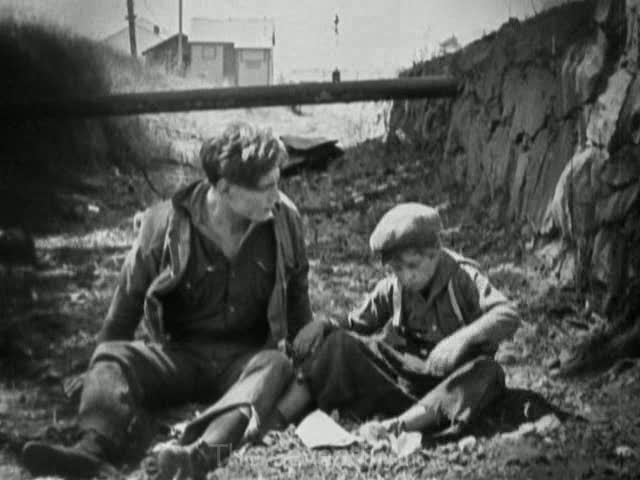
Just PalsJust Pals (1920) was apparently the first film Ford made for Fox Studios and the change is palpable. While the earlier couple of Westerns were transparent about their motives, with their trump cards being grand action set pieces, Just Pals leans more towards the sentimentalism and innocence epitomized by the films of Chaplin. In fact, Just Pals has a striking resemblance to The Kid (1921), where too a happy-go-lucky tramp is deeply transformed after he takes in an orphan – a scenario that would recur in many Ford films. As a result, the film is closer to the works of Capra than of Ford, with a preference for disarming emotionality over awe-inspiring grandeur. Given that the film plays hardly for an hour, it is commendable how much drama is packed into these precious minutes (There are at least three major concurrent conflicts in the film). Also noteworthy is how the film is more in line with the aesthetics of silent cinema than with those that Ford had developed so far. There are probably more close-ups than Ford would have liked. However, what both of them have in common is the strong sense of morality that would become the calling card for both Ford’s cinema and silent cinema at large. The film is fairly liberal and as inclusive as it can be. The love and contempt that Ford respectively has for socially marginal characters and the coterie that shuns it would echo in almost all of Ford’s Westerns that follow, where the conflict is translated to one between conscience and the law.

The Iron Horse (1924)

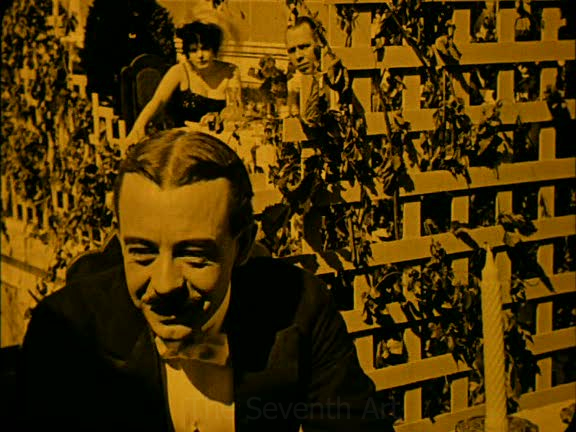
The Iron HorseSelf-proclaimed chronicle of the construction of railroad in the heartlands of America, The Iron Horse (1924) is a film that wears its epic nature on its sleeve. This is perhaps the film that the famed poetry of John Ford comes to the fore for the first time. This is perhaps also the first John Ford Western to recognize the often conflicting relationship between personal and national histories. An old man dies at a makeshift camp, two labourers dig his grave as the old man’s daughter stands mourning, the train carrying the rest of the company begins to leave, the two men quit working and join the train (“The old soak’s deep enough”), the girl watches on. The film contains many such instances of juxtaposition of personal anxieties with national ambitions – a theme that would permeate every substructure of the director’s Westerns. Other would-be Fordian elements that are present in this film are vignettes depicting camaraderie among the working class and sequences of barroom humour that implicitly comment on what law and order mean in these ever expanding, never clearly defined frontiers. The Iron Horse takes a sharp detour from the politics of the previous film with its text book conservatism and plausible xenophobia. Immigrant workers from Asia and Europe are the cause of most of the problems but they eventually unite when there’s a raid by the savage Indians! And all’s rosy once the national objective is accomplished. Ford would take a few decades to fully grow out of this world view.

3 Bad Men (1926)

3 Bad MenMenI’m going to go out on a limb and proclaim that 3 Bad Men (1926) is Ford’s first Western masterpiece. Here’s where Ford the filmmaker truly meets Ford the epic poet and Ford the painter. Set during a gold rush in Dakota, in the lands previously belonging to the Sioux, the film charts the attempts of the three titular bandits to escort the daughter of the decently deceased mayor across the plains and away from the scheming mind of the local Sheriff. Hilarious, eloquent, tragic, grand and moving all at once, 3 Bad Men is a fitting farewell to silent Westerns for Ford (sadly, it bombed at the box office) that embodies both the innocence of silent cinema and the splendour of Ford’s brand of filmmaking. One could almost swear that this film was a talkie, for the dialogue (much deadpan comedy and lots of sarcasm!) and acting here is highly naturalistic and it seems as if the director was all set for the sound revolution. But then, being silent is also the best part of the film because it prevents it from flaunting its biblical overtones and its themes of sin and redemption – a temptation that a few of the director’s talkies give in to. Rife with iconic shots, including one stunning two-way dolly that could sit alongside the legendary tracking shot that Murnau would pull off next year, and backed by a terrific 2007 score by Dana Kaproff, 3 Bad Men is Ford at his mythmaking best.

Drums Along The Mohawk (1939)

Drums Along The MohawkDrums Along The Mohawk (1939), the first talking Western by Ford and the first of the director’s Westerns to be shot in Technicolor, is also arguably the first failure for the director in this genre. The failure is especially pronounced given the fact that the film was made during Ford’s most fertile period. The film is set during the American War of Independence (earliest time frame of all the director’s films) and follows the life of a newly wed couple (Claudette Colbert and Henry Fonda) that’s expecting a child. With all its flaws and flourishes, Drums Along The Mohawk serves to demonstrate why Clint Eastwood is the most Fordian of all directors working in Hollywood today (followed by Spielberg who has been consistently revealing his indebtedness to Ford in his movies). One of Ford’s most cherished beliefs, as is apparently Eastwood’s and Spielberg’s as well, is the idea that the United States is a nation built upon great sacrifices and heroic acts of its founding fathers. That might explain why there are so many father figures (and, to a lesser extent, pregnant women and mother figures) in Ford’s films. However, here, the spiritual center of the film – the most critical component of Ford’s filmmaking – is almost completely hollow and the characters, somehow, seem to be sacrificed to uphold a vague, romantic ideology. But it is the Native American community that gets the rawest deal of them all, having been portrayed as unreasonable barbarians and regressive patriarchs. The shot of a bunch of women rejoicing, while pouring boiling water over an invading group of Indians, marks the nadir for Ford’s cinema.

Stagecoach (1939)

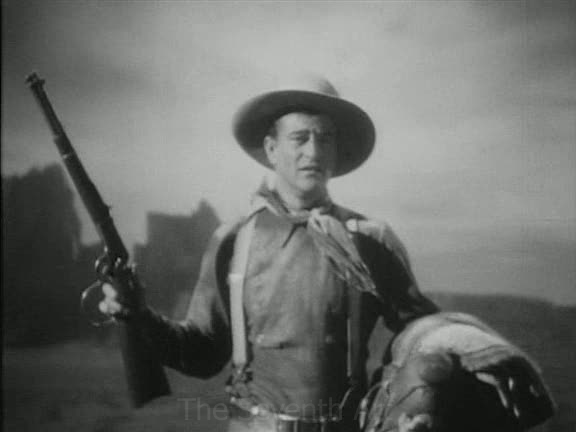
StagecoachTo say that Stagecoach (1939) makes up for the folly called Drums Along The Mohawk would be a gross understatement. It is one of Ford’s finest films and some might even call it the director’s greatest Western. It has been said that Stagecoach changed the way Westerns were made. I don’t know about that, but the film sure does take both the genre and the director to the next evolutionary level. An incisive sociocultural examination of frontier settlements, Stagecoach unfolds as a study of a bunch of characters, each of which would go on to become a genre cliché and the sum of which embodies a whole society. The motley crew is a mixture of marginalized people and bourgeoisie (a la Just Pals) the most striking of whom is a negatively shaded banker – a move that exemplifies Ford’s admiration for FDR and which presages the socialist spirit of The Grapes of Wrath (1940). Ford apparently told Wayne once that the actor just needs to stare at infinity and that the audience, equipped with full knowledge about the character he is playing, would fill in the emotions themselves. That idea is manifest in this very film. We know nothing about this utterly fascinating, almost otherworldly, being played by John Wayne. But, along the film, we also have this feeling of having known him for a long time. It is perhaps for the first time that a Ford Western utilizes what lies beyond its narrative to enrich its story – a technique that would be taken to the extreme in the films to come.

My Darling Clementine (1946)

My Darling ClementineMy Darling Clementine (1946) was made after the end of the Second World War and at a time when Hollywood was bitten by the Film Noir bug. As a result, My Darling Clementine is the first of Ford’s Westerns to go beyond the boundaries of a traditional Western to embrace other genres. Victor Mature’s Doc Holliday is a character straight out of film noir. It is revealed to us that he is a surgeon disillusioned by the uncertainty and brutality that marks his profession. He assumes a false identity, that of a rugged gun wielding gambler (!), to escape this existential angst and resorts to chronic drinking to forget his past (Kurosawa, influenced by Ford as ever, would resolve this duality into two separate characters in Drunken Angel (1948)). Wyatt Earp (Henry Fonda) himself is the quintessential existential hero, taking up the role of the judge, the jury and the executioner upon realizing that there is neither an established law to provide justice not a divine force to punish his brother’s killers (This character would be resolved into two by Ford himself, in his greatest Western). When Earp throws the drunken Indian out of the bar, he may have been acting out a historical truth, but it is also his way of imposing order upon a world that seems to have gone astray like his cattle. That is, of course, till he meets Clementine Carter (Cathy Downs), who is the film’s binding force and its sole symbol of moral purity and progress.


(To be continued…)


Lisandro Alonso

Lisandro Alonso 
(1975-)

Born in Buenos Aires in 1975, Lisandro Alonso studied at the Universidad del Cine (FUC) and co-directed in 1995 with Catriel Vildosola his first short film Dos en la Vereda (1995). After working as assistant sound engineer in many short films and a few features and as assistant director of Nicolas Sarquis for his film Sobre la Tierra, Lisandro Alonso returned to directing, making his first feature. In 2003 he founded 4L, a production company based in Buenos Aires, to produce his own films. Lisandro Alonso’s first feature La Libertad (2001) was chosen for the Festival de Cannes (Un Certain Regard). His most recent productions, Los Muertos (2004) and Fantasma  (2006), were also invited to Cannes, premiering in the Director’s Fortnight. (Image Courtesy: The Evening Class; Bio Courtesy: MUBI)


It is sort of funny to write about the works of Lisandro Alonso after writing about the films of Lav Diaz whose one film runs for longer than the entire filmography of this Argentine director. That just goes to show how different filmmakers, even when working towards similar goals, have different perspectives about the length of their films. Diaz and Alonso share a lot in common as far as their aesthetic choices are concerned. Just that Diaz’s narrative tends to be much more expansive than the latter’s. It is highly interesting that, despite this striking disparity, these filmmakers are two of the most important discoveries of last decade. However, one could argue that, unlike the very “Filipino” Diaz, Alonso is not a very “Argentine” filmmaker and that he is not even remotely interested in the national politics of his country. Even his films would testify that he is not overtly concerned with politics of any kind. Alonso instead seems to take the sociopolitical situation of his country as a given (a la late Tarkovsky and Bresson) and delves into something that is more abstract (as in what connects all of humanity) and more immediate. Most of the director’s films don’t even have societies, just wandering singletons. His characters are ones that live not even on the fringes of society, but beyond its edges. One might compare them to the people in Tsai Ming-Liang’s films, but Alonso’s characters seem to long for and work towards, in addition to the warmth of Tsai’s human connection, freedom and self-sufficiency.

However, despite the differences, Alonso, like Diaz, is a realist too, probably the most realistic of all directors working today. Like most of the filmmakers in Contemporary Contemplative Cinema canon, he mostly works in deep focus mise en scène, allowing the action to unfold at its own pace. He cuts sparely and allows each shot to breathe and develop its own rhythm. In fact, the whole of Alonso’s cinema is built on rhythms and melodies of everyday work. Consequently, he blends both documentary and fiction in his films. His actors may be playing themselves but they do that under slightly altered circumstances and scenarios. This way, the final trace of artificial professionalism in these “actors” is eliminated and what is uniquely theirs emanates. This refusal to dramatize through actors is only one of the many ways in which Alonso resembles Bresson. For one, the remarkable sound design in his films, which exercises an economy of expression and a tendency to nudge to viewers to complete the film’s world, is justifiably comparable to the French master’s (Ironically, Alonso’s films are bracketed by heavy metal soundtracks playing over the credits, as if placing the films into some sort of an aural vacuum in between). The director’s films also betray his keen eye for landscapes and architectures, which is only befitting of a director whose whole filmography studies man’s position in his universe, both in the literal and the metaphysical sense.

 
La Libertad (2001)

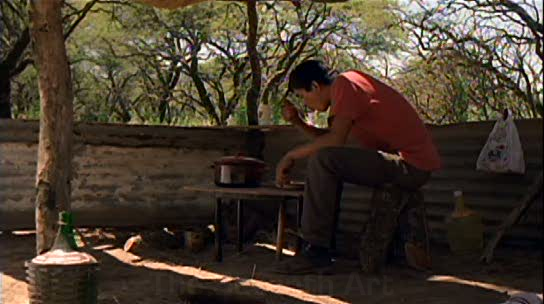
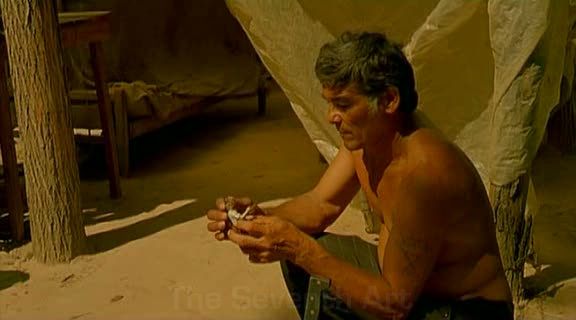
La LibertadWith La Libertad (2001), Alonso comes close to realizing the Italian neo-realists’ dream of recording 90 minutes of a man’s life, without obstruction. Although such documentary observation seldom leads us to uncover higher truths, Alonso’s film provides much space and time for contemplation. La Libertad is a plotless film that chronicles one day in the life of a woodcutter named Misael Saavedra (played by himself) as he goes about chopping trees, shaping the timber, loading them onto a jeep, dumping them at a wholesale shop, returning to the woods in the evening and hunting down an armadillo for dinner. Misael seems entirely cut off from ‘culture’ save for the odd conversation with his friend from whom he borrows the vehicle. He is almost completely self-sufficient in the sense that he derives both his income and his basic needs from nature itself. One could argue that his way of life is devoid of any form of economical exploitation. The ‘freedom’ of the title takes up multiple meanings in this regard. Misael seems altogether independent of the sociopolitical structures of the world that surrounds him. He achieves what the characters in Bartas’ Freedom (2000) and Weerasethakul’s Blissfully Yours (2002) wish for – to depoliticize the world they live in and lead a life that they want, in peace. Alonso’s independence, on the other hand, is from the equally suffocating restrictions of generic cinema such as psychological realism, causal narratives and novelistic drama. Finally, it is also the audience that is free to make sense of what it sees, hears and feels in this evocatively rendered pseudo-documentary.

Los Muertos (2004)

Los MuertosIf not the best film made by Lisandro Alonso, Los Muertos (2004) comes very close to it. The first great work by the Argentine, Los Muertos follows the Cain-like Vargas, a man in his fifties who is released from prison and who sets off to meet his daughter. Vargas is portrayed by Argentino Vargas himself, but, unlike in La Libertad, he is not entirely the character he plays. In a way, Los Muertos is both an explanation for the befuddling mysteries and a thematically and aesthetically enriched version of the director’s previous film.  The prison that Vargas comes out of might well have been the prison called society. His subsequent journey, then, becomes one where he sheds (sometimes literally) the artificial social constructions that ties him down and one where he returns to the nascent human state – a transition from the calculated propriety of the ego to the unbridled irrationality of the id (In that sense, Vargas is like Aguirre too, descending slowly into the darkest corners of his own psyche as he proceeds deeper and deeper into the jungle). It seems like Alonso wants us to relate Vargas’ murder of his brothers and his clinical slaughtering of the stray goat. Alonso’s point might just be derived from Freud’s theory that man is bestial by his very nature and morality, society and civilization are constructs to keep him from exercising his impulses. But Alonso’s film is far from a systematic psychoanalytical illustration. It is deeply human and hence infinitely complex. When, in the heartbreaking final shot, Vargas sits outside his grandson’s makeshift home on the verge of an existential breakdown, it isn’t only him who reassesses his life so far.

Fantasma (2006)

FantasmaA work that links La Libertad and Los Muertos, Fantasma (2006) is a one-hour treasure that marks a new high for the Argentine filmmaker. Set in a multiplex in Buenos Aires, Fantasma ports Vargas and Misael, this time devoid of any fictional trappings, from the lush, impenetrable greenery of the South American forests to restricted, deceptive and equally alien interiors of this concrete jungle. However, the human yearning for locating oneself within the world around remains as intense as ever. The four or five characters that we see in the film wander the empty corridors of the building like ghosts that have haunted an abandoned cinema hall. They are rarely seen in the same frame and, unlike the earlier films where they seemed to conquer new areas, keep covering the same set of spaces, taking turns (in a humorously Tati-esque fashion). Alonso isolates them from each other, boxing them out within this human grocery store with his (oft-repeated) compositions. But this sense of urban alienation and lack of communication is only the surface aspect of Fantasma. Two or three of the characters watching Los Muertos on screen in that near-seedy theatre is a grand symphony of cultural uprooting that resonates on multiple levels. In a way, the film’s closest cousin would be Tsai’s Goodbye, Dragon Inn (2003), where too the pathetic human condition was reflected and distilled in the dilapidating condition of the cinemas of yesteryear. Alonso’s film takes an equally nostalgic, elegiac and optimistic look at a world lost and an art rendered irrelevant.

Liverpool (2008)

LiverpoolAlonso’s most acclaimed film, the puzzlingly titled Liverpool (2008) is his most impregnable yet most affecting work to date. The film’s protagonist Ferrel (Juan Fernández) is a worker in a ship that anchors at Tierra del Fuego for a few days. The scenes on the ship are arguably the greatest that Alonso has ever lit and shot in his career. The detached, unfocused figure of Farrel in the opening scene fittingly sums up his condition. The out-of-focus lights of the city far off would remain emotionally out-of-focus for Ferrel even till the end. The warmth of his cluttered cabin is about to give way to a cold, open world that he’s not sure he prefers. One wishes that these scenes would play for eternity. Ferrel decides to take this time off to meet his ailing mother. It is after this that Ferrel progressively resembles Vargas of Los Muertos as he tries, possibly for one last time, to find his footing and perhaps regain his responsibility as a son and, more importantly, as a father that he seems to have disregarded. Alonso cuts his shots in such a way that Ferrel enters the frame after the shot has begun and leaves before it ends. This pattern also reflects the key idea of the film – the world Ferrel enters and exits remains as it was irrespective of his (failed) attempts to integrate himself into it. If Alonso indeed has a knack for finding profundity in the banal, it is in the final quarter hour of Liverpool that he is top form. Before his daughter (and the audience) bids adieu to Ferrel, he gives her a knick knack from his backpack instinctively. It doesn’t absolve him from his guilt, it does not establish a relationship (his daughter is mentally ill to boot) and it does not mean that he has fulfilled his duties as a father. It is a gesture – nothing more, nothing less – and a profoundly human one at that.


[Trailer of Los Muertos (2004)]

Lav Diaz

Lavrente Diaz 
(1958-)

Lavrente Indico Diaz is a multi-awarded independent filmmaker who was born on December 30, 1958 and raised in Cotabato, Mindanao. He works as director, writer, producer, editor, cinematographer, poet, composer, production designer and actor all at once. He is especially notable for the length of his films, some of which run for up to eleven hours. His eight-hour Melancholia, a story about victims of summary executions, won the Grand Prize-Orizzonti award at the Venice Film Festival 2008. His work Death in the Land of Encantos also competed and represented the country at the Venice Film Festival documentary category in 2007. It was granted a Special Mention-Orizzonti. The Venice Film Festival calls him “the ideological father of the New Philippine Cinema”. As a young man, Diaz was particularly inspired by Lino Brocka’s Maynila: Sa Mga Kuko ng Liwanag, describing it as the film that opened his eyes to the power of cinema. Ever since then, he made it his mission to make good art films for the sake of his fellow Filipinos. His body of work has led critics to call him both an “artist-as-conscience” and the heir to Lino Brocka. Diaz has also been compared to other great Filipino directors such as Ishmael Bernal, Mike de Leon and Peque Gallaga, whose films examined the ills of Filipino society (Image Courtesy: Rotterdam Film Festival, Bio Courtesy: MUBI)


Filipino director Lavrente Diaz is a very versatile artist. He started out as a guitarist (He recently released a music album to accompany his latest film), then wrote plays and short stories for television (a period he seems to hate, as is made clear in his works), later started writing poems (the poems that feature in his films are written by him) and then, in the early 90s, decided that he’ll be a professional filmmaker. The later films of the director present the same kind of problem to both commercial multiplexes and film festival screens – their length. His last four feature films have a total run time of around 36 hours! Diaz believes the long length of his films is an extremely crucial part of his aesthetic and radically alters the way in which the audience converses with his films. There is another specific problem in screening Diaz’s films world wide. That he is a very “Filipino” filmmaker. All his works are deeply rooted in the country’s history and politics. Any attempt to view the films in a de-contextualized manner is only futile. That makes Diaz one of the most uncompromising of directors working today. Diaz’s greatest ambition, as it seems, is to change the Filipinos’ (and rest of the world’s) perspective of their country and culture (He tells: “For me, the issue is: if you’re an artist, with the state the country is in you only have one choice – to help culture grow in this country. There’s no time for ego, you have to struggle to help this country. Make serious films that even if only five people watch it, it will change their perspective. You may make big box office but what do the people get out of it?”).

What is really striking about Lav Diaz is how vocal and frank he is about his ideology and his works. Most of modern mainstream auteurs and even festival regulars shy away from commenting on their work or on the ideas they present. Some of them bury their political concerns so deep within their films that they may simply be overlooked.  Diaz, on the other hand, is like an open book. In all his interviews, he is always willing to discuss his films and explain what they deal with. None of this actually dilutes the impact of the films or the complexities they contain. Instead, it only opens up a wider and more pertinent band of response to the film. Furthermore, Diaz is also very transparent about his political views and even his personal life (His story is exactly the kind of success yarn pseudo-liberal Hollywood studios are looking for. But one sure has to appreciate the man for what he’s gone through and what he’s become). To say that he feels strongly against the Ferdinand Marcos’s rule of The Philippines till about two decades ago would be an understatement (“He siphoned the treasury as well. He got everything. No matter what they say, he stole everything – the money, our dignity. It is true. Marcos is an evil person. He destroyed us. The hardest part was that he was Filipino”). Diaz is also very optimistic about the role artists play in a political revolution and this belief directly manifests in his films in the form of artist figures present in the narrative.

I’d say that Diaz’s aesthetic stands somewhere in between Contemporary Contemplative Cinema and conventional documentary. Like the former, he prefers long takes shot from at a considerable distance, avoids the use of background music, includes stretches of “dead time” in his narrative and relies on mood and atmosphere more than exposition or psychoanalysis. He employs parenthetical cutting that allows a shot to run for more duration than the length of the principal action, but cuts soon enough to avoid the shot to parody itself. Unlike Contemporary Contemplative Cinema, there are long stretches of dialogue in the vein of early Nouvelle Vague films and the politics the films deal with are much more concrete. All his recent features have been shot in black and white as if they are historical documents and as if the vitality of its characters has been sucked out. His use of direct sound goes hand in hand with his use of digital video, which enables him to experiment with long shots. It is only in a blue moon that he uses close-ups and all his medium and long shots come across as clinical observations of his characters’ lives. That doesn’t mean his films lack empathy or compassion. But the way he generates them is more distilled and uncontrived. He composes in deep space and allows the viewer to get a complete sense of the film’s environment and time. He says: “There’s no such thing as the audience in my work. There’s only the dynamic of interaction. And in time, that dynamic will grow. The greatest dynamic is when people want to see a work because of awareness and they want to experience it; and in so doing, they may be able to discover new perspectives or just put these perspectives into a greater discourse.


(NOTE: I’ve written here about all the films of Lav Diaz that I could get my hands on. However, I haven’t been able to see any his earlier works or his short films. I’ll append the entries for the missing films here once I get to see them)


Serafin Geronimo: Ang Kriminal Ng Baryo Concepcion (Serafin Geronimo: The Criminal Of Barrio Concepcion, 1998)

Serafin Geronimo - The Criminal of Barrio ConcepcionDiaz’s debut, Serafin Geronimo: Criminal of Barrio Concepcion (1998), even without the burden of its successors, is a poorly made piece of cinema. It’s got all the trappings of a bad student film – laboured acting, ill-advised cuts, unwarranted zooms and an occasionally bombastic score – that only worsen its low production values. Very loosely based on Fyodor Dostoevsky’s Crime and Punishment, Serafin Geronimo chronicles the titular criminal’s act of sin and his subsequent confession and redemption. Diaz chooses to externalize the moral conflict of the protagonist through a dental infection whose pain seems to grow unbearable. Additionally, there’s a lot of gratuitous violence – graphic and described – in the film (even in the censored version) that underscores the savagery of the world Serafin (Raymond Bagatsing), like Hesus, is caught in. Evidently, like the Russian author, the film wants to observe human suffering in all its brutality. But what the film does not seem to understand is that human suffering can’t be captured on film by merely recording mutilated bodies or the physics of their destruction. Such documentation must attempt to record the death of the soul – the internal through the physical – as well (Compare this film with the sublime, genuinely Dostoevsky-ian passage depicting Kadyo’s demise in Evolution). However, the scenes at the countryside, set in the past, are executed with certain affection and restraint. Diaz pushes his political ambitions to the background as the quest for personal justice and redemption takes precedence here over national issues. The use of curious, hand held camera and the staging of action in deep space during indoor scenes are few of the traits that would be carried over and refined in Diaz’s later, superior works.

Hesus Rebolusyonaryo (Hesus The Revolutionary, 2002)

Hesus the RevolutionaryHesus the Revolutionary (2002) is set in the year 2010 and follows the titular resistance fighter (Mark Anthony Fernandez) whose loyalty and ideology are put to test when he is ordered by the leader of the movement to kill his cell mates and is subsequently captured by the military. The most noteworthy aspect of the film is that Diaz does not set the film in far future or alter the mise en scène to make it seem futuristic. The fact that the architecture and geography look very contemporary indicates that there has been no progress for quite some time. Additionally, he uses pseudo-newsreels as prelude to the narrative. All these moves aid Diaz’s vision of establishing the future as a mere variant of the past and the present. His intention is to provide a critical distance between the audience and the story and hence make them reflect on how the same kind of events have happened in the past and are still happening. The chiaroscuro driven mise en scène through which the protagonist secretly moves seems to have been derived from American noir films. Diaz films his characters in moderately long shots and uses a techno soundtrack (by the band The Jerks) that enhances the dystopian sense overarching the film. Even while working within the limits of the genre (thereby using some of its conventions), Diaz manages to suffuse the film with themes that he would progressively be concerned with. However, Hesus the Revolutionary, in hindsight, is only the tip of a gargantuan iceberg.

Batang West Side (West Side Avenue, 2001)

West Side AvenueThanks to West Side Avenue (2001), clearly Lav Diaz’s first major work, we now know what will happen if the Filipino filmmaker takes to genre filmmaking. Diaz takes the standard policier, blows it to a size beyond what the text can handle and, in essence, brings to surface the mechanics of the genre. Constructed as a (seemingly endless) series of interrogations and recollections, a la Citizen Kane (1941), the film presents itself like a sphere without a centre. (Like Charles Kane, the relationship of all the characters to the dead boy at the centre of Diaz’s film – which is developed strikingly with a plethora of parallels – becomes the guiding device.) The procedure becomes so routine and schematic, aided to a large degree by the repetition of spaces and compositions, that the lead detective (Joel Torre) becomes something of a Melvillian zombie trudging through generic structures. But then, talking about Diaz’s film in terms of the genre is not half as justified as reading it from a national and auteurist perspective. Firmly planted in historical and geographical particulars – Filipino youth living in and around Jersey City during the turn of the century – the film takes up the issue of disappearing Filipinos – a sensitive idea that would be pursued further in other forms the later films – and examines the historical deracination and alienation that marks these young men and women. The relationship between the various characters with the killed teenager reflects their own conflicted relationship with their homeland. The film, itself, is somewhat (and slightly problematically) neo-nationalistic in flavour, gently appealing for cultural consciousness, integration and a “return to one’s roots”. The narrative mostly involves the investigation of the murder of one Manila teenager, If one moves beyond its precise sociological ambitions, one also discovers the flourishing of to-be-familiar stylistic (and narrative) devices: Scenes in master shots, montage of long takes, monochrome passages in. video and use of total amateurs. (Oddly enough, my favorite scene in the film is among the most uncharacteristic of Diaz’s cinema: a breakfast scene cut with verve comparable to Classical Hollywood). However, the most unmistakable authorial trademark of West Side Avenue is also the feature that attracts me most to Diaz’s work: the candidness and enthusiasm about his politics and political engagement, in general, as well as that rare faith in and love for cinema. That is why, towards the end of the film’s five hours, when the detective and the filmmaker – two professions seeking to discover truth – catch up with each other and restore the hitherto-absent heart of the film, you don’t if Diaz identifies with the detective or the filmmaker. He’s both.

    Ebolusyon Ng Isang Pamilyang Pilipino (Evolution Of A Filipino Family, 2004)

Evolution of a Filipino FamilyRunning for almost eleven hours and twelve years in the making, Evolution of a Filipino Family (2004), which many consider to be Lav Diaz’s greatest work, is kamikaze filmmaking of the highest order. Mixing film and digital formats (which might be an economic decision), splicing the real with the surreal and weaving together documentary and fiction, Diaz concocts a glorious and flamboyantly self-reflexive film that slips seamlessly from one mode of discourse into another. The film’s central character is Ray (Elryan De Vera), a child found on the street by the mentally ill Hilda (Marife Necisito) and who goes on to live with another family of gold diggers. One could argue that Ray is the stand in for a whole generation of Filipinos abandoned by their “parents” and left stranded (Diaz himself calls Ray as the Filipino soul). Also central to the film is Hilda’s brother Kadyo (Pen Medina), who helps the resistance fighters by stealing ammunition from dead soldiers of the military. Interspersed among the sequences that drive this fiction are newsreels depicting rallies and riots against the then-existing Ferdinand Marcos regime, interviews of the legendary filmmaker Lino Brocka explaining political film movement during the Marcos rule and footage of artists reciting sappy, exaggerated and hilarious radio serials that everyone in the fictional world seems to be hooked to. Evolution of a Filipino Family is, as the title hints, a document – one that studies and critiques a whole era and suggests what’s to be done.

Diaz shoots almost exclusively in medium shots (to avoid any sort of manipulation, he says) and some of his compositions carry the air of evocatively rendered still life paintings. His soundtrack is even more remarkable and he edits it in such a manner that fiction regularly overflows into reality. Diaz throws in everything he’s got into this film. Examining a number of topics including commercialism versus art, the class struggle, art versus reality and the inseparability of past and present, Diaz creates a dense and incisive film that seems to announce once and for all what Diaz’s cinema is all about. At heart, Evolution of a Filipino Family is a film about resistance – political and cinematic. While Kadyo and the farmer army he works for exhibit their resistance by taking up arms against the military, Lino Brocka and his cohorts manifest theirs in cinematic terms. The link is very important, as Diaz himself has pointed out, since it is through the machinery of cinematic propaganda that the Marcos regime (as any totalitarian regime would) had reinforced its position among the Filipinos. If Hesus the Revolutionary set a fantastical revolutionary movement in the near future, this film uses the one that took place for real in the past. Diaz’s intention is not just to capture the spirit of the age, but, as in the previous film, to use this piece of history to study the present and understand the state of affairs.

Heremias (Unang Aklat: Ang Alamat Ng Prinsesang Bayawak) (Heremias (Book One: The Legend Of The Lizard Princess), 2006)

HeremiasHeremias (2006) was devised as the first part of a diptych (the sequel is yet to be shot) and follows the titular merchant (Ronnie Lazaro) who decides to bid farewell to the group of artisans he is a part of and go his own way. After a near-mythical journey against the forces of nature, he lands in a shady town where his ox gets stolen and goods burned. After he comes to terms with the fact that he is not going to get justice from the corrupt police department, he decides to observe the scene of crime himself, with a hope that the criminal would come back sooner or later. It is here that he learns that the local congressman’s son is going to rape and kill a girl. And it is here – almost towards the end of this nine-hour film – that there is a trace of any “drama”. Heremias, petrified, tries to convince the local police officer and the town priest to do something about it, in vain. Diaz apparently built the film on the idea of paralysis (“the metaphor of being numbed”) and it is only during this final dramatic segment, where, for the first time, Heremias shows signs of concern and empathy, that he comes out of this (sociopolitical and historical) numbness. In a way, Heremias is the Jesus figure of the story who, after a drastic spiritual awakening, realizes that there are people worst off than him and becomes willing to suffer for the sake of others (Diaz believes this quality to be quintessentially Filipino).

Formally, Heremias deviates starkly from its legendary predecessor. Diaz seems to have found a new alternative to suit his long duration filmmaking style in digital video, where there is no worry of wasting film stock. He shoots in extremely long shots but mixes in close up. Diaz’s compositions early on in the film embody both fast moving objects, such as automobiles, and Heremias’ lumbering oxcart as if providing temporal reference for his kind of cinema. However, he also seems to be in a highly experimental mode, trying to arrive at an aesthetic that he might build his later films on. As a result, Heremias seems a tad derivative and falls a notch below the preceding and following films of the director. Where in later films he would fittingly cut after three or four seconds before and after a character enters or leaves the frame, here he provides a leeway of over a quarter minute, unnecessarily making the shots self-conscious (There is an hour-long fuzzy shot of Heremias watching a bunch of stoned teenagers partying, whose length, I believe, is not justified). But many of these shots are also highly rewarding and some even emotionally cathartic (for instance, the sublime shot where the light from Heremias’ lantern pierces the screen gradually). Ultimately, the film comes across as a minor, transitional (but nevertheless commendable) work that has a lot going for it thematically.

Kagadanan Sa Banwaan Ning Mga Engkanto (Death In The Land Of Encantos, 2007)

Death in the Land of EncantosDeath in the Land of Encantos (2007) was made immediately after the typhoon Reming/Durian devastated the town of Bicol (where the director had shot his previous two films), killing and displacing many families. The nine-hour film consists of two disparate threads the first of which plays out as a straightforward documentary where a filmmaker interviews the people affected by the disaster and gathers their opinion about the causes and consequences of the typhoon. The second thread in the film follows a fictional triad of artists who too live in the region of Bicol. Benjamin Agusan (Roeder Camanag) is a poet who has just returned from Russia and has discovered that his ex-lover has been buried under the outpouring of the volcano Mt. Mayon that was triggered by Reming. Then there are his friends Teodero (Perry Dizon), the level headed ex-poet who is now a fisherman, and Catalina (Angeli Bayani), a painter-sculptor who uses the debris spewed out by the volcano for her art. Benjamin is mentally disintegrating and has visions of his childhood and of his stay in Russia now and then. He is also hunted down by the government, which seems to have an agenda of killing all the soldiers and artists involved in the resistance, for his contribution to the anarchist movement. Diaz uses abstract time when dealing with sequences involving Benjamin wherein his immediate past, distant past and present (and possibly nightmares) reside in the same physical space, at times, like in The Mirror (1974) and The Corridor (1994).

Like in many contemporary works from around the world, fact and fiction reside alongside in Diaz’s film, even interpenetrating each other at times. Although this does reinforce the reality that the film is based on, Diaz views the marriage as a purely ethical decision intended to avoid exploitation of his people’s miseries (He had shot the documentary part before even deciding to make the film). As a result Encantos is like a Herzog film that encompasses its making-of. A peculiar thing that one notices about the film is that it is so full of artists – painters, sculptors, poets, filmmakers and writers all over. On that basis alone, one could say that Death in the Land of Encantos is Diaz’s most personal film. The film is built largely around long conversations that invariably end up discussing the role of artists in a revolution. Through the contrast between the two sections of the film, Diaz may just be exploring the seemingly unbridgeable chasm between artists and common folk that, as Evolution had elucidated, exploitative, commercial media have occupied. However, he is also very hopeful about the work of artists. Mt. Mayon is apparently symbolic of everything Filipino – both its beauty and its ugliness. Catalina making beauty out of its ugliness is what Diaz, as a filmmaker, seems to be attempting too – to embrace the state of Philippines in its entirety and use his art to correct its blemishes and restore its glory.

Melancholia (2008)

MelancholiaIf Evolution of a Filipino Family delineated the Filipino political situation through the eyes of common folk (some of whom aid the resistance movement) and Death in the Land of Encantos revealed it through the point of view of the artists, Melancholia (2008) confronts the issue head on and presents the struggle from standpoint of the resistance fighters themselves. One gets the feeling that this is the film that Lav Diaz was working towards all along. Melancholia is divided starkly into three segments each of which takes place in different time frames. The first segment is set in the town of Sagada and simultaneously follows three seemingly unrelated characters. Rina (Malaya Cruz) is a nun who wanders the streets of the town collecting charity money for the poor, Jenine (Angeli Bayani) is a streetwalker who seems to be having some trouble doing her job and Danny (Perry Dizon) is a procurer who also surreptitiously runs live sex shows for willing customers. It is soon revealed that these personalities are only characters being played by the three as a part of a rehabilitation program initiated by Danny (actually Julian) to cope up with the loss of their kith and kin in the resistance movement. The progressively elliptical second and third segments of the film respectively show the time periods following and preceding the trio’s stint in Sagada and gradually reveal the actuality behind these masks that the three have put on.

True to its title, Melancholia is a film that wallows in sadness. It is also probably Diaz’s most cynical work to date (although Diaz is staunchly against cynicism: “There’s hope even if we still have a very corrupt and neglectful system. We cannot allow cynicism to rule us.”). It is, in fact, the film non-linear structure that reduces the intensity of this pessimism largely. By presenting the consequences before the cause, Diaz sets up an extended, enigmatic prelude that is put into perspective only after the third part of the film plays out. It is after the film has ended that we learn that these three characters have embarked on a process of unlearning, of shedding the knowledge about bitter realities and settling down into a state of ignorant bliss, of repudiating the harshness of truth for the comforts of illusion. And it is during the very final shot of the film, when the shattered and disillusioned Julian and Alberta move away from each other and out of the now-empty frame that we feel the entire weight of the seven-and-a-half-hour film being exerted on us. Melancholia is a purgatory of sorts – a limbo between the states of resistance and defeat – whose inhabitants can feel neither the vigor of life nor the solace of death. “Many people are like Alberta” tells one of the characters early on in the film. And that is the most disheartening part.

Walang Alaala Ang Mga Paru-paro (Butterflies Have No Memories, 2009)

Butterflies Have No MemoriesThe director’s cut of Butterflies Have No Memories (2009) is something of a misnomer. For one, Diaz had to shoot and cut the film so that it didn’t run for a minute more than the one-hour mark. As a result, it feels as if Diaz had one eye on his film and the other on his watch. There are shots that are abruptly drained off their life and some that feel perfunctory. But the film also seems to mark a turning point in Diaz’s outlook towards the Filipino people. Perhaps for the first time, Diaz portrays the common folk (and perhaps a particular social class) as being almost completely responsible for their misery. In Butterflies, an ex-Chief Security Officer at the mines, Mang Pedring (Dante Perez), blames the mining company, which has withdrawn production after protests by the church and activist organizations, for the economic abyss he and his friends are living in. But it is also starkly pointed out to us that, while they were getting benefited by the mining company, these folks did nothing to set up alternate ways of business and earning and, as a result, find themselves foolishly hoping for a past to return, even when such a regression is harmful it is to the collective living on the island. Mang misguidedly plans to reverse time and reinstall the factory by kidnapping the daughter of the owner of the mining company (Lois Goff), who has returned to the island after several years and who calls Mang her second-father. What Mang tries to do overrides personal memory and disregards the fact that it is he who has lived like a moth, inside a cocoon. As, in the final shot, Mang and his friends stand wearing those Morione masks (which bring in the ideas of guilt, remembrance, conscience and redemption – so key to the film), they realize that they’ve gone way too far back in time than they would have liked – right into the moral morass of Ancient Rome.

[Death In The Land Of Encantos Trailer]
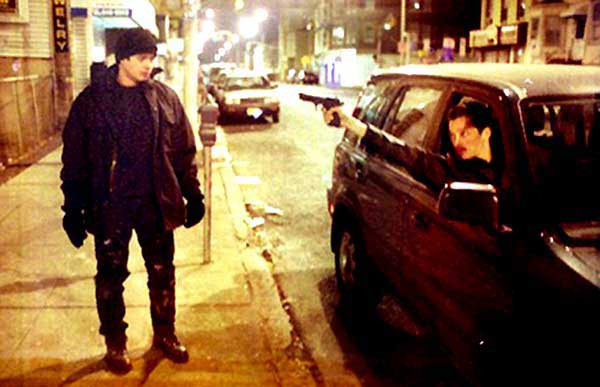
(Continued from Part 1)

Shijie (The World, 2004)

The WorldIf there is a film that perfectly sums up the state and outlook of the third world in the first decade of the new century, it has to be Jia Zhang-Ke’s The World (2004), first of the director’s film to be made with official consent. The very premise and setting of the film – a bunch of youngsters working a world park where you can witness life-size replicas of wonders from across the world – provide us with the various undercurrents that characterize the film without being ostentatious. Much like the previous Jia films, the people in The World are terribly out of sync with the environment surrounding them. This is a land where the terrible distances of the real world are pruned down to a few miles, yet the distance between individuals has increased manifold (The cramped and decrepit dressing rooms provide a counterpoint to the grandeur of the park’s front end). This is a zone which enables one to fulfill one’s desire to escape into a whole new world, yet one has to lose every shred of his/her individuality to do so (One of the early shots shows us a bunch of uniformed workers who don’t appear much different from the props they are carrying). This idea of one’s identity being stripped off, layer by layer, is built into the whole structure of the film. Dialects are normalized, costumes are changed by the minute and passports are confiscated. One of the characters towards the end tells: “It’s nice being in someone else’s home” – a delusion that seems to be common to all the residents of this synthetic world.

Sanxia Haoren (Still Life, 2006)

Still LifeStill Life (2006), which might be the best film by Jia Zhang-Ke yet, presents two stories sewn together thematically and temporally by two significant pan-and-cut shots. The first of them presents a coal miner, Sanming, from rural China moving to Three Gorges to meet his wife after 17 years and the second one gives us a young woman, Shen Hong, traveling to the same place to meet her husband whom she hasn’t seen for 2 years. Using these two threads connected by the China’s Three Gorges Dam project, Jia examines both the disparities, including that of class (Sanming works at the bottom of the rung while Shen Hong’s husband supervises the project), generation (Sanming’s traditional values are pitted against Shen Hong’s strength and resilience) and gender (Sanming and Shen Hong can be seen as the antithesis to each other’s spouses), and the commonalities that characterize the two different worlds that Sanming and Shen Hong inhabit. The prime motif that permeates Still Life is the destruction of the old and the birth of the new. Sanming yearns to return to the past while Shen Hong runs away from it. Residences are cleared to make way for the dam. English language shows its head regularly. And songs about eternal love play on the soundtrack ironically. Lastly, Jia’s film is also a paean to the marvels of the human body – the body that can create and destroy structures much, much larger than it, the body that is ultimately rendered inconsequential (as underscored by Jia’s striking compositions of man constantly being loaded down by the weight of his own creations) by the national importance of the structures themselves.

Dong (2006)

DongMade as a companion piece to the superior film Still Life, much of whose footage it shares, Dong (2006) sits somewhere alongside The Mystery of Picasso (1956) and The Quince Tree Sun (1992) in the way the director uses another artist – a painter, as is the case with the other two films – to examine the nature of his own work. Dong follows actor and painter Liu Xiao-Dong (who makes a brief appearance in The World) as he completes two of his five-piece paintings – one at the Three Gorges Dam construction site and the other in Bangkok, Thailand. Like Jia, Liu is a realist. Even he prefers to document his subjects from a distance as it provides him “better control and precision”. But when one of his subjects dies in an accident, all he can do is patronize the deceased person’s kids. Is Jia reflecting on the purpose of his own work? Perhaps. Although I believe that there has been an indictment of patriarchy, especially its presence in art, throughout Jia’s body of work, it is most manifest in Dong. In the first segment, Liu admires the body of his naked male models and paints them with utmost enthusiasm while, in Bangkok, he calls his models as “scantily-clad women” and completes his work somewhat dispassionately. We then notice that he is in an alien land not just in geographical terms. Again, it would not be an overstretch to consider much of this satire as self-criticism, given that Jia himself has been unrestrained in marveling the male body in his work, specifically in Still Life.

Wuyong (Useless, 2007)

UselessUseless (2007) could be considered as a logical extension of Still Life and Dong because it deals with a number of ideas common to those two films. Divided into three segments each of which takes up a unique perspective of the Chinese textile industry, Useless is a dense, meditative essay on production, consumption and function of art. It’s hard not to think of the film as an attempt by Jia to discover his responsibility as an artist and to locate himself within the cinema of his country. Throughout the film there is a battle between aesthetic and functionality of art – a struggle that seeps even into the film’s form – that is manifest in the segments involving mass depersonalized production, custom “auteurist” design catering to the west and smalltime tailoring to suit individual needs. However, Jia’s film does not take a pre-determined stance and shares our indecisiveness. The very fact that the director chooses “impersonal” high-def over the intimacy of film illustrates the complexity underlying the question. Furthermore, Jia’s film also examines the chasm that exists between the oriental and western perceptions of beauty and art. What is a fact of life in China – soiled bodies, dirty and worn out clothes – is considered an exotic, delicately assembled work of art in the west. Female nudity is commonplace in western art whereas male nudity takes its place in the oriental counterpart. When Jia pans his camera over female models getting ready for a show at Paris Fashion Week, one is reminded of the opening shot of Still Life where Jia’s male models sit unclothed in a boat, ready for their performance in the film.

Er Shi Si Cheng Ji (24 City, 2008)

In 24 City (2008), the latest of Jia’s great works, the director interviews several people all of whom are connected in some way to the prestigious aircraft manufacturing site, Factory-420, in Chengdu city that is now being torn down to make way for a residential complex. What Platform does in the present tense, 24 City does in the past. Each of these accounts so clearly elucidates what is essentially positive and what is not about life in a communist regime. The sheer joy of living as a symbiotic community seems to be counterbalanced by a tendency of individual wishes getting overridden by collective objectives. Throughout, these testimonies effortlessly present how, once, personal tragedies were invariably connected to national decisions and how an individual was able to define himself only with respect to his community (One character even clarifies her name using a city as reference). Furthermore, these accounts also give a vivid picture of the depersonalized and dehumanized way of work at the same factory after China’s cultural reforms in the late seventies. Jia juxtaposes images of the factory being destroyed with the faces of his subjects suggesting the demise of a wholly different way of life and thought. But all is not so sweetly nostalgic about Jia’s film. The set of interviewees consists of a mixture of people who’ve actually been through what they say and actors enacting such people. Are these accounts the absolute truth or are they the comfortable versions of the past concocted by memory with the passage of time? How much of an actor is there in each of these people? Jia, never ever cynical, is content in playing the Godard-ish ethnographer. Brilliant.

Heshang Aiqing (Cry Me A River, 2008)

Cry Me A RiverPicture Jia repenting for not being completely nostalgic in 24 City and deciding to assuage that guilt with a purely fictional feature. The 20-minute short Cry Me A River (2008) is just that. A group of middle class friends, well in their thirties, meet up, have dinner with one of their professors and talk in pairs about how their lives have been after they went their own ways. This must be the first time Jia is working within the tepid confines of a genre and he does remarkably well to leave his signature all over. But it is also true that Jia is one of the few directors who truly deserve a picture in this genre, given the consistency with which he has dealt with the theme of cultural transition in his films. Wang Hong Wei and Zhao Tao seem to be almost reprising their roles from Platform, which gives the film a touch of autobiographic authenticity, considering how often the director has used former actor as his alter ego. We are far from the sweet old days of Platform where the very sight of a train was rare. It’s now a matter of a few hours crossing the whole of China. As the professor and the students have their dinner, two actors in traditional theater costume perform at the restaurant with a huge bridge as the backdrop. Two characters travel on a boat in a river whose banks are adorned by old buildings, reminiscing and confessing how much they still love each other. They are, of course, going down the river of time with a clear knowledge that they can’t reverse its flow.

Hai Shang Chuan Qi (I Wish I Knew, 2010)

I Wish I KnewA project commissioned by the state in view of the upcoming Shanghai World Expo, Jia Zhang-ke’s I Wish I Knew (2010) is a thematic extension of 24 City and is much more freely structured and much broader in scope compared to its predecessor. The larger part of the film presents interviews with older residents of Shanghai (along with those of Taiwan and Hong Kong) who gleefully recollect their family’s history, which reveal the ever-growing chasm between the city’s past and present. Personal histories seem to be based on and shaped by the city’s tumultuous politics and culture. We see that the people being talked about were viewed as mere ideological symbols incapable of erring or transforming. In addition to his employment of mirrors and reflective surfaces suggesting both documentation and subjectivity, Jia films the interviewees in extremely shallow focus as if pointing out their being cut off from the present (It takes them the sound of breaking glass or the ring of a cellphone snap back to reality). This tendency is contrasted with the final few interviews of younger people where we witness how life can change course so quickly and how one can assume multiple social personalities on whim and float about like free entities. Losing one’s sense of existence in a particular environment is perhaps not a big price to pay after all for the seeming freedom of choice it gives. One’s history is no longer defined by one’s geographical location. One is no longer bound by dialectical ideologies. There is apparently no influence of the past on the present, in every sphere of life, whatsoever. Mistakes of the past are obscured by the glory of the present and the loss of values, by cries of progress. Jia’s view of the city is, against our wishes for a disapproving perspective, neither nostalgic nor rosy. It’s holistic.


[“Black Breakfast” – Jia Zhang-Ke’s segment in Stories on Human Rights (2008)]

Jia Zhang-Ke

Jia Zhang-Ke 
(1970-)

Born in 1970 (Fengyang, Shanxi Province), Jia Zhangke studied painting, developed an interest in fiction, and in 1995 founded the Youth Experimental Film Group, for which he directed two award-winning videos. He graduated in 1997 from the Beijing Film Academy, and his first feature, Xiao Wu (1998) was very successful at the Berlin, Nantes and Vancouver festivals. The following films Zhantai (Platform, 2000), and Ren xiao yao (Unknown Pleasures, 2002) were selected in competition respectively at Venice and Cannes. He established Xstream Pictures in 2003 in order to promote young talented directors from all over China. He directed Shijie (The World) in 2004 and his latest film Sanxia haoren (Still Life) received the Golden Lion Award at the Venice Film Festival 2006. (Bio Courtesy: Cannes Festival, Image courtesy: Glamour Vanity)


“Juxtaposing a person with an environment that is boundless, collating him with a countless number of people passing by close to him and far away, relating a person to the whole world, that is the meaning of cinema.”

– Andrei Tarkovsky


If the filmography of Jia Zhang-Ke is to be summed up in a single line, it has to be the above statement. Along with Apichatpong Weerasethakul, Jia appears to be the pick of the past decade and has made his way into almost every best-of-the-decade list out there. With a body of work that spans only a decade and a half, the Chinese has already authored at least four great works that clearly illustrate the director’s consistency of vision and his command of the filmic medium. What sets Jia apart from his contemporaries like Tsai Ming-Liang and Hou Hsiao-Hsien is the narrative and thematic specificity that pervades the whole body of his work. While the latter directors have sometimes de-contextualized their narratives and resorted to broad strokes in order to, perhaps, deliberately universalize the issues they are dealing with, Jia almost always particularizes. It is true that, like the other two senior directors, Jia keeps coming back to the same set of motifs and questions, but there is always a thread that runs through his films alongside these investigations that examines his own role and responsibility as a Chinese, as a filmmaker and as a Chinese filmmaker.

Jia seems to have established his signature aesthetic very early on in his career. Even in an early and relatively minor work like Pickpocket (1997), one can see that Jia, like Tsai and Hou, favours long shots, filmed from at a distance, and uses direct sound to wondrous effect. Then there is the trademark pan shot, which Jia treats like a brush running over a very wide canvas woven in time, whose use only proliferates with the years. Jia employs this pan shot to often depict people separated by space and time and the relationship they bear with the environment they live in. This unhurried, evocative shot directly ties Jia’s cinema to those of Tarr, Wenders, Polanski, Tarkovsky and Angelopoulos, the last of whom is the filmmaker Jia seems to closest to, thematically and formally. His actors are regularly seen squatting – a primal and distinctly human gesture that distinguishes man from the artificial, industrial universe around him. Most times, his scenes unfold in the master shot itself, as Platform (2000) and The World (2004) clearly testify. When the scenes are not shot in natural light – night scenes, for instance – they are, more often than not, lit by a single light source that is present in the diegesis itself.

From In Public (2001) onwards, Jia seems to have taken a liking for the HD digital format (shot masterfully by Yu Lik Wai) that seems to impart an extra layer of realism and intimacy to the films. Additionally, the director does not hesitate to shift the tone within his films abruptly – a playful tendency that is also palpable in Weerasethakul’s films. One moment you witness a solemn, moving conversation and in the next, you see characters floating about in animated spaces or buildings lifting off the ground like rockets. Apart from this, Jia’s vertically unsymmetrical framing is redolent of Godard’s early political features and he similarly embeds his characters within images of reconstruction and modernization of the place they live in. Also Godardian is the fact that there are hardly any “empty shots” (Godard’s terminology) in Jia’s films. He never depicts an action just for the sake of carrying the story forward or supplying petty information. To borrow Godard’s example, if a man crosses a street in a Jia film, one can be sure that either the director is interested in the man’s gait and gesture or the details of the street he is walking on or, as is usually the case, the relationship between the two.


Xiao Wu (Pickpocket, 1997)

PickpocketThe only Jia film with a single protagonist that I’ve seen, Pickpocket (1997) is also the director’s most accessible film. With a script whose likes one would find in the neo-realist films of yesteryear, Pickpocket chronicles the life of the titular small-timer, Xiao Wu, played charmingly by Jia regular-to-be Wang Hong Wei, as he loiters about doing his work in the streets of Fengyang, the director’s hometown. The questions of identity and cultural dislocation, which would intensify in the filmmaker’s subsequent works, already register a strong presence in this film. Jia employs direct sound to capture ambient and stray noises of the town that suit the film perfectly. Often, Xiao Wu’s voice is overpowered by the noise from the town streets or by the blaring pop songs that flood the soundtrack, which also particularize the film’s time line, suggesting the beginning of China’s globalization process. The soundtrack is complemented by the seeming omnipresence of the local television network that seems to either intrude into people’s private affairs or feed people with more dollops of pop culture. Xiao Wu is the quintessential Jia character, a flawed individual who has failed to catch up with the changing times (while all his colleagues have successfully boarded the train) and, as a result, pays the price. It is only after he (literally) sheds his old attire and learns to sing pop songs that he somewhat feels he is a part of his surroundings. As he sits arrested to an electric pole at the end, with the townsfolk staring at him curiously, one only thinks of the inevitability of this outcome. Forget the train, Xiao Wu hadn’t even got on to the platform.

Zhantai (Platform, 2000)

PlatformPlatfrom (2000), widely regarded as the director’s finest film, opens with a theatre performance that extols Mao’s communist revolution, setting up the theatre motif that permeates the entire film. Set at a time when China’s globalization measures were put into action, Platform is an epic film that actually gives the viewer the feeling of being there and drifting along with this endearing team of travelling players that stands for a whole generation – that of Jia’s – struggling to cope up with the drastic cultural transition that the measures have induced. That Jia sets the film in his hometown of Fengyang is of much importance because, according to Jia himself, it is one of China’s many towns that is far removed from the decision making machinery at Beijing and merely rolls along with the impetus given by the culture shock. Jia builds his film accumulating one insightful observation upon another, taking his characters through various signposts, such as screening of foreign films, permission for pop songs and private owned apparel shops, which indicate the direction the revolution is taking the country in. Characters go into sudden flights of fantasy, as they would in later films too, and step into improvised dance sequences and on-stage performances in an attempt to transcend the stalemate they are presently in. Jia’s film is a finely balanced mixture of nostalgia, elegy, cynicism, and hope, but never does it criticize its characters for their acts. It recognizes shares their surprise and alienation, recognizing and embracing them as flawed individuals who are yet to get onto the speeding train of progress and off the platform of cultural disjunction.

Gong Gong Chang Su (In Public, 2001)

In PublicIn Public (2001), made when Zhang-Ke was scouting locations for his next film, is the most abstract of all the director’s works for it completely sacrifices a narrative for something more expressive. Running for just over half an hour, In Public is the first film by the director to be shot in digital and presents vignettes from various public places, including a railway station, a bus stop, a bus, a pool hall and a discotheque, whose images inherently bear what Jia explored in his previous two fictional features. The key sequences come towards the end, in which we see people enthusiastically participating in activities at the pool hall and at the karaoke, where the effect of China’s modernization on a remote town’s populace is most evident. Even amidst the interesting impromptu dancing lessons that are taking place in the room, Jia’s ever-curious camera (often easily spotted by the people it shoots, helmed by regular collaborator Yu Lik Wai) keeps going back to a bald man sitting on a wheel chair at one end of the room. As the camera tilts down to the chair, we see a portrait of Mao Zedong hanging from the down. If not anything else, In Public serves as a distillation of the director’s techniques with its long and medium length shots, slow pans and his discerning eye for industrial landscapes. Jia’s attention is as much on the public places as it is on the people who inhabit them. He takes equal pleasure in dwelling on an arbitrary face that attracts him and in filming people from a distance, studying their behaviour in these public spaces.

Ren Xiao Yao (Unknown Pleasures, 2002)

Unknown PleasuresIf Platform was Jia traveling along with the touring theatre and sharing their culture shock, Unknown Pleasures is the director stepping back and looking at his counterparts of the next generation. The fact is underscored with the help of Wang Hong Wei who, as usual, remains the director’s alter ego and makes a cameo appearance, playing a variant of Xiao Wu. Slightly more cynical than all other Jia films, Unknown Pleasures is also the most light-hearted of them all, betraying a love and sympathy that the director has for his characters. A couple of middle class teenagers – Bin Bin (Zhao Wei Wei) and Xiao Ji (Wu Qiong) – knock about the town without any apparent motive when one of them falls in love with the mistress, Qiao Qiao (Zhao Tao, modeled after Mia Wallace), of a local gangster. In one scene, Xiao Ji, a parody of himself, talks to her about the bank robbery in Pulp Fiction (1994). In fact, the whole film borrows much from the Tarantino film. Xiao Ji dances at the local disco with Qiao Qiao, only to get repeatedly beaten up by the gangster. He decides to rob a bank which turns out to be only marginally less funny than a Woody Allen sketch. Jia’s film apparently has China’s “single-child” policy for population control as its backdrop and Jia might just be pointing out how this has resulted in an entire generation feeding and growing up on ideas and attitudes proposed by pop culture. But, keeping in mind the director’s previous couple of works, one may conclude that Jia’s primary intention is to portray the aftermaths of a cultural shift that is just too drastic for its participants to cope up with.


(To Be Continued…)

(Continued from part 1/2)

Hao Nan Hao Nu (Good Men, Good Women, 1995)

Good Men, Good WomenGood Men, Good Women (1995), the final part in Hou’s trilogy on Taiwanese history, could well be considered as the first in a series of highly experimental films by Hou Hsiao-hsien. Dividing the film into two time lines – one set in the Chiang Kai-Shek era of White Terror and the other in contemporary Taiwan – Hou investigates both the unifying spirit and the chasms that exist between the nation’s past, present and future. A lonesome actress Liang Ching (Annie Shizuka Inoh) is to play the role of Chiang Bi-Yu, a Taiwanese resistance fighter from the 1940’s. Ching’s confrontation with the painful history of her nation coincides with a confrontation with her own dark past, where we learn about her stint as a bar host and her affair with a man named Ah-Wei (Jack Kao), whose murder she becomes an accomplice to, for three million bucks. The betrayal of a group of loyal partisans by the very side it wished to fight for serves as an agonizing reminder of her betrayal of a man who loved and trusted her. Hou’s highly stylized direction cuts back and forth between the scenes from the past that use soft, black and white footage and those from the present, shot in a bland colour stock, both of which mingle at one point, pointedly suggesting the marriage of collective and personal histories that gives a not-so-rosy picture of the future. Good Men, Good Women is a transitional film for Hou in the way it acts as a bridge between the idea of inseparability of past and present indicated by The Puppetmaster (1993) and that of absolute isolation of the two from each other that characterizes Goodbye South, Goodbye (1996).

Nan Guo Zai Jian, Nan Guo (Goodbye South, Goodbye, 1996)

Goodbye South, GoodbyeWith Goodbye South, Goodbye (1996), Hou seems to have bid farewell to narrative cinema for good. It is safe to declare that absolutely nothing happens in the film, for right from the first shot of the film, where we witness a bunch of blasé youngsters sitting in a train and one of them losing signal on his cellular phone, to the last one where a car carrying those people crashes to a standstill, there is simply no indication that the vicious circle that the characters are treading on will break some day. Neither their choices nor their actions seem to make any difference to the drug-addicted, gamble-driven, aimless and nihilistic lives they seem to be leading. They live for the moment, without a shred of consideration for the consequences or causes of their present actions (They open a restaurant where they end up telling the customers what they should eat!). With an absurdly exaggerated colour scheme, consisting mostly of primary colours, Hou builds the film as a string of moments, each rife with dark, brutal humour (“Did she slit her wrists again?”), that gradually reveal how a whole generation is living with neither an apparent memory of the past nor a hope for the future. Alternating between scenes of motion – trains, motorbikes and automobiles – and transit, whose destination is never once clear, and utter motionlessness, shot in dimly lit, cramped interiors, Goodbye South, Goodbye is a stark and affecting portrait of a stalemated generation whose loss of identity seems to mirror that of the nation they are living in.

Hai Shang Hua (The Flowers Of Shanghai, 1998)

The Flowers of ShanghaiCould there be a more baffling and contrasting follow up to the apparent frivolity and irresponsibility of Goodbye South, Goodbye (1996) than The Flowers of Shanghai (1998), Hou’s only film to be set entirely in the pre-WW2 era? Slightly redolent of Zhang Yimou’s magnificent Raise the Red Lantern (1991), The Flowers of Shanghai, set during the turn of the nineteenth century in the brothels of Shanghai, presents us a series of seemingly endless conversations and bouts presided by men, presumably belonging to the officer class of the ruling government, who indulge themselves by patronizing the courtesans and playing drinking games on the table. Hou’s most relentless and most rigorous film till date, The Flowers of Shanghai is shot completely indoors, with carefully orchestrated actor choreography, consisting almost entirely of medium shots and with a intensely reddish lighting scheme throughout that evoke a high degree of claustrophobia and suffocation, which perhaps mirror the experience of the flower girls themselves (the exact feeling that is induced when one watches Ten (2002)). It is hard not to think of the film as a political allegory given the fact that the whole film plays out within a single, enclosed structure and the intricate way in which relationships are reduced to ideas of ownership, subscriptions and contracts. However, even if the case for political abstraction is dismissed, The Flowers of Shanghai still remains a scathing examination of power and freedom of a highly marginalized section of people living under a decidedly patriarchal structure – an exploration that remains as potent even in the most modern of times.

Qian Xi Man Po (Millennium Mambo, 2001)

Millennium MamboMillennium Mambo (2001) arrives, at the turn of the century, as a timely reboot to Hou’s Daughter of the Nile (1987). Like the protagonist of the latter film, Ah-Sang (Fan Yang), Vicky (Qi Shu) finds herself in a stalemate of sorts, with no relationship to really hold on to, and wishes to escape into the past as a means of overcoming the abyss called future. She seems haunted by the idea of beginning anew in a new place and a new time and is fascinated by the antiquity of Hokkaido, Japan, the old people who live there and the old cinema posters that adorn its slow-clad streets. However, unlike Ah-Sang, she seems numbed by her condition so as to not show any signs of desperation for escape. There are echoes of both Tsai Ming-Liang and Wong Kar Wai in this film in its existential overtones and (yet) brimming optimism. In stark contrast to the medium-shot rigor of his previous film, Hou’s aesthetics are freewheeling and he shoots in cinema vérité format, employing a mildly accentuated colour palette and a large number of loosely focused, handheld shots and close ups that was hitherto uncharacteristic of the director. Like some of his previous films, Hou seems to be interested more in capturing the rhythm of life during a specific time period in Taiwanese history than anything else. Consequently, Hou employs a highly evocative techno soundtrack and punctuating slow motion shots that gives one the affecting feeling that these are moments of utmost transience to be cherished for eternity, much like the evanescent face imprint that Vicky leaves on snow.

Kôhî Jikô (Café Lumiére, 2003)

Cafe LumiereCafé Lumiére (2003) is the kind of film that I would have expected from Jarmusch, given his preoccupation with Japan and, specifically, Ozu (No wonder he cites Hou as one of his idols). However, in retrospect, it looks like that no other director deserves making this film as much as Hou does. That is because Café Lumiére serves both as the updation of Ozu’s themes for the new century and as the next logical step in Hou’s body of work. Most minimal in terms of plot in all of Hou, Café Lumiére continues Hou’s exploration of the new generation that has been cut off from its past and that seemingly unbridgeable generation gap that exists between the members of two generations – a characteristic Ozu theme that had its cultural roots in Post-war Japan – in this post-globalization world. However, Hou examines this chasm from an outsider’s point of view, as and through a person straddling the cultures of Japan and Taiwan – a stance that permeates the whole film, tying what is quintessentially Hou to that which is quintessentially Ozu. Hou’s stylistics, too, become inseparable from the Japanese director’s as he concocts similar ground level compositions, with meticulous actor choreography filmed in long shots and  separated, at times, by major ellipses. Like Jarmusch’s latest, Hou’s film is also one about transition – one without any particular destination – and he adorns the film with images of trains and railway stations. In fact, Hou’s film is the cinematic equivalent of the painting that Hajime (Tadanobu Asano) creates in the film, indicating a generation that rests within the womb of a dense network of trains, slowly bleeding.

Zui Hao De Shi Guang (Three Times, 2005)

Three TimesHou Hsiao-hsien’s most acclaimed film, Three Times (2005), brings him back to overtly political filmmaking after a hiatus of, arguably, four films. Divided into three segments – set in 1911, 1966 and 2005 in Kaohsiung, Dadaocheng and Taipei respectively – Three Times seems like a distillation of three of the director’s earlier films. Hou’s aesthetics change with the time period the film deals with (in a highly cinematic sense too). He uses a green filter, a mixture of outdoor and indoor shots and a soundtrack composed of romantic songs for the first segment, a red filter, largely medium shots filmed indoors with a static camera and a classical soundtrack for the second and a blue tinge and fluid camerawork with a number of close-ups for the third, reflecting the spirit of each age. But Hou’s film is far from a simple comparison of lives in three distinct time periods. Hou is more interested in the underlying similarities and ironies more than the apparent and inevitable differences. Like many of the director’s previous films, Three Times is an exploration of the distance between individuals, the communication gap that separates them and the ways those distances and gaps are bridged. In the bittersweet, first segment, letters and boats serve the purpose of bringing people together, with words complementing when stretches of silence aren’t enough. In the second segment, voices are entirely muted as intertitles replace conversations. In the final one, despite the infinite means of communication and commutation available, characters don’t seem to be able to connect either with each other or with their past, as they ride off in their contraptions to nowhere.

Le Voyage Du Ballon Rouge (The Flight Of The Red Balloon, 2007)

The Flight of the Red BalloonThe Flight of the Red Balloon (2007) might just be Hou’s greatest accomplishment to date.  Hou’s second film on foreign soil is aptly set in Paris, France – the city of arts – and takes off from Lamorisse’s childlike short The Red Balloon (1956). The latter trivia is very important and provides thematic context to Hou’s film. The balloon in Lamorisse’s film becomes a symbol of beauty and of art, abandoning a cruel world that rejects it and embracing and protecting those who recognize beauty in the mundane. Likewise, in Hou’s film, Simon (Simon Iteanu) is surrounded by a number of art forms – music, literature, photography, puppetry, cinema and painting – and mother figures – his actual mother, his nanny, his piano teacher, his “pretend sister” and, of course, the all-mysterious red balloon. Hou, evidently inspired by the city, creates a fractal of art forms around these wonderful people in the film who seem to be striving to capture instantaneous reality and achieve peace and perfection through the art forms they practice. Hou uses semi-transparent, partially reflecting surfaces and has melodious music pieces accompany the most quotidian of images to underscore both the impossibility of life to attain the utopia of art and the presence of art in everyday life, all around us (The dense, final scene of the film employs Félix Vallotton’s painting, The Ball, to highlight how art is created out of the ordinary and how it embodies a desire to overcome the imperfection of reality). When Suzanne (Juliette Binoche) asks the blind tuner if he can tune the piano back to normal, she might well have been taking about her life.

Hou Hsiao-hsien

Hou Hsiao-hsien 
(1947-)

Director Hou Hsiao-hsien, in a 1988 New York Film Festival World Critics Poll, was voted one of three directors who would most likely shape cinema in the coming decades. He has since become one of the most respected, influential directors working in cinema today. In spite of his international renown, his films have focused exclusively on his native Taiwan, offering finely textured human dramas that deal with the subtleties of family relationships against the backdrop of the island’s turbulent, often bloody history. All of his movies deal in some manner with questions of personal and national identity, particularly, “What does it mean to be Taiwanese?“. In a country that has been colonized first by the Japanese and then by Chiang Kai-Shek’s repressive Nationalist Government, this question is pregnant with political connotations.

Hou was born to a member of the Hakka ethnic minority in southern Guangdong province in mainland China, but his parents emigrated to Kaohsiung, Taiwan, in 1949, to escape the bloodshed of the Chinese civil war. After serving in the military, Hou entered the film program at the National Taiwan College of the Arts. He graduated in 1972 and worked as a salesman until he landed a job as an assistant director and a screenwriter. In 1980, he made his directorial debut with Cute Girl, but he did not attract critical attention until The Son’s Big Doll appeared as an episode of the omnibus film Sandwich Man (1983). This film, along with another portmanteau movie, In Our Time (1982), is considered one of the first films of the New Taiwan Cinema movement, which injected a new level of sophistication and vitality into a moribund film industry previously known for martial arts spectaculars; it arose from the Foundation for the Development of Motion Picture Industry and the loosening of censorship laws in the late ’70s and was led by such young filmmakers as Hou and Edward Yang. (Bio Courtesy: All Movie Guide, Image Courtesy: Freakyflicks)


Zai Na He Pan Qing Cao Qing (The Green, Green Grass Of Home, 1983)

The Green, Green Grass of HomeDuring the first quarter hour, The Green, Green Grass of Home (1983), undoubtedly a weak link in Hou Hsiao-Hsien’s early career, seems to safely adhere to the noble-​teacher-​scores-​over-​unruly-​kids-​and-​profoundly-​changes-​their-​lives genre. Instead, Hou diverts the attention of the narrative from the student-teacher relationship towards the one between the kids and their parents and the romance between the teacher, played by Hong-Kong pop icon Kenny Bee, and his colleague in the primary school. There is dramatic tension in the story, which now seems uncharacteristic of the director, in the form of a environmental issue about illegal fishing in the village river, that is used to tie all the characters together in the third act. The director’s signature is barely visible and his methods seem to be in their very nascent stage. Hou shows almost none of his trademark restraint on the soundtrack, employing schlocky sentimental songs to hold attention. Of course, there is also much to take away from the film when the director is not concentrating on the star value of the film, especially when he deals with slice-of-life sequences from the children’s lives (There is a very funny sequence involving a stool test which, I’m sure, has been ripped off elsewhere). Also noteworthy is the way Hou positions his camera amidst the kids, often taking their POV of their teacher. But it is Hou’s choice of repeating certain compositions and locations throughout the film, which also presages a key technique in the director’s modus operandi, to get the audience accustomed to the film’s environment that ultimately saves the film.

Feng Gui Lai De Ren (All The Youthful Days, 1983)

Hou Hsiao-hsien’s fourth feature stands in remarkable contrast to the banality of his previous film, The Green, Green Grass of Home (1983), and should probably be considered as the first signs of a master who is to come. Tinged with nostalgia throughout, as the title would imply, All the Youthful Days presents us the lives of a bunch of rowdy youths from the town of Fengkuei, who move to the city looking for work (in a manner very reminiscent of Goodbye South, Goodbye (1996)). Although much more restrained than the director’s previous, a few of the clichés of the genre still remain. But what really sets apart the film from its predecessor is the confidence of its approach and its formal consistency that would become characteristic of the director later on. All the Youthful Days already shows the filmmaker’s need for direct sound, which he would employ a few films later, while the visual component succeeds in capturing the rhythm of life in the city and in the town with its long and drawn-out shots, restrictive framing, use of off-screen space and employment of multiple planes of action. Hou’s camera takes a detached but ever curious gaze towards its subjects as they engage in gang wars, witness the lives of their neighbours, get cheated in the city and lead a life that is as detached from the past as it is from the future. There is much understated pathos to be found in the final passages of the film, a la I Vitelloni (1953), where the friends are forced to come to terms with the fact that they have to break up and move on with their individual lives. (Republished)

Dong Dong De Jia Qi (A Summer At Grandpa’s, 1984)

A Summer at Grandpa'sA Summer at Grandpa’s (1984) is a tale of transition – from the chaotic life in the city to la dolce vita of the countryside, from the ennui of scientific modernity to the fascination with nature’s antiquity and from the blissful ignorance of childhood to the mercurial moods of pre-adolescence – and, fittingly, begins with the graduation ceremony of one of the two child protagonists of the film, who are to spend their titular summer at their grandfather’s house while their mother is to undergo a critical surgery in the city. Surely, it is not only the mother who is going to be going through a life-altering phase. The kids come across a host of alien characters and situations, including a pair of robbers and a mentally-challenged woman, that are so intricately woven into the narrative that even the adult viewer finds it increasingly difficult to locate his/her moral footing with respect to the film. A Summer at Grandpa’s is starkly redolent of Victor Erice’s The Spirit of the Beehive (1973) in the way it filters the political and moral complexities of the world though the eyes of children to paint an unsettling portrait of a society that is far from being the paradise it appears to be on the surface. Hou observes, with equal intrigue, both the carefree indulgence of the children in social games (including a hilarious turtle race) and the stark reality that interrupts these activities, as if trying to remind them that the best part of their lives is over.

Tong Nien Wang Shi (A Time to Live, A Time to Die, 1985)

A Time to Live, A Time to DieOf all the early works of Hou Hsiao-Hsien, it is perhaps A Time to Live, A Time to Die (1985) that most warrants a comparison to the works of Ozu given its themes of separation, loss and loneliness. First of the director’s films to be set in post-WW2 period in Taiwan, the film follows a family from mainland China that moves to the south of Taiwan after the war. Hou’s film simultaneously covers three generations– represented by the grandmother, the parents and the children respectively – each of which presents a certain kind of relationship between the present and the past. Grandma believes that she is still in the mainland and keeps looking for a bridge that isn’t there. The parents spend their lives believing that all this travail is temporary (as was the case with Taiwan itself during the period) and the past will return. The children are plainly oblivious to the past, engaging themselves in petty gang wars and bumming around. In addition to the themes, it’s also Hou’s aesthetics that seem highly Ozuvian. The architecture of the family’s house looks very Japanese (whose authenticity is intact given the place and the time the film is set in) with sparse, well-ventilated living rooms and doors, windows and other furniture made of bamboo and glass. The indoor compositions are double-framed with a ground-level camera angle that recalls the respect and humility of the Japanese director. Then there are also those major and minor ellipses that punctuate the narrative to give us a sense of time passing, people departing and life drifting away.

Lian Lian Feng Chen (Dust In The Wind, 1986)

Dust in the WindAs much as Dust in the Wind (1986) takes Hou back to the dialectics between rural and urban life styles that was present in his earlier films, it deviates starkly from the ideas underlying those films. The first five minutes of the film sits alongside the very best sequences that Hou has ever filmed. The film begins with Biblical darkness after which we see a speck of brightness approaching us, gradually growing in intensity and size. We realize soon that we are on a train moving into and out of unlit tunnels regularly. As twilight strikes, a young couple alights from the train and walks into the village. The dark and foreboding clouds gradually drift over the couple’s heads as the boy escorts the girl to her house. This extremely evocative sequence sets both the tone and the themes of the film that’s to come. The boy leaves school to go the city in search of work. The girl follows suit and ends up working in a textile firm. The romance between them is palpable and so is the seemingly unbridgeable gap. Hou and screenwriter Wu Nien-Jen, on whose teenage experiences the film is based, create a tender piece of work about the inability to escape one’s socio-economic and political status to do what one wants. They build the film around (subtly ridiculous) patriarchal structures, wherein it takes nothing more than a pair of cigarettes for males to bond while the whole world seems to be conspiring against the fruition of a romance.

Ni Luo He Nu Er (Daughter Of The Nile, 1987)

Daughter of the NileDaughter of the Nile (1987) is an anomaly of sorts in Hou’s filmography considering the direction his films have hitherto been moving in. The film’s begins like a Markerian tone poem, especially resembling Level Five (1997), establishing a strange connection between Taiwan and ancient Egypt, and goes on to unfold as a Tsai-esque poem about physical and emotional loneliness in a pre-apocalyptic world. Ah-Sang (Fan Yang) is a college-going young woman living with her sister, a school going teenager, her brother, a lifelong thief, now escalating the ladders of the mafia and her grandfather. Ah-Sang tries to find some happiness in the relationships with her family and friends, but is continually hampered by the ever-increasing brutality of the world around her. She tries to escape the bleakness by imagining herself as Carol, a manga character who leaves her family and flees to ancient Egypt only to be killed at 22. The greenery and serenity of the countryside, which had till now played a significant part in Hou’s films, is completely absent as Hou replaces it with saturated primary colours exuded by the luminous advertisements of nighttime Taipei. The spacious and airy interiors of previous films give way to cramped, suffocating rooms. Surely, Ah-Sang is no better than the fish in the tank in her apartment. Even amidst this desolation, she remains hopeful of a meaningful relationship with one of her brother’s mafia friends, only to be disappointed later. These are, truly, victims of the neon god.

Bei Qing Cheng Shi (A City Of Sadness, 1989)

A City of SadnessA City of Sadness (1989), one of Hou Hsiao-Hsien’s finest films, is an ambitious and extremely poignant work that deals with the tumultuous years after the war, during which Taiwan was in the transit between Japanese occupation and communist China’s rule. The film concerns, primarily, with the four sons of the Lin family, the eldest of whom is a straightforward man running a restaurant. The second son has lost his sanity during the war, the third is reported missing and the fourth – a deaf-mute – runs a photo-studio. These are, of course, the most basic of characters among the tens of others that come and go in the film. Hou’s rhythmic and oft-repeated compositions, aided by the runtime of the film, induce such familiarity with the film that they invoke a feeling of having lived with the Lin family for a long time. A City of Sadness deals with the problem of communication, as would the later works of the director, in all its shapes and sizes. There is the communication gap between the past and the present in the form of numerous arrests of the Taiwanese by the new Chinese government. There is the cultural gap between the mainlanders and the islanders exacerbated by the difference in languages of the two counties. Then there is the most basic human gap between the deaf-mute son and the girl he is interested in, which the pair tries to bridge using written language, also flashed on-screen. As a result, A City of Sadness plays out as an elegy about agonizing socio-cultural limbos during an equally painful political limbo in Taiwanese history.

Xi Meng Ren Sheng (The Puppetmaster, 1993)

The PuppetmasterThe Puppetmaster (1993), my favorite among the eight films listed here, chronicles the events in the life of a real life puppet master Li Tien-lu, from his birth to the year of Japanese surrender of Taiwan. Hou cuts back and forth between accounts narrated by Li himself, speaking directly to the camera in lengthy shots, and the fictional recreation of those events by the director as if trying to convey the amount of historical time that has passed. As Jonathan Rosenbaum notes, Li may a puppet master, but he is also a puppet himself. Right from the first significant event of his childhood, where he is prompted by his aunt to steal a few manuals, to his adolescent days, where he becomes a cash coughing machine for his father, and up to his mid life, where he does propaganda for the Japanese in Taiwan, Li is always under control of some higher authority, be it Chinese or Japanese. Of course, Li’s fate mirrors that of Taiwan – a country that was attached to strings held by the Dutch, then the Japanese and, finally, the Chinese. Furthermore, as highlighted by the long shots that dwarf the characters with respect to the landscape they are in, by the striking resemblance between puppet shows and stage performances within the film and also by a significant cut from the image of Li sitting in a dressing room, getting ready for a theatrical performance, to his present-day self, The Puppetmaster is also about people’s (specifically Taiwanese) near-complete loss of control of their own lives, courtesy the all-powerful political structure that oversees them and sweeps them along with its laws and decisions.

(To be continued…)

« Previous PageNext Page »