Flashback


Blowup (1966) (aka Blow-up)
English
Michelangelo Antonioni

“I wish I had tons of money… Then I’d be free.”
 

BlowupMichaelangelo Antonioni‘s films have always tried to establish the growing distance between humans and the alienation of self in the modern society. Though L’Avventura (1960) is his most intense meditation of that concept, it is measured in its pace and may not entice viewers of the newer generation. Ironically, his Blowup (1966) has more lovers now than it had during its time! Unlike its contemporaries which age with time, Blowup‘s appeal seems to grow with the years.

Thomas is a young and famous photographer who has models running after him for an appointment. He is indifferent towards them and even treats them as mere objects to the extent of being misogynistic. He spends his time doing ritualistic things such as collecting scrap objects and antiques. One day he finds a couple talking in a park and photographs them. The female in the couple finds this and asks him to return the film. On refusal, she tracks him to his studio and gives a futile attempt at recovering it. Getting suspicious, Thomas examines the photographs by blowing them up to the point where he sees a man holding a pistol among the bushes. He goes to the park to check and finds a corpse near the bushes. Shocked, he tries to call his friends who are too busy living in their own fantasy. Next morning, he revisits the park and is befuddled to find the corpse missing. He is not able to gather what is happening. In what I consider as one of the best endings in cinema history, a group of mime artists recreate a tennis match as Thomas watches on. Suddenly they act as if the ball has gone out of court. They ask Thomas to throw the ball in. Trying not to look different, he “throws the ball” to them. As the “match” progresses, Thomas is able to hear the hitherto silent rally of the ball. Thomas stands alone on the vast empty field as the screen fades to black.

Thomas is dissatisfied with a simple photograph of the park and digs deep into the picture using blow-ups. Thomas tries to find something extraordinary out of the ordinary picture similar to his real life where he is trying to find some meaning out of nothingness. He pursues false and assumed passions, engages in activities that only seem to bring happiness and tries to find an interpretation to everything and eventually fails. After the final encounter with the mime artists, he learns that the ball itself is a figment of his imagination. Thomas has realized his alienation and spoiled quest for meaning. Winner of Palm D’Or at the Cannes Film Festival in 1967.
Todo Sobre Mi Madre (1999) (aka All About My Mother)
Spanish
Pedro Almodóvar

“You are not a human being, Lola. You are an epidemic.”
 

All About My MotherPedro Almodóvar is nothing short of an icon for feminist cinema. The way how he uses his female characters, their position and responsibility in society, their independence in making decisions – all indicate his support for the equality of the sexes. Todo Sobre Mi Madre (1999) (as mentioned in the titles) is dedicated to all the women in the world and marks a very personal chapter in the canon of Almodóvar.
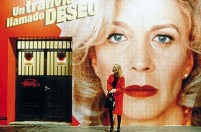
Manuela is the organ transplant co-ordinator at the local hospital. She lives with her 18-year old son, Esteban who is currently working on a book titled “All About My Mother“. On her son’s birthday, both of them go to the staging of “A Streetcar Named Desire” immediately after which Esteban is run over by a car. Having lost her only motivation for life, Manuela leaves for Barcelona in order to inform her now-transvestite husband Lola (also called Esteban) about the accident. There she meets her old transvestite friend Agrado and another young nun Rosa and settles down in Barcelona till she finds Lola. She also befriends Huma, a stage artist who plays Stella in “A Streetcar Named Desire”. Things take an sharp turn when she finds that Rosa is pregnant and suffering from AIDS because of Lola (again!). She decides to take care of Rosa till her end. After the delivery and subsequent death of Rosa, her parents are unable to take care of the child. Manuela decides to raise the child herself. She returns to Madrid, determined that she will not lose her Esteban for a third time.

Striking direction utilizes a script that was built with utmost care and crafted part by part to near-perfection. Manuela represents the quintessential woman – an actor who plays a number of characters in real life and a mystery who hides all her innermost feelings under her skin. The motif of acting and artificiality of outer self occurs throughout the film. A pleasant mixture of humour and emotion, all the way, won the film the Oscar for the best foreign film in 1999.

Charulata (1964) (aka The Lonely Wife)
Bengali
Satyajit Ray

“Give me your word that no matter what might happen, you won’t leave”
 

CharulataFor a large part of the rest of the world, the name Satyajit Ray would immediately relate to the Apu trilogy and would probably stop at that. Ironically, a great number of his fabulous films have never reached the eyes of the Occident. Charulata (1964) is one such gem that never gets a mention when briefing the director’s work.

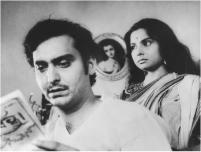
Bhupati is the owner of a newspaper The Sentinel and gives his heart and soul for its development so much so that he neglects the presense of his wife Charulata. Charulata kills her time doing petty stuff such as looking at people on the street through her opera glasses and doing embroidery. Bhupati asks his graduate brother, Amol, to somehow induce her to write which she seems interested in. Amol pretends to Charu that he is interested in writing and spends his afternoons with her trying to get valuable inputs from her. Finally, Amol manages to make Charu write an article and get it published in a renowned magazine but not before the latter develops a strong bond with her brother-in-law. Meanwhile, Charu’s brother and treasurer of The Sentinel doesn’t see prospects in running the newspaper and decides to run away with the funds. Bhupati comes to know of the betrayal and decides to suspend production after which Amol leaves the house with the intention of easing his brother’s burden. After a few sombre days, Bhupati and Charulata decide to resurrect the newspaper with both of the contributing. This is immediately followed by the climax where Bhupati accidentally discovers Charu’s attraction towards his brother and realises his mistakes.

Not one character is wasted or overdone in the film. In many ways, Charulata is Satyajit Ray’s most daring and open statement on the position of women in the society. Charulata is the epitome for the free and thinking woman of new India as opposed to her sister-in-law Manda. The tale of constrained relations between a man who has been complacent in his marital life, a woman who seeks forbidden love and a young man who becomes an involuntary catalyst for the exposure of truth is not only a commentary on contemporary India but also a fine work of art. Charulata won the Silver Bear at the Berlin International Film Festival in 1965.

Kakukshi-Toride No San-Akunin (1958) (aka The Hidden Fortress)
Japanese
Akira Kurosawa

“Get away from me! You stink of dead bodies!”
 

Hidden FortressJapanese cinematic master Akira Kurosawa has always been a source of inspiration for both contemporary and future film makers. Right from Sergio Leone to Kamal Haasan, every one who has come across his films have been entranced by it. Kakukshi-Toride No San-Akunin (1958), which is considered one of Kurosawa’s finest, apparently inspired George Lucas to script the characters and the narration in the Star Wars franchise based on the two slaves of the film.

Tahei and Matakishi are two slaves who dream of making big business during the war time. They are always fighting and trying to pull each others’ leg. They escape from a concentration camp and stumble upon some pieces of gold and discover that there is more where that came from. They are led by Rokurota Makabe who seems to have all the gold hidden at a secret place. They strike a deal with him wherein they get a share of the gold if they help him smuggle the gold across the heavily guarded border into another country. The gang go through a variety of dangerous situations, every time being saved by Rokurota Makabe. Gradually, they learn that Rokurota Makabe is not a lay man but he is the general of the Akizuki country and is in charge of getting Akizuki’s national treasure and its princess to the right place. The journey not only enlightens the princess about the plight of her subjects but also acts as a medium of settling the differences between the bickering duo.

“Unconventional” doesn’t start to describe this film that refuses to go traditional. Right from the starting conversation that is introduced without an establishing shot (that is reminiscent of the Tarantino age) to the style of narration of the story as viewed my the minor characters of the plot instead of the protagonists, the film breaks the canons of film making one by one with the action and thrill kept intact. Toshiro Mifune is majestic as ever with the right blend of the arrogance and humour. The film was the recipient of the FIPRESCI award at the Berlin International Film Festival in 1959.

Kaidan (1964) (aka Kwaidan)
Japanese
Masaki Kobayashi

“We forgot to write the holy text on his ears”
 

KwaidanVery few films have come out that are based on mythology of their country of origin. Except for the slew of animations films, there are no mainstream mythological films from India, a country with the richest mythology. Japan, on the other hand is conscious of its heritage and has adapted the same in various forms. Masaki Kobayashi’s Kaidan (1964) is based on a compilation of ghost stories from Japan and consists of four segments.
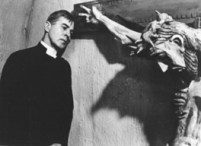
The first segment “Black Hair” follows a jobless samurai who has divorced his wife in exchange for a prestigious social position. He repents his decision and decides to return to his wife only to discover that she is dead. The second sequence titled “The Woman Of The Snow” has a young woodcutter witnessing a beautiful female ghost in a snowstorm and is haunted by the vision. Years later he comes to know that his young wife is a human form of the spectre he had seen. The third story “Hoichi, The Earless” tells about the mysterious disappearance at nights of the title character who is a blind monk living in a temple. When the senior monks conclude that it is a work of the spirits of the Heike army which perished near the temples years ago and tries to clear the situation. Things become worse when the discussed plan is not implemented perfectly resulting in the loss of ears of Hoichi. The final segment called “In A Cup Of Tea” involves a samurai who consumes a soul residing in a cup of tea, refuses to respect it and faces the consequences. The film ends in a rounded manner that reflects the structure of the final story.

The film does not frighten the viewer nor is it its intention. Amazing production design reflect the quality of investment of this multi-million project. Almost the whole of the first three stories is shot indoors in fabulous sets that set up the required eerie environment. For its rich visuals and exquisite cinematography in the widescreen, the film won the special jury prises at the Cannes Film Festival in 1965

Nattvardsgästerna (1963) (aka Winter Light)
Swedish
Ingmar Bergman

“God, my God! Why hast thou forsaken me?”
 

Winter LightFaith and doubt in God have always been a critical theme in most Bergman films, especially the ones in the so-called “Faith Trilogy“. Nattvardsgästerna (1963) is the second installment in this trilogy following Såsom I En Spegel (1961). Having established the concepts of God as love and God as a monstrous spider that can be simplified as “Godlessness” in the first part of the trilogy, Nattvardsgästerna puts these two concepts into test.

Tomas is a pastor who has lost his wife few years ago. As a result of this he has created, for himself, a Utopian world where nothing is deadly and God is always benign. He ignores the harsh realities of the world such as the Spanish Civil War and the nuclear race. Hence, He is unable to impart faith to people who come for help. There is Märta, an agnostic who loves him and desperately seeks to snap him out of his facade of belief and fantasy. Märta’s belief will depend on Tomas’ reciprocation of love which does not seem plausible yet. After a spiritual conversation with a believer about causes of suffering, Tomas realizes that his apathetic attitude towards love has cost him more than the cruel reality itself. Having recognized his isolation from society and hence love and communication (also addressed in the sequel), Tomas proceeds towards the pulpit with what seems to be a “revitalized belief”, thus providing a reinforcement for Märta’s faith, if not his own.

The film can be viewed as a bridge between absolute faith in God (as love) suggested in Såsom I En Spegel and absolute disbelief (as absence of love) as will be shown in its sequel. Symbols and metaphors galore, Nattvardsgästerna boasts of fantastic performances by Gunnar Björnstrand as Tomas and Ingrid Thulin as Märta. Nattvardsgästerna was followed by Tystnaden (1961), the final film in the trilogy that describes a colder and more apocalyptic premise of the “belief theory”.

Yume (1990) (aka Dreams)
Japanese
Akira Kurosawa

“Yesterday I was trying to complete a self portrait. I just couldn’t get the ear right, so I… cut it off and threw it away.”
 

YumeThe first thing that strikes everyone about Japanese cinema is the Samurai culture. And the first thing that strikes about Samurai films is Akira Kurosawa. Akira Kurosawa’s later films, however, were not received well even though they were offbeat works such as Dodes’ka-den (1970), Dersu Uzala (1975) and Yume (1990). Yume presents itself as a episodic collection of eight vignettes apparently based on the director’s dreams.

The first dream “Sunshine Through The Rain” presents a kid witnessing the wedding procession of foxes against his mother’s warnings and his subsequent punishment. In the second segment “The Peach Orchard” has a boy witnessing her sister’s dolls (which represent peach orchards) performing a dance and later scolding him for cutting down peach orchards. The next dream “The Blizzard” portrays a few mountaineers trying to scale a peak against all odds posed by the harsh nature. “The Tunnel” sequence is a chilling account of a Japanese army official who meets a dead soldier from his squad who refuses to believe that he is dead. In the “Crows” dream where Martin Scorsese plays Vincent Van Gogh, we are given a tour through the works of Van Gogh. The “Mount Fuji In Red” segment shows a nightmare portrayal of Nuclear explosion. In the seventh dream “The Weeping Demon”, a man meets a demon who explains that a large scale mutation took place that resulted men such as him. In the final dream “Village Of The Watermills”, a man looks at a village that abandoned the use of modern technology and has decided to live in a clean and peaceful environment.

Spectacular imagery and and amazing production design spells class all over. The film, without doubt, provokes mixed reactions from the audience. But it is indisputably, a daring work of art by all measures. Let’s face it. Which other director has the guts to make a picture based on their dream! The film was nominated for the Golden Globe for best foreign film in 1991.

Bicycleran (1987) (aka The Cyclist)
Persian
Mohsen Makhmalbaf

“His name is Nasim (Breeze), but he resembles a typhoon. He rides bicycle blindfolded. This man has stopped a train in India with his eyes. In Pakistan, he’s lifted two bulls on a finger and this time he is gonna ride and live on a bicycle for 7 days round the clock.”


The cyclistThe objectives, outlooks and needs of different levels of a community, naturally, do not concur. One man’s grief is another man’s pleasure. Mohsen Makhmalbaf’s Bicycleran (1987) captures this difference in the context of an event as viewed from people from different sections of the society. Though a bit more dramatic than most films then from Iran, Bicycleran has enough raw power and truth value to be classified under the neo-realistic genre.

Nasim is a Afghani labourer whose wife is sick and is in need of immediate treatment. Times are hard and labourers cannot expect more than 50 Tomans per day for their work. But Nasim’s requirements are higher and he tries everything he can including a feigned suicide attempt to blackmail people into giving money. Finally, through a bookie, Nasim agrees to put up a show where he would be riding a bicycle for 7 continuous days. The show begins amidst a lot of objections and . with time pedestrians and vendors begin to gather around him. Nasim witnesses his own exploitation by various people from different strata of society – vendors making it their sales hub, middlemen betting and common people getting relief from his plight. In spite of a lot of physical, emotional and social obstacles Nasim manages to finish the 7 days. At the time of glory, Nasim is asked to dismount from the bicycle by the reporters. He is indifferent to all the commotion (possibly because of the physical and mental fatigue) and continues to ride in the circular path.

The film can be viewed as an allegory of the struggles of the working class, a society that exploits them and an upper class that views them as objects of amusements. The recurrent themes of roundness that occur through the images of wheels, cycles and structures signify the vicious circle of fate and inevitability that the working class treads in. The film won the best film at the Hawaii Film Festival in 1987.

La Strada (1954) (aka The Road)
Italian
Federico Fellini

“What a funny face! Are you a woman, really? Or an artichoke?”
 

La StradaSeldom do films come that are so simple in their presentation yet possess such strength in their characters. These are the films that sweep you off the ground with their sheer brilliance. Federico Fellini’s La Strada (1954) is a benchmark for industries such as Bollywood which flourish on fantasy for film making. La Strada marks Fellini’s transition from neo-realism (His previous film being the brilliant I Vitelloni (1953)) to fantasy. And what a transition it is!
Gelsomina is a innocent and childlike girl brought up isolated from her surroundings. She has always been with nature and children like her. Her life takes an unexpected when Zampano, a wandering stunt performer “buys” her from her mother. She learns to play the trumpet for performing with Zampano. The film follows her encounters with various people on her journey with the “road” being a metaphor for life. Zampano is a beast-like man who has no soft corner towards Gelsomina and ill-treats her consistently. They also meet The Fool, a comedian from another troupe who Gelsomina likes. Things are not smooth between The Fool and Zampano and the latter kills The Fool inadvertantly. Witnessing such cruelty is all novel to Gelsomina who goes into a shell and is eventually deserted by Zampano. Zampano learns later that Gelsomina passed away. The film ends with Zampano breaking down and realizing his mistakes.

A film with great characterization and humour bubbling with innocence. Gelsomina’s character acts as an angel who provides salvation at the end to the sin-hardened Zampano. The images and references of Gelsomina’s childlike innocence indicating her “angelness” appear throughout the film. Guilietta Masina gives a wonderful performance as Gelsomina with strong support from Anthony Quinn as Zampano and Richard Baseheart as The Fool. Oscar winner for best foreign language picture in 1957.

Krótki Film O Milosci (1988​) (aka A Short Film About Love)
Polish
Krzysztof Kieślowski

“I watch you through the window”
 

A Short Film About LoveWhat is love? Is it the inevitable sensual desire that arouses? Is it only bodily game played by the hormones? Can science explain all loves? Or is it something that transcends reasoning? These are issues explored in Kieślowski’s Krótki Film O Milosci (1988). Released as an extended version of an episode from Kieślowskis phenomenal TV series Dekalog, Krótki Film O Milosci was shamelessly ripped off (including the title) for the Indian version Ek Choti Si Love Story.

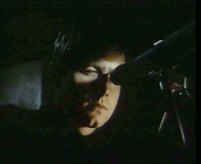
Tomek, a nineteen year old boy whose parents have left him, lives in the house of a friend with the latter’s mother and works at a post-office. Tomek passes his time by watching his neighbour Magda through a telescope everyday. Magda (aka Marie Magdalena, get the point?) is a middle-ager who has a number of men visiting her regularly. Hobby turns into obsession as Tomek starts pinching Magda’s letters, delivers false notices and hides milk bottles so that he can see her now and then. When the truth is revealed to Magda, she asks Tomek the reasons for his spying. Tomek says that he has no intentions of sleeping with her and he truly loves her. Magda is of the opinion that there is nothing called love and wants to teach this to Tomek. After a unsuccessful sexual encounter, Tomek is humiliated and slits his wrists. Roles reverse as Magda starts worrying about Tomek and keeps watch on his room using binoculars. The final scene (which was made to differ from Dekalog VI) has her acknowledging the fact that there is something called love and it needs no reason.

The film cleverly uses point of vies to develop its characters at various points in the movie. Like all Kieślowski films, chance and fate play important roles in the development of the events. Never over the top or judgmental on its characters, Krótki Film O Milosci is marked by top-notch performances by the leads Grazyna Szapolowska and Olaf Lubaszenko. For its effort, the film won The Golden lion at the Poland Film Festival.

« Previous PageNext Page »