Hollywood


[From my column on studio-era Hollywood films for Firstpost]

In a meeting of the members of the Screen Directors Guild in 1950, one filmmaker introduced himself thus: “My name is John Ford. I make Westerns.” This extreme understatement, coming from a director who had already won three Academy Awards, also aptly describes Ford’s modest, pragmatic filmmaking style. Despite making over a hundred films in a variety of genres, John Ford is most remembered as the maker of Western pictures, especially ones starring John Wayne.

Made in 1939, Stagecoach was not just Ford’s first talking Western, but also his first prominent collaboration with Wayne and his first film shot in the Monument Valley, an iconic location in Southwest America that will feature regularly in the director’s future work. In fact, the film begins with shots of the Monument Valley in which a group of cavalrymen ride towards the camera. They inform the commander at their outpost that Geronimo, a notorious Apache figure intent on burning white settler ranches, is on the loose. Meanwhile, a public stagecoach carrying nine people makes its way to Lordsburg through Apache territory.

            The literary quality of this simple premise—a group of people move from point A to B under great risk—is reinforced by the trope-like characters. The nine people aboard the stagecoach are all broadly outlined: the bumbling driver Buck (Andy Devine), the marshal Curley (George Bancroft) who has the authority to call the shots, the perpetually-drunk doctor Boone (Thomas Mitchell) who has hidden profundities, the timid whisky salesman Peacock (Donald Meek) who struggles in vain to protect his liquor from the doc, Dallas (Claire Trevor) the hooker with the heart of gold, Mrs. Mallory (Louise Platt) the wife of an army officer who is dismayed by the idea of traveling with Dallas, the suave gambler Hatfield (John Carradine) who has unclear designs involving Mrs. Mallory, and the scheming banker Gatewood (Berton Churchill) who has embezzled a large sum of money from miners. They are joined en route by a sharpshooter Ringo Kid (John Wayne), who has broken out of jail seeking to avenge his murdered brother.

            As with any story of people confined in a space, Stagecoach depicts the changing group dynamics, shifting allegiances and the formation of a chain of command among the passengers. In their own way, the nine represent a microcosm of America, their eventual cooperation demonstrating that it takes all kinds to make a world. In one early scene, the upper-class Hatfield, Gatewood and Mrs. Mallory are shocked at having to share table with the likes of Dallas, who was thrown out by the respectable people of her town for her loose morals. The morally upright Ringo, on the other hand, constantly accords her equal respect and stands in for Ford, for whom the shared dinner is a vital sign of the community.

            Stagecoach is set somewhere in the aftermath of the American Civil War. A former soldier in the Union army, the doctor is a man with forward-looking ideals. His ideas run up against Hatfield the gambler, a true-blue Southerner and a major in the Confederate army still hurting from the loss of the war. He even tries to kill Mrs. Mallory to save her honour when he suspects the Apache will lay their hands on her.

But Stagecoach is a film reacting to its own times as well. Ford was not a committed progressive, but he is responding here to the socialist spirit of the New Deal in the air. This is most apparent in the character of the banker, a figure looked down upon in the thirties as one of the factors behind the Great Depression. Gatewood is a libertarian railing against government intrusion into business and auditing of banks. “What’s good for the banks is good for the country”, he declares. While all the other characters have redeeming qualities about them, Gatewood, with his interminable whining and hypocrisy, never appeals to our sympathy.

            The film is adapted from a short story by Ernest Haycox, but there’s something European, particularly French, about its suspicion of mainstream society. It might have to do with the fact that Stagecoach traces its lineage partly to Guy de Maupassant’s short story “Boule de Suif”. Ford’s cinema isn’t particularly known for its affection for outsider figures, but Stagecoach exhibits a deep affinity for outcasts and deadbeats, conventionally unsuccessful characters who are “victims of social prejudice”. Perhaps Ford the Catholic saw in Dallas the fallen woman, Ringo the orphan, Boone the drunk and Peacock the unmanly a kingdom of the meek. In contrast, the Law and Order League, the group of society women that kicks Dallas and the doctor out of the town, is presented as a bunch of busybodies scandalized at the smallest gesture of nonconformity. When Dallas and Ringo drive away from the town at the end, the doc cries out, “saved from the blessings of civilization”.

            The critique of an exclusionary community is conveyed primarily through the character of Dallas, who is the heart of the narrative. All through the film, Ford emphasizes her pain of not belonging and her gratefulness at those treating her with dignity. Everyone, except the banker, eventually comes to respect her, yet she can’t become a part of them. Towards the end, when the group reaches its destination, Mrs. Mallory and company are taken indoors by the townsfolk, Dallas left standing at the doorstep. A contemplative moment finds her alone gathering her belongings from the coach. It’s a direct predecessor to the last shot of Ford’s The Searchers (1956) where it’s John Wayne standing alone at the entrance, incapable of taking part in the community.  

            Although Claire Trevor as Dallas gets top billing in the credits, history has deemed Stagecoach a John Wayne vehicle, and the actor has a veritable star-making turn as Ringo. He is introduced with an emphatic combination of zoom and track shots, the brief defocusing of the camera adding to the dreamlike texture of this introduction. But Ford mostly photographs Wayne in long shots underscoring his then-lanky frame. Ford’s characteristic low-level indoor camera positioning and use of architectural elements of the west produces a strong sense of space. With a large part of the film set inside the limited confines of the coach, Ford chains together closeups in tight shot-reverse shot configurations, creating intimate connections or oppositions between characters.

            These close-grained conversation scenes are set against two grandiose action set-pieces. In the first, the stagecoach is pursued by a team of armed Apaches. Filmed in extremely wide shots, the scene is thrilling in its action choreography, with stunt doubles getting in and out of the moving vehicle, jumping on and off horses running at top speed. There’s a shot from the wheel of the speeding wagon that has become a staple in chase sequences ever since.

Even more impressive is the final showdown, in which Ringo takes down his brother’s three killers. Firstly, the lead-up to the sequence is a masterful tonal mix that intertwines an episode of anguished romance between Ringo and Dallas and a tense, wordless passage of the villains waiting at the saloon, punctuated by a muffled piano melody. The shootout itself is nothing short of mythical. Unfolding in the deserted main street of the town and lit by harsh side lights that produce tall shadows, the actual shooting is suggested by the gunshots Dallas hears. The villain trudges back into the saloon, now full of anxious faces, and collapses, signaling Ringo’s triumph. It’s a striking example of high stylization in the genre that is a precursor to the baroque formalism of the Spaghetti Westerns in the 1960s.   


[Originally published at Firstpost]

Frances Ferguson (Bob Byington)

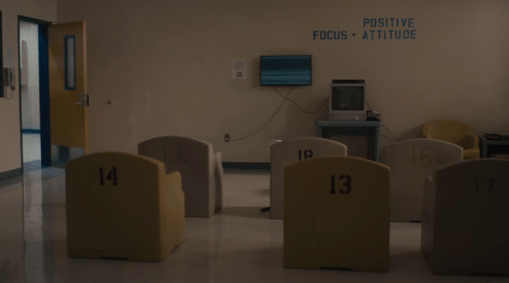
Was it Beauty that killed the beauty? Frances Ferguson (Kaley Wheless) is pretty, and that is her problem. Byington’s “story of a woman cast adrift in the Midwest” follows the sin, punishment and redemption of Fran, a substitute teacher in a high-school in North Platte, Nebraska. Twenty-five years of age, Fran is going through a failed marriage to a sleazy, loafing husband. Sexual frustration and a mistaken replacement lead to an infatuation with one of the students. In vein of pornographic tales, she arranges to meet the boy secretly, tries to seduce him at a laundromat with a pathetic cheerleader costume (for the “Cougars”) and hooks up with him at the motel. She is promptly arrested, tried for abuse of authority to sexually exploit minors and incarcerated. Frances Ferguson outlines her parole life in detail, structuring it through different penal procedures Fran has to follow: probation debriefing, compulsory group therapy, behavioural counselling, community service, supervised visitation of her daughter, probation exit interview and even voluntary group therapy sessions. Life outside the prison turns out to be even more distressing, uninvited attention for her looks now compounded with the notoriety of being a sex offender. All through the ordeal, the question that arises is whether Fran’s good looks are responsible for her trouble as for the townsfolk’s vivid memory and negative perception of her. Her warden wonders why female sex offenders are invariably pretty. When she tells her therapist that she hardly had authority at the school to abuse, he retorts that beauty is a kind of authority.

The story is recounted by a humorous, at times tendentious, male narrator (Nick Offerman), whose personality constantly comes in way of his objectivity. He contradicts Fran, who also gets to narrate the story from time to time (“joie de vivre”, he corrects Fran who is trying to fake her way through a French class). He inserts his own opinion on the proceedings and acts as a Greek chorus for Fran’s impending tragedy (“Was this breaking the law”? he asks at every turn of Fran’s). The narrator calls to mind Listen Up Philip, but one that’s less world-wise and serious about himself. Byington avoids traditional shot-reverse shot constructions, preferring to build conversations out of separate close ups; the scene of Fran’s interrogation by two police officers is particularly well-edited. He employs an 8-bit video game-like music cue, and a camera that goes out of focus to bid farewell to characters, to funny ends. The sound-bridges and the on-screen texts introducing characters and situations sometimes recall sitcoms, but the comic sense here is much more subtle. It’s still characteristic American sarcasm at work, but Byington pares down the exchanges, cutting away the excess fat that usually burdens American comedies with an insufferable smugness: when the prison cab driver asks Fran to use regular cabs as they are cheaper, she only asks him: “the next time I’m released from prison?”, dropping out the obligatory “sure” at the end. Wheless’ blank-stare performance, accompanied by internal screams, is the visual correlative of this muted comic strategy.

Immortal (Ksenia Okhapkina)

The only contextualizing text of Ksenia Okhapkina’s Immortal speaks of the gulags that were built to industrialize the arctic stretches of Russia. When the camps were opened after Stalin’s death, we’re told, the prisoners stayed back in the town. It’s a telling detail, whether you choose to see it a gesture of helplessness or the product of Pavlovian indoctrination. This three-line title card has more insight to offer than the film that follows. Okhapkina’s 60-minute film presents impressionistic vignettes from one of these erstwhile gulags, a mining town in the arctic still bearing the visual signatures of the Soviet era: image and quotes by Lenin plastered on walls, alongside posters of other Russian heroes. It would seem that it wasn’t just the people who stayed back, but the ideology too. Immortal examines this persistence of ideology in two spaces. In the first, a group of girls are being trained at a ballet school. The instructor asks them to exert themselves and fall in line with others. This exigence, as well as the ballet music, overflows into the second space: a military camp mostly for boys and young men. We see different groups of children and youth being trained for various competences: instruction in training assault rifles, mission simulations, marching drills, shooting practice, screening of nationalistic videos about Soviet kamikaze pilots with promises of concomitant greatness. The boys are insulted by the instructors over looks and behaviour, punished for minor mistakes and questioned over their origin.

The synchronization of military drill to ballet music and the marshalling of soldier bodies into harmonious movement, filmed here in disorienting closeups, brings to mind Beau Travail. Both the ballet (?) and the military camp, it’s revealed, are preparations for an enlistment ceremony on Russia’s Fatherland’s Heroes Day. The show, and the oath, anthem and photography session that follow, seem remnants of Soviet pageantry. Okhapkina pads these two narrative strands with repeated imagery from the town: the spectral to-and-fro of freight trains carrying mined material, hooded miners knocking about in the snow, buses that convey the youth from their house to the camp and back, the dingy corridors of the apartments where they live, a worker using a blowtorch to melt ice off a national monument, an empty factory and the barbed wire fence around it, and so on. The deserted public spaces seem to belong to a ghost town, or a place with no sense of freedom and life. A lone dog barks in the snow, until its fur is covered with frost, forcing it to find shelter. Faces of young men and women are intercut with drawings of heroes, which themselves are intercut with shots of tombstones and cradles, suggesting individualities hollowed out by state apparatuses. Immortal is unquestionably successful in evoking a despairing mood, but it also feels like an exercise in shooting fish in a barrel. Curiously, the film is at its weakest when dealing with concrete events such as the ballet class and the drill—who’d ever suspect a military camp to be a space of ideological indoctrination? I can imagine the material better suited for a book of photos or illustrated poems.

For Sama (Waad Al-Kateab, Edward Watts)

Whatever Russia Today or Al Jazeera will have you believe, whatever you think of American deep state’s collusion with Islamist fundamentalism, whatever objections are raised about the funding of “rebel” reporters, the brute facts regarding For Sama are there for everyone to see: Waad Al-Kateab stayed back with her doctor husband Hamza in rebel-controlled east Aleppo, delivered a baby and lived through the worst months of Putin-backed state bombing of her district. She kept filming, even when the bombings were at her doorstep, even when bodies piled up at the makeshift hospital that she had made home. Edited and telecast this year on British television, For Sama is a record of Al-Kateab’s life between the first student protests in 2012 to her eventual emigration in December 2016. It is presented as a filmed letter to her baby, Sama, to explain her parents’ decision to stay back in east Aleppo despite the impossible conditions of living, despite the inevitability of defeat. Filmmaking here becomes an existential cry against an order of things that would rather not hear these voices. The regime denied that the student protests were going on, says Al-Kateab, filming was the only way to show otherwise. For Al-Kateab, it becomes increasingly important to film as the military makes advances into east Aleppo, reducing the rebels to a few square kilometres. Filming, she says, gives her a reason to believe.

“Silence makes you feel that the city is dead”, notes the filmmaker when she finally leaves the city. Indeed, the incredible shock of For Sama stems from the extraordinary disconnect between image and sound, between the visual illusion of normalcy and the constant noise of shelling. So much so that even Sama doesn’t react to the explosions. The film is an inexhaustible series of harrowing sights—a mother carrying her dead son wrapped in plastic, a baby resuscitated from the clutches of stillbirth, a pan shot from a dead child to Sama in the operating room, Waad and Hamza singing to calm Sama down as they sneak back into their district, a young boy talking about his missing friends, two hospital attendants warming themselves over the shell that has pierced the building—whose horror is redoubled by the facts of normal life punctuating them: a wedding, Sama’s birth and antics, reunions with other families who are staying back, everyday school, painting sessions, a persimmon fruit as a gift, Waad’s repeated declarations of love to Hamza. To be sure, Al-Kateab makes only a passing mention of the extremists running her city, and we don’t get a clearer idea of what’s holding them back from leaving this nightmare, except their faith in revolution. In a sense, it is problematic that For Sama excises politics out of its narrative, rendering it an account of the extraordinary bravery of people fighting an abstract force of annihilation. On the other hand, it’s a deeply disturbing reminder that peace is not a stable condition interruptions to which are wars, but a fleeting, fragile state that can be swept away overnight.

The Lighthouse (Robert Eggers)

The story of Prometheus, with its democratic challenge to the keepers of the fire, represents a metatext of Western modernity, but its tragic vision also dovetails with the Christian worldview. Robert Eggers’ The Lighthouse reinterprets this pagan myth, infusing it with a stark (anti-)Catholic flavour. Robert Pattinson and Willem Dafoe play lighthouse keepers, Winslow and Wake respectively, posted on a remote, deserted island for a month. Wake the boss has Winslow do all the menial chores on the island, while he reserves the lofty task of maintaining the light on the tower. The bearded Wake, who is indeed a walking parody of a seaman, delivers long, literary monologues in sailorspeak, even when he’s only ordering Winslow to wipe the floor or cursing him for not liking his cooking. He pulls rank over Winslow every time he can, at times gaslighting his subordinate and weaponizing his original sin, which Winslow confesses during a night of drunken revelry. With mounting isolation, sexual frustration and a possibility that his stay on the island will be permanent, Winslow starts to lose it, abetted in no small part by alcohol. Soon, the pair bickers like the seagulls hovering above the island. The Lighthouse is set in no particular place or time, and it’s deliberately set at a register far above ordinary realism. This lack of particularity, combined with the simplicity of the outline, give the film a horror fable-like texture. This ethereal quality is countered by a grimy realism of mise en scène. Scenes of violence and physical degradation are visceral and the film features every bodily emanation possible.

There’s another reason that The Lighthouse floats unmoored to history. It’s evidently a very cinema-aware work, echoing if not quoting a range of films from the Expressionist classics to Ingmar Bergman and Bela Tarr. Its memorable monochrome cinematography, with geometric movements of the camera, looming shadows and an ominous atmosphere, its boxy aspect ratio, its actors staring back at the camera, and its use of medium and ‘American’ shots all make it feel familiar without locating it within a specific cinematic tradition or time period. That said, it is to Eggers’ credit that, despite the evocations, the film never feels like a pastiche. The Lighthouse employs horror movie tropes in its foreboding sound and visual design, but it doesn’t go where traditional horror films go. In fact, the stakes as well as the outcome of the premise, that the two men are going to go stir crazy, is clear right at the outset. The disintegration that does happen is played out with ample dose of comedy: Wake’s farts echoed with the sirens of the lighthouse, his towering self-seriousness that must inevitably mask a sense of uselessness, and Winslow’s eventual outburst when he blows his superior’s cover. Dafoe and Pattinson are fascinating to look at, especially in their very physical scenes with homoerotic undertones, but the film itself feels like a slight cinephilic sortie.

[From my column on studio-era Hollywood films for Firstpost]

French filmmaker Jean Renoir, son of Impressionist painter Pierre-Auguste Renoir, moved to Hollywood following the German occupation of France in 1940. The Southerner, the third of the five films Renoir made in America, tells the story of the Tucker family, plantation workers who decide to grow their own cotton as tenant farmers on a piece of leased land. It turns out that, though fertile, the stretch of land they get requires a great deal of work. Worse, when they move in, the Tucker family finds that the ramshackle house on the land is barely inhabitable. But they decide to persist against the odds: the immense physical labour required of them, the ill-will of their neighbouring farmer Devers (J. Carrol Naish), the spring fever that affects their child and, most of all, the forces of nature. Structured over four seasons of a year, The Southerner stars Zachary Scott and Betty Field as Sam and Nona Tucker.

Adapted from by George Sessions Perry’s novel Hold Autumn in Your Hand, The Southerner is reminiscent of certain Depression-era films. The Tucker’s overloaded jalopy has echoes of the Joads’ vehicle from The Grapes of Wrath. The sharecropper backdrop, the Tuckers’ rickety home and their struggle with the land recalls King Vidor’s Our Daily Bread. But Renoir’s interest is neither social nor political. As a man from the Old World, he’s captivated by the unmistakably American subject of the story. Early in the film, Sam’s dying uncle asks him to grow his own crops instead of working as a farmhand. This characteristic American notion of being able to chart one’s own path, no matter one’s station in life, is at the focal point of Renoir’s film.

Renoir, whose final production before he left France was the classic haute bourgeoisie portrait The Rules of the Game, is manifestly fascinated by the self-sufficient, austere quality of this life close to nature. Throughout The Southerner is a dialogue between Renoir’s European sophistication and the New World pragmaticism of the Tuckers. This remove between the filmmaker and his subject is made evident by a scene that doesn’t exactly work: a boisterous wedding party in which the revellers take turns downing alcohol and knocking each other down. The simplicity and vulgarity of the celebration, in Renoir’s handling, seems too theoretical, too studied in comparison to similar scenes by, say, John Ford or Howard Hawks.

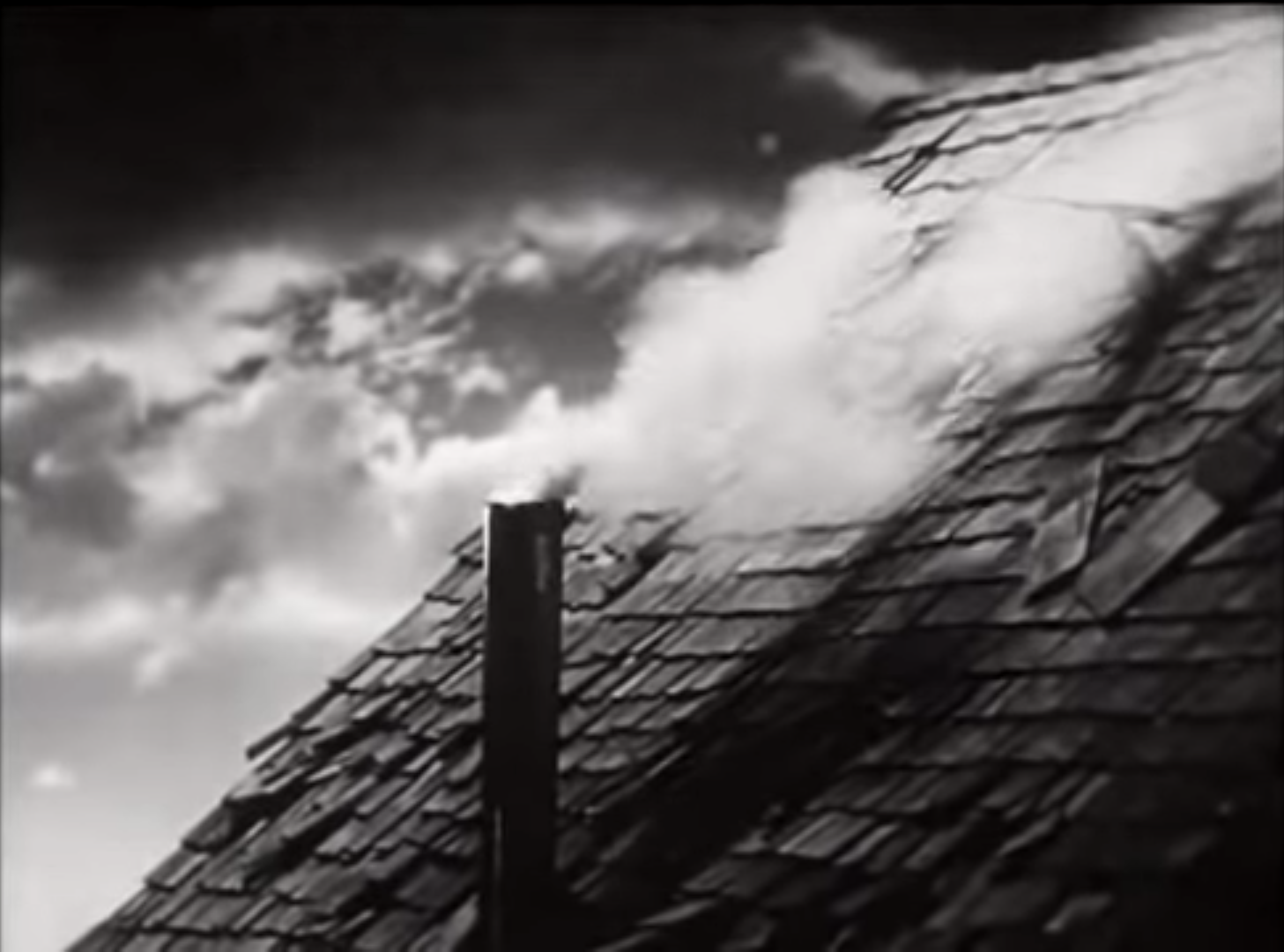
On the other hand, the filmmaker’s French sensibility affords him a distance that allows him to trace out a meta-narrative of America from the story. He emphasizes the Tuckers setting up a home in what is practically wilderness: shots of Sam securing the porch, Nona lighting up the stove, the chimney smoking for the first time, all acquire a symbolic weight that harks back to the pioneer settlers of the continent.

At the same time, there’s a timelessness to The Southerner that makes it more than a film about America and takes it closer to the story of mankind itself. To be sure, the setting is Texas during the first half of the 20th century and there’s a passing reference to the ongoing war. But, unlike the strongly contemporary and Californian Our Daily Bread, very little in The Southerner ties it to a particular place and time. In a microcosmic reflection of civilization, the Tuckers move from fishing and hunting to agriculture for their sustenance over the course of four seasons. This lack of particularity was taken to task by the critic James Agee, who found the depiction of Southern life in the film inauthentic.

However, for Renoir, this is an existence in constant tussle with nature, alternately established against its forces and lived at its mercy. He locates a streak of violence in the life of the Tuckers. The scene in which Sam smokes out a possum from the hollow of a tree and then shoots it down carries a touch of environmental dread redolent of Robert Flaherty. When Sam brings the animal home for supper, Nona says “Reckon we can eat now, folks”, sharpening her knife in a rather disturbing gesture. The Tuckers transform the land through their hard labour into a flourishing plantation, but nature has its own plans, sending down an off-season rain to destroy the crops.

There’s little space for culture in this tug-of-war between man and nature. Save for a couple of photos and a picture calendar, the Tuckers have no contact with culture. In a rather nasty barroom fight, the participants destroy rudimentary signs of culture—a jukebox, the sculpture of a woman—while, a bit later, Sam finds himself in knee-deep rainwater wearing a tuxedo. Much of the poetry of The Southerner derives from the idea that domesticity and culture need to be wrested out of a fundamentally hostile universe. The film’s final passage presents vignettes of this cosmic battle: cows and chicken stranded in the rainwater, ripe cotton flowers drowned, the Tucker’s home wrecked once more.

In this warlike scheme of things, men and women are expected to assume their conventional roles. The drive of the menfolk is also what blinds them towards more pressing realities: in his dogged determination to make something of the land, Sam rejects taking up a job at the town factory, which could save his ailing son right away. Devers the neighbour cuts the rope of his well to spite Sam even at the cost of having no water for himself. The womenfolk, on the other hand, are icons of care and consideration. Devers’ daughter secretly secures a pail of milk for Sam’s son against her father’s wishes. When Sam decides to give up farming after the floods, it’s the silent courage and optimism of Sam’s granny (Beulah Bondi) and Nona that encourage him to change his mind.

There is courage and optimism, but there are no heroes or villains in The Southerner. Renoir being Renoir, everyone in the film has their own reasons. Granny Tucker is a caricature of a nagging old woman, but the film lets you see her bitterness as the product of a long, bitter life marked by loss and grief. Devers’ resentment towards Sam’s success doesn’t come across as jealousy as much as an anxiety about the limited resources of the region and about his own failed life. Unlike the typical Hollywood villain, Devers incites pity, not anger. In an exchange about farming and factory work, Sam’s friend Tim (Charles Kemper), whose character and physicality both resemble Jean Renoir, tells Sam that “it takes all kinds to make up the world”, a cogent summation of the French filmmaker’s worldview.

As is expected of a Renoir film, The Southerner is alluring in its visual beauty: deep space compositions in natural locales, tracking shots through cotton fields and floodwaters, gentle pan shots inside the Tucker household, a measured editing rhythm, intimate two shots with Sam and Nona, Vidor-like framing of the horizon and a painterly shot design with foreground elements acting as repoussoir. But if there’s one element that most characterizes The Southerner as a Renoir work, it’s the harsh, realistic outlook that pervades the narrative. In contrast to the Hollywood tradition, no triumphalism marks the Tucker story. There are no miracles here that turn Sam’s farming enterprise into an immediate success. Renoir recognizes the impossible odds and appeals for a stoicism in face of these failures. Their farm washed out, the Tuckers get back to fixing their house. The stove burns once more, there’s coffee for now, the fields need to be ploughed and the seeds planted again. C’est la vie.


[Originally published at Firstpost]

[From my column on studio-era Hollywood films for Firstpost]

Ernst Lubitsch was a German immigrant to Hollywood who made some of the most memorable works of its Golden Era. His suave, sexy romantic comedies brought a touch of European elegance to Hollywood and helped found a genre that thrives till date. His sophisticated sense of screen comedy, characterized by subtle, effortless and precise exposition and seamless technique, has influenced comedic filmmakers ever since, not the least of all Billy Wilder, who was a screenwriter on two of his films. Lubitsch worked for almost all the major companies in Hollywood, but his finest achievement was a picture made outside of these studios. To Be or Not to Be (1942) was produced by Romaine, a house set up by Alexander Korda, and distributed by United Artists. Arguably the greatest Hollywood comedy of the sound era, To Be or Not to Be is a daring, intellectually provocative work that stands testament to the power of life-sustaining humour in face of unspeakable horror.

Days before Hitler’s invasion of Poland in 1939, a Jewish troupe in Warsaw tries to put up a play about the Nazis. There’s a disagreement between the actors and the director on whether it should be a comedy or a serious, realistic drama—a split equally applicable to Lubitsch’s film, which bandies the viewer between two approaches to the subject matter. After the Nazis take over, the troupe is forced to shelf the play and continue performing Hamlet. The early stretch of the film centres on a comic romantic triangle involving the troupe’s lead actor, Joseph Tura (Jack Benny), his wife and actress Maria Tura (Carole Lombard, in her last screen role) and an admirer of Maria’s, the war pilot Sobinski (Robert Stack). Warsaw is soon bombed by the Luftwaffe and the film turns into a tense espionage drama. Sobinski flees to England, and becomes part of the Polish division of the Royal Air Force.

The RAF division is infiltrated by Professor Siletsky (Stanley Ridges), a Nazi spy who gathers information about Polish underground resistance fighters. By the time, Sobinski discovers this, the professor is already on his way to the Gestapo office in Warsaw. Sobinski sets out to Poland to stop the professor, but is forced to go underground in Warsaw after the Nazis spot him. He enlists the help of the theatre troupe to mislead the professor, take the documents from him and kill him if need be. This puts the film back on the comedic track, with ingenious scenes of disguise, deceit and subterfuge to follow. Jura first masquerades as the Gestapo commander to get the professor’s files, but he blows his own cover in a fit of jealousy over the professor’s comments about Maria. He then masquerades as the professor to meet the real Gestapo commander Col. Ehrhardt (Sig Ruman), who soon discovers that the real professor is dead. Their mission accomplished, the entire troupe orchestrates an escape plan in which they fly out of Poland in Hitler’s own plane.

All through Lubitsch’s film is an osmosis between reality and artifice. In the film’s first scene, a street corner in Warsaw (itself recreated on a studio lot) is visited by Hitler behind whom a shop window closes like theatrical curtain. A while later, it’s revealed that this Führer was simply one of the troupe’s actors in disguise. A Gestapo interrogation scene turns out to be a scene from a play, while the bombing of Warsaw is described as a “show” put up by the Nazis “without a censor to stop them”. As the play is interrupted by real world events, the troupe finds itself converting real world into a play, transforming the theatre into a fake Gestapo office, scripting plot lines to fool the real Gestapo, writing new roles on the fly, and rehearsing their great escape. Running away from the spotlight, the professor dies on stage in a dramatic fashion. Lubitsch’s film, in which Americans masquerade as Europeans, is a battle of appearances, where Jewish actors masquerading as Nazis try to outwit a Nazi masquerading as a Jew.

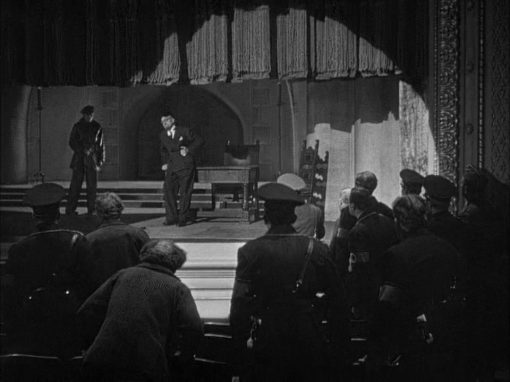
This interplay between theatre and politics has an intellectual coefficient. “The logical result of Fascism is the introduction of aesthetics into political life”, wrote Walter Benjamin, and “all efforts to render politics aesthetic culminate in one thing: war.” The Nazi ideology, with its supremacist racial theories, its cult of beauty, its romanticisation of destruction and its eugenic researches, was at its heart aesthetic. It’s significant that To Be or Not to Be climaxes in a theatre where the Nazi top brass attends a play while the troupe attempts to sabotage it by mounting a little theatre outside the theatre (a scene that’s the direct precursor to Quentin Tarantino’s Inglorious Basterds (2009)). Shakespeare serves as a thematic backdrop to the film, embodying the noblest impulses of mankind in contrast to the fascist project. Hamlet’s eponymous monologue becomes an existential question for the Jewish actors, the answer to which lies in the “Hath not a Jew eyes?” monologue from The Merchant of Venice they use in one of their “skits”.

None of this, however, takes away from how funny the film is. “The Lubitsch touch” is a quality often attributed to the filmmaker. While there’s no set definition to the term, it variously refers to Lubitsch’s economic approach to storytelling (the several narrative ellipses that force the audience to deduce elided plot details), his manner of multiplying the effect of a joke (repetitions within scenes and across the film, with the punchline generally arriving much later than expected and with greater comedic force), his direction of secondary actors that elevates them to show-stealers (Sig Ruman’s caricatural, fawning Ehrhardt with his doubled dialogue and reversals of fortune) and his characteristic construction of a gag (the viewer notices the dead body of the professor at the Gestapo office before Tura does).

Lubitsch employs a whole array of comedic devices here: wordplay (“a laugh is nothing to be sneezed at”, says an actor defending a joke), wit (“what you are I wouldn’t eat” says a Jewish colleague to a ham actor), slapstick (king Hamlet’s crown knocking against a lamp), visual gag (the tracking shot of Sobinski leaving just as Tura starts his monologue), tonal incongruity (the sight of Hamlet ordering salami and cheese sandwich on phone) and situational comedy (the long shot of Tura discovering Sobinski in his bed). In a quintessential Lubitsch gag towards the end, we see an actor dressed as Hitler enter the house where Ehrhardt is forcing himself on Maria. We see Hitler entering before Ehrhardt does, and the pan shot of them discovering each other, petrified, is the comedic equivalent of Hitchcock’s theory on suspense.

Of course, the elephant in the room is the question whether one can make jokes on a subject as serious as Nazism, even if the full horror of the Holocaust wasn’t yet known. It was an objection made during and after the making of the film too: scriptwriter Samuel Raphaelson and music composer Miklós Rózsa quit the project, and certain critics excoriated the film on moral grounds, so much so that Lubitsch had to defend himself in the New York Times. History, however, has been kind to Lubitsch’s film. Like Chaplin’s The Great Dictator two years before it, it believes in comedy as a force of resistance. The very idea that a Jewish troupe rises above its differences to stand against fascism with humour, grace and intelligence, just like considerably Jewish crew of Lubitsch’s film, rests its case as a comedy. In Lubitsch’s own words: “What is the only picture that is still remembered from the last war? It’s not Griffith’s Hearts of the World, or any of the sad ones. It’s Chaplin’s Shoulder Arms.”


[Originally published at Firstpost]

[From my column on studio-era Hollywood films for Firstpost]

The period between the introduction of talking pictures in the late 1920s and the imposition of the censorship codes in 1934 is now known as the pre-Code era of Hollywood. Pre-Code films are characterized by a permissiveness in their depiction of sex and violence, but also by their subversive outlook towards several social issues. Made towards the end of this period, the Warner production Gold Diggers of 1933, directed by Mervyn LeRoy, is a racy backstage musical rife with the kind of elements that the Hays censor office will veto in the following years: women in underwear and skimpy stage costumes, or as sexy silhouettes changing clothes, their bums slapped my men, dialogue with double entendre and a scenario that’s gleefully amoral. But it’s also a story about four independent women who are more worried about work and money than their romantic relationships with men. In its own way, Gold Diggers embodies a strain of Hollywood’s response to the Great Depression during which it was made.

The film opens with a peppy number called “We’re in the money”, in which women wearing costumes made of fake coins belt out a cheerful denial of the economic crisis: “Ol’ Man Depression, you are through, you done us wrong! We never see a headline ’bout a bread line today.” Reality soon hits back as the police barge into the rehearsal and confiscate every little prop in exchange for outstanding loans. The show is closed even before it opens and the four leading ladies of the film—Polly (Ruby Keeler), Carol (Joan Blondell), Trixie (Aline MacMahon) and Fay (Ginger Rogers)—find themselves out of a job and penniless. The upbeat music sequence gives way to an overhead shot of three of them sharing a bed. Trixie steals a bottle of milk for breakfast as Polly swoons to a song their neighbour Brad (Dick Powell), a struggling pianist, croons. Romance is one of the things that Gold Diggers will furnish an antidote to financial problems.

To their pleasant surprise, the women learn that their old producer, Barney Hopkins (Ned Sparks), is putting up a new show and willing to cast them in it. The cigar-chewing Hopkins says that it’ll be a show about the Depression, that the girls will all have meaty roles and that even Brad, whose tunes he loves, will work as the music composer. Only problem: there’s no money for the show. Conveniently enough, Brad secretly happens to be a Boston Brahmin, heir to a New England banking empire. He sponsors the show, which causes suspicion among the actresses that he’s mixed up in a crime syndicate. Lawrence (Warren William), Brad’s uptight brother, is against Brad getting into show business and marrying Polly. He tries to buy Polly away, but ends up mistaking Carol for Polly. This prompts Carol and Trixie to take Lawrence and his lawyer for a ride, have them pay for their indulgences and even make them fall in love with them.

For a film that was made at a time when the wider public was wary of bankers and fat cats in general, Gold Diggers shows no resentment against the institutional power that Brad stands for. All anxiety about the Depression dissolves into a lukewarm comedy involving bumbling billionaires, shrewd showgirls and a cloying true romance. The film confirms Lawrence’s perception of showgirls as gold diggers all the way till the end, when their machinations are justified by profession of love. For the girls, on the other hand, the rich men represent a ticket out of the poverty permeating their lives. Like Hopkins’ show, Gold Diggers monetizes the Great Depression, but it offers hope and cheerfulness as the guiding response to economic problems. Like other contemporary backstage musicals, Gold Diggers is about people in need helping each other out. In its narrative of creative folks coming together to produce something beautiful amidst gloom and hardship, the films functions as an expression of the optimism that characterized the New Deal era.

The narrative, though, is little more than an excuse for Gold Diggers to chain together its main draws: the four musical sequences directed by legendary choreographer Busby Berkeley. Trained as a military choreographer, Berkeley had an unmistakeable style that directly or indirectly influenced scores of choreographer-filmmakers across the world, including Sanjay Leela Bhansali, Ashutosh Gowariker and Prabhu Deva. His orchestra of human bodies often involves an army of young men and women marshalled into striking geometric or organic patterns, supported by disproportionate, flamboyant props and stage design. Individual performers in these pieces are subsumed into a larger scheme made of repeating motifs, captured by a gliding, craning camera, which regularly pulls back or hovers above to record these formations.

The opening number, “We’re in the Money”, employs the dollar coin as a theme for costumes as well as décor. At one point, the girls on stage stand in an arc and execute a perfect Mexican wave with the coin-shaped placard they carry. The next set-piece, “Pettin’ in the Park”, occurs in the middle of the film and showcases a parade of couples romancing in various settings. The visual thrill stems from the repetition of similar-looking couples engaged in the same activity in sync. Even more characteristic is the third number, “The Shadow Waltz”, a breezy love song where a chorus of women, spruced up in petal-like dresses, plays violins bordered by neon lights. The stage lights go off at one point, and all we see are the neon violins, which in turn come together to form a larger neon violin. The sequence is a total work of art in which the sinuous music, lighting, costume, actor and camera movement all follow the central floral theme.

It is, however, the final musical number that the entire film builds up to. “Remember My Forgotten Man” is one of the high points of Golden-era Hollywood. The six-minute-long sequence depicts the plight of war veterans reduced to picking up cigarette butts, sleeping on street corners and standing in breadlines. Guided by Carol’s anguished lament for the “forgotten man”, the number brings into perfect fusion Berkeley’s penchant for repetition and political ideas of the time: a parade of hardy faces of lonely women waiting, followed by a scene of soldiers marching as a platoon which gives way to the same set of anonymous men standing in food queues, passing a single cigarette between them and pulling their coats in the cold—all set to a haunting, rhythmic, dirge-like musical score.

The musical sequences in Gold Diggers are presented as on-stage numbers, but it’s plain that they could’ve been conceived only for a film audience. The volume of actors, the scale of the stage, the spatial relations between people and the attention to minute performance details are unreal for a stage musical. Berkeley’s baroque stylization of the sequences is in contrast with the muscular aesthetic of the rest of the film. The narrative passages are kinetic and derive their nervous energy less from camera movement and editing than from frenzied actor movement and snappy dialogue delivery in which one line almost overlaps with another. There’s a two-minute-long shot with Warren William and Joan Blondell in which they fight and profess love, while a framed cheque hangs between them on a wall. Above all, it’s the four lead actresses who lend Gold Diggers its enduring vitality and charm.


[Originally published at Firstpost]
Cynical

Arts no. 715; 25 March 1959.

Like Lucchini in Bonitzer’s Nothing about Robert, I probably didn’t see the film I’m talking about (or maybe one reel, or the trailer, I don’t know)

NB: Fess Parker was rechristened “Fier” Parker in France1.

Alas, the censors are guilty of authorizing this execrably psychoanalytical, misanthropic and incurably zoophilic hagiography for mutts. Cinema is dogs, says Disney, in agreement with De Sica, painter of the bitchiness of life. The SPA2 must get such movies banned because if, coming out of Cinéma Avenue, I’d found some pup at my feet, I assure you that it would’ve gone through hell as a reward for such nonsense instead and in place of its fellow dogs, of Robert Stevenson, an usurper who has nothing to do with the master of adventure, of Dorothy McGuire, worse than the dog, of Fess Parker, a little too “Fier” in our country. Go for it, dogs and even cynephiles. But cinephiles, stay away.


1[Translator’s note] Presumably because Fess sounds like fesses (buttocks). Fier: proud.

2[Translator’s note] La Société protectrice des animaux, the society for animal protection.


[From Luc Moullet’s Piges choisies (2009, Capricci). See Table of Contents]


[From my column on studio-era Hollywood films for Firstpost]

Fritz Lang’s Cloak and Dagger (1946) was made at a peculiar historical moment in 20th century American history. The Second World War had just ended and with it the rivalry with Germany. But the Cold War, marked by red scare and communist witch-hunts, hadn’t yet begun. The effect of this unusually peaceful period, nevertheless characterized by an exhaustion with the long war and an anxiety about the nuclear future, is palpable both in the circumstances of the film’s production as well as its narrative. In its own way, Cloak and Dagger attests to the passing of the baton from Hollywood’s left wing, in the ascendant since the Great Depression, to the conservatives, who will dominate the industry in the subsequent decade.

Made by Warner Brothers, the film is set just before the end of the war and opens in southern France with one of its many wordless sequences: a reconnaissance mission involving freight trains, a liaison with an Allied informant at the back of a bar, a double-crossing leading to a double murder. Back at the Office of Strategic Services (OSS) in Washington D.C., we learn that Germany is amassing raw material for the development of an atomic bomb and that the OSS needs a scientist in their ranks to sabotage this development. So they solicit Professor Alvah Jesper (Gary Cooper), a physicist at “Midwestern University” working on the Manhattan project.

It’s a rather odd casting choice whose oddity is revealing too. As he’s written, Jesper is a nuclear scientist who speaks German, which suggests that his character was imagined as an immigrant (like Lang himself). Casting Cooper—and not someone like, say, Edward Robinson, the star of Lang’s previous two films—transposes a flavour of American exceptionalism over the anxious scientist character. But Jesper remains a man of science only for his first scene, in which Cooper, in suit, fixes a lab equipment, flexes his fingers and plays with an apple as he converses with the OSS emissary sent to persuade him. Convinced of the importance of using science only for humanity’s good, Jesper is reluctant at first, but joins the mission nevertheless when he thinks of the horror of a German nuclear weapon. Once recruited, Jesper becomes a full-time spy—a character that fits Cooper like a glove, even when he’s speaking German with an American accent.

Right away, Jesper flies to Switzerland to gather more information from Dr. Lodor (Helen Thimig), a German scientist who has just fled the Nazis. At the end of a series of twists, Jesper finds himself en route to Italy to meet with Lodor’s colleague Polda (Vladimir Sokoloff). After his illegal crossing into Italy via a lake—another tense, wordless sequence—he meets Gina (Lilli Palmer, also a German immigrant to Hollywood), an Italian resistance fighter who will help him contact Polda and lie low until an escape is planned. His first sight of her is when Gina removes her dark raincoat and hat in the cargo truck, her sexy white dress and blonde hair illuminating the dark interior of the truck. It’s a tender introduction that sets the tone for the film’s first major transition: following a long meeting with Polda, which slows down the narrative tempo and prepares us for the second movement of the film, Jesper is asked by his peers to simply hole up with Gina for a week.

This is where Cloak and Dagger turns into a full-scale romance, as its guiding perspective shifts from Jesper to Gina. The focus of their first night together moves from their mutual seduction, mediated by a hungry cat, to the scars from Gina’s past. We learn that Gina was a hopeful musician in love until the war forced her into an untrusting, broken girl who kisses without feeling. As they flee from her flat—now no more a safe space—to an abandoned circus to a lavish apartment and finally to the ruins, the film enacts a narrative of tortured domesticity, emphasizing the feeling of never being able to settled down. Their journey through these symbols of purity and homeliness becomes a reminder of what the war has damaged, perhaps irreparably. Even so, this time together with Jesper is a moment of respite for Gina, who finally dresses up in a nostalgia for life before the war.

While the transition to sentimentalism can seem jarring for viewers used to tight film noir narratives of the era, Cloak and Dagger deems it important and just to give Gina this passage of peace and warmth before the spy film resumes with all its violence and mayhem. For Lang’s film is first and foremost a fable about the loss of innocence—a theme that preoccupied the filmmaker throughout his working life. In 1945, the year before the film’s production, the Nazi concentration camps were discovered, shaking western civilization’s deep-rooted faith in progress. It was also the year atomic bombs were dropped in Hiroshima and Nagasaki, catapulting humanity into an age of fear and uncertainty.

One of the first Hollywood films to deal with the moral and existential repercussions of the nuclear era, Cloak and Dagger evokes the disillusionment of a civilization with the stories it has been telling about itself. The film was written by Albert Maltz and Ring Lardner Jr., screenwriters blacklisted in 1947 as part of Hollywood’s anti-communist drive, and Jesper’s opening speech spells out their pacifist dispositions. In an interview years later with Peter Bogdanovich, Lang revealed that the film’s original ending had Jesper discover an abandoned concentration camp with several thousand deceased inmates who had been forced to work on the bomb. This conclusion, with its suggestion that the real danger had only begun, was too strong for producer Milton Sperling, who instead ended the film triumphantly with Jesper returning to America with Polda.

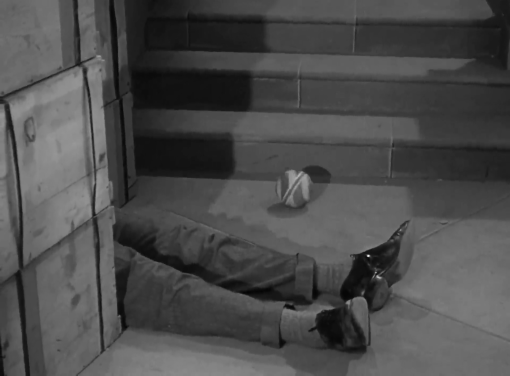
Jesper, too, experiences this loss of innocence in a stylized-yet-austere scene set in an apartment foyer, where he’s forced to fight a henchman tailing Polda. It’s an unsettling, very physical sequence of hand-to-hand combat in which the henchman digs his nails into his rival’s eyes while Jesper, with Gina’s help, strangles the man to death. That this peace-loving scientist of lofty ideals could suffocate a man with his bare hands is the kind of dark irony Lang was adept at driving home. A master of mixing tonalities, Lang amplifies the brutality of the sequence by cutting it with sweet accordion music playing in the streets. As the dead man lies on the floor, a ball comes bouncing towards him from the staircase—a quintessential Lang image of corrupted innocence that harks back to his German-language masterpiece M (1931).

Cloak and Dagger might also be regarded as one of the first examples of the Euro thriller—a sub-genre of Hollywood thrillers whose action takes place in attractive European locations and which is predicated on the prerogative of the American hero to go wherever he wants without hindrance. The challenges of the film’s plot are rather conveniently resolved by Jesper, who wanders around Switzerland and Italy without much trouble. The Italian streets splattered with Mussolini propaganda are, of course, shot in Hollywood studios, whose artificiality sticks out all the more considering Rossellini made the neorealist epic Paisan the same year. Realism of appearance, however, is not the primary concern here. Cloak and Dagger puts its finger on a paranoia that will come to define a decade, attaining its full proportions when the Soviet Union performs its first nuclear weapon test in 1949.


[Originally published at Firstpost]
Synonyms (Nadav Lapid)

Nadav Lapid’s third film, Synonyms, like its predecessor, The Kindergarten Teacher, exhibits a special attention to words. It comes in the form of Yoav (Tom Mercier), a young Israeli ex-serviceman who leaves his home country for France. In Paris, he picks up a French dictionary and amasses synonyms to describe his hate for Israel. He refuses to speak in Hebrew, even when he works at the Israeli embassy and rubs shoulders with fundamentalist Batar volunteers. Identity being socially determined, Yoav can neither completely abandon Israel nor assimilate into the French culture that he loves unilaterally. Lapid realizes that a realist approach to this autobiographical tale would be both tedious and unoriginal, so he pegs the film on a register where psychological causality doesn’t hold. A non-professional, Mercier invests all his energy into the shots, his extreme physicality threatening to spiral out of control at all times. The film is likewise rugged, mixing nausea-inducing handheld shots with more graceful movements of the camera. The extra space available offered by the widescreen also allows for much movement and dynamism within shots.

Inspired by the location as well as his sojourn in France, Lapid draws liberally from the art film tradition. Yoav, and the bourgeois couple who shelter him after he is robbed, are variants on Bresson’s disaffected young men, and their half-naturalist, half-theatrical line delivery is similarly inflected with poetic stylization even when the content is ordinary. The constant interaction between youth, poverty and the sense of dislocation also recalls Carax, while the makeshift ménage à trois Yoav forms with his hosts could be from any post-68 French film. It’s to Lapid’s credit that he’s been able to mould these influences into a personal style. On the other hand, there’s really no framework that contains Yoav’s actions. Just when Yoav obtains French citizenship through a sham marriage, he rejects the idea owing to some undefined moral compulsion. He belts out the Marseillaise and Israeli national anthem with equal zest at the integration class, but the film also undercuts the Republican values taught at the same course. Yoav’s contradictions, as a result, feel artificial, a dramatic contrivance with very little context to back it up.

Midsommar (Ari Aster)

Having tragically lost her sister and parents, Dani (Florence Pugh) leans on her boyfriend Christian (Jack Reynor) for support. While Christian is understanding, his friends think she’s taking too much advantage of him, offering little in return. When one of Christian’s friends invites them to his village in Sweden to participate in midsummer festivities, Christian asks Dani to join them in order to not offend her rather than out of concern. When the film actually gets going, the group finds itself in an isolated commune in central Sweden. The commune, uniformly of Scandinavian extraction and sporting white costume, is welcoming of the strangers, offers them psychedelic drugs and lets them tour their facilities. But movies have prepared us to read communes as cults, and this one turns out to be no different. The summer festivities grow bizarre by the day and includes ritual suicides and sacrifices. Anthropology graduates, Christian and a friend, meanwhile, fight over the rights to write a thesis on the commune. Soon enough, the visitors make those idiotic moves characteristic of horror movies and end up disappearing, leaving Christian and Dani to fend for themselves.

If Midsommar takes its own time to move the story along, it’s because it fashions itself as an intimate film about lovers’ paranoia expressed in horror movie terms. If the film has an insight to offer, it’s that couples in isolation from each other are prone to being brainwashed into doubt, be it by well-meaning friends or by murderous cults, into believing that they deserve better than what they have. It would have served the film better then to have characters that aren’t off a stencil as they are here. Dani, especially, comes across as needier, clingier than the film supposes, and her constant anxiety about Christian ignoring her make her even less sympathetic. Nor does the film have any ambivalence towards the commune to genuinely propose it as a solution to Dani’s perennial loneliness. The tragedy of her past is inserted in flashes, claiming psychological weight in a film whose pleasures are on its surface. Midsommar succeeds primarily as an assured iteration of the last girl template and is noteworthy in how little it relies on traditional horror movie tropes: it’s shot in broad daylight of northern summer, all shocking information is signalled beforehand, and visitors to the cult meet the exact fate you imagine for them. The film has passages of alluring visual and sonic rhythm, and the long-tether narrative moves through different perspectives and spaces freely once at the camp. The camera has a life of its own, pushing and pulling, craning up and down to describe a world out of whack.

The Beach Bum (Harmony Korine)

Harmony Korine’s The Beach Bum immerses the viewer into the bohemian life of Moondog (Matthew McConaughey), a seasoned hedonist spending his days on the beaches of Florida in sex, alcohol and drugs. Moondog is a poet of unusual talent, we are told, and lives off the inherited wealth of his wife Minnie-Boo (Isla Fisher), who has an open affair going on with Moondog’s friend Lingerie (Snoop Dogg). When Minnie-Boo leaves behind a will that obliges Moondog to publish his long-pending book in order to inherit her money, the decadent poet becomes a nomad, reaching out to old friends for help. With a highly expressive colour palette, Korine’s sensual direction evokes a particular, self-indulgent view of life on the beach. Cycling through sunlit exteriors, interiors of gonzo tones and moody fluorescent streetlamps, the film progresses in a mosaic-like fashion, never lingering on any event for long, just like its protagonist, even as it deals with plot mechanics. Moondog’s treads light on the ground underneath, even when he’s pushed to a corner. And the film’s breezy aesthetic beguilingly captures this sense of transience of things.

Korine punctuates Moondog’s uncommitted life with moments of pathos, culminating in a charming romantic sequence with Minnie-Boo, the nightfall, the sea breeze, the white streetlight and Peggy Lee’s If That’s All There Is brought together into a fatalistic mix overseeing the tragedy that immediately follows. The Beach Bum is evidently on the side of Moondog, whose excesses it subsumes in a Romanticist notion of the downbeat artist who flouts conventions, but sees things more clearly than those around him. Moondog is a flaneur, perennially on the road with nothing but typewriter and a sack of books, depending on the universe to see him through the day. But the film also makes it plain that Moondog’s poetry is juvenile. He plagiarises from Lawrence, Baudelaire and Whitman, but his own work reads like bathroom scribbling. The people around him indicate again and again that beneath Moondog’s shallow life lies a core of genius, that behind his ironic relation to people and things likes a being of deep sensitivity—an intimation that never comes to fruition. These assurances of greatness subsidise his vulgarity and provide a reason to consider his humanity—an instrumental morality that goes against the film’s generous-seeming outlook.

The Souvenir (Joanna Hogg)

In contrast to The Beach Bum, Joanna Hogg’s Souvenir presents a modern, wholly original vision of the artist figure. Her autobiographical Julie (a heartbreakingly beautiful Honor Swinton Byrne, daughter of Tilda), a filmmaker in training, is neither a tortured genius, nor a social outcast. She is everything one doesn’t associate with artists: generous, unassuming vulnerable, passive, docile and supremely decent. She is in a romantic relationship with Anthony (Tom Burke), an opinionated, strong personality who looms large over Julie’s life. His yearning, poetic letters of love—presented as interludes read by Julie over shots of the countryside horizon—ascribe to her a power over him that (a) she doesn’t possess and (b) only serves to further disempower her. “Don’t be worthy, be arrogant”, he advises her. But Julie is incapable of feigning arrogance or authority, and that’s what gives The Souvenir its unique force. She is literally self-effacing, seen as she is at the edge of the frame for most part of the film. Julie is told to make films based on her experience, but she can’t bring herself to be arrogant enough to believe it’s worthy of being filmed. She’s always seen writing something else than her own life.

What The Souvenir gets so right is that Julie’s self-doubt as a person—in her relationship with her parents, with Anthony—feeds on and into her self-doubt as an artist. At shoots, Julie is never in control, allowing her work to be overshadowed by her collaborators. She’s mentally elsewhere, carrying the guilt of ignoring Anthony and regularly calling him back from the set. Hitchcock is invoked, and The Souvenir can be seen as a loose reworking of Suspicion, where Julie lets Anthony overpower her despite her better judgment. But unlike the swooning Joan Fontaine who is quite obviously head over heels in love with Cary Grant, Julie’s irrational attraction and jealously towards Anthony feels somewhat theoretical and laboured, added in retrospect. Shooting in 16mm in a beige-brown-white aesthetic, Hogg evokes the eighties through events entirely offscreen—money problems, Irish bombings, the flourishing of cinéma du look in France. She frames every shot with thoughtful consideration, with plenty of negative space. She often films Julie through reflective surfaces, accentuating the sense of her fragility, and cycles through familiar spaces and compositions, rendering them as intimate as the subject.

The Dead Don’t Die (Jim Jarmusch)

It must take a peculiar artistic temperament to follow up one of the decade’s best films with one of the year’s worst. Jim Jarmusch’s The Dead Don’t Die has no reason to exist except as the by-product of an old pals’ reunion. Adam Driver, Chloe Sevigny, Bill Groundhog Day Ghostbustin’ Ass Murray play cops Peterson (!), Morrison and Robertson respectively. They are the entire police force in charge of keeping order in Centerville, a town of less than 1000 inhabitants with an overpopulated juvenile penitentiary and cemetery. The officers don’t have much to do, except investigate missing chicken and keep an eye on Hermit Bob (Tom Waits), who lives in the woods. That’s only until the town is beset by strange incidents. A practice called polar fracking has reoriented the earth’s magnetic axis, resulting in exceptionally long days or nights. Animals go missing and the dead rise from their grave. Totally ill-equipped to handle the situation, the residents succumb to the zombies one by one. The linear simplicity of structure and composition that begins the film makes way for crippling hipster irony devoid of purpose or pleasure.

Besides this airless self-referencing, The Dead Don’t Die is also strewn with plugs to other films high and low. It’s clearly Jarmusch’s “take” on the now-buried B-movie tradition: the dialogue is expressly tacky (“Next to her dead body?”), the situations derivative, and the gore overdone. The actors are conscious of being in a Jarmusch movie—a stillborn idea that’s exhaustingly reiterated. But the film is invested in nothing, not even its own existence. The subtexts of Romero’s films are spelled out to intentionally keep them at arm’s length. Climate change is played out as a never-ending joke, as is a stilted redneck character played by Steve Buscemi. The zombies are of the most unimaginative kind, roaming around chanting ‘coffee’ (yes, coffee), ‘candy’, ‘drugs’, ‘wifi’ and other easy pickings like that. Jarmusch manages to make every element a grating presence, from the theme song to Swinton’s antics as a Japanophile mortician. Only Sevigny, with her completely misplaced sincerity and a subtle sense of self-deprecating comedy, livens things up in an otherwise dead undertaking.

The Traitor (Marco Bellocchio)

In The Traitor, Marco Bellocchio recreates the story of Tommaso Buscetta, a mafia boss from Palermo who turned government informant, leading to the arrest of hundreds of other members of the crime syndicate. The film opens in 1980, the year Buscetta was allowed to flee to Brazil where he’d be later picked up to be coerced into collaboration, and follows him through his “betrayal” over the next twenty years. Bellocchio and co-writers focus on the self-perception of the protagonist as an honourable man, whom Pierfrancesco Favino portrays with solemn dignity. While the mafioso and their workers take him to be a traitor, Buscetta sees himself as the true guardian of the Cosa Nostra tradition and the people he’s denouncing as the true traitors. This self-narrativization, the film underscores, is based on a notion of masculine honour above all else: Buscetta admittedly has a weakness for women (allowing the film to include gratuitous sex scenes); he resists aging and resents his wife supporting him financially in the US, where he’s put under witness protection. He spends his old age in the obscurity of suburban middle-class life, in constant fear of a retribution that never comes.

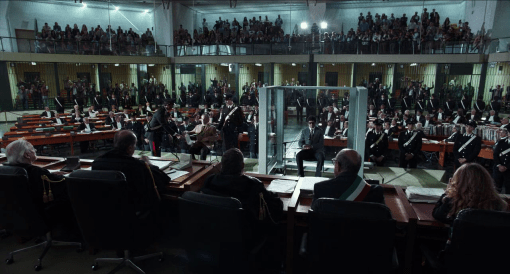
The 79-year-old filmmaker employs his characteristic, cocky style to dramatize mafia wars. A ticker of the body count flashes on the screen with every murder. Bold, brash texts filling the screen announce important dates and events. The arrest of a boss is rapidly intercut with a trapped hyena. An impressive bombing scene unfolds as a single shot from the back of the victim’s car. But Bellocchio is most attuned to scenes with a theatrical flourish: Buscetta’s deposition and subsequent cross-examinations that were televised. Unfolding in a vast courtroom with Buscetta at its centre and peripheral cells holding the denounced, the trials are filmed in wide-angle shots and echoing sound. Like the opening of Vincere, Buscetta’s composure is contrasted with the agitated, crazy reactions of his rivals. As the denunciations become a regular affair and the public interest vanes, the trials grow modest and the judges less scared of the accused. Despite its baroque touches, The Traitor remains a by-the-numbers biopic, choosing to tread close to history at the expense of insight. There’s another character whose collaboration runs parallel to Buscetta’s, and it is offered in elaborate detail for no other reason than to blink at the audience’s knowledge of the events.

The Golden Glove (Fatih Akin)

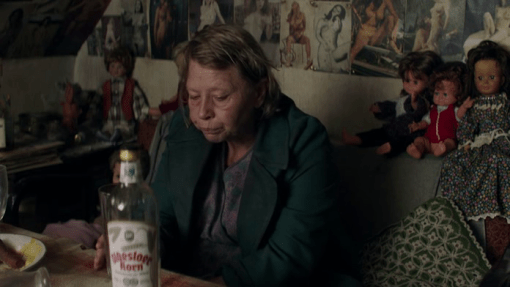
If Lars von Trier’s serial killer movie tempered the gratuity of its graphic descriptions with a dialectical organization, Fatih Akin’s The Golden Glove drops another layer from the wall separating art and snuff. Adapted from a novel of the same name, the film follows the exploits of Fritz Honka (Jonas Dassler) between 1970 and 1975, when he murdered and decapitated women in his Hamburg apartment. Unlike The House that Jack Built, The Golden Glove makes no claims to explaining Honka: barely any detail about his childhood, upbringing or inner life. Whatever we glean about this character comes from the faithful reconstruction of his apartment from photographs: the furniture and linen hint at a lived-in homeliness while posters of naked models coexist with chubby, matronly dolls. Instead, we are presented with shots of Honka binge drinking, forcing the women he picks up on street into violent sex, killing them and parcelling their bodies. Akin films the gruesome acts of rape and murder so that the architecture distances us from the events by partially blocking our view. This considered reserve, which sometimes increases the perversity of the crimes, vanishes as the film proceeds and we are treated to Honka’s fits of rage in full intimacy.

What takes the place of individual psychology is social description. Set in the seventies in West Germany, the film—likely following the book—portrays Honka as a product of his environment. Honka is at the bottom of the social pyramid: he works dead end jobs at malls and construction sites, lives in a cubbyhole and spends his money on alcohol. His face deformed after an accident, Honka is ruled out of the dating market as well. His only social life is at the Golden Glove, a seedy joint for freaks and outcasts (any of whom could be the protagonist of the story) whom Akin describes elaborately without affection. The corpulent, old women Honka lures with the promise of alcohol are also outliers of the free market economy with no social support or means of sustenance except through abject slavery. Seeing them showing no will to live and their old bodies being manipulated and mutilated like inanimate objects is the most distressing and repulsive aspect of The Golden Glove. Consequently, it’s liberating to witness the lucky few who escape this fate, thanks either to a Christian missionary trying to “save” the Golden Glove regulars or to sheer accident: a sentiment that the film structures itself around. The uplifting image of a blonde teen whom Honka idealizes unwittingly escaping Honka closes the film.


Pain and Glory (Pedro Almodóvar)

In Pain and Glory, Almodóvar lets go of the generic framework that imparted a sense of mystery and thrill to his narratives. The film is instead simply the story of a filmmaker reminiscing about his past, patching up broken friendships and coming to terms with his creative and corporeal disintegration. Weakened and frazzled, Antonio Banderas is exquisite in his role as Salvador, a successful movie director who has quit working and chooses to fritter away his time in his swanky apartment. Salvador suffers from a number of ailments stemming from his partially paralyzed back. On the occasion of the restoration of one of his older productions, he reaches out to the film’s lead actor from whom he’s been estranged for thirty years. This contact inducts him into a heroin addiction, which Salvador gladly chooses over resuming filmmaking. His heroin-induced stupor provokes memories of his pre-teen years: the suffering and hardship of his poor parents, his mother’s loneliness and resourcefulness faced with the absence of her husband and the precocious awakening of his sexuality in his relation with an older labourer he teaches. Back in the present, he meets an old lover, whom he unsuccessfully tried to save from drugs, and recounts to his doting secretary-friend his relation with his mother in her final years.

None of this information is offered as a revelation or a piece of a puzzle. Neither are they woven into a causal narrative. This lends the film a transparency and directness that critics, perhaps with justification, are quick to read as confession. The film is populated with references to the filmmaker’s life but also details so particular—his mother breaking a slab of chocolate to make a sandwich, mending a sock with an egg as support, Salvador placing a pillow on floor before bending down to access a safe—that they could’ve come from nowhere except experience. But Almodóvar avoids sentimentalism and undercuts the obvious emotions with counter-intuitive musical cues. When Salvador meets his old lover, there’s a cut across the 180° line that positions this film as a sequel of sorts to Tie Me Up! Tie Me Down!, heterosexual domesticity being the implied horror connecting both encounters. For the most part, though, the attention is on Salvador’s pain and physical degradation. The film opens with him suspended under water as though in a womb, and the presence of water bodies throughout the film suggests a time before birth. In that, it’s clearly an autumnal reflection on aging that appears to be favourite theme of the year.

[From my column on studio-era Hollywood films for Firstpost]

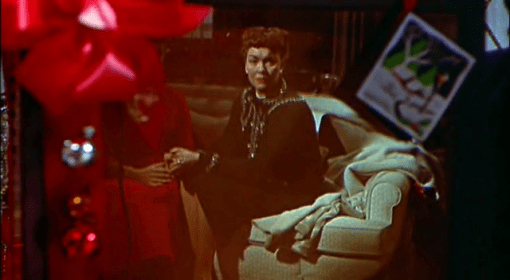
German-born Douglas Sirk moved to Hollywood in 1937 and made a name for himself as the maker of “women’s pictures”, melodramas with ill-fated romances and tragic characters. The term melodrama, originally referring to any drama set to music, carries a negative connotation in common parlance, but Sirk’s films infused the form with a critical consciousness that commented on the stories even as it presented them. In his supreme accomplishment, All that Heaven Allows (1955), Sirk uses the trope of forbidden love to mount a heartrending critique of what he takes to be a contemporary American malaise. The film begins with the shot of a church steeple, that symbol of small-time community. The camera descends from its clockface striking noon, glides over red leaves of autumnal trees and scans the identical-looking houses of a nondescript suburb in New England. Perfectly manicured lawns, mothers on sidewalks with their prams and the odd automobile: images of middle-class virtue that David Lynch will parody in Blue Velvet (1986). The camera stops at a randomly selected house where the story begins.

Cary Scott (Jane Wyman) is a widow of about forty resigned to her staid bourgeois existence of respectable motherhood and occasional cocktail parties. There are men in the local country club who make her proposals, decent and otherwise, but the choices she is allowed to have are hardly inspiring: to be the secret mistress of a man who sees her as an object of desire or to be the wife of an old, kind gent who may be in love with her. Her heart, however, has its own way, and she ends up falling in love with her hunky gardener, Ron (Rock Hudson), several years younger than her. Eating with his hand, his collars turned up and shirt unbuttoned, the tanned, subaltern Ron is everything Cary isn’t. Having rejected the rat race, he lives in a glasshouse in the woods, embodying the self-sufficient life Thoreau described in Walden. Ron is presented as a temperamental figure with dubious, even threatening motivations, and so we share Cary’s doubts about him even as we recognize the attraction he exerts.

The affair scandalizes her grown-up children, who expect Cary to “act her age”, and her community, where she soon becomes the object of vile gossip. The film makes it clear that it’s not so much the class difference as the difference in age between Cary and Ron that sends the townsfolk into a tizzy. That an older woman, practically middle-aged, could desire and be desirable to a young, attractive man is an affront to the puritan mores of the community, to whose order sexuality is a threat. Admiring herself in front of a mirror, Cary’s nerdy daughter, a Freud-loving psychology student, says that “sex becomes incongruous” after a certain age, clearly disapproving of her mother dating anyone younger. A moment later, looking at the red dress Cary has worn, her son asks her if it isn’t too revealing. He’ll later accuse her of seeing Ron as a “pile of muscles”. One obnoxious acquaintance at the country club party that evening insinuates that Cary is out of her line for wanting to wear an appealing red dress.

Sirk and screenwriter Peg Senwick caricature the country club as a nosy, disingenuous, gossip-mongering and casually spiteful group. When Cary brings Ron to the club for the first time, in order for him to be accepted by the town, the club members treat him like an alien species and call him names: “nature boy”, “earthy type”. This exoticism, of course, derives from the perceived sexual promiscuity of coloured folk—a subtext that German filmmaker (and Sirk’s protégé) Rainer Fassbinder will make explicit in his remake of the film, Ali: Fear Eats the Soul (1974)¸ in which the tanned Ron is replaced by a black man, an immigrant and Muslim to boot. On the other hand, the gathering of friends in the woods that Ron takes Cary to is a natural community, spontaneous in their joy and genuine in their affection. The first-name based intimacy of this group, consisting of rugged immigrants and other lively underclass specimen, is in direct opposition to the suffocative banality of the small talk at the country club, with its stiff formality and fake decency.

The two contrasting communities are an opportunity for Sirk—better placed as an outsider to do so—to bring two specific visions of America in dialectical opposition. Ron and his friends are spiritual inheritors of the 19th century transcendentalist movement, which advocated a life of solitude and self-sufficiency in harmony with nature, away from the corrupting influence of civilization. Cary and her town are, on the contrary, contemporary products of 20th century America. Sirk’s film was made during what is known as the Boomer era, a period of American post-war prosperity, accelerated consumerism and cultural conservatism. One of the defining phenomena of the period was the “white flight”: a large-scale migration of white people from the mixed-race urban zones to newly-developed suburban settlements. The war now over, once-employed women found themselves at home and away from entertainment options in the city, leading to an exponential increase in the sale of television sets across the country. When her son gifts her a television set as a cure to her loneliness, Cary is filmed as a reflection on the television screen, trapped by it.

Douglas Sirk was a true intellectual, perhaps the only one in Hollywood. As a youngster in Hamburg, he studied under art historian Erwin Panofsky, attended Einstein’s lectures on relativity and translated Shakespeare’s sonnets into German. He was an active theatre director working on both classics, in which he was well-versed, as well as contemporary plays such as his by peer Bertolt Brecht. In Hollywood, a land averse to intellectuals, he took on one of the most derided genres, melodrama, transforming overwrought material into clear-eyed modernist works. He managed to let his mise en scène, the ensemble of a film’s plastic elements, always convey more meaning than what the script allows for. His handling of Technicolor, in particular, was exemplary.

In All That Heaven Allows, he heightens the tints at Cary’s home, saturating the light with primary colours and producing dramatic shadows. He contrasts this artificiality of Cary’s milieu with the natural, earthy tones of Ron and his surroundings. Likewise, Cary is often photographed as though she’s imprisoned by her décor: furniture, window grills and their shadows. Her house, a veritable mausoleum in memory of her dead husband, is full of objects against which she is filmed in tight shots. In contrast, Ron’s mill-turned-home is warm-looking and sparsely furnished. Ron’s house and the surrounding nature are photographed in wide shots full of breathing space. Sirk was, in fact, influenced by Brecht’s theory of the theatre, which postulated that the audience must always be kept at a dispassionate distance from the spectacle so that they reflect on the story critically rather than get immersed in it. Sirk’s use of colour and composition was frequently directed to this end.

That, however, does not vitiate the emotional impact that All That Heaven Allows creates. It’s a highly moving work about the anxiety of having to live up to societal standards and the programmed fear of rejecting of them. Sirk, too, has no fear of the excesses the material presents. If the film has endured despite the sometimes clumsy and verbose script (inspiring no less than two remakes, great works in their own right), it is wholly thanks to Sirk’s treatment, which elevates it to another artistic plane.


[Originally published at Firstpost]
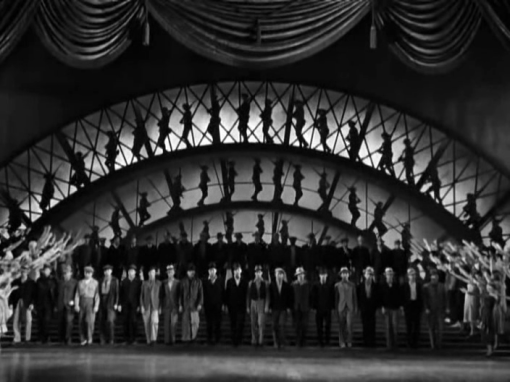
 

« Previous PageNext Page »