While my writing on this blog came to a grinding halt in 2014, watching and reading hit an all-time high, with the year practically spent in the eight feet between my bookshelf and computer screen. The films that I really liked last year consisted of some boldly adventurous mainstream Indian features (Haider, Dedh Ishqiya, Pisaasu, Jigarthanda), strong arthouse dramas (Waste Land, Two Days, One Night, Clouds Of Sils Maria, A Midsummer’s Fantasia), experiments in participative ethnography charting newer territories (Episode Of The Sea, Joy Of Man’s Desiring, Tomorrow Is Always Too Long), intelligent and reflexive modernist works (Actress, The Salt Of The Earth), classic fly-on-the-wall documentaries (National Gallery, Of Men And War, Maidan), purely formalist delights (Journey To The West, Panchromes I, II, III, Khan Khanne) and nearly unclassifiable mysteries without mysteries (Jauja, For The Plasma, Mercuriales). But (nearly) no film of the year, I thought, compared to the best offerings of the previous few years. Here’s hoping for a much richer 2015. As always, only the films that had their world premiere in 2014 are considered for this list. Happy New Year and good luck at the movies.
1. Goodbye To Language (Jean-Luc Godard, Switzerland)
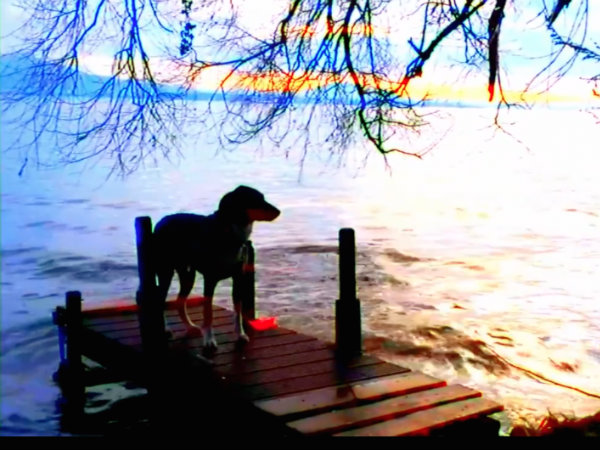 There is a reason why Godard’s explosive ‘second final’ film is called Adieu au langage and not Adieu à la langue: what it seeks to bid farewell to is not any particular language, but the system of language itself – not surprising for a film that attempts to wrestle with half a millennium’s worth of Western perceptual history. In 3D, which he employs like Cézanne employed watercolours, Godard finds a tool that can demolish the Albertian perspective of 2D images, decenter the human spectator and ultimately dethrone anthropocentric perception as the preeminent way of observing the world. The result is a torrent of phenomenological incidents in which stereoscopic images reinforce and undermine one another, stereophonic monologues diffuse into dialogue and ‘stereotemporal’ narrative shards respond to each other tangentially. Goodbye to Language is a investigation into the 3rd dimension in every sense of the word and sets up a plethora of sonic, visual, narrative and conceptual dialectics to see what the synthesis does to its two constituents. It is an attempt to find a perspective outside language – one of a dog, perhaps. No other film this year animated me and annoyed me as much. More importantly, it snapped me out of a cinephilia-induced intellectual stupor.
2. The Second Game (Corneliu Porumboiu, Romania)
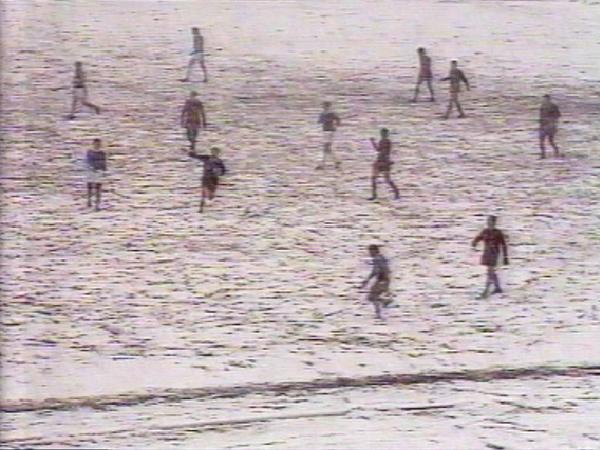
The simple and cozily domestic setup of Porumboiu’s pseudo-single shot movie – the director and his father bond over a recorded game of televised football, in which the latter was a referee – belies the complex chain of implications that this physically hermetic film sets in motion. Running for exactly the length of one football match (played between two governmental bodies in 1988 on a spectacular snow covered ground), The Second Game is part-filial wish fulfillment of watching his father at work, part-review of sports aesthetics under communism and part-remembrance of an outmoded video technology, all filtered through a present day perspective. Striking an equivalence between his profession and his father’s, in both of which players have to be directed and decisions have to be made on the spot, the film is likely a reflection on whether or not the filmmaker has temperamentally inherited anything from dad, whose view of sports as perishable commodity is antithetical to his son’s view of it as art. It is more importantly one of the most intelligent and productive instances of appropriation art, with Porumboiu refashioning out of obscure sports footage a trademark film that is “long”, where “nothing happens” and which is nonetheless highly suspenseful.
3. Transformers: The Premake (Kevin Lee, USA)
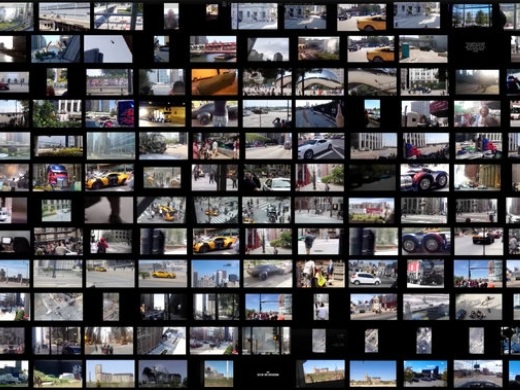 If what Porumboiu accomplishes sitting in front of a TV screen was amazing, what Chicago-based Kevin Lee does sitting in front of a computer is downright revelatory. Weaving together hundreds of internet videos about the making of Paramount Pictures’ Transformers: Age of Extinction (2014), uploaded by common folk in America and Hong Kong and official news agencies in mainland China, Lee develops a brilliant and scary picture of corporate cultural hegemony in which seemingly the entire world bends over backwards to affiliate itself, consciously or otherwise, with the American conglomerate. Imbibing the spirit of Harun Farocki and Theodor Adorno (who, not coincidentally, lend their names to Lee’s HDDs) respectively in its tracing of modern forms of labour and commodity production and its critique of the darker side of popular entertainment, Premake reveals a post-globalized, post-nationalist Hollywood whose financial motor is now set to ensure China-friendly films to capitalize a booming market – a pertinent reminder that the influence of patronage on aesthetics is strongest in cinema of all arts. It is a short, sharp alarm call about the all-pervasive nature of Big Money, which can forge adherents out of the very people it has run over.
4. Bronx Obama (Ryan Murdock, USA)
 Ryan Murdock’s bountiful Kickstarter-funded documentary about Bronx-based Puerto Rican single father and Obama-impersonator Louis Ortiz is an oblique tale of possession and haunting. For the recession-hit Ortiz, Obama’s ascension to power is not only a story of national hope, but also a personal one that rides the coattails of Project Merchandise Obama. Murdock’s richly thematic film ties his fate to that of the POTUS in heady ways that demonstrate the double-edged nature of power: while his daughter can’t take for granted the privileges that the president’s can, Ortiz, unlike Obama, has infinitely more power in being able to stop playing the president any time he wants. It is also a snapshot of a common man struggling to maintain his dignity and identity under the weight of celebrity, for Ortiz has to not only become a receptacle of repressed racial hatred towards the president, but actively undercut his beliefs and parody his idol for one-percenter entertainment. When Ortiz looks at his hero speaking on television, he is at the same time looking at a mirror, continuously calibrating his speech, gesture and gait to match those of his doppelgänger. A Kagemusha for the 21st century.
5. The Grand Budapest Hotel (Wes Anderson, USA)
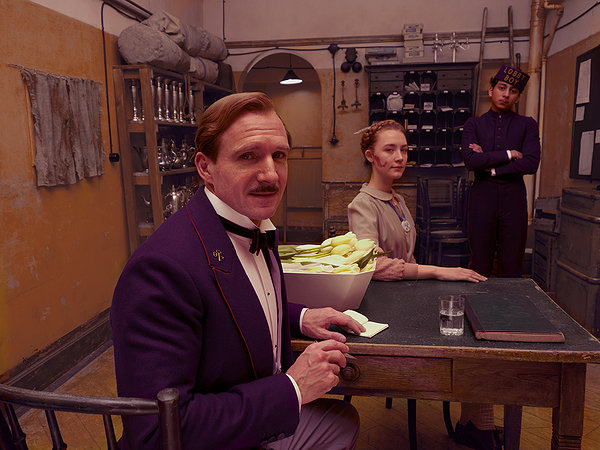 It seems to me that, with The Grand Budapest Hotel, Anderson set himself his biggest challenge to date. If making films with genuine affect wasn’t tough enough in a postmodern art climate where unironic approach to material is generally considered reactionary, his new movie assigns him the task of conveying nostalgia for a world doubly lost to our post-ideological age, in which the only valid nostalgia is the nostalgia for a time when nostalgia was even possible. The Matrioshka doll-like construction of the film aptly serves this objective by employing nested frameworks, each set in crucial periods of 20th century Western history, that bring this lost world closer to us instead of distancing it. The result is a deeply felt work about the enduring value of categories such as truth, beauty and basic human decency, really, which sets Anderson apart from most of his equally flamboyant peers, whose malevolent or agnostic universes seem to reject the spiritually uplifting side of art. If ever Renoir’s faith in Human Goodness in The Grand Illusion (1937) felt as being trapped in a time capsule beyond contemporary access, Anderson’s film releases it back into our epoch.
6. Letters To Max (Eric Baudelaire, France)
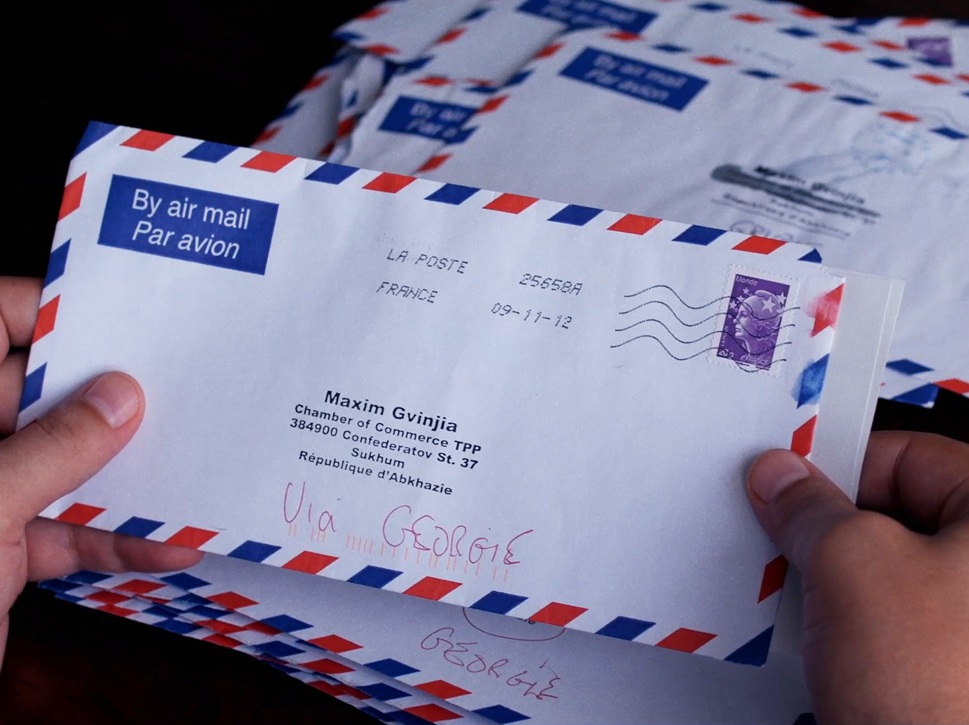 “Dear Max, Are you there?” asks Baudelaire in the first of his 74 “impossible letters” to his Abkhazian friend and ex-diplomat, Maxim Gvindjia, addressing, in effect, both his interlocutor and his country. This existential question haunts the entirety of the film, which investigates what it is that really makes a nation. Is it the spectacular rituals and glorious anthems reinforcing nationhood? The time-worn buildings and landscape that give it a unity of character? The dubious accreditation of superpowers? Or is it indeed an imagined community forming an identity in opposition to ‘the other’? Such a dialogue between the material and the abstract is woven right into the structure of Letters to Max, where the very possibility of the physical letters that Baudelaire dispatches from France reaching Abkhazia gestures towards a recognition of its existence. Baudelaire’s film is partly an amicable correspondence between amis sans frontières and partly an interview between a bureaucrat and a political critic in which Eric’s broaching uncomfortable questions thwart Max’s desire to paint a unblemished picture of Abkhazia, putting him in a double bind paralleling that of his country: a nation torn apart as much historically between change and preservation as it is geographically.
7. False Harmonies (Paul Vecchiali, France)
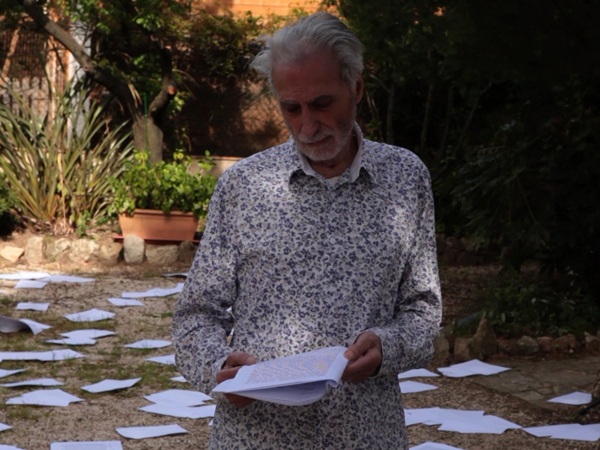 Veteran French filmmaker Paul Vecchiali made not one but two sublime films in 2014, the other being the Dostoyevsky adaptation, White Nights on the Pier. In False Harmonies, Vecchiali plays a man who is grieving the death of his long time partner. He chances upon email exchanges that the latter had had with an anonymous user on an online gay dating website and imagines the texts being read out to him by this unknown young man, who is played by two different actors depending on the tone and content of the messages. On one level, False Harmonies is an intelligent modernist exercise that charts its own making, wherein the script of the film is its very subject and the elaborate central scene of letter-reading is, in effect, the audition for the actors playing that role. But, like White Nights, it is also a work of soaring honesty about the essentially limited nature of romantic relationships. It suggests the frightful probability that the person you have spent half your life with might be the one you know the least; that we play roles in a relationship, sure, but we also seek out other roles to complement it; that getting out of character might be as important as getting in.
8. Li’l Quinquin (Bruno Dumont, France)
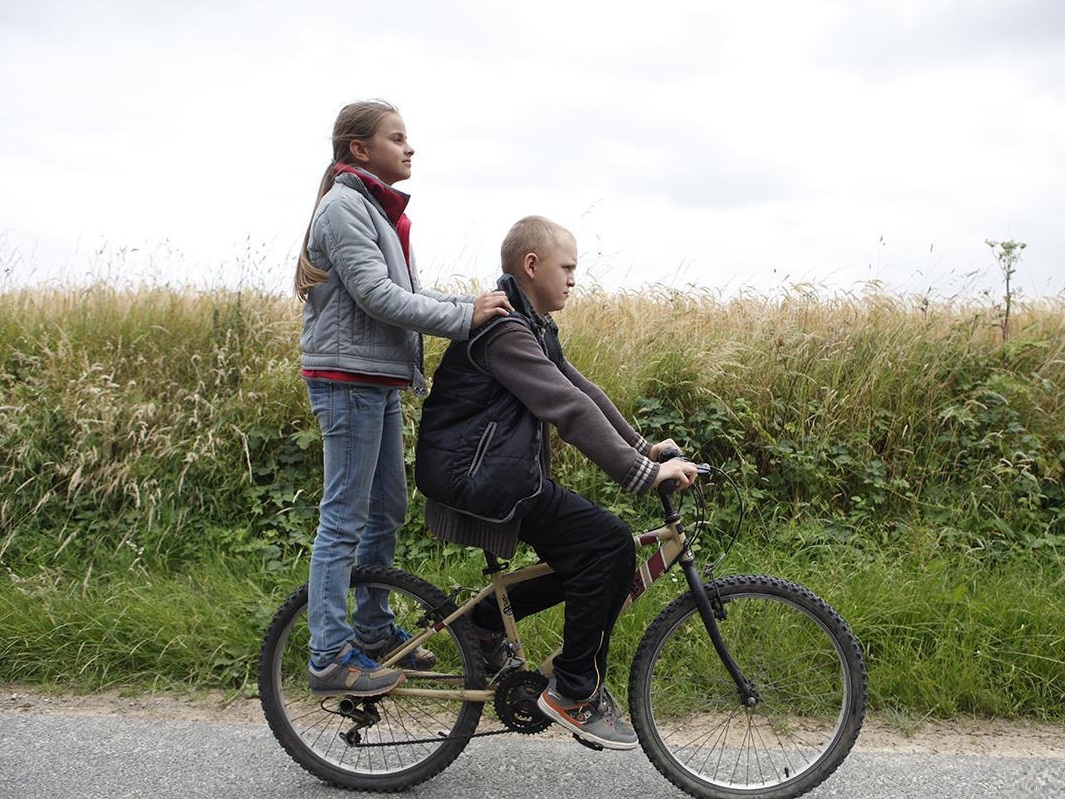 In its conception, Bruno Dumont’s Li’l Quinquin, made as a four-part television miniseries, recalls the slyly subversive films of Robert Altman in his heyday. Picture this: 1.4 million French folks tune in to Arte TV expecting a comic broth of northern hicks, bumbling detectives and enfants terribles. What they get instead is a progressively morbid feuilleton about an ersatz Old Testament God meting out gory punishment for vaguely defined transgressions and a community with a twisted idea of moral propriety willing to shield this vigilante who seems to give potent form to their own thwarted drives. This is fine, topical screenwriting that responds to the rapid rise of the far-right in France, portraying a nation whose barely-repressed xenophobic streak during and before WW2 rears its ugly head in the present as Islamophobia. (Quinquin seems so tailor-made for India, where similar political upheavals have taken place and where a psychopath with a perverted sense of bovine justice is very much in the realm of possibilities,) It’s a world where pre-adolescents inherit, internalize and put into practice adult beliefs and rituals without reflection. Despite its humour and frivolity, darkness looms in the future that Dumont’s film lurches into.
9. The Lesson (Kristina Grozeva, Petar Valchanov, Bulgaria)
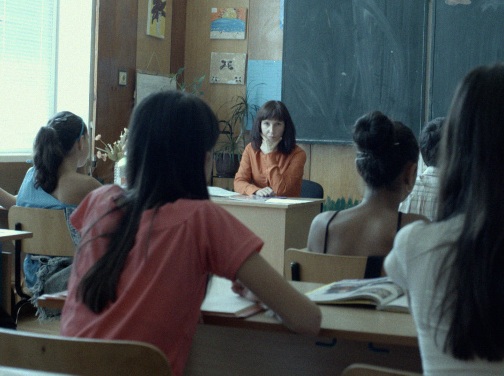 The debut feature by Grozeva and Valchanov, like Two Days, One Night, works within the melodramatic form, moving its protagonist from point A to B through a series of progressively challenging obstacles. But while I found the Dardennes’ formidable and formally astute picture nonetheless a tad too ‘clean’, in the way it deliberately takes an irresolvable ethical quandary as a starting point and keeps underscoring a globalized Europe, The Lesson seems to me to retain the messiness of some of their earlier great films. On one level, it is a simple parable about the fallibility of authority, but it is also an uncompromising portrait of the tyrannical nature of all forms of social organizations, be they human systems with conscientious individuals at the helm or faceless bureaucratic ones with no vested interests. Slowly shifting its narrative space from the classroom to the metropolis with an enviable economy of exposition, The Lesson facilitates a double-edged critique that argues that the values taught in the class are but modeled on the values the state imposes on us and that what the state demands of us is to be ideal pupils in a classroom that is less than ideal.
10. Melbourne (Nima Javidi, Iran)
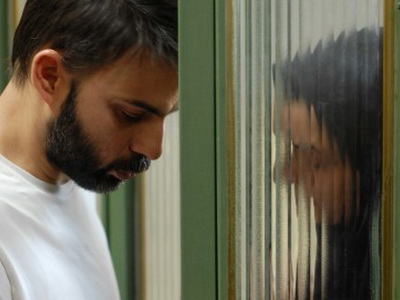
 This remarkable debut feature by Nima Javidi naturally reminds one of Asghar Farhadi’s films, with its strong sense of drama, tremendous actor interpretations and mature writing that does not compromise the integrity of any of the characters. But there is also something particularly “new generational” about it in the way it harnesses the choice in front of affluent young Tehranians: to stay in Iran and own up its problems or to leave the country to start life anew. The inciting event in the film that dramatizes this choice stops the train of life dead in its tracks, exposing its protagonists to the unbearable “nowness” of the present. It is a terribly universal predicament in which time freezes around the material reality before you and all plans for the future and memories of the past seem like a remote, inaccessible country, a crisis that makes you want to either regress in time (“wish mother were here”) or to jump to a future day when the clouds have cleared, a moment where husband and wife see each other’s innermost character in all its stark nakedness. Though the couple might physically arrive at the eponymous neverland, the utopia it once represented is irrevocably lost.





 Surely, it takes a bona fide auteur like David Cronenberg to locate his signature concerns in a text – such as Don Delillo’s – that deals with ideas hitherto unexplored by him and spin out the most exciting piece of cinema this year. Holed up in his stretch limo – an extension of his body, maneuvering through Manhattan inch by inch as though breathing – Eric Packer (Robert Pattinson) comprehends the universe outside like cinema, through a series of moving images projected onto his car windows. Why not? This world, whose master he is, is experiencing the epistemological crisis of late capitalism: the increasing abstraction of tactile reality into digital commodities. Packer, like many Cronenberg characters, is more machine than man, attempts – against the suggestions of his asymmetrical prostate and of the protagonist of Cronenberg’s previous film – to construct a super-rational predictable model of world economy – a project whose failure prompts him to embark on an masochistic odyssey to reclaim the real, to experience physicality, to be vulnerable and to ultimately die. At the end of the film, one imagines Packer shouting: “Death to Cyber-capitalism! Long live the new flesh!”
 Un chant d’amour for cinema, Leos Carax’s Holy Motors is an ambitious speculation about the total transformation of life into cinema and cinema into life – the death of the actor, audience and the camera. The European cousin to Apichatpong Weerasethakul’s Uncle Boonmee Who Can Recall His Past Lives (2010), Carax’s return-to-zero work draws inspiration from the process of film itself – death, resurrection and persistence of vision – and takes cinema to its nascence – fairground attractions, popular theatre and zoopraxography – while opening up to its future possibilities. Uncle Oscar (Denis Lavant, the raison d’etre of Holy Motors), like Cronenberg’s Packer, cruises the streets of Paris in his limo in search of purely physical experiences – a series of performance pieces carried out solely for “the beauty of the act” – only to find that the city is a gigantic simulacrum in which everyone is a performer and a spectator (and thus no one is) and where the distinction between the real and the fictional becomes immaterial. At the very least, Holy Motors is a reflection on the passing of “things”, of physicality, of the beauty of real gesture, of the grace of movement of men and machines.
 Nicolas Rey’s third feature, consisting of 9 short segments (reels, to be precise) projected in a random sequence, is a radical project that re-politicizes the cinematic image. Not only does the randomization of the order of projection of the reels circumvent the problem of the authoritarianism of a fixed narrative, it also exposes the seam between the semi-autonomous theses-like segments, thereby making the audience attentive to possible ideological aporias that are usually glossed over by the self-fashioned integrity of filmic texts. Furthermore, the existence of the film in the form separate reels is a breathing reminder of the material with which it was made: 16mm. The persistent dialectic between the visual – shots of highways, industries, farms and modernist suburban housing in the eponymous fictional city registering the sedate rhythm of everyday life – and the aural – snippets of conversations between two politicized industrial workers about the invisible tendons that enable a society to function smoothly – strongly drives home the chief, Althusserian concern of the film: the essential unity of the various, seemingly autonomous, strands of a state, contrary to claims of disjunction and autonomy.
 A film that is reminiscent of Weerasethakul’s many bipartite films, Miguel Gomes’ singular Tabu, too, works on a range of binaries – past/present, youth/old age, city/countryside, abundance/scarcity, modern/primitive, colonizer/colonized – and sets up a conversation between the carefree, profligate days of the empire full of love, laughter and danger and Eurocrisis-inflected, modern day Portugal marked by alienation and loneliness. The opening few minutes – a melancholy mini-mockumentary of sorts chronicling the adventures of a European explorer in Africa with a native entourage –announces that the film will be balancing distancing irony and classicist emotionality, donning an attitude that is in equal measure critical and sympathetic towards the past. In Gomes’ sensitive film, the heavy hand of the past weighs down on the present both on aesthetic (silent cinema stylistics, film stock, academy ratio, the excitement of classical genres) and thematic (collective colonial guilt, residual racism, punishment for forbidden love) levels and this inescapability of the past is also functions as (sometimes dangerous) nostalgia for the simplicity and innocence of a cinema lost and an entreaty for the necessity of exploring and preserving film history.
 What partially elevates the first film of Ulrich Seidl’s Paradise trilogy from its rather undistinguished concerns about emotional alienation and old age loneliness is the nexus of intriguing cultural forces that it brings into the picture by having a relatively affluent, 50-year old Austrian single-mother (Margarete Tiesel, in a no-holds-barred performance) indulge in sex tourism in Kenya along with five other women friends. The result is a rich, provocative negotiation along class, gender, race and age divides that upsets conventional, convenient oppressor-oppressed relationships. In doing so, the film wrenches love from the realm of the universal and the ahistorical and demonstrates that between two people lies the entire universe. Seidl’s heightened, bright colour palette that provides a sharp chromatic contrast to the bodies of Kenyan natives and his confrontational, static, frontal compositions (Seidl’s nudes are antitheses to those of the Renaissance), which make indoor spaces appear like human aquariums, both invite the voyeuristic audience to take a peek into this world and place it on another axis of power – of the observer and the observed.
 Sri Lankan filmmaker Prasanna Vithanage’s exquisite, exceptional adaptation of Fyodor Dostoyevsky’s The Meek One (1876) aptly locates the Russian tale of matrimonial discord between a bourgeois pawnbroker and the gentle creature he weds within the ethno-political conflict between nationalist and rebel factions of the country. Unlike humanist war dramas that, often naively, stress the underlying oneness among individuals on either side, Vithanage’s intelligent film underscores how the political haunts the personal and how the tragic weight of history impacts the compatibility between individuals here and now, while deftly retaining Dostoyevsky’s central theme of ownership of one human by another. Though liberal in narration and moderate in style compared to Mani Kaul’s and Robert Bresson’s adaptations of the short story, Vithanage, too, employs an attentive ambient soundtrack that counts down to an impending doom and numerous shots of hands to emphasize the centrality of transaction in interpersonal relationships. The metaphysical chasm between the possessor and the possessed finds seamless articulation in concrete sociopolitical relations between Sinhalese and Tamils, between the army and refugees, between the poor and the wealthy and between man and woman.
 There has always been something intensely spiritual about Tsai’s films, even when they seem to wallow in post-apocalyptic cityscapes and defunct social constructions. In Tsai’s hands, it would seem, an empty subway corridor shot in cheap digital video becomes the holiest of spaces ever filmed. Walker, a high-def video short made as a part of the Beautiful 2012 project commissioned by Hong Kong International Film Festival, crystallizes this particular tendency in the director’s work and centers on a Buddhist monk played by Lee Kang-sheng (a muse like no other in 21st century cinema). As the monk walks the hyper-commercialized streets of Hong Kong at a phenomenally slow pace for two days and two nights, his red robe becomes a visual anchor in stark contrast to the greys of the urban jungle and the blacks of people’s winter clothing and his very being, his eternal presence, becomes a spiritual grounding point amidst the impersonal hustle-bustle of this super-capitalist Mecca. Part performance art with a gently cynical punch line, part an exploration of the limits of DV, Walker is a deeply soothing and often moving work from one of Asia’s finest.
 Moving unsteadily with the help of a walking stick, the 79-year old founder of the National Film Archive of India (NFAI), P. K. Nair, despite himself, becomes a metaphor for the state of film archiving in the country. It is of considerable irony that, in a nation that prides itself for its rich cultural heritage, film archiving is considered a useless exercise. During the three decades that Nair headed the NFAI, he was instrumental in discovering the silent works and early talkies of Bombay and south Indian cinema, including those of Dadasaheb Phalke, the “father of Indian cinema”. Celluloid Man, bookended by scenes from Citizen Kane (1941), draws inspiration from Welles’ film and sketches a fascinating if reverential portrait of Nair constructed from interviews with international filmmakers, scholars, historians and programmers and curiously hinged on the fact of Nair’s “Rosebud” – ticket stubs, promotional material and assorted film-related curios that the man collected during his childhood. Shivendra Singh’s film is a irresistible romp through early Indian cinema and an endlessly absorbing tribute to a man who is fittingly dubbed the “Henri Langlois of India”. To paraphrase one of the interviewees, Phalke gave Indian cinema a past, Nair gave it a history.
 Although it might appear that it is perhaps the hollowness of Xavier Dolan’s previous feature that makes his latest, 160-minute music video look like a cinematic coup, Laurence Anyways really does succeed in accomplishing more than most of contemporary “LGBT-themed independent cinema”. While the latter – including this year’s Cahiers darling – almost invariably consists of realist, solidarity pictures that use social marginalization as shorthand for seriousness, Dolan’s emotionally charged film takes the game one step further and probes the inseparability of body and character, the effect of the physical transformation of a person on all his relationships – a transformation that is mirrored in the flamboyant, shape-shifting texture of the film – without sensationalizing the transformation itself. Rife, perhaps too much so, with unconventional aesthetic flourishes and personal scrapbook-ish inserts, the film rekindles and enriches the youthful verve of the Nouvelle Vague – a move that should only be welcome by film culture. If not anything more, Laurence Anyways establishes that critics need to stop using its author’s age as a cudgel and look at his cinema du look as something more than a compendium of adolescent affectations.
 Let me confess upfront that putting Wes Anderson’s (surprise!) whimsy, twee and self-conscious Moonrise Kingdom in my year-end list is less a full-hearted appreciation of the film than a confession that I find Anderson to be an important voice that I’m genuinely keen about, but can’t entirely celebrate. I don’t think I’ve seen any film that employs so many elements of industrial cinema yet feels meticulously artisanal, a film that, on the surface, seems to (literally) play to the gallery yet is so full of personality and one that is oddly familiar yet thoroughly refuses instant gratification. Moonrise Kingdom appears to have every ingredient of an obnoxious family comedy, but the unironic, straight-faced attitude and the single-minded conviction with which it moulds the material into an anti-realist examination of the anxieties of growing up, alone, is something not to be found either in cynical mainstream cinema or in the overwrought indie scene of America. Anderson’s neo-sincere film is, as it were, a classicist text couched within a postmodern shell, an emotional film without affect. Paper blossoms, but blossoms nonetheless.








 “I don’t know whether it’s a comedy or a tragedy, but in any case it’s a masterpiece”, says one of the characters, self-referentially, in Godard’s
 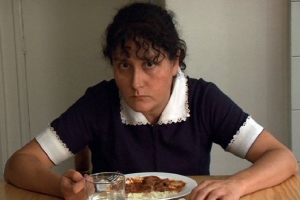 A sister film, in some ways, to Jonathan Demme’s brilliant Rachel Getting Married (2008), Sebastián Silva’s The Maid is nothing short of a spiritual revelation at the movies. What could have been an one-note leftist tirade about Chile’s class system is instead elevated into the realm of human where one facial twitch, one stretch of silence and one impulsive word can speak much more than any expository monologue or contrived subplot. There is no simplification of human behaviour here, no easily classifiable moral categories and no overarching statement to which truth is sacrificed. Nor does Silva suspend his study of the classes to observe his characters. He merely lets the obvious stay in the background. And just when you think that Silva’s vision of the world is getting all too romantic, he delivers a fatal blow to shatter your smugness – a single, deceptively simple shot during the final birthday party that masterfully sums up everything from the irreconcilable, repressed tension that exists between classes in capitalistic societies to our adaptability as humans to live peacefully with each other despite socio-economic disparities.
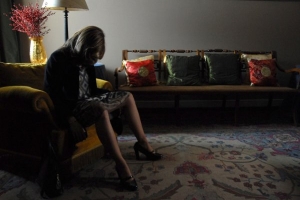 Rigorous but oh-so-tender, centenarian Manoel de Oliveira’s one-hour wonder Eccentricities of a Blonde-haired Girl is a film in one and a half acts. Oliveira translates the work of Eça de Queiroz to the screen, running the 19th century tale of romance through the current economic landscape and harnessing the resultant anachronism to paint an achingly beautiful picture about the inability to transcend class, escape reality and lose oneself in art. Despite its decidedly Brechtian and ceaselessly self reflexive nature, Oliveira’s film is rife with moments of poignancy and touches of humour. Using double, triple and quadruple framing and achieving a mise-en-abyme of art and reality, Oliveira writes a ruminative essay on the impossibility of art and reality to merge, the confusion that exists between them and the classism that exists within and with respect to art. Flooded with references to art and art forms, Eccentricities is such a dense and intricate fabric of the arts that even the past is treated in a detached manner like a piece of art, where each image looks like a painting, each sound feels like a melody and each movement cries out: “cinema!”.
 Of all the recent movies that have attempted to acknowledge dark chapters in national histories and advocated looking forward to the future instead of crying over what is lost, perhaps, none is as sober, ethical and uncompromising as Claudia Llosa’s Golden Bear winner. Llosa inherits her tale from the terrorist atrocities that plagued Peru two decades ago (Inheritance being the prime motif of the film) but, subsequently, discards every possible opportunity for sensationalism or propaganda. Tightly framing the lead character, Fausta (Magaly Solier), within and against claustrophobic structures, doorways, photographs, windows, paintings, mirrors and walls, gradually varying the depth of focus along the movie to detach the protagonist and integrate her with her surroundings and using extremely long shots to dwarf her in vast opens spaces of the tranquil town, Llosa concocts a film of utmost narrative austerity and aesthetic rigor. Punctuating and contrasting these downbeat images of Fausta’s life are slice-of-life sequences from the town depicting various wedding rituals and parties which tenderly highlight Peruvian people’s open-hearted embracing of capitalism and their resolve to come out of the trauma of the past and move on with life.
 If Inglourious Basterds was a coup from within the system, Jim Jarmusch’s The Limits of Control is an out-and-out war against the machine. The essential piece of cinema of resistance, The Limits of Control eschews simple genre classification and flips every ingredient of Hollywood’s conveyor belt products to surprise, appall, irritate and provoke us with each one of its moves. The complete absence of Jarmuschian brand of deadpan humour announces the film’s seriousness of intent. It is as if Jarmusch wants to establish once and for all that Hollywood does not equal American cinema and that the cinema that the former school marginalizes is truly alive and kicking. The Limits of Control is a film that can easily get on your nerves but, eventually, it succeeds in getting under your skin and evolving gradually to reveal how meticulously crafted it is. Using Cinematographer Christopher Doyle, production designer Eugenio Caballero and editor Jay Rabinowitz masterfully, Jarmusch creates a movie so meditative and relaxing that one feels exactly how William Blake (Johnny Depp) would have at the end of Dead Man (1995).
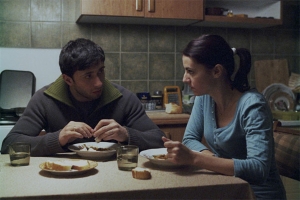 Porumboiu’s follow-up to one of the most hilarious comedies of the decade, 12:08 East of Bucharest (2006), is a companion of sorts to Jarmusch’s film not only in the sense that both of them negate the function of the genre they are supposed to belong to, by completely de-dramatizing their narratives, but also because Porumboiu’s film, too, is a conflict between two types of cinema – the cinema of analytical contemplation represented by the detective-protagonist of the film (Dragos Bucur) and the cinema of thoughtless action represented by his ready-for-ambush boss (Vlad Ivanov). However, more concretely, Police, Adjective is an examination of how our own political and social systems, partly due to the rigidity of our written languages, end up dominating us and how individual conscience and social anomalies are effaced clinically in order to have the bureaucratic clockwork running smoothly. Like Bucharest, Porumboiu, often self-reflexively, sketches the portrait of a bland and pacific city that tries to ape the far west and project itself as more dynamic than it actually is. The film’s disparate themes crystallize deliciously in the final, side-splitting, Tarantino-esque set piece where we witness the police chief urging his subordinates to act by the book, literally.
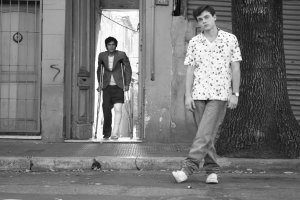 Tetro is a beautiful film. Not just in the way it looks, but in the sheer romance it has for a lost world. The only worthy B&W film of this year out of the four I saw (the other three being Haneke’s
 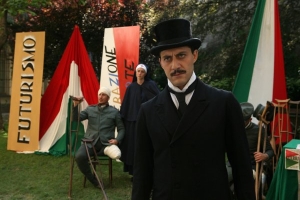 Writer-director Marco Bellocchio’s ballad, based on a nebulous part of fascist leader Benito Mussolini’s life, can teach those so-called historical dramas a thing or two about locating personal ideologies within collective history without being exploitative or pandering to pop demands. Bellocchio’s film is far from a detailed recreation of Mussolini’s political life. It is, in fact, a commentary upon such “detailed recreations” of history based on documents written by winners. Bellocchio’s formidable script and mise en scène keep probing and remarking upon the tendency of fascist systems to suppress histories – personal and national – and exploit popular media, especially the relatively young and emotionally powerful cinema, to blind people of truth and forge a faux reality – a theme underscored in Tarantino’s film too. What more? Bellocchio constructs the film exactly like one of those Soviet agitprop films – not by easy spoofing, but by retaining their spirit and rhythm – using rapid montage, expressionistic performances and operatic sounds. Be it common folk fighting in a cinema hall over a news reel or a bereaved mother breaking down during the screening of The Kid (1921), cinema registers its omnipresence and omnipotence in Bellocchio’s film.
 The perfect antidote to the summer blockbuster, Warwick Thornton’s Samson and Delilah is an extremely assured and undeniably moving piece of cinema that arrives, appositely, as the golden jubilee reboot to Herzog’s thematically kindred movie, Where the Green Ants Dream (1984). Cleverly relegating specific issues such as the Australian government’s intervention and relocation policies for the Aborigines to the background, Thornton frees his films of broad, propagandist political agendas, without ever making the film lack social exploration. With an extraordinary sound design, Thornton keeps the word count in the film to an absolute minimum, letting the stretches of silence shared by his lead characters speak for themselves. The film’s observations about banality of racism in contemporary Australia, exploitation of tribal art and its consequences, the effect of colonialism, especially due to Christian missionaries, on the Aboriginal culture and the ever growing chasm between the tribal and white life styles themselves are fittingly subordinated to the beautiful, unspoken love story that, essentially, forms the heart of the film.
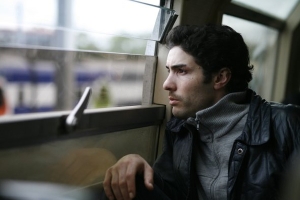 Let me dare to say this: Jacques Audiard’s A Prophet is either the most profound or the most pretentious movie of the year. For now, I choose the former. Audiard’s decidedly unflinching feature breaks free from the limitations of a generic prison drama and takes on multiple dimensions as the apolitical and irreligious protagonist of the film, Malik (played by Tahar Rahim), finds himself irreversibly entangled in ethnic gang wars within and outside the prison. A trenchant examination of religion as both a tool of oppression and a vehicle for political escalation, A Prophet is an audacious exploration of Muslim identity in the western world post-9/11. Although the plot developments may leave the viewer dizzy, it is easy to acknowledge how Audiard confronts the issues instead of working his way around it or making cheeky and superficial political statements. Strikingly juxtaposing and counterpointing Sufism and Darwinism in Malik’s search for identity, Audiard creates an immensely confident and nonjudgmental film that trusts its audience to work with the rich ambiguity it offers.
 The Seventh Art