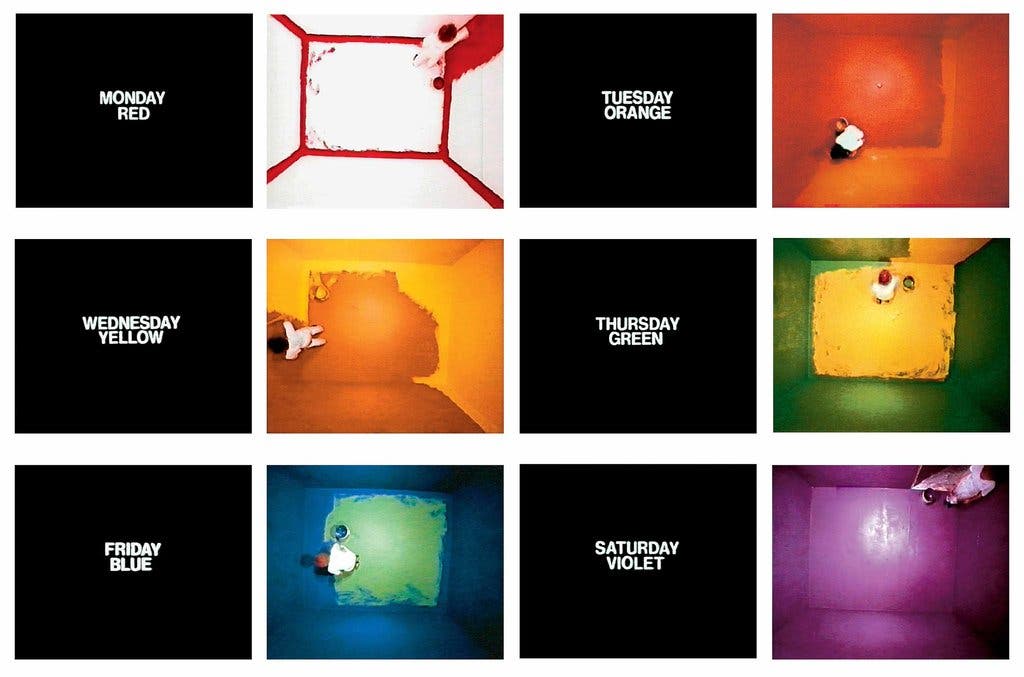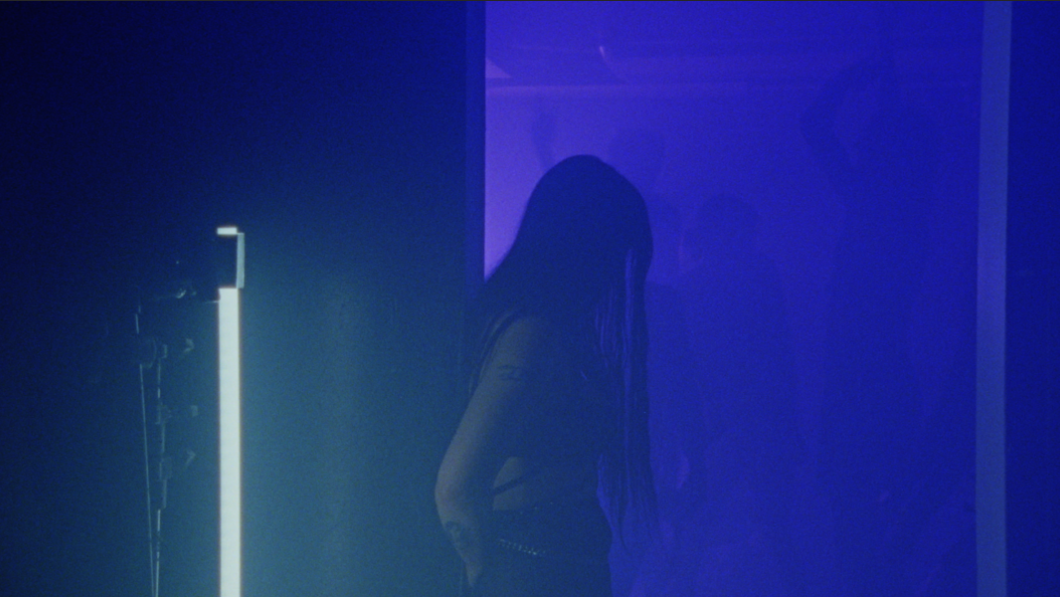
2019 was a special year for me. I came back to cinema in an abiding way after a break of over three years. It was also this year that I quit my day job to write and translate full time, even if it has mostly been for this site. This second innings of my cinephilia has been more guarded, and I find it hard to be excited about watching this or that film, even if it’s by a favourite filmmaker. Part of the reason for this change, I think, is that I don’t repose as much faith in the taste-makers I was earlier guided by (major festivals, branded auteurs, critical consensus). This has weakened, if not completely collapsed, the structure in my mind of what constitutes important cinema of a particular year. Adding to this is the fact that the way I react to films has changed. In my writing, I see myself responding to certain aspects of a work rather than forming strong opinion on its overall merit. As a result, I’m as stimulated by lesser works with strong moments or ideas as I am by expectedly major projects. Whether this breaking down of hierarchies is a sign of openness to new things or a symptom of waning faith, I don’t know.

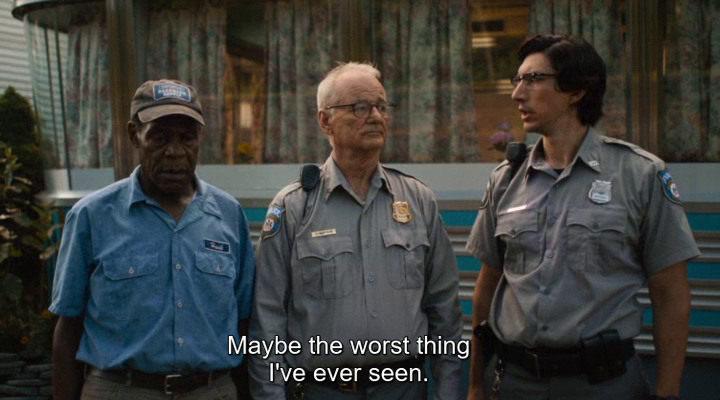
            The state of affairs in the world outside cinema hasn’t been easy either. The staggering return of the politically repressed around the world has found an expression in some of this year’s films too (Zombi Child, The Dead Don’t Die, Atlantics, Ghost Town Anthology, Immortal). Personally speaking, the increasingly dire situation in India hasn’t been without its influence on the way I relate to cinema. The brazenness of the Citizenship Amendment Act (CAA) has now paled in comparison to the mind-numbing institutional violence towards the ongoing protests against the act. Looking at videos of police brutality on my social media feed, I wondered, as anyone else involved in matters of lesser urgency must have, if writing about cinema at this point even had a personal significance, leave alone a broader, social one. The directness of the videos, the clarity of their meaning and the immediacy of their effect made me doubt whether cinematic literacy—contextualization, analysis, inference, interpretation—was a value worth striving for. Weakening of convictions is perhaps part of growing old, but it makes writing all the more difficult. Every utterance becomes provisional, crippled by dialectical thought. I don’t have a hope-instilling closing statement to give like Godard does in The Image Book, so here’s a top ten list instead. Happy new year.


0. 63 Up (Michael Apted, UK)


1. The Truth (Hirokazu Kore-eda, Japan/France)


While multiple films this year about old age have presented it as a time of reckoning, Kore-eda’s European project The Truth offers an honest, rigorous and profoundly generous picture of life’s twilight. In a career-summarizing role, Catherine Deneuve plays a creature of surfaces, a vain actress who struts in leopard skin and surrounds herself with her own posters. Her Fabienne is a pure shell without a core who can never speak in the first person. She has written an autobiography, but it’s a sanitized account, a reflection of how her life would rather have been. “Truth is boring”, she declares. Responding to her daughter Lumir’s (Juliette Binoche) complaint that she ignored her children for work, she bluntly states that she prefers to be a good actress than a good person. Behaviour precedes intent in the mise en abyme of Kore-eda’s intricate monument to aging, as performance becomes a means of expiation and a way of relating to the world. A work overflowing with sensual pleasures as well as radical propositions, The Truth rejects the dichotomy between actor and role, both in the cinematic and the existential sense. In the end, Fabienne and her close ones come together as something resembling a family. That, assures Kore-eda’s film, is good enough.


2. Parasite (Bong Joon-ho, South Korea)


The across-the-board success of Parasite invites two possible inferences: either that the cynical logic of capital can steer a searing critique of itself to profitable ends or that this twisted tale of upward ascension appeals to widely-held anxiety and resentment. Whatever it is, Bong Joon-ho’s extraordinary, genre-bending work weds a compelling social parable to a vital, pulsating form that doesn’t speak to current times as much as activate something primal, mythical in the viewer. With a parodic bluntness reminiscent of the best of seventies cinema, Bong pits survivalist working-class resourcefulness with self-annihilating bourgeois prejudice and gullibility, the implied sexual anarchy never exactly coming to fruition. He orchestrates the narrative with the nimbleness and legerdemain of a seasoned magician, the viewer’s sympathy for any of the characters remaining contingent and constantly forced to realign itself from scene to scene. Parasite is foremost a masterclass in describing space, in the manner in which Bong synthesizes the bunker-like shanty of the working-class family with the high-modernist household of their upper-class employers, tracing direct metaphors for the film’s themes within its topology. It’s a work that progresses with the inevitability of a boulder running down a hill. And how spectacularly it comes crashing.


3. Vitalina Varela (Pedro Costa, Portugal)


Vitalina Varela is an emblem of mourning. In recreating a harrowing moment in her life for the film, the middle-aged Vitalina, who comes to Lisbon following her husband’s death, instils her loss with a meaning. It’s a film not of political justice but individual injustice, the promise to Vitalina the that men in their resignation and madness have forgotten. It’s also a bleak, relentless work of subtractions. What is shown is arrived at by chipping away what can’t/won’t be shown, this formal denuding reflective of the increasing dispossession of the Cova da Moura shantytown we see in the film. Costa’s Matisse-like delineation of figure only suggests humans, enacting the ethical problems of representation in its plastic scheme. The film is on a 4:3 aspect ratio, but the viewer hardly perceives that, the localized light reducing the visual field to small pockets of brightness. Vitalina is a film of and about objects, whose vanishing echoes the community’s dissolution and whose presence embodies Vitalina’s assertive spirit. Her voice has its own materiality, her speech becomes her means to survival. Costa’s film is a vision of utter despair, a cold monument with an uplifting, absolutely essential final shot. A dirge, in effect.


4. Bird Island (Sergio da Costa & Maya Kosa, Switzerland)


The bird island of the title is a utopian place, a refuge for those wounded or cast aside by modernity. For sixty minutes, we are invited to look at five people working silently alongside each other in a bird shelter, tending to birds dazed by the airport next door. They don’t ask where these birds come from, nor do they expect them to leave soon. They simply treat the feathered creatures, re-habituate them into the wild and set them free. The reclusive Antonin, the new employee, is one such bird too, and his social healing at the shelter is at the heart of the film. Bird Island is full of violence, natural and man-made, all of which it treats with stoic acceptance, but it’s a work primarily about the curative power of community, the capacity for individuals to coexist in mutual recognition of each other’s frailties. In that, it’s the Catholic film par excellence, an allegory of the origin of religion. It’s also an exceptionally relaxing film to look at. Observing the participants absorbed like Carthusian monks in their individual tasks, even while working in a group, places the viewer on the same meditative state.


5. Heimat is a Space in Time (Thomas Heise, Germany)


Without question, Heimat is a Space in Time is the best 3½-hour film of the year. Heise’s sprawling experimental documentary uses largely personal documents—letters sent between family members, handed-down private documents—to evoke a broad history of 20th century Germany. As a narrator reads out the exchanges—Heise’s grandfather trying to reason with the Nazi state against his forced retirement, heart-rending accounts from his Jewish great grandparents describing their impending deportation, letters between his parents who were obliged to be in two different places in DDR—we see quotidian images from current day Germany and Austria, urban and rural. For Heise’s family, always made to justify their own place in the country and to never truly belong, the Germanic idea of Heimat seems positively a fantasy. While he reads out his great grandparents’ descriptions of their increasingly impossible conditions of living, Heise presents a scrolling list of Viennese deportees prepared. We try to look for the inevitable arrival of their names in the alphabetical list, our gaze forever deferred. When they do arrive, it feels arbitrary. In other words, what we hear could well be the story of any of the thousand preceding names. Perhaps all of them.


6. Slits (Carlos Segundo, Brazil)
 

A worthy heir to Tarkovsky’s Solaris, Slits draws its inspiration from quantum physics to explore patently human concerns of loss, grief and memory. The uncertainly principle it offers is a choice between being in this world, awake to the problems of living, and finding meaning in the elsewhere. Physicist Catarina (Roberta Rangel) makes ‘sound-photos’ to study quantum the properties of light. She makes extreme zooms into a digital image to perceive the noise issuing from particular coordinates. These ‘dives’ enable her to listen to conversations from another space-time. Grieving from the loss of her child, Catarina unconsciously attempts to find closure through her research. But trying to inspect the surface of things from too close, she loses sight of her immediate reality; trying to find solace in the objectivity of science, she ends up rediscovering the great lesson of 20th century science (and cinema): that the observer influences the observation. Shot in high-definition digital video, Slits is to this new format what Blow-up was to photography. It locates in the trade-offs of the medium—between details and stability, between richness of palette and noise—visual correlatives to its key idea of quantum uncertainty. A brilliant, sophisticated work of politico-philosophical science fiction.


7. Little Joe (Jessica Hausner, UK/Austria)


Of all the recent classical Hollywood riffs in mind, none reinvigorates the B-movie tradition as intelligently or potently as Little Joe. Hausner’s modernist creature feature is a monster movie unlike any other: the dangers of the genetically-modified “happiness” plant that biologist Emily (Alice Woodard) develops is exposed early on, and there’s no triumphal reassertion of mankind to counter its menace. What we get instead is a protracted, total submission of individuality to a hegemony of happiness. Little Joe is many things at once: a multi-pronged attack on the wellness industry straight out of Lanthimosverse, the difficulty of being less than happy in an environment that demands you to be constantly upbeat, the fallout of women artists trying to expunge their maternal complexes in their work and of mothers having to lead double lives. Hausner’s camera appears to have a mind of its own, settling on the space between people, which is what the film is about: the culturally mediated relations between individuals. It’s notable that the titular plant reproduces not biologically but culturally. With its terrific score and work on colour, Hausner turns the cheesecake aesthetic of the film against itself. The result is a film of unusual intellectual density and formal frisson.


8. Status and Terrain (Ute Adamczewski, Germany)


In Status and Terrain, the German obsession with documentation and due process is called to testify to the dialectical process of historical remembrance. Adamczewski’s gently moving camera surveys the length and breath of public spaces in the Saxony region, once a Nazi stronghold, now seemingly anaesthetized under liberal democracy. Official communication, bureaucratic reports and private testimonies read on the voiceover incriminate the buildings and monuments we see on screen, revealing their role in power struggles through the ages. Just as the documents vie for a narrative on the soundtrack, ideologies once thought dead and buried surface to stake their claims on the urban landscape in the present. Adamczewski moves through 80 years of German history non-chronologically, the collage of information pointing to the living, breathing nature of political belief systems. Nazi detention of political opponents in concentration camps, Soviet retribution and blindness to victims of persecution, rise of neo-fascist groups post reunification and the historically indifferent, bulldozing force of current-day neoliberalism play out on the surface of seemingly sedate cities and towns. Status and Terrain is a sober, bracing examination of the manner in which prejudice becomes writ, which in turn becomes history, but also of the way in which this history is contested.


9. Ham on Rye (Tyler Taormina, USA)


The premise is a throwback to the clichés of the eighties: a group of teenagers at a suburban school prepare for their prom night. But in Taormina’s sure-handed treatment, this banal event assumes a spiritual dimension. In the film’s cubist first half, different groups of boys and girls make their way to the restaurant-turned-dance hall, where they will take part in rites of initiation into adulthood and experience something like a religious communion. And then, right after this VHS-ready high, a void descends over the film, turning its raptures into a mourning, not for those who have left this small-town existence but for those left behind: disaffected youth drift about the town or going through robotic social rituals, devoid of magic or warmth. It’s a work evidently deriving from personal experience, but one that’s refracted through a formalist lens. The strength of Ham on Rye is not the depth of its ideas, but the vigour of its prose. Taormina’s manifestly personal style emphasizes the surface of things, the idiosyncratic shot division focuses on gestures and minor physical details to construct scenes, and the eclectic sense of music imposes a global consciousness on a narrative that is otherwise extremely local.


10. Just Don’t Think I’ll Scream (Frank Beauvais, France)


“Cinephiles are sick people”, said Truffaut. Frank Beauvais agrees. Following his father’s passing and a breakup, Beauvais shut himself up in his house in a trou perdu in Eastern France, and watched over 400 films in a period of seven months. Out of this glut, this sickness that Beauvais calls ‘cinéfolie’, came Just Don’t Think I’ll Scream, a film about looking, made wholly of clips from these 400 movies. Through a rapid, self-aware voiceover, the filmmaker reflects on his self-imposed isolation, his panic attacks, the poverty that prevents him from changing his lifestyle, his complicated feelings towards with political action, the conservatism of those around him and his relationship with his parents. Beauvais’s film is a record of his malady as well as its cure. In its very existence, it demonstrates what anyone sufficiently sickened by cultural gluttony must’ve felt: that the only way to give meaning to the void of indiscriminate consumption is to produce something out of it. Just Don’t Think I’ll Scream is not just a cinephile’s film, filled end to end with references, but the preeminent film about cinephilia, the solipsistic hall of mirrors that Beauvais breaks down and rebuilds inside out.


Special Mention: Gully Boy (Zoya Akhtar, India)


Frances Ferguson (Bob Byington)

Was it Beauty that killed the beauty? Frances Ferguson (Kaley Wheless) is pretty, and that is her problem. Byington’s “story of a woman cast adrift in the Midwest” follows the sin, punishment and redemption of Fran, a substitute teacher in a high-school in North Platte, Nebraska. Twenty-five years of age, Fran is going through a failed marriage to a sleazy, loafing husband. Sexual frustration and a mistaken replacement lead to an infatuation with one of the students. In vein of pornographic tales, she arranges to meet the boy secretly, tries to seduce him at a laundromat with a pathetic cheerleader costume (for the “Cougars”) and hooks up with him at the motel. She is promptly arrested, tried for abuse of authority to sexually exploit minors and incarcerated. Frances Ferguson outlines her parole life in detail, structuring it through different penal procedures Fran has to follow: probation debriefing, compulsory group therapy, behavioural counselling, community service, supervised visitation of her daughter, probation exit interview and even voluntary group therapy sessions. Life outside the prison turns out to be even more distressing, uninvited attention for her looks now compounded with the notoriety of being a sex offender. All through the ordeal, the question that arises is whether Fran’s good looks are responsible for her trouble as for the townsfolk’s vivid memory and negative perception of her. Her warden wonders why female sex offenders are invariably pretty. When she tells her therapist that she hardly had authority at the school to abuse, he retorts that beauty is a kind of authority.

The story is recounted by a humorous, at times tendentious, male narrator (Nick Offerman), whose personality constantly comes in way of his objectivity. He contradicts Fran, who also gets to narrate the story from time to time (“joie de vivre”, he corrects Fran who is trying to fake her way through a French class). He inserts his own opinion on the proceedings and acts as a Greek chorus for Fran’s impending tragedy (“Was this breaking the law”? he asks at every turn of Fran’s). The narrator calls to mind Listen Up Philip, but one that’s less world-wise and serious about himself. Byington avoids traditional shot-reverse shot constructions, preferring to build conversations out of separate close ups; the scene of Fran’s interrogation by two police officers is particularly well-edited. He employs an 8-bit video game-like music cue, and a camera that goes out of focus to bid farewell to characters, to funny ends. The sound-bridges and the on-screen texts introducing characters and situations sometimes recall sitcoms, but the comic sense here is much more subtle. It’s still characteristic American sarcasm at work, but Byington pares down the exchanges, cutting away the excess fat that usually burdens American comedies with an insufferable smugness: when the prison cab driver asks Fran to use regular cabs as they are cheaper, she only asks him: “the next time I’m released from prison?”, dropping out the obligatory “sure” at the end. Wheless’ blank-stare performance, accompanied by internal screams, is the visual correlative of this muted comic strategy.

Immortal (Ksenia Okhapkina)

The only contextualizing text of Ksenia Okhapkina’s Immortal speaks of the gulags that were built to industrialize the arctic stretches of Russia. When the camps were opened after Stalin’s death, we’re told, the prisoners stayed back in the town. It’s a telling detail, whether you choose to see it a gesture of helplessness or the product of Pavlovian indoctrination. This three-line title card has more insight to offer than the film that follows. Okhapkina’s 60-minute film presents impressionistic vignettes from one of these erstwhile gulags, a mining town in the arctic still bearing the visual signatures of the Soviet era: image and quotes by Lenin plastered on walls, alongside posters of other Russian heroes. It would seem that it wasn’t just the people who stayed back, but the ideology too. Immortal examines this persistence of ideology in two spaces. In the first, a group of girls are being trained at a ballet school. The instructor asks them to exert themselves and fall in line with others. This exigence, as well as the ballet music, overflows into the second space: a military camp mostly for boys and young men. We see different groups of children and youth being trained for various competences: instruction in training assault rifles, mission simulations, marching drills, shooting practice, screening of nationalistic videos about Soviet kamikaze pilots with promises of concomitant greatness. The boys are insulted by the instructors over looks and behaviour, punished for minor mistakes and questioned over their origin.

The synchronization of military drill to ballet music and the marshalling of soldier bodies into harmonious movement, filmed here in disorienting closeups, brings to mind Beau Travail. Both the ballet (?) and the military camp, it’s revealed, are preparations for an enlistment ceremony on Russia’s Fatherland’s Heroes Day. The show, and the oath, anthem and photography session that follow, seem remnants of Soviet pageantry. Okhapkina pads these two narrative strands with repeated imagery from the town: the spectral to-and-fro of freight trains carrying mined material, hooded miners knocking about in the snow, buses that convey the youth from their house to the camp and back, the dingy corridors of the apartments where they live, a worker using a blowtorch to melt ice off a national monument, an empty factory and the barbed wire fence around it, and so on. The deserted public spaces seem to belong to a ghost town, or a place with no sense of freedom and life. A lone dog barks in the snow, until its fur is covered with frost, forcing it to find shelter. Faces of young men and women are intercut with drawings of heroes, which themselves are intercut with shots of tombstones and cradles, suggesting individualities hollowed out by state apparatuses. Immortal is unquestionably successful in evoking a despairing mood, but it also feels like an exercise in shooting fish in a barrel. Curiously, the film is at its weakest when dealing with concrete events such as the ballet class and the drill—who’d ever suspect a military camp to be a space of ideological indoctrination? I can imagine the material better suited for a book of photos or illustrated poems.

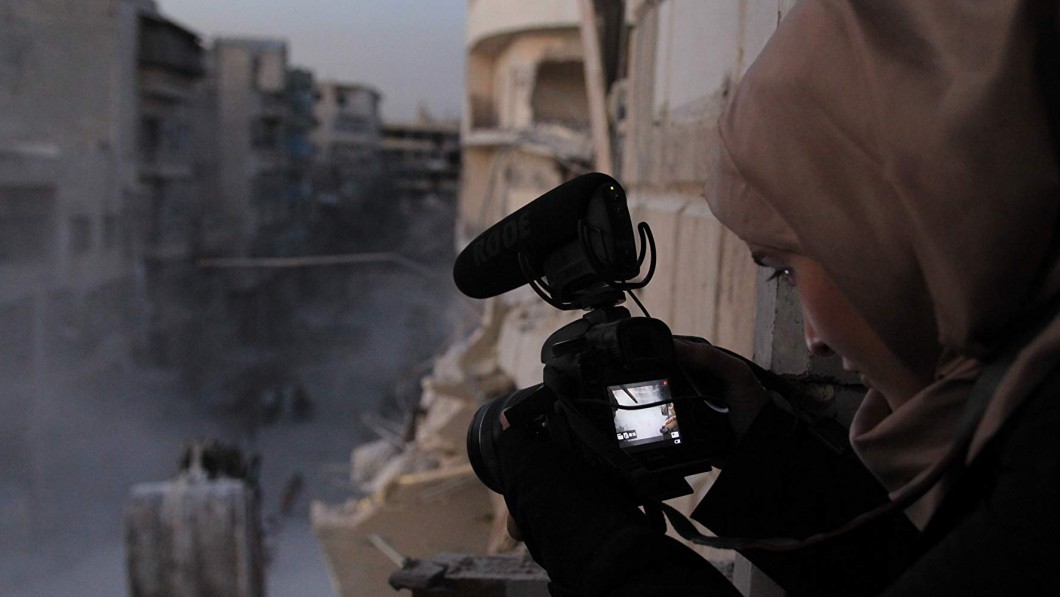
For Sama (Waad Al-Kateab, Edward Watts)

Whatever Russia Today or Al Jazeera will have you believe, whatever you think of American deep state’s collusion with Islamist fundamentalism, whatever objections are raised about the funding of “rebel” reporters, the brute facts regarding For Sama are there for everyone to see: Waad Al-Kateab stayed back with her doctor husband Hamza in rebel-controlled east Aleppo, delivered a baby and lived through the worst months of Putin-backed state bombing of her district. She kept filming, even when the bombings were at her doorstep, even when bodies piled up at the makeshift hospital that she had made home. Edited and telecast this year on British television, For Sama is a record of Al-Kateab’s life between the first student protests in 2012 to her eventual emigration in December 2016. It is presented as a filmed letter to her baby, Sama, to explain her parents’ decision to stay back in east Aleppo despite the impossible conditions of living, despite the inevitability of defeat. Filmmaking here becomes an existential cry against an order of things that would rather not hear these voices. The regime denied that the student protests were going on, says Al-Kateab, filming was the only way to show otherwise. For Al-Kateab, it becomes increasingly important to film as the military makes advances into east Aleppo, reducing the rebels to a few square kilometres. Filming, she says, gives her a reason to believe.

“Silence makes you feel that the city is dead”, notes the filmmaker when she finally leaves the city. Indeed, the incredible shock of For Sama stems from the extraordinary disconnect between image and sound, between the visual illusion of normalcy and the constant noise of shelling. So much so that even Sama doesn’t react to the explosions. The film is an inexhaustible series of harrowing sights—a mother carrying her dead son wrapped in plastic, a baby resuscitated from the clutches of stillbirth, a pan shot from a dead child to Sama in the operating room, Waad and Hamza singing to calm Sama down as they sneak back into their district, a young boy talking about his missing friends, two hospital attendants warming themselves over the shell that has pierced the building—whose horror is redoubled by the facts of normal life punctuating them: a wedding, Sama’s birth and antics, reunions with other families who are staying back, everyday school, painting sessions, a persimmon fruit as a gift, Waad’s repeated declarations of love to Hamza. To be sure, Al-Kateab makes only a passing mention of the extremists running her city, and we don’t get a clearer idea of what’s holding them back from leaving this nightmare, except their faith in revolution. In a sense, it is problematic that For Sama excises politics out of its narrative, rendering it an account of the extraordinary bravery of people fighting an abstract force of annihilation. On the other hand, it’s a deeply disturbing reminder that peace is not a stable condition interruptions to which are wars, but a fleeting, fragile state that can be swept away overnight.

The Lighthouse (Robert Eggers)

The story of Prometheus, with its democratic challenge to the keepers of the fire, represents a metatext of Western modernity, but its tragic vision also dovetails with the Christian worldview. Robert Eggers’ The Lighthouse reinterprets this pagan myth, infusing it with a stark (anti-)Catholic flavour. Robert Pattinson and Willem Dafoe play lighthouse keepers, Winslow and Wake respectively, posted on a remote, deserted island for a month. Wake the boss has Winslow do all the menial chores on the island, while he reserves the lofty task of maintaining the light on the tower. The bearded Wake, who is indeed a walking parody of a seaman, delivers long, literary monologues in sailorspeak, even when he’s only ordering Winslow to wipe the floor or cursing him for not liking his cooking. He pulls rank over Winslow every time he can, at times gaslighting his subordinate and weaponizing his original sin, which Winslow confesses during a night of drunken revelry. With mounting isolation, sexual frustration and a possibility that his stay on the island will be permanent, Winslow starts to lose it, abetted in no small part by alcohol. Soon, the pair bickers like the seagulls hovering above the island. The Lighthouse is set in no particular place or time, and it’s deliberately set at a register far above ordinary realism. This lack of particularity, combined with the simplicity of the outline, give the film a horror fable-like texture. This ethereal quality is countered by a grimy realism of mise en scène. Scenes of violence and physical degradation are visceral and the film features every bodily emanation possible.

There’s another reason that The Lighthouse floats unmoored to history. It’s evidently a very cinema-aware work, echoing if not quoting a range of films from the Expressionist classics to Ingmar Bergman and Bela Tarr. Its memorable monochrome cinematography, with geometric movements of the camera, looming shadows and an ominous atmosphere, its boxy aspect ratio, its actors staring back at the camera, and its use of medium and ‘American’ shots all make it feel familiar without locating it within a specific cinematic tradition or time period. That said, it is to Eggers’ credit that, despite the evocations, the film never feels like a pastiche. The Lighthouse employs horror movie tropes in its foreboding sound and visual design, but it doesn’t go where traditional horror films go. In fact, the stakes as well as the outcome of the premise, that the two men are going to go stir crazy, is clear right at the outset. The disintegration that does happen is played out with ample dose of comedy: Wake’s farts echoed with the sirens of the lighthouse, his towering self-seriousness that must inevitably mask a sense of uselessness, and Winslow’s eventual outburst when he blows his superior’s cover. Dafoe and Pattinson are fascinating to look at, especially in their very physical scenes with homoerotic undertones, but the film itself feels like a slight cinephilic sortie.

Walden (Daniel Zimmermann)

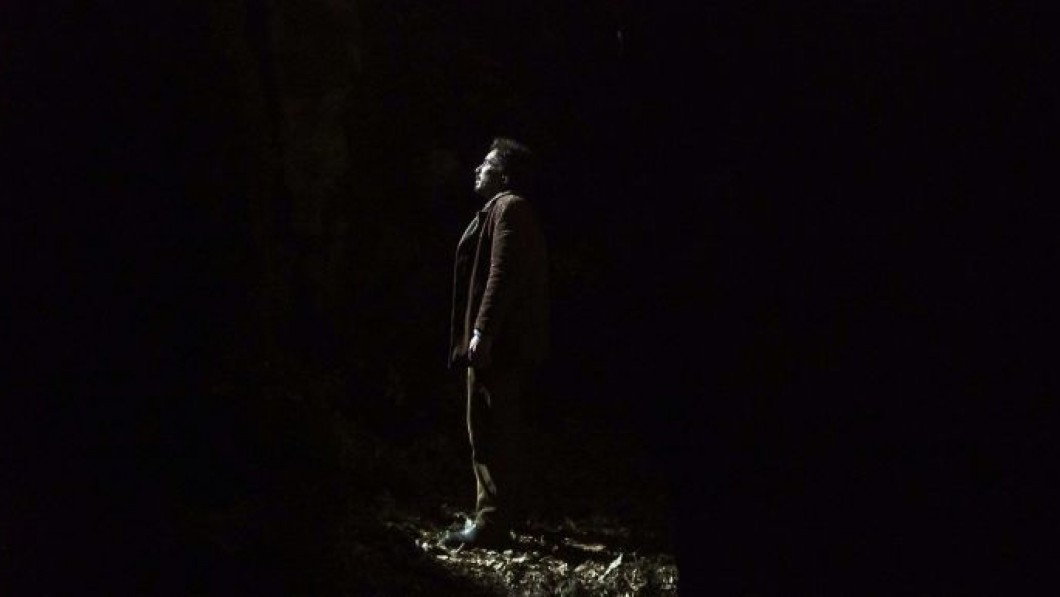
In the first shot of Austrian artist Daniel Zimmermann’s Walden, a camera pans from left to right in the middle of a forest. It’s still and quiet, and it isn’t until minutes into the shot that we have the first human presence. A lumbering activity is underway and we hear the hum of a chainsaw in the distance. Around the eighth minute of the shot, amid cries of timber, a tree falls, its tip just a few feet from the camera. When the camera completes full circle, the view has changed so much that we aren’t sure whether it’s the same spot the camera started at. Human action on the environment is what Walden is about, traces as it does the conversion of the fallen tree into planks and its transportation over rail, road and sea to a forest location in Brazil. Walden tangentially fits into a tradition of narrative documentaries that purport to demonstrate the workings of a globalized economy by focusing on the provenance of specific consumer goods. While its cross-continental movement is still enabled by international trade, the timber here isn’t following the regular route of imported goods. As the film’s supporting text points out, the path of the planks in Walden is the reverse of the usual trajectory of goods in a global economy. The film never reveals the mystery of why a consignment of sawn wood must move from Austria to a tribal region in the Amazon.

This refusal to explain can partly be understood by the fact that Walden also inscribes itself into another tradition. Constructed out of thirteen 360-degree pan shots of about eight minutes each, it has a direct kinship to structural films such as those of James Benning. It’s especially reminiscent of Benning’s RR in its emphasis on movement of goods described in predetermined cinematic formulae. The structure raises the questions: why 360-degree pan shots and why nine minutes? I think there are no extra-cinematic explanations to these choices and that these are foundational parameters—arbitrary givens of the problem—that are to be taken for what they are. Besides, the shots don’t exactly complete full circle, most stop at three-fourths. The duration, too, ranges from seven to nine minutes. While Zimmermann’s camera moves at a constant pace, it gives the illusion of slowing down or speeding up depending on the movement that happens along the sweep of the camera. The moving timber makes its presence in every shot either at the beginning or the end, but the milieu it’s moving through—whether it’s a scenic port city in Brazil or a tribal village in the woods—is of equal interest. The film starts and ends in the stillness and silence of the jungle while its middle section consists of constant movement, just as it begins and closes deep within the woods, with its central passages having to do with modern facets of civilization. Zimmermann’s camera always seems to be at the right place and time to capture the most interesting action in the vicinity. This aspect reinforces its pre-determined structure over its documentary aspects.

The Whalebone Box (Andrew Kötting)

For those who have seen any of Kötting’s work, the confounding associations of The Whalebone Box shouldn’t come as a total curveball. The sixty-year-old Kötting makes playful experimental films featuring friends and family that work off English folklore and geography. A frequent protagonist is his daughter Eden, an artist herself, who was born with Joubert Syndrome. Eden is both the narrator and the inspiration for this new film. Two dominant narrative strands emerge from the audiovisual thicket of The Whalebone Box. In the first, we see Eden dressed as a May Queen, seated in a forest on a fauteuil holding a hunting rifle and peering through binoculars. She is admittedly looking for a whale to hunt down. We also see her at a museum and, more frequently, in bed. Subtitles express her thoughts and dreams, which are about a box made of whalebone, an artefact she recreates in cardboard. The second narrative strand is actually about the legendary whalebone box, which was reportedly created by sculptor Steve Dilworth on the Scottish island of Harris thirty years ago. The island, we are told, is now afflicted with an unknown epidemic and the box might hold a cure. So Kötting, the writer Iain Sinclair and the photographer Anonymous Bosch set out with the box on a journey from London to the north. They stop at places of mythological import to “charge the box” with curative energy. Several shots of the film show the box on the dashboard of the group’s car or Sinclair lugging it around the English landscape. Interspersed with this journey is monochrome clips of children playing and recreating pagan myths.

Now, how much of this myth is fabricated, we don’t know (I suspect all of it is); Kötting’s rough-hewn home movie aesthetic imparts a found-footage like authenticity to it. But what is evident is that The Whalebone Box is partly a wish fulfilment project in which Kötting fashions a film after his daughter’s dreamlike fiction. He departs from the basic idea of a mysterious whalebone box and weaves in all the references that it evokes. There’s Moby Dick, for instance, which had already made its appearance in Kötting’s earlier work. The filmmaker expands on the MacGuffin with soundbites from Robert Aldrich’s Kiss Me Deadly, also about a box with deadly powers, and Billy Wilder’s Sunset Boulevard. Other references include Pandora’s box, the black box of airplanes and Schrödinger’s box containing the cat, which here stands for the whale simultaneously in “a state of being on land and returning to ocean”. The artefact the trio carries is at times swapped with Eden’s cardboard version, making clear the playful, recreative intention behind the project. Shooting in 16mm, Kötting employs an amateur film style with handheld camera and washed out colours. He quotes titles from Philip Hoare’s book Leviathan and has poems read on the soundtrack. At times, he overlays recorded speech over the same words captured on location, imparting an oneiric rhythm and texture to the film.

So Pretty (Jessie Jeffrey Dunn Rovinelli)

Four gender-fluid youth spend their days in a shared apartment in Manhattan. They cook, have sex, paint protest posters, make music, organize reading sessions in the park and discuss communism. Trans filmmaker Jessie Jeffrey Dunn Rovinelli’s So Pretty presents the life of these young, queer folk as a self-sufficient world. Considering that we see it through the eyes of its participants and their friends, there’s no outsider gaze against which these lives are to be assessed. The camera often follows them walking the sidewalks of New York, this liberating gesture being a given. Their protests and the police crackdown of these protests are only suggested and remain in the periphery. Grafted on the documentary record of this everyday routine are details from the eponymous novel by German writer Ronald M. Schernika. So Pretty isn’t as much an adaptation as a dialogue with the novel. The actors of the film take turns reading passages from the book to each other. The film dramatizes what they read sometimes. Tonia, the “character” played by Rovinelli, is in fact in the process of translating the book and discusses with Franz (Thomas Love) on whether a particular word needs to be translated negatively as “coupledom” or positively as “togetherness”. At first, it appears that Paul (Edem Dela-Seshie) and Erika (Rachika Samarth) are a stable, “trans heterosexual” couple, but it soon becomes apparent that there’s no point boxing the desires of these characters. They make out and sleep with each other in every combination, their interlaced bodies on bed being a punctuating visual of the film.

Rather than the representational politics or particulars of the adaptation, it’s the film’s formal strategies that struck me the most. Rovinelli’s camera pans and tracks in extremely slow motion across the rooms, producing tableaux of people in ordinary interactions. In a remarkable early shot, six characters sit in the dining room making small talk in pairs. Some of them are off the frame, and their voices are mixed so that they vie equally for our attention. Like in a Robert Altman shot, there’s no central point of focus, and our ears and eyes shuttle from one pair to another, without every settling on any of them. In the following scene Franz and Tonia make their bed. Their heads out of the frame, our focus oscillates between the two across the vast negative space of the bed. I presume this asymmetrical manner of framing has a theoretical underpinning, but it’s also a visceral choice. Tonia suffers a heartbreak with Franz, but this never becomes a dramatic element. A long shot presents the two, now in a different apartment Tonia has taken up, cooking, doing dishes and eating in the kitchen, the tense, wordless atmosphere signalling the straining relationship. The film’s measured pace is further diluted as the relationship buckles and even more so when the police arrests Erika. The characters split up in two groups and the ambience becomes mournful. Towards the end, the film becomes a pure light-and-sound performance played against Erika’s music that mixes melody and atonality. In other words, a sustained mood piece.

Mother (Kristof Bilsen)

The Baan Kamlangchay centre in Chiang-May, Thailand, is a home run by a Swiss national for patients suffering from Alzheimer’s, dementia and related ailments. It shelters fourteen patients from German-speaking countries and employs three local caregivers. The film begins with the anguished thoughts of one of them. Pomm is separated from her husband and gets to visit her three children only occasionally. She works two jobs to pay back her debt and secure a future for her children. Bilsen’s film too juggles two narrative arcs. In the first, we follow Pomm’s routine: her comfortable rapport with her nonagenarian patient Elizabeth, her visits to her mother and children living several hours away, her interactions with her employer, her account of her father’s depression and eventual suicide, her mourning over Elizabeth’s passing, and articulations of her anxiety about her old age and her guilt over ignoring her mother. Running parallel to Pomm’s life is Maya’s in Switzerland. Maya is 57 years old and suffers from Alzheimer’s. After much deliberation and concern, her husband and daughters have decided to admit her to Baan Kamlangchay. They speak about the prejudice associated with sending your loved one to a home. Indeed, Maya’s family couldn’t be more loving. We see her daughters take her for daily walks, doing her hair and nails, preparing her move to Thailand, packing her medicines and clothes, and generally being there for Maya. Bilsen cuts between Pomm and Maya before they meet in reality, and when they do, he reinforces their almost predestined bond through a closed shot-reverse shot-reaction shot triad at the home.

Mother is evidently about caregiving and maternal affection, but it’s a detailed study in the cultural differences involved in familial bonds. Pomm is moved when she meets her mother after a while. She tells the camera that she wants to hug her, but wouldn’t dare to, given her cultural norms. On the other hand, we see Maya’s family expressing their love through embraces and kisses. Maya’s relation to her pre-teen children, in contrast, is much more intimate and physical than what Western parents would exhibit towards their adolescents. Bilsen intercuts between the two families to illustrate different verbal and non-verbal expressions of affection. Now, as an employee at the home, Pomm has to be much more physical with her Western patients, who are maternal figures to her, than she is with her own mother. This evocation of the effects of global capital on the most personal of relationships is what gives Mother its intellectual foundation. The very fact of the home being in Thailand, and not in expensive Switzerland, points to the economic underpinnings of the caregiving industry. Pomm discusses shifts and holidays with her boss, who calls his patients customers. But she is also genuinely caring of her patients. Mother doesn’t state that either capital or caregiving trumps the other. It merely throws light on newer forms of a labour that’s always been side-lined, and the contradictions that these new forms produce. Pomm reflects on the good fortune of her patients to be able to pay for the care, which she herself won’t be able to afford for her mother. In Marxist terms, Pomm is alienated from her own service, even when it doesn’t involve any means of production. What would happen to her, Pomm wonders, when she is old? Would her kids provide her the same care? If they move to Switzerland, perhaps.

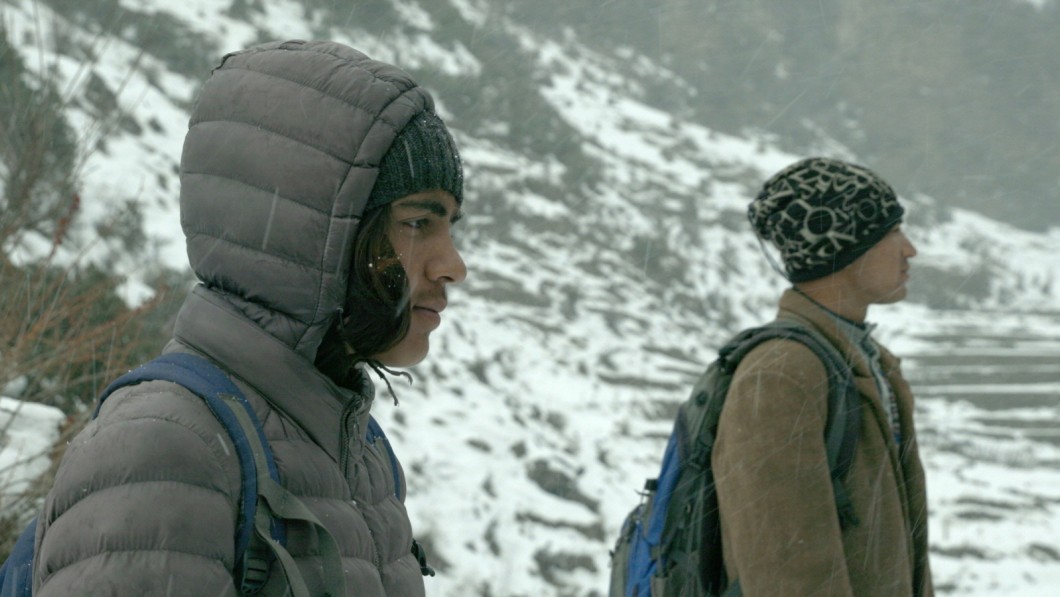
Bitter Chestnut (Gurvinder Singh)

If cinema could substitute for voyages, it will look something like Gurvinder Singh’s Bitter Chestnut. The film immerses the viewer deep into the sights and sounds of an unnamed village in one of the valleys in Himachal Pradesh, where Gurvinder then lived and worked. The immersion is so total that the film could serve as a comprehensive catalogue of the way of life in the valley. Gurvinder is so fascinated with the textures of the place that the need to impose a fictional narrative on it becomes not just a secondary concern, but a hindrance at several points in the film. Bitter Chestnut is brimming with anthropological facts; the food, architecture, attire, language, occupations and rituals of the community become such important details that the film abandons its putative story half an hour in to become a full-blown documentary, resuming its narrative only much later. We are made privy to a baby’s first shower, the woman-only drunken revelry that follows, an oral history of fire hazard in the village, men and women daubing colour on each other during Holi, a newly-made cupboard moved through a celebrating crowd, not to mention elaborate scenes of the 17-year old protagonist, Kishan (Kishan Katwal), cooking. Even when the film introduces fiction, there’s no drama, Kishan’s low-key anxiety never snowballing into a conflict. Kishan’s family, around which the film revolves, leads a tough life sustained by a variety of occupations—hunting, carpentry, horse rearing, dairy farming, spinning—in addition to Kishan’s father’s and brother’s stints as labourers in the city from time to time. It’s an austere, pragmatic life, only occasionally given to festivals and faith.

Sporting a hoodie and sneakers, Kishan, like the community at large, is facing the slings of modernity. He makes pizzas at a restaurant (Gurvinder’s own, called Cloud Door, in homage to his mentor Mani Kaul) run by an outsider for international tourists. It’s a dead-end job, especially depressing considering that Kishan’s peers are leaving the valley for greener pastures in Delhi. His uncertain desire to move out is counterbalanced by the immediate economic and emotional needs of his family. It’s a modern predicament that goes against the time-worn mores of the valley. It’s also a narrative that hovers untethered over the documentary pleasures of Gurvinder’s film. Bitter Chestnut rests uneasily between two modes: the purity of the world at hand holds Gurvinder back from fictionalizing it too much, while the fiction prevents him from breaking the fourth wall, something which could have made for a richer work. Gurvinder works with simple camera and lighting setups, allowing large chunk of the scenes to unfold in the master shot itself. The participants are all non-actors from the valley playing their real selves. Their reticence before the camera shows when they are made to enact predetermined exchanges, while scenes of them celebrating or performing are more spontaneous. It is, however, the spellbinding (if at times touristy) Kangra district itself, spanning winter and springtime, that is the true protagonist of the film. Along with Amit Dutta’s films, Bitter Chestnut constitutes a distinct cinema of the region. I do nevertheless wonder if this is the kind of film the creator of Alms for a Blind Horse would ideally like to be making.

Status and Terrain (Ute Adamczewski)

Ute Adamczewski’s excellent debut feature Status and Terrain begins with shots of homes, public structures and castles in the Saxony region of Germany. An archival text, spoken on the voiceover, tells us that the region was home to the labour movement of 1933, the backbone of the National Socialists (“Hitler belongs to the Elbe”, states one citation). It was the year that opponents to Nazism, especially Communists, were detained in “protective custody” under the Decree for the Protection of People and State. And it’s these youth clubs and castles that served as preliminary concentration camps for the detainees. And so Status and Terrain establishes its modus operandi early on. All through the film, we will be shown buildings, monuments and public spaces in current-day Saxony, captured in the mournful hues of winter. Read on the soundtrack are documents—official notices from the government, bureaucratic communication between state organs, diary entries and memoirs of the persecuted, prisoner release forms and surveillance reports—related to the structure under consideration: a shut-down notice to a cafeteria that has become a hotbed of subversion, a plea by the wife of a political prisoner assuring her husband’s recantation, an ordinance asking camp detainees to pay two reichsmarks every day for their own detention, a letter from traders around the Sachsenburg camp requesting the state to source supplies from them, a Soviet announcement declaring that Jews shouldn’t be considered the primary Nazi victims, and other such extraordinary communications.

In the film’s dialectical organization, the tumultuous past described on the soundtrack seems to belie the calm image of the present. But, as the description of more recent events are read out, it becomes clear that the present, rather than representing a rupture with the history, bears witness to continuing violence and fascism. This manner of tracing historical trauma in the visible signs of the present isn’t new. In that, Status and Terrain shares DNA with works like James Benning’s Landscape Suicide, John Gianvito’s Profit Motive and the Whispering Wind and, closer home, Nicolas Rey’s differently, Molussia and Thomas Heise’s Heimat is a Space in Time. But the present in Adamczewski’s film doesn’t just bear the weight of history, it is an active battleground of ideologies. In the eighty years of German history that Status and Terrain shuttles across, we see that different narratives contest for the same geographical space. After the war, an association of the persecuted wrote a letter to Soviet authorities asking them not to execute Nazis in the same space that Jews were. Antifa and pro-DDR graffiti are as visible as ultra-right-wing imperial flags. A WWI memorial was turned into a fascist monument in 1933, an anti-fascist monument in 1963, a symbol of German unity in 1990 and is now being run over by a supermarket. Like in Alex Gerbaulet’s Shift, all sediments of history over a place seem to be active at the same time, vying for dominance. Adamczewski’s gently roving camera picks up an encapsulating detail: celebratory plaques for great German composers embossed on the ceiling of a castle that was converted to a concentration camp.

The Cordillera of Dreams (Patricio Guzmán)

A return to the permanence of nature might be symptomatic of the desire of old age to distance itself from worldly affairs. But when Patricio Guzmán returned to the Atacama Desert in Nostalgia for the Light, it was to get back to the political past, both personal and national. The approach was reinforced in The Pearl Button, the vast Chilean coast being the subject of Guzmán’s dive into history. The Cordillera of Dreams completes the trilogy, the filmmaker now turning to the Cordillera, the stretch of the Andes mountain range that isolates Santiago from the rest of the world, as the object of his interrogation. “I was busy trying to change society”, says the filmmaker in his characteristically meditative voiceover, “that I was never interested in the Andes; I now see it as a gateway to understanding Chile”. The film is punctuated by awe-inducing helicopter shots of the snow-covered Cordillera, its rocky surfaces and barren, infinite valleys. Woven around these heart-stopping images are interviews with Santiago’s culturati—two sculptors, a singer, a writer and a volcanologist—who discuss the significance of the Andes: the mountains as a watchful mother, a carrier of scents, a muse for artists, a veritable coast that turns the country into an island. For Guzmán, however, the Cordillera stands as a silent witness to the nation’s hidden past. It’s as though the mountains are keeping a secret from me, he says in all sincerity, a secret that might be the coup d’état of 1973.

While a personal work like its predecessors, The Cordillera of Dreams however ventures deep into sentimental territory. The sight of the mountains, admits Guzmán, makes him want to go back to his childhood in this city that nevertheless “greets him with indifference”.  He films the houses and streets he lived in, talks about the making of The Battle of Chile, his detention by the military and his subsequent flight to Europe. He confesses his desire to begin anew and rediscover the life he had left behind. Even in Europe, he says, he’s always been making films about Chile. He seeks to understand this gravitational pull that the country exerts on him through the figure of another filmmaker who did stay back. Pablo Salas is a documentarian who has been recording political happenings around him for 37 years. His personal archive of video tapes and hard drives fills his entire office, and they serve as the suppressed record of Chile under the Pinochet dictatorship. Guzmán and Salas discuss their work and politics at length: the challenges of filming protests, the tyranny of the dictatorship, the ruthless neoliberalist revision of Chilean economy, the inequality and rampant privatization of resources, and so on. Guzmán is wholly admirative of Salas, the man he wasn’t, and speaks of the filmmaker’s large archive as the memory of what was hidden. His own film, though, feels like an obligatory extension of Nostalgia for the Light and The Pearl Button. Part of the reason for the slide is that the Andes remains only a picturesque background to the investigation. Now and then, Guzmán does relate the mountains to history, as with the idea that the rocks from them were used for paving the streets of Santiago, which saw the boots of the military and blood of the protestors. These connections, though, remain far and few, unlike the tightly knit associations of the previous two remarkable works.

143 Sahara Street (Hassen Ferhani)

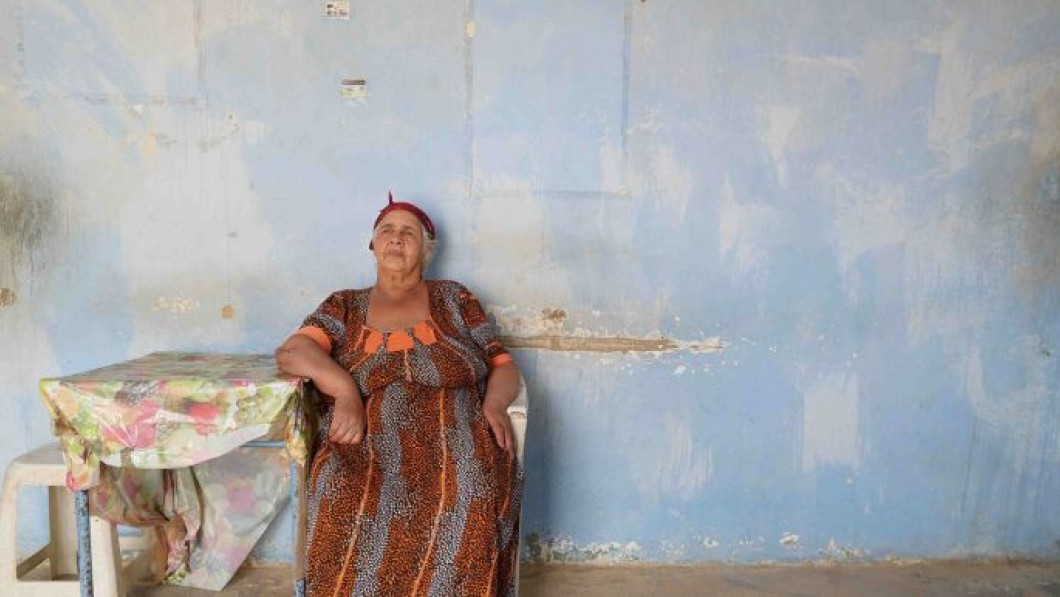
In a bright, panoramic shot of a desert, a microscopic figure on the left side moves slowly towards a rudimentary structure on the right. The figure is that of Malika, a rotund, elderly woman who lives and runs a shop on a highway just outside the town of El Menia, Algeria, in the Sahara. Malika lives with her cat Mimi and her joint, possessing the absurd address of the title, serves as a refreshment point for bikers and motorists passing by. Malika is an unusual woman, not just in that she’s an old woman running the shop independently, but also in that she’s unmarried, doesn’t have kids and prefers to stay away from her extended family. Her independence needs no extenuating context: when a client talks about newly legislated women’s rights, she lashes out, “I don’t need any rights”. Malika likes music and dance, hates religious hypocrisy and claims she can’t stand other women. The building she inhabits is spare and contains two rooms: a kitchen and a dining area for clients. There’s a fridge but no electricity. Living far from civilization, Malika, whom one visitor aptly christens “the gatekeeper of the void”, listens to whatever the radio can pick up. A petrol station-cum-restaurant is cropping up next door, potentially eating into her revenue. Malika, though, is unfazed, convinced that the new venture will shut shop in two weeks.

Outside of the occasional accident in the vicinity, Malika’s only entertainment and source of interaction is with the people who stop by at her place for tea, bread, cigarettes or soda. The characters are colourful enough: a Polish woman biking across two continents, a group of young men who mount a musical performance for Malika, a couple of imams from Algiers, immigrant workers who have come to Algeria for better prospects, a man looking for his lost brother whom Malika suspects of being a charlatan. Director Ferhani captures all this interaction in simple, front-on shots from a tripod. Inspired by the Sahara, his compositions are strongly horizontal, the desert constantly framed by the edges of doors and windows like a landscape painting. Over the course of the film, we are made intimately familiar as much with the building as with Malika. The various walls of the house against or through which we see Malika are later stitched together with a circular tracking shot around the house. Ferhani does not dissimulate his presence and regularly interacts with both Malika and her clients from behind the camera. Less than a hundred in number, the long shots of the film encapsulate the rhythm of the place, recording action in real time without ellipses. Despite its apparent modesty, there’s a philosophical undercurrent to Ferhani’s film. When Malika is by herself, the passing of time is all the more palpable, her mortality looming large. The infinite space of the desert, devoid of other human presence, invites an interrogation of the meaning of freedom, and whether or not one would trade it for the security of a community.

Ridge (John Skoog)

Swedish filmmaker John Skoog’s debut is set in his native Skåne County in the south of the country. Ridge revolves around a dairy farm in the countryside, but doesn’t follow a familiar narrative line. What we get is a mosaic of scenes from the vicinity of the farm involving men, animals and machines in isolation or in interaction: foreign workers from Poland arriving by ferry to the farm, a local supervisor walking them through the routines, harvest machines working on the fields, cows being milked by robots, residents collecting snails at night with flashlights, a migrant worker writing a musical greeting card to someone back home, two children playing a farm simulator game, a largely mute girl corralling cows that have broken free, a flea market suggested through a tracking shot of a stall with objects, fully costumed hunters entering cane fields, a cat in the house being thrown out, a picnic of young people in which one passes out, a machine cutting trees all alone in the dark, a burning car, a disco party and so on. There are a handful of protagonists that emerge, characters and locations that appear in multiple scenes, but there’s no sense of progress or causality across them. These documentary shards of information are, instead, loosely held together by the sensation of northern midsummer and the generally upbeat and mischievous feeling that goes with it.

Skoog, consequently, emphasizes the ambience. His smooth tracking shots glide over fields and pastures at golden hour. His meticulous sound design, which regularly drowns out human voice, mixes electronic music, machine drones and natural sounds. Despite not being about individuals or even humans per se, Skoog’s work with actors is noteworthy. An improvised scene with a Polish youth receiving a haircut becomes an impromptu lesson on immigrant behaviour and cultural differences, which then turns into a bullying session. The film opens with a voiceover recounting the legend of two cows that go wild; the two cows will make their appearance at the end. The work thus blends personal experience, folklore, fictional and documentary passages without favouring any of them. To some extent, Ridge recalls Koyaanisqatsi in its weaving of human, mechanical, animal and natural presences into a larger tapestry of life in a particular region. But Skoog’s film is vehemently anti-didactic, refuses as it does even the basic enticements of a narrative. On the other hand, it’s a work full of surface pleasures, especially Zbroniec-Zajt’s twilight cinematography. The result is a beguiling if befuddling portrait of migrant experience in the vein of Apichatpong Weerasethakul.

Those That, at a Distance, Resemble Another (Jessica Sarah Rinland)

Jessica Rinland’s unusually titled film (and unusually presented in two aspect ratios, 1.33 and 1.85) is also an unusual museum documentary. It begins with an on-screen text that muses on the relation of a replica to the original, tracing the parentage of painted animals to real animals, which themselves are DNA replicas of original specimen. The film opens with a replica too. A researcher-curator has a replica produced of an elephant tusk. She unpacks it carefully from its container, sucking out the flour-like powder protecting it. We will remain with this replica for a large part of the film, as the curator cleans it, has it broken with a hammer for an unspecified reason and glues back the broken pieces again for an unknown reason. Interspersed between these actions are other allied activities at the museum restoration section. What makes Rinland’s film go against the grain is that it refuses to give any context for the actions we witness. The activities we see are, in fact, undertakings at different museums across the world, but we don’t know that until the final credits. We assume that it’s the same cast replica of the ivory being processed, but we are in fact observing several artefacts, real and replicas. This destabilizing erasure of the boundary between real and fake also makes the viewer suspicious of the film’s apparently documentary nature.

Rinland is no Frederick Wiseman, her interest is not in the politics of art objects and institutions. If her patient observation of restoration activity recalls Harun Farocki’s work, the patently anti-explanatory bent of her film couldn’t be more different. Unlike traditional museum documentaries, Those That Resemble provides no supplementary information, no detail on the nature or history of the artefacts, the institutions sheltering and handling them. Rinland’s camera is relentlessly trained on hands performing a range of tasks: brushing casts, turning book pages, kneading dough to secure the casts, removing layers of packing material, chipping stones, drawing graphs and measurements, fixing ivory-lined boxes, cutting sponge into blocks that are then used to prime a tusk, laser cleaning a piece of ivory and so on. These activities take on a hypnotic quality in their zen-like focus on objective-bound activities; they are also very pleasurable to the obsessive-compulsive part of the brain trying to complete patterns. Large stretches of the film unfold like unbox therapy or five-minute craft videos, underscoring the care and precision with which the artefacts are handled. Recalling the cinematography of Claire Denis and Claire Mathon, Rinland’s camera exhibits a curious material fetish, fixated as it is on various textures natural and artificial. I was also reminded of Mani Kaul’s Mind of Clay at many points.

America (Garrett Bradley)

America opens with one of its many references that go over my head: a photo of black entertainer Bert Williams, who becomes a springboard for the film’s critical reflection on the visual history of black performers and entertainers. Stills and extracts from silent films featuring Afro-American actors are excerpted over ambient noise from the present. This archival material is intertwined with fictional passages shot in strongly monochrome 35mm: a black woman in post-Civil war South walks by cane fields and strips a white man wrapped in a long white cloth. The cloth flies over the field, becomes a plaything for a group of kids. It’s then trampled over by a unit of black Union cavalrymen, before being appropriated by them as a flag. The film’s dreamlike central section features even more disconnected vignettes: a boy scout group from Louisiana two of whose members play with telephone cables, a baptism filmed in split compositions, a table fan in the open, rotating doors, women skating, a couple dancing, disco lights, a knife falling and men with musical instruments staring at the camera. These seemingly unrelated glimpses of 20th century (Louisianian?) black experience, however, converge as the focus shifts to professional entertainment.

Louisiana-based Bradley, it appears, is interrogating the history of black representation as consumed and internalized by black viewers. Clips from silent films show Afro-American performers in exaggerated blackface caricaturing black life for a predominantly white audience, whether they are bumbling in a barroom dance or romancing on a merry-go-round. Bradley provides corrective recreations in the present, black performers executing graceful movements, gestures and actions in their respective fields. Bradley’s telescoped look at the history of black representation is sometimes quotational, as with the familiar image of athletes and baseball players, and sometimes revisionist, like as when we see an Afro-American orchestra conductor or a female aviator—images of black cultural contribution we aren’t regularly exposed to. The schema becomes apparent in a scene, filmed in tracking shots and canted angles, which recreates the Last Supper with black Jesus and apostles. The performers striking tableaux in America, in contrast to their predecessors, are black entertainers playing as and for themselves. In its exploration of the place of black figures in popular visual culture, America is a companion work to Ja’Tovia M. Gary’s The Giverny Document, in which the marked absence of black bodies in the Western artistic canon is juxtaposed with the safety of black women in public spaces. If less ambitious or polemical, Bradley’s film is more attuned to cinema history and, with its baroque compositions, superpositions and sharp chiaroscuro images, is also formally alive.

Present.Perfect. (Shengze Zhu)

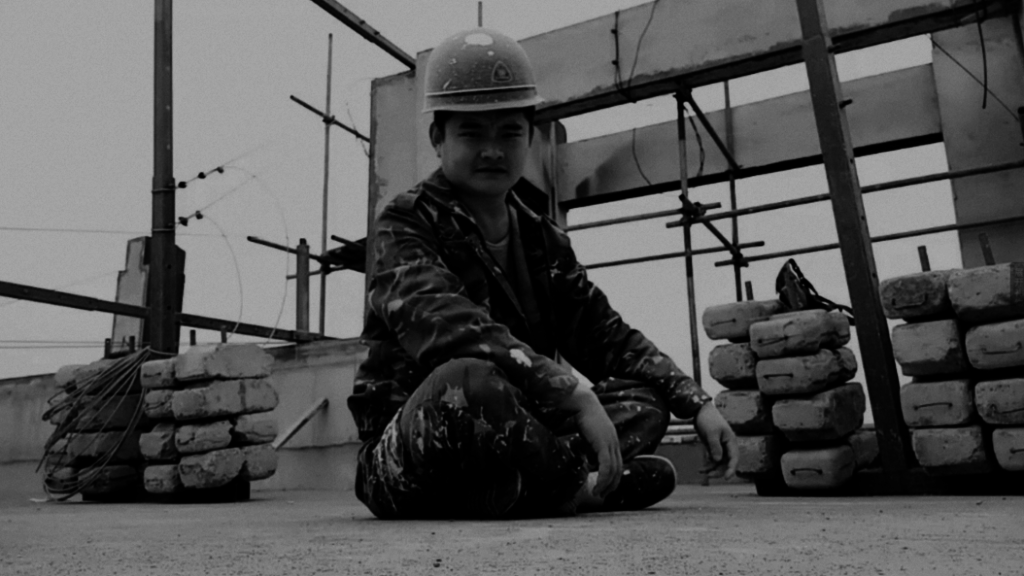
Present.Perfect. is about China’s live streaming craze, which witnessed a regular user base of 422 million in 2017. To explore this phenomenon, Zhu has reportedly sifted through 800 hours of streamed footage and fashioned a film of two hours. The first section of her film is democratic and presents a mosaic of video clips. The selection predominantly consists of uniformly young men and women in blue collar jobs telecasting their everyday routine: wrecking buildings, transporting bags, running a pig farm, cutting trees, welding, digging ditches, and so on. One host offers “agritainment” to “rich city folks” through his organic farming sessions. Curiously resembling regular, festival-level contemplative cinema, this genre of streaming transforms boring jobs into spectacles enjoyed by people around the country. And Zhu’s non-hierarchical assembly of these clips offers something akin to the crowdsourced documentary Life in a Day, the cumulation of several idiosyncratic users functioning as a kind of collective portrait of young China. What we perceive is an entire country entertaining and being entertained by each other, a massive service economy masquerading as entertainment industry. As one host puts it, while streaming a cockroach carcass being raided by ants, “I’ll talk about whatever you want to hear”.

While this process of constantly turning private life into a public spectacle might appear worrisome, we see liberative strands emerge. In this snapshot of how a nation looks at itself, we observe how individuals, especially the most disenfranchised, build a self-image. Queer users and sex workers seem to have found a relatively safe space to express their voice or ply their trade. The terminally lonely find community, the terminally bored get entertainment, and those anonymized by assembly line work recuperate a sense of individuality through their devoted viewership: shooting with a selfie camera, they literally position themselves at the centre of a world that otherwise consigns them to the margins. In the longish title card, we are told about the popularity of the medium, but also the government’s measures to shut down channels telecasting unlawful content, such as violence and self-harm. This dialectic between private aspiration and state control, however, vanishes when the film abandons its sampling approach to focus on five particular hosts: a burn survivor who preaches against god, a single mother working at a undergarment factory, a street dancer with an awkward style, a mendicant with severely disfigured limbs and a factory worker suffering from a sexual maturity disorder which makes him look like a boy. The interest wanes—and the insight vanishes—as the film devolves into a freak show of sorts. On the other hand, as the film’s witty title indicates, Present.Perfect. demonstrates that live streaming profoundly transforms the nature of cinema as we understand it. The ‘cinema of the past’, based on recording reality and later transmitting it, makes way for a cinema in the present, viewed at the same time it’s made. The real-time exchange facilitated by the platform paradoxically takes cinema closer to its origins, turning it into a kind of low-grade, interactive vaudeville. How long before the corporates jump in?

Height of the Wave (Park Jung-bum)

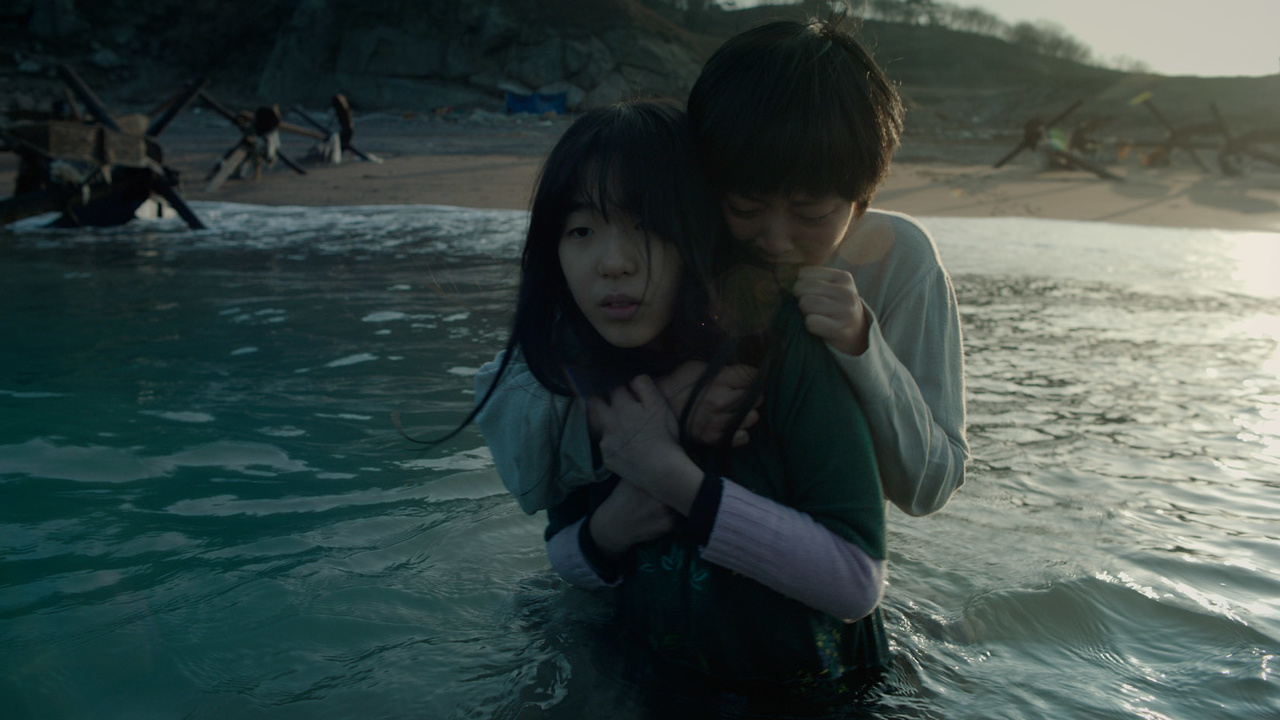
In Park Jung-bum’s Height of the Wave, a cop Yeon-soo (Lee Seung-yeon) is posted to an island village. She’s going through a divorce and finalizing her settlements through a lawyer. On the island with her is her teenage daughter, who is evidently upset at not only the divorce, but also the isolation unwillingly imposed on her. Yeon-soo is doesn’t speak much and holds the world at a sceptical distance. She’s also depressed. On her first day, she visits the village dentist for some anti-depressants. The mayor of the village is also present at the clinic, and he complements the officer on her shampoo when he invites her to a welcome party. At the party, Yeon-soo notices two young men cajoling a woman, Yea-eun (Lee Yeon-hee), and whisking her away into the dark. The officer follows them, not sure if it’s romance, coercion or prostitution she’s witnessing. The threesome gives enough clues for Yeon-soo to suspect the latter and she pursues the case: Yea-eun forced into underage prostitution by her guardians with full knowledge of the village council. This spells bad news for the mayor, who’s trying to make the island a special destination for tourists. He gathers the stakeholders of the village—all men—to derail the investigation.

Park’s film is a story of three women: Yeon-soo, who experiences sexism at all levels of society despite the power vested in her, Yea-eun, an abject victim who has been groomed into a life of abuse, and Yeon-soo’s daughter, who’s dealing with her own deracination. Save for a dim-witted young boy with rudimentary conscience, every man in the village is guiltier than the other, seems to have his own reason. Yea-eun’s uncle and guardian, who is courageous enough to challenge the mayor in his plans for the island, remains a silent accomplice in his niece’s prostitution. Like the child in Loveless, Yea-eun runs away into the woods and the entire village goes up the hills to look for her. But it’s Dogville that’s a more relevant touchstone here. In Park’s disturbing, cynical view, it takes a village to abuse a child. His idea of this village, whose children kill ants in a vicarious fear of outsiders, is a place close to nature both in its austere beauty and murderous violence. On the other hand, we never get to understand Yeon-soo’s grief outside of her divorce. Her peculiar gestures—burying a toaster her ex-husband gifted her daughter, opening and closing doors constantly in wait for her missing daughter, kneeling in the woods crying—reinforce her suffering without explaining them. Outside of a few long shots of high physicality, the film mostly runs on auto-pilot with a gawking shoulder camera. The cold winds, the muted colour and the faded anoraks suggest a sullen atmosphere, but the hills, beaches and jungles aren’t put to particularly interesting use.

Earth (Nikolaus Geyrhalter)

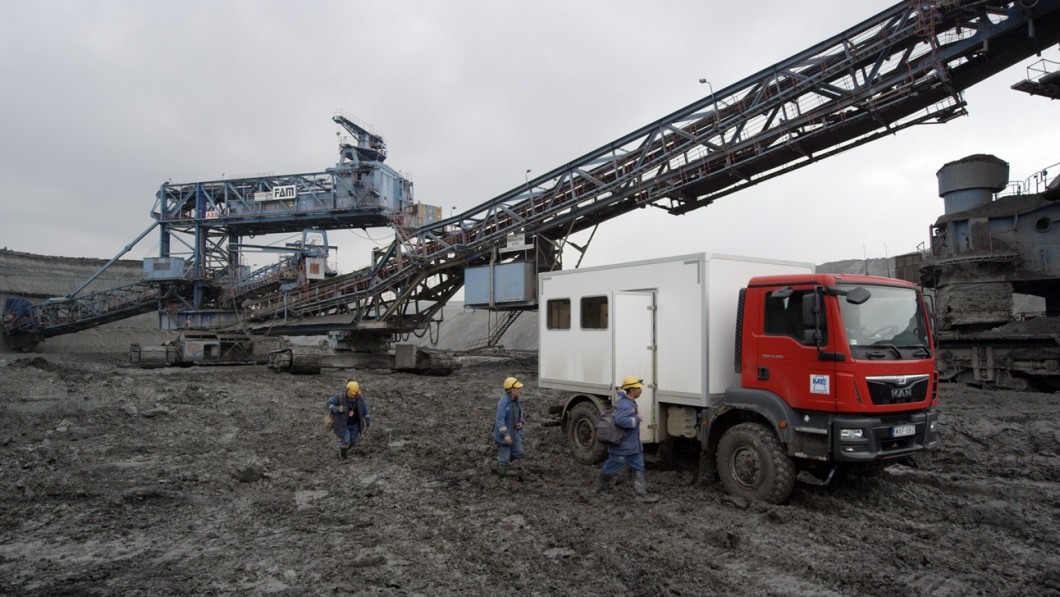
Nikolaus Geyrhalter’s Earth begins with an announcement that “humankind is the most decisive geological factor of our time” going by the volume of top soil our kind displaces every day. Geyrhalter charts these massive changes effected to the surface of the earth at seven sites across two continents: large-scale sand mining in California to make way for new townships, the construction of a 22-kilometer long tunnel through the mountains between Austria and Italy, strip mining for coal in Gyöngyös, Hungary, extraction from a marble quarry in Carrara, Italy, the dynamiting of mountains for copper ore in Minas de Riotinto, Spain, damage control of nuclear waste stored in underground salt mines in Wolfenbüttel, Germany, and open pit oil mining in a First Nations reservation in Fort McKay, Canada. Geyrhalter’s MO throughout the film is the same. A drone shot of the site from an extreme height introduces each section. Shots of men at work are interspersed with interviews with them. The filmmaker questions them about their work, its end use, its physical and moral limits, their feelings towards their job, the impact of their work on the environment, and the ethical quandaries, if any. There are patterns in the answers too. The men and women recognize that their activity might be harmful to the environment, but they declare that it’s their job, that someone else will do it if not them, that we can’t help but continue if we want to progress.

Geyrhalter captures breath-taking images of the mining sites, images that seem otherworldly in their desolate beauty. The geometric forms of the Carrara marble quarry or the vast craters of the Gyöngyös mines make for awe-inducing spectacle comparable to those in Michael Glawogger’s Workingman’s Death. But Geyrhalter’s perspective is not Marxist; his focus is not on the workers or their alienation from their work. The mostly male interviewees, in fact, assert their passion for their job, the adrenaline rush it induces. Where the emphasis lies, instead, is in mankind’s incredible constructive capacity as well as its ultimate frailty, the two in constant conversation with each other. Looking at the gargantuan mining sites with huge moving parts, one wonders at their construction, but also at the fact that any of the ant-like workers in the vicinity could be killed were a tiny part of the facility to fall on him. Geyrhalter’s film pits man’s massive machines against the earth, which here takes on a human quality. One interviewee talks of the mountain’s virginity, another laments the hurting of “Mother Earth”. The serial explosives that are used to clear the way produce ripples on the land surface, making it look like human convulsions. Geyrhalter, who has produced and directed dozens of documentaries, doesn’t swap out nuance for quick judgment, though his sympathies are evident in his choices. He gets enviable access to private sites, which is perhaps why the last segment in Fort McKay, where he has no permission, sticks out, spells out as it does the film’s themes and proclivities.

Endless Night (Eloy Enciso)

I watched Galician filmmaker Eloy Enciso’s Endless Night in a state of anxiety. My mind was awash with news from the anti-CAA protests all over India and the brutal police response to the protestors. Given its story about a fascist regime’s crackdown of dissidents, the poisonous nationalism of those in power and the apathy of those on the right side of the government, the film should have spoken to me at this moment. But it was the opposite that happened. Enciso deliberately strips the narrative—set during and after the Spanish Civil War—of its particularities in order to impart a universal, contemporary significance. He takes an admirable, Pedro Costa-like distance from the political, which keeps the viewer at a critical distance. I could, however, not get rid of the feeling that, despite its unique stylistic choices, Enciso is leaning back on established arthouse shibboleths, both formal and narrative, to evoke pre-determined responses from the viewer. And I wholly accept the possibility that this suspicion of mine could be the product of the gap between the urgency of the situation around me and the film’s meditative treatment of a similar subject. In other words, I can’t be objective about this film. But then, what is one ever objective about?

I also suspect the structure of Endless Night is derived from the opera; an opera reimagined as a Sharunas Bartas elegy for the Spanish Republic. Divided into three acts, the film begins with an overture in which two mendicants, presumably acting as a Greek chorus, talk about the changing times. In the first act, we are introduced to various figures in the village: Falangist businessmen, relatives of resistance fighters, a mayoral candidate of the village and the powerful of the region who discuss the state of things over a game of cards. In the second, we get testimonies by those who were incarcerated or persecuted. Much like in Seven Years in May, a woman by the fire recounts her prison experience in a long shot. “Though you may forget, the body keeps its own memory of the torment”, says another. A soldier in the Franco army confesses his true sentiments. In the third act, the resistance fighter who has been the loose connecting thread of the narrative wanders the jungles, seemingly being pursued. As the camera focuses on his hands and feet moving over rocks and leaves, letters of the incarcerated are read in the voiceover—it’s not clear whether the film is conflating two time lines of the “protagonist” or creating a mosaic of dissident experiences. Endless Night becomes increasingly sparse in terms of action and dialogue, coming almost to a standstill in the final passages where the hero strikes pensive poses in artfully lit night time shots. In the first two acts, Enciso obsessively avoids shots with more than one actor, his compositions presenting profiles or three-quarter medium shots of performers interacting with off-screen characters. These stretches evoke John Ford and Manoel de Oliveira in equal measure, while Straub becomes a reference point in the third act.

Bird Island (Sergio da Costa, Maya Kosa)

It is perhaps owing to the same anxiety that I found watching Bird Island a supremely relaxing experience. Shot charmingly in 16mm in academy ratio, the film is a loosely fictionalized documentary set in a bird shelter, somewhere near the Geneva airport I’m told. Antonin is a young man who has been posted at the shelter as part of his rehabilitation programme following a long period of ailments and surgeries. At the facility, he assists Paul, who is responsible for breeding mice to feed the birds at the shelter, which arrive there presumably after being dazed or disoriented at the airport. Also present at the site are veterinarian Emilie, first-aid giver Sandra and keeper Iwan. We follow the work of the shelter’s staff in measured, long shots sewn together by Antonin’s voiceover: Emilie operating on injured birds of prey, Sandra reintroducing the operated birds into a life in the wild, Paul teaching Antonin the nitty-gritty of breeding mice and killing them. Antonin is reticent and timid at first, and his integration into the small community of the shelter parallels the reintegration of the injured birds into the wild. “Some birds prefer security to freedom”, observes Antonin about one feathered friend that decides to stay back at the shelter—a comment equally true of the humans here.

Bird Island considers with equanimity the violence inherent in human and natural processes. The mice are bred to be killed, but their meat saves the lives of the injured birds. The dazed birds, themselves, are collateral damage of technology and progress, which are also what enable the shelter. Birds are trained to hunt mice before being set free, but some of the escaped rats attack the birds fatally. This adiabatic exchange within nature, the cycle of hurting and healing, is signalled by the closing images of the film’s two halves. In the first, a heat map left behind a dead mouse on a tissue paper slowly vanishes. In the second—the last image of the film—we see the dazed owl, now cured, in similar infrared imagery, flying away. These serious themes, however, never come in the way of the film’s essentially calming quality. Bird Island is, at heart, about a helpful, soft-spoken, decent community that accepts its members as they are. The members like each other’s presence and are indulgent towards each other’s failings. They don’t discuss past or future, or anything outside of work. “Paul is like a chosen one”, notes Antonin, “he poses no questions about his work.” This utopian quality of accepting birds and people as they come, and letting them go if they want to, is in stark contrast to real communities, which are predicated on shared history and shared future. Everything about Bird Island is clean and simple: the soft-lit compositions, the spare dialogue, the sporadic flute melody that forms the only soundtrack, the narrative sparsity and the acting, which here is just being. And this Rohmerian clarity and simplicity calms your nerves about the state of the world—which is what the subject of the film is.

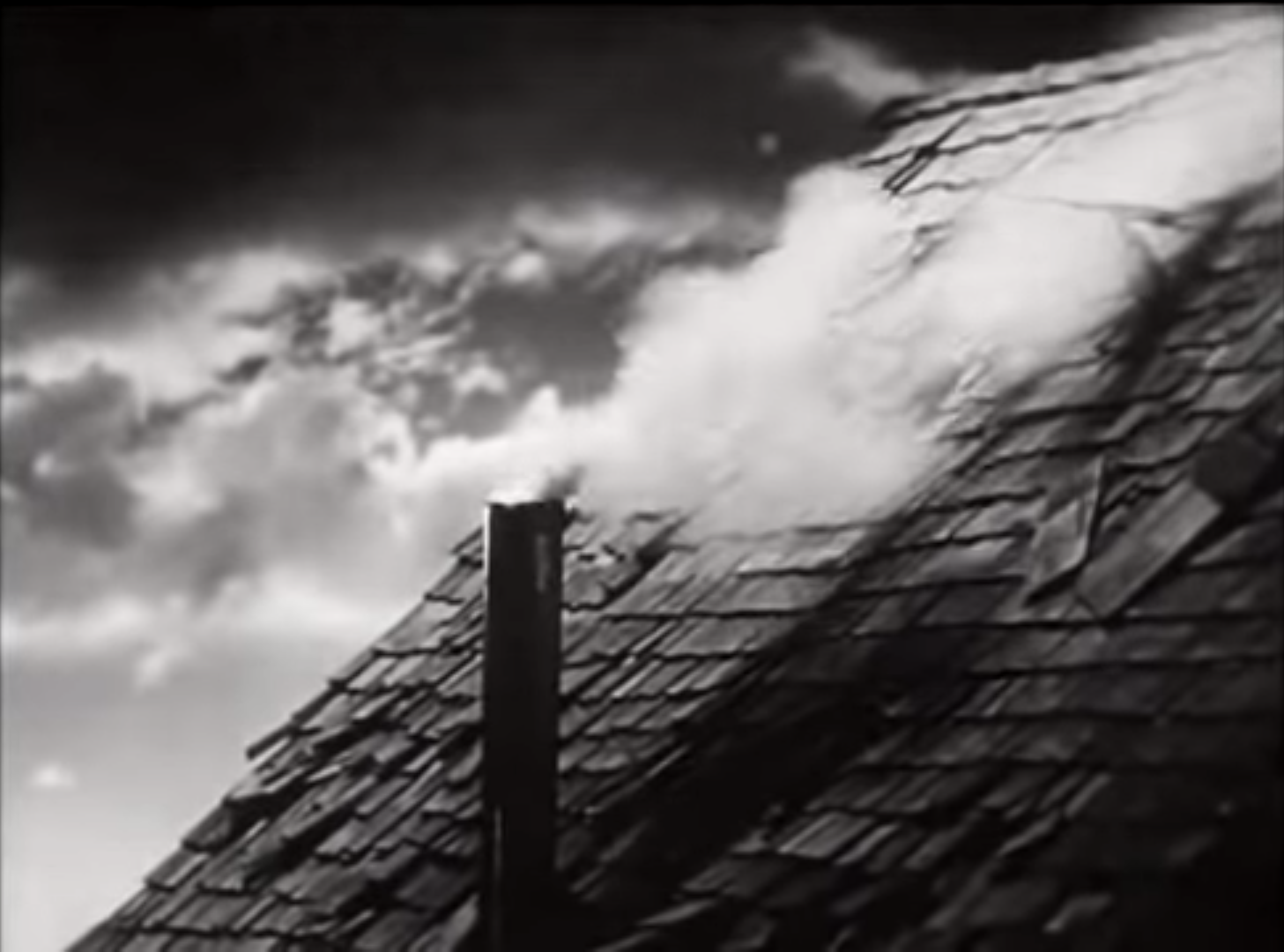
[From my column on studio-era Hollywood films for Firstpost]

French filmmaker Jean Renoir, son of Impressionist painter Pierre-Auguste Renoir, moved to Hollywood following the German occupation of France in 1940. The Southerner, the third of the five films Renoir made in America, tells the story of the Tucker family, plantation workers who decide to grow their own cotton as tenant farmers on a piece of leased land. It turns out that, though fertile, the stretch of land they get requires a great deal of work. Worse, when they move in, the Tucker family finds that the ramshackle house on the land is barely inhabitable. But they decide to persist against the odds: the immense physical labour required of them, the ill-will of their neighbouring farmer Devers (J. Carrol Naish), the spring fever that affects their child and, most of all, the forces of nature. Structured over four seasons of a year, The Southerner stars Zachary Scott and Betty Field as Sam and Nona Tucker.

Adapted from by George Sessions Perry’s novel Hold Autumn in Your Hand, The Southerner is reminiscent of certain Depression-era films. The Tucker’s overloaded jalopy has echoes of the Joads’ vehicle from The Grapes of Wrath. The sharecropper backdrop, the Tuckers’ rickety home and their struggle with the land recalls King Vidor’s Our Daily Bread. But Renoir’s interest is neither social nor political. As a man from the Old World, he’s captivated by the unmistakably American subject of the story. Early in the film, Sam’s dying uncle asks him to grow his own crops instead of working as a farmhand. This characteristic American notion of being able to chart one’s own path, no matter one’s station in life, is at the focal point of Renoir’s film.

Renoir, whose final production before he left France was the classic haute bourgeoisie portrait The Rules of the Game, is manifestly fascinated by the self-sufficient, austere quality of this life close to nature. Throughout The Southerner is a dialogue between Renoir’s European sophistication and the New World pragmaticism of the Tuckers. This remove between the filmmaker and his subject is made evident by a scene that doesn’t exactly work: a boisterous wedding party in which the revellers take turns downing alcohol and knocking each other down. The simplicity and vulgarity of the celebration, in Renoir’s handling, seems too theoretical, too studied in comparison to similar scenes by, say, John Ford or Howard Hawks.

On the other hand, the filmmaker’s French sensibility affords him a distance that allows him to trace out a meta-narrative of America from the story. He emphasizes the Tuckers setting up a home in what is practically wilderness: shots of Sam securing the porch, Nona lighting up the stove, the chimney smoking for the first time, all acquire a symbolic weight that harks back to the pioneer settlers of the continent.

At the same time, there’s a timelessness to The Southerner that makes it more than a film about America and takes it closer to the story of mankind itself. To be sure, the setting is Texas during the first half of the 20th century and there’s a passing reference to the ongoing war. But, unlike the strongly contemporary and Californian Our Daily Bread, very little in The Southerner ties it to a particular place and time. In a microcosmic reflection of civilization, the Tuckers move from fishing and hunting to agriculture for their sustenance over the course of four seasons. This lack of particularity was taken to task by the critic James Agee, who found the depiction of Southern life in the film inauthentic.

However, for Renoir, this is an existence in constant tussle with nature, alternately established against its forces and lived at its mercy. He locates a streak of violence in the life of the Tuckers. The scene in which Sam smokes out a possum from the hollow of a tree and then shoots it down carries a touch of environmental dread redolent of Robert Flaherty. When Sam brings the animal home for supper, Nona says “Reckon we can eat now, folks”, sharpening her knife in a rather disturbing gesture. The Tuckers transform the land through their hard labour into a flourishing plantation, but nature has its own plans, sending down an off-season rain to destroy the crops.

There’s little space for culture in this tug-of-war between man and nature. Save for a couple of photos and a picture calendar, the Tuckers have no contact with culture. In a rather nasty barroom fight, the participants destroy rudimentary signs of culture—a jukebox, the sculpture of a woman—while, a bit later, Sam finds himself in knee-deep rainwater wearing a tuxedo. Much of the poetry of The Southerner derives from the idea that domesticity and culture need to be wrested out of a fundamentally hostile universe. The film’s final passage presents vignettes of this cosmic battle: cows and chicken stranded in the rainwater, ripe cotton flowers drowned, the Tucker’s home wrecked once more.

In this warlike scheme of things, men and women are expected to assume their conventional roles. The drive of the menfolk is also what blinds them towards more pressing realities: in his dogged determination to make something of the land, Sam rejects taking up a job at the town factory, which could save his ailing son right away. Devers the neighbour cuts the rope of his well to spite Sam even at the cost of having no water for himself. The womenfolk, on the other hand, are icons of care and consideration. Devers’ daughter secretly secures a pail of milk for Sam’s son against her father’s wishes. When Sam decides to give up farming after the floods, it’s the silent courage and optimism of Sam’s granny (Beulah Bondi) and Nona that encourage him to change his mind.

There is courage and optimism, but there are no heroes or villains in The Southerner. Renoir being Renoir, everyone in the film has their own reasons. Granny Tucker is a caricature of a nagging old woman, but the film lets you see her bitterness as the product of a long, bitter life marked by loss and grief. Devers’ resentment towards Sam’s success doesn’t come across as jealousy as much as an anxiety about the limited resources of the region and about his own failed life. Unlike the typical Hollywood villain, Devers incites pity, not anger. In an exchange about farming and factory work, Sam’s friend Tim (Charles Kemper), whose character and physicality both resemble Jean Renoir, tells Sam that “it takes all kinds to make up the world”, a cogent summation of the French filmmaker’s worldview.

As is expected of a Renoir film, The Southerner is alluring in its visual beauty: deep space compositions in natural locales, tracking shots through cotton fields and floodwaters, gentle pan shots inside the Tucker household, a measured editing rhythm, intimate two shots with Sam and Nona, Vidor-like framing of the horizon and a painterly shot design with foreground elements acting as repoussoir. But if there’s one element that most characterizes The Southerner as a Renoir work, it’s the harsh, realistic outlook that pervades the narrative. In contrast to the Hollywood tradition, no triumphalism marks the Tucker story. There are no miracles here that turn Sam’s farming enterprise into an immediate success. Renoir recognizes the impossible odds and appeals for a stoicism in face of these failures. Their farm washed out, the Tuckers get back to fixing their house. The stove burns once more, there’s coffee for now, the fields need to be ploughed and the seeds planted again. C’est la vie.


[Originally published at Firstpost]

[The following is a translation I did with Andy Rector of the 14-page interview with Jean-Luc Godard that appears in the October issue of Cahiers du Cinéma]

That is what is beautiful about The Image Book. The whole life piles up. You keep everything with you.

I debuted in the second Revue de cinéma when it was with Gallimard and it was with the help of Doniol-Valcroze that I entered Cahiers little by little. Doniol-Valcroze was the son of a friend of my mother’s at the Victor-Duruy high school. I thought he received me because of that. I learnt later that he was demobilized and took refuge in Switzerland. It was my mother who got him to France, to Thonon, on a little speedboat called “the hyphen” and with which we often went vacationing in my grandfather’s property. I discovered that after Doniol-Valcroze’s death. I wasn’t against the Cahiers management at that time. He was the editor-in-chief along with Bazin. He was a “gentle man” in the literal sense of the term. I didn’t know Bazin like Truffaut did at all. I knew Bazin as the head of a communist organization, Work and Culture, just opposite the Beaux-Arts. There was a small library opposite run by a friend of Rivette’s from Rouen. It’s a story that I attached myself to little by little, not from the beginning, but there are all these stories I want to keep to myself. I was prudent like the Delacroix character. I stole some money from one of my uncles to finance Rivette’s first short film, Le Quadrille.

Whom did you feel closest to?

Rivette. Then Truffaut, but before he made Les Mistons. I don’t know if he was already married to Madeleine Morgenstern, whom I liked a lot. He’d become rich by this point. Madeleine Morgenstern’s father was the head of a distribution company called Cocinor in the Nord region and in Paris. But when he wrote “A Certain Tendency of French Cinema”, I hung out with him a lot. I wasn’t so much with Rivette. We could go see films at 2pm and leave at midnight because it was a single-admission cinema. I’d give up after an hour or two. Rivette stayed until the end. Rohmer had a different life. He was a professor and lived in a small hotel opposite the Sorbonne. His name was Schérer and he started signing “Rohmer” so that his mother didn’t know he led a dissolute life in cinema. These were three different friends. It was real camaraderie with Schérer—I still call him Schérer—Rivette and Truffaut. Schérer was one of the few who knew which woman I was in love with, and I was the only one to know that he was in love with the wife of an old head—a communist—of the CNC. Rohmer was ten years older and he was the counterbalance to Bazin and Pierre Kast. In The Image Book, I have a shot of the Liberation of Paris. We see an FFI member from behind, with a gun on his back, speaking to a woman on her knees. To my mind, this man was always Pierre Kast. I hope it’s true.

We get the feeling that you didn’t have political discussions at Cahiers at that time.

Very little. It was the cinema. Even girls were a secret. I remember a moment during the Algeria war. I was at the Place de l’Alma with Rivette. A car sped by with the “nee-naw” of the OAS siren. I saw that as a shot by Douglas Sirk. And Rivette chided me. I couldn’t see things politically at that time. The one who could easily do that was Straub, because he was there from the beginning.


Seven Years in May (Affonso Uchoa)

Brazilian helmer Affonso Uchoa’s forty-minute Seven Years in May contains only four scenes. In the first, a man walks long on the road at night. In the following scene, a group of young men chance upon a box with police uniforms and weapons. They change into these clothes and go out on a raid. They pick up a young man, who we learn is Rafael dos Santos Rocha (playing himself). They rough him up and ask him to reveal where a particular stock of drugs is in his house. Rafael denies that he has any, which prompts the young men to drag the man along with them into the dark. The third and the longest scene of the film is predominantly a monologue. Rafael sits by the fire, recounting the night the police brutalized him in search of drugs. He describes his life thereafter: going on the run, substance abuse, getting cheated, wandering the streets, going to a village to sell drugs, a second double-crossing and finally a return home. It’s clear from the vividness of the description that the trauma is fresh in his mind even though it happened seven years ago. He won’t forget their faces, he says; if he did, what they did to him will be complete. A cut reveals a listener—also a non-white man—who says that every story he hears seems to reflect his own. He declares that, though he believes in an eye for an eye, it’s better “for us and for everyone” to move on.

If one didn’t look at the credits or press notes, it’s hard to guess that Uchoa is mixing fictional and documentary modes here. Rafael, portraying himself, is presumably drawing from his own life for his monologue, which is much more polished and articulate than a spontaneous rendition would be. The second scene, then, is a reconstruction of Rafael’s real-life experiences, which raises the ethical question: why put Rafael through the harrowing situation again? Whether this recreation of violence is itself a form of violence or a therapeutic remedy is possibly only for Rafael to know. What is clear is that Uchoa is building a scaffolding in which power dynamics are presented as a product of role playing. The proposition that a bunch of possibly disenfranchised youth become aggressors by just donning police uniform finds its response in the fourth scene of the film: a white man in police uniform commands a group of about hundred non-white men and women. He utters one of two words—‘alive’ or ‘dead’—to which the men and women must respond by standing up or squatting. Those that react wrongly are ‘out’ of the game. The last man standing turns out to be Rafael, and he refuses to ‘die’ even when the instructor repeatedly commands him to. As a political statement, it’s laughably schematic, but as an instance of curative theatre, it’s at home in the film. Seven Years in May is an odd film that appears to be constantly shifting its axes of operation. Familiarity with the filmmaker’s earlier work would perhaps throw more light.

Farewell to the Night (André Téchiné)

Muriel (Catherine Deneuve) runs a horse ranch in the southwest of France near the Spanish border. When her grandson, Alex (Kacey Mottet-Klein) arrives for a long-pending visit, she discovers that he has converted to Islam and has been radicalized by one of the farmhands, Lila (Oulaya Amamra). We learn this before Muriel does. When Alex meets Lila for the first time, they go out to the lake. She wears a burkini to get into the water, he remains on shore. They embrace, but never kiss. Their interaction and their attitude towards others follow the halal code. He refuses to greet-kiss another man, she refuses to serve men in the old age home she works at. He turns down alcohol and cigarettes, she refuses to uncover her sleeve at work. In collusion with another young radical, the pair plan to fly to Syria to ‘the front’, but are faced with money problems. They decide to steal money from ‘the kuffar’ Muriel, an act Lila justifies as ‘not haram’. Like any liberal-minded film worth its salt, Farewell to the Night ‘explains’ Islamic radicalism to us. The film unfolds over the first five days of spring in 2015. Local elections are underway and, we are told, the National Front is on the ascendant. It’s a soundbite intended to both hint at the other side of the divide and ‘explain’ increasing radicalism.

Lila rails about the rotten society that consigns old people to retirement homes, and she is genuinely compassionate towards the people she serves. On the other hand, the Caucasian Alex, still affectionate towards his grandmother, is sure neither about his sexuality nor about his new mission. Téchiné’s film psychoanalyses the radicals and professes its good faith by throwing in two “good Muslims”, including a Daesh renegade who tries to dissuade Alex in vain. As a portrayal of racial and religious divides in France, Farewell to the Night is a rather unexceptional. But the seventy-five-year-old filmmaker seems to be making a distinction between generational and cultural shifts rather than racial or religious. The world Muriel represents, in harmony with nature and with people of all stripes, is far removed from the polarized present. She is surrounded by children learning riding, and the first thing she does when she realizes she has lost Alex for good is to stop by a highway to watch boys and girls play football. Lila stays with a lonely old man who longs for company, while the foyer is a veritable refuge of those fading away. At one point, Téchiné cuts between the meeting of the stern radicals and a celebration at Muriel’s with wine and dance to indicate two different conceptions of community and culture. His ever-moving camera captures the landscape, vegetation and infrastructure of the region with an aim to please. Deneuve huffs and puffs her way through the ranch, but is all surface. Her purported devastation over her grandson’s fate and her guilt over her ultimate decisions don’t really register. There is, however, a great shot of her taking a swig.

The House (Mali Arun)

In an unnamed part of France, presumably in Occitanie, lies a massive spa retreat: a 22-room renaissance structure from the 17th century once visited by the likes of Voltaire and Casanova. Mali Arun’s film doesn’t give any more detail and simply calls the building ‘La Maison’. The House opens with a fade in from the structure’s original plan to its current decrepit state. Arun’s camera surveys the decaying façade and decrepit interiors of the house, a seeming repository of the debris of European culture: portraits, musical instruments and other objets d’art amassed carelessly in unused rooms and workshops. The attention soon shifts to the residents of this modern “ark”, as the filmmaker calls it: a constantly changing commune of white men, women and children galvanized around the permanent figure of a certain sexagenarian called Jacques. Arun’s voiceover tells us that the spring running through the site was exploited by Nestlé till the seventies, and that when the company left, they filled the water source with concrete to maintain their monopoly. Jacques and co. make plans of renovating the house as per the original plan. They draft monthly goals for their reconstruction project. They call a water diviner to retrace and restore the stream. However, the group, and Jacques in particular, seems to spend most of its time doing everything else.

Arun’s film is interested less in the history of the building or the personalities of the residents, who get to do little more than pose for closeups. It’s more concerned with the building as a space of memory and experience than as a physical presence. Arun’s emphasis is on the way of life of the inhabitants. We see them cutting trees, making music, cooking, discussing and debating, calling relatives on phone, playing with water, moving pianos, rehearing plays, raising bees and, if time permits, working a bit on the house. Despite Jacques’ central status, there’s no hierarchy within the commune, nor is there any binding faith or vice defining them. At best, they exhibit a faint decadence in their epicurean life of wine and music. For the most part, we see them in the all-purpose workshop-turned-piano room, fine-tuning the instruments, practicing pieces and preparing for recitals. There’s a bit of talk about administration, maintenance and financial problems, but nothing that disrupts the character of the place. As the description above suggests, The House is very loosely organized to give a sense of an ambiance. Even though Arun divides the film into seasons of the year in what seems like a last-minute effort, this lack of a structuring element collapses the distance between the filmmaker—who is part of the commune and is pregnant during the making of the film—and her subject. The outcome is a sentimental work, no doubt successful in certain aspects, that asks us to accept it without furnishing a justification as to why we must.

Slits (Carlos Segundo)

Carlos Segundo’s explosive horror-sci-fi hybrid is a high-concept work that draws ideas from quantum mechanics to explore themes of loss, grief and memory. Catarina (Roberta Rangel) is a physicist studying the quantum properties of light. She’s European, but works as a visiting scientist in the city of Natal in Eastern Brazil. In her supplementary research, she makes ‘sound-photos’ to analyse the “displacement of light caused by sound of matter”. For that, she first captures wide shots of ordinary scenes in Natal—digital footage with direct sound. She then ‘dives’ into a particular point on the image—zoom-ins of several thousand orders that abstracts the image—and listens to the ‘noise’ emanating from it. These dives enable her, like the sound engineer of Blow Out, to see with her ears, enter another space-time and listen to stories from another place and period: a kind of synaesthesia that breaks down the barriers between light and sound, visible and invisible, past and present. Shot in crisp, high-definition digital video, Slits is a bracing meditation on the nature of the medium. It finds an expression in Heisenberg’s uncertainty principle of the contradictions inherent in the digital image: the tug of war between details and stability, between richness of palette and noise. Like the zoom of Michael Snow’s Wavelength, Catarina’s dives reveal stories to her, accounts that belie the banality of the image.

The same uncertainly becomes an expression of Catarina’s existence as well. Through the course of the film, we learn that Catarina has had a stable, privileged life with too many options and no crises whatsoever. She is apolitical, doesn’t know the troubled history of the region and doesn’t even participate in the university strike. Her only student, a fisherman, speaks of the need to initiate movements instead of expecting predictable results. Catarina has come to Natal, historically a region of passage, at a moment when natives are trying to leave the place. We also learn that she has become estranged from her husband in France following the loss of their baby daughter. In a sense, Catarina is fleeing Europe, her past and her reality for another dimension. Like the protagonist of The Invention of Morel, she finds refuge in a world of abstract images and sounds. And like Scotty of Vertigo (referenced here) and Laura of Don’t Look Now, she seeks to make sense of her tragedy through a process of reconstruction and interpretation. Her closest cinematic relative is, however, the gamer of Chris Marker’s Level Five, who too loses grip on the present in a quest to reconstruct the past. In the last shot of Marker’s film, the gamer zooms into a video image of herself to a point of obscurity, enacting the same instabilities besieging Catarina: observing reality from too close, she loses sight of it, just like how the extreme telephoto of the painted portrait at her home becomes one with the image of the sea. Catarina’s observations are coloured by her own subject position, and starting off from scientific premises, she ends up with results that can only be unscientific, unobservable and unrepeatable. As she tells her husband who urges her to move on from her mourning, time for some is chronological, for others its chronic.

Unpublished, 2009.

            On the level of quality, Hollywood has declined quite a bit, but its place has been brilliantly taken over by American literature.

That’s why, as a fan of the USA, I’ve decided not to talk about its films anymore, but only about its books.

James Ellroy’s first eight novels still respect many of the conventions of the American detective novel. Ellroy, however, distinguishes himself with the size of his books (about a hundred pages more than the standard crime novel), their excessively gory and sleazy quality, the abundance and rapid succession of their actions. These books don’t respect the good old principle of describing a single criminal affair. There is also the desire to limit himself to the LAPD, the Los Angeles Police Department, and to the personality of his investigators (who are more important than the crimes to be solved). A haunting microcosm that equals those, richer in landscapes, of great writers, Faulkner and his Yoknapatawpha, Giono and his Haute-Provence, Hardy’s Wessex, Mary Webb’s Shropshire, and Caldwell’s Georgia. We hardly leave Los Angeles with Ellroy. The reader is confined to this limited, airless zone that ends up overwhelming him. He’d like to get out of it, but he can never escape.

A small evolution: after Brown’s Requiem (1981) and Clandestine (1982), Ellroy abandons first-person narrative for an objective point of view. A superficial change since this objectivity is expressed in a very personal way. It’s merely a façade, intended to make the odd, the horrible and the repulsive more believable.

It’s still classical narration that predominates from Blood on the Moon (1985) to The Big Nowhere (1988).

But then, from L.A. Confidential onwards, there is a revolution, a rupture which will be even more drastically reaffirmed in White Jazz (1992) and especially in American Tabloid (1995) and The Cold Six Thousand (2001).

How to describe this change, pre-1989 and post-1989? There are several obvious characteristics.


Length of the texts

Ellroy moves from 300 or 400 pages, more or less normal for the thriller genre, to 600 pages or more. Unusual size for a detective novel, which is generally designed to entertain you during a journey (“an airport novel”, it’s called) and shouldn’t be too bulky. This expanse of the books is amplified, as we will see, by the extreme condensation of actions. It makes the reader’s head spin.


Accelerated succession of actions and words used

There are provocative ellipses in Ellroy’s work:

Burglars, confessors–physical stats/MO/priors–I took notes. The Wino Will-o-the-Wisp–shit, still at large. Names, names, names– candidates for a psycho framee. Scribbling notes–distracted–flirty carhops, new money. Nagging me: a frame meant no payoff–no way to match Lucille and the burglar to WHY?

(White Jazz, chapter 8)

One would think it’s the first thriller by James Joyce…

The reader understands a large part of this information, probably not everything. He must make an “effort to participate” to grasp the terms or expressions whose meaning remains obscure. If he cannot, he will have the proof of the superiority of the author (and of the “reality” depicted) over him. Similarly, in The Cold Six Thousand, he will have some serious work to do if he wants to know the kind of character hiding behind each name. And there are more than sixty protagonists! In order to get a hold on things—I think that it’s the first time I’ve had to do that—I had to write down the dramatis personae on a card, like at the start of a play, with the name, profession and purpose of each actor in the drama: another aspect which makes the reader a participant in an interactive work, whereas a crime novel fan is most often a passive being.

If the quality of a book is to be measured against the reader’s pleasure, we can affirm that Ellroy has delivered here a production of very high quality, since I had infinite pleasure in dodging Ellroy’s traps and understanding everything (well, I’m boasting: understanding almost everything).


Intrusion of lapidary terms

I mean by that press cuttings, police reports, telegrams, taped telephone conversations, confidential notes etc.

Like in Dos Passos, who seems to have influenced Ellroy, and Tom Wolfe and the practitioners of the journalistic novel, these documents end up constituting a good part of the book, a quarter or even a third of it. It’s a device somewhat comparable to the succession of letters in our literature of the 18th century, with the difference being that the nature of these “documents” varies enormously.


Starkness

Traditional description of places, faces and bodies so dear to the good old novel and even to the first master of the genre, Dashiell Hammett, is practically eliminated. We rarely know the colour of the hair, the height or the build of the protagonists.

In The Big Nowhere, we could still find some awkward and almost parodic descriptions:

Sodden confetti hung out of windows and littered the sidewalk, and the sun that was looming above the eastern basin had the feel of heat, steam and bad hangovers.

There won’t be any more descriptions.


The brevity of sentences

That night, Lesnick left the apartment to get medicine at County General, thinking Coleman’s Upshaw fixation would break him down on his homosexuality, stymie and stalemate him.

It’s Ellroy’s last big sentence, we find it nine pages before the end of The Big Nowhere.

This example clearly shows that Ellroy has never been at ease with these convoluted, winding, very clever sentences where the reader is somewhat lost. The detective novel, on the other hand, has always been written such that people have a good grasp on the proceedings.

But, all through L.A. Confidential and in the novels thereafter, we will largely find brief, very simple, brutal, elliptic and concise sentences.

In American Tabloid and The Cold Six Thousand, Ellroy proceeds at a frantic rhythm of more than seventy sentences per page. There can be three on a single line. The only exceptions are in the dialogue, or in extracts from the press or copied messages, which seem—wrongly of course—to be not Ellroy’s. This enhances the impression of reality.

We find a good example, among thousands, in L.A. Confidential:

Pops doused his head in the sink, charged with his face scorched black.

A roundhouse to the knees–Papa went down glued to that cleaver. Bud stepped on his hand, cracked the fingers–Papa let go screaming. Bud dragged him to the oven, kicked the pallet loose. Yank the trapdoor, drag the old man downstairs.

Fumes: opium, steam. Bud kicked Papa-san quiet. Through the fumes: dope suckers on mattresses.

(Chapter 66)

This realism is undercut by remarks or comments by real personalities, such as Frank Sinatra or John Kennedy, that are clearly imaginary. We’ll come back to the importance of contradiction and dialectic in Ellroy’s work.


The use of nominal sentences (without verbs)

The notion of a sentence is rather vague since the only objective identification of a sentence is the full stop, which we either put or don’t. In the famous sentence from Ulysses (50 pages), there are no separating periods, but we nevertheless notice a multitude of virtual sentences undone by a tendentious punctuation, which helps to stretch matters.

We find excellent examples of nominal sentences in The Cold Six Thousand:

Bob stood up. Bob aimed his pump. Bob shot low. A beehive blew–darts blew–darts on fire.

The spread cohered. The spread hit. The spread severed legs.1

We see that these nominal sentences arrive at the end of a series of short sentences with verbs. They convey the final acceleration of the action.

It’s obvious that Ellroy could’ve combined several of these actions into a single sentence, but that would’ve destroyed the rhythm and the musicality of the piece, all the more powerful because its poetic impact derives from actions that are antithetical to traditional poetry.

Ellroy had already tried out these nominal sentences before, but only on rare occasions. So, in Suicide Hill (1986), we have: “Dimly, he knew his kick-out date was coming and the bulls were leaving him alone because they were afraid of him. But Vandy …” This line is on page 659 of the Hopkins trilogy.

This “But Vandy” corresponds to an idea of a sentence, suggested, undescribed or scratched out while proofreading. It could mean: “But he thought of Vandy” or something else altogether.

These elliptic flourishes certainly gave the necessary impetus to Ellroy’s subsequent career.


In White Jazz (chapter 29), Ellroy will go even further:

A white screen.

Cut to:

Johnny Duhamel naked.

Cut to:

Dave Klein swinging a sword.

Zooming in–the sword grip: SSGT D.D. Klein USMC Saipan 7/24/43.

Cut to:

We can clearly see the source of inspiration for this scene as for many others: cinematic découpage like in Eisenstein or Scorsese. It’s possible to suppose that Ellroy wrote his book this way because he had a potential film adaptation in mind. I don’t think so. He didn’t really need that, his books selling very well already. And the film adaptation of L.A. Confidential had to employ a classical decoupage that’s vastly from Ellroy’s. But the interest here is in the odd intrusion of specifically cinematic language in literature, just like how we noted the incongruity of poetic language in the description of crime novel massacres.


The importance of numbers

Numbers have a bad reputation in literary culture owing to the old opposition between noble literature and vulgar arithmetic (money + anti-poetic objectivity): to such a degree that, in all novels and in literary or film criticism, as much as possible, numbers are spelt out even if it’s longer (it’s, by the way, more interesting when the author is paid by the word) .

The challenge then for Ellroy is to pack in the most amount of numbers, dates, times, flight numbers, car models, police ID numbers, bullet counts, the sum of money on a body, code and telephone numbers etc.

Buzz Meeks checked in with ninety-four thousand dollars, eighteen pounds of high-grade heroin, a 10-gauge pump, a .38 special, a .45 automatic and a switchblade…

(L.A. Confidential, prologue)

The precision in these numbers is of no interest in itself, but imparts a particular and uncommon rhythm. This documentary aspect enhances the realism of the novel, which, because of its material—several murders and very gory fights—is as unrealistic as possible. And through their repetition, the numbers create a new and unexpected form of poetry.


The importance of acronyms

The creative process here is the same as the one with numbers. The acronyms can be of official administrative organizations (LAPD, CIA etc.) or of commercial firms. In the same vein, we find initials of first names, often followed by those of last names (JFK).


Punctuation

We notice the frequent alternation of words in lower case and those in upper case (newspaper headlines, especially), as well as words in italics.

The forward slash is the most characteristic symbol in Ellroy’s work: “Chairs/shelves/table” (White Jazz, end of chapter 48). It conveys an enumeration based on options and alternatives.


The art of enumeration

This is at the heart of Ellroy’s art.

Ever since book II of the Iliad, we know that literature relies on the extent and quality of enumerations.

Hence, in White Jazz (chapter 27):

11/3/58, 11/3/58, 11/4/58, 11/4/58–Ad Vice.

11/5/58, 11/5/58, 11/6/58–GR 1-4790–John Duhamel, 10477

Just to clarify, this pertains to a list of telephone calls.


Repetition of the subject

Wayne aimed. Wayne popped four shots off. Fido’s teeth shattered. Fido’s neck blew.

Wayne heard yells. Wayne saw three VC.

They charged. They aimed carbines. They got kadre klose. Pete stood up. Chuck stood up. Mesplède waved _come on_.

(The Cold Six Thousand, chapter 62)

The name of the character performing actions is repeated for each of his actions, which creates an incantatory, hallucinatory poetic rhythm.

You will notice here that Ellroy resolves through the absurd—and without annoying the reader one bit—literature’s chief problem, unsolved even today: we don’t ever know who’s speaking or acting, the author being afraid of repeating “A said” or “B said”.


The one-liner

Common in cinema and especially television, this literary device consists of making each character utter a short sentence, to be translated into a single subtitle. For example, at the end of chapter 19 of American Tabloid, there are forty-five lines of dialogue made just of one-liners.


Interrupted sentences

We don’t know how a particular dialogue will end. All we have are the three trailing dots. This allows for the acceleration of the action. Sometimes, the speaker is hit by a bullet.

This could create the impression of realism, as though the speech written by the author was cut short by a reality larger than him.

This effect is sometimes related to the “surprise development”.

For example, characters speak of random, ordinary things. And, in the course of a sentence, the conversation turns into drama, but narrated in the same, trivial tone. At the end of chapter 95 of American Tabloid, we have this exchange:

Kemper said, “Did you really do that?”

“As sure as I’m standing here basking in your light, Boss. As sure as niggers—”

Kemper shot him in the mouth. A full clip took his head off.


Alliterations

“BOOZEBLITZED AND BESOAKED BASTION BOOGIE-WOOGIES!” This extract from American Tabloid (chapter 67) reveals an excess of virtuosity that we can find gratuitous, but which is so difficult to imagine that the reader hardly understands anything. Which adds to the chaotic nature of the work and the world described.


Onomatopoeias

They often express a sonic reality. Hence the ‘bump’ repeated seven times in a row in L.A Confidential (chapter 73). There are also the nine Gs (White Jazz), each occupying a new line, which seem to announce the arrival of the GLUTTON2. Their purpose can be guessed more than understood through a logical analysis.

These various devices—and there are many more—betray an art founded on artifice. But this constant and unpredictable shift from one device to another produces a strong impression of variety, richness and imagination.


Local slang

Vulgar vocabulary, sexual as well as violent, is harnessed to the fullest. This is unusual for an avant-garde work, which often favours a loftier terminology.


Evolution towards the macrocosm

Until L.A. Confidential, we only find simple stories about individuals.

Until White Jazz, we remain focused on Los Angeles and the LAPD.

But little by little, the horizon widens.

For one thing, The Big Nowhere is an indirect story of witch hunts.

Ellroy then leaves Hollywood for Dallas and all the states of America to portray the Kennedy years and the Cuban crisis (American Tabloid).

He then goes around the entire world, all the way to Vietnam to depict the post-Kennedy era, the Dallas investigation and the years between 1963-68 (The Cold Six Thousand).

Those who have followed every step of James Ellroy’s so far, book by book, will be very surprised by this sudden, unmeasured opening up towards the macrocosm. An opening up that comes as a considerable shock to the reader, as though Jane Austen started to travel all over the world. A widening that we could object on these grounds: the notion of a microcosm is closer to the essence of the detective novel. The respect for Aristotelian unities, the endearing modesty of the work that shunned “big subjects” made for its power. Aren’t James Ellroy’s super-detective novels comparable to the flashiness of sumptuous and empty super-westerns? On the contrary, what force, what freshness, what radiance!

Ellroy’s conquest of a new identity, following his first eight novels, clearly proves that Ellroy’s style, as we have admired in the past few years, has nothing innate, immanent or essential about it, in contrast to that of Céline, who has always written the same way. What we see is an evolution, a rather slow progression, a tactic even. Which takes nothing away from the power and originality of the works.

This state of affairs is reaffirmed by Ellroy’s other recent stories such as Tijuana, Mon Amour (1999) or certain short stories—Dial Axminster 6-400, The Tooth of Crime, Bad Boys in Tinseltown, My Life as a Creep—or even My Dark Places (1996). These are more conventional or sober (My Dark Places) works—witnesses perhaps to a flagging of inspiration—sometimes written with the left hand, rehashing previously used ideas. But the literary devices are rarely piled up. There are, to be sure, alliterations in Tijuana and terse sentences in most of the short stories. But these somewhat abridged writings don’t have the same sort of power, the same breath in the sum of their effects. Length has become indispensable in order to assert the force of accumulation.

In the first novels, I was quite aware of the character traits and the deeper themes these thrillers had to offer: artistic creation and woman as savoir, the difficult relationship with the father, guilt and redemption…

All these are present in the recent works too, but we don’t really notice them. The frenzy created by the various devices we have studied doesn’t give the reader the time to analyse character psychology, busy as he is trying to decipher the identity of the protagonist underlying each proper noun, the action underlying each sentence. What remains is only the impression of chaos, generalized corruption and nonsense. A pessimistic vision that is erased, so to speak, by our nascent pleasure before the divine fury of writing.

This bird’s eye view of the characters, and the more human meaning of the work, far from reducing the novel’s value, takes it to new heights: the Ellroy of today has nothing to envy Proust, Camus or Thomas Mann.

Could psychology, certainly present here though invisible, simply be a crude springboard for artistic creation? That’s what happens sometimes in cinema and almost always in music, in opera: the libretto must surely exist, but it’s only a subordinate element. Everything is style. The writing produces a new being in Ellroy’s work, regardless of its contents (les valeurs contenutistes).


1 [Translator’s Note] The excerpt in French contains more nominal sentences than the original, which has only one.

2 [Translator’s Note] This is a literal translation of Moullet’s line. I glanced through White Jazz and did not find such a passage. Perhaps Moullet is misattributing (as he sometimes does in this essay) to White Jazz what might be present in some other novel by Ellroy or someone else.


[From Luc Moullet’s Piges choisies (2009, Capricci). See Table of Contents]