Anand Patwardhan

Anand Patwardhan 
(1950-)

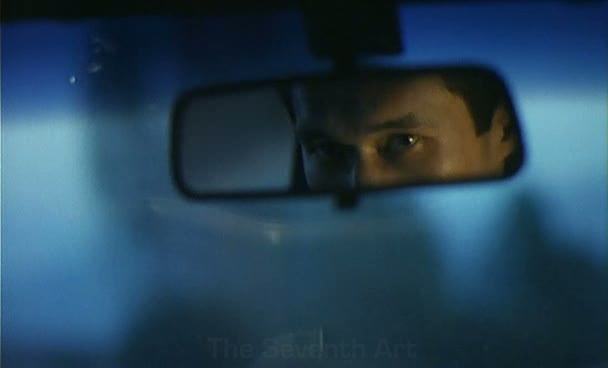
Anand Patwardhan has been making political documentaries for nearly three decades pursuing diverse and controversial issues that are at the crux of social and political life in India. Many of his films were at one time or another banned by state television channels in India and became the subject of litigation by Patwardhan who successfully challenged the censorship rulings in court. Patwardhan received a B.A. in English Literature from Bombay University in 1970, won a scholarship to get another B.A. in Sociology from Brandeis University in 1972 and earned a Master’s degree in Communications from McGill University in 1982. Patwardhan has been an activist ever since he was a student — having participated in the anti-Vietnam War movement; being a volunteer in Caesar Chavez’s United Farm Worker’s Union; working in Kishore Bharati, a rural development and education project in central India; and participating in the Bihar anti-corruption movement in 1974-75 and in the civil liberties and democratic rights movement during and after the 1975-77 Emergency. Since then he has been active in movements for housing rights of the urban poor, for communal harmony and participated in movements against unjust, unsustainable development, miltarism and nuclear nationalism. [Image Courtesy: Icarus Films, Bio Courtesy: Official Site]

The most acclaimed Indian documentary filmmaker, Anand Patwardhan has been called the Michael Moore of India, although the latter started his career much later than Patwardhan did. The comparison is not entirely unwarranted though. For one, Patwardhan’s political inclination is very similar to that of the Canadian-American. He even admires Moore’s works to a large extent. But of more interest is the commonality between their styles. Like in the films of Moore, the image and the sound counterpoint each other at the most critical junctures. But, unlike in Moore where it’s almost exclusively played out for laughs, this friction is also used to provide highly affecting social ironies or even serve as penetrating summations. Same is true of the dialectical imagery – arrived at though Eisensteinian cutting or, more frequently, within the same shot – in his films. This might sound too crude and simplistic, but Patwardhan’s curious, clear-sighted camera and editing never once call attention to themselves or invite us to marvel their artistry. It is almost as if the sound and the image have independent existence since each of them has its own emotional weight and rumination quotient. At times, the image and sound are linked together by folk (generally recorded directly) or pop songs (official versions), which serve as catharsis for the pent up resentment and tension. Moreover, these folk songs also help illustrate how a community uses its art forms to make a record of its problems and struggles and to develop a sense of clanship among its members to help them go on.

Another singular aspect of Patwardhan’s cinema is his attention to dialects, language and speech patterns. Although there must have been considerable amount of luck in making many of these observations, the amazing consistency with which these nuggets steal the speeches they appear in makes this an ostensible trademark of the director.  A chief nuclear scientist believes, albeit with a modicum of humour, that the numerous berserk cows did not spoil the nuclear test because they are sacred. A well-off, educated urban businessman, who has, along with his wife, resorted to religious methods for having a child, tells us (among other atrocities) that Hinduism is extremely liberal and broad minded in comparison to Islam and that “women cannot be divorced very easily”. An atheist (or secular) speaker of the Left uses the term “Lakshman Rekha” to denote the poverty line. This scrupulous attention to representation extends also to the visual language. Mass media, especially mainstream cinema and popular television (shows and news – rather interchangeable really), make regular appearances in Patwardhan’s films and are used to highlight their regressive influence. Although the working methods that he has developed over time bear an unmistakable authorial stamp (save for two rather ordinary short films), Patwardhan claims that he does not believe in deliberate stylization and that there is no conscious aesthetic in his films. In fact, the only cinematic influence that he mentions in interviews is that of Imperfect Cinema (Patwardhan’s films are certainly works of Third Cinema and his essay on The Battle of Chile (1977) is an illuminating read). So it should of little doubt that his politics is what informs his aesthetics.

In a way, Anand Patwardhan could be called the child of Karl Marx and Karamchand Gandhi. If there is one vein that runs throughout Patwardhan’s filmography, it is the attempt to suitably wed class consciousness with nonviolent methods of problem solving. In that respect, all his films could be seen as efforts to demonstrate that this marriage is not just chimerical utopianism, but a practical possibility. He has been criticized for taking sides, for not presenting facts with objectivity and, plainly, for not giving the ‘other’ side a fair hearing. Surely, there can be few qualities more repulsive than non-committedness, neutrality and pseudo-objectivity in a political documentary for you can’t be neutral on a moving train. But then that doesn’t mean films such as Patwardhan’s are propagandistic or, worse, merely personal preferences, worldviews and opinions. His filmmaking is defined by curiosity and compassion rather than didacticism and judgment. Patwardhan’s allegiance is not to any geography, religion, ideology, language or class, but only to humanitarianism (for the lack of a better term), although, ironically, that stance dictates much of his politics. Through the films, it becomes evident that it is not an hatred towards the ruling class, but a genuine concern for the underprivileged that characterizes his cinema.  Witness to this attitude is the fact his central interest remains – and this has given birth to the best sections he’s ever done – in the struggles of the oppressed than the acts of the powerful. All his films, in one way or the other, are celebrations of (or pleas for) nonviolent forms of resistance. (He places Mohandas Gandhi, Martin Luther King, B. R. Ambedkar and Salvador Allende on the same pedestal.) It is as if, for him, the struggle itself is more important than the end result. These films testify to the filmmaker’s belief that a struggle for human rights need not necessarily entail dehumanization of oneself, that, to borrow Gandhi’s oft-used quote, “an eye for an eye makes the whole world blind”.

 
(NOTE: As usual, there are gaping holes here which will be filled once I see those missing films)

Zameer Ke Bandi (Prisoners Of Conscience, 1978)


Prisoners of ConscienceShot on grainy 16mm stock that embodies the spirit and theory of Imperfect Cinema that Patwardhan so cherishes, Prisoners of Conscience (1978) captures a particular facet of the tumultuous years following the declaration of emergency by Prime Minister Indira Gandhi in June, 1975: political imprisonment. Through first hand accounts, the director presents details of the appalling brutality of prison procedures and the classism that permeates them. Patwardhan’s major lament is not against Indira’s policies per se, but the very act of holding political prisoners without trial (That the film clearly points out that the situation did not improve much even after Janata Dal came to power testifies to its “nonpartisan” quality). What was unique about the widespread resistance to this political ploy of Indira Gandhi was that it was highly democratic in nature, with participation by both the secular Left and the Hindu-based RSS (a marriage quite unimaginable now), both workers and students, both citizens and immigrants and both radical Maoists and nonviolent Gandhians. Using the various interviews of people from each of these groups, Patwardhan attempts to examine and evaluate his own political leaning by trying to uncover socialist strains in Gandhian philosophy and the possibility of having a nonviolent base for Marxist thought. In additional to his ideology, it is also Patwardhan’s directorial style that seems to have (more or less) found its bearings in Prisoners as is evident in the therapeutic use of folk songs, the ironic cross cutting between Republic Day celebrations and prison proceedings and the general hesitation to be overly acerbic or coldly academic.

Hamara Shahar (Bombay, Our City, 1985)

Bombay, Our CityBombay, Our City (1985) is a devastating account of the slum clearance operations of the Bombay Municipal Corporation in 1984, in which encroachments by rural immigrants were systematically removed to make way for skyscrapers and to prettify the city. Patwardhan interviews residents of the slums, industrialists in the city, officials at the municipality office and middle class citizens of the city, all of whose words provide a unique insight into the issue. Occasionally, the film falls prey to an unrefined Marxist impulse wherein the director includes images of bourgeois tea parties and yacht races for no reason other than to provide contrast. But then, this sudden shift of gears also seems justified when we witness a group of upper-class folks – the city’s police commissioner included – discussing how to fight this “evil” of encroachments through martial training of youths. What is really extraordinary about the segments involving the slum residents is how remarkably aware these people are of their surroundings and of the numerous forces that bind them. A terrific song compiled by the local theatre group, which forms the spiritual backbone of the film, details the government’s injustices with great humour and pathos. Equally piercing are the testaments of the evicted (One of them says “Instead of removing poverty, they’re removing the poor”, alluding to Indira (and Rajiv) Gandhi’s populist slogan for eradicating poverty). Finally, Bombay, Our City also presents Patwardhan finding his own place as a filmmaker and an activist. One of the slum dwellers accuses Patwardhan of exploiting their misery for artistic gains while the Right accuses him of romanticizing the working class. The director, however, remains the humble inquisitor.

Una Mitran Di Yaad Pyaari (In Memory Of Friends, 1990)

In Memory of FriendsIn Memory of Friends (1990) finds Patwardhan in Punjab covering communal clashes between Sikh and Hindu fundamentalists during the Khalistan Movement and the subsequent endeavours of secular parties with Marxist associations in reinstating peace in the state. The subject of In Memory is both philosophically and politically complex (primarily due to different parties holding power at the state and central levels), for the demand for a separate state based on religion is, as Patwardhan remarks, both purely democratic and against democracy. At the focal point of the film is the figure of Bhagat Singh, freedom fighter and revolutionary whose image has been appropriated and manipulated by each political group to suit to its own ideological agenda. The Sikh separatists claim Bhagat Singh was a religious man whereas the right wing extols his nationalism. Even those who remain neutral about him seem to consider him as some sort of an antithesis to the nonviolent Gandhi. This starling rupture between the past and the present – the reality and its image – informs the central structuring device of In Memory. Interleaved with footage of interviews with the secularists, the separatists and the relatives of Bhagat Singh are passages in which Bhagat Singh’s posthumously published jail writings are recited by a narrator (Naseeruddin Shah) which clearly indicate that he was not only a staunch socialist and an atheist who believed that widespread class consciousness was the only way out of communal wars, but also that he deeply admired non-violence. Like all the secular teachings of Sikhism, Bhagat Singh’s beliefs, too, seem to have vanished into the past.

Ram Ke Naam (In The Name Of God, 1992)

In The Name Of GodIn the Name of God (1992) chronicles the immediate and historical events leading up to the demolition of the Babri Mosque in Ayodhya, Uttar Pradesh on 6 December 1992, when thousands of Hindu fundamentalists barged into the mosque premises and started bringing down the structure. Characteristically witty with a very keen eye for tragicomic ironies (The camera casually photographs an eatery named “Shriram Fast Food” as we hear public speakers, mounted on hired trucks, advertising the divinity of Lord Ram), Patwardhan examines the classism that exists within these communal forces (in the form of castes) and charts both the strategies of the then-oppositional Hindu groups, one of whose leaders had undertaken a nationwide propagandist tour, and the efforts of the secular Left in mitigating the communal agitation that seemed to have gripped the country like a plague. Unlike most rationalists, he chooses to view religion not as an entity fascist in its very conception, but as one which is molded by the ideology that propagates it. This is reinforced by the numerous segments featuring with Pujari Laldas, the official priest at the temple inside the mosque premise and a Hindu liberation theologian, the honesty and conviction of whose words suffuse the film with an earnestness and compassion so crucial to sociological filmmaking. But perhaps more than anything, In the Name of God is an elegy for the city of Ayodhya – a city caught unawares by external polarizing forces, its identity erased and reconstituted and its people made to live in perpetual fear.

Pitra, Putra Aur Dharmayuddha (Father, Son And Holy War, 1994)

Father, Son And Holy WarA twin to In the Name of God, Father, Son and Holy War (1994) is less topical and more contemplative a film than its predecessor in that it attempts to study primeval and deep-rooted social issues with the bloody aftermath of the Babri Mosque demolition as only the backdrop. The central thesis of the film contends that religion and mythology – whatever be their flavour – construct and propagate a skewed sense of masculinity and bravery that is predicated on violence and hatred, which deems non-violence as an impotent principle and which is only exacerbated by most of modern consumerist advertising and certain sections of the mass media. Furthermore, Patwardhan suggests, it is the same texts and practices that define femininity as whatever masculinity isn’t, with passive acceptance, chastity and servility being its prime virtues. The film argues, presenting archaeological evidence, that this was not always the case and that, at the danger of sounding too simplistic, this worship of violence and destruction – in place of fertility and proliferation – started when man learned to domesticate and own animals and settle down. Equally sweeping are its other assertions that attempt to cover of number of social phenomena (including the popularity of WWF and on-screen violence, in general), which runs the risk of decontextualizing the key argument of the film. True, that all these facets are only deeply intertwined, but the film is so ambitious and loosely structured that it almost ends up proving otherwise. These observations would find greater strength and coherence in the director’s decidedly superior work, War and Peace.

A Narmada Diary (1995)

A Narmada DiaryA very pertinent film about the social conditions in the third world – especially after the advent of globalization – A Narmada Diary (1995) sits well alongside works such as West of the Tracks (2003) and Up the Yangtze (2007) in the sense that it chooses to document on film – for us and for posterity – what would otherwise be relegated to the footnotes of most mass media. Co-directed with activist Simantini Dhuru, the film tracks the struggle of an indigenous population (Narmada Bachao Andolan/Save Narmada Movement) living on the banks of river Narmada against the Sardar Sarovar Dam project, which would result in their displacement and massive land submergence. There is a sense of watching history in the making as the group congregates for planning, organizes non-violent protests, confronts key officials responsible for the construction of the dam and exhibits a singular integrity of purpose, further evidencing Patwardhan’s heartfelt admiration for Patricio Guzmán’s masterpiece. Although the Save Narmada Movement is generally known to be led by Medha Patkar, Patwardhan and Dhuru avoid the pitfall of making a hero out of her and building a film around an exceptional individual’s actions. Instead, true to the spirit of this struggle, the directors present her as a key player in a movement organized and executed by the local populace en masse. Additionally, A Narmada Diary is also a personal struggle for Patwardhan as a filmmaker. Like the rebellion, his work stands as the direct antithesis to the pro-dam government propaganda films that make their appearance throughout the picture.

Jang Aur Aman (War And Peace, 2001)

War and PeaceWar and Peace (2001) could well have been titled War and Peace: Or How I Learned to Forget Gandhi and Worship the Bomb, for the major theme that runs through the film is the disjunction that exists between the past and the present and a nation’s collective (and selective) cultural amnesia with respect to its own past. Shot in four countries – India, Pakistan, Japan and the USA – and over a period of four years following the 5 nuclear tests done by India in 1998, Patwardhan’s film was slammed by Pakistan for being anti-Pakistani and by India for being anti-Indian, while the film’s barrel was always pointed elsewhere. Tracing out the country’s appalling shift from Gandhianism to Nuclear Nationalism and Pakistan’s follow-up to India’s nuclear tests, Patwardhan examines the role of the two countries as both perpetrators and victims of a major mishap that is now imminent, taking the Hiroshima-Nagasaki incident as a potent example to illustrate why nuclear armament is not merely a potentially hazardous move, but a wholly unethical one. War and Peace is a film that should exist, even if amounts to only the ticking of a radiometer amidst atomic explosions, for it calls for a realization that there can be neither a victor nor a finish point in this internecine race. It is, without doubt, Anand Patwardhan’s masterpiece. [Read full review]

[To The Children Of Swat, From The Children Of Mandala (2009)]

The Heart Of The World (2000)
Guy Maddin
Canada
6 Min.


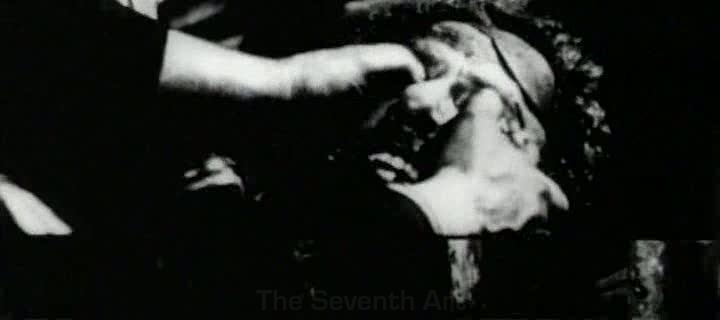
One of the most exhilarating works of the last decade, Guy Maddin’s six minutes of undiluted phantasmagoria, The Heart of the World (2000), is a postmodern film about modernism. Like The Limits of Control (2009) – a postmodern film about postmodernism – Maddin’s picture parodies modernist ideas of grand narratives and universal philosophical and political truths, obtainable through science, that could help change humanity for the better. But while Jarmusch’s latest took up arms against capitalist modernization and cultural homogenization, Maddin’s film is merely nostalgic and mocking in attitude. Constructed using pseudo-degraded film stock, expressionist, distorted images, atypically ambiguous Eisensteinian montage and a pulsating track by Georgi Sviridov (which was also employed by Peleshian in Beginning (1967)), the film’s “grand narrative” opens with the image of an omniscient cinematic eye peeping into the diegesis and follows Anna the scientist (the mother figure in the film – wielding a telescope that points downwards – is possibly modeled after the titular queen in Aelita (1924)) as she tries to save the “heart of the world” – the truth – from a breakdown due to, well, individualism and capitalism. Even at the minimum, The Heart of the World, teasingly and cheerfully, presents a scintillating time capsule of an age that exhibited a utopian optimism towards psychoanalysis (the film is a Freudian’s playground), feminism, technology and cinema (the last two of which Vertov uses almost interchangeably when he says that Kino-Eye can transform man “from a bumbling citizen through the poetry of the machine to the perfect electric man”), be it through Kino-Pravda, Kino-Train or Kino-Eye.

L’homme Sans Nom (2009) (Man With No Name)
Wang Bing
Silent


Man With No NameA refreshing and welcome relocation for Wang Bing from the decrepit industrial landscapes of post-Mao China, Man With No Name (2009) finds the director pointing his ever curious, never condescending, hand-held digital camera towards the eponymous, anonymous man living in a deserted wasteland in an unnamed part of the country. A Dersu Uzala incarnate, he lives in an underground shanty – an earthen igloo – in this harsh and otherworldly geography that seems to be entirely cut off from civilization, save for some broken plastic containers that the man uses. From an anthropological perspective, Wang Bing’s account is the idea of man being reduced to his most rudimentary elements. This unnamed man is largely seen taking care of his basic needs – food, clothing and shelter. But, additionally, he also appears to have developed an aesthetic need and we see him compacting heaps of earth and mending the mud walls of his neighbourhood during his “free time”. However, such a reading runs the risk of undermining the political question that the work raises. The moment a film relates one person to another, it goes political. And films such as Man With No Name become political by, ironically, being exceptions to that rule – politicization due to resistance to it. The man in Bing’s film is also a political concept, a new man who refuses to leave the (literal and figurative) womb of the earth, a man who, like Lisandro Alonso’s woodcutter, has seemingly succeeded in freeing himself from all ideology and leading a genuinely self-sustained life.

Tueur À Gages (1998) (Killer)
Darezhan Omirbaev
Russian


KillerA bleak and incisive social portrait of Kazakhstan following the fall of Soviet Union, Darezhan Omirbaev’s Killer (1998), on the outside, seems like a sudden detour from the director’s earlier works. Unlike the director’s previous three eloquent films, which respectively depicted a boy’s life in Kazakhstan during his childhood, adolescent and preadolescent periods, the sociopolitical description of the country here is neither allegorized nor limited by personal experience. What surfaces is a string of vignettes – highly redolent of the best of Italian neorealism – whose nearly mathematical structure betrays a need on the part of the director to speak out, to be overtly political. In the film, a scientist speaks about the importance of demonstration over verification (Omirbaev himself is a mathematician turned film theorist turned filmmaker). Likewise, Omirbaev takes it upon himself to demonstrate the various forces at work on an individual and to illustrate how the often depoliticized idea known as fate is nothing but a set of sociopolitical equations grounded in causality. He uses recurrent imagery and situations to highlight this idea of being unable to escape these forces. Interestingly, the acting, editing and direction are all highly Bressonian, with the excesses of the melodramatic script being continuously siphoned off by the austerity of (the sporadically heavy-handed) realization and relegation of all sensational action to off screen space and ellipses. Although Killer is anti-Bressonian in the sense that it dispels the illusion of randomness of grace, the penultimate encounter and the inevitable ending of the film is as affecting and as spiritually charged as the finest of Bresson.

(Nearly) random excerpts from Robert Bresson’s Notes On Cinematography (1977):


  • Cinematography, the art, with images, of representing nothing.
  • Make visible what, without you, might never have been seen.
  • Shooting. No part of the unexpected which is not secretly expected by you.
  • Many people are needed in order to make a film, but only one who makes, unmakes, remakes his images and sounds, returning at every second to the initial impression or sensation which brought these to birth and is incomprehensible to the other people.
  • Economy: Racine (to his son Louis): I know your handwriting well enough, without your having to sign your name.
  • Respect man’s nature without wishing it more palpable than it is.
  • Actor. The to-and-fro of the character in front of his nature forces the public to look for talent on his face, instead of the enigma peculiar to each living creature.
  • To defeat the false powers of photography.
  • Two persons, looking each other in the eye, see not their eyes but their looks. (The reason why we get the color of a person’s eyes wrong?)
  • From the beings and things of nature, washed clean of all art and especially of the art of drama, you will make an art.
  • X demonstrates a great stupidity when he says that to touch the masses there is no need of art.
  • Not to shoot a film in order to illustrate a thesis, or to display men and women confined to their external aspect, but to discover the matter they are made of. To attain that “heart of the heart” which does not let itself be caught either by poetry, or by philosophy or by drama.
  • Empty the pond to get the fish.
  • Don’t run after poetry. It penetrates unaided through the joins (ellipses).
  • Your film’s beauty will not be in the images (postcardism), but in the ineffable that they will emanate.
  • Production of emotion determined by a resistance to emotion.
  • The CINEMA did not start from zero. Everything to be called into question.

Sharon Lockhart

Sharon Lockhart 
(1964-)

Sharon Lockhart was born in 1964 in Norwood, Massachusetts. The American artist and filmmaker studied at the Art Center College of Design in Pasadena, and at the San Francisco Art Institute. She lives and works in Los Angeles. Her work has been shown in numerous exhibitions and screenings in America, Europe and in Japan and has won many awards. Lockhart is the recipient of fellowships from the Guggenheim Foundation, the Rockefeller Foundation and the Asian Cultural Council. Her films NO and TEATRO AMAZONAS both screened at the Berlinale, Forum of New Cinema. In February 2006, her work, PINE FLAT, was shown at the Berlinale within the context of Forum expanded, the new platform for video art and installations, hosted by Forum and KW Institute for Contemporary Art. [Bio Courtesy: Split Film Festival, Image Courtesy: Walker Art Center]


Photographer and experimental filmmaker Sharon Lockhart’s cinema is one that straddles multiple realms. It has been noted that her film works attempt to explore the boundary between photography and cinema. For one, most of her films are composed with a static camera and with self-conscious framing that photographs actions head on. The compositions serve to remind us that the camera’s vision is highly restricted and there’s a world that lies beyond its four edges. This is also reinforced by the numerous activities that take place off-screen in the films. Since the prime distinguishing factor between cinematography and photography is time, these works are highly conscious of their temporal dimension. While Lockhart introduces the element of time in her photography by perturbing the order in which the photographs were taken, she chooses to preserve the linearity of time in her films. Instead, she invokes the sense of passing of time by retaining the photographed image for a long time – by using overly prolonged shots of largely unchanging actions. It is perhaps best to look at her films in relation to her photographs and vice versa. Another prominent aspect of her cinematographic work is the relationship between people and the spaces they inhabit. These surroundings may counterpoint (an opera house in the Amazon, a basketball court in Japan) or define (a labyrinthine industrial corridor, dusty Polish courtyards) the way of life of the people within them, but, in all cases, the kinship between the two remains of central interest.

Another dialectic that permeates Lockhart’s filmography is that between art and ethnography/anthropology – between straightforward documentation and authorial stylization. Lockhart seems to be conscious of the fact that such a tug-of-war always runs the risk of entering the territory of exploitation and unwarranted anesthetization (“I was well aware of the problems of filming in another culture and had begun to think about the way ethnographic film works within an art context.”). She overcomes this deadlock, as do other documentary filmmakers, by choreographing routines (there are dance trainers and movement advisors who work in Lockhart’s films), by making the subjects active participants in the filmmaking process and by not imposing preformed psychoanalytic notions on them. She cites Jean Rouch as a major inspiration (“I became even more fascinated with ethnographic film, especially Jean Rouch. He took ethnographic film to a whole new level. His ideas of collaboration and being a catalyst are especially interesting to me, like the way he lets his subjects choose fictional characters or roles, through which something very real comes out”). Consequently, the actions in her films are both spontaneous (the anthropological) and rigged (the aesthetic) wherein the participants both perform and behave. They are carrying out their daily tasks and, at the same time, executing the choreography they have practiced.

Goshogaoka (1998)

GoshogaokaLockhart’s debut project, Goshogaoka (1998), shot in 16mm in a basketball stadium in Japan, opens with the image of a theatre curtain, thereby setting up the motif of theatricality that pervades the rest of the film. The stillness of the image is interrupted as we witness almost two dozen high school girls in sports outfit running in and out of the frame – apparently in a circle – making the shot indicative of the cinematic system itself – the projector and the screen (In one segment, the “actors” run towards the camera, projecting themselves on us, as if mirroring the light particles that bombard the screen within the film). In fact, Goshogaoka, in its entirety, could pass of as a metaphor for filmmaking where seemingly random acts are shaped and stylized into a coherent whole (“everyday routines recontextualized and reinterpreted as dance”), where order is arrived at through disorder and where the banal moulds itself into the beautiful. The impeccably ritualized nature of the activities in the early part of the film – as one would associate with the Japanese-ness of the participants – gives way to more improvised individual tasks where the girls “perform” consciously in front of the camera, floundering at times, as if on the audience’s demand. The illusion of the work being a straightforward documentation of routines is also broken by Lockhart’s self-referential framing and utilization of off-screen space wherein we are made to acknowledge that all that we see is as much posed as it is improvised. This concept of the cinema space, by its very purpose, being a zone of contemplation would be explored further in Lockhart’s next film.

Teatro Amazonas (1999)

Teatro AmazonasTeatro Amazonas (1999) is set in the eponymous opera house in Manaus, Brazil, which one might remember from Herzog’s Fitzcarraldo (1982), and consists of a single half-hour shot filmed in 35mm of a native audience listening to a piece of avant-garde music (scored by Becky Allen). As the film progresses, the voices of the audience completely overpower the vocals of the music in the same way our concentration is distracted by the length of the shot. The camera is on the stage and observes the audience head on, essentially making the film screen a portal of sorts through which cultural exchange – between two worlds, one might say – takes place. One is reminded of Kiarostami’s Shirin (2008) in the way the screen additionally acts as a mirror where one audience – watching Lockhart’s experimental work – resembles the other – listening to Allen’s experimental work. Being set in South America, the reversal of the subject-audience relationship here elicits other intriguing responses from us as well. Lockhart’s camera places us on the stage, with the Native American audience staring at us, and hence manages to reverse the colonial gaze (if one makes the fairly questionable assumption that the audience is predominantly European/North American). The “colony-wise” credits at the end only compound this revisionism. In that sense, each passing minute ratchets up the tension instead of accustoming us to the new space. Although Lockhart’s films don’t possess such overt political objectives, this particular film works on such an extreme Brechtian level that such a response doesn’t seem invalid.

NŌ (2003)

NoA companion piece to Goshogaoka in a number of ways, NŌ (2003) is a highly formalist work that attempts to study the properties of the film frame with the agricultural process of mulching as the backdrop (the ethnographic aspect of the film is very subdued). The film documents two Japanese farmers (Masa and Yoko Ito) amassing heaps of hay and later spreading them out on a field. We see that farther the farmers are from the camera, the longer they take to traverse the breadth of the frame. As the amount of hay gathered decreases with decreasing distance of the workers from the frame, we realize that the geographical and representational areas of a region are in inverse proportion to each other and that the field of vision of a camera is conical rather than cubical. Although NŌ is an examination of the relation between the XY plane and the Z-axis, it also functions as a painting unfolding in time. The screen is bisected by the horizon which separates the black soil from the reddish sky. As the farmers spread the hay over the soil, they end up coloring the lower half of the frame, literally assembling it. Coupled with ambient sounds of bird chirps, NŌ is like an impressionist painting on film in which both rapidly and gradually varying hues of light are registered (A little more plot and it could pass off as Jean Renoir). In that respect, the semi-static-semi-dynamic composition of the film largely resembles those of James Benning, where, too, quick changes in landscape are pitted against microscopic ones.

Pine Flat (2006)

Pine FlatLockhart’s longest feature to date, Pine Flat (2006) is shot in the eponymous rural area in California where she apparently lived for four years. Consisting of twelve silent ten minute sketches – most of them presented through skewed compositions – all of which deal with kids and teenagers residing the locality, Pine Flat preoccupies itself with the study of cinematic time. The first six sketches deal with children who are alone and the next six with groups of teenagers and kids hanging out together. Lockhart reveals that she wanted to investigate the subjective experience of time in both these types of situations. In both cases, the kids seem to be somehow beating boredom by indulging themselves and each other (The viewer’s experience of these stretches of time also plays a part in the film’s exploration). Lockhart’s idea of disrupting chronology in her photo works translates to prolongation of the film image in this work. Consequently, the segments are reduced to their functional minimum and come across as little more than photographic – a girl reading a book, a boy playing the harmonica, a kid waiting for the school bus, a boy sleeping on the ground and so on. This return to cinematic zero (if one can approximate cinema as photography in time) is also mirrored in the implied return to zero of nature. The kids playing and carrying out their petty activities happily in the lush woods is the image of serenity itself. Alternately, this sort of persistence on mundane gestures defamiliarizes them, elevating the quotidian into the realm of art (similar to Walhol’s works) and eventually urging us to see them with fresh eyes.

Lunch Break (2008)

Lunch BreakIn Lunch Break (2008), Sharon Lockhart seems to have taken to heart the Douglas Adams quip that time is an illusion and lunchtime doubly so. Shot in Bath Iron Works, Maine during the titular break period on a typical day, the film consists of a single tracking shot through the central corridor of the factory slowed down digitally to 75 minutes (It is probably the only film I’ve seen that takes longer to see than to shoot!). The dolly moves along the Z-axis of the frame – reminiscent of Kubrick’s tracking shots in the WW1 trenches – as rusty lockers and other furniture trudge past us. The film almost entirely consists of vertical planes, straining and training our eyes to such an extent that we start recognizing the minutest of lateral movements that the camera undergoes. Beyond a point, our eyes start playing tricks on us. If we concentrate at the centre of the image, the edges seem to melt away and the camera seems to move pretty fast and if we choose to pay attention to the edges, the camera seems slower than ever (an illusion that might be very useful in genre filmmaking). At times, when there are only machines in our view, we are not sure if we are witnessing a tracking shot within a real space or a zoom into a photograph (The one Lockhart film that most resembles Wavelength (1967) is this). It is only when the humans enter the frame that we have reference for the camera’s motion. Likewise, it is only during the lunch break that the human elements, for once, triumph over their mechanical counterparts, which continue to drone even during this cherished recess time.

Exit (2008)

ExitOver a 110 years after the Lumiére brothers photographed workers coming out of a factory, Sharon Lockhart embarks on a similar project, attempting to chronicle workers exiting a factory – Bath Iron Works again – over a time span of five days. Unlike in the earlier film, we don’t get to see the worker’s faces. Only a few of them even seem to notice the presence of a camera. Over the week, we see a number of workers walking into the frame, moving away from the camera and vanishing at a point near the centre. There is no strict pattern – in attendance, in attire or in mood – that is evident as we move from Monday to Friday. No insight into the psychology of the workers is given either. Instead we are left to speculate about the contents of the lunch boxes (which had made their debut in Lunch Break) and back packs (which many seem to be carrying), about the kind of work these workers are doing (not all seem to be involved in physical labor) and about the time of the day and season of the year (given the changes in the intensity of natural light). It’s kind of like guessing the contents of those mysterious trains in RR (2007). A man stops to chat with another. We barely hear their voices and are left wondering about the poetry of their lives. One striking thing that is evident is that the majority of the workers are wearing denim. This might give us an insight into the taste and economic standing of these people, but it is also suggestive of mass production of commodities, discrediting of human skill and homogenization of culture.

Podwórka (2009)

PodworkaPodwórka (2009) is shot in Lodz, Poland and consists of six sketches depicting the kids of the neighbourhood playing with each other in the courtyards of the city. A miniature version of sorts of Pine Flat, this film, too, presents a string of vignettes from the lives of children of a particular city. But, unlike Lockhart’s earlier film which shot the kids from at eye level and from a close distance, the kids here are photographed with a detached perspective and in long shots as if integrating them with their environment. This, in effect, presents them as human elements maneuvering through industrial landscapes which are – a la Lunch Break – marked by rusted pipes and seemingly defunct structures. Like Pine Flat, Podwórka attempts to study a locality by viewing it from different angles and through different people and to synthesize a version of the region that stays true to the filmmaker’s experience of it (although I don’t understand the geo-specificity of Poland for this project) – as if trying to hold on to the fleeting memories of childhood, which is influenced only too deeply by one’s environment. If it was the green trees in Pine Flat, it is Lodz’s mellowed courtyards that seem to be engulfing the children in Podwórka. The soiled, dilapidated walls of the neighbourhood seem to be of no bother to the kids, who are gleefully engaged in playing with mud, bicycles, footballs and the surrounding buildings. In that sense, one could say that the film is, as is Weerasethakul’s debut feature, a paean to dead times of the afternoon and to the power of human imagination.


(You can watch two of Lockhart’s films here)


Instructions For A Light And Sound Machine (2005)
Peter Tscherkassky
Silent

“…”


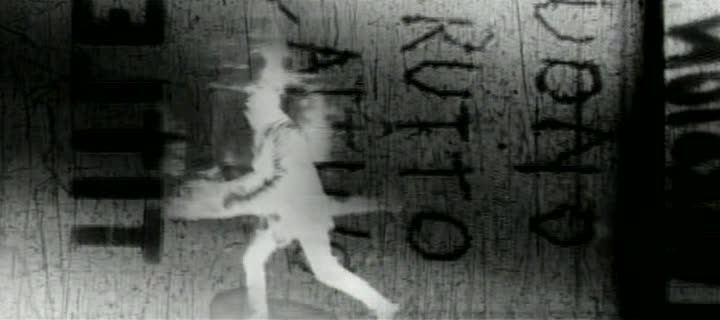
Instructions for a Light and Sound MachineAustrian experimental filmmaker Peter Tscherkassky has the most bizarre working method I’ve come across. He apparently only works on found footage which he doesn’t merely reuse. Using a specialized laser beam, he transfers the images partially from the footage onto a fresh stock, working painstakingly on a frame-by-frame basis, leaving certain areas of the latter unexposed. In other words, he literally ‘sculpts’ his film from the raw footage he gathers and gives them a whole new appearance and meaning. One could say that he is essentially responsible for every single speck present in the frames of his films. This fact is of utmost importance since the medium is the message in his 16-minute wonder, Instructions for a Light and Sound Machine (2005), a work that packs a wallop like a few films do. That Tscherkassky chooses Sergio Leone’s spaghetti Western, The Good, the Bad and the Ugly (1966), for his project is vital. Like the Kinski-esque man in it who steps in front of the camera to gaze into it, the Leone film is a self-conscious masterpiece that keeps the narrative to its bare minimum, dissolving the genre and asking us to see through its own construction (If he was allowed, Leone would probably have included the boom mike in the frame as well). Like the Italian film, Instructions is a work that has both narrative and formal concerns, but it goes one further in the way it calls attention to its narrative, its aesthetic and its medium, all at once. And how often do we see experimental films being made in 35mm CinemaScope?!

Instructions consists of a bunch of shots from the Leone film, almost all of which deal with Ugly/Tuco (Eli Wallach) running – for the treasure and for his life. Tscherkassky takes the shots through his elaborate transfer process, extracting, distorting, stressing and degrading them. Sometimes he repeats, reverses, negates, overexposes and overlaps the shots, creating a highly familiar yet vastly different stream of images. The soundtrack, likewise, is a dense collage of diegetic sounds and extra-textual mechanical noises. We hear a clamorous storm of bullets, the hum of a rickety projector, the footsteps of the characters, alarming wail of sirens and other cyclic machine sounds put together by Dirk Schaeffer. Instructions begins with a man – the surrogate audience – opening a window and peering into the horizon through his telescope. An exposed ellipse reveals to us that it’s Tuco arriving on a horse. Soon there are bunch of these ellipses as if a crowd of such men has gathered. We are soon thrust into a duel, bullets fly by, the image jars and switches between negative and positive, with lots of flickering of image and sound. The violence in film parallels the violence on film and, somehow, the latter prevents us from enjoying the former. The film is, hence, also violence on us, an assault on our senses. It’s sadism that’s being exhibited on every level – not just the filmmaker’s, ours too. By exposing the process of the film running, we are made to notice the politics of the narrative, of the form and of the material itself.

Instructions for a Light and Sound MachineTscherkassky seems to have found an apt metaphor for the filmmaking process in The Good, the Bad and the Ugly. An actor in a film dies at the end of each frame only to be born again in the next, like how Blondie (Clint Eastwood) – the director stand-in – surrenders Tuco to the sheriff for hanging only to save him again. This seemingly never-ending cycle of death and resurrection pervades the entire film as Tuco becomes the Sisyphus-ean man caught in the loop of film, never being able to escape the tyrannical circle. In the final scene, he finds himself in a cemetery full of graves, which might all well be his own. He runs from one grave to another trying to find the one that will redeem him. But what he does not know is that he is not in control of his situation. It is Blondie who makes him run from one grave to another. It is Tscherkassky who makes him run from one direction to another and back. Tuco tries to evade death by trying to jump onto the next frame and perhaps even out of the film, to no avail. He is puppet in the hands of the filmmaker who distorts Tuco’s figure to give it a phantom-like appearance, as if the man is on fire. Tuco vainly attempts to enforce his reality, to free himself from the machinations of the narrative, the filmmaker, the audience and the projection system. But, even after the ‘Finish’ frame has arrived (which is immediately juxtaposed with the ‘Start’ frame), he is still running, wandering the limbo between life and death, never to see real light.

Instructions is a meditation on the nature of film and its relationship to cinema in this world of digital video. Tscherkassky’s film is highly rooted in the ontology of the material using which it is made and this inseparability of the movie’s medium, aesthetic and content is what gives the work its special significance. In the director’s own words: “I attempt to create art works that can only be made with film. In other words, if there were nothing other than the computer, hard disk and magnetic tape, then these works would simply not exist”. More than anything, Instructions illustrates how the film medium is inherently a vehicle of personal expression and how it bears the authorial stamp more deeply than any other modern medium. A scratch on a piece of film denotes human authorship while a smudge on a piece of digital video does not. The scratch – be it a conscious distortion on the part of the filmmaker or a folly of the projectionist – proves and particularizes the existence of the piece of work in the real world. It stands witness to the human elements of the cinema enterprise – from the production of a film to its exhibition. It’s an existential question of sorts for the work being created, like for Tuco here. The medium of the work has to be palpable and has to be subject to physical impairment in order for it to testify its being. May be that’s why the combustion and destruction of film stock always has some romanticism associated with it. The death is what establishes its existence.

Instructions for a Light and Sound MachineA digital smudge, on the other hand, could happen anywhere within the production, distribution and exhibition systems. It might just be the corruption of a few thousand bits of data. It might purely be the work of a malfunctioning storage device. The smudge makes a film metaphysical by refusing to acknowledge its being in the real world (Tscherkassky’s film, in a way, could be read as an assault on digital video by film). In a sense, it sweeps the work off ground and makes it a bunch of floating images that find their meaning only in the minds of their beholders. Consequently, it is both interesting and problematic when one watches Tscherkassky’s film on the computer or on a DVD system. For one, the basic significance of the whole film is lost. It digitizes the analog. One is never sure if a particular defect in the image stream that we see is a part of the original film or a result of the inefficiency of the video encoder used. This additional dialectic goes to the extent of inverting the filmmaker’s and the spectator’s relationship with the film. The work ceases to be a set of instructions ‘for’ a light and sound machine and becomes a set of instructions ‘from’ a light and sound machine. We stop being the authors and the critics and become the passive screen on which the film projects itself back, assaulting and deceiving us with its glitches. Thanks to the proliferation of online video sites, we have managed to mass produce, more rapidly than ever, what was essentially to be found on a single reel of film. As Godard said, what we see is not even a copy of a reproduction.

In his seminal essay The Work of Art in the Age of Mechanical Reproduction (1935), Walter Benjamin optimistically examines how the invention of film (more or less coinciding with the birth of psychoanalysis) changed the perception of the world at large and redefined the function of art. He argues that cinema, by its inherent necessity to be reproduced on a large scale (owing to the sheer amount of financing that goes into it, unlike other arts), destroys the aura – to use Benjamin’s terminology – around a piece of art. The question of authenticity of a work of art, in such a case, becomes irrelevant. Thanks to such mass production, a work of art is no more the centre of the world that connoisseurs must travel miles to see. Art is now delivered at our doorstep, so to speak. It frees cultural expression from the confines of an arthouse by making it accessible to a large part of the public, hence making the perfect tool for political mobilization. He writes:

Mechanical reproduction emancipates the work of art from its parasitical dependence on ritual. To an ever greater degree the work of art reproduced becomes the work of art designed for reproducibility. From a photographic negative, for example, one can make any number of prints; to ask for the “authentic” print makes no sense. But the instant the criterion of authenticity ceases to be applicable to artistic production, the total function of art is reversed. Instead of being based on ritual, it begins to be based on another practice – politics.

This invalidation of the question of authenticity by mass production, far from being a death knell for the arts as some purists may cry, obviates the need to own and collect works of art. Mass production, on the most basic level, thus seems to override socioeconomic disparities, freeing art of the classism and elitism inherent in a ritualistic approach to it (One could dig a little further to see the underlying contradictions within modern, assembly-line production and marketing). This liberation of the arts rings truer in the world of video streaming and peer-to-peer sharing, where even collection of reproductions of work of art, like DVDs, has become a futile exercise (the ritualist cinephile’s last hope is, then, boasting about the number of films she’s watched). So a work of art, essentially, is stripped down to being about its ideas and emotions and our responses to them than about its authenticity, ownership and geographical location.

Instructions for a Light and Sound MachineNow, one could argue that films such as Tscherkassky’s (and others’ such as those of Stan Brakhage, which literally have its author’s signature imprinted), which thrive on the existence of a physical medium, only bring back the ritual culture generally alien to cinema (The tendency is also manifest when certain experimental films are auctioned for tens of thousands of dollars and even in certain tenets of the auteur theory). But one could also say that it’s their way of asserting their individuality amidst the ruthless homogenization of commercial cinema, over the effacement of a personal vision by the financial objectives of studios (Tscherkassky’s is very much a work of Second Cinema). Instructions, in particular, resorts to this ritualism only to illustrate the tyranny of film, the olden days when the author could make his material transmute on whim and even impart a part of his personality to his film. Not anymore. Authorship can no longer exist on the frame, only within it. As far as the physical medium goes, the author is dead now, which is not necessarily a bad thing. The film even seems to look forward to a newer, less egotistic cinema as suggested by the strange overlapping of ‘Start’ and ‘Finish’ frames. Now that Tscherkassky has mourned the death of the despotism of film, it’s time for some filmmaker to celebrate the democracy of digital video.


(You can watch the film here. The password to the video is “theauteurs”.)

Kanasembo Kudureyaneri (2010) (Riding The Stallion Of A Dream)
Girish Kasaravalli
Kannada


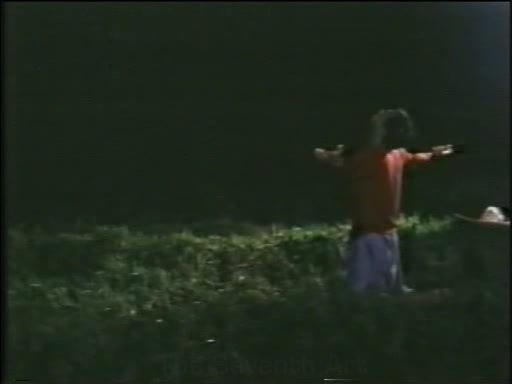
Riding the Stallion of DreamGirish Kasaravalli’s Riding the Stallion of a Dream (2010) is something of a blast from the past, specifically from the Indian parallel cinema of the 1970s of which Kasaravalli himself was a part (This regression in time might just be the point of the film). Like most films of that period, Riding has a keen sense of class politics at work in the hinterlands of the country (There is nothing very specifically 21st century about the script, except for the mention of factories buying farmlands). Furthermore, it embraces the typical aesthetic characteristics of the movement with its use of a traditional, downbeat soundtrack, its penchant for naturalism and, particularly, darkness and its employment of dubbed sound. But more importantly, it retains the optimistic belief of the age that change is indeed possible (even though Kasaravalli’s proposed means of change is much less romantic and much more grounded). However, unlike its predecessors, Kasaravalli’s film is unwilling to overlook the human elements comprising the class struggle. Indeed, this is where the script’s Arriaga-like structure is really put into good use. The film is essentially divided into four segments which alternately present reality as seen by Irya the village gravedigger and his wife Rudri and reality as seen by the son Shivanna and the daughter-in-law Hema of the recently deceased village elder (among other elites). Predictably for a film that deals with multiple classes, Riding is full of ironies small and big. The pristine corridors of the elder’s house are contrasted with the dilapidated interiors and streets of Irya’s home and neighbourhood. Shivanna and Hema are almost always seen trapped inside the claustrophobic villa, which is suffused with the stench of the rotting corpse of the village elder that reflects their moral decay, while the gravedigger and his wife are seen in glorious long shots traversing the wide open spaces and flower farms of the village. The death of the patriarch (whose body has to be forced to a sitting position and whom his son will be taking over from) spells doom for Shivanna and co. while it’s Rudri (there’s even a direct reference to her as Irya’s surrogate mother) who takes to herself to reconstruct her husband’s life. Revealing the old man’s death helps affirm Irya’s dream while it would shatter Shivanna’s and contrariwise. In both camps, it is a blind faith in God and religion that serves to preserve status quo. There is considerable tweaking of the mise en scène – especially in the lighting and actor blocking – as well that aids to emphasize this tug of war. Kasaravalli provides us almost exactly one half of the truth in each segment, leaving it to the subsequent or preceding segment to complement it. A simple shot from a particular segment finds its corresponding reverse shot in only the next segment and vice versa. Each of these couples in the story wants to lead a better, more dignified life, as defined by their social classes. Like the audience, these couples are unable to see what lies on the other side of the hedge and how their seemingly independent plans might affect the other. There is no moral dilemma that they see in their actions. This way, Kasaravalli calls into question the perceptibility of the class structure itself and, subsequently, uses his art to provide us that critical distance from reality which is required to understand it in totality. As a result, the characters in Kasaravalli’s film are not (save for a touch of contempt and sympathy the upper and lower class characters respectively receive from the director – a possible residue of the parallel cinema of yesteryear) class abstractions or oversimplified monsters and victims. They are both individuals with choice and products of their classes (Irya blows his money on alcohol and loafs about regularly, Rudri is a casual thief and some of the landowners in the village do genuinely care about Irya’s condition). Only that each of the couple wants to ride off on its own dream horse and in a direction that it wants. But what both don’t realize is that the horses are tied to the same chariot.


(Image Courtesy: Goethe Institute)

Serafin Geronimo: Ang Kriminal Ng Baryo Concepcion (1998) (Serafin Geronimo: The Criminal Of Barrio Concepcion)
Lav Diaz
Tagalog/English/Chinese/Filipino


Serafin Geronimo - The Criminal of Barrio ConcepcionDiaz’s debut, Serafin Geronimo: Criminal of Barrio Concepcion (1998), even without the burden of its successors, is a poorly made piece of cinema. It’s got all the trappings of a bad student film – laboured acting, ill-advised cuts, unwarranted zooms and an occasionally bombastic score – that only worsen its low production values. Very loosely based on Fyodor Dostoevsky’s Crime and Punishment, Serafin Geronimo chronicles the titular criminal’s act of sin and his subsequent confession and redemption. Diaz chooses to externalize the moral conflict of the protagonist through a dental infection whose pain seems to grow unbearable. Additionally, there’s a lot of gratuitous violence – graphic and described – in the film (even in the censored version) that underscores the savagery of the world Serafin (Raymond Bagatsing), like Hesus, is caught in. Evidently, like the Russian author, the film wants to observe human suffering in all its brutality. But what the film does not seem to understand is that human suffering can’t be captured on film by merely recording mutilated bodies or the physics of their destruction. Such documentation must attempt to record the death of the soul – the internal through the physical – as well (Compare this film with the sublime, genuinely Dostoevsky-ian passage depicting Kadyo’s demise in Evolution). However, the scenes at the countryside, set in the past, are executed with certain affection and restraint. Diaz pushes his political ambitions to the background as the quest for personal justice and redemption takes precedence here over national issues. The use of curious, hand held camera and the staging of action in deep space during indoor scenes are few of the traits that would be carried over and refined in Diaz’s later, superior works.


[Capsule added to The Films of Lav Diaz]

Hai Shang Chuan Qi (2010) (I Wish I Knew)
Jia Zhang-ke
Mandarin


I Wish I KnewA project commissioned by the state in view of the upcoming Shanghai World Expo, Jia Zhang-ke’s I Wish I Knew (2010) is a thematic extension of 24 City (2008) and is much more freely structured and much broader in scope compared to its predecessor. The larger part of the film presents interviews with older residents of Shanghai (along with those of Taiwan and Hong Kong) who gleefully recollect their family’s history, which reveal the ever-growing chasm between the city’s past and present. Personal histories seem to be based on and shaped by the city’s tumultuous politics and culture. We see that the people being talked about were viewed as mere ideological symbols incapable of erring or transforming. In addition to his employment of mirrors and reflective surfaces suggesting both documentation and subjectivity, Jia films the interviewees in extremely shallow focus as if pointing out their being cut off from the present (It takes them the sound of breaking glass or the ring of a cellphone snap back to reality). This tendency is contrasted with the final few interviews of younger people where we witness how life can change course so quickly and how one can assume multiple social personalities on whim and float about like free entities. Losing one’s sense of existence in a particular environment is perhaps not a big price to pay after all for the seeming freedom of choice it gives. One’s history is no longer defined by one’s geographical location. One is no longer bound by dialectical ideologies. There is apparently no influence of the past on the present, in every sphere of life, whatsoever. Mistakes of the past are obscured by the glory of the present and the loss of values, by cries of progress. Jia’s view of the city is, against our wishes for a disapproving perspective, neither nostalgic nor rosy. It’s holistic.

P.S: Don’t let the warmed up arthouse trick of having Zhao Tao wander the city streets in search of the city’s soul turn you off. Jia more than compensates for it with his search.


[Capsule added to The Films of Jia Zhang-ke]