Question: “What kind of film do you want to see?”
American 1: “I want a Superhero movie”
American 2: “I want an Iraqi war movie”
American 3: “I want to things go BOOM, BANG and CLANK, with lotsa cool special FX”
Thus, Iron Man was born (Sounds like the perfect specimen for dubbing into all languages, from Bhojpuri to Tamil, doesn’t it?).
Summer is here and as usual, it has brought along with it a string of action flicks. This time around we get to see 3 comic book adaptations. Jon Favreau’s Iron Man is the first of the three and has made it big at the box office. With a series of duds by Marvel after Spider-Man 2 and a title as lame as this, one cannot hope for much.
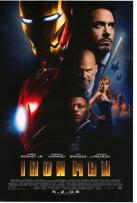
Tony Stark (Robert Downey Jr.) has got everything one wants – the style, the brains, the bucks and a lovely assistant Virginia Potts (Gwyneth Paltrow). He builds WMDs for the American soldiers fighting all over the world. On a trip to Afghanistan, he is kidnapped and forced to build a super-powerful missile from scratch in a cave. Instead, with the help of a faithful assistant (who obviously can speak English and is obviously going to die), Stark builds a metallic suit and manages to escape. On return, he ponders how his own inventions have been used against him and decides to end it all. But his business partner Obadiah Stane (Jeff Bridges) has other plans. Thus ensues a battle between technologies and (naturally but unavoidably) the good guy beats up the baddie and all’s well.
This could have been another run-of-the-mill superhero movie if not for the character and performance of Robert Downey Jr. The alter egos of all the superheroes hitherto have been wimps whereas Tony Stark is charismatic, brilliant, provides most of the clever lines in the film and can-survive-without-superhero-costume. Robert Downey Jr. does a great job with his looks and actions that reflect the don’t-care attitude of Stark. Gwyneth Paltrow‘s character as Ms. Pepper does not seem to be well delineated. She means business in some scenes whereas in others, she is a bumbling young girl. Jeff Bridges (The Dude) is good but just reminds me of Goldfinger during the last part of the film.
The screenplay moves from predictability, hovers over tautness for sometime and goes back again to immense predictability. Be alert for the best moment in the film which I will not spoil by mentioning. Special effects galore, one has to admit the film does not lack action at all. A lot of effort has gone into the detail of the armor and flight scenes. The sets of the Stark’s laboratory do not give the complete feel of a superhero movie but are good nevertheless. The film has underplayed the War on terrorism and the politics behind it even though blatant caricaturing of the Jehadis is done.
Lots of bangs, booms and clashes agreed, the film does not give fresh entertainment and succumbs to become yet another bead in the string of Marvel flops. Save Robert Downey Jr., the film has not much to offer and thoroughly over hyped. But if you want some 2 hours of time to kill, Iron Man may be a decent watch to keep you awake.
Verdict: 

 While watching Polladhavan, I realized that almost every other Tamil movie that releases today is based on underworld and organised crime. Gangwars, Hooligans in love, Rise to power of a henchman, common man pulled into violence and what not. We may even see a Dada learning bharatnatyam or a Gunda turning into a priest very soon. I then traced back to the movie that perhaps started it all, Mani Rathnam’s Nayakan. Released way back in 1986, the movie has inspired a whole new generation of filmmakers in the state.
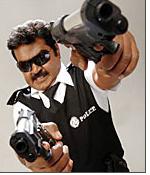 What do you get if you cross a Vijaykanth script with Vettaiyadu Vilayadu? Yes, You are right. Captain catching Kashmir-born Tamil terrorists (Theeviravadhinga) in Canada. That is exactly what happens in Captain’s 150th, “Arasangam“. After giving epics such as “Chocklet” and “Madurai”, R. Madhesh is back with this rib-tickler…oh sorry, nerve-wracker.
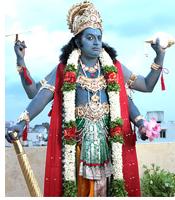 This is it. One of the two movies I was looking forward this year is here (The other one OBVIOUSLY being “Dasavatharam”). After having seen V. Priya painful fall from “Kanda Naal Mudhal” to “Kannamoochi Yenada”, I did not want to see another successful debutant taking a hard second step. But “Arai Enn 305-il Kadavul” is a large disappointment from a person who gave the genuinely comic “Imsai Arasan, 23-am Pulikesi“.



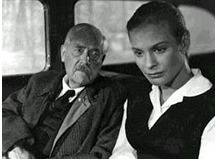 Wild Strawberries
 Special mention must be made to Jafer Panahi’s Ayneh and Daniel Myrick and Eduardo Sanchez’s Blair Witch Project for redefining the lines between reality and fiction, the former in its typical Iranian fashion and the latter in the American camp style. Let’s hope more such movies come up in the future and explore this medium to the fullest possible extent.







 “Oh, Prakashraj and Prithviraj with Viji at the helm?”, I thought, “It’s Duet movies, it must be good.”. Generalizations suck, don’t they?. It doesn’t matter how famous the cook is, it’s all about the recipe. Vellithirai becomes a cinematic embodiment of this statement.
