Gabbeh (1996)
Persian
Mohsen Makhmalbaf

“Life is colour”
 

GabbehA co-production of the French and the Iranian film industry, Gabbeh (1996) is perhaps the best and most typical starting point for the westerners who would like to get an insight into the cinema of the east. Released in 1996 Gabbeh has managed to enchant the westerners and the Asians alike for not only its artistic merits but also for its subtle exposure of the culture of Iran. The film is centered around a nomadic tribe, which is tightly bound by blood relations. The tribe has its own rituals and beliefs which it passes on for posterity. One such practice is the weaving of carpets for a person depicting the journey of their life. The tribe carries and updates the carpets wherever they go.
The film begins with an old couple who are at the river side washing one such carpet. They envisage a young lady representative of the carpet and converse with her. The young lady has a story to tell- one that of forbidden love. She takes us through her life’s ordeals, her moments of joy, dissatisfaction and sorrow. Representing various emotions, colours play a very important role in the film. These colours blend with the carpet to tell stories of the people it has been with. So do the various landscapes that the tribe wanders through. The animals too, in the film are representative of the oneness of the clan and the alienation of the beloved of the young lady.

Running over just a hour and a quarter, the film is succinct and opts to show what it wants rather than talk. The film opened ways for subsequent Iranian films to reach out to the world and display their artistic and film making abilities. For its poetic direction and striking use of imagery, the film won the Best Artistic Contribution Award in the Tokyo International Film Festival.

I’m going to try to put up a series of posts titled “Flashback“. These will be about movies that fascinated, infuriated, impressed, enthralled (enough with the verbs now) me. I’ll try to sustain it as much as possible. Watch out this space for the updates. I also have plans of having other series if this one gets steady. The reviews will keep coming as usual.

Question: “What kind of film do you want to see?”
American 1: “I want a Superhero movie”
American 2: “I want an Iraqi war movie”
American 3: “I want to things go BOOM, BANG and CLANK, with lotsa cool special FX”

Thus, Iron Man was born (Sounds like the perfect specimen for dubbing into all languages, from Bhojpuri to Tamil, doesn’t it?).

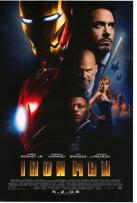
Summer is here and as usual, it has brought along with it a string of action flicks. This time around we get to see 3 comic book adaptations. Jon Favreau’s Iron Man is the first of the three and has made it big at the box office. With a series of duds by Marvel after Spider-Man 2 and a title as lame as this, one cannot hope for much.

Tony Stark (Robert Downey Jr.) has got everything one wants – the style, the brains, the bucks and a lovely assistant Virginia Potts (Gwyneth Paltrow). He builds WMDs for the American soldiers fighting all over the world. On a trip to Afghanistan, he is kidnapped and forced to build a super-powerful missile from scratch in a cave. Instead, with the help of a faithful assistant (who obviously can speak English and is obviously going to die), Stark builds a metallic suit and manages to escape. On return, he ponders how his own inventions have been used against him and decides to end it all. But his business partner Obadiah Stane (Jeff Bridges) has other plans. Thus ensues a battle between technologies and (naturally but unavoidably) the good guy beats up the baddie and all’s well.

This could have been another run-of-the-mill superhero movie if not for the character and performance of Robert Downey Jr. The alter egos of all the superheroes hitherto have been wimps whereas Tony Stark is charismatic, brilliant, provides most of the clever lines in the film and can-​survive-​without-​superhero-​costume. Robert Downey Jr. does a great job with his looks and actions that reflect the don’t-care attitude of Stark. Gwyneth Paltrow‘s character as Ms. Pepper does not seem to be well delineated. She means business in some scenes whereas in others, she is a bumbling young girl. Jeff Bridges (The Dude) is good but just reminds me of Goldfinger during the last part of the film.

The screenplay moves from predictability, hovers over tautness for sometime and goes back again to immense predictability. Be alert for the best moment in the film which I will not spoil by mentioning. Special effects galore, one has to admit the film does not lack action at all. A lot of effort has gone into the detail of the armor and flight scenes. The sets of the Stark’s laboratory do not give the complete feel of a superhero movie but are good nevertheless. The film has underplayed the War on terrorism and the politics behind it even though blatant caricaturing of the Jehadis is done.

Lots of bangs, booms and clashes agreed, the film does not give fresh entertainment and succumbs to become yet another bead in the string of Marvel flops. Save Robert Downey Jr., the film has not much to offer and thoroughly over hyped. But if you want some 2 hours of time to kill, Iron Man may be a decent watch to keep you awake.

Verdict:

Q: How many TV Today Network employees does it take to screw in a light bulb?
A: Nineteen. 2 guys to announce the problem and postpone it to a special show. 2 to host the special show. 3 experts to talk about problems without light bulbs. 3 experts to talk about problems with screwing in a light bulb. 1 guy to announce an SMS poll about morality of screwing in light bulbs. 4 other reporters to bring in public opinions in various cities. 2 guys to host a special segment called “Bollywood and light bulbs”. 1 guy to extend it to another segment titled “Khabardar, ye apka aakhri bulb ho sakta hai” (Beware, This might be your last bulb). 1 techician to actually do it.

Just tune into Headlines Today nowadays and you are sure to find a program that talks about Aamir Khan’s blog and the supposed cold war that is growing in Bollywood. For the uninitiated, here are a few points the channel managed to drag up.

Incident 1: Shahrukh teases Aamir about his habit of not attending award ceremonies in India (The reason we find is that Aamir is skeptical about their authenticity. Well, who’s not).

Incident 2: Aamir slams Bhansali’s ‘Black’ calling it “manipulative and cold”. He pointed out that the performances were over the top. Apparently, he did not expect a child to be treated roughly in a film.

Incident 3: Amitabh takes incident 2 very personal and says that the performances were indeed over the top- of Aamir head (ooh…hot). Aamir later clarifies his respect for Amitabh.

Incident 4: Aamir writes a blog about a dog named Shahrukh that resides in his house.

Incident 5: Amitabh points out that Shahrukh’s TV show “Panchvi Pass…” has mustered a very small audience compared to KBC and suggests Shahrukh to change the format of the game.

Incident 6: Aamir writes a song “Pappu can’t dance” in his nephew’s debut film “Jaane Tu Ya Jaane Na” and gives an offhand comment related to Salman Khan (Yes, a new character!) and the song.

Nobody can judge the moral correctness of these incidents, especially the media. A news medium is judged by its objective reporting of issues despite clashes with their policies. Knowing that, it is but frustrating to see a news network pin the blame on Aamir Khan for the whole “cold war” that has sprout up in this “war of the words”. It’s none other that Headlines Today/Aj Tak (India’s best news channels, hmmm…) that has crafted these otherwise independent events into one hell of a battle.

I read Aamir’s post and found it quite funny and well written and whoa, below it were 4000 responses (How I wish I was Aamir!). Aamir has managed to keep the post as lucid as possible and clear of all possible controversies. Hey, not so fast. Our secret weapon, TV Today can spin gold out of hay. And thus we have frequent (read 24 hours a day) shows that point out the “Unbearable Blasphemy” about King Khan and Big-B again and again to instigate the already temperamental Indian audience. New interpretations started coming for the “Pappu can’t dance” song (even before its official release) and the channel tried to somehow fit in Salman into each and every word of the song (Yes, you are right. a special 1 hour show for that too, repeated a dozen times). They even stooped down to the level that they made a song mocking Aamir and his personal life. No offense intended (not really), the song was sickeningly cheap and hard on ears, not to mention the childishly made video made from footage.

This is a free country, they say which means that every one has not only the freedom to express their opinions freely but also the right to (authentic) information. News channels such as HT not only misinterpret and mispresent casual and harmless commens (which would otherwise be solved over a simple phone call), but also provide twisted and biased information to polarise the public. Sharp news for sharp people indeed.

P.S.: Don’t be surprised if HT manages to put this blog on air and hosts a special show (yes, repeated half-a-dozen times) called “Harmful influence of Aamir’s blog on youth of India”!

While watching Polladhavan, I realized that almost every other Tamil movie that releases today is based on underworld and organised crime. Gangwars, Hooligans in love, Rise to power of a henchman, common man pulled into violence and what not. We may even see a Dada learning bharatnatyam or a Gunda turning into a priest very soon. I then traced back to the movie that perhaps started it all, Mani Rathnam’s Nayakan. Released way back in 1986, the movie has inspired a whole new generation of filmmakers in the state.
Heavily inspired by the Coppola classic The Godfather (1972), no doubt, Nayakan still has the power to sweep you off the ground. This may not be Kamal Haasan‘s best performance or Mani Rathnam’s best venture, but Nayakan has provided something Tamil cinema has longed for – a milestone. Organized crime has never been shown before with such authority and vitality in Tamil cinema. A commoner who has the guts to stand up against the tyranny of the police, a boy-next-door growing to become the biggest don, a godfather you can rely upon for help – what more could the audience ask for? Velu standing against the water spray, Nayakar defending Selva after his daughter witnesses murder, the scene at the hospital where a child is to be treated, the death of Surya, the now-classic climax – these images will linger in minds of everyone who wants good Tamil movies.

No other “don movie” has even thrilled audience like Nayakan (excepting Basha, credits fully to Superstar), leave alone making an impact. This shows how stale the state of the Tamil cinema industry is. Why do the filmmakers go in search of another Nayakan? Why don’t they try reforming the present state? The answer, some may say, lies in the “Critical Vs Commercial” debate. But haven’t many other films been both critical and commercial success? So why are we stuck up with these gangstas? Are we lacking talent? Are we devoid of new ideas? I think not.

The present state of the industry may be attributed to the producers who want to play safe. The small ones want to use the time tested formulas (2 rooba pottu 3 rooba sambathikardhu) and are afraid to produce new ideas. The big players, on the other hand need stars who in turn do not want their image to be hurt by new ideas. So what is the solution? It is up to the veteran directors and actors who want to provide good cinema to persuade their producers to take a bold step forward. Shankar’s S-pictures, for one, is doing that. Also, if the small-timers can collaborate or if the senior directors can contribute for more such production houses, Tamil cinema can proudly give birth to new Nayakans.

What do you get if you cross a Vijaykanth script with Vettaiyadu Vilayadu? Yes, You are right. Captain catching Kashmir-born Tamil terrorists (Theeviravadhinga) in Canada. That is exactly what happens in Captain’s 150th, “Arasangam“. After giving epics such as “Chocklet” and “Madurai”, R. Madhesh is back with this rib-tickler…oh sorry, nerve-wracker.

Arivarasu (Captain Vijaykanth) is called for action after the kidnap of Manoj (Biju Menon), a friend-cum-police inspector who was on the trail of a bunch of terrorists who were instigated by Chandru (Rahul Dev), a Tamil terrorist led by Martin, a Canadian mafia who resembles Manoj (Whew!). So all Captain has to do now is to go to Canada, talk in Tamil to all the Canadians, catch Martin admist lots of bombings, come back to India to diffuse a retina-authenticated bomb that is on a train travelling miles away from Captain.

Though the film is predictable to the extent that one can countdown to the song and fight sequences (believe me, I did), the movie does offer a few twists and turns to make you believe that there has been a serious effort put in. The scenes where Captain blushes before his love are 30 years too late for him. The film goes through the loop song-speech-fight-sentiment interspersed with the twists and proceeds to the ending one is longing for.

The pick of the cast is Biju Menon, who does a good job both as Manoj and Martin. The imported heroines Navneet kaur and Seril Brindo are props, period. Rahul Dev (yet again) can rename himself “the actor who plays terrorists in Captain films”. Another typical performance by Captain.

Madhesh seems to be a very liberal director. He has allowed all the actors to speak in the languages they want. The editing too, has been a culprit in exposing the sickening re-recording. Srikanth Deva‘s background music (at times) is in the same league as Braveheart and other great Hollywood scores. This is because they are the same. The stunt sequences are not all that bad.

Do not go for the film if you want to see the turning point of Tamil cinema or even if you want a hi-octane thriller. But if you are game for some clean mean fun, Captain-style, then “Lets Start The Mizzon“!

Verdict:

This is it. One of the two movies I was looking forward this year is here (The other one OBVIOUSLY being “Dasavatharam”). After having seen V. Priya painful fall from “Kanda Naal Mudhal” to “Kannamoochi Yenada”, I did not want to see another successful debutant taking a hard second step. But “Arai Enn 305-il Kadavul” is a large disappointment from a person who gave the genuinely comic “Imsai Arasan, 23-am Pulikesi“.

Rasu (Santhanam) and Mokkai (‘Ganja’ Karuppu) are two roomies living in a wretched part of the city. Their life follows the highly predictable path of humiliation-humiliation-humiliation. With no consolidated job in hand and a love life that is strictly one-sided, Rasu is left with no other option than to curse his creator. And ho! look who’s here…it’s Him (Prakashraj). With the usual “Still don’t believe I’m god?” conversation followed by some gimmicks, God reveals the source of His power – a completely portable, rechargeable galaxy controller box* (*Batteries not included). Our mortals turn green-eyed and steal the galaxy box from God himself!. What follows is their realization that you don’t need superpowers to solve your problems and superpowers don’t solve all your problems.

With an offbeat storyline such as this, what you expect as a follow up to “Imsai Arasan…” is something that is uniquely rib tickling and perhaps even slightly satirical. Not only does “Arai Enn…” fail to maintain a consistent streak of humour but also breaches the thin line between thought-provocation and preaching. The film does intend to create a festive atmosphere with its battalion of characters, but fails to handle them with equal sincerity. As a result, these characters become nothing but props that act as targets to God’s kind deeds. Also, the toying around with the galaxy box goes on for too long, thoroughly hampering the already hurt second half.

Santhanam is not able to emote. You tend to expect a Lollu Sabha punchline (like “Yenna Goinda, nethu rathiri kottaru ashtu full tight pola…”) every time the camera focuses him. Not to mention ‘Ganja’ Karuppu who takes ages to deliver the punchline. Surprisingly, it is the underdogs (Buvana’s mother, ‘Java’ Sundaresan and Mokkai’s nephew) whose performances are commendable. As usual, the heroines (Madhumita and Jyothirmayee) are punctual for their duets and both of them do have an unexpected “twist” at the end.

Vidyasagar‘s score is passable with “Kadhal Sei” being one of the better ones. The biggest technical fall for the movie has to be in the editing department. The first half hour has scenes where you are left puzzled about what’s going on and the meddling around with the galaxy box comes way too late in the second half. A lot of effort has gone into the special effects and it shows (except for some fleeting shots).

In all, “Arai Enn…” is far from interesting and way too short of the standards set by Chimbudevan‘s debut. The movie takes much liberty in endorsing its views than in providing entertainment throughout. Without doubt, Chimbudevan has ideas that could well save a drowning industry, but those are like fine works of glass. Even if one breaks, it is a great story unfortunately wasted. Chimbudevan has to clean up the remains of “Arai Enn…” and move ahead carefully.

Verdict:

Russian Ark: Montage has always been a characteristic of Russian Cinema. Alexander Sokurov discards exactly that in this breathtaking film that takes us through the history and heritage of Russia in the past few hundred years- All in a single, continuous, unedited shot!. Makes us think how difficult it would have been to assemble the whole crew and sets. The film serves as an example of how long shots can be composed well by proper direction.

Salo: 120 Days Of The Sodom: Banned in many countries world over, Pasolini’s final venture is one of the most “indigestible” ever made. Call it a satire on capitalism or a commentary on misuse of power, the film is shocking and depressing by all means. The film never intentionally portrays graphic images even though the content is definitely not for the weak-hearted. A film that redrew the boundaries of rights-and-wrongs of cinema.

The Man With A Movie Camera: Though overshadowed by his Russian contemporaries Eisenstein and Pudovkin, Dziga Vertov managed to come up with this gem about a man shooting whatever he comes across in Moscow with his camera. Serves as a showcase of all the editing and camera techniques available in the nascent stages of cinema. Offbeat and way ahead of its times while the others were busy making films endorsing communism.

Un Chien Andalou: Kings of surrealism Luis Buñuel and Salvador Dali co-script this less than a quarter hour long film that may be hailed as the most influential French film ever made. Carefully assembled sequences that do not have any solid meaning and plethora of shocking images pave the way for hundreds of surreal films that were to come from filmmakers around the world and from Buñuel himself.

Wild Strawberries: An old professor retrospects his life, its disappointments and his mistakes while he is on his way to receive an honorary degree. Bergman’s masterful direction utilizes the monochrome with such perfection, that the film has become a staple for any film student. Fraught with images that last for a lifetime, this is one film that may change the way you look at life.

Special mention must be made to Jafer Panahi’s Ayneh and Daniel Myrick and Eduardo Sanchez’s Blair Witch Project for redefining the lines between reality and fiction, the former in its typical Iranian fashion and the latter in the American camp style. Let’s hope more such movies come up in the future and explore this medium to the fullest possible extent.

“Photography is truth. The cinema is truth 24 times per second.” – Jean Luc Godard

It is doubtless that the power of cinema, the youngest of all arts, is not exploited to the fullest. Though many masters of the medium continuously strive to provide a whole new look and feel to the seventh art, it still has a lot of unexplored content. I present here, ten of the very many films that had successfully utilized the power of cinematic expression and redefined cinema in their respective periods.

2001: A Space Odyssey: “Open the pod bay doors, HAL”– A line that has been etched in cinema history. Stanley Kubrick’s magnum opus provides a new interpretation to the classic man versus machine theme. Co-scripted with Arthur C. Clarke, the film’s amazing use of sound and time line has class written all over. With HAL’s cold yet human voice and the stunning “dawn of man” opening sequence, the film is definitely in the top ten movies ever made.

Apocalypse Now: Adapted from Joseph Conrad’s novella “Heart Of Darkness”, this Coppola classic is not only the journey of a disturbed man into the bowels of a war-torn nation but also into the darkness of his own mind. Classic portrayal of effects of war and the discovery of evil within oneself. The graded natural lighting throughout the film coupled with the short-but-chilling performance of Marlon Brando as Colonel Kurtz is the best combination you can ask for.

Jurassic Park: Special Effects – The latest boon given to cinema. Though used now to tasteless extents, the movie that made it big and neat is this Steven Spielberg fantasy. Oozing with the “Magic of the big screen”, it is just scintillating to see the big creatures roam about and live in the big screen. Spielberg’s unquenchable thirst for science fiction succeeds big time when his ideas meet the tools.

Koyaanisqatsi: Godfrey Reggio’s tradition-defying “movie” is a seemingly unconnected set of images powered by great music (Philip Glass). But there is definitely more to it than meets the eye. Unlimited number of plausible interpretations make this a brand new movie no matter how many times you watch it. This gem in interactive cinema requires the viewer to think and draw conclusions- a very rare thing indeed.

Rashomon: Perhaps the most influential Asian film, Kurosawa’s Rashomon was the prime reason for the inclusion of a best foreign film category in the Oscars. Endlessly imitated for its breakthrough screenplay and simplicity, the film has been remade and plagiarized many times over. Thoroughly exploiting the features of cinematic medium, Rashomon remains an object of amazement for filmmakers and film buffs around the world.

ikiru.jpgIkiru is another gem from the great filmmaker. A sincere officer in a government office realizes that he is going to die in a few months due to a disease. He does all he can against all odds to finish a public park before his death. The final moment in the movie shows him sitting in the snow on a swing in the completed park. This remains one of the most memorable moments in world cinema.

Another example of Kurosawa’s perfection is Red Beard which revolves round a hospital in a disease-stricken village. Kurosawa had asked all the actors to not sign any other film during the two and a half year shoot so that they get into the character’s skin. Even the sets in the movie were made of rotting wood to show the time line of the movie. The operation scene in the movie is way ahead of its times and even now it makes us wince.

ran.jpgThere are numerous other examples from all his films that shows his mastery over the medium. The fate of the impersonator in Kagemusha after the king dies is true of the acting profession as a whole. The contrast of classes in the final sequence of High And Low remains one of the most subtle scenes ever. The intense heat wave throughout Stray Dog directly places us into the protagonist’s boots. Ran is as grand as an epic gets.

dreams.jpgThese are images that are cherished by filmmakers and movie buffs all over the world. Even though he had a huge downfall in his career monetarily after Red Beard, the films that followed did not show any aging or fall in quality. In fact, the movies that came in the dusk of his career are some of the most different and daring film works ever. Even now, when a samurai film is made, it is endlessly compared with Kurosawa and labeled “Nah! Not as good as Kurosawa!”.