DISCLAIMER: People with weak constitutions/heart problems please stay away from this post. Contains graphic violence and thematically disturbing images.
The year was 1990. There was an unusual crowd at the theater. Upon investigation, it was found that it was the occasion of the release of next film by Ramanarayanan, the master of “religious thrillers”, if they exist. Aadi Velli (1990) had set high expectations in the minds of the film fanatics and they did not want to miss the rare chance of seeing it in theaters. The whole crowd got in. The show finally began. But only half the people returned.
The whole film has such exhilarating moments that people went numb watching it. The climax which tops all the scenes is one that was jaw-dropping (minus the drool) and will be cherished by generations to come. I had the chance of seeing it on VHS about 15 years ago and boy did I love the film! I recently got hold of the original VCD. As a service to mankind, I have cut out the best parts from the climax and uploaded it on you tube. I am presenting the same below. (If you have hurried to this point, read the disclaimer above)
Notice the time-slice photography in the duel, later copied by The Matrix. Also note how easy it is to generate King Katari. But please kids, these stunts have been performed by expert programmers and professional monster-creators. Do not try this at home.
Though King Katari is defeated, it will remain as the best villain in the memories of the audience for its efforts, intimidating acts, courage, shape, size, colour, cost, elastic coefficient etc. As a Cinemaniac and responsible human being, I request all of you viewers to spread the word and ask as many people to watch the video so that we do not miss one of the best moments in world cinema history.
P. S. : Please do not compare with Narasimma or Yaarukku Yaaro. I hate such comparisons.
Bowling For Columbine (2002)
English
Michael Moore
Perhaps Moore’s best work till date, Bowling For Columbine (2002) examines the ever-increasing gun crimes especially among the youth of the United States of America. Though the truth value of the facts stated in the movie are constantly debated there are some scenes that you can’t resist appreciating.
One of them is the part where the movie tries to provide a brief history of America to trace back the gun culture. Playing just over three minutes, the scene is a completely animated sequence with South Park like caricatures being used to describe the progress of events. The narration is rapid and comic with lots of slang and voice modulations. The fast narration is interwoven with these caricatures that, from time to time, utter some weird but funny lines. You can view the scene here:
For those who do not have speakers (such as me), here is the transcript of the scene (Bear with me, its long!)
Once upon a time, there were these people in Europe called pilgrims and they were afraid of being persecuted. So they all got in a boat and sailed to the New World where they wouldn’t have to be scared ever again.
– Oh, I’m so relaxed.
– I feel so much safer.
But as soon as they arrived, they were greeted by savages.
– They got scared all over again.
– Injuns!
So they killed them all. Now, you’d think wiping out a race of people would calm them down, but no. Instead, they started getting frightened of each other.
– Witch!
– So they burned witches.
In 1775, they started killing the British, so they could be free. And it worked. But they still didn’t feel safe. So they passed a 2nd amendment, which said every white man
– could keep his gun.
– I loves my gun, loves my gun.
This brings us to the genius idea of slavery. You see, boys and girls, the white people back then were also afraid of doing any work. So they went to Africa, kidnapped thousands of black people, brought them to America, and forced them to work very hard for no money. And I don’t mean no money like:
-I work at Walmart and make no money.
I mean zero dollars. Nothing, nada, zip. Doing it that way made the USA the richest country in the world. So did having all that money and free help calm the white people down? No way. They got even more afraid. That’s because after 200 years of slavery, the black people now outnumbered the white people in many parts of the South. Well, you can pretty much what came next. The slaves started rebelling. There were uprisings and old masters’ heads got chopped off and when white people heard of this, they were freaking out. They going
– I want to live!
– Don’t kill me, big black man.
Well, just in the nick of time came Samuel Colt, who, in 1836, invented the first weapon ever that could be fired over and over without having to reload. And all the settlers were like:
-Yee-hah!
But it was too late. The North soon won the Civil War and the slaves were free to go chop the old masters’ heads off. Then everybody was like:
-Oh, no, we’re gonna die.
But the freed slaves took no revenge. They just wanted to live in peace. But you couldn’t convince the white people of this.
So they formed the Ku Klux Klan and, in 1871, the same year the Klan became an illegal terrorist organization, another group was founded: the National Rifle Association. Soon, politicians passed one of the first gun laws, making it illegal for any black person to own one. It was a great year for America. he KKK and the NRA. Of course, they had nothing to do with each other; it was a coincidence. One group legally promoted responsible gun ownership; the other shot and lynched black people.
That’s the way it was till 1955, when a black woman broke the law by refusing to move to the back of the bus. White people just couldn’t believe it.
– Huh? Why won’t she move?
– What’s going on?
Man, all hell broke loose. Black people everywhere demanded their rights. White people had a major, freaky-feel meltdown
and they were all like:
-Run away! Run away!
And they did. They all ran fleeing to the suburbs, where it was all white and safe and clean. And they went out and bought a
quarter-of-a-billion guns. And put locks on their doors, alarms in their houses, and gates around the neighbourhoods. And finally, they were all safe and secure and snug as a bug. And everyone lived happily ever after.
Though this is a gross simplification of the truth, it still has the potency to grab your attention. In just 3 minutes, it gives us the outline of how the country has become what it is now. Without being a documentation or making a serious issue out of it, the scene gives a blow by pin-pointing the mistakes of the nation and the consequences, all in the typical Michael Moore style!
La Strada (1954) (aka The Road)
Italian
Federico Fellini
“What a funny face! Are you a woman, really? Or an artichoke?”
Seldom do films come that are so simple in their presentation yet possess such strength in their characters. These are the films that sweep you off the ground with their sheer brilliance. Federico Fellini’s La Strada (1954) is a benchmark for industries such as Bollywood which flourish on fantasy for film making. La Strada marks Fellini’s transition from neo-realism (His previous film being the brilliant I Vitelloni (1953)) to fantasy. And what a transition it is!
Gelsomina is a innocent and childlike girl brought up isolated from her surroundings. She has always been with nature and children like her. Her life takes an unexpected when Zampano, a wandering stunt performer “buys” her from her mother. She learns to play the trumpet for performing with Zampano. The film follows her encounters with various people on her journey with the “road” being a metaphor for life. Zampano is a beast-like man who has no soft corner towards Gelsomina and ill-treats her consistently. They also meet The Fool, a comedian from another troupe who Gelsomina likes. Things are not smooth between The Fool and Zampano and the latter kills The Fool inadvertantly. Witnessing such cruelty is all novel to Gelsomina who goes into a shell and is eventually deserted by Zampano. Zampano learns later that Gelsomina passed away. The film ends with Zampano breaking down and realizing his mistakes.
A film with great characterization and humour bubbling with innocence. Gelsomina’s character acts as an angel who provides salvation at the end to the sin-hardened Zampano. The images and references of Gelsomina’s childlike innocence indicating her “angelness” appear throughout the film. Guilietta Masina gives a wonderful performance as Gelsomina with strong support from Anthony Quinn as Zampano and Richard Baseheart as The Fool. Oscar winner for best foreign language picture in 1957.
Schindler’s List (1993) is undoubtedly Spielberg‘s most serious film and one of Hollywood’s most fresh films. Spielberg’s portrayal of the German industrialist who traded his wealth for the lives of hundreds of Jews provided the industry a benchmark in almost all aspects of film making. Ralph Fiennes plays the chief of the Nazi camp, Amon Goeth, and Liam Neeson plays the title character.
Oskar is troubled by the atrocities he has witnessed during his stay at the camp. He is not able to come to terms with the mindless killing of the workers at the camp. The scene I going to talk about is my favorite in the movie where Amon Goeth and Oskar Schindler are at the former’s birthday party and sitting on the balcony. Goeth is heavily drunk and points out how sober Oskar is even though he has drunk much. The following conversation ensues.
Oskar: Why do you drink that motor oil? I send you good stuff all the time. Your liver’s going to explode like a hand grenade. Amon: You know, the more I look at you… I watch you! You’re never drunk. Oh, that’s… that’s real control. Control is power. That’s power. Oskar: Is that why they fear us? Amon: We have the fucking power to kill, that’s why they fear us. Oskar: They fear us because we have the power to kill arbitrarily. A man commits a crime, he should know better. We have him killed, and we feel pretty good about it. Or we kill him ourselves and we feel even better. That’s not power, though. That’s justice. It’s different than power. Power is when we have every justification to kill… and we don’t. Amon: You think that’s power? Oskar: That’s what the emperors had. A man stole something… he’s brought in before the emperor… he throws himself down on the ground, he begs for mercy. He knows he’s going to die. And the emperor, pardons him. This worthless man. He lets him go. Amon: I think you are drunk. Oskar: That’s power, Amon. That, is power!
The video of this conversation is given here:
The following day, Goeth witnesses one of his servants bumbling and he decides to “pardon” him. Surprised, the boy exits the house. Goeth tries to feel the “power” as mentioned by Oskar only to look stupid. He immediately takes a rifle and shoots the boy to death from the balcony as Itzhak Stern (Ben Kingsley) watches on.
After the immensely successful (!) “Flashback” series, i have decided to start another one called “Super Scenes“. The posts in this series will be about the scenes that impressed me for their aspects of film making, acting, novelty or just sheer charm. I will try to provide the video links as far as possible to the scenes described in the corresponding post. The “Flashback” series and the reviews will, however, keep coming in between.
Krótki Film O Milosci (1988) (aka A Short Film About Love)
Polish
Krzysztof Kieślowski
“I watch you through the window”
What is love? Is it the inevitable sensual desire that arouses? Is it only bodily game played by the hormones? Can science explain all loves? Or is it something that transcends reasoning? These are issues explored in Kieślowski’s Krótki Film O Milosci (1988). Released as an extended version of an episode from Kieślowskis phenomenal TV series Dekalog, Krótki Film O Milosci was shamelessly ripped off (including the title) for the Indian version Ek Choti Si Love Story.
Tomek, a nineteen year old boy whose parents have left him, lives in the house of a friend with the latter’s mother and works at a post-office. Tomek passes his time by watching his neighbour Magda through a telescope everyday. Magda (aka Marie Magdalena, get the point?) is a middle-ager who has a number of men visiting her regularly. Hobby turns into obsession as Tomek starts pinching Magda’s letters, delivers false notices and hides milk bottles so that he can see her now and then. When the truth is revealed to Magda, she asks Tomek the reasons for his spying. Tomek says that he has no intentions of sleeping with her and he truly loves her. Magda is of the opinion that there is nothing called love and wants to teach this to Tomek. After a unsuccessful sexual encounter, Tomek is humiliated and slits his wrists. Roles reverse as Magda starts worrying about Tomek and keeps watch on his room using binoculars. The final scene (which was made to differ from Dekalog VI) has her acknowledging the fact that there is something called love and it needs no reason.
The film cleverly uses point of vies to develop its characters at various points in the movie. Like all Kieślowski films, chance and fate play important roles in the development of the events. Never over the top or judgmental on its characters, Krótki Film O Milosci is marked by top-notch performances by the leads Grazyna Szapolowska and Olaf Lubaszenko. For its effort, the film won The Golden lion at the Poland Film Festival.
Horí, Má Panenko (1967) (aka The Firemen’s Ball)
Czech
Milos Forman
“Never! In this situation, never. Remember that. The good name of the fire brigade means more to me than any honesty”
Cinema has evolved from being a medium of documentation and story-telling and to a medium of providing social, political and spiritual commentary of the era involved. But all such movies are not accepted with open arms. Tastes differ and so do ideologies. Films that have been against the political and religious ideologies of key organizations and powerful people have been shunned and their makers condemned. This was especially true of the films that were made in communist countries such as USSR and East-Germany. One such gem that came from the Czech Republic is Milos Forman’s Horí, Má Panenko (1967).
Running just over 70 minutes, the film follows a group of old firemen trying to organize a ball to honour their 86-year old chairman. In the party, they try to organize a beauty pageant by gathering the most beautiful females in the ball and asking the winner to present the “Golden Axe” to their chairman. Needless to say, it flops. None of the candidates have the guts to show up on stage and they go hide in the restrooms. Meanwhile, a lottery is also being organized whose prizes are being stolen by the people in the ball!. Worse, there is a big fire accident near the hall and everybody runs to go see it. The old owner of the burnt house is offered the proceedings from the lottery which eventually is scrapped due to all the prizes getting pinched. They finally try to get the criminals, in vain. As a final attempt they also try to honour the chairman themselves who has been a victim throughout the chaos.
The movie may appear amusing for its subtle humour throughout. But it gives a whack on the head when you consider it as a satire on the then ruling Czech government. A government ruled by a bunch of bumbling old men devising their own inconsequential plans, constant embezzlement of funds, the public who is left with nothing but promises – the film portrays all these using comedy as the medium. The film wouldn’t have seen the light of the day if it was not for François Truffaut who bought out the film’s rights before it was banned outright by the Russian during their invasion of the Czech Republic. The film was nominated for the Oscar for the best foreign film in 1969.
Salò O Le 120 Giornate Di Sodoma (1975) (aka Salò, Or The 120 Days Of Sodom)
Italian
Pier Paolo Pasolini
“We fascists are the only true anarchists.”
Once in a while, there comes a movie that shatters the beliefs of people on cinema and redraws the lines between right and wrongs of the medium. These are the films that redefine the boundaries of film making thus providing new standards and freedom for films to come. At a time when swearing on screen was a taboo, came the classic Gone With The Wind (1939) with the legendary “Frankly my dear, I don’t give a damn.” quote. A Clockwork Orange (1971) that questioned induced goodness and evil in a very strong way, Straw Dogs (1971), famous for its graphic rape scene, Un Chien Andalou (1929) that introduced surrealism in cinema, the semi-snuff Cannibal Holocaust (1980) and its brutality – all these movies may have been snubbed by audience and critics at the time of their release, but no one can question their impact on the future generation of directors.
The year was 1975. Pier Pasolini‘s last few few ventures were not received well. What was to be his last film, released. Films were no longer safe now. Banned in almost every country it penetrated, Salò (1975) is a disturbing account of 4 Fascist officials running riot in a holiday villa. A few dozen teens are “captured” brought to the mansion. They are made to perform grotesque sexual acts while the “ladies of the house” narrate erotic and perverse stories. In another round of events, the inmates are forced to dine on human faeces. The ones that do not follow the instructions are tortured and even put to death. After all the debauchery, the officials take pleasure in watching the “violators” being brutally dismembered. More description of the scenes will be futile.
With what exact state of mind did Pasolini make this film, I don’t know. To me, Pasolini’s depressing work looks like a satire on overuse of power, especially pointing out to the division of classes in Capitalism (with Pasolini himself being a member of Italian Communist Party). Whatever be it, Salò has the power and the influence to be considered one of the critical films of the 20th century.
Tirez Sur Le Pianiste (1960) (aka Shoot The Piano Player)
French
François Truffaut
“My old man used to say: When you hear someone at your door, think it might be an assassin. This way, if it’s a thief, you’ll be glad.”
I’m sure many would have watched Quentin Tarantino’s Reservoir Dogs (1992) or Pulp Fiction (1994) and become fascinated with the style of film making – Long conversations about…er, just conversations, dark humour, petty issues magnified, weird characters. Though Tarantino was influenced much by the works of Godard, the effect of Truffaut’s Tirez Sur Le Pianiste (1960) on his style cannot be written off. Tirez Sur Le Pianiste primarily acts as a cross between the 50’s film-noir style and Hitchcock’s troubled characters.
The film starts off with Chico, a gangster being chased by two others. He runs for refuge to his brother Charlie, a piano player in a local bar. Charlie manages to save him while the focus of the film shifts towards Charlie’s lonesome and mundane life. Charlie, a timid and tongue-tied person as is revealed by many encounters with women, has never done what he really wanted to. He has unsuccessful attempts at getting close with a young stewardess Lena at the bar, who is attracted to Charlie. “The truth about Charlie” is revealed in a flashback where he is a famous pianist Eduardo Saroyan who is very much preoccupied with himself that he neglects his wife’s individuality. Things become sour when his wife reveals certain details. Charlie’s timidity becomes a reason for his wife’s demise. He decides to change for good and takes up a new name. A parallel track runs where a pair of gangsters are forcing Charlie to reveal the whereabouts of his brother (who apparently cheated these two guys out of a deal) and kidnap his brother Fido. Charlie is pulled into violence when he inadvertently kills his boss and runs to his brothers’ hideout. In a Vertigo-esque twist in the story, Charlie loses his love for the second time, almost in a similar fashion.
The film has a constant flow of humour that ranges from pure slapstick (The conversation about the Japanese metal scarf takes the cake) to black. Charles Aznavour‘s passive performance not only gives the timid portrayal required but also acts as a facade for his past. Truffaut’s follow-up to the spectacular Les Quatre Cents Coups (1959) is fresh but mellow. It is nevertheless, a critical film in the French New Wave.
Idi I Smotri (1985) (aka Come And See)
Russian
Elem Klimov
“Flor, My dear child! They killed your folks!”
During a war, more than armies and governments, it is the children who are affected most. The images of the atrocities and violence in the war makes an impact that is life-changing for them. The subject of children of war has been a less tackled one when it comes to Cinema. Andrei Tarkovsky’s Ivan’s childhood (1962) gave as an immensely personal account of war as seen by the title character. Another critical film on the same subject is Elem Klimov’s Idi I Smotri (1985). The film is hailed as one of the best anti-war films for its depiction of the influence of war on children.
It’s World War 2 and Hitler is plundering in the western borders. Florya is called for military service against the wishes of his mother. The youngest at the camp, he is left behind by the troops. He meets another young girl the camp and both of them try to run from the onslaught of the German flights and paratroops. There is this beautiful scene here where both of them play and dance in the rain amidst all the bombings- A scenic reminder that children are after all, children. The journey continues to Florya’s home where he discovers that his family has been killed. Responsibilities increase and Florya goes in search of food for the villagers and survives a series of ordeals that kills all of his mates during the journey. Meanwhile, the resistance forces manage to capture the German troops and the latter is exterminated without consideration.
The climactic scene where Florya continuously fires at a portrait of Hitler is cross-cut with the footage of the rise of Hitler played in reverse. This powerful sequence shows how Florya has been affected by war and all the mishaps he wants to undo. A fantastic performance by Alexei Kravchenko as Florya and disturbing scenes such as the bonfire of people and the the crossfire across barren field that kills Florya’s mates (Believe it or not, a real cow was killed for the scene) won this film the Golden Prize at the Moscow Film Festival in 1985.
 Seldom do films come that are so simple in their presentation yet possess such strength in their characters. These are the films that sweep you off the ground with their sheer brilliance. Federico Fellini’s La Strada (1954) is a benchmark for industries such as Bollywood which flourish on fantasy for film making. La Strada marks Fellini’s transition from neo-realism (His previous film being the brilliant I Vitelloni (1953)) to fantasy. And what a transition it is!
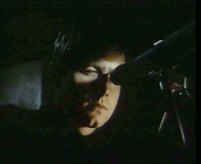 What is love? Is it the inevitable sensual desire that arouses? Is it only bodily game played by the hormones? Can science explain all loves? Or is it something that transcends reasoning? These are issues explored in Kieślowski’s Krótki Film O Milosci (1988). Released as an extended version of an episode from Kieślowskis phenomenal TV series Dekalog, Krótki Film O Milosci was shamelessly ripped off (including the title) for the Indian version Ek Choti Si Love Story.
 Cinema has evolved from being a medium of documentation and story-telling and to a medium of providing social, political and spiritual commentary of the era involved. But all such movies are not accepted with open arms. Tastes differ and so do ideologies. Films that have been against the political and religious ideologies of key organizations and powerful people have been shunned and their makers condemned. This was especially true of the films that were made in communist countries such as USSR and East-Germany. One such gem that came from the Czech Republic is Milos Forman’s Horí, Má Panenko (1967).
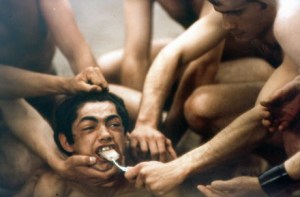 Once in a while, there comes a movie that shatters the beliefs of people on cinema and redraws the lines between right and wrongs of the medium. These are the films that redefine the boundaries of film making thus providing new standards and freedom for films to come. At a time when swearing on screen was a taboo, came the classic Gone With The Wind (1939) with the legendary “Frankly my dear, I don’t give a damn.” quote. A Clockwork Orange (1971) that questioned induced goodness and evil in a very strong way, Straw Dogs (1971), famous for its graphic rape scene, Un Chien Andalou (1929) that introduced surrealism in cinema, the semi-snuff Cannibal Holocaust (1980) and its brutality – all these movies may have been snubbed by audience and critics at the time of their release, but no one can question their impact on the future generation of directors.
 I’m sure many would have watched Quentin Tarantino’s Reservoir Dogs (1992) or Pulp Fiction (1994) and become fascinated with the style of film making – Long conversations about…er, just conversations, dark humour, petty issues magnified, weird characters. Though Tarantino was influenced much by the works of Godard, the effect of Truffaut’s Tirez Sur Le Pianiste (1960) on his style cannot be written off. Tirez Sur Le Pianiste primarily acts as a cross between the 50’s film-noir style and Hitchcock’s troubled characters.
 During a war, more than armies and governments, it is the children who are affected most. The images of the atrocities and violence in the war makes an impact that is life-changing for them. The subject of children of war has been a less tackled one when it comes to Cinema. Andrei Tarkovsky’s Ivan’s childhood (1962) gave as an immensely personal account of war as seen by the title character. Another critical film on the same subject is Elem Klimov’s Idi I Smotri (1985). The film is hailed as one of the best anti-war films for its depiction of the influence of war on children.
 The Seventh Art