Cinema of India


Mani Kaul

Mani Kaul 
(1944-2011)

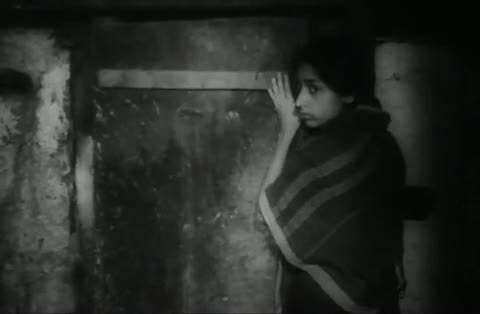
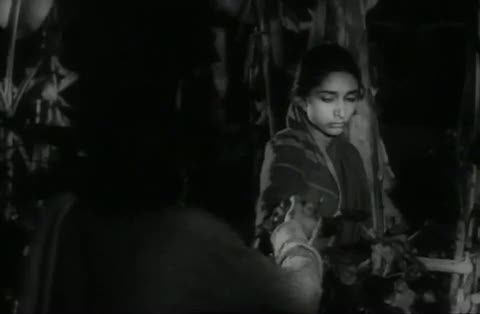
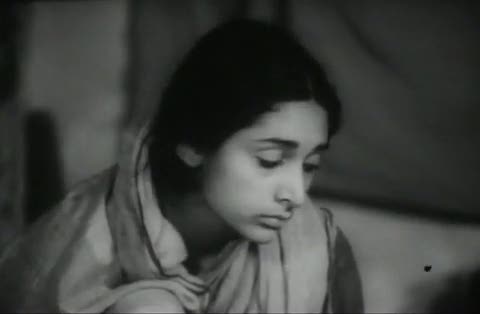
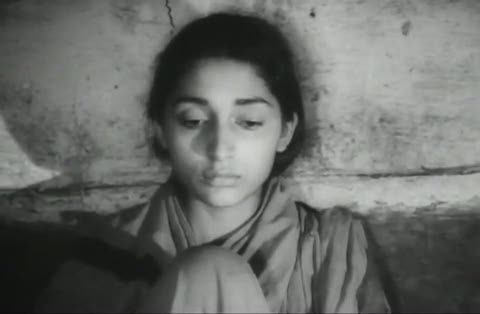
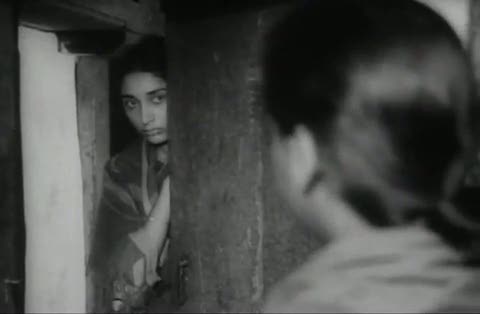
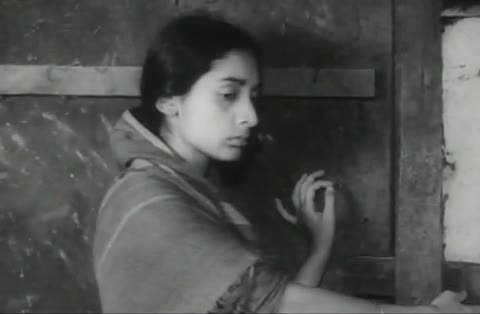
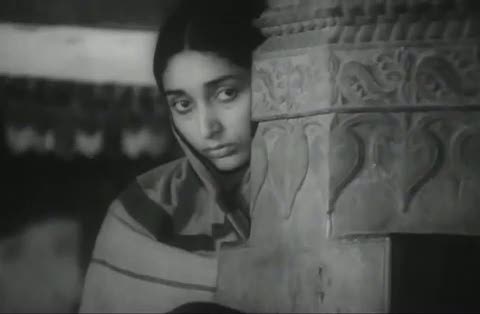
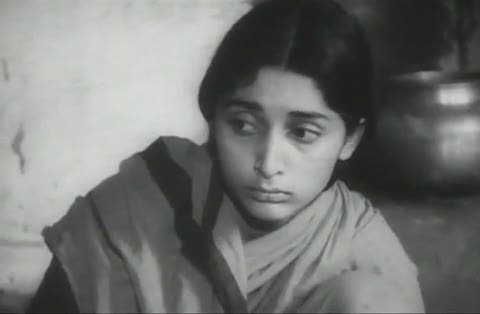
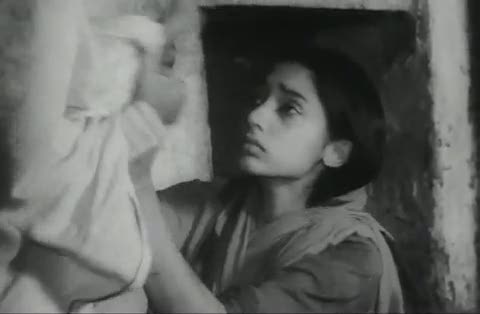
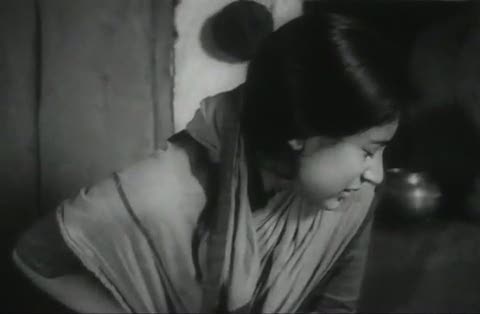
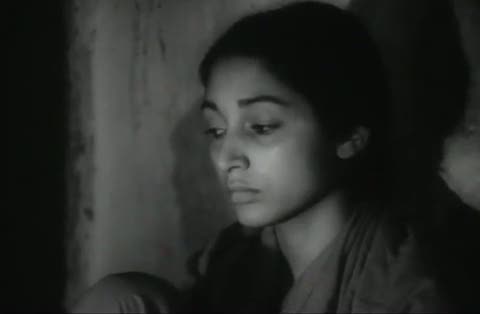
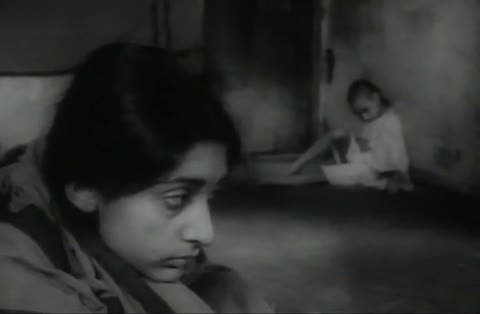
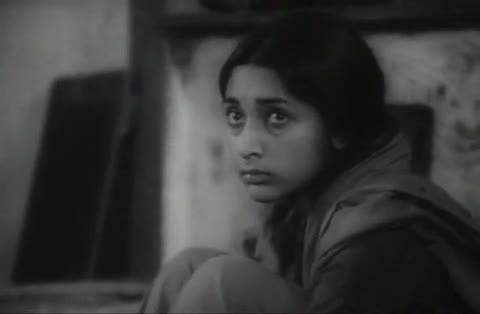
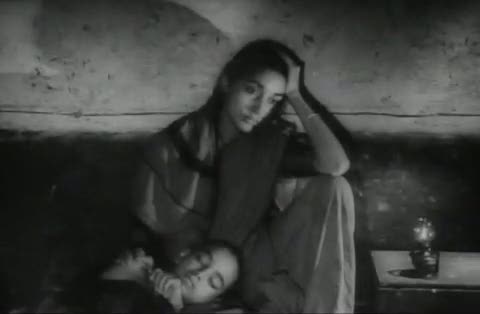
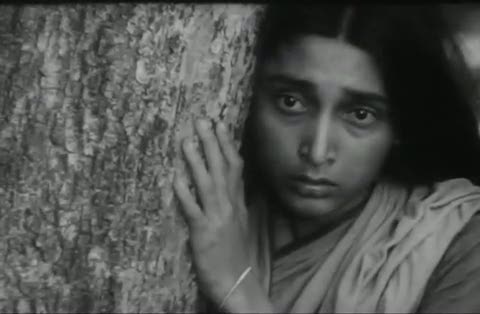
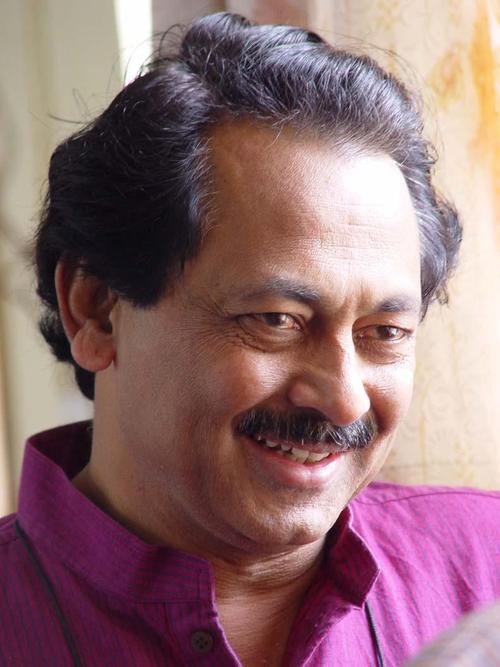
Mani Kaul is undoubtedly the Indian filmmaker who, along with Kumar Shahani, has succeeded in radically overhauling the relationship of image to form, of speech to narrative, with the objective of creating a ‘purely cinematic object’ that is above all visual and formal. He was born Rabindranath Kaul in Jodhpur in Rajasthan in 1942 into a family hailing from Kashmir. His uncle was the well-known actor-director Mahesh Kaul. Mani joined the Film and Television Institute of India (FTII), Pune initially as an acting student but then switched over to the direction course at the institute. He graduated from the FTII in 1966. Mani’s first film Uski Roti (1969) was one of the key films of the ‘New Indian Cinema’ or the Indian New Wave. The film created shock waves when it was released as viewers did not know what quite to make of it due to its complete departure from all Indian Cinema earlier in terms of technique, form and narrative. The film is ‘adapted’ from a short story by renowned Hindi author Mohan Rakesh and is widely regarded as the first formal experiment in Indian Cinema. While the original story used conventional stereotypes for its characters and situations, the film creates an internal yet distanced kind of feel reminiscent of the the great French Filmmaker, Robert Bresson. The film was financed by the Film Finance Corporation (FFC) responsible for initiating the New Indian Cinema with Bhuvan Shome (1969) and Uski Roti. It was violently attacked in the popular press for dispensing with standard cinematic norms and equally defended by India’s aesthetically sensitive intelligentsia. [Image & Bio Courtesy: Mubi]


I guess Mani Kaul could be called, with qualifications of course, the invisible man of Indian cinema. The home audience might find his films too ‘European’, too alien, and too cryptic, and might prefer instead the realist-humanist works of an artist like Ray. Foreign viewers, on the other hand, might complain that they are too culturally-rooted, too alien and too cryptic, and instead opt for a ‘universal’ filmmaker like Ray. Indeed, neither Kaul nor his pictures make any claim to ‘universality’. They are, undoubtedly, steeped in Indian classical art forms like how the Nouvelle Vague films were, with respect to the European classical tradition. Many of these films are adapted from literary works in Hindi, have a profound relationship with Hindustani music and exhibit an influence of representational forms from the country. In fact, his cinema, if not much else, is about these very forms, both in terms of subject matter and their construction. These films, to varying degrees, are literature (The Cloud Door), painting (Duvidha), architecture (Satah Se Uthata Aadmi), poetry (Siddheshwari) and music (Dhrupad). Right from his early documentary Forms and Design (1968), which sets up an opposition between functional forms of industrial age and decorative ones from Indian tradition, Kaul makes it, more or less, apparent that is he is interested in the possibilities of a form itself more than the question if it can convey a preconceived thesis. Like Godard, Kaul starts with the image and works his way into the text, if any.

Perhaps it is classical music, and specific strains of it, that exhibits strongest affinity with Kaul’s cinema. The director has mentioned that the trait that attracts him to it the most is that there are elements that just don’t fit into a system, notes that slip away and could find themselves elsewhere in the composition, Similarly, Kaul, admittedly, edits his films like composing music, moving a shot along the timeline, beyond logic, meaning or chronology, till it finds its right place, in terms of mood, rhythm or whatever parameter the director has in mind. (“And I know that when the shot finds its place, it has a quality of holding you. The position is its meaning”). He has, time and again, spoken elaborately on the systematization of fine art by European Renaissance and the need to find out alternate modes of expression free from its constraints. Convergence, be it in the perspective compositions of painting, the three-act structure of literature, or the climaxing of motifs in music, has always been an area of concern and investigation for him. (He admires Hum Aapke Hain Kaun (1994) for its insistence on spending a quarter hour fretting about a pair of shoes, at the expense of plot). Consequently, fragmentation becomes the central organizing principle of his aesthetic. Like Robert Bresson, one of his greatest influences, Kaul prefers filming parts of the body – hands, feet and head – and positions his actors such that they are facing away from the camera or are in profile, thereby disregarding the convention that the face is the centre of one’s body. (Kaul’s sketches, in that sense, are direct antithesis to the portraits of Renaissance). Accordingly, because the face is tied to the notion of a unique identity, Kaul’s actors are stripped off all natural expression and behaviour and de-identified. Many of his shots are ‘flat’, without any depth cues or perspectival lines. (He traces this to ‘perspectiveless’ Mughal miniature paintings and cites Cézanne as another major influence). None of the characters are Enlightenment heroes having a firm hold on their world. The narratives are decentered and distributed across multiple perspectives.

This resistance to convergence principles of Renaissance has also led him to radically reformulate his relationship to the spaces he films. He believes that filmic and social spaces have been conventionally divided into ‘the sacred’ – the perfect realization of an ideal, carefully framed and chiseled, with all the undesired elements out – and ‘the profane’ – accidental intrusions, random fluctuations and irreligious interruptions; that the moment a filmmaker looks through the viewfinder, he ‘appropriates’ the hitherto ‘neutral’ space to compose based a set of principles, polishes it and turns it into a ‘sacred’ space. Kaul, on the other hand, has increasingly been resistant to ‘perfecting’ an image or space, instead treating space as something neutral and unclassifiable in itself and concentrating on the tone, feeling and emotion of a shot. (This is also what Godard does in his latest work, where spaces and images of all kind are given equal importance). In his later films, he has asked his cameraman not to look through the viewfinder while filming. (This does not mean that one shoots blindly. The director has elaborated in his writings on how this could be practically implemented. “What needs to be determined by the director and the cameraman is the act of making the shot: attention being that aspect of time that deeply colours the emergent feeling in a shot”). He has, admittedly, been open to intrusions and one can see stray elements, like cat mews appearing unexpectedly, in some of his shots. Likewise, none of his “stories” converge, or even have a linear progression, and, in fact, keep diffusing and opening up new possibilities.


[There are numerous features not covered in this post. The entries will be added if and when I see those missing films. All short films are omitted here.]


Uski Roti (A Day’s Bread, 1969)

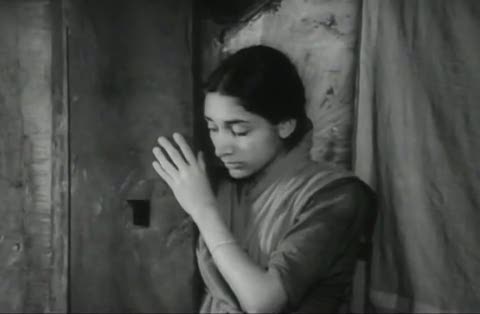
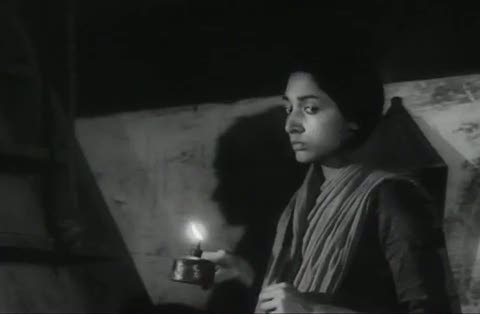
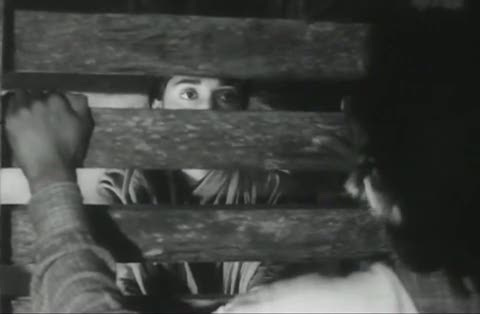
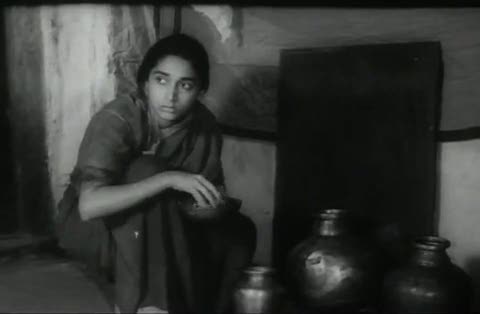
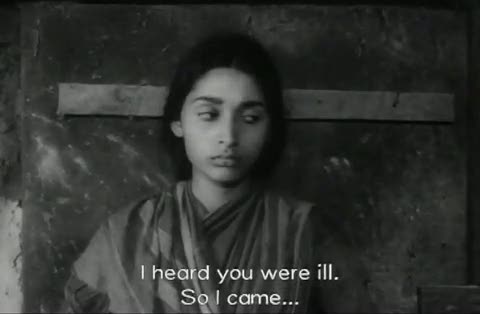
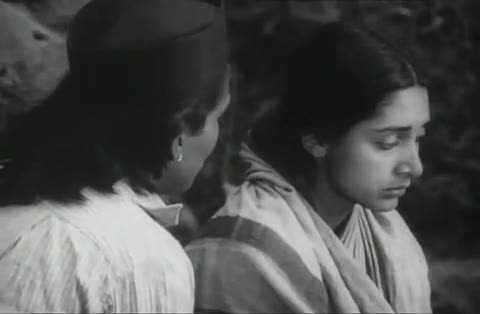
Uski RotiMade when he was 25, Mani Kaul’s first feature Uski Roti (1969) is what one might call a poetic film about waiting. Kaul takes a simple premise for the film – a woman who goes to the highway everyday to give lunch to her husband, whom she,  oddly enough, addresses using his full name – and strips it down to its skeleton, diverting our attention from what is represented to how it is represented. (Kaul likens this process to a painter emphasizing his brush strokes). Bresson’s influence is palpable in many aspects of filmmaking here: the delayed editing of shots that parenthesizes action, the de-dramatization of scenario, the atonal, unaccented line delivery by actors without forced expressions, the emphasis on objects rather than concepts, the numerous shots of hands and faces that have a grace of their own and, of course, the central, suffering woman. (There is even a direct homage to Pickpocket (1959)). Additionally, Kaul’s own training in short documentaries seems to have made its mark here, given how keen the film is on documenting purely physical activities such kneading dough, which becomes the central gesture. (This would be elaborated upon in the short A Historical Sketch Of Indian Women (1975)). Utilizing plethora of Ghatak-influenced wide angle shots, in high-contrast monochrome (if only the film had used European film stock, Pedro Costa would applaud), a hyperreal sound mix and a highly idiosyncratic grammar (horizontal asymmetry, characters facing away from camera, no reaction shots), Kaul makes an arresting if not totally underivative debut.

Duvidha (In Two Minds, 1973)

DuvidhaKaul’s most acclaimed film Duvidha (1973) opens with a rather flat, Godardian image of a woman in a red saree standing in front of a white wall, staring determinedly into the camera, as high-pitched Rajasthani ethnic vocals grace the audio. Like the frozen image of Truffaut’s juvenile delinquent, it suggests a predicament addressed to the audience. Based a folk tale, Duvidha speaks of a love that is beyond time and space. The presence of the ghost, which falls in love with the new bride, is not an exotic delicacy served to us but a given. And so is the ‘story’, which is read out verbatim to us by the narrator, freeing the film from the burden of storytelling, so to speak, instead allowing it to experiment with the imagery. Employing a number of photographs, freeze frames, jump cuts and replays, which illustrate the film’s central notion of temporal and geographical dislocation (and save on the budget) and manipulating time like an accordion player, Kaul weaves a narrative where the past, the present and the future are always in conversation. (The ghost is simply referred to as ‘Bhoot’ (ghost), which is, of course, the word for ‘past’ as well). The predicament of the title, then, involves a choice between the spiritual and the material, the bride’s past and future, her childhood and adulthood, her freedom and honour and her love and security. Bewitchingly shot like a Dovzhenko film (and composed like Cézanne‘s still lifes), and impressively designed, with a simple yet striking interplay of red and white, Duvidha builds on both Kaul’s feminist leanings and highly personalized aesthetic.

Satah Se Uthata Aadmi (Arising From The Surface, 1980)
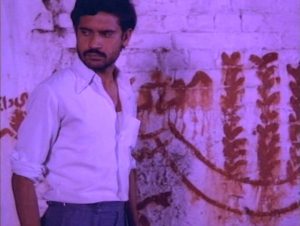
Satah Se Uthata AadmiSatah Se Uthata Aadmi (1980) begins with a shot of a serene lakeside landscape being abruptly shut off from view by a closing window, following which camera gradually withdraws deeper into the eerily empty rooms of a dilapidating house where the central character of the film – a poet – resides. This notion of the artist being far removed from reality, and retreating further into himself, resonates throughout the film. Based on the deeply personal texts of Gajanan Mukthibodh, Satah Se Uthata Aadmi presents a world where the revolution has failed, idealism has died out in the name of practicality and the role of intellectuals and artists has been vehemently questioned. Rekindling the question of theory versus practice, the film attempts to examine if residing is certain social frameworks to make a living amounts to a sellout of oneself. (Like Godard-Truffaut, Ghatak-Ray, does Kaul have anyone in mind?). This fragmented, post-socialist state of society that the film depicts – through its vignettes of urban Indian individuals – is reflected in the Malick-like disunited voiceover which spans three characters and which conversely, unites the narrative together. A remarkably sustained tone poem, with brooding surreal passages (including a hypnotic documentary sequence inside a factory and an unabashedly allegorical finale) and minor experiments (sections from Muktibodh’s texts displayed on screen), reminiscent of Godard’s work of the 90s, rife with strong verticals and perspective compositions (which is odd, given Kaul’s resistance to it), Satah Se Uthata Aadmi is both Kaul’s most stringent and most affecting work.

Dhrupad (1982)

DhrupadDhrupad (1982) finds Kaul studying the eponymous classical music form, specifically the Dagarvani variation of it practiced by the Dagar family, with whom the director has close associations with. Apparently, the music the film examines is one without any form of notation since, reportedly, many of the tones don’t fit into existing notational systems and the transmission of tradition is done purely orally. (The vocal performances that we hear exhibit such malleability of human voice that one is convinced that no instrument can aspire to emulate its timbre). This trait of not conforming to the systematized models of Renaissance is of special interest to Kaul, who has long been aware of the need to discover non-reductive, discursive modes of expression. Likewise, Dhrupad, like many of the director’s pictures, eludes categorization or compartmentalization. Part historical study, part religious documentation of performances, part experiment with cinematic time (the sublime shot that spans a sunrise invokes contemporary ‘landscape filmmakers’ like Benning) and part exercise in thematically conglomerating classical Indian art forms – music, sculpture, architecture, painting and cinema – the self-referential film gives a vivid picture of what makes Dhrupad so striking, with its numerous mise en abymes and fractals. Like in the films of Resnais, with whom Kaul shares an affinity for ‘fragmentation’, the camera glides through the Mughal style corridors and courtyards, in which the veteran artistes of the Dagar family perform and teach – while the soundtrack takes off on its own – evoking a sense of history that is living and breathing.

Mati Manas (The Mind Of Clay, 1985)

Mati ManasCommissioned by NFDC and the handicrafts division of Ministry of Textiles, Mani Kaul’s Mati Manas centers on potters and terra cotta artisans located in and around Rajasthan and unfolds as a fictionalized version of Kaul’s journey into the region as an outsider and a documentary filmmaker. We have documentary passages that elaborately detail the art and business of terra cotta making and the way of life that revolves around it interspersed with sections where we see the in-movie documentary crew shuttling between museums showcasing earthenware from the Indus Valley civilization, excavation sites and various potter villages while narrating to us the various myths, legends and folk tales of the region that reveal how mud/earth has become, for these artisans, an element inextricable from imagination and practice and has gone on to develop maternal associations with its capacity to nurture, shelter and produce. Suffused with Cezanne-like still life and images of potters at work, especially the weary, skillful hands that lovingly, spontaneously shape raw earth into little, wondrous artifacts, Mati Manas comes across as a tribute to the dignity and grace of human labour. Perhaps more importantly, Kaul’s return-to-zero film unveils a society where people’s relationship to art is still habitual and tactile, a pre-reflective, non-reductive, phenomenological way of experiencing art that stands in opposition to modern, appropriative, optical approaches – a split that is reflected in the chasm between how ancient pottery is exhibited in museums and sketched in textbooks as icons of heritage and triumph of archaeology and how it might have been perceived by people of its time.

Siddheshwari (1989)

SiddheshwariWith Siddheshwari (1989), Kaul turns the typical artist-profile film (produced by Films Division) on its head. Not only does it eschew straightforward documentation of the titular singer’s artistry, but it almost completely does away with basic biographical details to arrive at something more exhilarating and revelatory. Instead of presenting music, the film presents the idea and experience of music. A bona fide avant-garde feature that amalgamates multiple timelines, geographies, realities and narrative modes, Siddheshwari brings together various art forms like literature (the chapterized film opens with a table of contents!), music (shifts in ragas, reflected in the filmmaking with hue and rhythm changes) and theatre (both in its production design and its emphasis on role-playing throughout). The camera is perpetually moving – dollies and cranes galore – as if reading an ancient scroll and acts like a force of time that moves Siddheshwari Devi through landscapes and times. The soundtrack, similarly, is a dense network of speech, whispers, vocal and instrumental music ad recited poetry. Siddheswari Devi is portrayed by a number of women, including some who enact her biography, some who depict her sensorial experiences and Devi herself. (This is only one of the reasons I’m reminded of Hou’s The Puppetmaster (1994)). One of them is Mita Vasisht, whom we see at an archive, at the end, watching tapes of Devi singing, possibly to prepare herself for the role. Like The Taste of Cherry (1997), fiction and reality bid adieu, with Kaul restoring things back to their original places, as though returning what he borrowed to create his greatest work.

Nazar (The Gaze, 1989)

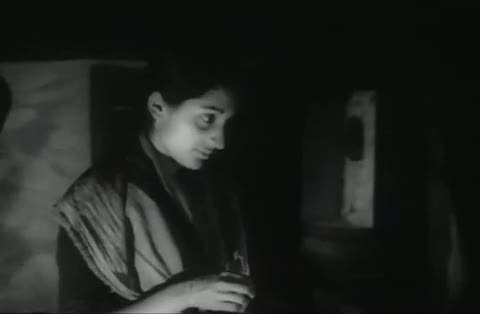
NazarAdapted from Fyodor Dostoevsky’s short story, Nazar (1989) bears natural resemblance to Robert Bresson’s shining adaptation of the same, A Gentle Creature (1969) in its characteristically stylized direction of actors and the sacrificing drama for rhythm, mood and an intensity of observation. Kaul replaces the generally bright interiors of Bresson’s version of the couple’s high-rise housing, which cordons them off from the rest of the world and which is emphasized continuously in the film, with a low-lit (barely any artificial light) semi-dungeon marked dominated by black-blue and brown shades, suggestive of the moral malaise that marks both the psyche of the male character and the space the pair lives in. The ever-wandering camera hovers over characters who appear to be stationed in space – with barely any movement – as if frozen in time. Kaul’s ultra-minimal chamber drama, too, starts off with the suicide of a woman (Kaul’s daughter Shambhavi, an avant-garde filmmaker herself), although it is only alluded to by her husband (noted director Shekhar Kapur), who tries to recollect to us what might have moved her to commit this act. Kapur’s stream-of-consciousness delivery of lines is exceptionally fragmented, as if he’s trying to wrestle information from deep recesses of ‘actual and ’‘convenient’ memories. This narrative within the narrative is the man’s way of vindicating himself; of blinding himself to the fact that ‘ownership’ is what that mattered to him all along and that he is, like the antiques that he sells, a man stuck in time.

Naukar Ki Kameez (The Servant’s Shirt, 1999)

Naukar Ki KameezNaukar Ki Kameez (1999), as it appears, is a ‘conventional’ narrative film, by the director’s standards, with that generally-revered ‘naturalistic’ acting and speech, its relatively generous use of musical score and a general willingness to present a string of events, if not a plot. However, it is also one of Kaul’s most experimental features (Kaul couldn’t ideally be classified as an experimental filmmaker) and employs a fragmented narrative structure (which keeps spreading out to new directions) with constant chronological jumps back and forth, an absurd, magic realist tone (which reveals a tenderness towards his characters and his geography) and a potpourri of filmmaking modes (including canned laughter of sitcoms and internal monologues of low-end TV dramas). Set at the fag end of the 60s, Naukar Ki Kameez, which centers on a lower-middle class clerk, Santu, in a government office, and his wife, for most part, is a simple metaphorical tale of upward class mobility and its psychological and social impediments. Santu is a bundle of contradictions; he is conscious of class divisions and the need for revolution and yet harbours hope for social-climbing, he recognizes the need to respect the other, yet casually oppresses his wife, whom he genuinely loves as well. Like Aravindan’s Oridathu (1986), it gives us a nation with an identity crisis: one caught between extreme Westernization and dreams of a revolution – between tradition and modernity – posing a question to itself: To wear or to tear?

Een Aaps Regenjas (A Monkey’s Raincoat, 2005)

A Monkey's RaincoatMore fascinating than the fact that A Monkey’s Raincoat (2005) revitalizes the age-old question of purpose of art and its relationship to the real world is that low-end handheld DV, which the film is shot on, helps put nearly all of Kaul’s theoretical principles and inclinations into practice: the idea of not looking through the viewfinder while shooting, the rejection of the dichotomy between “sacred” and “profane” spaces, the notion of camera as an extension of one’s body and movement and a deep-seated interest in the experience of filming over filming itself. Adopting a loose, instinctive and continuous mode of shooting, Kaul inquisitively records an assortment of young painters at work at two places – Biennale, Venice and at their residency in Amsterdam, Netherlands – often interacting with them as he works. We see that Amsterdam is something of a dream destination for budding artists, a melting pot of cultures, where they can at least hope to find an audience. Though never taking potshots at art or its reception, Kaul’s film gently mocks an art scene where artists seem to be fond of ‘playing’ artists, with a set of personalized eccentricities and self-imposed clichés. As he samples their creations, he wonders in the voiceover if there is any purpose to art at all, given that it has been able to solve not one of the world’s problems. Kaul realizes that the question is moot and questions if art for humans is what a raincoat if for monkey: it might not stop the rain but at least it helps you to recognize it and shield yourself from it.
Shaitan (2011) (Devil)
Bejoy Nambiar
Hindi


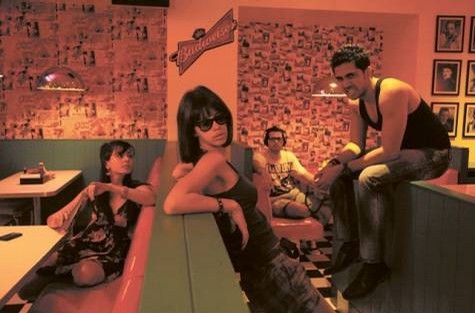
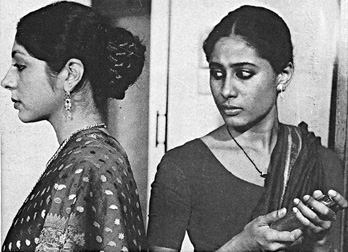
ShaitanBejoy Nambiar’s Shaitan (2011) deliberately starts off on the wrong foot, presenting a hackneyed bunch of carefree upper class youth inducting one more into the gang, with a scene that seems more like endorsement than condemnation. (This is the sole scene when the five leads are their most comfortable, with a slack, indulgent, food-in-the-mouth kind of acting epitomized by Brad Pitt). It is only when we follow them all over Mumbai as they indulge in all sorts of puckish activities including casual robbery and midnight races that we realize that our identification is being severed and a critical distance developed. And it is only when the pack rams into a scooter that it realizes that a whole world exists underneath its (literally: under their car’s tyres). Speaking in collective terms here is justified, since not one role in the film is a character; all are types, with minute variants at best. The film itself makes no claims otherwise. (In a way, it is a final girl flick, full of caricatures, without any external threat). Ostensibly a film wanting to examine mob mentality – the gang, bevies of reporters, religious masses – and tyrannical impulses within us – the leader of the gang, the various law enforcers and their activities – Shaitan finds its bunny-ear-donning child-adult protagonists, who are initially blind to notions of class and religion, gradually being pushed out of their comfort zones into a minority and attempting to blend into larger groups for survival. (You have kidnappers thrashing kidnapers, police chasing police and rich kids with a money crunch!) The film is defined by its major ellipses which swing between smart telescoping of action (e.g. the suspension of the officer) and incompetent shorthand (the news channels, which have usurped the role of the narrator in Hindi cinema off late). But it is the bravura action sequence at the lodge, with its off-kilter, everything-is-allowed, anything-goes, Hollywood movie brat-like aesthetic that takes the rest of the film’s banal TV and ad inspired stylistic to a whole new level. Nambiar, it seems to me, is a natural when directing music videos and this sublime, provocative, magical scene, which cross cuts between slo-mo bullet rains and the gang dropping from rooftops in fluttering black purdahs like fallen angels onto a truck full of feathers, alone is worth sitting till and beyond it. Also includes an in-joke among Kashyapians involving Rajat Barmecha and a wordless subplot (if not the ultimate ignoring of the gang’s original crime) dealing with a miffed couple that might impress Nambiar’s south side mentor.
(Image Courtesy: First Post)

Explorer (1968)
Pramod Pati
Silent
 

ExplorerPramod Pati’s pocket-sized dynamite, Explorer (1968), opens with a rather representative image: alternating horizontal black and white strips, resembling window blinds, flickering on what appears to be a screen (within the screen) that is being refreshed vertically – like television display – at a relatively slow rate,. The soundtrack, likewise, alternates between high-pitched, discontinuous noise of what might be telegraphing and printing machines and the comparatively bass sound generated by the Damaru. It is through this audiovisual thicket that the name of the film reaches us, appearing and disappearing along with the strips, oscillating between two typefaces – one fragmented and stretched and one sturdy and more conventional. This deeply dialectical title sequence pretty much sets up the tone, the modus operandi and the primary thematic and stylistic concerns of the seven-minute phantasmagoria that is to follow. Pramod Pati, who died an untimely death at the age of 42, worked for the Films Division [sic] of the Ministry of Information and Broadcasting in India, which generously commissioned feature-length and short documentaries as well as short animation films for the purposes of cultural archiving and nationwide information dissemination. The documentaries generally consisted of profiles of artistes practicing traditional forms (sometimes directed by names as big as Adoor Gopalakrishnan, Govindan Aravindan and Ritwik Ghatak), standard ethnographic explorations, educational films for adults (such as on family planning, which Pati was involved in) and other socially-oriented films while the animation was usually targeted towards toddlers and young adults, presenting simple moral tales and basic literacy courses. Although there was an obvious restriction on the type of subjects filmmakers can choose, the Films Division, like the Kanun in Iran, was free from commercial concerns and thus presented a higher scope for formal experimentation for directors. In Explorer, Pati seems to have harnessed that liberty to the fullest to produce a doggedly inscrutable, remarkably witty and manifestly personal work.

The eerie title sequence of Explorer gives way to the first “photographic” image: a miniature Hindu idol in profile, magnified by its distance from the camera. We assume that it on the plane closest to the lens, but Pati reconfigures our depth perception with a fluid racking of focus – rack focus forms a major motif in the film – that discovers an oil lamp nearer to the camera than the idol, before revealing a man – in profile as well – reading sacred verses. We don’t hear him though and the soundtrack, strangely, gives us the cry of an infant, as if trying to reach out. This somewhat serene shot is interrupted by a startling cut, followed by a short, rapid zoom accompanied by the noise of a cymbal. Before we even begin to register the scene, Pati switches to a barrage of images in which with the bobbing camera captures the faces of ecstatic teenagers in extreme close-up, interleaved with extra-brief shots of the religiously-charged alphabet “Om” represented in Devanagari script and of the chicly-dressed gang, from at a distance, dancing to what might be rock-and-roll tracks. The audio, however, uses loopy non-contiguous samples from traditional music including classical instruments and vocals overlaid over a continuous stream of Ghunghru sounds, punctuated now and then by clapper board-like noises. The association here is, of course, between tradition and modernity, between ecstatic rapturous tripping and religious fervour – and it is here that the film announces its context – urban India in the sixties – and its central idea.

ExplorerThe sequence is also one of the few occasions in the film when we are asked to make a purely intellectual connection between the shots, between the sound and the image. For a large part of the film, the montage is also rhythmic, and sometimes even metric, as is the case with the immediately following segment in which the preceding staccato arrangement makes way for a rather mathematical audiovisual pattern: A snappy pan shot from right to left followed by the face of a Buddha idol, a quick pan shot from left to right followed by a painting of Radha and Krishna. This model repeats a couple of times before being abruptly interrupted by a brisk tilt shot of an electronic machine with hundreds of small lights on it, which, in turn, is interrupted regularly by close-up shots of the faces of youth, before culminating in a slightly intimidating, negativized image of another god, (The latter intervention is thematically and stylistically vital to the film). The linearly assembled audio, in this section, curiously enough, neither spans across multiple images nor consists of overlapping tracks. Each sound accompanies an image. The whole setup described above repeats once more, faster than before, with additional interruptions by sound graphs and B&W film headers, after which select images from the whole film thus far interspersed with a hazy shots of palm lines and fingerprints play over a sound stream composed of what might be samples from sci-fi and thriller movies. What follows is a sprawling ten or so seconds bursting forth with polemical ideas. The visual backbone of this stretch – the (by-now-familiar) tracking shot of hundreds of analog indicators (of pressure gauges? speedometers?) – is disrupted by disparate single-frame images (a la Ken Jacobs’ Star Spangled To Death (1957-2004)) hurrying past from right to left in a way that also reveals the “filmic” nature of Pati’s work: faces of gods, the word “War” printed on paper in bold, black letters, the cover of a porno storybook, an open eye and a medieval painting on whose central figure’s chest is a white circle with the self-censored words “F.ck Censorship” in capital letters. The soundtrack here, though, is unbroken and is made up of repetitive noise of machine/automobile exhaust. Then, another horizontal-vertical assemblage like the previous segment, now with the image of a huge plant leaf inserted right in between. In retrospect, it is probably at this point that the film’s primary ideas clearly surface.

Explorer was made in 1968, a time right in between two wars with Pakistan, a time when the scientific race among the superpowers was at its most feverish, a time when the Vietnam War was shaking the world and a time when Western media was becoming increasingly permissive. Urban India, meanwhile, was vacillating between the forward thrust of scientific and technological development and the conservative tendencies of its dominant culture, religion and art forms. Explorer subliminally charts this polarization at the heart of this ancient-yet-young country, in ways that are just more than textual. This conflicting duality is embodied by the colour (strong blacks and strong whites), movement (the diametrically opposite directions that the camera takes), the sounds (ancient chants and electronica, ritual noises and machine humming) and the very material of the film (developed and undeveloped negatives). Till I saw Pati’s film, I’d thought Kamal Swaroop’s Om-Dar-Ba-Dar (1988) really had no precedent in Indian cinema. Exactly like Swaroop’s pièce de résistance, Pati attempts to portray a country caught between a number of opposing and diverging tendencies – between war and celebration, rock-and-roll and Bhajan, science and religion – in all its richness, convolutedness and madness. Alongside such analysis, Pati’s film seems to wonder about the future of the nation, especially that of its youth. Palm lines and fingerprints from the chief leitmotif of the film. As if, ironically, practicing palmistry through assortment of sounds and images, Pati strikes a conceptual parallel between the myriad divergent lines of the palm with the numerous incompatible and expansive practices emerging with the march of progress. Perched at the crossroads of 1968, Explorer is an idiosyncratic – but ever loving and never cynical – examination of where the nation is and where it is heading. It is a “palm-size” state of the union address.

ExplorerBy the same token, Pati’s film is an outrage against film censorship. The Film Censor Board, coming from a country where the most famous and explicit book on sexuality was produced, too, seemed (and it still does) to have been caught between similarly opposing currents, when the rest of the world was opening up to hitherto scandalous representations. Pati’s placing of such elusive placards disapproving censorship and the bunch of barely-identifiable images of porn magazines and nude women throughout the film is, patently, an attempt to break out of this entrapment. Likewise, three pairs of opposing camera movements characterize the visual field of Explorer, which are simply the three geometric axes: a up/down movement consisting of fast tilts and headers consisting of everyday symbols, an in/out movement made up of numerous rapid zoom-ins and zoom-outs and protracted rack focus shots and a dominant right/left movement involving zippy pan shots of the dancing crowd and machines at work and handheld shots at a university library. The camera frequently hops across these major axes, as though being swept by their force, oscillating to and fro within them. There are also a number of (possibly metaphorical) crisscrossing diagonals – the veins of the leaves, the leaves of the tree – that seem like vectorial resultant of actions on major axes. (One useful point of reference for Explorer is Artavazd Peleshian’s electrifying Beginning (1967) with its equally rhythmic back and forth movement of crowds and its eclectic sound mix consisting of popular dramatic sounds). The notion of present as a meeting point and a dialogue between the past and the future is further emphasized in the way the film often juxtaposes images we’ve already seen so far with those we are yet to see (and will see a little later).

After the psychedelic opening minute or two, the film applies brakes to present a series of “melodic” rack focus shots – some of the longest in the film – that appear to meld images of idols and paintings of god (which were intercut with the faces of exuberant young people) and those of laboratory machines. We hear a teacher and a student reciting “Ramayana, Parayana. Kuran, Puran” one after the other and we see youngsters handling microscopes (much like how Pati uses his medium). This passage is followed by another series of brusque imagery and soundscape: a shot of a bearded man meditating and those of a group chanting the Vedas, interwoven with a spate of western symbols and psychedelic wallpaper patterns, archival images of riots, women in the nude, the face of a monkey (Hanuman?) and the now-familiar attack on censorship. (A case could be made for Explorer as a sur-realist – even Buñuellian – portrait of the mind of a teenager in urban India in the sixties). The film’s construction becomes more mystifying following this, with both the images (not just religious and scientific, but archeological and cosmic as well) and the connection between them appearing even more abstract, although the aesthetic choices remain pretty much the same. There is a marked predominance of images of science, technology and education over those of religion and tradition, possibly hinting at a resolution of the conflict thus far. But not for long. As the film moves into its final “section”, where we see the same close up shots of the faces of youth, among negativized images of the dance sequence at the start, . the soundtrack becomes, once more, infused by classical vocals and Hindu incantations. In the final few seconds, the film is reduced to a sustained flicker, with a looming image of the letter “Om” becoming the visceral centre of the imagery. Beyond this point, the whole film seems to go backwards, calling forth a flood of recognizable images from the film in reverse order within a matter of seconds as the film’s title flashes in the middle of the screen. The film is actually undoing itself. Here in, Explorer, like Tscherkassky’s Instructions for a Light and Sound Machine (2005), becomes a Sisyphean tragedy; not of a man unable to escape the process of film, but of a film unable to escape the claws of a reactionary establishment. As indicated by the lateral tug-of-war involving the film-strip-like imagery throughout, Explorer is a film that fails at breaking free into full-on modernity, instead getting sucked back (and backwards) into the mouth of traditionalism. Forget it, Pramod. It’s India.

[The Explorer (1968)]

Thampu (1978) (aka The Circus Tent)
Govindan Aravindan
Malayalam

“World-famous performers. Hilarious clowns. Leopards, Goats, Monkeys and other exotic animals. Miracles, acrobatics you have never seen in your lives. Don’t wait for anyone. Art loving residents, watch the Great Chitra Circus.”


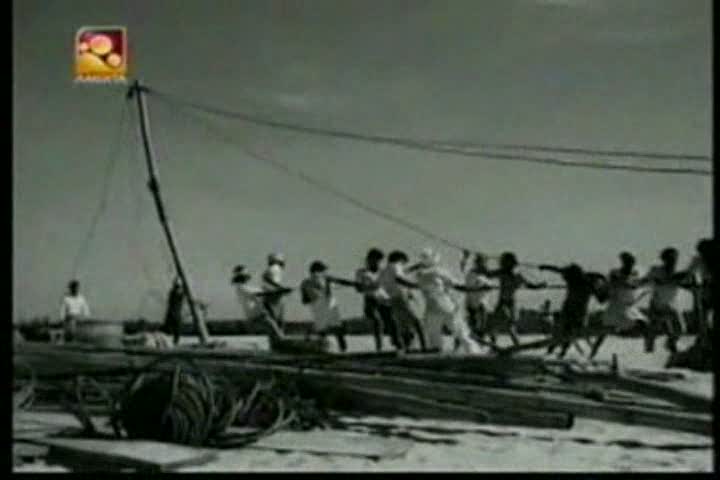
https://theseventhart.info/wp-content/uploads/2011/04/kummatty.jpgThe state of the great Indian filmmaker Govindan Aravindan, who would have turned 75 this year, is not much different from one of his most famous characters, Esthappan, about whom every one talks about and whom no one has seen. An even more unfortunate fact is that few of his films are available on home video or underground distribution networks – the ones available are in an extremely bad shape – and the situation doesn’t seem like its going to get any better. When even ‘bankable’ art house filmmakers like Adoor Gopalakrishnan and Girish Kasaravalli don’t have all their works out there on discs, a truly marginal (and truly challenging) filmmaker like Aravindan, who was neither a professionally trained filmmaker nor a filmmaker who made cinema his profession (He did have a day job, if I’m right), could only hope for a miracle. Thampu (1978), my favorite Aravindan film of the ones I’ve seen, is as simple as they come, in terms of the plot: A circus troupe arrives at a village, sets up their tent, performs and leaves. And Aravindan films exactly that. We see in fine detail – pretty much like a fly-on-the-wall documentary – how the troupe enters the village, how it sets up the tent, promotes the show, practices, performs multiple shows, incurs losses and finally leaves. Like Tati’s amazing Jour de Fete (1949), Thampu is a film that is a chain of moments, actions and impressions.

Besides Jour de Fete, there are a number of films that Thampu channels. First is, of course, Ruttmann’s Berlin: Symphony of a Great City (1914) in the way Aravindan develops a tone and an ambience by choosing to shoot the deserted streets and the old buildings of the village with great affection, as though they were all alive. We can also see assorted elements that Tarr would incorporate in his later films: long shots of outdoor action, processions, celebratory dances, inebriated people, papers all over streets, high-pitched diegetic music and even an enigmatic head of the circus troupe. Then there’s the ‘c’est la vie’ approach to circus and life – life at circus and circus of life – of Chaplin’s Circus (1928). But the most fruitful reference point for Thampu would have to be the middle period films of Federico Fellini, especially The Clowns (1970) and Amarcord (1973). Like the former, which deals with the circus as well, Thampu is a touch elegiac about the profession, about the waning interest towards circuses and about clowns of yesteryear being disregarded and discarded as troupes lose business. And like Amarcord, Thampu unfolds as a string of vignettes of the village – children on the streets watching the circus monkey perform, workers leaving the factory after a hard day’s work, villagers crossing the river on a boat to catch the evening show, the village prostitute carrying on with her work and, generally, the dead times of a life lived more leisurely – all directly from what seems like adolescent memory, so typical of Fellini’s cinema as well.

ThampuThe prime structural and visual motif – a rarity considering given how ‘spontaneous’ the film seems – of Thampu is that of the circle. The film opens startlingly with a three-minute, near-silent sequence – redolent of Adoor Gopalakrishnan’s equally experimental opening of Swayamvaram (1972) – that presents the circus crew entering the village in their truck and it closes with a similar sequence as they move out of the village, with no apparent impact on either the village or themselves. Within the story, circles of power result in circles of suffering and circles of mute suffering, cyclically, perpetuate circles of power. The local elite who has returned from abroad, Bidi Menon, maintains his own circle of bourgeois connections and practices while manager Panicker’s circus (etymology check: “circle”) crew is a closed circle of friends and families putting up assorted acts in the circus ring. Power abuse in Menon’s family is mirrored in that of Panicker’s. (Aravindan, of course, cuts between the two ‘circles’ in order to establish this equivalence. Both the family heads are even portrayed by bald actors with a good degree of resemblance). In both, people – the women in Menon’s group and the aging performers in Panicker’s group – are subordinated and condemned to a lowly existence (The protracted inter-cutting between the old clown and the monkey getting ready for their respective acts is one of the very few instances of heavy-handed-ness in the film). Only Menon’s son, who realizes his entrapment – within concrete houses, amidst drinking bouts and alongside rock music records – tries to break out of this circle, even if it means entering another – that of the circus. (The last shot is, at once, full of hope, anxiety and pathos). It’s not a bit clichéd as it sounds at all, for all these relationships remain nearly inconspicuous under the ‘tender’ surface of the picture.

It’s tempting to declare Thampu as a work that is all surface and no centre. The film is fragmented, constructed as a series of visual and aural impressions of an event, as an elliptical memory of images from the village fete. Like Ruttmann, Aravindan shoots the empty streets and bylanes of the location with care, as though attempting to find something in these surfaces. Aravindan’s cinema is, in more than one sense, surfaces in search of a centre, images in search of a story. In Kummatty (1979, a remarkable ‘children’s book movie’, if there ever was one), the eponymous, mysterious bogeyman becomes the talk of the village kids, who seem to spin their own myths about him. The identity of the titular stranger in Esthappan (1980, a quasi-Marxist update on Citizen Kane (1941)), is nothing but the sum of the village folks’ anxieties, fears and hopes. Same is the case with electricity in Oridathu (1987, the portrait of a nation in its Mirror Stage). Far from dealing merely with central MacGuffins, these pictures emphasize the present over the absent, the visible over the invisible, appearance over meaning. (Even in a deceptively straightforward documentary like Anadi-Dhara (1988), the director underscores physicality, of people trying, with glitches, to exhibit their native art within a totally alien environment). This trait seems all the more radical given that it stands in direct opposition to the conventions of Parallel Cinema – the category under which Aravindan’s name is generally placed – whose works are built around heavy, politically-charged texts. Aravindan, on the other hand, constructs his films top-down, using his images to develop rhythms and moods rather than to drive the plot. He knows well that cinema begins where meaning ends, that cinema is the preeminent art form of the visible and that no philosophical or psychological depth can make up for the visceral impact of the photographic image.

ThampuThampu could be classified, in a broad sense, as falling under the ‘aesthetic category’ of Contemporary Contemplative Cinema (CCC), a mode of filmmaking that Indian filmmakers rarely get into. Like the major works of CCC, it eschews narrative for texture and psychology for gestures. The film generally works with long shots and little employs speech, pruning down sensational elements and using a naturalistic mise en scène and an observational style. However, unlike most CCC films, Thampu uses a lot of music, most of them diegetic. There are songs that play on the radio, songs from the circus loudspeakers and a bunch of them even sung directly by characters. However, each of these occurrences is presented in a nearly-documentary format, as a part of everyday life of the villagers. The result is fascinating in the way the movie ventures into territory generally alien to CCC and yet works within its paradigms. Throughout the film, there is a tug-of-war between performance and naturalism. Rather, one complements the other. Decidedly over-the-top, spectacular scenes from the circus performance are intercut with the audience’s faces whose startled reactions are little spectacles in themselves. We watch the performance of their faces as they watch the faces of their performers. We are made the spectators of faces as we watch the faces of the spectators. The contrived and repetitive, even if bravura, acts of the circus troupe are countered by the fresh, spontaneous gestures on the audience’s faces, as if trying pointing to Parallel Cinema a whole new type of filmmaking.

The indoor scenes, on the other hand, are highly synthetic (not in a derogatory sense). For one, the scenes at Menon’s house are filmed like a newspaper caricature, composed like a tableau at times. But even in the other scenes at the circus, the naturalism of the documentary sections (the circus show, the streets of the village etc.) is replaced by a highly stylized aesthetic that uses monochrome backgrounds before which actors move, perform and talk in a self-consciously artificial fashion. Even here, there is a push-pull relationship between conscious performance and the naturalism vested in the documentation of that performance (a dialectic that forms the central working principle of Anadi-Dhara). The circus manager, Panicker, is played by Bharath Gopi, one of India’s finest actors. He plays Panicker straight, without any attempt to convince that he’s into the skin of the character or that this is how a circus manager behaves. Like Cassavetes’ strip club owner (but not half as empathetic towards his workers) he just is. Gopi’s portrayal is a termite art of the highest order and his face here is one that you won’t forget for a long time. In fact, it’s tough to forget any of the faces one watches in this movie. Quite simply, Thampu is a film about faces, like how Kummatty is a film about horizons of all kinds. Aravindan, somewhat like Bartas, cuts from one face to other, using them like notes in a melody, as if conjuring them up from childhood memory. As in Shirin (2008), there is something expressive about these faces, their reaction to a small-scale spectacle revealing more than what’s visible. And like the Kiarostami film, we realize that the screen space extends on to us, inviting us to revel in this small-scale spectacle of faces.


Here is a set of interviews of Govindan Aravindan speaking about his films. On Thampu:


When you planned the film THAMPU, what was uppermost in your mind: was it the problems and insecurities of the circus artists or the response of the villagers to the circus tent?

I planned THAMPU as a documentary feature. The film was shot in Thirunavaya on the banks of Bharathapuzha. I came to this village with ten to fifteen circus artistes who had already left their circus company. We did not have a script, and we shot the incidents as they happened. What we did on the first day was to call all the villagers and perform a circus act for them. There were a lot of people who had not seen a circus before. We shot their responses as they were watching. We did not ask them to do anything. After the initial hesitation, they forgot the lights and the shooting and completely got involved in the circus. It was all very original. At that time the village was also getting ready for the Ayappan Vilaku festival, which we used in the film. Finally the whole village got so involved in preparing for its festival, they lost their interest in the circus. The film ends there. In fact it is a location film.

Well, in THAMPU also, there is a discontented young man.

This character was there in the film – young man from an upper middle class family returned from abroad and settled in the native land. I am fascinated by these kind of people. You see similar people in UTTARAYANAM also. This ‘return’ has been with us for a very very long time. Earlier people ‘returned’ from Singapore, Burma, Ceylon etc. Now they ‘return’ from the Gulf. That is the only difference. When they ‘come back’ they will build a big bungalow and live isolated from the others around. Their relationships are confined to those of similar ‘type’ – they will of course have their “weekend gatherings”. The question is why do they ‘come back’ if they are unable to or do not want to mix with the people around? My young man is someone who is discontented with this sort of isolation and wants to be in tune with the people and surroundings. He does not like to sit at home. He starts learning to read Malayalam and then ask the circus whether he can join them and ultimately goes away with them.

Just a small comment. Although apparently ‘regional’, your films, one could say are much broader – Indian. Your comments on contemporary issue reflect more a cynicism towards the present (as in your cartoons) than a nostalgic return to the past. To get back to the film – the young man has never been to see a circus, has he?

No. When the circus goes back he just goes along with them.

When a circus is on the move, the artists are resting or asleep. They have nothing to expect or remember from the places they visit or stay in. This young man takes a decision to go with them. Why? Perhaps a recognition that he is no different from them! Or is this decision merely coincidental?

He could not get along with his family. To escape the home atmosphere he goes and finds a place under the Banyan tree and learns to read etc. I have included in the film the moment of his decision to join the circus. At home he was surrounded by rock music while he himself loves classical music. There you see him asking the circus to take him along. The circus manager tells him to get into the van. At that moment he has not identified himself with the circus – he is merely escaping from his environment. No one has taken note of him in the circus company. The film ends with the sequence of him sleeping by the side of the circus clown.

For the circus, this journey is a stagnation. A period of rest, where as for the young man this trip is a progress and escape.

We cannot really say predict what he will become or do… He could become anything…even a circus clown… We are not making it clear. The emphasis is on his escape from the immediate environment.

As you are talking about the journey of the young man, it occurs to me that all your films have this aspect of a voyage to self-discovery or a ‘movement’ towards betterment of humanity. e.g. in KANCHANA SEETA, Rama carrying the sacrificial fire and going into the Sarayu River; in UTTARAYANAM, Ravi going into the forest; the arrivals and departures of the bogeyman in KUMMATTY according to the seasons; in CHIDAMBARAM Shankaran Kutty’s search for peace in his troubled conscience etc. Your films seem to be myriad manifestations of the deep desire of human kind for answers, peace, meaning…?

(Remains silent)

The Ritual

The Ritual

The Ritual

The Ritual

The Ritual

The Ritual

The Ritual

The Ritual

The Ritual

The Ritual

The Ritual

The Ritual

The Ritual

The Ritual

The Ritual

The Ritual

The Ritual

The Ritual

The Ritual

The Ritual

The Ritual

The Ritual

The Ritual

The Ritual

The Ritual

The Ritual

The Ritual

The Ritual

The Ritual

The Ritual

The Ritual

The Ritual

The Ritual

The Ritual

The Ritual

Girish Kasaravalli

Girish Kasaravalli 
(1950-)

Girish Kasaravalli was born in Kesalur, a village in the Tirthahalli taluk in Shimoga district in 1950 to Ganesh Rao and Lakshmi Devi. He had his primary education in Kesalur and middle school education in Kammaradi. Hailing from a family of book lovers, he was initiated to reading good books from a young age by his father. His father was also a patron of Yakshagana, a folk system of dance, native to Karnataka. All this formed a basis for a life rich with creative aspirations. He was also attracted to the touring talkies which visited his village once in a while to screen popular Kannada films. This was his first exposure to the world of Cinema. Another relative who supported his love for creative arts was his maternal uncle K.V.Subbanna, a Magsaysay award winner who founded Neenasam, a critically acclaimed and popular drama company. After completing his high school and college education in Shimoga, he enrolled for the B.Pharma course in the College of Pharmacy, Manipal. The college was a commonplace for many cultural activities and kept Girish Kasaravalli’s creative interests alive. After completing his degree, he went to Hyderabad for training. But due to his pre occupations in Cinema and art, he found it difficult to manage his profession and interest together. He decided to quit the career in Pharmacy and join the Film and Television Institute of India, Pune. A gold medalist from the Film and Television Institute of India, Pune, Girish Kasaravalli started his career in films with Ghatashraddha (1977), over the next 30 years he directed eleven films and a tele serial.The Film he made to fulfill his Diploma “AVASHESH” was awarded the Best Student Film. Avashesh also won the President’s Silver Lotus award for the Best Short Film of that year [Bio Courtesy: Wikipedia, Image Courtesy: ProKerala]


Girish Kasaravalli’s films are full of rituals, ceremonies, legitimization games, legal procedures and codes of communication and social conduct. These narratives are all structured around notions of inclusion and exclusion, of inclusiveness and exclusivity. They are all about who is in a particular game and who is not. Even though Kasaravalli’s films are about rituals, the films, themselves, are never rituals. Part of what makes Kasaravalli’s cinema so rich is the fact that, unlike many of his contemporaries, the director hasn’t allowed his world view to stagnate, his concerns to become characteristic or his explorations to become answers. Even though they have been present in one form or another throughout his filmography, the key question that Kasaravalli’s films have put emphasis on has moved from that of socio-religious institutions and their laws, through that of authorization of those laws by those whom it applies to, to that of justice and its many conflicting definitions that seek to pin down its meaning, all the while having at their focal points the effects that these questions have on the social standing of women. Let’s make no mistake; his films – like many works of ‘Parallel Cinema’ – have always been about with the status of women in a conservative setup. What sets these films apart is, however, the fact that they choose to venture beyond the miserablism that the scenario offers (and which many filmmakers wallow in) and probe what makes a setup conservative in the first place. For every mention of Kasaravalli the humanist, there is Kasaravalli the analyst beneath, for every instance of Kasaravalli the metaphysician, there is Kasaravalli the sociologist operating alongside and for every cry of Kasaravalli the universal, there’s Kasaravalli the native working on historicized junctures.

Despite sharing a woman-behind-bars aesthetic highly typical of Parallel Cinema – locale shooting with an affinity for the horizon and landscapes at dawn and dusk, low-light static compositions (often through doorways) and continuity editing that indicate a respect towards the written word, pans and tilts that unveil details gradually, an inclination towards restrained low-key classical score (by his regular, the highly talented Isaac Thomas Kottukapally) and naturalist sound design complementing re-recorded speech – there are a few directorial choices – the scroll-like horizontal tracking shots that are present right from his experimental, Tarkovsky-esque diploma film Avasesh (1975), the temporalizing intertitles and the major ellipses that bypass drama – which have revealed themselves as stark deviations from the movement’s aesthetic. There are as many shots of freewheeling corporeality in Kasaravalli’s films as there are modernist shots carrying the burden of meaning, as many moments that rebel against the narrative as there are moments that are at its service. And that is indeed a rare sight to see in Parallel Cinema.


[The usual caveat: Lots of films missing here. Notes will be added once I see them]

 
Ghatashraddha (The Ritual, 1979)

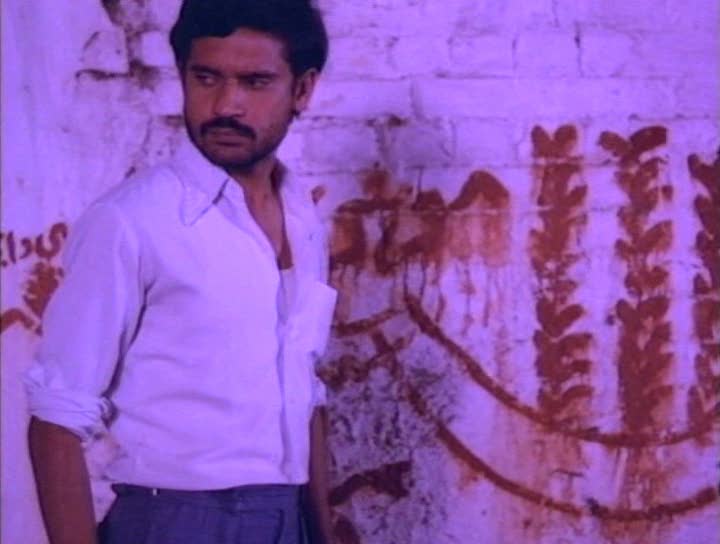
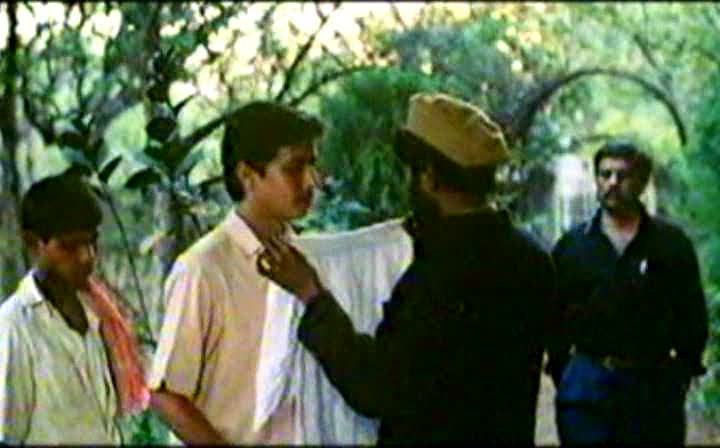
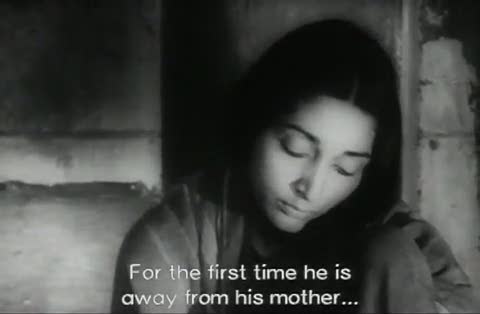
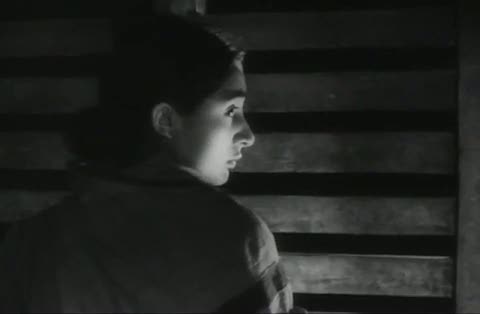
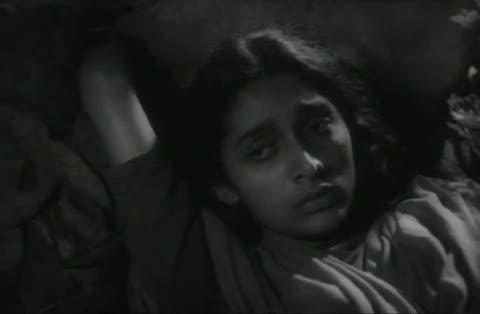
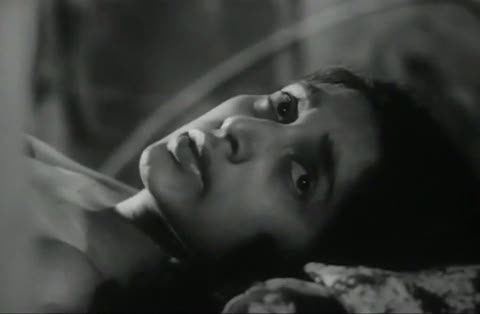
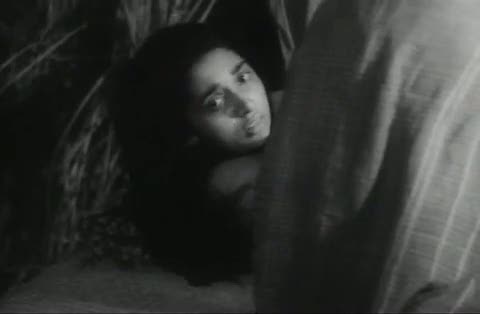
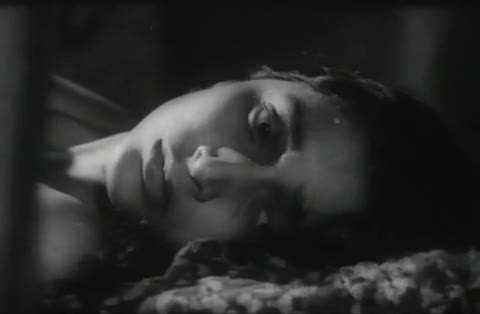
GhatashraddhaThe director’s debut feature, The Ritual, couldn’t have more aptly titled given that every subsequent Kasaravalli film could be named the same. Set in a Brahmin (priest class) settlement where sacred hymns are taught by male teachers and learnt by rote by male children, Ghatashraddha delves into a system of social legitimation that is built on suppressing differences, deviances and dissent. (Having a homosexual teenager in the school is provocative even today). Kasaravalli portrays these rituals – religious and social – in high detail that they seem to almost possess a power beyond the people who perform them. The act of teaching and reciting these very hymns (some of which are specifically written for men) proves to be an authorization procedure for the perpetuation of patriarchy and of maintaining a closed circle of legislative and judicial power. Both the young kid Nani (Ajith Kumar), who isn’t able to learn these chants, and the young woman Yamuna (the beautiful Meena Kuttappa), who gets pregnant out of wedlock, are deemed outcasts. Ghatashraddha pays out like a tragedy in which every attempt to break out of a rigid system of rules is put down and all discursive entities that could undermine the integrity of the system are absorbed into the mainstream. Kasaravalli uses his actors remarkably – almost in a Bressonian manner – pruning down superfluous elements of performance and expression and reducing the tragic presence of Yamuna to an aggregate of glances and stares, and his command on his images is equally noteworthy, with sharp, beautiful monochrome photography.

Mane (House, 1991)

ManePossibly the most unusual Kasaravalli picture and certainly my favorite by the director, Mane (also dubbed in Hindi as Ek Ghar) is a Kafkaesque tale about a young couple (Naseeruddin Shah and Deepti Naval) that moves to the city from a village with the hope of finding privacy and freedom, which are unavailable in the joint family system. For all its narrative excursions, in a sense, Mane is merely about the breakup of a marriage in which the Rossellinian couple, unable to confront each other directly amidst the loneliness of the city, externalizes their troubles – his powerlessness, her desire for freedom and their childlessness – and shifts blame on situations beyond their control in order to act victims. Kasaravalli works wonder with film and sound here, using them to denote the impending break down. (One stunning shot uses the neon lights of the neighbourhood to literally break apart the frame). A critique on urban spaces that suffocate more than they promise privacy, Mane unfolds like a sociological update on Rear Window (1954), in which personal anxieties and fears are displaced onto the surroundings and, specifically, onto a lower social class. In that sense, Mane connects all the way to the director’s latest work in the manner in which it raises questions about the visibility of the class structure and the seeming imperceptibility of the consequences of acts of one class on the other. Mane is full of such encroachments of freedom by other competing notions of freedom – between classes, between houses and between spouses.

Thai Saheba (1997)

Thayi SahebaThai Saheba, I think, is best understood as a transitional film because it is in this film that Kasaravalli tries to streamline most of the diverging concerns of his previous features into a sustained reflection on justice – a topic that he would keep refining in his subsequent three works. Shot mostly indoors with the production design dominated by deep red and brown colours, the film is reminiscent of similarly-themed films of the same decade by Hou and Zhang, especially in the way the women orbit the largely unseen patriarch of the house and how the personal becomes inseperably entagled with the political. Kasaravalli, interestingly, sets his story in pre-independence India in an attempt, however unsure, to make a positive intervention into history and open it up for analysis. More precisely, the period is the 1940s when the independence struggle against the British Empire was at its peak. The leader of the house is a Gandhian fighting earnestly for independence while he keeps ignoring his wife (one among three!), who finds companionship in her adopted son, who, in turn, falls in love with his step sister. The film is rife with such complex familial relationships and forbidding codes of conduct, through which questions regarding inheritance and birth right are broached. (There’s a narrative thread regarding perfumes that Kasaravalli uses as shorthand for feudal legacy). Like the previous picture, Thai Saheba keeps pitting one idea of freedom and justice with other. However, there’s also the feeling that the film might be treating history as a closed book, suggesting that we are living at more liberal times. The corrective would arrive three films later.

Dweepa (The Island, 2003)

DweepaDweepa is a quantum leap of sorts for Kasaravalli. For one, the scenario takes a gigantic jump from pre-independence India to post-globalization India (the jump is highly ironic since the politico-historic situation doesn’t differ as much as one expects it to): to a time when huge construction projects are undertaken at the cost of the livelihood of thousands of indigenous people. Possibly the most keenly observed of all the director’s films, Dweepa finds Kasaravalli shifting his focus from institutions and their laws towards the legitimization of those very laws, to the many internal contradictions a statement of justice has to suppress to create a stable meaning. The film almost plays out reverse-dialectically – like a chain of nuclear fissions – breaking down one stable narrative of justice into smaller narratives each counterpointing the other. The island of the title, then, not only refers to the geography of the story or to the situation that the priest family – father, son and daughter-in-law and the young outsider – finds itself in, but also to this impossibility of consensus and to the narratives of minorities being abandoned in favour of those of existing technocratic and paternal institutions. (The story’s development, in a way, parallels the trajectory of critical discourses in the past few decades, in the undermining of totalizing theories by identity groups). Kasaravalli can’t propose a solution (is there one?), but the response he suggests – of perpetual resistance – is borne out of a deep respect for his subjects.

Haseena (2004)

HaseenaHaseena begins with a bruised, middle-aged woman (Tara) sitting determinedly in front of a mosque before cutting – painfully – to an older, beautiful version of her. Haseena has all the trappings of a “woman’s picture” – a poor lower-class woman, with many kids and a abusive, drunkard husband who beats her up, struggling to make a living in a man’s world – and, to an extent, it is. But instead of converting the scenario into a woe-of-the-week saga and wallowing in self-pity and condescension that almost seems to be the natural reaction from many filmmakers, Kasaravalli, respecting the dignity of himself and his subject, moves beyond superficial humanism to embark on an examination of the law, justice and the crossroads between them. That the story is set in an Islamic community, where laws and rules are more localized and, hence, the idea of justice could be more accommodative, helps illustrate the dynamics of legislation and legitimization with higher transparency. Absorbing a number of uncharacteristic directorial choices, strangely enough, from contemporary Iranian cinema, where too characters retain their self-esteem, specifically in its use of colour and music (Kottukapally’s high-scale stringed compositions, well, strike a chord for those familiar with Majidi’s cinema, for instance) and it’s magic realist finale, Kasaravalli experiments with his new found freedom of form and the confidence of approach that the previous, seminal feature seems to have fortified.

Naayi Neralu (In The Shadow Of The Dog, 2006)

Naayi NeraluNaayi Neralu is the exact kind of movie that Kasaravalli’s filmography was working towards all along. Like Thayi Saheba, this one is also set in a pre-independence era, but instead of treating issues from at a distance and institutions monolithically, Kasaravalli treats them like how a present-day sociologist would talk about present-day problems. Kasaravalli’s intervention into history exemplifies postmodernism as a responsible critical approach (and not as “anything goes” complacency that the term has become a mnemonic for) in the way it keeps revealing the individual not as a rational, integral consciousness trapped inside institutions and their oppressive rules but as a de-centered subject sitting at the intersection of multiple Symbolic orders with much more authority than a modernist illustration would allow for. The complex script (many share writing credits) first establishes, like Ghatashraddha, a widow Venku (Pavitra Lokesh) in a fixed, conservative milieu before introducing a disturbance into the system in the form of a young man who claims to be her husband, reincarnated. The society in question authorizes the intrusion and this, ironically, promises escape for Venku, who crosses over into the new legal contour. After certain unforeseen incidents, the society realizes the radicalism of its own decision and revokes back the patent, leaving Venku outside all social circles. An incisive portrait of law as a sum of countersigning gestures and justice as something more individualized, like a signature, Naayi Neralu presents Kasaravalli’s social study at its most refined.

Gulabi Talkies (2008)

Gulabi TalkiesSet in a coastal town in Karnataka where fishing is the major source of livelihood and at a time when the country was engaged in the Kargil war, Gulabi Talkies, along with the next film, marks another major transitional period – if not a minor fall from the precision of Naayi Neralu, which I think is the case – for Kasaravalli. If, in the previous pictures, the director and the writers attempted to look at the bigger picture – at the narrative that confronts and governs other narratives –they suggest here that one might not be able to get a bigger picture at all. There are a hundred things that are going on in Gulabi Talkies that attempt to tear the film’s focus apart. The first of two major threads involves a movie-loving middle-aged Muslim midwife (Umashree) who is gifted a television set with satellite connection and the second one deals with a group of Visconti-like fishermen who are enraged by the government’s decision to grant permission to a local Muslim bigwig to fish in the same zone as them. Gulabi Talkies investigates how international events and decisions trickle down – step by step – into every day life and acquire a completely different flavour that conceals knowledge of the actuating force. The war against Pakistan (itself a consequence) translates to communal violence within the country, which translates to gang wars among fishermen and which, in turn, bear upon Gulabi’s status as the cynosure of the local housewives. Perhaps, this is why the film’s most telling image is that of a satellite dish on the beach facing the sea: Images from a world beyond having catastrophic effects elsewhere.

Kanasembo Kudureyaneri (Riding The Stallion Of A Dream, 2010)

Kanasembo KudureyaneriKanasembo Kudureyaneri begins quite flashily, as though advertising its own script, with the quip by Godard that a film needn’t have a beginning, middle and an end in the same order. But then, instead of using the hyperlink structure of the script to pull off one emotional coup after another, Kasaravalli and co. use it to emphasize the invisibility of one part of the script to another. The two branches of the narrative – each of which deals with one particular socioeconomic class – are interconnected by a specific event: the death of the village patriarch, which also fulfils its symbolic purpose, but none of the characters that constitute these classes recognizes this. All of them work towards their own individual dreams and aspirations without realizing that this quest of theirs’ shapes and is shaped by the others’ as well. The setting of the story is contemporary no doubt, but there is scarcely anything contemporary about it. It might be true that the remains of feudalism still plague the country’s rural regions, but given that the economic system that drives this problem even today has flourished upon the idea of death of feudalism and even promotes itself at the cost of feudalism, Kanasembo Kudureyaneri comes across as a slightly anachronistic (and assimilable-into-mainstream) film. Having said that, I must also add that the film brings Kasaravalli’s filmography to a very interesting point where, with the support of the finesse of perspective and approach that previous few films have worked towards, he can plunge into more globalized, potentially uncomfortable issues with a more refined and rigorous control over his craft. I think the next one will be mighty interesting.


(Image Courtesy: Various)


Dhobi Ghat (2010) (Mumbai Diaries)
Kiran Rao
Hindi/English


Dhobi GhatKiran Rao’s Dhobi Ghat (2010) is a film about Mumbai (duh!). More precisely, it’s a film about the impossibility of making a film about Mumbai, an impressionistic look at the city which argues that it is the only possible way to look at the city at all. Everyone in Rao’s film is an artist. No, not just the four lead characters but everyone – even the myriad Jia-esque immigrant workers who literally build the city’s canvas – is an artist here, albeit removed from reality to varying degrees. If Rao’s Mumbai is the film crew, the sea at its end is the cinema screen, before whose stoic permanence social divisions vanish. (One character notes that the sea air smells of people’s desires). Everyone, and specifically the quartet at the centre, seems to attempt to find in art a subliminal hope of transcending class, of being on a level ground. Arun (Aamir Khan) – the film critic figure – can relate to the city space only through the arts. Shai (Monica Dogra) desires to level all spaces through her photography. Munna (Prateik Babbar) – ever at right angles to life – dreams of hitching to the mainstream through cinema. Yasmin (Kriti Malhotra) seeks to rationalize her condition through her art and hopes it will outlive her. Alas, right from the first scene, reality seeps in to foil such utopian plans. Rao, likewise, has a keen eye for urban and screen spaces, dividing and subletting the frame to emphasize the fragmentation that exists on multiple levels. This fragmentation is integral to Dhobi Ghat, for it is terrified of a complete view of the city, suggesting that a total understanding of the city – with its frightening disparities, unspoken calamities and tragicomic ironies – can only result in deep silence – of acknowledgement, of paralysis and of powerlessness. Like Arun’s last painting, like the old woman next door, like the sea.

Road, Movie (2009)
Dev Benegal
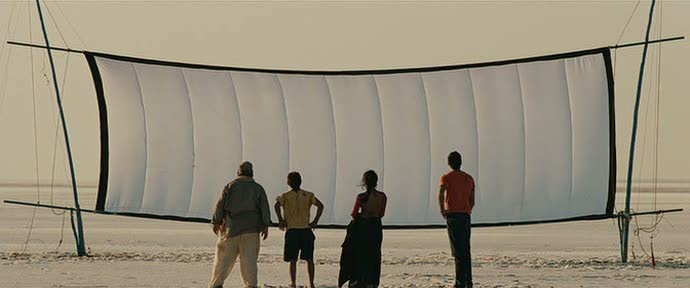
Hindi


Road, MovieRoad, Movie (2009), written and directed by Dev Benegal, follows Vishnu (played by middle cinema darling Abhay Deol), the son of a small time hair oil seller, who borrows an ancient Chevrolet truck from his neighbour and hits the road on the pretext of selling his father’s stock and delivering the truck to its proper destination. Little does he care that the truck doubles as mobile cinema. On his way, he encounters a village in dire need of water where a dacoit group has been terrorizing the villagers, appropriating the available water, bottling it and selling it back to them. A paean to popular cinema of yesteryear, specifically to those times when films used to be a collective social experience that transcended class, race, gender and other disparities, Road, Movie views (and literalizes, as in the carnival segment) cinema, in the Bazinian sense, as a collective dream that acts as a fulfillment ground for our real life desires. Consequently, it laments the death of that collective experience due to corporatization of film production and segmentation of potential markets*. Through plot details, bizarrely enough, it equates cinema to both water (suggesting that both are essentially public commodities unjustly being appropriated for the benefit of a few) and oil (in that both are ultimate stress-busters and great social levelers, as is pointed out in the recurring song borrowed from Guru Dutt’s Pyaasa (1957)). Road, Movie is also self-consciously generic, as its title points out, likening the journey on a road to the trajectory and experience of a movie. True to the conventions of its genre, the individualistic, petit bourgeois protagonist realizes the meaning and importance of living in a community and, among other bromides, that the journey is more important than destination. But then, Benegal also keeps deviating from the genre in that he avoids conjuring up a revolutionary hero out of Vishnu. He may mean good, he might have learned a few important lessons, but he’s as helpless in front of these social forces as he was at the beginning. He can do nothing but go back to his dreary middle class existence. Oh well, at least there’s Tel Malish.


[*See Jonathan Rosenbaum’s review of Sleepless in Seattle (1993) for a detailed examination of the phenomenon]

Anand Patwardhan

Anand Patwardhan 
(1950-)

Anand Patwardhan has been making political documentaries for nearly three decades pursuing diverse and controversial issues that are at the crux of social and political life in India. Many of his films were at one time or another banned by state television channels in India and became the subject of litigation by Patwardhan who successfully challenged the censorship rulings in court. Patwardhan received a B.A. in English Literature from Bombay University in 1970, won a scholarship to get another B.A. in Sociology from Brandeis University in 1972 and earned a Master’s degree in Communications from McGill University in 1982. Patwardhan has been an activist ever since he was a student — having participated in the anti-Vietnam War movement; being a volunteer in Caesar Chavez’s United Farm Worker’s Union; working in Kishore Bharati, a rural development and education project in central India; and participating in the Bihar anti-corruption movement in 1974-75 and in the civil liberties and democratic rights movement during and after the 1975-77 Emergency. Since then he has been active in movements for housing rights of the urban poor, for communal harmony and participated in movements against unjust, unsustainable development, miltarism and nuclear nationalism. [Image Courtesy: Icarus Films, Bio Courtesy: Official Site]

The most acclaimed Indian documentary filmmaker, Anand Patwardhan has been called the Michael Moore of India, although the latter started his career much later than Patwardhan did. The comparison is not entirely unwarranted though. For one, Patwardhan’s political inclination is very similar to that of the Canadian-American. He even admires Moore’s works to a large extent. But of more interest is the commonality between their styles. Like in the films of Moore, the image and the sound counterpoint each other at the most critical junctures. But, unlike in Moore where it’s almost exclusively played out for laughs, this friction is also used to provide highly affecting social ironies or even serve as penetrating summations. Same is true of the dialectical imagery – arrived at though Eisensteinian cutting or, more frequently, within the same shot – in his films. This might sound too crude and simplistic, but Patwardhan’s curious, clear-sighted camera and editing never once call attention to themselves or invite us to marvel their artistry. It is almost as if the sound and the image have independent existence since each of them has its own emotional weight and rumination quotient. At times, the image and sound are linked together by folk (generally recorded directly) or pop songs (official versions), which serve as catharsis for the pent up resentment and tension. Moreover, these folk songs also help illustrate how a community uses its art forms to make a record of its problems and struggles and to develop a sense of clanship among its members to help them go on.

Another singular aspect of Patwardhan’s cinema is his attention to dialects, language and speech patterns. Although there must have been considerable amount of luck in making many of these observations, the amazing consistency with which these nuggets steal the speeches they appear in makes this an ostensible trademark of the director.  A chief nuclear scientist believes, albeit with a modicum of humour, that the numerous berserk cows did not spoil the nuclear test because they are sacred. A well-off, educated urban businessman, who has, along with his wife, resorted to religious methods for having a child, tells us (among other atrocities) that Hinduism is extremely liberal and broad minded in comparison to Islam and that “women cannot be divorced very easily”. An atheist (or secular) speaker of the Left uses the term “Lakshman Rekha” to denote the poverty line. This scrupulous attention to representation extends also to the visual language. Mass media, especially mainstream cinema and popular television (shows and news – rather interchangeable really), make regular appearances in Patwardhan’s films and are used to highlight their regressive influence. Although the working methods that he has developed over time bear an unmistakable authorial stamp (save for two rather ordinary short films), Patwardhan claims that he does not believe in deliberate stylization and that there is no conscious aesthetic in his films. In fact, the only cinematic influence that he mentions in interviews is that of Imperfect Cinema (Patwardhan’s films are certainly works of Third Cinema and his essay on The Battle of Chile (1977) is an illuminating read). So it should of little doubt that his politics is what informs his aesthetics.

In a way, Anand Patwardhan could be called the child of Karl Marx and Karamchand Gandhi. If there is one vein that runs throughout Patwardhan’s filmography, it is the attempt to suitably wed class consciousness with nonviolent methods of problem solving. In that respect, all his films could be seen as efforts to demonstrate that this marriage is not just chimerical utopianism, but a practical possibility. He has been criticized for taking sides, for not presenting facts with objectivity and, plainly, for not giving the ‘other’ side a fair hearing. Surely, there can be few qualities more repulsive than non-committedness, neutrality and pseudo-objectivity in a political documentary for you can’t be neutral on a moving train. But then that doesn’t mean films such as Patwardhan’s are propagandistic or, worse, merely personal preferences, worldviews and opinions. His filmmaking is defined by curiosity and compassion rather than didacticism and judgment. Patwardhan’s allegiance is not to any geography, religion, ideology, language or class, but only to humanitarianism (for the lack of a better term), although, ironically, that stance dictates much of his politics. Through the films, it becomes evident that it is not an hatred towards the ruling class, but a genuine concern for the underprivileged that characterizes his cinema.  Witness to this attitude is the fact his central interest remains – and this has given birth to the best sections he’s ever done – in the struggles of the oppressed than the acts of the powerful. All his films, in one way or the other, are celebrations of (or pleas for) nonviolent forms of resistance. (He places Mohandas Gandhi, Martin Luther King, B. R. Ambedkar and Salvador Allende on the same pedestal.) It is as if, for him, the struggle itself is more important than the end result. These films testify to the filmmaker’s belief that a struggle for human rights need not necessarily entail dehumanization of oneself, that, to borrow Gandhi’s oft-used quote, “an eye for an eye makes the whole world blind”.

 
(NOTE: As usual, there are gaping holes here which will be filled once I see those missing films)

Zameer Ke Bandi (Prisoners Of Conscience, 1978)


Prisoners of ConscienceShot on grainy 16mm stock that embodies the spirit and theory of Imperfect Cinema that Patwardhan so cherishes, Prisoners of Conscience (1978) captures a particular facet of the tumultuous years following the declaration of emergency by Prime Minister Indira Gandhi in June, 1975: political imprisonment. Through first hand accounts, the director presents details of the appalling brutality of prison procedures and the classism that permeates them. Patwardhan’s major lament is not against Indira’s policies per se, but the very act of holding political prisoners without trial (That the film clearly points out that the situation did not improve much even after Janata Dal came to power testifies to its “nonpartisan” quality). What was unique about the widespread resistance to this political ploy of Indira Gandhi was that it was highly democratic in nature, with participation by both the secular Left and the Hindu-based RSS (a marriage quite unimaginable now), both workers and students, both citizens and immigrants and both radical Maoists and nonviolent Gandhians. Using the various interviews of people from each of these groups, Patwardhan attempts to examine and evaluate his own political leaning by trying to uncover socialist strains in Gandhian philosophy and the possibility of having a nonviolent base for Marxist thought. In additional to his ideology, it is also Patwardhan’s directorial style that seems to have (more or less) found its bearings in Prisoners as is evident in the therapeutic use of folk songs, the ironic cross cutting between Republic Day celebrations and prison proceedings and the general hesitation to be overly acerbic or coldly academic.

Hamara Shahar (Bombay, Our City, 1985)

Bombay, Our CityBombay, Our City (1985) is a devastating account of the slum clearance operations of the Bombay Municipal Corporation in 1984, in which encroachments by rural immigrants were systematically removed to make way for skyscrapers and to prettify the city. Patwardhan interviews residents of the slums, industrialists in the city, officials at the municipality office and middle class citizens of the city, all of whose words provide a unique insight into the issue. Occasionally, the film falls prey to an unrefined Marxist impulse wherein the director includes images of bourgeois tea parties and yacht races for no reason other than to provide contrast. But then, this sudden shift of gears also seems justified when we witness a group of upper-class folks – the city’s police commissioner included – discussing how to fight this “evil” of encroachments through martial training of youths. What is really extraordinary about the segments involving the slum residents is how remarkably aware these people are of their surroundings and of the numerous forces that bind them. A terrific song compiled by the local theatre group, which forms the spiritual backbone of the film, details the government’s injustices with great humour and pathos. Equally piercing are the testaments of the evicted (One of them says “Instead of removing poverty, they’re removing the poor”, alluding to Indira (and Rajiv) Gandhi’s populist slogan for eradicating poverty). Finally, Bombay, Our City also presents Patwardhan finding his own place as a filmmaker and an activist. One of the slum dwellers accuses Patwardhan of exploiting their misery for artistic gains while the Right accuses him of romanticizing the working class. The director, however, remains the humble inquisitor.

Una Mitran Di Yaad Pyaari (In Memory Of Friends, 1990)

In Memory of FriendsIn Memory of Friends (1990) finds Patwardhan in Punjab covering communal clashes between Sikh and Hindu fundamentalists during the Khalistan Movement and the subsequent endeavours of secular parties with Marxist associations in reinstating peace in the state. The subject of In Memory is both philosophically and politically complex (primarily due to different parties holding power at the state and central levels), for the demand for a separate state based on religion is, as Patwardhan remarks, both purely democratic and against democracy. At the focal point of the film is the figure of Bhagat Singh, freedom fighter and revolutionary whose image has been appropriated and manipulated by each political group to suit to its own ideological agenda. The Sikh separatists claim Bhagat Singh was a religious man whereas the right wing extols his nationalism. Even those who remain neutral about him seem to consider him as some sort of an antithesis to the nonviolent Gandhi. This starling rupture between the past and the present – the reality and its image – informs the central structuring device of In Memory. Interleaved with footage of interviews with the secularists, the separatists and the relatives of Bhagat Singh are passages in which Bhagat Singh’s posthumously published jail writings are recited by a narrator (Naseeruddin Shah) which clearly indicate that he was not only a staunch socialist and an atheist who believed that widespread class consciousness was the only way out of communal wars, but also that he deeply admired non-violence. Like all the secular teachings of Sikhism, Bhagat Singh’s beliefs, too, seem to have vanished into the past.

Ram Ke Naam (In The Name Of God, 1992)

In The Name Of GodIn the Name of God (1992) chronicles the immediate and historical events leading up to the demolition of the Babri Mosque in Ayodhya, Uttar Pradesh on 6 December 1992, when thousands of Hindu fundamentalists barged into the mosque premises and started bringing down the structure. Characteristically witty with a very keen eye for tragicomic ironies (The camera casually photographs an eatery named “Shriram Fast Food” as we hear public speakers, mounted on hired trucks, advertising the divinity of Lord Ram), Patwardhan examines the classism that exists within these communal forces (in the form of castes) and charts both the strategies of the then-oppositional Hindu groups, one of whose leaders had undertaken a nationwide propagandist tour, and the efforts of the secular Left in mitigating the communal agitation that seemed to have gripped the country like a plague. Unlike most rationalists, he chooses to view religion not as an entity fascist in its very conception, but as one which is molded by the ideology that propagates it. This is reinforced by the numerous segments featuring with Pujari Laldas, the official priest at the temple inside the mosque premise and a Hindu liberation theologian, the honesty and conviction of whose words suffuse the film with an earnestness and compassion so crucial to sociological filmmaking. But perhaps more than anything, In the Name of God is an elegy for the city of Ayodhya – a city caught unawares by external polarizing forces, its identity erased and reconstituted and its people made to live in perpetual fear.

Pitra, Putra Aur Dharmayuddha (Father, Son And Holy War, 1994)

Father, Son And Holy WarA twin to In the Name of God, Father, Son and Holy War (1994) is less topical and more contemplative a film than its predecessor in that it attempts to study primeval and deep-rooted social issues with the bloody aftermath of the Babri Mosque demolition as only the backdrop. The central thesis of the film contends that religion and mythology – whatever be their flavour – construct and propagate a skewed sense of masculinity and bravery that is predicated on violence and hatred, which deems non-violence as an impotent principle and which is only exacerbated by most of modern consumerist advertising and certain sections of the mass media. Furthermore, Patwardhan suggests, it is the same texts and practices that define femininity as whatever masculinity isn’t, with passive acceptance, chastity and servility being its prime virtues. The film argues, presenting archaeological evidence, that this was not always the case and that, at the danger of sounding too simplistic, this worship of violence and destruction – in place of fertility and proliferation – started when man learned to domesticate and own animals and settle down. Equally sweeping are its other assertions that attempt to cover of number of social phenomena (including the popularity of WWF and on-screen violence, in general), which runs the risk of decontextualizing the key argument of the film. True, that all these facets are only deeply intertwined, but the film is so ambitious and loosely structured that it almost ends up proving otherwise. These observations would find greater strength and coherence in the director’s decidedly superior work, War and Peace.

A Narmada Diary (1995)

A Narmada DiaryA very pertinent film about the social conditions in the third world – especially after the advent of globalization – A Narmada Diary (1995) sits well alongside works such as West of the Tracks (2003) and Up the Yangtze (2007) in the sense that it chooses to document on film – for us and for posterity – what would otherwise be relegated to the footnotes of most mass media. Co-directed with activist Simantini Dhuru, the film tracks the struggle of an indigenous population (Narmada Bachao Andolan/Save Narmada Movement) living on the banks of river Narmada against the Sardar Sarovar Dam project, which would result in their displacement and massive land submergence. There is a sense of watching history in the making as the group congregates for planning, organizes non-violent protests, confronts key officials responsible for the construction of the dam and exhibits a singular integrity of purpose, further evidencing Patwardhan’s heartfelt admiration for Patricio Guzmán’s masterpiece. Although the Save Narmada Movement is generally known to be led by Medha Patkar, Patwardhan and Dhuru avoid the pitfall of making a hero out of her and building a film around an exceptional individual’s actions. Instead, true to the spirit of this struggle, the directors present her as a key player in a movement organized and executed by the local populace en masse. Additionally, A Narmada Diary is also a personal struggle for Patwardhan as a filmmaker. Like the rebellion, his work stands as the direct antithesis to the pro-dam government propaganda films that make their appearance throughout the picture.

Jang Aur Aman (War And Peace, 2001)

War and PeaceWar and Peace (2001) could well have been titled War and Peace: Or How I Learned to Forget Gandhi and Worship the Bomb, for the major theme that runs through the film is the disjunction that exists between the past and the present and a nation’s collective (and selective) cultural amnesia with respect to its own past. Shot in four countries – India, Pakistan, Japan and the USA – and over a period of four years following the 5 nuclear tests done by India in 1998, Patwardhan’s film was slammed by Pakistan for being anti-Pakistani and by India for being anti-Indian, while the film’s barrel was always pointed elsewhere. Tracing out the country’s appalling shift from Gandhianism to Nuclear Nationalism and Pakistan’s follow-up to India’s nuclear tests, Patwardhan examines the role of the two countries as both perpetrators and victims of a major mishap that is now imminent, taking the Hiroshima-Nagasaki incident as a potent example to illustrate why nuclear armament is not merely a potentially hazardous move, but a wholly unethical one. War and Peace is a film that should exist, even if amounts to only the ticking of a radiometer amidst atomic explosions, for it calls for a realization that there can be neither a victor nor a finish point in this internecine race. It is, without doubt, Anand Patwardhan’s masterpiece. [Read full review]

[To The Children Of Swat, From The Children Of Mandala (2009)]

Kanasembo Kudureyaneri (2010) (Riding The Stallion Of A Dream)
Girish Kasaravalli
Kannada


Riding the Stallion of DreamGirish Kasaravalli’s Riding the Stallion of a Dream (2010) is something of a blast from the past, specifically from the Indian parallel cinema of the 1970s of which Kasaravalli himself was a part (This regression in time might just be the point of the film). Like most films of that period, Riding has a keen sense of class politics at work in the hinterlands of the country (There is nothing very specifically 21st century about the script, except for the mention of factories buying farmlands). Furthermore, it embraces the typical aesthetic characteristics of the movement with its use of a traditional, downbeat soundtrack, its penchant for naturalism and, particularly, darkness and its employment of dubbed sound. But more importantly, it retains the optimistic belief of the age that change is indeed possible (even though Kasaravalli’s proposed means of change is much less romantic and much more grounded). However, unlike its predecessors, Kasaravalli’s film is unwilling to overlook the human elements comprising the class struggle. Indeed, this is where the script’s Arriaga-like structure is really put into good use. The film is essentially divided into four segments which alternately present reality as seen by Irya the village gravedigger and his wife Rudri and reality as seen by the son Shivanna and the daughter-in-law Hema of the recently deceased village elder (among other elites). Predictably for a film that deals with multiple classes, Riding is full of ironies small and big. The pristine corridors of the elder’s house are contrasted with the dilapidated interiors and streets of Irya’s home and neighbourhood. Shivanna and Hema are almost always seen trapped inside the claustrophobic villa, which is suffused with the stench of the rotting corpse of the village elder that reflects their moral decay, while the gravedigger and his wife are seen in glorious long shots traversing the wide open spaces and flower farms of the village. The death of the patriarch (whose body has to be forced to a sitting position and whom his son will be taking over from) spells doom for Shivanna and co. while it’s Rudri (there’s even a direct reference to her as Irya’s surrogate mother) who takes to herself to reconstruct her husband’s life. Revealing the old man’s death helps affirm Irya’s dream while it would shatter Shivanna’s and contrariwise. In both camps, it is a blind faith in God and religion that serves to preserve status quo. There is considerable tweaking of the mise en scène – especially in the lighting and actor blocking – as well that aids to emphasize this tug of war. Kasaravalli provides us almost exactly one half of the truth in each segment, leaving it to the subsequent or preceding segment to complement it. A simple shot from a particular segment finds its corresponding reverse shot in only the next segment and vice versa. Each of these couples in the story wants to lead a better, more dignified life, as defined by their social classes. Like the audience, these couples are unable to see what lies on the other side of the hedge and how their seemingly independent plans might affect the other. There is no moral dilemma that they see in their actions. This way, Kasaravalli calls into question the perceptibility of the class structure itself and, subsequently, uses his art to provide us that critical distance from reality which is required to understand it in totality. As a result, the characters in Kasaravalli’s film are not (save for a touch of contempt and sympathy the upper and lower class characters respectively receive from the director – a possible residue of the parallel cinema of yesteryear) class abstractions or oversimplified monsters and victims. They are both individuals with choice and products of their classes (Irya blows his money on alcohol and loafs about regularly, Rudri is a casual thief and some of the landowners in the village do genuinely care about Irya’s condition). Only that each of the couple wants to ride off on its own dream horse and in a direction that it wants. But what both don’t realize is that the horses are tied to the same chariot.


(Image Courtesy: Goethe Institute)

« Previous PageNext Page »