



June 3, 2012
May 19, 2012
Pâfekuto Burû (1997) (Perfect Blue)
Satoshi Kon
Japanese
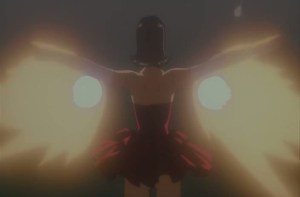 Satoshi Kon’s remarkable debut feature Perfect Blue (1997) begins with an action scene from a television episode of Power Rangers, revealed only shortly later to be a live performance by the actors in a public auditorium. As the resoundingly unsuccessful show winds down, we hear some young audience members sourly point out that it was nothing like the television version. This idea of the virtual, the illusionary coming across as more real than the real drives the central conflict of Perfect Blue, in which an erstwhile pop idol, Mima, finds herself becoming the prisoner of her own fabricated personality. A good ten years ahead of its time, Satoshi Kon’s film frighteningly presages the progressive virtualization and publicization of our personalities. Mima loses out to one of her fans who does a better job of impersonating her than herself and develops a persona for Mima that’s truer than reality. Perfect Blue doesn’t merely subordinate reality to illusion and personality to identity, but thoroughly undermines the possibility of constructing such dichotomies, as reality and illusion bleed so thoroughly into each other that it is not just impossible, but also immaterial that they be separated. Even with its deceptively assuring closure, a la Shutter Island (2010), the film pulls the rug of reality from under our feet and leaves us hanging like Scottie Ferguson. Very much like Mima, the audience struggles with the instability of the movie’s construction and attempts (perhaps in vain) to hold on to a solid ground from which to view things, to secure its own sanity. Directed with an extremist’s taste for visceral shock and a modernist’s eye for reflective surfaces, Perfect Blue challenges the psychological seriousness of many similar live-action features, while benefiting from its choice of the medium.
April 28, 2012













April 15, 2012
Bara No Sôretsu (1968) (Funeral Parade Of Roses)
Toshio Matsumoto
Japanese
 Toshio Matsumoto’s flamboyant, shape shifting, subversive Funeral Parade of Roses (1969) is perhaps the ideal poster boy for what is known as the Japanese New Wave. If this loosely defined group associated with the cinema of filmmakers such as Nagisa Oshima and Shohei Imamura attacked the traditional notion of “the Japanese Identity”, exposing the blind spots in its attempts at constructing a seamless racial, political and cultural identity for the nation and upsetting any stable ground hitherto held on to, Matsumoto’s film questions the idea of identity itself. Centering on a group of transvestites working at a bar in Tokyo’s Shinjuku District, Funeral Parade of Roses is a potpourri of fictional passages, interviews and found footage that weaves together various modes of representation/exposition and simulates the theme of amorphousness of identity that is at the heart of the film. This idea of identity-as-performance is set in motion by a tape recording that plays throughout the film and talks about humans wearing multiple masks one over the other and is fortified by the film’s perpetual self-reflexivity, which keeps revealing whatever we witness as staged. This reflexivity also keeps the film from being exploitative towards its transvestite subjects, who are instead made active participants in the creative process. Matsumoto does nothing that could undermine the dignity of his actor-characters and portrays them in all their richness: jealous, scheming, funny, carefree, tormented, self-deprecating and proud. (Not that the film takes all the right steps – it still seems to buy into the troubled childhood cliché.) Full of baffling shifts in tone, attitude, pace and narrative modes, Funeral Parade of Roses is the kind of film Almodóvar would really dig: perverse, intense, loving and dead serious.
April 9, 2012
Kôshikei (1968) (Death By Hanging)
Nagisa Oshima
Japanese
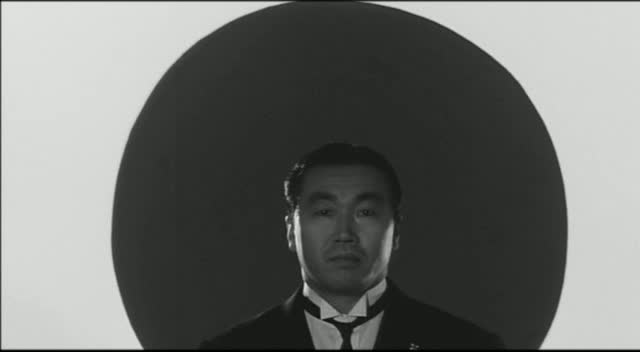 Troublemaker extraordinaire Nagisa Oshima’s Death by Hanging (1968) is a tar-black comedy in the vein of Dr. Strangelove (1964), straddling the polar realms of docu-drama and over-the-top absurdity, and begins with a documentary passage that tells us that about a recent survey which reveals that most Japanese are against the abolition of death penalty. Following this statistic, we are shown the process of execution of a prisoner step-by-step, with voiceover commentary that befits one of those state-sponsored awareness raisers, before being abruptly thrust into a world of Kafkaesque fiction. Authorities overlooking the execution discover that the hanged prisoner R (Do-yun Yu) is not dead yet and has lost his memory. Not having encountered this situation before, they scramble for law books and scriptures, before deciding that they would have to rekindle R’s memory and make him aware of his guilt so that he can be hanged again. What ensues is, as it were, a theatre of the absurd, with officials role-playing, reconstructing in great detail R’s past – right from his possibly troubled childhood – based on popular knowledge, their biases, neuroses and fantasies. “The Law is always prepared to lend you a spare brain in order to condemn you without remorse”, wrote Barthes. In Oshima’s film we witness that tendency in all its viciousness, as the officers channel their repressed racism and sexual frustration onto the ethnic outsider R, who becomes a Christ-like figure bearing the consequences of the prejudices of a whole nation. Oshima is unabashedly agenda-driven and uses a host of devices, which no doubt recall Godard, that distances the audience – who are explicitly implicated and grilled – from the central drama. With a moralist’s anger and a filmmaker’s flamboyance, he creates a cold, caustic work that presents a ruthless Japan that haunts its youth with the ghosts of an imperial, feudal, terrorizing past.
March 31, 2012
Tôkyô Orimpikku (1965) (Tokyo Olympiad)
Kon Ichikawa
Japanese
 Commissioned by Japan’s national Olympic committee during the Summer Olympics of 1964, Tokyo Olympiad (1965) is a study in forms. Covering the event end-to-end – from the opening to the closing ceremony – Kon Ichikawa’s film is preoccupied with the filmic form as an end in itself, indifferent to if not independent of its ostensible subject. This stance is highly befitting of the project as well, for what are the Olympic Games if not the pure form of war, emptied of all its teleology and historico-political foundation? Each of the sport is filmed, edited and scored with a different style and rhythm, as though trying to develop an impressionistic portrait of the game. Ichikawa is excited by movement and by speed, by an athletic manoeuvre and by a show of sheer force, by the elegance of a gymnastic move and the animality of a shot put throw. His fascination is not with the perfection and beauty of the human body, as it might have been to Leni Riefenstahl, but with the grace of its movement and with the skill it’s capable of. Even when he is fixated on an isolated body part, as is the case with the oscillating derriere of an athlete in a walking event, the interest is less in the anatomical details than with the form of its motion through space and time. Ichikawa, as it were, is proposing why “Citius, Altius, Fortius” could well apply to the medium he is working with too. He also takes the spirit of the Olympics from the outside to the inside, from the frenzy of a mass sport to the simmering moods of an individual. He mystifies by distance, by covering the athletes from a distance and with a brooding voiceover which makes them come across like Zen monks (a stratagem that Chris Marker would employ in his film on Kurosawa). He captures their little quirks, their absurd superstitions and their emotional fragility in vivid detail, which acts as the perfect foil to the extreme physicality of the rest of the film.
March 20, 2012
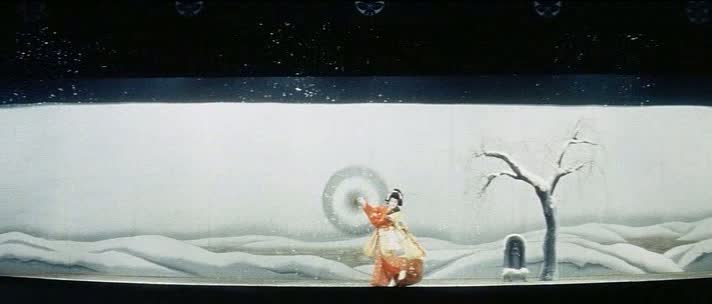
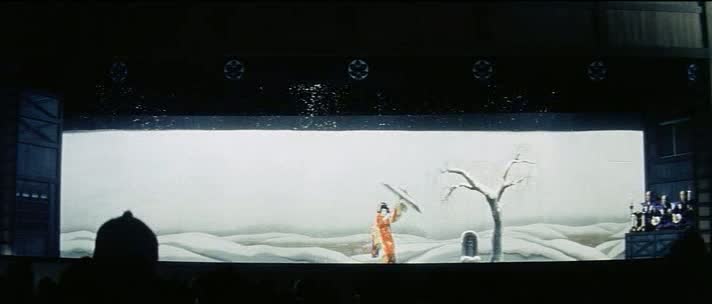
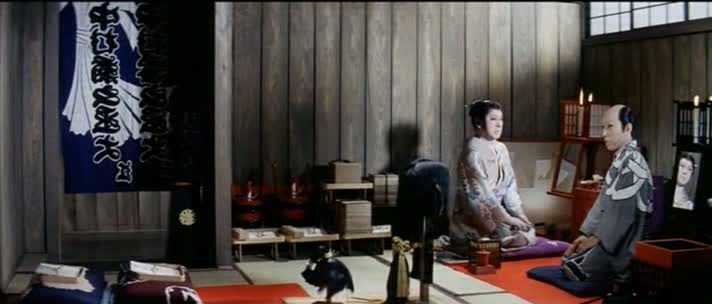
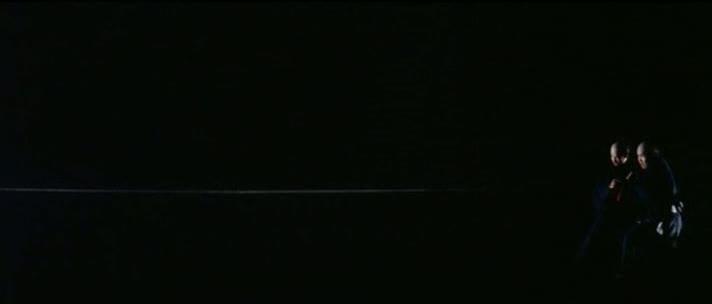
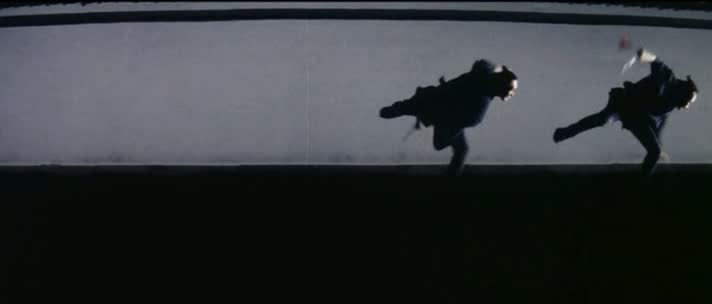
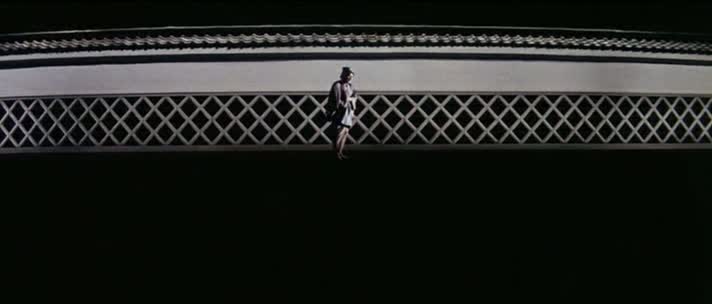
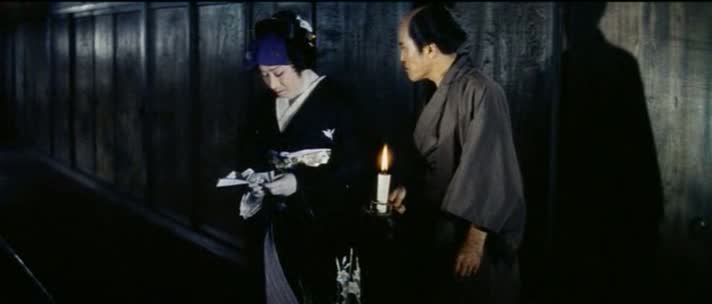
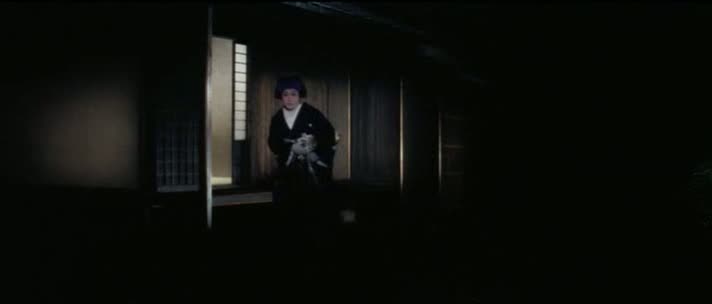
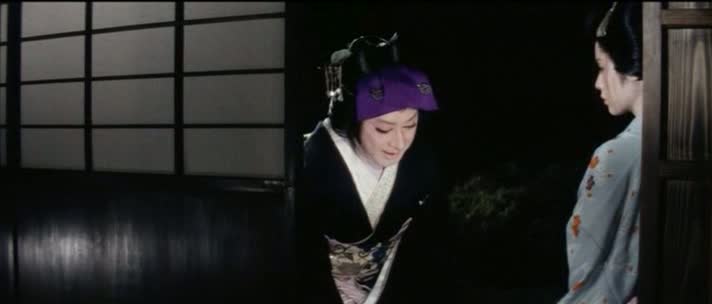
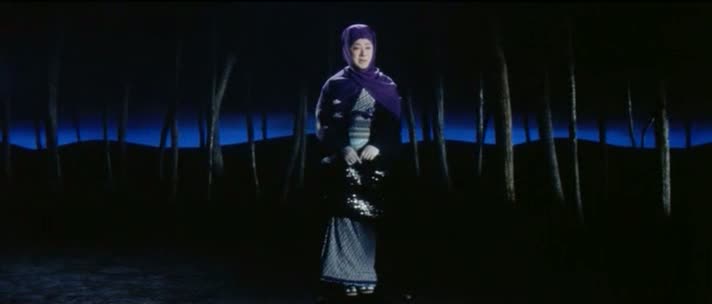
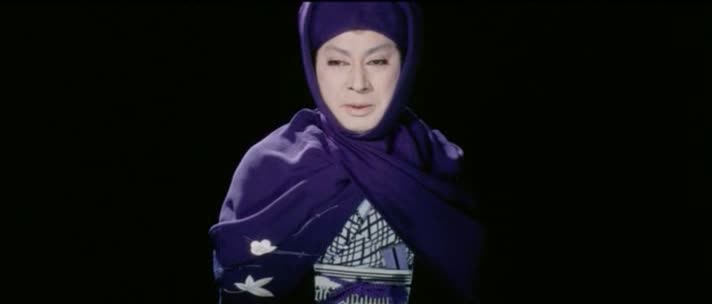
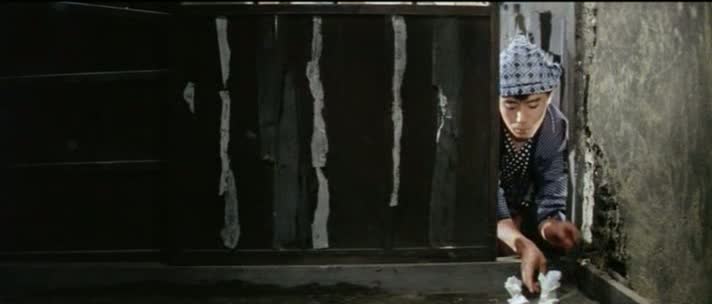
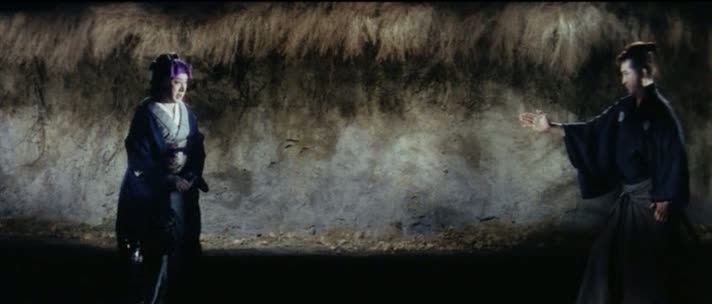
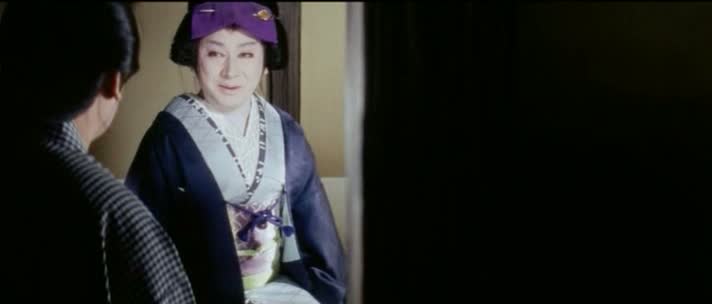
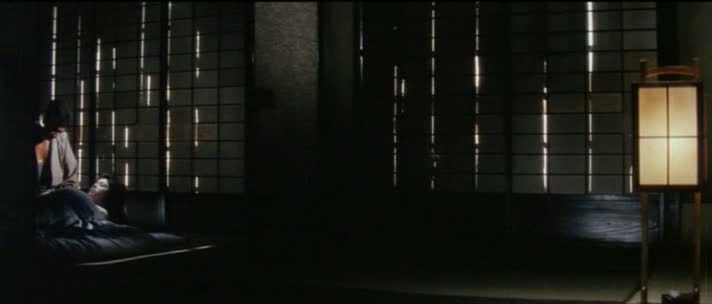
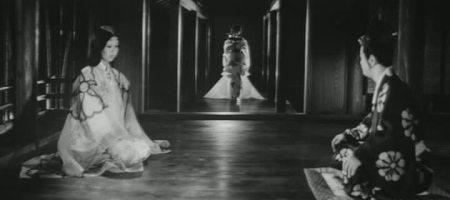
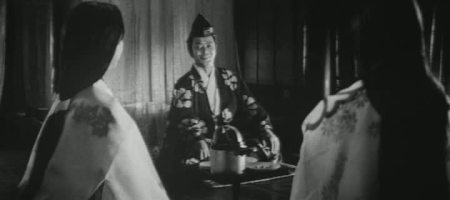
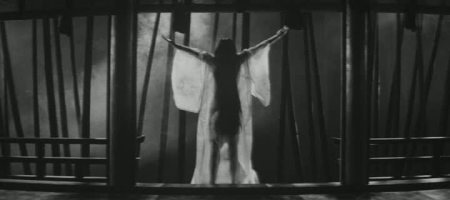
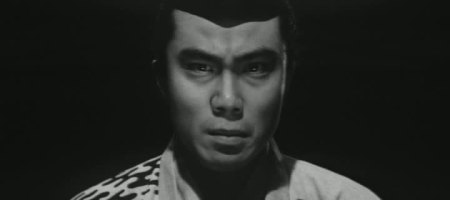
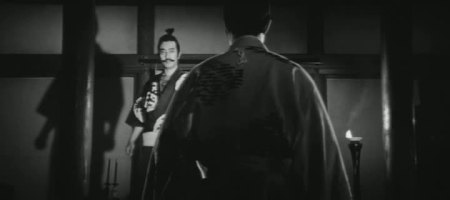
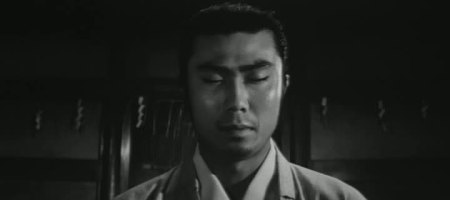
Kon Ichikawa’s An Actor’s Revenge (1963) displays a love-hate relationship – a morbid fascination, why not – with the widescreen. Ichikawa seems to be engaged in a wresting match with the widescreen as the ludicrous plot of the film plods on without shame or scruple. The film opens with an expansive shot of an artificial landscape which is revealed to be a stage after the camera pulls out, as though acknowledging its miscalculation that the 2.35:1 ratio will be wide enough to contain the stage. Of course, the stage we see is too big to be contained by anything, leave alone a letterboxed perspective, because, in An Actor’s Revenge, the world itself is an extension of theatre, where roles have to be played, spaces have to be negotiated and a narrative has to be taken to a tragic yet gratifying closure. Ichikawa points not only at this theatricality of the film’s world with double framing and bracketed compositions – a bizarre ploy that nearly makes it seem like a film shot in Academy Ratio is playing within the Scope film we are watching – but also to the inability to take the play of life to a conclusion, to get off the stage, by consistently revealing its unsurpassable edge, wherein a part of the screen just becomes an inaccessible, immobile wasteland. What is startling about An Actor’s Revenge is that, unlike most widescreen pictures, it does not adopt a single, streamlined aesthetic strategy towards the format. Ichikawa and regular DOP Setsuo Kobayashi tussle with the ratio here, being at times charitable towards it, at times critical and, at times, plain indifferent. At times Ichikawa makes judicious use of the screen space, providing a lot of visual data to process, and at times he just disregards this abundance of space, to the point of blacking it out as if trying to get rid of it. During one moment he is in awe of its generosity and during the other he is mocking its inadequacy. As he indulges himself with the dramatic quality of strong horizontals and verticals, he ends up emulating a lot of aspect ratios, wider and smaller. Sometimes he is excited by the visceral effect of a diagonal across an elongated rectangle, sometimes by the pensiveness of a slanted construction in deep space. Sometimes, he is simply being eccentric.
Widescreen as a stage, Wide screen as a storage space, Widescreen as a notice board, Widescreen as an annexe, Widescreen as a scroll, Widescreen as a ruler, Widescreen as a Swiss army knife, Widescreen as insufficient, Widescreen as excess, Widescreen as useless.









March 11, 2012







January 23, 2011
Manzan Benigaki (2001) (Red Persimmons)
Shinsuke Ogawa, Xiaolian Peng
Japanese
 Red Persimmons (2001) begins with a movie crew watching the fascinating A Visit To Ogawa Productions (1981), in which the late Shinsuke Ogawa, that Japanese filmmaker who pushed the limits of documentary filmmaking like no other, talks to Nagisa Oshima about his then current project A Japanese Village (1982), a work that is so oppressively modest that it turns out avant-garde. This absence of Ogawa haunts Red Persimmons, which Chinese filmmaker Xiaolian Peng helped complete, especially when it uses on-screen text instead of Ogawa’s usual, casual voiceover. Less digressive than the typical Ogawa picture but as sensitive and attentive to the rhythms of the countryside as any of his works, Red Persimmons attempts to trace the history of Kaminoyama with the science and commerce of persimmon farming, which forms the lifeline of the village, at its focal point. We see how personal and collective histories are tied to the production of this fruit, how persimmons have use, exchange and even symbolic value for the villagers and how the technology that develops alongside evolves primarily to address necessities and reduce effort than for expansion or multiplication of revenue. We observe, through the course of the film, that the persimmon itself becomes representative of ‘the Japanese village’ in the way it goes from being an organic part of a lifestyle, through being a commodity under simple capitalism and then a fiercely competitive economy, to gradually losing its ritualistic qualities and finally ending up as a low-demand produce. Beautiful, like a Dovzhenko film, humble, essential.
April 17, 2010
Shijie (The World, 2004)
 If there is a film that perfectly sums up the state and outlook of the third world in the first decade of the new century, it has to be Jia Zhang-Ke’s The World (2004), first of the director’s film to be made with official consent. The very premise and setting of the film – a bunch of youngsters working a world park where you can witness life-size replicas of wonders from across the world – provide us with the various undercurrents that characterize the film without being ostentatious. Much like the previous Jia films, the people in The World are terribly out of sync with the environment surrounding them. This is a land where the terrible distances of the real world are pruned down to a few miles, yet the distance between individuals has increased manifold (The cramped and decrepit dressing rooms provide a counterpoint to the grandeur of the park’s front end). This is a zone which enables one to fulfill one’s desire to escape into a whole new world, yet one has to lose every shred of his/her individuality to do so (One of the early shots shows us a bunch of uniformed workers who don’t appear much different from the props they are carrying). This idea of one’s identity being stripped off, layer by layer, is built into the whole structure of the film. Dialects are normalized, costumes are changed by the minute and passports are confiscated. One of the characters towards the end tells: “It’s nice being in someone else’s home” – a delusion that seems to be common to all the residents of this synthetic world.
Sanxia Haoren (Still Life, 2006)
 Still Life (2006), which might be the best film by Jia Zhang-Ke yet, presents two stories sewn together thematically and temporally by two significant pan-and-cut shots. The first of them presents a coal miner, Sanming, from rural China moving to Three Gorges to meet his wife after 17 years and the second one gives us a young woman, Shen Hong, traveling to the same place to meet her husband whom she hasn’t seen for 2 years. Using these two threads connected by the China’s Three Gorges Dam project, Jia examines both the disparities, including that of class (Sanming works at the bottom of the rung while Shen Hong’s husband supervises the project), generation (Sanming’s traditional values are pitted against Shen Hong’s strength and resilience) and gender (Sanming and Shen Hong can be seen as the antithesis to each other’s spouses), and the commonalities that characterize the two different worlds that Sanming and Shen Hong inhabit. The prime motif that permeates Still Life is the destruction of the old and the birth of the new. Sanming yearns to return to the past while Shen Hong runs away from it. Residences are cleared to make way for the dam. English language shows its head regularly. And songs about eternal love play on the soundtrack ironically. Lastly, Jia’s film is also a paean to the marvels of the human body – the body that can create and destroy structures much, much larger than it, the body that is ultimately rendered inconsequential (as underscored by Jia’s striking compositions of man constantly being loaded down by the weight of his own creations) by the national importance of the structures themselves.
Dong (2006)
 Made as a companion piece to the superior film Still Life, much of whose footage it shares, Dong (2006) sits somewhere alongside The Mystery of Picasso (1956) and The Quince Tree Sun (1992) in the way the director uses another artist – a painter, as is the case with the other two films – to examine the nature of his own work. Dong follows actor and painter Liu Xiao-Dong (who makes a brief appearance in The World) as he completes two of his five-piece paintings – one at the Three Gorges Dam construction site and the other in Bangkok, Thailand. Like Jia, Liu is a realist. Even he prefers to document his subjects from a distance as it provides him “better control and precision”. But when one of his subjects dies in an accident, all he can do is patronize the deceased person’s kids. Is Jia reflecting on the purpose of his own work? Perhaps. Although I believe that there has been an indictment of patriarchy, especially its presence in art, throughout Jia’s body of work, it is most manifest in Dong. In the first segment, Liu admires the body of his naked male models and paints them with utmost enthusiasm while, in Bangkok, he calls his models as “scantily-clad women” and completes his work somewhat dispassionately. We then notice that he is in an alien land not just in geographical terms. Again, it would not be an overstretch to consider much of this satire as self-criticism, given that Jia himself has been unrestrained in marveling the male body in his work, specifically in Still Life.
Wuyong (Useless, 2007)
 Useless (2007) could be considered as a logical extension of Still Life and Dong because it deals with a number of ideas common to those two films. Divided into three segments each of which takes up a unique perspective of the Chinese textile industry, Useless is a dense, meditative essay on production, consumption and function of art. It’s hard not to think of the film as an attempt by Jia to discover his responsibility as an artist and to locate himself within the cinema of his country. Throughout the film there is a battle between aesthetic and functionality of art – a struggle that seeps even into the film’s form – that is manifest in the segments involving mass depersonalized production, custom “auteurist” design catering to the west and smalltime tailoring to suit individual needs. However, Jia’s film does not take a pre-determined stance and shares our indecisiveness. The very fact that the director chooses “impersonal” high-def over the intimacy of film illustrates the complexity underlying the question. Furthermore, Jia’s film also examines the chasm that exists between the oriental and western perceptions of beauty and art. What is a fact of life in China – soiled bodies, dirty and worn out clothes – is considered an exotic, delicately assembled work of art in the west. Female nudity is commonplace in western art whereas male nudity takes its place in the oriental counterpart. When Jia pans his camera over female models getting ready for a show at Paris Fashion Week, one is reminded of the opening shot of Still Life where Jia’s male models sit unclothed in a boat, ready for their performance in the film.
Er Shi Si Cheng Ji (24 City, 2008)
 In 24 City (2008), the latest of Jia’s great works, the director interviews several people all of whom are connected in some way to the prestigious aircraft manufacturing site, Factory-420, in Chengdu city that is now being torn down to make way for a residential complex. What Platform does in the present tense, 24 City does in the past. Each of these accounts so clearly elucidates what is essentially positive and what is not about life in a communist regime. The sheer joy of living as a symbiotic community seems to be counterbalanced by a tendency of individual wishes getting overridden by collective objectives. Throughout, these testimonies effortlessly present how, once, personal tragedies were invariably connected to national decisions and how an individual was able to define himself only with respect to his community (One character even clarifies her name using a city as reference). Furthermore, these accounts also give a vivid picture of the depersonalized and dehumanized way of work at the same factory after China’s cultural reforms in the late seventies. Jia juxtaposes images of the factory being destroyed with the faces of his subjects suggesting the demise of a wholly different way of life and thought. But all is not so sweetly nostalgic about Jia’s film. The set of interviewees consists of a mixture of people who’ve actually been through what they say and actors enacting such people. Are these accounts the absolute truth or are they the comfortable versions of the past concocted by memory with the passage of time? How much of an actor is there in each of these people? Jia, never ever cynical, is content in playing the Godard-ish ethnographer. Brilliant.
Heshang Aiqing (Cry Me A River, 2008)
 Picture Jia repenting for not being completely nostalgic in 24 City and deciding to assuage that guilt with a purely fictional feature. The 20-minute short Cry Me A River (2008) is just that. A group of middle class friends, well in their thirties, meet up, have dinner with one of their professors and talk in pairs about how their lives have been after they went their own ways. This must be the first time Jia is working within the tepid confines of a genre and he does remarkably well to leave his signature all over. But it is also true that Jia is one of the few directors who truly deserve a picture in this genre, given the consistency with which he has dealt with the theme of cultural transition in his films. Wang Hong Wei and Zhao Tao seem to be almost reprising their roles from Platform, which gives the film a touch of autobiographic authenticity, considering how often the director has used former actor as his alter ego. We are far from the sweet old days of Platform where the very sight of a train was rare. It’s now a matter of a few hours crossing the whole of China. As the professor and the students have their dinner, two actors in traditional theater costume perform at the restaurant with a huge bridge as the backdrop. Two characters travel on a boat in a river whose banks are adorned by old buildings, reminiscing and confessing how much they still love each other. They are, of course, going down the river of time with a clear knowledge that they can’t reverse its flow.
Hai Shang Chuan Qi (I Wish I Knew, 2010)
 A project commissioned by the state in view of the upcoming Shanghai World Expo, Jia Zhang-ke’s I Wish I Knew (2010) is a thematic extension of 24 City and is much more freely structured and much broader in scope compared to its predecessor. The larger part of the film presents interviews with older residents of Shanghai (along with those of Taiwan and Hong Kong) who gleefully recollect their family’s history, which reveal the ever-growing chasm between the city’s past and present. Personal histories seem to be based on and shaped by the city’s tumultuous politics and culture. We see that the people being talked about were viewed as mere ideological symbols incapable of erring or transforming. In addition to his employment of mirrors and reflective surfaces suggesting both documentation and subjectivity, Jia films the interviewees in extremely shallow focus as if pointing out their being cut off from the present (It takes them the sound of breaking glass or the ring of a cellphone snap back to reality). This tendency is contrasted with the final few interviews of younger people where we witness how life can change course so quickly and how one can assume multiple social personalities on whim and float about like free entities. Losing one’s sense of existence in a particular environment is perhaps not a big price to pay after all for the seeming freedom of choice it gives. One’s history is no longer defined by one’s geographical location. One is no longer bound by dialectical ideologies. There is apparently no influence of the past on the present, in every sphere of life, whatsoever. Mistakes of the past are obscured by the glory of the present and the loss of values, by cries of progress. Jia’s view of the city is, against our wishes for a disapproving perspective, neither nostalgic nor rosy. It’s holistic.
[“Black Breakfast” – Jia Zhang-Ke’s segment in Stories on Human Rights (2008)]
 The Seventh Art