
Synonyms (Nadav Lapid)
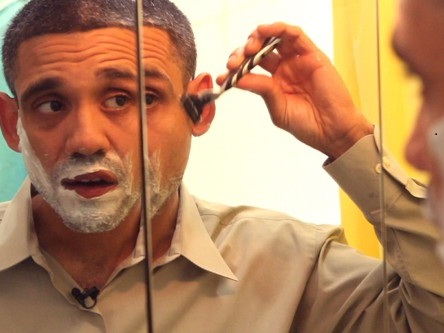
Nadav Lapid’s third film, Synonyms, like its predecessor, The Kindergarten Teacher, exhibits a special attention to words. It comes in the form of Yoav (Tom Mercier), a young Israeli ex-serviceman who leaves his home country for France. In Paris, he picks up a French dictionary and amasses synonyms to describe his hate for Israel. He refuses to speak in Hebrew, even when he works at the Israeli embassy and rubs shoulders with fundamentalist Batar volunteers. Identity being socially determined, Yoav can neither completely abandon Israel nor assimilate into the French culture that he loves unilaterally. Lapid realizes that a realist approach to this autobiographical tale would be both tedious and unoriginal, so he pegs the film on a register where psychological causality doesn’t hold. A non-professional, Mercier invests all his energy into the shots, his extreme physicality threatening to spiral out of control at all times. The film is likewise rugged, mixing nausea-inducing handheld shots with more graceful movements of the camera. The extra space available offered by the widescreen also allows for much movement and dynamism within shots.
Inspired by the location as well as his sojourn in France, Lapid draws liberally from the art film tradition. Yoav, and the bourgeois couple who shelter him after he is robbed, are variants on Bresson’s disaffected young men, and their half-naturalist, half-theatrical line delivery is similarly inflected with poetic stylization even when the content is ordinary. The constant interaction between youth, poverty and the sense of dislocation also recalls Carax, while the makeshift ménage à trois Yoav forms with his hosts could be from any post-68 French film. It’s to Lapid’s credit that he’s been able to mould these influences into a personal style. On the other hand, there’s really no framework that contains Yoav’s actions. Just when Yoav obtains French citizenship through a sham marriage, he rejects the idea owing to some undefined moral compulsion. He belts out the Marseillaise and Israeli national anthem with equal zest at the integration class, but the film also undercuts the Republican values taught at the same course. Yoav’s contradictions, as a result, feel artificial, a dramatic contrivance with very little context to back it up.

Midsommar (Ari Aster)
Having tragically lost her sister and parents, Dani (Florence Pugh) leans on her boyfriend Christian (Jack Reynor) for support. While Christian is understanding, his friends think she’s taking too much advantage of him, offering little in return. When one of Christian’s friends invites them to his village in Sweden to participate in midsummer festivities, Christian asks Dani to join them in order to not offend her rather than out of concern. When the film actually gets going, the group finds itself in an isolated commune in central Sweden. The commune, uniformly of Scandinavian extraction and sporting white costume, is welcoming of the strangers, offers them psychedelic drugs and lets them tour their facilities. But movies have prepared us to read communes as cults, and this one turns out to be no different. The summer festivities grow bizarre by the day and includes ritual suicides and sacrifices. Anthropology graduates, Christian and a friend, meanwhile, fight over the rights to write a thesis on the commune. Soon enough, the visitors make those idiotic moves characteristic of horror movies and end up disappearing, leaving Christian and Dani to fend for themselves.
If Midsommar takes its own time to move the story along, it’s because it fashions itself as an intimate film about lovers’ paranoia expressed in horror movie terms. If the film has an insight to offer, it’s that couples in isolation from each other are prone to being brainwashed into doubt, be it by well-meaning friends or by murderous cults, into believing that they deserve better than what they have. It would have served the film better then to have characters that aren’t off a stencil as they are here. Dani, especially, comes across as needier, clingier than the film supposes, and her constant anxiety about Christian ignoring her make her even less sympathetic. Nor does the film have any ambivalence towards the commune to genuinely propose it as a solution to Dani’s perennial loneliness. The tragedy of her past is inserted in flashes, claiming psychological weight in a film whose pleasures are on its surface. Midsommar succeeds primarily as an assured iteration of the last girl template and is noteworthy in how little it relies on traditional horror movie tropes: it’s shot in broad daylight of northern summer, all shocking information is signalled beforehand, and visitors to the cult meet the exact fate you imagine for them. The film has passages of alluring visual and sonic rhythm, and the long-tether narrative moves through different perspectives and spaces freely once at the camp. The camera has a life of its own, pushing and pulling, craning up and down to describe a world out of whack.

The Beach Bum (Harmony Korine)
Harmony Korine’s The Beach Bum immerses the viewer into the bohemian life of Moondog (Matthew McConaughey), a seasoned hedonist spending his days on the beaches of Florida in sex, alcohol and drugs. Moondog is a poet of unusual talent, we are told, and lives off the inherited wealth of his wife Minnie-Boo (Isla Fisher), who has an open affair going on with Moondog’s friend Lingerie (Snoop Dogg). When Minnie-Boo leaves behind a will that obliges Moondog to publish his long-pending book in order to inherit her money, the decadent poet becomes a nomad, reaching out to old friends for help. With a highly expressive colour palette, Korine’s sensual direction evokes a particular, self-indulgent view of life on the beach. Cycling through sunlit exteriors, interiors of gonzo tones and moody fluorescent streetlamps, the film progresses in a mosaic-like fashion, never lingering on any event for long, just like its protagonist, even as it deals with plot mechanics. Moondog’s treads light on the ground underneath, even when he’s pushed to a corner. And the film’s breezy aesthetic beguilingly captures this sense of transience of things.
Korine punctuates Moondog’s uncommitted life with moments of pathos, culminating in a charming romantic sequence with Minnie-Boo, the nightfall, the sea breeze, the white streetlight and Peggy Lee’s If That’s All There Is brought together into a fatalistic mix overseeing the tragedy that immediately follows. The Beach Bum is evidently on the side of Moondog, whose excesses it subsumes in a Romanticist notion of the downbeat artist who flouts conventions, but sees things more clearly than those around him. Moondog is a flaneur, perennially on the road with nothing but typewriter and a sack of books, depending on the universe to see him through the day. But the film also makes it plain that Moondog’s poetry is juvenile. He plagiarises from Lawrence, Baudelaire and Whitman, but his own work reads like bathroom scribbling. The people around him indicate again and again that beneath Moondog’s shallow life lies a core of genius, that behind his ironic relation to people and things likes a being of deep sensitivity—an intimation that never comes to fruition. These assurances of greatness subsidise his vulgarity and provide a reason to consider his humanity—an instrumental morality that goes against the film’s generous-seeming outlook.

The Souvenir (Joanna Hogg)
In contrast to The Beach Bum, Joanna Hogg’s Souvenir presents a modern, wholly original vision of the artist figure. Her autobiographical Julie (a heartbreakingly beautiful Honor Swinton Byrne, daughter of Tilda), a filmmaker in training, is neither a tortured genius, nor a social outcast. She is everything one doesn’t associate with artists: generous, unassuming vulnerable, passive, docile and supremely decent. She is in a romantic relationship with Anthony (Tom Burke), an opinionated, strong personality who looms large over Julie’s life. His yearning, poetic letters of love—presented as interludes read by Julie over shots of the countryside horizon—ascribe to her a power over him that (a) she doesn’t possess and (b) only serves to further disempower her. “Don’t be worthy, be arrogant”, he advises her. But Julie is incapable of feigning arrogance or authority, and that’s what gives The Souvenir its unique force. She is literally self-effacing, seen as she is at the edge of the frame for most part of the film. Julie is told to make films based on her experience, but she can’t bring herself to be arrogant enough to believe it’s worthy of being filmed. She’s always seen writing something else than her own life.
What The Souvenir gets so right is that Julie’s self-doubt as a person—in her relationship with her parents, with Anthony—feeds on and into her self-doubt as an artist. At shoots, Julie is never in control, allowing her work to be overshadowed by her collaborators. She’s mentally elsewhere, carrying the guilt of ignoring Anthony and regularly calling him back from the set. Hitchcock is invoked, and The Souvenir can be seen as a loose reworking of Suspicion, where Julie lets Anthony overpower her despite her better judgment. But unlike the swooning Joan Fontaine who is quite obviously head over heels in love with Cary Grant, Julie’s irrational attraction and jealously towards Anthony feels somewhat theoretical and laboured, added in retrospect. Shooting in 16mm in a beige-brown-white aesthetic, Hogg evokes the eighties through events entirely offscreen—money problems, Irish bombings, the flourishing of cinéma du look in France. She frames every shot with thoughtful consideration, with plenty of negative space. She often films Julie through reflective surfaces, accentuating the sense of her fragility, and cycles through familiar spaces and compositions, rendering them as intimate as the subject.



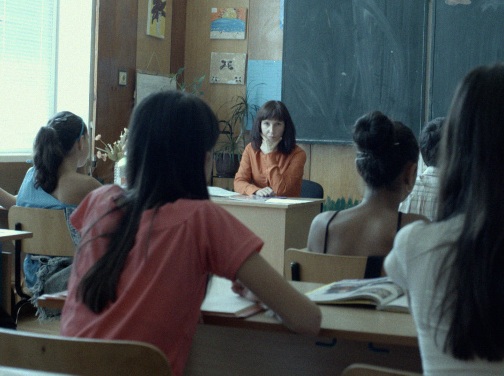


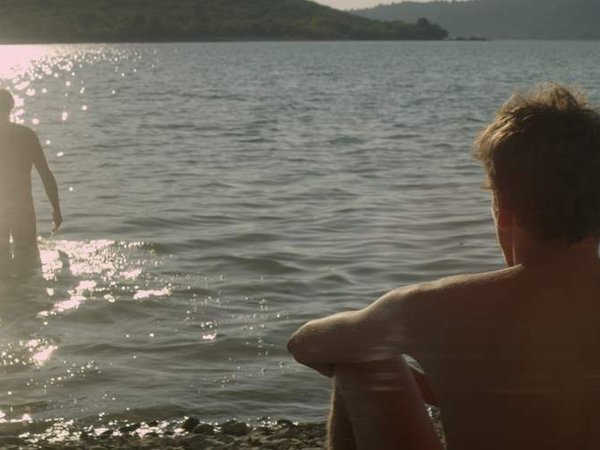


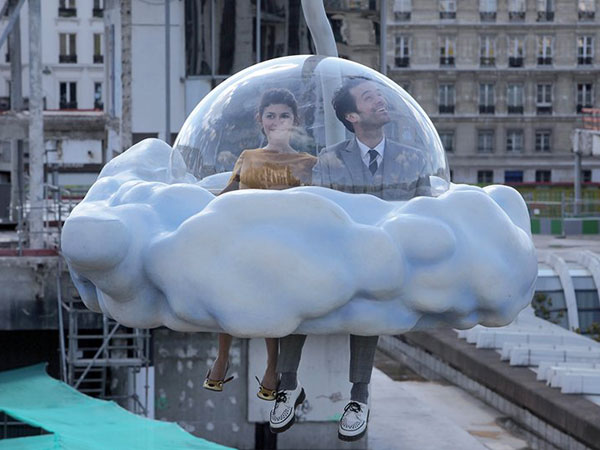


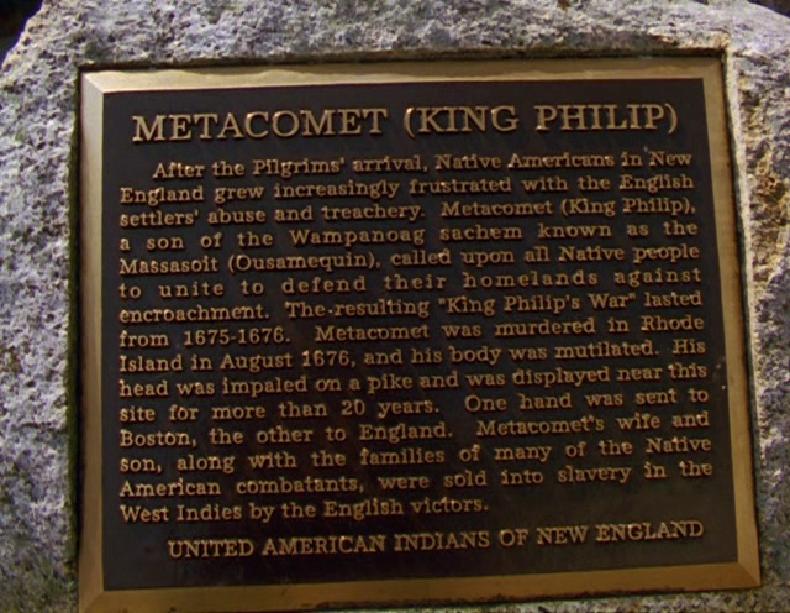


 Surely, it takes a bona fide auteur like David Cronenberg to locate his signature concerns in a text – such as Don Delillo’s – that deals with ideas hitherto unexplored by him and spin out the most exciting piece of cinema this year. Holed up in his stretch limo – an extension of his body, maneuvering through Manhattan inch by inch as though breathing – Eric Packer (Robert Pattinson) comprehends the universe outside like cinema, through a series of moving images projected onto his car windows. Why not? This world, whose master he is, is experiencing the epistemological crisis of late capitalism: the increasing abstraction of tactile reality into digital commodities. Packer, like many Cronenberg characters, is more machine than man, attempts – against the suggestions of his asymmetrical prostate and of the protagonist of Cronenberg’s previous film – to construct a super-rational predictable model of world economy – a project whose failure prompts him to embark on an masochistic odyssey to reclaim the real, to experience physicality, to be vulnerable and to ultimately die. At the end of the film, one imagines Packer shouting: “Death to Cyber-capitalism! Long live the new flesh!”
 Un chant d’amour for cinema, Leos Carax’s Holy Motors is an ambitious speculation about the total transformation of life into cinema and cinema into life – the death of the actor, audience and the camera. The European cousin to Apichatpong Weerasethakul’s Uncle Boonmee Who Can Recall His Past Lives (2010), Carax’s return-to-zero work draws inspiration from the process of film itself – death, resurrection and persistence of vision – and takes cinema to its nascence – fairground attractions, popular theatre and zoopraxography – while opening up to its future possibilities. Uncle Oscar (Denis Lavant, the raison d’etre of Holy Motors), like Cronenberg’s Packer, cruises the streets of Paris in his limo in search of purely physical experiences – a series of performance pieces carried out solely for “the beauty of the act” – only to find that the city is a gigantic simulacrum in which everyone is a performer and a spectator (and thus no one is) and where the distinction between the real and the fictional becomes immaterial. At the very least, Holy Motors is a reflection on the passing of “things”, of physicality, of the beauty of real gesture, of the grace of movement of men and machines.
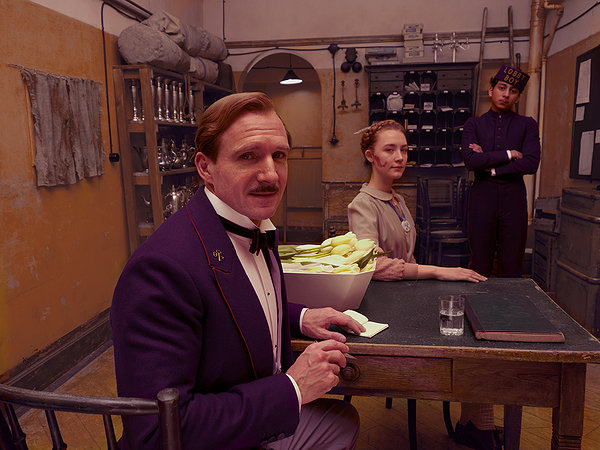
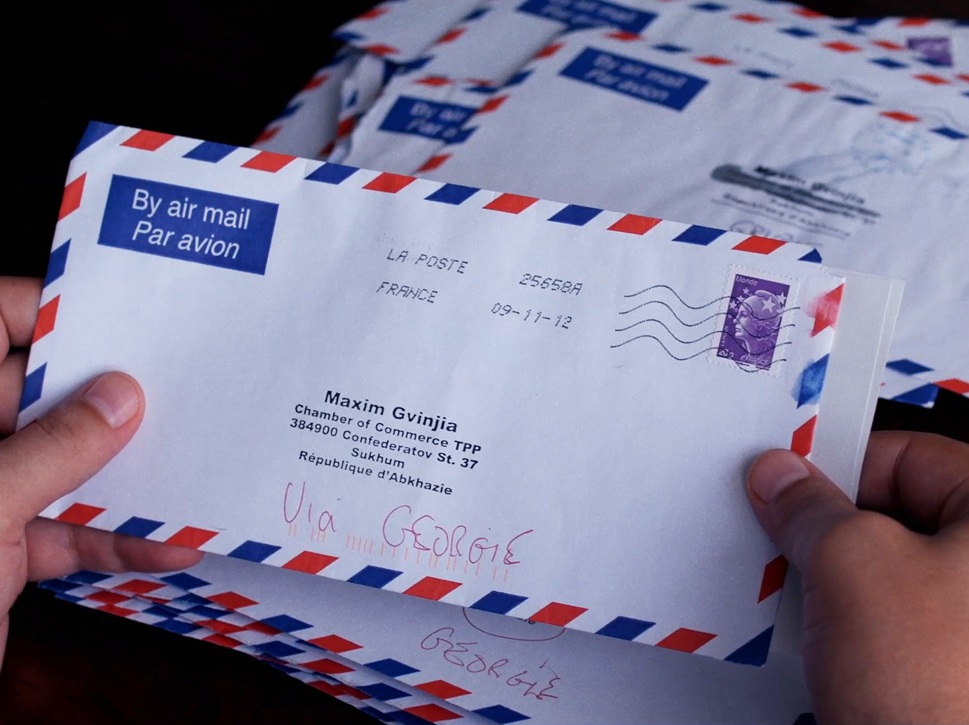
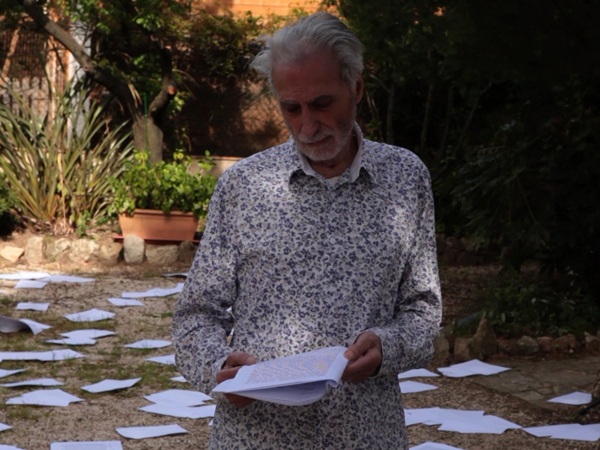
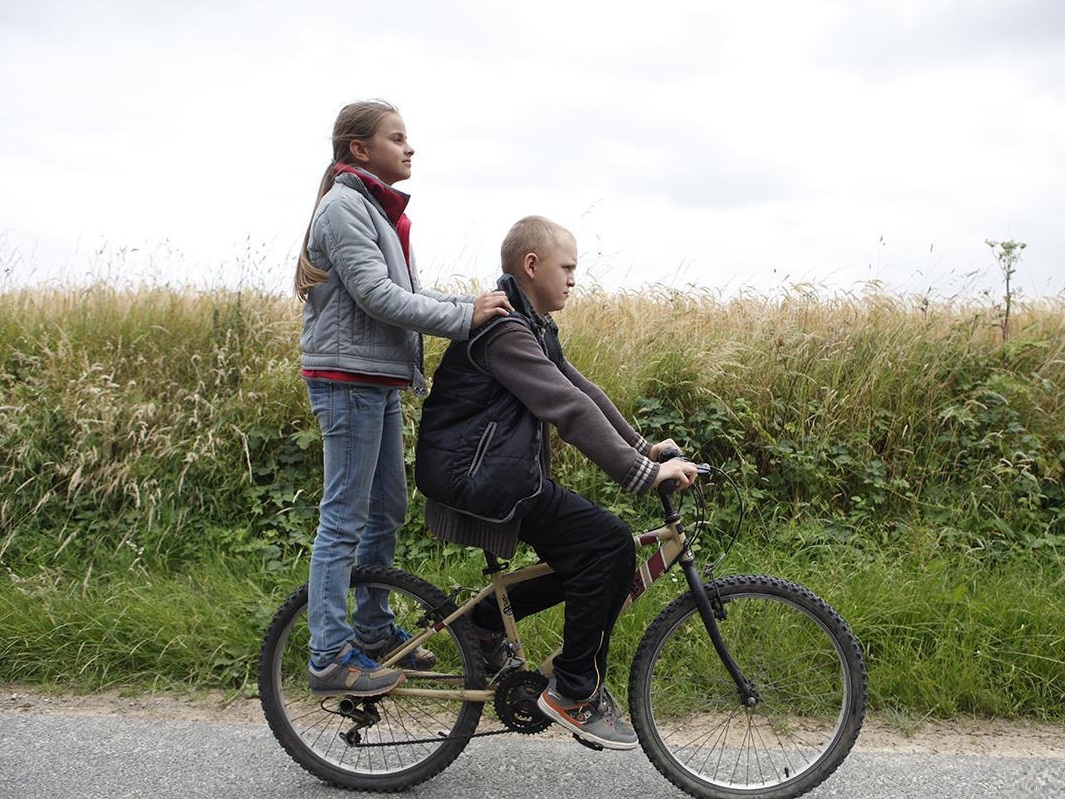
 Nicolas Rey’s third feature, consisting of 9 short segments (reels, to be precise) projected in a random sequence, is a radical project that re-politicizes the cinematic image. Not only does the randomization of the order of projection of the reels circumvent the problem of the authoritarianism of a fixed narrative, it also exposes the seam between the semi-autonomous theses-like segments, thereby making the audience attentive to possible ideological aporias that are usually glossed over by the self-fashioned integrity of filmic texts. Furthermore, the existence of the film in the form separate reels is a breathing reminder of the material with which it was made: 16mm. The persistent dialectic between the visual – shots of highways, industries, farms and modernist suburban housing in the eponymous fictional city registering the sedate rhythm of everyday life – and the aural – snippets of conversations between two politicized industrial workers about the invisible tendons that enable a society to function smoothly – strongly drives home the chief, Althusserian concern of the film: the essential unity of the various, seemingly autonomous, strands of a state, contrary to claims of disjunction and autonomy.
 A film that is reminiscent of Weerasethakul’s many bipartite films, Miguel Gomes’ singular Tabu, too, works on a range of binaries – past/present, youth/old age, city/countryside, abundance/scarcity, modern/primitive, colonizer/colonized – and sets up a conversation between the carefree, profligate days of the empire full of love, laughter and danger and Eurocrisis-inflected, modern day Portugal marked by alienation and loneliness. The opening few minutes – a melancholy mini-mockumentary of sorts chronicling the adventures of a European explorer in Africa with a native entourage –announces that the film will be balancing distancing irony and classicist emotionality, donning an attitude that is in equal measure critical and sympathetic towards the past. In Gomes’ sensitive film, the heavy hand of the past weighs down on the present both on aesthetic (silent cinema stylistics, film stock, academy ratio, the excitement of classical genres) and thematic (collective colonial guilt, residual racism, punishment for forbidden love) levels and this inescapability of the past is also functions as (sometimes dangerous) nostalgia for the simplicity and innocence of a cinema lost and an entreaty for the necessity of exploring and preserving film history.
 What partially elevates the first film of Ulrich Seidl’s Paradise trilogy from its rather undistinguished concerns about emotional alienation and old age loneliness is the nexus of intriguing cultural forces that it brings into the picture by having a relatively affluent, 50-year old Austrian single-mother (Margarete Tiesel, in a no-holds-barred performance) indulge in sex tourism in Kenya along with five other women friends. The result is a rich, provocative negotiation along class, gender, race and age divides that upsets conventional, convenient oppressor-oppressed relationships. In doing so, the film wrenches love from the realm of the universal and the ahistorical and demonstrates that between two people lies the entire universe. Seidl’s heightened, bright colour palette that provides a sharp chromatic contrast to the bodies of Kenyan natives and his confrontational, static, frontal compositions (Seidl’s nudes are antitheses to those of the Renaissance), which make indoor spaces appear like human aquariums, both invite the voyeuristic audience to take a peek into this world and place it on another axis of power – of the observer and the observed.
 Sri Lankan filmmaker Prasanna Vithanage’s exquisite, exceptional adaptation of Fyodor Dostoyevsky’s The Meek One (1876) aptly locates the Russian tale of matrimonial discord between a bourgeois pawnbroker and the gentle creature he weds within the ethno-political conflict between nationalist and rebel factions of the country. Unlike humanist war dramas that, often naively, stress the underlying oneness among individuals on either side, Vithanage’s intelligent film underscores how the political haunts the personal and how the tragic weight of history impacts the compatibility between individuals here and now, while deftly retaining Dostoyevsky’s central theme of ownership of one human by another. Though liberal in narration and moderate in style compared to Mani Kaul’s and Robert Bresson’s adaptations of the short story, Vithanage, too, employs an attentive ambient soundtrack that counts down to an impending doom and numerous shots of hands to emphasize the centrality of transaction in interpersonal relationships. The metaphysical chasm between the possessor and the possessed finds seamless articulation in concrete sociopolitical relations between Sinhalese and Tamils, between the army and refugees, between the poor and the wealthy and between man and woman.
 There has always been something intensely spiritual about Tsai’s films, even when they seem to wallow in post-apocalyptic cityscapes and defunct social constructions. In Tsai’s hands, it would seem, an empty subway corridor shot in cheap digital video becomes the holiest of spaces ever filmed. Walker, a high-def video short made as a part of the Beautiful 2012 project commissioned by Hong Kong International Film Festival, crystallizes this particular tendency in the director’s work and centers on a Buddhist monk played by Lee Kang-sheng (a muse like no other in 21st century cinema). As the monk walks the hyper-commercialized streets of Hong Kong at a phenomenally slow pace for two days and two nights, his red robe becomes a visual anchor in stark contrast to the greys of the urban jungle and the blacks of people’s winter clothing and his very being, his eternal presence, becomes a spiritual grounding point amidst the impersonal hustle-bustle of this super-capitalist Mecca. Part performance art with a gently cynical punch line, part an exploration of the limits of DV, Walker is a deeply soothing and often moving work from one of Asia’s finest.
 Moving unsteadily with the help of a walking stick, the 79-year old founder of the National Film Archive of India (NFAI), P. K. Nair, despite himself, becomes a metaphor for the state of film archiving in the country. It is of considerable irony that, in a nation that prides itself for its rich cultural heritage, film archiving is considered a useless exercise. During the three decades that Nair headed the NFAI, he was instrumental in discovering the silent works and early talkies of Bombay and south Indian cinema, including those of Dadasaheb Phalke, the “father of Indian cinema”. Celluloid Man, bookended by scenes from Citizen Kane (1941), draws inspiration from Welles’ film and sketches a fascinating if reverential portrait of Nair constructed from interviews with international filmmakers, scholars, historians and programmers and curiously hinged on the fact of Nair’s “Rosebud” – ticket stubs, promotional material and assorted film-related curios that the man collected during his childhood. Shivendra Singh’s film is a irresistible romp through early Indian cinema and an endlessly absorbing tribute to a man who is fittingly dubbed the “Henri Langlois of India”. To paraphrase one of the interviewees, Phalke gave Indian cinema a past, Nair gave it a history.
 Although it might appear that it is perhaps the hollowness of Xavier Dolan’s previous feature that makes his latest, 160-minute music video look like a cinematic coup, Laurence Anyways really does succeed in accomplishing more than most of contemporary “LGBT-themed independent cinema”. While the latter – including this year’s Cahiers darling – almost invariably consists of realist, solidarity pictures that use social marginalization as shorthand for seriousness, Dolan’s emotionally charged film takes the game one step further and probes the inseparability of body and character, the effect of the physical transformation of a person on all his relationships – a transformation that is mirrored in the flamboyant, shape-shifting texture of the film – without sensationalizing the transformation itself. Rife, perhaps too much so, with unconventional aesthetic flourishes and personal scrapbook-ish inserts, the film rekindles and enriches the youthful verve of the Nouvelle Vague – a move that should only be welcome by film culture. If not anything more, Laurence Anyways establishes that critics need to stop using its author’s age as a cudgel and look at his cinema du look as something more than a compendium of adolescent affectations.
 Let me confess upfront that putting Wes Anderson’s (surprise!) whimsy, twee and self-conscious Moonrise Kingdom in my year-end list is less a full-hearted appreciation of the film than a confession that I find Anderson to be an important voice that I’m genuinely keen about, but can’t entirely celebrate. I don’t think I’ve seen any film that employs so many elements of industrial cinema yet feels meticulously artisanal, a film that, on the surface, seems to (literally) play to the gallery yet is so full of personality and one that is oddly familiar yet thoroughly refuses instant gratification. Moonrise Kingdom appears to have every ingredient of an obnoxious family comedy, but the unironic, straight-faced attitude and the single-minded conviction with which it moulds the material into an anti-realist examination of the anxieties of growing up, alone, is something not to be found either in cynical mainstream cinema or in the overwrought indie scene of America. Anderson’s neo-sincere film is, as it were, a classicist text couched within a postmodern shell, an emotional film without affect. Paper blossoms, but blossoms nonetheless.
 Hinged on the economic crisis of 2008, Lauren Greenfield’s cautious, measured The Queen of Versailles (2012) charts the riches-to-proverbial-rags trajectory of David A. Siegel, American real estate magnate, and his family as they plummet from being revoltingly rich to being nearly have-beens who are forced to relinquish the largest American home ever built. Greenfield’s film is full of improvisational metaphors, bitter little ironies and strokes of poetic justice, such as how the many employees whom Siegel laid off – not the big banks which refused to fund him – end up helping his family through thrift shopping. The most interesting aspect of the film, however, is how it throws light on how the familial fabric of the Siegel family, which no doubt is used to typify middle and upper American households, is dictated by factors outside their control and much larger than them, such as the global economic downturn – a direct demonstration of family being superstructural organization shaped by an economic base. These passages of the film play out like Metamorphosis as we witness the bourgeois family structure falling apart when the financial adhesive that held it together vanishes. Like Kafka’s novella, these scenes evoke a mix of revulsion and pathos: the repulsion one feels watching how thoroughly these relationships are founded on a bed of material transactions is counterbalanced by a pity for the children who seem to be oblivious to how tainted by excess wealth they are. If there is a lingering feeling, despite the film’s efforts to remain nonjudgmental and neutral about the events that transpire, that we feel pity for a group of people who are going from being extremely rich to merely rich, it is because the film rightly preserves the basic humanity of the Siegel family.
