Review


[From my column on studio-era Hollywood films for Firstpost]

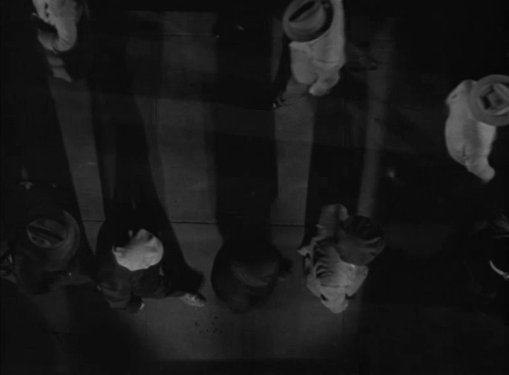
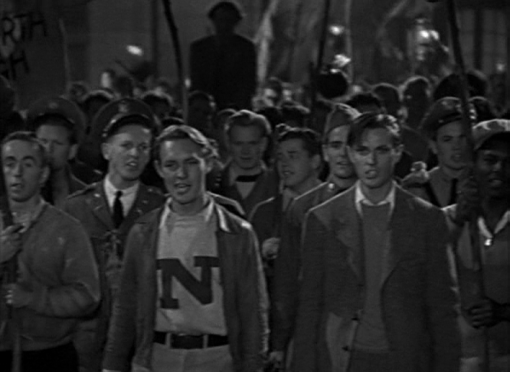
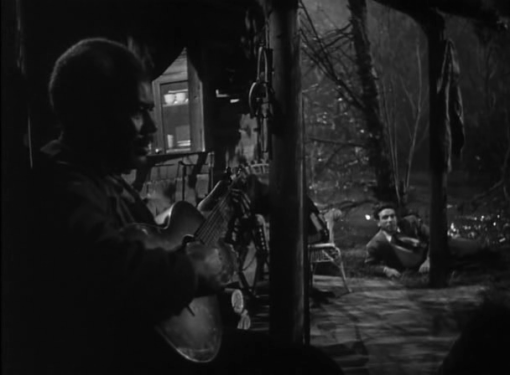
Adapted from Ayn Rand’s madly popular 1943 novel, The Fountainhead (1949) is the story of Howard Roark (Gary Cooper), a genius modernist architect whose refusal to accept established styles and conform to public standards make him a pariah among his peers. Roark declares that his primary quest is his work itself, not its possible beneficiaries. He does not accept the judgment of collectives and knows that no “group, board, council or commission” would give him projects. Recognizing his greatness, but lacking the courage to be by his side, are Dominique (Patricia Neal), an architecture critic in love with Roark’s work (and thus Roark), and Wynand (Raymond Massey), a self-made media baron trying to regain the strength of character he lost on his way to the top. Running the crusade against Roark is Toohey (Robert Douglas), a social-minded critic at Wynand’s publication who is convinced of Roark’s genius and wants to break him down for that very reason.

            Much of the drama of the script, adapted from the novel by Rand herself, passes through a romantic triangle. Dominique is in love with Roark, but is afraid that the world will grind him down. To protect herself from the heartbreak, she marries Wynand, who also loves Dominique. Wynand is a very nuanced figure, an antagonist trying to redeem himself, who sees in Roark the man he could have been, but was too scared to become. Roark, for his part, is a cipher, an emotional monolith who refuses to compromise his work, whatever be the personal and professional cost of that attitude. The characters’ attraction to each other are modulated less by erotic fervour than their appreciation of each other’s moral outlook.

There’s a starkly new style of acting afoot in Vidor’s film, no doubt informed by the nature of the material at hand. Unusually for a Hollywood hero, Roark is not someone the viewer identifies with. Vidor’s direction divorces our perspective from that of Roark, whom we get to know only through information supplied by other characters. In the opening volley of exchanges, Roark stands as a silhouette at the edge of the frame, as his varying interlocutors describe his personality by way of cautionary advice: stubborn, uncompromising, visionary, individualistic, too idealist for this business. Throughout the film, we hear about the brilliance of Roark’s Frank Lloyd Wright-like designs, but we’re never told why they are so.

Cooper, in turn, dials down his already minimalist style and turns the character into a near-mythical figure. Many shots present him from the back, his obscured profile lending him a larger-than-life presence. Rand’s story constantly compares buildings to people and locates the integrity or inauthenticity of architects in the designs they produce. Roark, like his creations, is solemn, impassive, upright, impenetrable and flawless. Cooper is really playing a slab of marble here. He stands tall, hardly moves and performs very few actions. Except for a pair of gestures involving his fingers, his hands always remain close to his body or in his pockets. Whatever reactions he has, he conveys using microscopically calibrated facial expressions. His general unflappability becomes a moral quality, set against the neurotic body language of characters like his frazzled, covering peer Keating (Kent Smith). This idea of laconic speech and reduced physical movement conveying a superiority of character was already present in Cooper’s role in Mr. Deeds Goes to Town (1936), and it’s taken to its philosophical extreme in The Fountainhead, thanks in no small part to Rand’s scenario.

Similar principles are at work with Patricia Neal’s character. In the initial stretches of the film, Dominique is dead-eyed, never blinks or moves her pupils when she fixates on something. She is cold and removed, her distance an expression of self-protection and a fear of loss of control. In her first scene, she tosses away a pretty statue because, she says, it’s too beautiful for this wretched world. Her melancholy defiance and whip-wielding dominance, of course, melt away when she lays eyes on Stark’s chiselled body drilling down a marble. As a result, Neal’s eyes become progressively warmer, her hands less in control. Vidor cranks up the sexual tension to untenable levels, curiously sublimating it in architecture talk. The dynamic culminates in the proto-fascist iconography of the final scene where Dominique, now wholly submitted to her love, ascends via a fork lift towards Roark, who stands atop a skyscraper looking down at her, his hands on his hips.  

This melodramatic framework is fundamental, and not incidental, to Rand’s script. In direct opposition to Freud, Rand believed that a person’s emotional life was founded on a bedrock of reason and that one could direct one’s sentimental life by rational analysis. “A man falls in love with and sexually desires a person who reflects his own deepest values”, she wrote. In flagrant contrast to the Hollywood model, Roark and Dominique fall in love with each other through an appreciation of each other’s moral, intellectual virtues. A long scene of romantic confession takes the shape of Dominique’s admiration for Roark’s nonconformism. This notion of an amorous relationship based on “rational self-interest”, if it isn’t given a lie by Rand’s own love life beset by passion and jealousy, at least makes for odd drama.

Another aspect of Rand’s script that goes against the grain of classical Hollywood is its unapologetic verbosity. Rand adores reiterating her declarations against mass culture (incriminating Hollywood indirectly), collectivism, altruism, solidarity and common standards in exceptionally lofty, impossibly articulate dialogue. She puts her most scandalizing lines in the mouth of Roark’s rival Toohey, whose cigar-blowing critic is a caricature of the New York intellectual. This writerly excess reaches its crescendo in an extended courtroom scene where Roark spells out his (and the film’s) philosophy in unequivocal terms. Like Roark, Rand sold the film rights on the condition that not one word of any of this be changed.

All the same, Vidor activates the material with a vertiginous imagery scored to Max Steiner’s thunderous score. Vidor’s style here can justifiably said to be baroque. His strong, rectilinear compositions in deep space make dazzling use of Edward Carrere’s modernist interiors and the highly directional lighting. A scene set at a marble quarry is a veritable series of minimalist canvases harnessing the straight edges of rock formations to great effect. Vidor’s eye for geometry is visible even in minor scenes like an idyllic interlude of three characters relaxing under a tree. The filmmaker’s characteristic camera movements impart a dynamism to scenes threatened by Rand’s wordiness. Even the long-winded courtroom speech is made snappy thanks to Vidor’s fluid sequencing and Cooper’s deadpan line delivery.  

Warner Brothers had bought the rights to Rand’s novel during the war, but it couldn’t be made into a film because of America’s pro-Russia stance at the time. In 1949, however, things were markedly different. The Cold War had begun and anti-communist sentiment was in the air. The House of Un-American Activities Committee (HUAC) pursued its investigation into leftist infiltration of Hollywood. At the famous HUAC hearings of 1947, Cooper and Rand were summoned as friendly witnesses to denounce communism, which they did in their own unmistakable manner. First among those promising cooperation and clean-up was Jack Warner, the head of the studio that saw a major workers’ strike in 1945. It’s something of a bitter irony that Warner Brothers, known for its socially-conscious cinema and films about the little man, would go on to make a work that decried these very values. But the climate had changed, and one thing that the old Hollywood moguls understood well was which direction the winds blew. The Fountainhead was fashionable once more.


[Originally published at Firstpost]

[Possible spoilers ahead]

It’s of little doubt that there is a distinct personality behind Mysskin’s films. Thanks to his acting jobs and interviews, the director is such a familiar figure that it’s also hard to see his films without imagining him personally commenting on the proceedings. But watching his past couple of works, and hearing him speak, I’m beginning to wonder if this distinct personality is of any interest anymore at all. Whenever Mysskin’s body of work seems poised to deepen in a particular direction, he marshals some unrelated inspiration or childhood fascination into a project that takes him back to square one: Takeshi Kitano, Bruce Lee, Arthur Canon Doyle. His latest, titled Psycho, is a tribute to Alfred Hitchcock. What remained intact throughout Mysskin’s meandering filmography was his capacity to tightly plot a story and hold the audience in a state of melodramatic high—an ability that collapses in this new film.  

            This is a movie about a serial killer, whose identity and MO we learn in the very first scene. Shortly after, a psychologist explains to us the motivation behind his particular brand of murders. Soon the structure for a thriller falls into place in the form of three intersecting tracks. In the first, we see the killer (Rajkumar Pitchumani) going about his job, picking up his victims and dispatching them. In the second, the police force is seen investigating into the kidnappings and murders. And in the central track, a blind music conductor (Udhayanidhi Stalin, conveniently bespectacled) is forced to carry out a parallel investigation because the killer’s latest victim is his romantic interest (Aditi Rao Hydari). In that, he is helped by a foul-mouthed, quadriplegic ex-officer (Nithya Menen) and her mother (Renuka).

            All these characters are archetypes carrying echoes of Mysskin’s earlier creations. They have no social background, except that they belong to the filmmaker’s floating universe, where characters don’t need any logical reason to have names like Angulimala, Kamala Das and Sylvia Plath. This literal-mindedness has hardly been a hindrance to enjoying Mysskin’s films because these types are generally swept into a closely-knit narrative of tremendous forward momentum. Some of that is still present in Psycho, but the overarching structure is so lazily conceived that they are here revealed for what they are: a grab bag of character tics and story elements characteristic of the filmmaker assembled into an unsightly, unwieldy whole.

            The most obvious failure is the second thread involving the police force. It’s a dead-end narrative that’s ostensibly borrowed from some other of Mysskin’s unfinished scripts. Familiar forward and backward camera movement follows the cops as they discuss the case walking towards scenes of crime. The investigative unit is led by a plainclothes officer (filmmaker Ram), who sings old Tamil film songs when under stress. This idiosyncrasy promises a hidden intelligence, but he ends up doing something so stupid that you realize his modesty was well justified.

As for the serial killer, Mysskin hangs so many references and backstories on him that it’s plain he hasn’t thought through the character enough. Clean-shaven and well-off, the man appreciates classical music. He’s given a history of Catholic school abuse. There’s then the Buddhist fable of Angulimala, like whose bandit our killer collects pinkies. We are also told that the victims are women who are at the top of their respective fields. His lair is a pig farm lit in incandescent hues and production-designed in familiar bloody, metallic palette. All of this is swept under a last-minute sympathy for the devil. As is customary with crime movies, Mysskin sketches a parallel between the killer and the protagonist, both affluent orphans, driving luxury cars with fancy numbers, listening to Beethoven, but the equivalence doesn’t hold, mostly because our protagonist is a cipher.

            Finally, there’s the main narrative track, which starts with an aggressive romantic pursuit. It never takes off because it leaps to its emotional peak too soon in a moody night-time party scene lit by row lights. The hero sings of his love for the heroine, who bewilderingly conveys her hesitation by getting off her chair and sitting down twice in succession. Romance isn’t Mysskin’s strong point (his one sustained attempt at it, in Mugamoodi, was an embarrassment), and he’s clearly trying to force the issue in order to get the investigation going. A curious little subversion is at work in having a ragtag bunch of invalids (a blind musician, a quadriplegic cop, an elderly woman and a pot-bellied man) get ahead of the police in tracking down the perpetrator. But it soon becomes apparent that they exist in order to satisfy a concept. A colossally pointless drive sequence prefaces the climax, an excuse for an emotional transition through song with little logical link to the narrative.

            At first glance, it appears that what pulls the viewer along, despite all these failings, is the way the team unravels the killer’s identity and location. But Mysskin, who made Psycho between two detective movies, is evidently deploying a fixed formula. Every revelation is preceded by a perplexing demand or action of the protagonist—he now needs two pigs, he now needs a measuring tape—which leaves the viewer guessing until the next scene, where the reason for his demand is revealed. This sensation of being left behind momentarily by the plot is indeed pleasurable, but the strategy becomes mechanical when you notice that the scriptwriter is withholding information that could well have been given without a scene’s detour. The inferences that the musician ends up making aren’t always novel or even pertinent to the case.

Psycho is Mysskin’s ninth directorial venture. There’s a perceptible change in his technique. While there’s no reserve to be sensed in aural assault of the sound design and the anxiety-inducing score he gets from Ilarayaraja, his sequencing is more restrained, the camera placement and movement less showy. Mysskin’s filmmaking is indeed an idiolect. That it sounds nice doesn’t necessarily mean it’s meaningful. After nine films, it’s still not clear to me where he’s headed. What moves him, disturbs him, excites him, outside of the countless movies and books that he namedrops? His apolitical aestheticism is a welcome difference from his more intellectual peers, but he seems incapable of following up on a line of thought. Wholly derivative (from himself and from others), Psycho jeopardizes his sole defence against that objection—that style is thought. Remains the feeling that this film could’ve been made by someone parodying Mysskin.

It only takes two minutes for Sam Mendes’ WWI saga 1917 to set up its premise. A pair of lance corporals (George MacKay and Dean-Charles Chapman) are entrusted by the General (Colin Firth) no less to courier a message to another battalion camping nine miles away. Failure to convey the message before dawn will result in the sure death of 1,600 soldiers. Its implausibility aside, this is an extremely cinematic setup, allowing the story to follow a pair of characters from point A to B. But Mendes chooses to film the entire two-hour narrative in an apparently single take, in the process snuffing out the rich possibilities of the premise.

            Like Dunkirk, 1917 is an experiment in film narrative. And like Nolan’s film, it is a failure that’s instructive in the way it fails. The director of Dunkirk had interwoven not just three timelines, which is standard practice, but three timescales: unfolding over a week, a day and an hour but sharing the same screen time. But in popular cinematic grammar, multiple closely intercut narrative threads evoke a sense of simultaneity. Failing that, a thematic correlation as is the case with films like Cloud Atlas or Wonderstruck. Nolan’s consciously anti-grammatical film demands the viewer to actively shift the time markers in their head back and forth, compelling him/her to recognize the various ways war is experienced by its participants despite a unity of mission. Whatever the mechanistic thrills of this formal scheme, the process remains intellectual, far more exigent than the intuitive pleasures offered by the accelerated editing of The Dark Knight series.

            1917 complements the challenge, choosing to preserve the spatial and temporal integrity of the narrative by filming it in a single shot. We understand right away, thanks to the history of war movies, that the corporals are going to make it to their destination no matter what, but we also know that they cannot possibly cover nine miles in two hours of real time, considering that they travel mostly on foot. It’s then immediately clear that Mendes has to fudge his filmmaking for the story to reach its conclusion. While the single shot setup purports to offer a slice of real time, as in Jafar Panahi’s Offside, the narrative itself is telescoped artificially into two hours.

            Mendes conveys a sense of passing distance and time, without it actually happening, by chaining together a series of starkly different landscapes: cramped trenches, marshlands, lush meadows, drab fields, a surreally lit, ruined city, water bodies and trenches once more. The movement of the corporals from one landscape to another serves the same purpose as a fade-out in conventional movies: to evoke a sensation of ellipse in the viewer. What we then have is an edit-less edit, like in those commercials where the actor seamlessly moves from one vastly different environment to another while seeming to simply walk across rooms. The principle is that of video games, where we find the same idea of telescoping longer durations and distances into shorter screen time, even when the player has a feeling of contiguous experience.

            The lack of cuts undermines the effect in another way too. Given that the viewer is planted in the here and the now, there’s no suspense against which the corporals’ action is to be measured. Hitchcock’s theory of suspense involves the revelation of dramatic stakes by a cutaway (to a ticking bomb, for instance). But considering we never know what’s at risk while the corporals are getting delayed, or if they’re getting delayed at all, we don’t share the urgency that the protagonists express time and again. The French film critic and theorist André Bazin championed long take realism, but only insofar as it preserved the spatial tension of a scene. The shot of an Inuit trying to hunt a seal, in Bazin’s example, has more impact presented in a single shot because it reproduces the danger involved as is. In contrast, conceit of 1917 perennially relegates the danger off-screen, rendering every dramatic development merely a shock.  

            “We experience life much closer to one longer continuous shot”, says Mendes in an interview. But do we? Anyone who has ever watched two people converse across a table will realize that we don’t pay attention to the empty space between them as our eyes leap from one speaker to the other. Our cognitive processes don’t track our ocular movement; our brain incessantly edits out insignificant information. Even our eyes constantly shuttle within a scene, causing counterintuitive mental compensations. Classical Hollywood continuity editing, which relies on closely stitching together vital bits of information from a single space, is thus perhaps more truthful to real experience than the long take. Defending classical scene construction over long shot filmmaking, Jean-Luc Godard wrote: “I would even see in that spatial discontinuity occasioned by shot changes, which certain devotees of the ‘ten-minute takes‘ make a point of despising, the reason for the greater part of the truth which this figure of style contains.

            Indeed, the formal schema of 1917 ensures that it lacks the psychological charge that even the most rudimentary war films contain. Mendes and cinematographer Roger Deakins rightly suppose that their camera must be able to move 360 degrees around the actors to capture their expression. There are even a handful of closeups in the film to underscore dramatically important moments. But these closeups are simply relayed as discrete packets of new information (grief, shock etc.) without actually anticipating them. The viewer’s identification with a protagonist often passes through a combination of an action and the protagonist’s immediate reaction to it. Think of Kirk Douglas walking through the trenches looking at the cowering soldiers in The Paths of Glory. The continuous camera movement of 1917, however, prevents shot-reverse shot constructions. Here, the roving camera introduces a delay between action and reaction, allowing the viewer to get ahead of the protagonists. Or we see the actors’ reaction before the camera pans to what they are reacting to, which makes the reaction only mysterious.

            Finally, the notion of transforming the most horrifying of wars into an awe-inducing spectacle carries a stench of Big Money cynicism. To be sure, the idea is to immerse the audience into a time-space where there’s no time for mourning or contemplation, where the only action allowed is to move on, physically and mentally. “It doesn’t do to dwell on it”, tells a higher-up to one of the corporals after a tragedy. And there are references to the “horrors of war”, to death and destruction. But all of that is wrapped up in a triumphalist narrative closer to a speedrun through a particularly hard third-person shooter than a meditation on war. Deakins and Mendes concoct several visceral, stunning passages, breaking the monotony of the conceit with regular changes in scale, pace and tone. The viewer is perpetually aware of the creation of this spectacle, even when it tries to conceal it. This self-awareness, though, is led nowhere but a dumb submission to technical virtuosity.

Writing about his son’s enthusiastic visit to the offices of a comic book publisher, American critic Robert Warshow reflected on the benefits of disillusionment: “I think Paul’s desire to put himself directly in touch with the processes by which the comic books are produced may be the expression of a fundamental detachment which helps to protect him from them; the comic books are not a ‘universe’ to him, but simply objects produced for his entertainment.” Maybe 1917 is a new kind of war movie, a proto-Brechtian project that produces an illusion of the world even as it induces a doubt as to how that illusion was produced. And maybe that’s a good thing. We’ll know in time.

[From my column on studio-era Hollywood films for Firstpost]

The White Flight phenomenon of the 1950s saw middle-class America withdraw from the cities and settle down in the suburbs. This resulted in the television supplanting cinema as the preeminent medium of entertainment. The film industry intended to tackle this by offering unique attractions and introducing more spectacular formats such as the widescreen CinemaScope. The aim was to lure audiences from the cosiness of suburban houses back to theatres. One of the most prominent examples of CinemaScope, Nicholas Ray’s Rebel Without a Cause too sought to shake up the tranquillity of suburban life by exploring the disquiet simmering beneath its apparent peace and propriety. The constituent of this disquiet is juvenile resentment and dissent, but unlike The Blackboard Jungle (1955), Rebel Without a Cause tackles the subject entirely from the perspective of the youngsters.

            In the first scene, three teenagers are seen detained at the police station at night: Jim (James Dean) for drunkenness, Judy (Natalie Wood) for vagrancy and Plato (Sal Mineo) for killing puppies. Ray expertly cuts from one character to another to develop of a collective portrait of youth gone astray. As the cops interrogate the trio, we get an idea of the reason underlying their worrisome action. Jim, the protagonist, bemoans a lack of authority in his life. His cuckolded father (Jim Backus), who can’t stand up to his nagging wife (Ann Doran), disappoints him with his indecisiveness and timidity. In his fear of inheriting his father’s spinelessness, he roughs up anyone who calls him a ‘chicken’, prompting his parents to move towns to cover up his aggression. At the police station, he gets thrown down by the interrogating officer, who earns Jim’s respect for that.

Judy’s father doesn’t dote on her the way he used to when she was a child. Suddenly expected to behave like a woman, Judy draws the attention of her parents through her transgressive behaviour. Plato lives with a guardian ever since his parents separated and left him alone. Armed with a pistol, he lashes out at anyone abandoning him. The film makes it amply clear that these are not teenagers from difficult economic backgrounds. The youth we see are affluent; most drive around in their own cars and live in large suburban houses. It is, in fact, the materialist and convenient life of post-war America, devoid of a sure moral grounding, that the boys and girls are reacting against. Rebel Without a Cause is thus an account of a generation coming to age at a time of peace, but also one of empty spiritual lives.

Produced by Warner Brothers, the film traces its lineage partly to psychiatrist Robert Lindner’s eponymous book on psychopathy. While its script does offer ample psychoanalysis of its characters, Nicholas Ray isn’t interested as much in offering a study of these wayward youngsters as obliging the viewer to share their viewpoint. Criminal behaviour is evoked, but it remains off-screen, registering simply as symptoms of a more fundamental problem. Classical Hollywood’s poet laureate of youth, Nicholas Ray immerses us into a world in which adults are only powerless spectators. His focus is on young people living through the final hours of a tumultuous period in their lives. The film unfolds in just over a day, a duration in which the teens break with their parents, make friends, experience death, find love and come of their own.  

            In one famous scene, the school takes its students to the Griffith Observatory in Los Angeles for a show on constellations. The youngers’ rivalries and grudges seem positively petty set against the commentator’s remarks on the insignificance of human life on the cosmic scale. On the other hand, the emotions they are living through is a veritable end-of-the-world scenario for them. Jim and his peers are, as it were, “half in love with easeful death”, even though they don’t wholly understand the concept. They engage in a sensational knife fight outside the observatory in a display of one-upmanship. That night, they continue their battle in the form of a “chickie race”, which involves driving stolen cars towards a cliff and jumping off at the last moment. Jim survives, but his rival Buzz (Corey Allen) perishes.

            As Jim unsuccessfully explains to his parents that he should turn himself in and walks away to the police station, the other youngsters decide to threaten him against it. This leads to a long night of strife in which all the teenagers of the town are out on the streets, the adults relegated to the margins of this failed society. Running away from the mob, Jim, Judy and Plato end up at a deserted mansion near the observatory. They romance, crack jokes and horse around in the dark—a behaviour much removed from the death-stricken panic of the hour before. If the film’s depiction of the youngsters’ amoral power games was a sharp deviation from the clear moral binaries of classical Hollywood, this indifferent response to a fatal incident borders on the scandalous.

            In their playacting at the mansion, the trio simulates a nuclear family—Jim the husband, Judy the wife and Plato the child. And in this improvised roleplay, they come to work through each other’s complexes and satisfy one another’s needs. The diminutive Plato sees in Jim and Judy parents who will never abandon him like his real parents did. Judy finds a protective figure in Jim, under whose affectionate kisses she can grow up at her own pace. And in standing up for Judy and Plato, Jim walks out of the shadow of his father’s cowardliness to find a stable moral compass. None of these roles is real, but it is good enough to take them through their night of sentimental education.

            “It’s an age where nothing fits”, remarks Judy’s mother. She’s talking about Judy straddling childhood and adult life, but it could well be a comment on Ray’s use of the Cinemascope. Shot in a dizzyingly wide aspect ratio of 2.55:1, the film employs the horizontal spread offered by the format in striking ways. In the very first shot, Dean falls down drunk on the road, his body slowly contracting to accommodate itself into the frame. Objects and actors hurtle across the screen at great speed all through the film, and Ray’s compositions in deep space, his unusual camera angles and movements, his anti-grammatical editing produces a strong, baroque aesthetic. Ray pays great attention to the teenagers’ clothing and footwear, whose primary-colour dominated palette clashes violently with the brown-and-grey outfits of the adults and the sedate, beige wallpapers of the houses.

            The single most non-conforming element, however, is the figure of James Dean himself. His very presence in the film, conveys a sense of spontaneous revolt. The memorable image of him in his iconic red jacket, collar upturned and his fists in the pocket, is a picture of coolness as much as of barely contained rage. Dean’s is a truly modern performance in the vein of Marlon Brando. His improvised body language, with muffled gestures and a lowered head, and his purposefully inarticulate line reading draw him inward from the screen, cultivating an aura of seductive mystery about him. Dean died in an accident a month before the premiere of this film at the age of 24. His death catapulted his celebrity onto a mythical plane, turning him into an enduring symbol of youth rebellion. Rebel Without a Cause, his most famous film, embodies what its French title describes: a lust for life.


[Originally published at Firstpost]

[From my column on studio-era Hollywood films for Firstpost]

In a meeting of the members of the Screen Directors Guild in 1950, one filmmaker introduced himself thus: “My name is John Ford. I make Westerns.” This extreme understatement, coming from a director who had already won three Academy Awards, also aptly describes Ford’s modest, pragmatic filmmaking style. Despite making over a hundred films in a variety of genres, John Ford is most remembered as the maker of Western pictures, especially ones starring John Wayne.

Made in 1939, Stagecoach was not just Ford’s first talking Western, but also his first prominent collaboration with Wayne and his first film shot in the Monument Valley, an iconic location in Southwest America that will feature regularly in the director’s future work. In fact, the film begins with shots of the Monument Valley in which a group of cavalrymen ride towards the camera. They inform the commander at their outpost that Geronimo, a notorious Apache figure intent on burning white settler ranches, is on the loose. Meanwhile, a public stagecoach carrying nine people makes its way to Lordsburg through Apache territory.

            The literary quality of this simple premise—a group of people move from point A to B under great risk—is reinforced by the trope-like characters. The nine people aboard the stagecoach are all broadly outlined: the bumbling driver Buck (Andy Devine), the marshal Curley (George Bancroft) who has the authority to call the shots, the perpetually-drunk doctor Boone (Thomas Mitchell) who has hidden profundities, the timid whisky salesman Peacock (Donald Meek) who struggles in vain to protect his liquor from the doc, Dallas (Claire Trevor) the hooker with the heart of gold, Mrs. Mallory (Louise Platt) the wife of an army officer who is dismayed by the idea of traveling with Dallas, the suave gambler Hatfield (John Carradine) who has unclear designs involving Mrs. Mallory, and the scheming banker Gatewood (Berton Churchill) who has embezzled a large sum of money from miners. They are joined en route by a sharpshooter Ringo Kid (John Wayne), who has broken out of jail seeking to avenge his murdered brother.

            As with any story of people confined in a space, Stagecoach depicts the changing group dynamics, shifting allegiances and the formation of a chain of command among the passengers. In their own way, the nine represent a microcosm of America, their eventual cooperation demonstrating that it takes all kinds to make a world. In one early scene, the upper-class Hatfield, Gatewood and Mrs. Mallory are shocked at having to share table with the likes of Dallas, who was thrown out by the respectable people of her town for her loose morals. The morally upright Ringo, on the other hand, constantly accords her equal respect and stands in for Ford, for whom the shared dinner is a vital sign of the community.

            Stagecoach is set somewhere in the aftermath of the American Civil War. A former soldier in the Union army, the doctor is a man with forward-looking ideals. His ideas run up against Hatfield the gambler, a true-blue Southerner and a major in the Confederate army still hurting from the loss of the war. He even tries to kill Mrs. Mallory to save her honour when he suspects the Apache will lay their hands on her.

But Stagecoach is a film reacting to its own times as well. Ford was not a committed progressive, but he is responding here to the socialist spirit of the New Deal in the air. This is most apparent in the character of the banker, a figure looked down upon in the thirties as one of the factors behind the Great Depression. Gatewood is a libertarian railing against government intrusion into business and auditing of banks. “What’s good for the banks is good for the country”, he declares. While all the other characters have redeeming qualities about them, Gatewood, with his interminable whining and hypocrisy, never appeals to our sympathy.

            The film is adapted from a short story by Ernest Haycox, but there’s something European, particularly French, about its suspicion of mainstream society. It might have to do with the fact that Stagecoach traces its lineage partly to Guy de Maupassant’s short story “Boule de Suif”. Ford’s cinema isn’t particularly known for its affection for outsider figures, but Stagecoach exhibits a deep affinity for outcasts and deadbeats, conventionally unsuccessful characters who are “victims of social prejudice”. Perhaps Ford the Catholic saw in Dallas the fallen woman, Ringo the orphan, Boone the drunk and Peacock the unmanly a kingdom of the meek. In contrast, the Law and Order League, the group of society women that kicks Dallas and the doctor out of the town, is presented as a bunch of busybodies scandalized at the smallest gesture of nonconformity. When Dallas and Ringo drive away from the town at the end, the doc cries out, “saved from the blessings of civilization”.

            The critique of an exclusionary community is conveyed primarily through the character of Dallas, who is the heart of the narrative. All through the film, Ford emphasizes her pain of not belonging and her gratefulness at those treating her with dignity. Everyone, except the banker, eventually comes to respect her, yet she can’t become a part of them. Towards the end, when the group reaches its destination, Mrs. Mallory and company are taken indoors by the townsfolk, Dallas left standing at the doorstep. A contemplative moment finds her alone gathering her belongings from the coach. It’s a direct predecessor to the last shot of Ford’s The Searchers (1956) where it’s John Wayne standing alone at the entrance, incapable of taking part in the community.  

            Although Claire Trevor as Dallas gets top billing in the credits, history has deemed Stagecoach a John Wayne vehicle, and the actor has a veritable star-making turn as Ringo. He is introduced with an emphatic combination of zoom and track shots, the brief defocusing of the camera adding to the dreamlike texture of this introduction. But Ford mostly photographs Wayne in long shots underscoring his then-lanky frame. Ford’s characteristic low-level indoor camera positioning and use of architectural elements of the west produces a strong sense of space. With a large part of the film set inside the limited confines of the coach, Ford chains together closeups in tight shot-reverse shot configurations, creating intimate connections or oppositions between characters.

            These close-grained conversation scenes are set against two grandiose action set-pieces. In the first, the stagecoach is pursued by a team of armed Apaches. Filmed in extremely wide shots, the scene is thrilling in its action choreography, with stunt doubles getting in and out of the moving vehicle, jumping on and off horses running at top speed. There’s a shot from the wheel of the speeding wagon that has become a staple in chase sequences ever since.

Even more impressive is the final showdown, in which Ringo takes down his brother’s three killers. Firstly, the lead-up to the sequence is a masterful tonal mix that intertwines an episode of anguished romance between Ringo and Dallas and a tense, wordless passage of the villains waiting at the saloon, punctuated by a muffled piano melody. The shootout itself is nothing short of mythical. Unfolding in the deserted main street of the town and lit by harsh side lights that produce tall shadows, the actual shooting is suggested by the gunshots Dallas hears. The villain trudges back into the saloon, now full of anxious faces, and collapses, signaling Ringo’s triumph. It’s a striking example of high stylization in the genre that is a precursor to the baroque formalism of the Spaghetti Westerns in the 1960s.   


[Originally published at Firstpost]

[From my column on studio-era Hollywood films for Firstpost]

French filmmaker Jean Renoir, son of Impressionist painter Pierre-Auguste Renoir, moved to Hollywood following the German occupation of France in 1940. The Southerner, the third of the five films Renoir made in America, tells the story of the Tucker family, plantation workers who decide to grow their own cotton as tenant farmers on a piece of leased land. It turns out that, though fertile, the stretch of land they get requires a great deal of work. Worse, when they move in, the Tucker family finds that the ramshackle house on the land is barely inhabitable. But they decide to persist against the odds: the immense physical labour required of them, the ill-will of their neighbouring farmer Devers (J. Carrol Naish), the spring fever that affects their child and, most of all, the forces of nature. Structured over four seasons of a year, The Southerner stars Zachary Scott and Betty Field as Sam and Nona Tucker.

Adapted from by George Sessions Perry’s novel Hold Autumn in Your Hand, The Southerner is reminiscent of certain Depression-era films. The Tucker’s overloaded jalopy has echoes of the Joads’ vehicle from The Grapes of Wrath. The sharecropper backdrop, the Tuckers’ rickety home and their struggle with the land recalls King Vidor’s Our Daily Bread. But Renoir’s interest is neither social nor political. As a man from the Old World, he’s captivated by the unmistakably American subject of the story. Early in the film, Sam’s dying uncle asks him to grow his own crops instead of working as a farmhand. This characteristic American notion of being able to chart one’s own path, no matter one’s station in life, is at the focal point of Renoir’s film.

Renoir, whose final production before he left France was the classic haute bourgeoisie portrait The Rules of the Game, is manifestly fascinated by the self-sufficient, austere quality of this life close to nature. Throughout The Southerner is a dialogue between Renoir’s European sophistication and the New World pragmaticism of the Tuckers. This remove between the filmmaker and his subject is made evident by a scene that doesn’t exactly work: a boisterous wedding party in which the revellers take turns downing alcohol and knocking each other down. The simplicity and vulgarity of the celebration, in Renoir’s handling, seems too theoretical, too studied in comparison to similar scenes by, say, John Ford or Howard Hawks.

On the other hand, the filmmaker’s French sensibility affords him a distance that allows him to trace out a meta-narrative of America from the story. He emphasizes the Tuckers setting up a home in what is practically wilderness: shots of Sam securing the porch, Nona lighting up the stove, the chimney smoking for the first time, all acquire a symbolic weight that harks back to the pioneer settlers of the continent.

At the same time, there’s a timelessness to The Southerner that makes it more than a film about America and takes it closer to the story of mankind itself. To be sure, the setting is Texas during the first half of the 20th century and there’s a passing reference to the ongoing war. But, unlike the strongly contemporary and Californian Our Daily Bread, very little in The Southerner ties it to a particular place and time. In a microcosmic reflection of civilization, the Tuckers move from fishing and hunting to agriculture for their sustenance over the course of four seasons. This lack of particularity was taken to task by the critic James Agee, who found the depiction of Southern life in the film inauthentic.

However, for Renoir, this is an existence in constant tussle with nature, alternately established against its forces and lived at its mercy. He locates a streak of violence in the life of the Tuckers. The scene in which Sam smokes out a possum from the hollow of a tree and then shoots it down carries a touch of environmental dread redolent of Robert Flaherty. When Sam brings the animal home for supper, Nona says “Reckon we can eat now, folks”, sharpening her knife in a rather disturbing gesture. The Tuckers transform the land through their hard labour into a flourishing plantation, but nature has its own plans, sending down an off-season rain to destroy the crops.

There’s little space for culture in this tug-of-war between man and nature. Save for a couple of photos and a picture calendar, the Tuckers have no contact with culture. In a rather nasty barroom fight, the participants destroy rudimentary signs of culture—a jukebox, the sculpture of a woman—while, a bit later, Sam finds himself in knee-deep rainwater wearing a tuxedo. Much of the poetry of The Southerner derives from the idea that domesticity and culture need to be wrested out of a fundamentally hostile universe. The film’s final passage presents vignettes of this cosmic battle: cows and chicken stranded in the rainwater, ripe cotton flowers drowned, the Tucker’s home wrecked once more.

In this warlike scheme of things, men and women are expected to assume their conventional roles. The drive of the menfolk is also what blinds them towards more pressing realities: in his dogged determination to make something of the land, Sam rejects taking up a job at the town factory, which could save his ailing son right away. Devers the neighbour cuts the rope of his well to spite Sam even at the cost of having no water for himself. The womenfolk, on the other hand, are icons of care and consideration. Devers’ daughter secretly secures a pail of milk for Sam’s son against her father’s wishes. When Sam decides to give up farming after the floods, it’s the silent courage and optimism of Sam’s granny (Beulah Bondi) and Nona that encourage him to change his mind.

There is courage and optimism, but there are no heroes or villains in The Southerner. Renoir being Renoir, everyone in the film has their own reasons. Granny Tucker is a caricature of a nagging old woman, but the film lets you see her bitterness as the product of a long, bitter life marked by loss and grief. Devers’ resentment towards Sam’s success doesn’t come across as jealousy as much as an anxiety about the limited resources of the region and about his own failed life. Unlike the typical Hollywood villain, Devers incites pity, not anger. In an exchange about farming and factory work, Sam’s friend Tim (Charles Kemper), whose character and physicality both resemble Jean Renoir, tells Sam that “it takes all kinds to make up the world”, a cogent summation of the French filmmaker’s worldview.

As is expected of a Renoir film, The Southerner is alluring in its visual beauty: deep space compositions in natural locales, tracking shots through cotton fields and floodwaters, gentle pan shots inside the Tucker household, a measured editing rhythm, intimate two shots with Sam and Nona, Vidor-like framing of the horizon and a painterly shot design with foreground elements acting as repoussoir. But if there’s one element that most characterizes The Southerner as a Renoir work, it’s the harsh, realistic outlook that pervades the narrative. In contrast to the Hollywood tradition, no triumphalism marks the Tucker story. There are no miracles here that turn Sam’s farming enterprise into an immediate success. Renoir recognizes the impossible odds and appeals for a stoicism in face of these failures. Their farm washed out, the Tuckers get back to fixing their house. The stove burns once more, there’s coffee for now, the fields need to be ploughed and the seeds planted again. C’est la vie.


[Originally published at Firstpost]

[From my column on studio-era Hollywood films for Firstpost]

Ernst Lubitsch was a German immigrant to Hollywood who made some of the most memorable works of its Golden Era. His suave, sexy romantic comedies brought a touch of European elegance to Hollywood and helped found a genre that thrives till date. His sophisticated sense of screen comedy, characterized by subtle, effortless and precise exposition and seamless technique, has influenced comedic filmmakers ever since, not the least of all Billy Wilder, who was a screenwriter on two of his films. Lubitsch worked for almost all the major companies in Hollywood, but his finest achievement was a picture made outside of these studios. To Be or Not to Be (1942) was produced by Romaine, a house set up by Alexander Korda, and distributed by United Artists. Arguably the greatest Hollywood comedy of the sound era, To Be or Not to Be is a daring, intellectually provocative work that stands testament to the power of life-sustaining humour in face of unspeakable horror.

Days before Hitler’s invasion of Poland in 1939, a Jewish troupe in Warsaw tries to put up a play about the Nazis. There’s a disagreement between the actors and the director on whether it should be a comedy or a serious, realistic drama—a split equally applicable to Lubitsch’s film, which bandies the viewer between two approaches to the subject matter. After the Nazis take over, the troupe is forced to shelf the play and continue performing Hamlet. The early stretch of the film centres on a comic romantic triangle involving the troupe’s lead actor, Joseph Tura (Jack Benny), his wife and actress Maria Tura (Carole Lombard, in her last screen role) and an admirer of Maria’s, the war pilot Sobinski (Robert Stack). Warsaw is soon bombed by the Luftwaffe and the film turns into a tense espionage drama. Sobinski flees to England, and becomes part of the Polish division of the Royal Air Force.

The RAF division is infiltrated by Professor Siletsky (Stanley Ridges), a Nazi spy who gathers information about Polish underground resistance fighters. By the time, Sobinski discovers this, the professor is already on his way to the Gestapo office in Warsaw. Sobinski sets out to Poland to stop the professor, but is forced to go underground in Warsaw after the Nazis spot him. He enlists the help of the theatre troupe to mislead the professor, take the documents from him and kill him if need be. This puts the film back on the comedic track, with ingenious scenes of disguise, deceit and subterfuge to follow. Jura first masquerades as the Gestapo commander to get the professor’s files, but he blows his own cover in a fit of jealousy over the professor’s comments about Maria. He then masquerades as the professor to meet the real Gestapo commander Col. Ehrhardt (Sig Ruman), who soon discovers that the real professor is dead. Their mission accomplished, the entire troupe orchestrates an escape plan in which they fly out of Poland in Hitler’s own plane.

All through Lubitsch’s film is an osmosis between reality and artifice. In the film’s first scene, a street corner in Warsaw (itself recreated on a studio lot) is visited by Hitler behind whom a shop window closes like theatrical curtain. A while later, it’s revealed that this Führer was simply one of the troupe’s actors in disguise. A Gestapo interrogation scene turns out to be a scene from a play, while the bombing of Warsaw is described as a “show” put up by the Nazis “without a censor to stop them”. As the play is interrupted by real world events, the troupe finds itself converting real world into a play, transforming the theatre into a fake Gestapo office, scripting plot lines to fool the real Gestapo, writing new roles on the fly, and rehearsing their great escape. Running away from the spotlight, the professor dies on stage in a dramatic fashion. Lubitsch’s film, in which Americans masquerade as Europeans, is a battle of appearances, where Jewish actors masquerading as Nazis try to outwit a Nazi masquerading as a Jew.

This interplay between theatre and politics has an intellectual coefficient. “The logical result of Fascism is the introduction of aesthetics into political life”, wrote Walter Benjamin, and “all efforts to render politics aesthetic culminate in one thing: war.” The Nazi ideology, with its supremacist racial theories, its cult of beauty, its romanticisation of destruction and its eugenic researches, was at its heart aesthetic. It’s significant that To Be or Not to Be climaxes in a theatre where the Nazi top brass attends a play while the troupe attempts to sabotage it by mounting a little theatre outside the theatre (a scene that’s the direct precursor to Quentin Tarantino’s Inglorious Basterds (2009)). Shakespeare serves as a thematic backdrop to the film, embodying the noblest impulses of mankind in contrast to the fascist project. Hamlet’s eponymous monologue becomes an existential question for the Jewish actors, the answer to which lies in the “Hath not a Jew eyes?” monologue from The Merchant of Venice they use in one of their “skits”.

None of this, however, takes away from how funny the film is. “The Lubitsch touch” is a quality often attributed to the filmmaker. While there’s no set definition to the term, it variously refers to Lubitsch’s economic approach to storytelling (the several narrative ellipses that force the audience to deduce elided plot details), his manner of multiplying the effect of a joke (repetitions within scenes and across the film, with the punchline generally arriving much later than expected and with greater comedic force), his direction of secondary actors that elevates them to show-stealers (Sig Ruman’s caricatural, fawning Ehrhardt with his doubled dialogue and reversals of fortune) and his characteristic construction of a gag (the viewer notices the dead body of the professor at the Gestapo office before Tura does).

Lubitsch employs a whole array of comedic devices here: wordplay (“a laugh is nothing to be sneezed at”, says an actor defending a joke), wit (“what you are I wouldn’t eat” says a Jewish colleague to a ham actor), slapstick (king Hamlet’s crown knocking against a lamp), visual gag (the tracking shot of Sobinski leaving just as Tura starts his monologue), tonal incongruity (the sight of Hamlet ordering salami and cheese sandwich on phone) and situational comedy (the long shot of Tura discovering Sobinski in his bed). In a quintessential Lubitsch gag towards the end, we see an actor dressed as Hitler enter the house where Ehrhardt is forcing himself on Maria. We see Hitler entering before Ehrhardt does, and the pan shot of them discovering each other, petrified, is the comedic equivalent of Hitchcock’s theory on suspense.

Of course, the elephant in the room is the question whether one can make jokes on a subject as serious as Nazism, even if the full horror of the Holocaust wasn’t yet known. It was an objection made during and after the making of the film too: scriptwriter Samuel Raphaelson and music composer Miklós Rózsa quit the project, and certain critics excoriated the film on moral grounds, so much so that Lubitsch had to defend himself in the New York Times. History, however, has been kind to Lubitsch’s film. Like Chaplin’s The Great Dictator two years before it, it believes in comedy as a force of resistance. The very idea that a Jewish troupe rises above its differences to stand against fascism with humour, grace and intelligence, just like considerably Jewish crew of Lubitsch’s film, rests its case as a comedy. In Lubitsch’s own words: “What is the only picture that is still remembered from the last war? It’s not Griffith’s Hearts of the World, or any of the sad ones. It’s Chaplin’s Shoulder Arms.”


[Originally published at Firstpost]
[From my column on studio-era Hollywood films for Firstpost]

The period between the introduction of talking pictures in the late 1920s and the imposition of the censorship codes in 1934 is now known as the pre-Code era of Hollywood. Pre-Code films are characterized by a permissiveness in their depiction of sex and violence, but also by their subversive outlook towards several social issues. Made towards the end of this period, the Warner production Gold Diggers of 1933, directed by Mervyn LeRoy, is a racy backstage musical rife with the kind of elements that the Hays censor office will veto in the following years: women in underwear and skimpy stage costumes, or as sexy silhouettes changing clothes, their bums slapped my men, dialogue with double entendre and a scenario that’s gleefully amoral. But it’s also a story about four independent women who are more worried about work and money than their romantic relationships with men. In its own way, Gold Diggers embodies a strain of Hollywood’s response to the Great Depression during which it was made.

The film opens with a peppy number called “We’re in the money”, in which women wearing costumes made of fake coins belt out a cheerful denial of the economic crisis: “Ol’ Man Depression, you are through, you done us wrong! We never see a headline ’bout a bread line today.” Reality soon hits back as the police barge into the rehearsal and confiscate every little prop in exchange for outstanding loans. The show is closed even before it opens and the four leading ladies of the film—Polly (Ruby Keeler), Carol (Joan Blondell), Trixie (Aline MacMahon) and Fay (Ginger Rogers)—find themselves out of a job and penniless. The upbeat music sequence gives way to an overhead shot of three of them sharing a bed. Trixie steals a bottle of milk for breakfast as Polly swoons to a song their neighbour Brad (Dick Powell), a struggling pianist, croons. Romance is one of the things that Gold Diggers will furnish an antidote to financial problems.

To their pleasant surprise, the women learn that their old producer, Barney Hopkins (Ned Sparks), is putting up a new show and willing to cast them in it. The cigar-chewing Hopkins says that it’ll be a show about the Depression, that the girls will all have meaty roles and that even Brad, whose tunes he loves, will work as the music composer. Only problem: there’s no money for the show. Conveniently enough, Brad secretly happens to be a Boston Brahmin, heir to a New England banking empire. He sponsors the show, which causes suspicion among the actresses that he’s mixed up in a crime syndicate. Lawrence (Warren William), Brad’s uptight brother, is against Brad getting into show business and marrying Polly. He tries to buy Polly away, but ends up mistaking Carol for Polly. This prompts Carol and Trixie to take Lawrence and his lawyer for a ride, have them pay for their indulgences and even make them fall in love with them.

For a film that was made at a time when the wider public was wary of bankers and fat cats in general, Gold Diggers shows no resentment against the institutional power that Brad stands for. All anxiety about the Depression dissolves into a lukewarm comedy involving bumbling billionaires, shrewd showgirls and a cloying true romance. The film confirms Lawrence’s perception of showgirls as gold diggers all the way till the end, when their machinations are justified by profession of love. For the girls, on the other hand, the rich men represent a ticket out of the poverty permeating their lives. Like Hopkins’ show, Gold Diggers monetizes the Great Depression, but it offers hope and cheerfulness as the guiding response to economic problems. Like other contemporary backstage musicals, Gold Diggers is about people in need helping each other out. In its narrative of creative folks coming together to produce something beautiful amidst gloom and hardship, the films functions as an expression of the optimism that characterized the New Deal era.

The narrative, though, is little more than an excuse for Gold Diggers to chain together its main draws: the four musical sequences directed by legendary choreographer Busby Berkeley. Trained as a military choreographer, Berkeley had an unmistakeable style that directly or indirectly influenced scores of choreographer-filmmakers across the world, including Sanjay Leela Bhansali, Ashutosh Gowariker and Prabhu Deva. His orchestra of human bodies often involves an army of young men and women marshalled into striking geometric or organic patterns, supported by disproportionate, flamboyant props and stage design. Individual performers in these pieces are subsumed into a larger scheme made of repeating motifs, captured by a gliding, craning camera, which regularly pulls back or hovers above to record these formations.

The opening number, “We’re in the Money”, employs the dollar coin as a theme for costumes as well as décor. At one point, the girls on stage stand in an arc and execute a perfect Mexican wave with the coin-shaped placard they carry. The next set-piece, “Pettin’ in the Park”, occurs in the middle of the film and showcases a parade of couples romancing in various settings. The visual thrill stems from the repetition of similar-looking couples engaged in the same activity in sync. Even more characteristic is the third number, “The Shadow Waltz”, a breezy love song where a chorus of women, spruced up in petal-like dresses, plays violins bordered by neon lights. The stage lights go off at one point, and all we see are the neon violins, which in turn come together to form a larger neon violin. The sequence is a total work of art in which the sinuous music, lighting, costume, actor and camera movement all follow the central floral theme.

It is, however, the final musical number that the entire film builds up to. “Remember My Forgotten Man” is one of the high points of Golden-era Hollywood. The six-minute-long sequence depicts the plight of war veterans reduced to picking up cigarette butts, sleeping on street corners and standing in breadlines. Guided by Carol’s anguished lament for the “forgotten man”, the number brings into perfect fusion Berkeley’s penchant for repetition and political ideas of the time: a parade of hardy faces of lonely women waiting, followed by a scene of soldiers marching as a platoon which gives way to the same set of anonymous men standing in food queues, passing a single cigarette between them and pulling their coats in the cold—all set to a haunting, rhythmic, dirge-like musical score.

The musical sequences in Gold Diggers are presented as on-stage numbers, but it’s plain that they could’ve been conceived only for a film audience. The volume of actors, the scale of the stage, the spatial relations between people and the attention to minute performance details are unreal for a stage musical. Berkeley’s baroque stylization of the sequences is in contrast with the muscular aesthetic of the rest of the film. The narrative passages are kinetic and derive their nervous energy less from camera movement and editing than from frenzied actor movement and snappy dialogue delivery in which one line almost overlaps with another. There’s a two-minute-long shot with Warren William and Joan Blondell in which they fight and profess love, while a framed cheque hangs between them on a wall. Above all, it’s the four lead actresses who lend Gold Diggers its enduring vitality and charm.


[Originally published at Firstpost]

[From my column on studio-era Hollywood films for Firstpost]

Fritz Lang’s Cloak and Dagger (1946) was made at a peculiar historical moment in 20th century American history. The Second World War had just ended and with it the rivalry with Germany. But the Cold War, marked by red scare and communist witch-hunts, hadn’t yet begun. The effect of this unusually peaceful period, nevertheless characterized by an exhaustion with the long war and an anxiety about the nuclear future, is palpable both in the circumstances of the film’s production as well as its narrative. In its own way, Cloak and Dagger attests to the passing of the baton from Hollywood’s left wing, in the ascendant since the Great Depression, to the conservatives, who will dominate the industry in the subsequent decade.

Made by Warner Brothers, the film is set just before the end of the war and opens in southern France with one of its many wordless sequences: a reconnaissance mission involving freight trains, a liaison with an Allied informant at the back of a bar, a double-crossing leading to a double murder. Back at the Office of Strategic Services (OSS) in Washington D.C., we learn that Germany is amassing raw material for the development of an atomic bomb and that the OSS needs a scientist in their ranks to sabotage this development. So they solicit Professor Alvah Jesper (Gary Cooper), a physicist at “Midwestern University” working on the Manhattan project.

It’s a rather odd casting choice whose oddity is revealing too. As he’s written, Jesper is a nuclear scientist who speaks German, which suggests that his character was imagined as an immigrant (like Lang himself). Casting Cooper—and not someone like, say, Edward Robinson, the star of Lang’s previous two films—transposes a flavour of American exceptionalism over the anxious scientist character. But Jesper remains a man of science only for his first scene, in which Cooper, in suit, fixes a lab equipment, flexes his fingers and plays with an apple as he converses with the OSS emissary sent to persuade him. Convinced of the importance of using science only for humanity’s good, Jesper is reluctant at first, but joins the mission nevertheless when he thinks of the horror of a German nuclear weapon. Once recruited, Jesper becomes a full-time spy—a character that fits Cooper like a glove, even when he’s speaking German with an American accent.

Right away, Jesper flies to Switzerland to gather more information from Dr. Lodor (Helen Thimig), a German scientist who has just fled the Nazis. At the end of a series of twists, Jesper finds himself en route to Italy to meet with Lodor’s colleague Polda (Vladimir Sokoloff). After his illegal crossing into Italy via a lake—another tense, wordless sequence—he meets Gina (Lilli Palmer, also a German immigrant to Hollywood), an Italian resistance fighter who will help him contact Polda and lie low until an escape is planned. His first sight of her is when Gina removes her dark raincoat and hat in the cargo truck, her sexy white dress and blonde hair illuminating the dark interior of the truck. It’s a tender introduction that sets the tone for the film’s first major transition: following a long meeting with Polda, which slows down the narrative tempo and prepares us for the second movement of the film, Jesper is asked by his peers to simply hole up with Gina for a week.

This is where Cloak and Dagger turns into a full-scale romance, as its guiding perspective shifts from Jesper to Gina. The focus of their first night together moves from their mutual seduction, mediated by a hungry cat, to the scars from Gina’s past. We learn that Gina was a hopeful musician in love until the war forced her into an untrusting, broken girl who kisses without feeling. As they flee from her flat—now no more a safe space—to an abandoned circus to a lavish apartment and finally to the ruins, the film enacts a narrative of tortured domesticity, emphasizing the feeling of never being able to settled down. Their journey through these symbols of purity and homeliness becomes a reminder of what the war has damaged, perhaps irreparably. Even so, this time together with Jesper is a moment of respite for Gina, who finally dresses up in a nostalgia for life before the war.

While the transition to sentimentalism can seem jarring for viewers used to tight film noir narratives of the era, Cloak and Dagger deems it important and just to give Gina this passage of peace and warmth before the spy film resumes with all its violence and mayhem. For Lang’s film is first and foremost a fable about the loss of innocence—a theme that preoccupied the filmmaker throughout his working life. In 1945, the year before the film’s production, the Nazi concentration camps were discovered, shaking western civilization’s deep-rooted faith in progress. It was also the year atomic bombs were dropped in Hiroshima and Nagasaki, catapulting humanity into an age of fear and uncertainty.

One of the first Hollywood films to deal with the moral and existential repercussions of the nuclear era, Cloak and Dagger evokes the disillusionment of a civilization with the stories it has been telling about itself. The film was written by Albert Maltz and Ring Lardner Jr., screenwriters blacklisted in 1947 as part of Hollywood’s anti-communist drive, and Jesper’s opening speech spells out their pacifist dispositions. In an interview years later with Peter Bogdanovich, Lang revealed that the film’s original ending had Jesper discover an abandoned concentration camp with several thousand deceased inmates who had been forced to work on the bomb. This conclusion, with its suggestion that the real danger had only begun, was too strong for producer Milton Sperling, who instead ended the film triumphantly with Jesper returning to America with Polda.

Jesper, too, experiences this loss of innocence in a stylized-yet-austere scene set in an apartment foyer, where he’s forced to fight a henchman tailing Polda. It’s an unsettling, very physical sequence of hand-to-hand combat in which the henchman digs his nails into his rival’s eyes while Jesper, with Gina’s help, strangles the man to death. That this peace-loving scientist of lofty ideals could suffocate a man with his bare hands is the kind of dark irony Lang was adept at driving home. A master of mixing tonalities, Lang amplifies the brutality of the sequence by cutting it with sweet accordion music playing in the streets. As the dead man lies on the floor, a ball comes bouncing towards him from the staircase—a quintessential Lang image of corrupted innocence that harks back to his German-language masterpiece M (1931).

Cloak and Dagger might also be regarded as one of the first examples of the Euro thriller—a sub-genre of Hollywood thrillers whose action takes place in attractive European locations and which is predicated on the prerogative of the American hero to go wherever he wants without hindrance. The challenges of the film’s plot are rather conveniently resolved by Jesper, who wanders around Switzerland and Italy without much trouble. The Italian streets splattered with Mussolini propaganda are, of course, shot in Hollywood studios, whose artificiality sticks out all the more considering Rossellini made the neorealist epic Paisan the same year. Realism of appearance, however, is not the primary concern here. Cloak and Dagger puts its finger on a paranoia that will come to define a decade, attaining its full proportions when the Soviet Union performs its first nuclear weapon test in 1949.


[Originally published at Firstpost]
[From my column on studio-era Hollywood films for Firstpost]

German-born Douglas Sirk moved to Hollywood in 1937 and made a name for himself as the maker of “women’s pictures”, melodramas with ill-fated romances and tragic characters. The term melodrama, originally referring to any drama set to music, carries a negative connotation in common parlance, but Sirk’s films infused the form with a critical consciousness that commented on the stories even as it presented them. In his supreme accomplishment, All that Heaven Allows (1955), Sirk uses the trope of forbidden love to mount a heartrending critique of what he takes to be a contemporary American malaise. The film begins with the shot of a church steeple, that symbol of small-time community. The camera descends from its clockface striking noon, glides over red leaves of autumnal trees and scans the identical-looking houses of a nondescript suburb in New England. Perfectly manicured lawns, mothers on sidewalks with their prams and the odd automobile: images of middle-class virtue that David Lynch will parody in Blue Velvet (1986). The camera stops at a randomly selected house where the story begins.

Cary Scott (Jane Wyman) is a widow of about forty resigned to her staid bourgeois existence of respectable motherhood and occasional cocktail parties. There are men in the local country club who make her proposals, decent and otherwise, but the choices she is allowed to have are hardly inspiring: to be the secret mistress of a man who sees her as an object of desire or to be the wife of an old, kind gent who may be in love with her. Her heart, however, has its own way, and she ends up falling in love with her hunky gardener, Ron (Rock Hudson), several years younger than her. Eating with his hand, his collars turned up and shirt unbuttoned, the tanned, subaltern Ron is everything Cary isn’t. Having rejected the rat race, he lives in a glasshouse in the woods, embodying the self-sufficient life Thoreau described in Walden. Ron is presented as a temperamental figure with dubious, even threatening motivations, and so we share Cary’s doubts about him even as we recognize the attraction he exerts.

The affair scandalizes her grown-up children, who expect Cary to “act her age”, and her community, where she soon becomes the object of vile gossip. The film makes it clear that it’s not so much the class difference as the difference in age between Cary and Ron that sends the townsfolk into a tizzy. That an older woman, practically middle-aged, could desire and be desirable to a young, attractive man is an affront to the puritan mores of the community, to whose order sexuality is a threat. Admiring herself in front of a mirror, Cary’s nerdy daughter, a Freud-loving psychology student, says that “sex becomes incongruous” after a certain age, clearly disapproving of her mother dating anyone younger. A moment later, looking at the red dress Cary has worn, her son asks her if it isn’t too revealing. He’ll later accuse her of seeing Ron as a “pile of muscles”. One obnoxious acquaintance at the country club party that evening insinuates that Cary is out of her line for wanting to wear an appealing red dress.

Sirk and screenwriter Peg Senwick caricature the country club as a nosy, disingenuous, gossip-mongering and casually spiteful group. When Cary brings Ron to the club for the first time, in order for him to be accepted by the town, the club members treat him like an alien species and call him names: “nature boy”, “earthy type”. This exoticism, of course, derives from the perceived sexual promiscuity of coloured folk—a subtext that German filmmaker (and Sirk’s protégé) Rainer Fassbinder will make explicit in his remake of the film, Ali: Fear Eats the Soul (1974)¸ in which the tanned Ron is replaced by a black man, an immigrant and Muslim to boot. On the other hand, the gathering of friends in the woods that Ron takes Cary to is a natural community, spontaneous in their joy and genuine in their affection. The first-name based intimacy of this group, consisting of rugged immigrants and other lively underclass specimen, is in direct opposition to the suffocative banality of the small talk at the country club, with its stiff formality and fake decency.

The two contrasting communities are an opportunity for Sirk—better placed as an outsider to do so—to bring two specific visions of America in dialectical opposition. Ron and his friends are spiritual inheritors of the 19th century transcendentalist movement, which advocated a life of solitude and self-sufficiency in harmony with nature, away from the corrupting influence of civilization. Cary and her town are, on the contrary, contemporary products of 20th century America. Sirk’s film was made during what is known as the Boomer era, a period of American post-war prosperity, accelerated consumerism and cultural conservatism. One of the defining phenomena of the period was the “white flight”: a large-scale migration of white people from the mixed-race urban zones to newly-developed suburban settlements. The war now over, once-employed women found themselves at home and away from entertainment options in the city, leading to an exponential increase in the sale of television sets across the country. When her son gifts her a television set as a cure to her loneliness, Cary is filmed as a reflection on the television screen, trapped by it.

Douglas Sirk was a true intellectual, perhaps the only one in Hollywood. As a youngster in Hamburg, he studied under art historian Erwin Panofsky, attended Einstein’s lectures on relativity and translated Shakespeare’s sonnets into German. He was an active theatre director working on both classics, in which he was well-versed, as well as contemporary plays such as his by peer Bertolt Brecht. In Hollywood, a land averse to intellectuals, he took on one of the most derided genres, melodrama, transforming overwrought material into clear-eyed modernist works. He managed to let his mise en scène, the ensemble of a film’s plastic elements, always convey more meaning than what the script allows for. His handling of Technicolor, in particular, was exemplary.

In All That Heaven Allows, he heightens the tints at Cary’s home, saturating the light with primary colours and producing dramatic shadows. He contrasts this artificiality of Cary’s milieu with the natural, earthy tones of Ron and his surroundings. Likewise, Cary is often photographed as though she’s imprisoned by her décor: furniture, window grills and their shadows. Her house, a veritable mausoleum in memory of her dead husband, is full of objects against which she is filmed in tight shots. In contrast, Ron’s mill-turned-home is warm-looking and sparsely furnished. Ron’s house and the surrounding nature are photographed in wide shots full of breathing space. Sirk was, in fact, influenced by Brecht’s theory of the theatre, which postulated that the audience must always be kept at a dispassionate distance from the spectacle so that they reflect on the story critically rather than get immersed in it. Sirk’s use of colour and composition was frequently directed to this end.

That, however, does not vitiate the emotional impact that All That Heaven Allows creates. It’s a highly moving work about the anxiety of having to live up to societal standards and the programmed fear of rejecting of them. Sirk, too, has no fear of the excesses the material presents. If the film has endured despite the sometimes clumsy and verbose script (inspiring no less than two remakes, great works in their own right), it is wholly thanks to Sirk’s treatment, which elevates it to another artistic plane.


[Originally published at Firstpost]


« Previous PageNext Page »